
Dubai becomes more interesting when a journey stops trying to outdo it. The city's quieter luxury lies in first light over the desert, a well-hosted conversation about Emirati culture, contemporary art beside the Creek and a hotel that restores calm between two substantial days. Not every moment needs to be private, gilded or record-breaking.
Four moments that endure
- Before sunrise
- Desert ecology instead of a noisy dune race
- Beside the Creek
- History, trade and an abra used as real transport
- In Jaddaf and Al Quoz
- Contemporary art chosen from the current programme
- At the hotel
- A quiet anchor rather than the only attraction
This essay composes Dubai's cultural and quieter experiences. To choose the right geographical base, read Where to stay in Dubai: Beach, DIFC, Downtown or Creek.
The short answer: elegance comes from editing
A cultivated Dubai stay needs fewer, stronger contrasts. One morning belongs to the desert and another to the historic Creek. An afternoon enters an institution with its own curatorial voice; an evening remains open for a long dinner or an early return to the hotel. Space between these moments is part of the design.
The city becomes flat when every hour is sold as “VIP”. An abra carrying commuters can reveal more than a decorated private yacht. A knowledgeable Emirati host at breakfast offers more access than a photographic set. Luxury here is not the exclusion of everyone else, but the freedom to be in the right place, at the right hour, with someone who can make it legible.
| Moment | What gives it value | What diminishes it | What to verify |
|---|---|---|---|
| Desert | Early light, natural history, small group | Speed, noise and too many staged elements | Season, reserve, guide, animal welfare |
| Historic Dubai | Context around trade, belief and daily life | Souk-hopping without interpretation | Opening, dress, photography |
| Creek and abra | The city as a working transport landscape | Selling a short crossing as folklore | Route, station, operating time |
| Contemporary art | A curatorial programme and regional perspectives | Closed galleries and lists of names | Exhibitions, appointments, rights |
| Dinner | A clear cuisine and time at the table | Three spectacular reservations in one night | Concept, table, noise, menu |
The desert before spectacle and staged privacy
The best desert morning starts in darkness and is not burdened by a catalogue of attractions. What matters is responsible access to protected land, a guide able to explain tracks, plants, water and animal behaviour, and enough time to watch light alter the landscape. A nature drive is not a race across dunes.
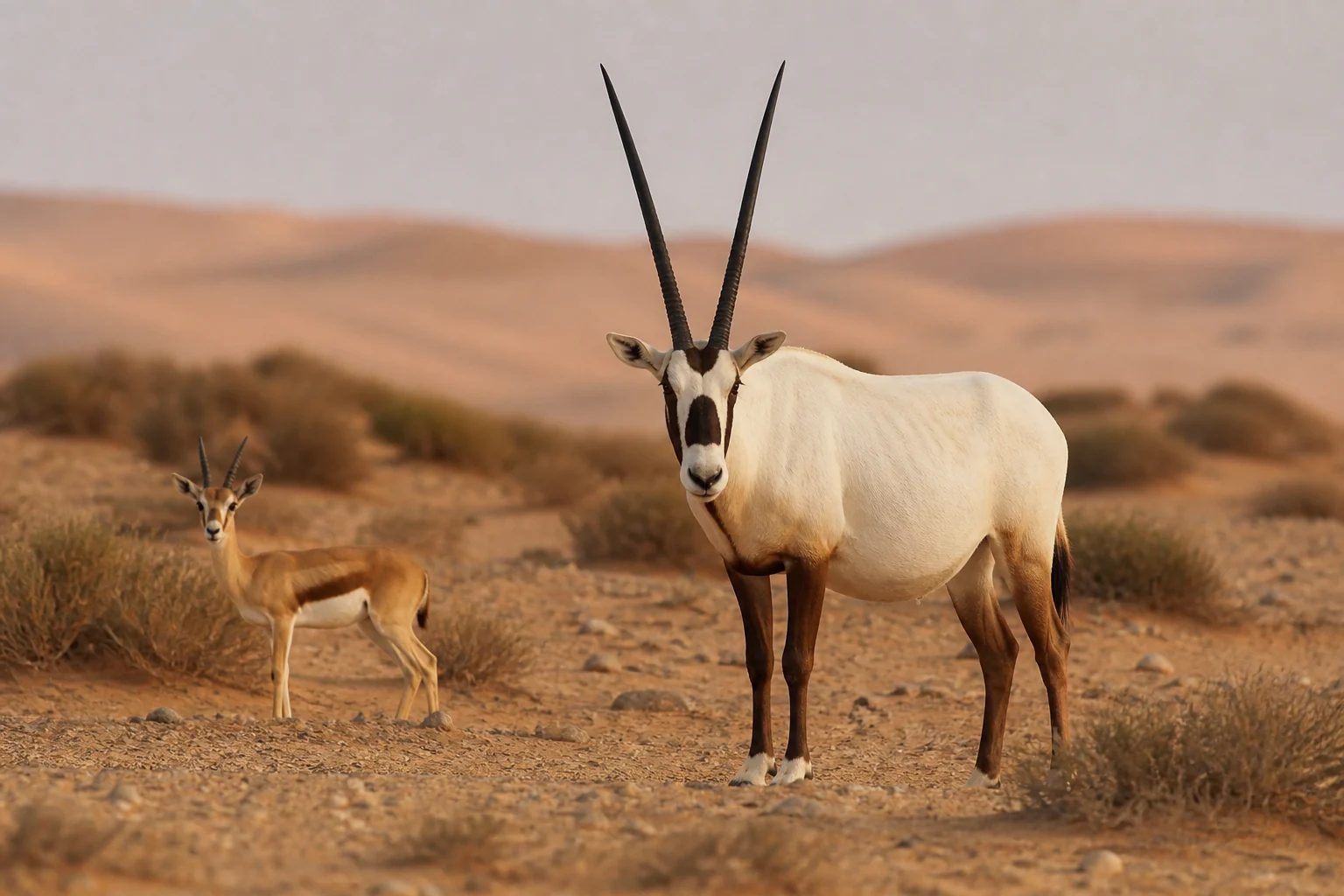
The verified Platinum Heritage programme combines interpretation inside the Dubai Desert Conservation Reserve with cultural and evening elements. In August 2026, it is seasonally closed and announces reopening on 1 October. That detail illustrates the rule: even an established operator is never recommended as permanently available. Date, group size, vehicle, route and actual content are reconfirmed.
A private vehicle can serve a family, serious photography, limited mobility or a precise return time. It does not guarantee the stronger guide or more wildlife. Routes, speed and behaviour inside a reserve remain regulated; exclusivity does not suspend them.
We therefore ask about guide profile, maximum group size, approach to wildlife, distance during falconry and the proportion of genuine natural-history content. Camel, dinner, music and balloon are not bundled by reflex. A fine morning may end after two or three elements.
Creek, cultural breakfast, abra and souk
The Creek is more than a photogenic line of water. It carries histories of trade, boatbuilding, pearls, migration, scent and family. Al Shindagha Museum, operated by Dubai Culture, connects visitors with the history of the Emirates and its people. The Perfume House shows how fragrance, raw materials and trade routes meet in culture.
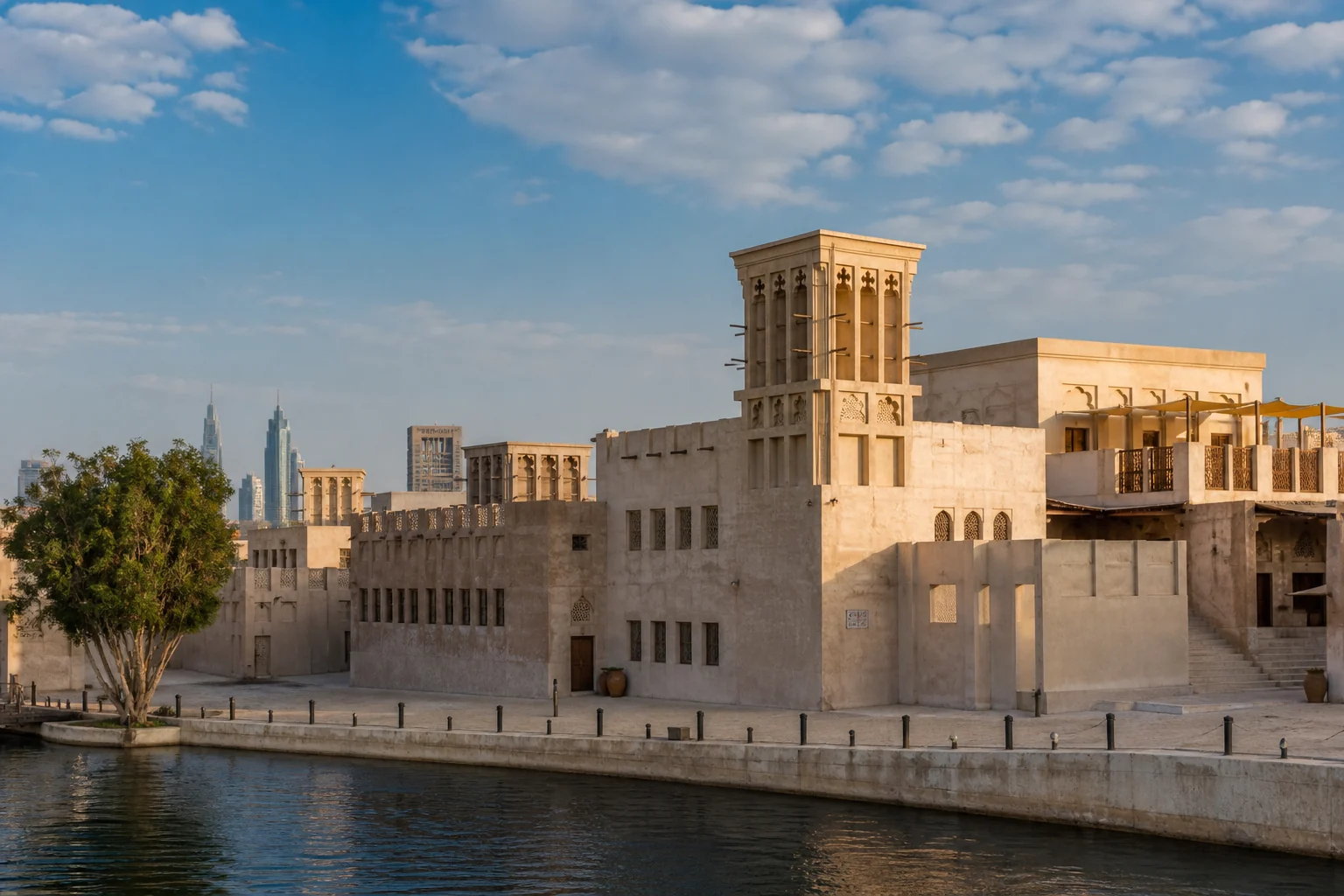
A thoughtful visit selects two or three themes instead of every pavilion. A guide or prepared curatorial route prevents architecture and media from becoming a sequence of displays. Opening hours, accessible houses and current programming are checked in advance; the museum district deserves longer than a photographic stop.
The Sheikh Mohammed Centre for Cultural Understanding offers Emirati meals, heritage formats and mosque visits. Its value lies in conversation: questions about belief, dress, family, hospitality and life in the contemporary Emirates can become specific. Guests who come only for the meal miss the principal form of access.
We choose the session according to language, interest and group. A public breakfast can improve through other guests' questions; a private format may suit family conversations or professional interests. Dress, meeting point, duration, prayer times and photography rules are clarified respectfully before arrival.
RTA's traditional abra routes connect, among other stations, Dubai Old Souq, Al Fahidi, Al Sabkha, Al Seef, Baniyas and Deira Old Souq. Their elegance is elemental: crossing the Creek as the city intends, experiencing wind, engine, water and commerce from close to the surface.
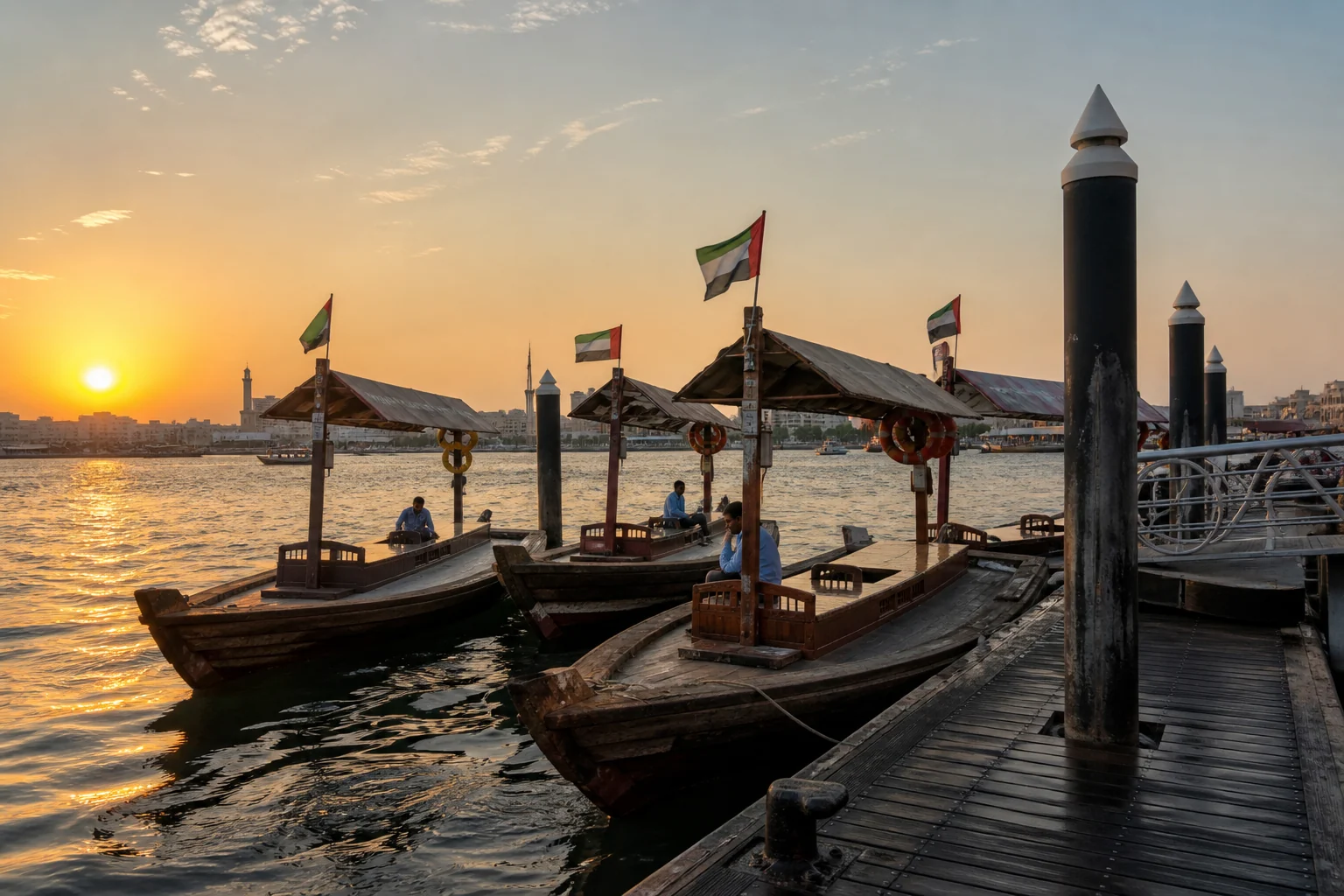
The ride belongs inside a real route—from museum or Al Fahidi towards a market—not as a detached “authentic activity”. Station, timetable, payment and accessibility are checked on the day. For limited mobility, another marine service may be more appropriate than the most romantic timber boat.
Gold, spices and textiles do not make a narrative on their own. A strong walk follows one thread: Indian Ocean trade, fabric and tailoring, perfume and oud, or the making of Deira. The guide interprets prices and vocabulary, but also social conventions and the distinction between living craft and visitor merchandise.
Purchase only when origin, material, weight, certification and return conditions are understood. A “friend's price” is not proof of quality. Jewellery and important objects warrant a separate appointment with a verified specialist; the market walk should remain cultural inquiry rather than sales pressure.
Jameel, Alserkal and art buying with provenance
Jameel Arts Centre in Jaddaf is an independent arts institution beside the Creek. Exhibitions, collections, learning programmes, architecture and gardens bring an intellectual quiet often missing from a skyline itinerary. It matters not because the building is photogenic, but because the institution places contemporary voices from the region and beyond in relation to one another.
We read the current programme before choosing a tour, conversation or independent visit. Artist names, exhibition titles and image rights are handled accurately. Since the institution itself asks visitors to recheck opening hours, no old calendar is copied into a new itinerary.
Across converted industrial buildings in Al Quoz, Alserkal Avenue brings together galleries, studios, design, craft, cinema, cafés and changing events. Its quality resides in the community, not the number of doors. Without research, a spontaneous morning can meet a row of closed galleries.
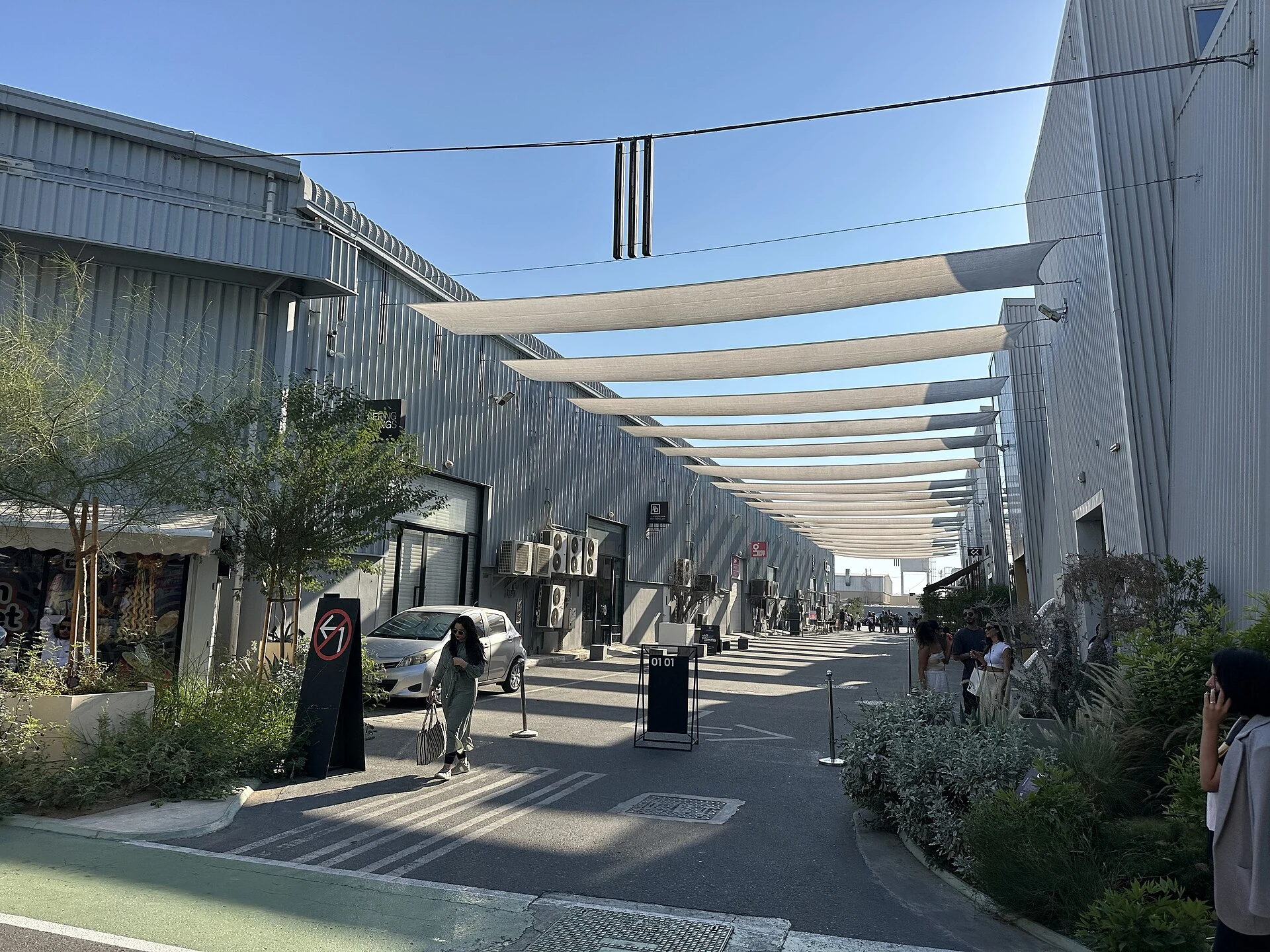
A curated afternoon might include two or three exhibitions, one design or making space and a pause. During art weeks, a conversation with a gallerist or curator adds depth; in quiet summer weeks, the selection becomes smaller and more precise. Jameel and Alserkal can share a day only when the programmes justify the crossing.
A potential acquisition requires artist history, edition, condition, provenance, tax, export, insurance and transport to be understood. A travel advisor can coordinate access and logistics but does not replace independent art advice, legal counsel or tax expertise.
Photography in an exhibition is not an automatic right either. Artist and institution permissions still matter when an image is intended only for a private album. Restraint belongs to the encounter: look first, ask next, photograph last.
One right dinner and the hotel as quiet anchor
Dubai has an extraordinary breadth of restaurants, but three bookings in one evening do not prove discernment. We select one culinary argument for each day: Emirati food after a heritage visit, a rigorous contemporary menu after Alserkal, or a calm terrace following the Creek. Cuisine, room and the story of the day should agree.
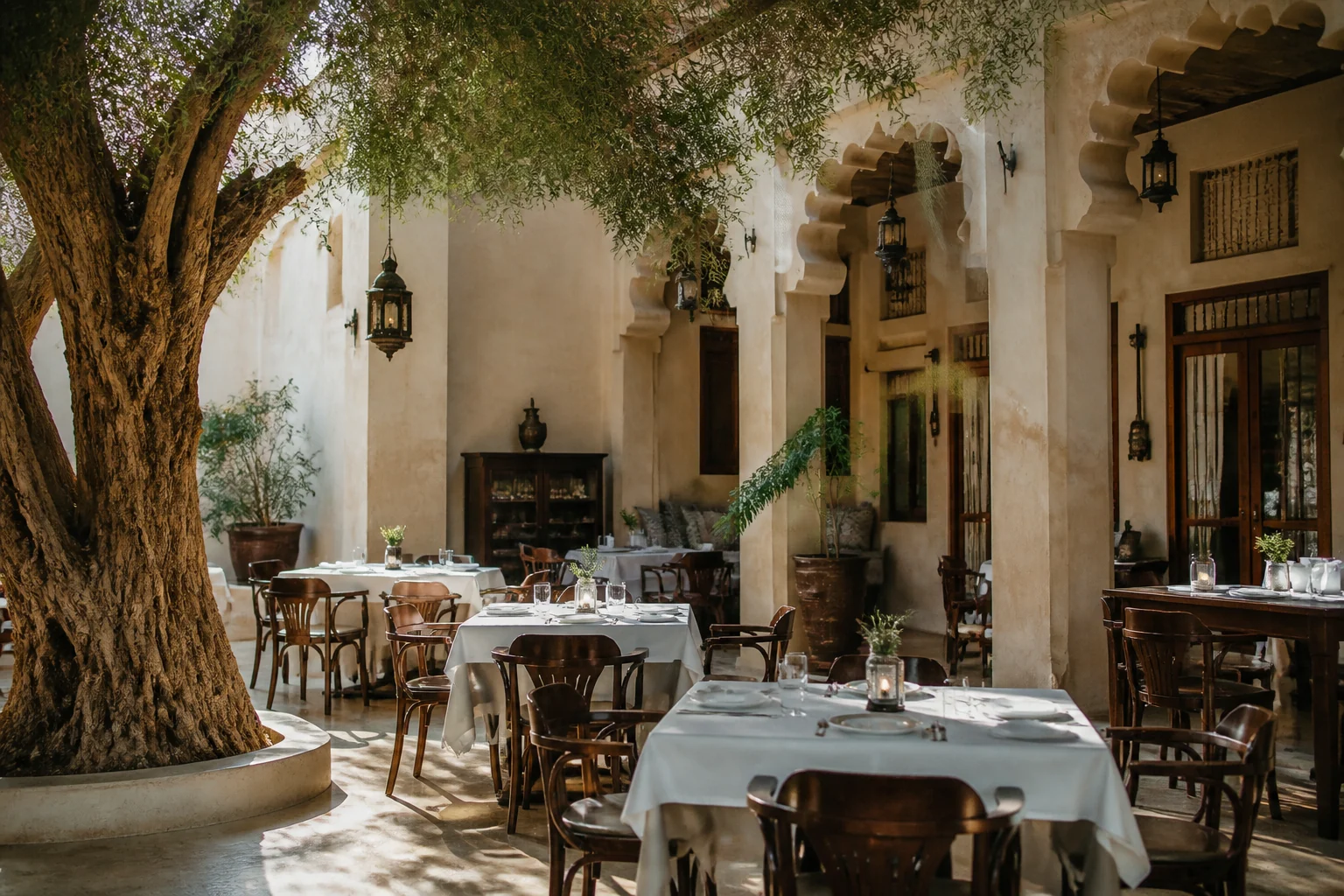
The finest table is not always the one facing the skyline. Distance, acoustics and service may matter more to a conversation. Menu, allergies, alcohol, dress, minimum spend, cancellation and actual table position are confirmed. A new opening is not prioritised solely for novelty; continuity is luxurious too.
After a concentrated cultural day, guests do not need another performance in the lobby. The right hotel provides shade, a thoughtful lounge or library, a spa at useful hours and a room that is genuinely quiet. A free afternoon without a transfer can improve the entire journey.
The answer may be a low-rise Creek resort, an intimate city hotel or a Jumeirah beach property. MAG-052 addresses geography. Here, function matters: unhurried breakfast, recovery between early starts and a concierge willing to protect an empty hour instead of filling it.
Two, four or six days for introduction and return
Day one: selected houses at Al Shindagha, a simple lunch, an abra and a thematic walk through Deira. The evening holds one dinner. Day two: Jameel Arts Centre or Alserkal Avenue, according to the current programme, followed by spa or beach.
The desert belongs only if it is the principal moment and replaces half a city day. Sunrise, museum, souk, art and a major dinner in a single sequence create exhaustion, not depth.
Day one begins slowly at the hotel and moves towards the Creek in the afternoon. Day two combines Al Shindagha, SMCCU and an abra, with pauses. Day three centres on Jameel or Alserkal. Day four starts in the desert or remains free for beach and spa.
Order follows season and weekday. A closed gallery programme is not concealed beneath additional attractions. A late night never precedes the desert start. Good composition takes energy as seriously as opening hours.
Six days allow a second art district, an architectural theme, a private specialist conversation or a complete resort day. The Creek can be experienced at more than one hour. One meal might belong to a cultural host, another to a contemporary kitchen.
At least half a day remains uncommitted. That reserve can receive an invitation, an extended tour or simple fatigue. Luxury travel does not become more accomplished when every opening is sold in advance.
When quieter Dubai does not fit
Travellers who want records, beach clubs, shopping and large productions should choose them with confidence; this is not a moral alternative. The error is to claim that restraint is inherently superior. A quiet programme suits curious guests willing to listen and notice distinctions.
For young children, the ratio of discussion and museum needs adjustment. In high summer, outdoor crossings become brief and early starts more important. Guests with limited mobility need exact information about abras, uneven surfaces, museum houses and vehicle access.
The Deluxetargets recommendation
We begin with interests, not a list of exclusive access. Then we choose one desert moment, one properly interpreted day around the historic Creek and one contemporary institution. Everything else must add a different perspective. The hotel holds the rhythm together; one excellent dinner completes the day.
Before booking, we verify season, guide, group size, opening, exhibition, religious protocol, photography, mobility and return transport. Dubai then becomes not artificially “secret”, but legible: a city between trade and landscape, memory and the present, public life and deeply personal time.