
Two ways of reading the wild
A vehicle gives reach, comfort and photographic range. On foot, the landscape acquires scale, scent and consequence. The finest safari rarely chooses one ideology; it chooses the right rhythm for the guest and the place.
This is not a contest between authentic and easy
Walking is often marketed as the “real” safari, as though a vehicle were merely a comfortable compromise. That is lazy storytelling. A superb game drive with an exceptional guide can reveal behaviour, territory and ecological relationships at a level that a short walk never reaches. A poorly led walk can become little more than single-file exercise decorated with danger.
The two formats answer different questions. A drive asks: what is happening across this landscape today, and how can we reach it A walk asks: what does this place reveal at human speed The choice should follow the traveller’s interests, body, experience and comfort—not the prestige attached to an activity name.
What a game drive does exceptionally well
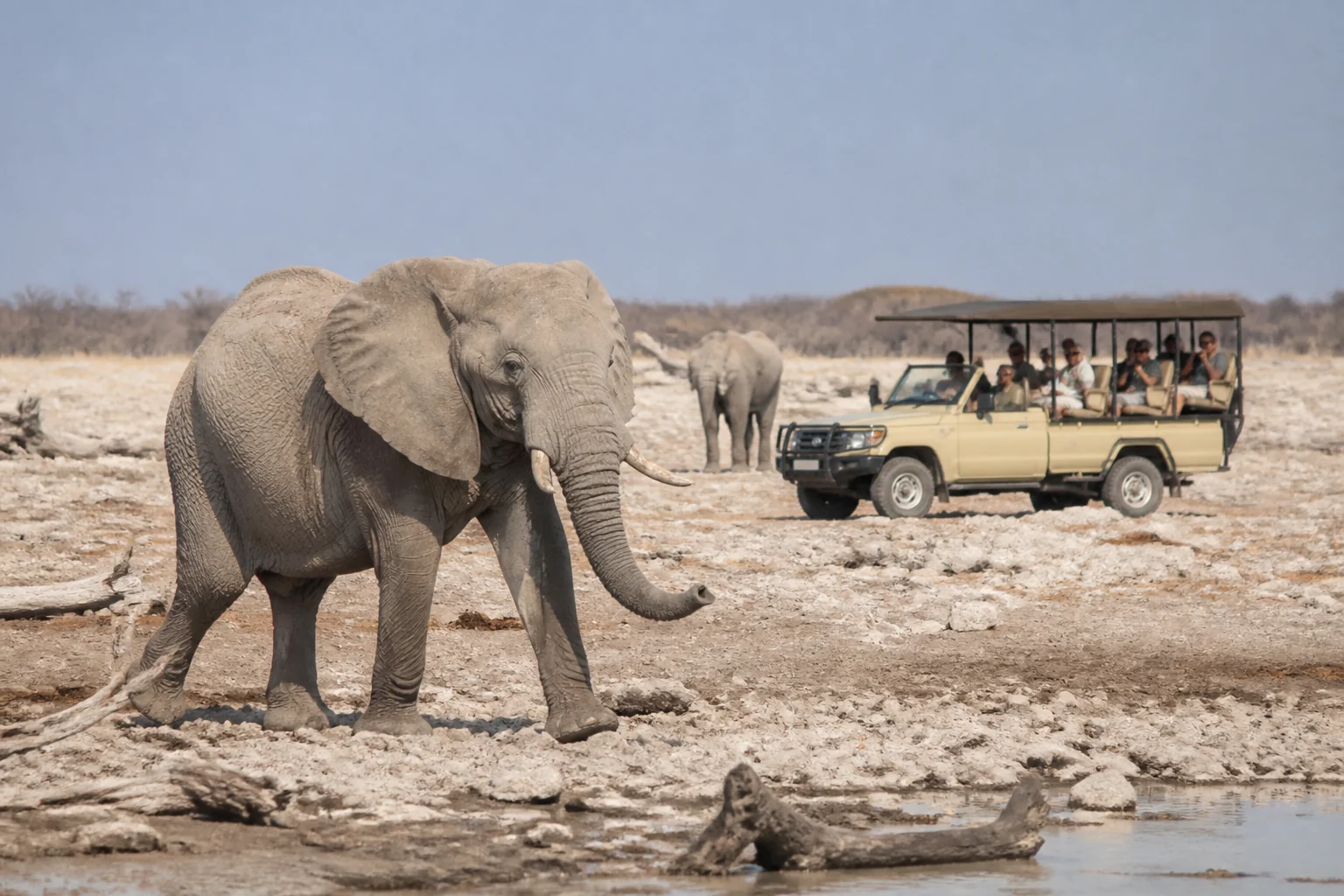
A safari vehicle covers distance, crosses varied habitat and carries water, blankets, camera equipment and people who may not walk comfortably. It can reposition as wildlife moves, stay with a hunting sequence at a respectful distance and reach a distant sighting before the light disappears. An elevated seat also creates a clearer view above grass and scrub.
For a first safari, drives often provide the broadest introduction to species and landscape. They are especially useful in large ecosystems, when wildlife is dispersed, for guests with limited time and for photographers using long lenses. The vehicle is not simply transport. Used well, it becomes a mobile hide and a platform for interpretation.
What changes when the engine stops
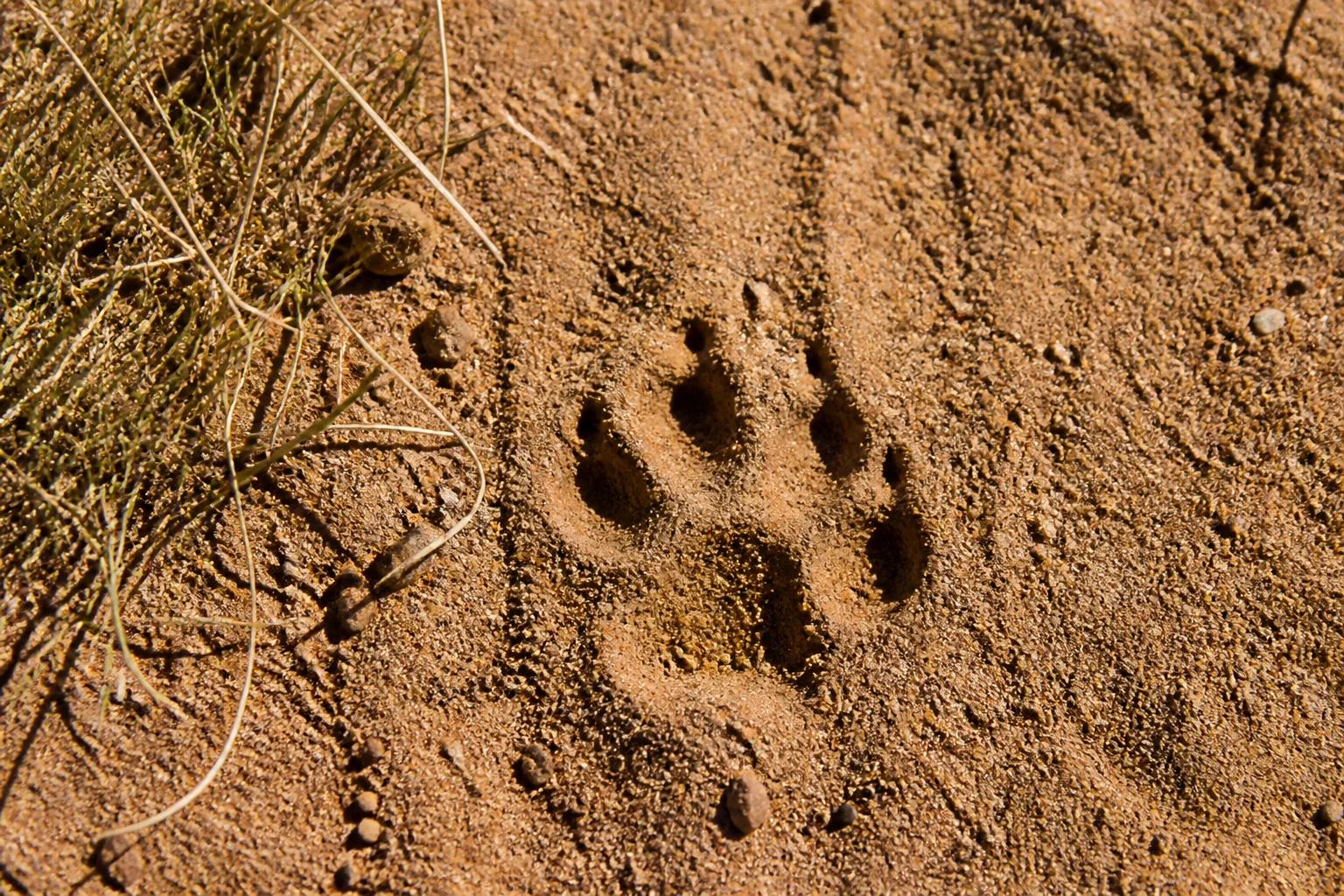
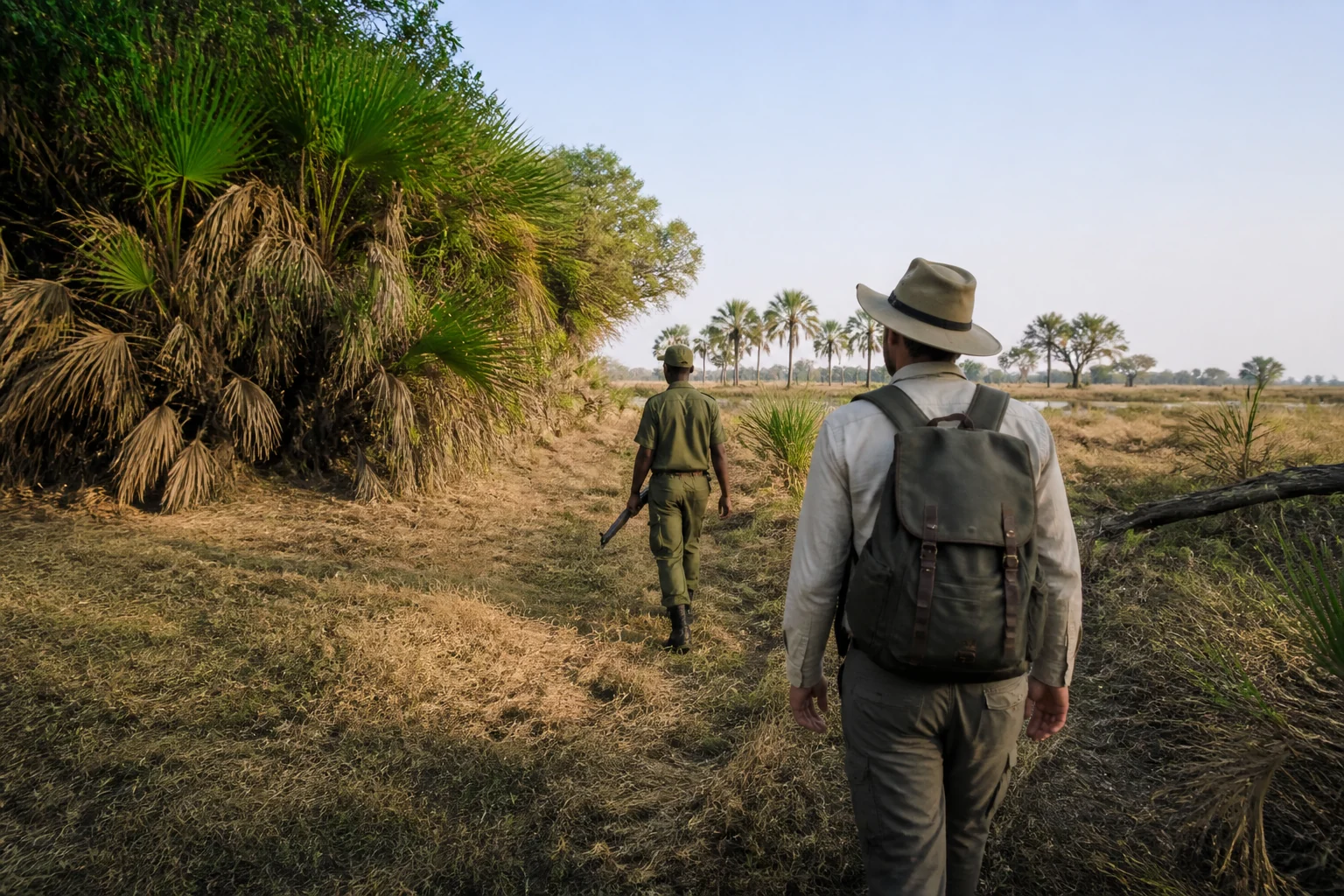
On foot, the horizon becomes less important and evidence takes over: a track pressed into dust, the freshness of dung, a rubbed branch, alarm calls, wind direction and the insects working inside a fallen tree. The guide reads signs that a passenger might pass at speed. Silence becomes part of the experience.
A walking safari is not designed to deliver a checklist of large mammals. An animal may be observed at distance, avoided or left before the guest ever sees it. This is not failure. It is the discipline that allows human presence to remain measured. The reward is a sharper understanding of how the ecosystem fits together.
Three kinds of walking safari, guide quality and safety
A nature walk from camp may last an hour or two and focus on plants, tracks, birds and smaller life, sometimes outside a dangerous-game context. A longer big-game walk enters habitat where potentially dangerous animals may be present and requires an appropriately qualified guide, strict briefing and small group. A mobile trail moves between simple camps over several days, making the walk the architecture of the journey.
These experiences cannot be compared by one label. Ask about duration, terrain, likely temperature, group size, guide qualification, overnight style, distance from a vehicle and the procedure if someone wishes to stop. A “morning walk” may be gentle; a multi-day trail may demand sustained fitness and a willingness to accept simple comforts.
Walking in wildlife habitat demands more than charisma. The lead guide needs the legally required local qualification, current experience in that ecosystem and calm judgement. In parts of southern Africa, specialist trails-guide pathways document hours and encounters in dangerous-game areas. Other countries use different licensing systems. A general field-guide title is not automatically a walking qualification.
Ask who will lead, who provides back-up, how many guests join and which language is used for the safety briefing. The best guide does not dramatise a weapon or promise proximity. She or he controls spacing, reads wind and behaviour, explains decisions and is prepared to turn around. Restraint is the highest form of competence.
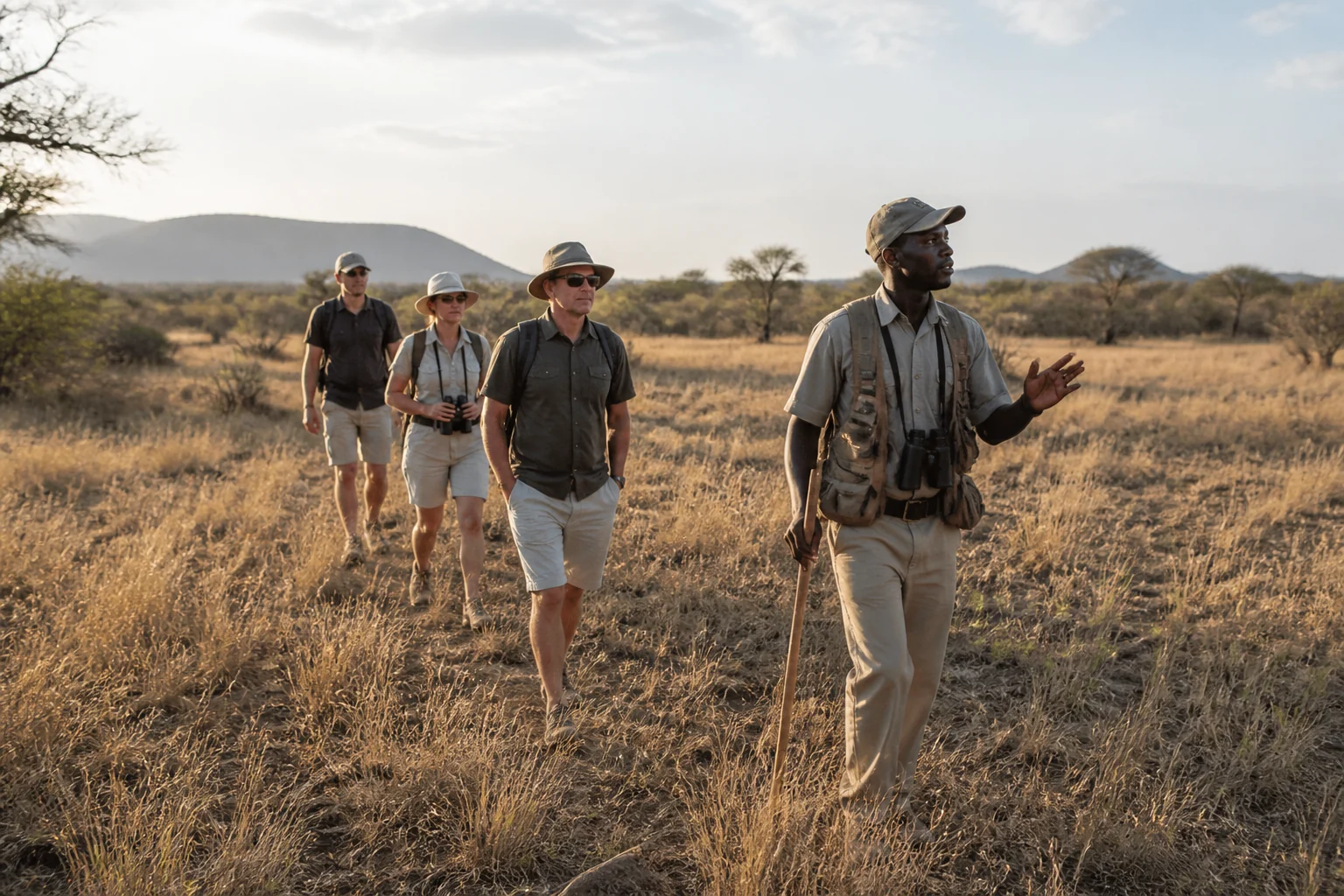
Before departure, guests should understand formation, hand signals, voice discipline and exactly what to do if the guide stops or changes direction. Instructions override photography. Nobody runs, leaves the group or advances for a clearer view. The guide decides when terrain, weather, animal behaviour or a guest’s condition makes the walk inappropriate.
No responsible operator can promise zero risk in wild habitat. The relevant questions are how risk is assessed and managed: communication, first aid, emergency plan, vehicle support, water, route knowledge and realistic response time. A waiver is not evidence of a good system.
A short, cool-season walk on level ground is different from several hours through sand, heat, riverbed or uneven bush. Distance alone can mislead; standing quietly, stepping over roots and remaining attentive also require energy. Guests should disclose heart or respiratory conditions, balance issues, recent surgery, pregnancy, medication effects and heat sensitivity before booking.
“Reasonably fit” needs translation into pace, terrain, duration and escape options. A private walk may allow a gentler rhythm but does not remove environmental demands. The elegant choice is the one a guest can enjoy with attention still available for nature—not the one completed through silent discomfort.
Parks and operators publish different minimum and sometimes maximum ages. A guided drive may accept younger children than a walk; a multi-day wilderness trail may have stricter age and fitness criteria than a camp nature walk. These rules can change and must be confirmed for the exact activity, not inferred from another lodge.
A legal minimum does not prove emotional readiness. A child must follow instructions immediately, remain quiet when required and tolerate walking without turning the group’s attention into childcare. Conversely, an older traveller with strong fitness and field experience may be an excellent participant. Calendar age is only one variable.
Families, mobility and honest fear
One family vehicle gives control over breaks, snacks, questions and return time. Children can learn through tracks and birds without being forced into a long adult drive. Where walking age limits exclude younger guests, adults may alternate a guided walk while children take a dedicated activity with qualified staff. The childcare arrangement, guide credentials and location must be explicit.
Do not design every day around the youngest traveller and then call it a family safari. Parallel activities can preserve depth for adults and delight for children. A private guide who understands different attention spans is often worth more than another suite category.
A well-designed game drive can provide serious natural history, patient tracking and intimate observation without requiring a walk. Vehicle access still needs scrutiny: step height, door, seat width, handholds, transfer assistance and toilet breaks vary. Some open vehicles are surprisingly difficult to enter.
Short interpretive walks around camp, hides and accessible decks may add texture where appropriate. The guest should never be pressured to walk in order to receive an “authentic” experience. Authenticity lies in attention, not exertion.
Feeling alert on foot is part of the experience; overwhelming anxiety is not. A guest concerned about snakes, large animals, weapons or distance from a vehicle should discuss it privately before joining. A calm guide can explain probability, protocol and route without mocking the concern or promising that nothing can happen.
A first short walk can be more revealing than committing to a three-night trail. It is always acceptable to decline. The objective is sharpened perception, not a test of courage.
Photography, naturalism, vehicle and rhythm
A game-drive vehicle carries long lenses, supports beanbags and allows a stable position while a guide works with light and animal movement. A private vehicle can leave early, stay late and position for one photographer’s priorities, subject to reserve rules and animal welfare. Seat layout matters: three rows of guests do not offer equal angles.
On foot, heavy equipment becomes a burden and photography is subordinate to instruction. A small camera, quiet shutter and modest lens may suit tracks, details and landscape. Guests must never fall behind or move for a frame. The strongest photographic itinerary uses the walk to deepen seeing and the vehicle to make the image.
Driving reaches distant habitats and carries scopes or large binoculars. Walking reveals calls, insects, flowers, geology and relationships that disappear from a moving vehicle. A specialist guide changes either experience profoundly. “Birding” should be specified: target species, general learning, photography or simply slower observation.
For guests interested in botany, tracking or conservation, a morning on foot may become the intellectual centre of the safari even without a dramatic mammal sighting. This is why activity planning should begin with curiosity rather than a Big Five list.
Open sides offer visibility and immediacy; roofs provide shade and weather protection. Stadium seating improves sight lines but can be high to climb. Enclosed vehicles may be appropriate in climate, tsetse areas or particular parks. The number of occupied seats matters more than the manufacturer’s nominal capacity.
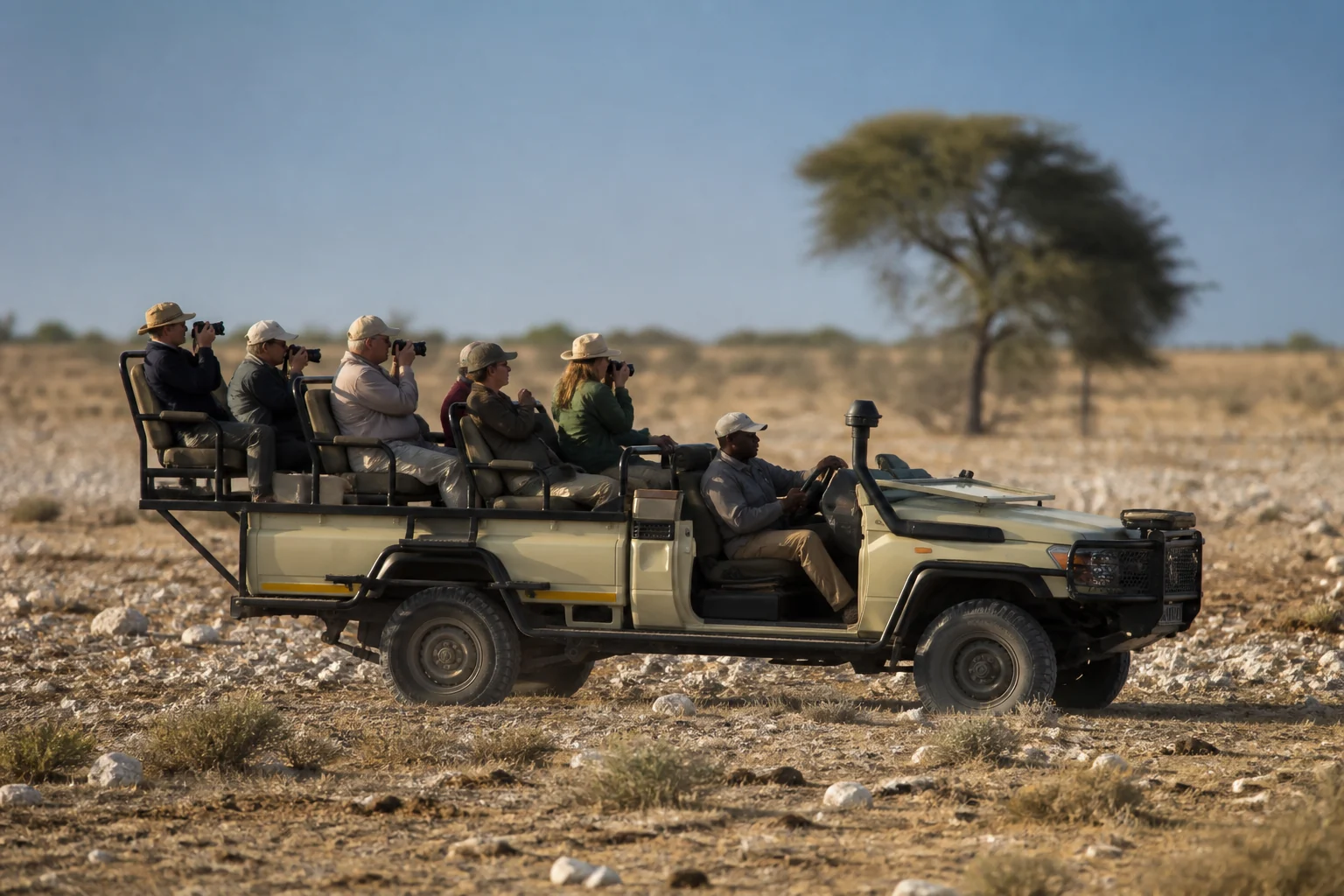
Ask whether the vehicle is shared, how many guests it carries, whether there is a tracker seat, how camera gear is stored and whether charging is available. A “private vehicle” may still follow park rules on roads, hours and sightings. It purchases control of pace, not control of wildlife.
A shared drive can be sociable and rewarding when guests have compatible interests. It can also fragment into conflicting priorities: one person wants birds, another races toward every radio call, a child needs to return, a photographer waits for light. A private vehicle protects a coherent day and can be decisive for mobility, family or specialist interests.
A private walk deserves similar thought. A smaller party allows clearer communication and a pace matched to the guest, but guide availability and park rules may still set limits. Privacy never permits a closer or less cautious wildlife encounter.
Season and habitat decide what each activity can reveal
Dense green vegetation can make driving sightings more challenging while enriching birding, insects and tracks. Dry periods may concentrate animals near water and improve vehicle visibility, yet heat can shorten comfortable walking hours. Flood, rain, fire management and river levels affect routes and camp access differently across regions.
There is no universal “walking season”. The specific park, concession and operator determine whether walks run, at what time and in which terrain. A morning cancelled because conditions are wrong demonstrates judgement, not poor service.
Zambia, Zimbabwe, Botswana, South Africa and East Africa compared
South Luangwa is closely associated with both camp-based and mobile walking safaris. It can offer the experienced guest a journey built around tracks, riverine habitat and movement between intimate camps. Yet not every stay there should become a multi-day trail. The season, exact operator, guide and guest fitness remain decisive.
A first-time visitor may combine drives for wider wildlife context with two or three walks. An experienced walker may choose a mobile route with simpler nights and fewer vehicle interventions. The destination’s reputation is an invitation to investigate the product, not permission to book by label.
Excellent walking exists in parts of Zimbabwe, Botswana and South Africa, but permissions and style vary by national park, private concession and reserve. One camp may offer short interpretive walks; another specialises in dangerous-game encounters with highly qualified guides; a third may not walk at all because of habitat, regulation or season.
In Botswana, water activities can add another layer to the drive-and-walk choice. In private South African reserves, off-road permissions and tracker teams may make vehicle safaris unusually strong. The lodge name alone never explains the activity.
Many famous East African wildlife areas have specific rules about where guests may leave a vehicle. Walking may take place in designated concessions, conservancies or specialist camps rather than across the standard game-drive circuit. Landscape walks away from dangerous game are also different from armed big-game walks.
Clarify the land status, guide licence, wildlife context and transfer from camp. A “bush walk” added to a brochure is not equivalent to a walking-safari operation designed around the activity.
The strongest four-night rhythm often combines both
A balanced stay might begin with a drive that gives geographic and wildlife context. The next morning, a short walk introduces tracks, plants and guide protocol. Later drives use that new awareness; a second walk can go deeper if the guest enjoyed the first. One full morning in the vehicle remains available for distant habitat or photography.
This is only a model. Weather, animal movement and guide judgement alter the sequence. The principle is to alternate scale and pace rather than fill every dawn and dusk mechanically. Rest is an activity too.
Questions that reveal the real activity
- Is this a nature walk, dangerous-game walk or multi-day trail
- Who leads it, which local qualification is held and how current is the experience
- How many guests and guides participate, and in which language is the briefing
- What distance, terrain, temperature and duration are realistic
- What are the exact age, health, footwear and equipment rules
- How can a guest stop, and what vehicle or communication back-up exists
- For drives, what vehicle, seat count, private-use terms and park restrictions apply
The right safari changes how the guest pays attention
The vehicle teaches range: how rivers, plains and woodland connect, how predators move and how light travels across distance. Walking teaches consequence: where to place a foot, how wind carries information and how much life exists below the headline animals. Neither is a superior morality.
Choose the format that allows curiosity to stay open. For many guests, that means the comfort and reach of excellent drives, interrupted by one or two carefully led walks that recalibrate the senses. The ultimate luxury is not proximity to wildlife. It is the quality of attention brought to it.