
An island that begins beyond the last jetty promises a rare distance from ordinary life. Yet “accessible only by boat” is neither automatically exclusive nor inherently difficult. The experience depends on the crossing, the scale of the island, the position of the villa and the competence of the operation. The best resorts turn remoteness into calm without making the guest hostage to weather, a timetable or one poorly explained connection.
Boat-only is an operating chain
One island may sit ten sheltered minutes from shore; another lies hours across open water. Some receive a public ferry, while others depend entirely on the resort launch. The same phrase can therefore conceal radically different journeys. Begin with departure point, distance, vessel, schedule and fallback. Exclusivity does not come from the absence of a road.
It comes from intelligent spacing, controlled visibility, professional operation and a hotel that absorbs the friction of water access instead of passing it on to the guest.
A resort may occupy an island yet also have a bridge, helipad or occasional air service. Conversely, a short ferry after a long road transfer may be marketed as a private marine arrival. Request the complete route from international terminal to lobby.
Is there a choice between shared and private craft Does a domestic flight come first Which sector is unavoidable Once each component is visible, the property can be compared fairly with a supposedly less remote hotel whose journey may in practice be longer or more exposed.
The embarkation point may be attached to the airport, across a congested city or on a distant coast. Road time and traffic risk between terminal and pier belong in the itinerary. Confirm a mapped meeting point, live contact and recognisable handover. Is there a shaded or air-conditioned lounge, water,
seating and a lavatory Who assumes custody of baggage A handsome boat cannot repair a confused hour at the wrong marina. The first luxury moment is clarity at the handover, not the first photograph offshore.
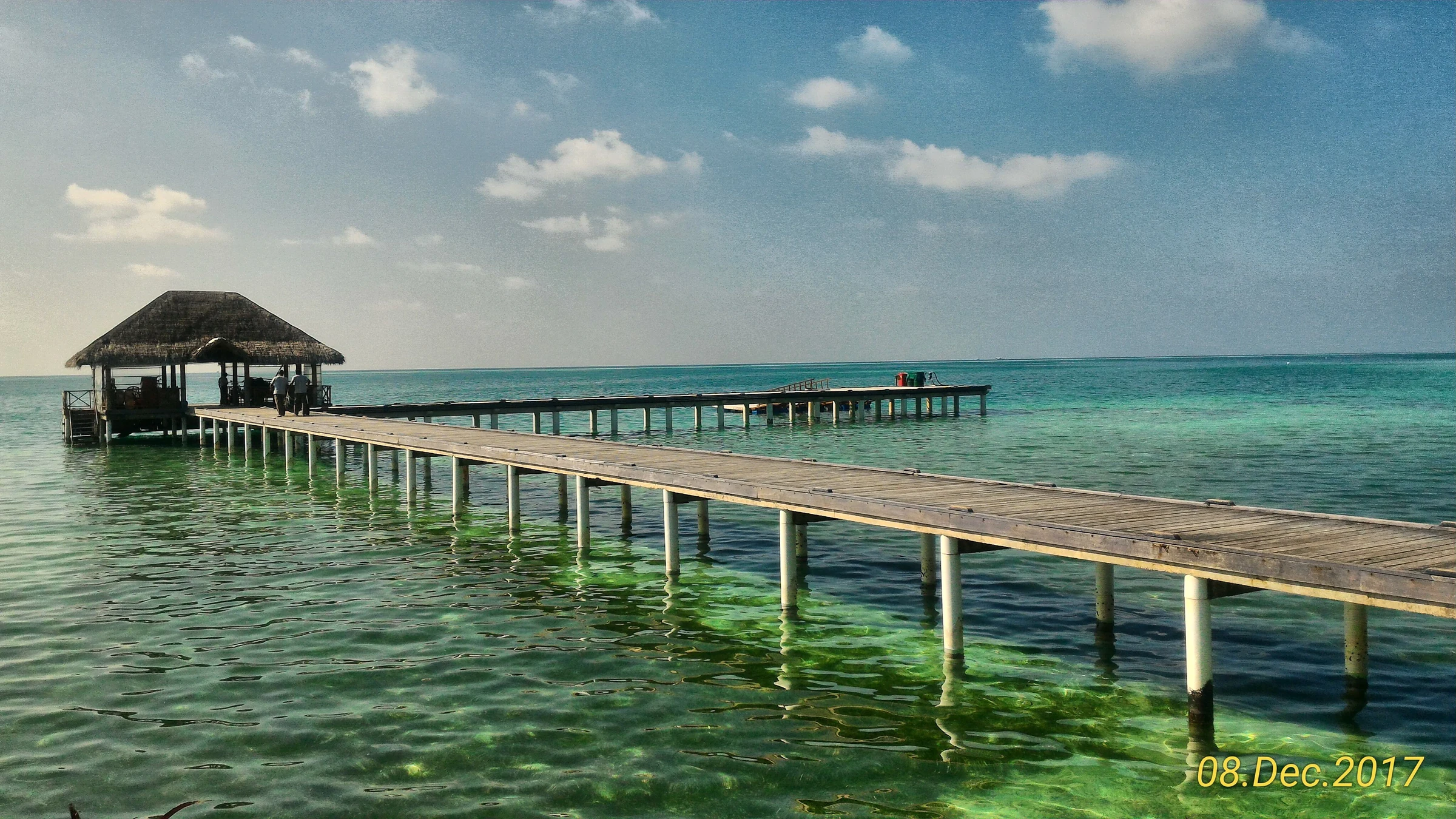

An afternoon airline arrival may be too late once immigration and baggage have taken their share. Ask for the last credible connection rather than a published departure in isolation. What buffer does the resort require If the flight slips, will the craft wait, can a private transfer operate,
or is an overnight stay arranged Choosing an earlier flight may add more value than upgrading the villa. At peak dates or for a honeymoon, a deliberate stopover on the previous evening deserves to be considered as part of the experience.
A shared boat is predictable, less resource-intensive and can provide a graceful introduction to the island. It may wait for other guests and remains tied to a timetable. A private launch offers flexibility at a premium, but it is still subject to weather and operational approval. Establish maximum waiting time, intermediate calls, passenger capacity,
baggage policy and cancellation terms. “Private transfer available” is not a recommendation by itself. The right answer follows the airline schedule, party size, budget and tolerance for additional social contact.
An enclosed launch is a different proposition from an open speedboat, traditional craft or small tender. Duration alone reveals little about motion, noise, spray, heat and seating. Ask which vessel usually operates, whether there is shade, ventilation, forward-facing seating and weather protection. The International Maritime Organization’s passenger-ship work illustrates how construction, operation,
training and emergency planning interact; smaller resort boats may fall under national regimes instead. The relevant assessment is the actual operator, craft and route, not the hotel’s star rating.
The UK Maritime and Coastguard Agency applies different life-saving requirements to different classes of vessels, including dedicated rules for certain small commercial craft. Those rules are not a global resort standard, but they illuminate the right enquiry: which local framework applies, and what equipment is carried for this passenger mix and voyage Ask about correctly sized flotation devices for children as well as adults.
A concise briefing, visible equipment and a confident crew do not diminish elegance. They demonstrate that the experience has operational substance.
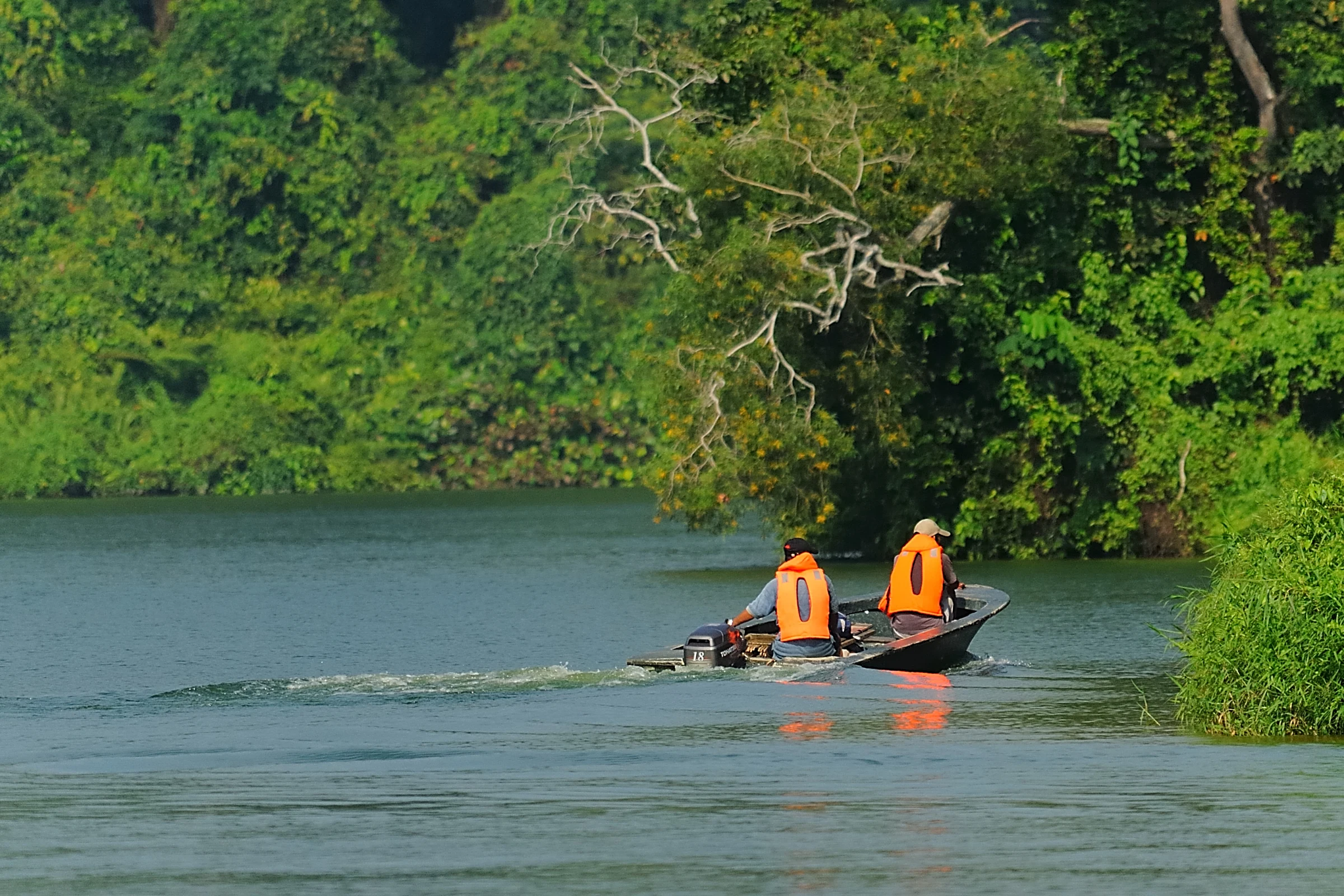

A fixed jetty permits a different transition from a floating pontoon. A tender can require transfer between moving vessels; a beach landing may involve spray, unstable footing or stepping into water. For mobility concerns, request current photographs of both ends. Count steps, check handrails, lighting, ramp gradient and the arrangement at low tide. “Easy boat access” is not a specification.
The journey must work after dark and after rain, when the guest is tired and the polished images of a sunny midday are least relevant.
Plan for weather, arrival day and baggage
Wind, swell, thunderstorms, current and visibility can alter a crossing even in the preferred season. Historical averages do not replace a local forecast or the operator’s decision. Ask how often the service is interrupted in the specific month and what usually happens, rather than requesting a promise of calm water.
Which party monitors conditions and which route is used as a fallback A skilled advisor distinguishes climate, current weather and operational limits. A resort can sell an island stay; it cannot sell control of the sea.
After a long-haul flight, road journey and crossing, another fixed appointment is rarely wise. Protect the first evening for arrival, food and sleep. A treatment immediately after rough water or a hurried diving orientation can wait. Confirm how late the restaurant, children’s service and in-villa dining operate if the boat docks behind schedule.
The best hotels prevent guests feeling that an expensive day has been “lost”. The crossing is part of that day’s narrative, and a relaxed first meal can be its proper conclusion.
Small craft can impose limits on case size, number or total weight. Diving equipment, prams, surfboards and hard cases may require advance notice. Confirm whether luggage remains with the guest and under waterproof cover. Passports, medicine, electronics, swimwear and one night’s clothing belong in a compact personal bag. If the airline delays a suitcase,
the resort needs a plan for the last launch and subsequent delivery. An island without easy shops makes missing essentials more consequential than they would be in a city hotel.
Children, accessibility and medical distance
A child may adore boats and still find one overwhelming after an overnight flight. Ask about minimum age, correctly sized flotation, secure seating, shade, lavatory access and typical motion. Can an infant travel protected from heat and spray, and can a pushchair be stored dry On the island, examine flat paths, railings, pool safety, restaurant distance and childcare.
“Family friendly” becomes meaningful only in relation to the exact villa and daily routine. Adventure should be invited, never imposed by inflexible logistics.
EU regulations provide rights to accessible information and assistance on covered transport, but a bespoke resort launch still requires an individual assessment. Share wheelchair dimensions, transfer ability, equipment and assistance needs in advance. Can the traveller move safely at the departure pier, aboard the craft and at the island jetty Are ramps,
lifting support or a more suitable vessel available A beautifully adapted villa is irrelevant if its only approach cannot be used. Require a written, step-by-step confirmation rather than a general assurance.
What level of care exists on the island, who is available overnight and how long would transfer to an appropriate clinic take A first-aid room is not a hospital. Identify communication, marine or other evacuation options and their weather constraints. This article cannot determine personal fitness to travel; individual risks belong with a qualified professional.
Insurance and evacuation cover must include the actual destination and activities. Remoteness feels restorative only when the emergency plan consists of more than goodwill and a fast-looking boat.
How the island can actually be inhabited
A small island can feel intimate or confined; a large one can offer freedom or long service routes. Request walking times between villa, breakfast, main pool, spa and water-sports centre. Do buggies pass at night Are paths shaded A map with scale conveys more than a drone shot. Compact proximity may be ideal for older guests,
young families or a short stay. Travellers who want long walks and several beaches need physical space, not simply a low room count or the phrase “private island”.
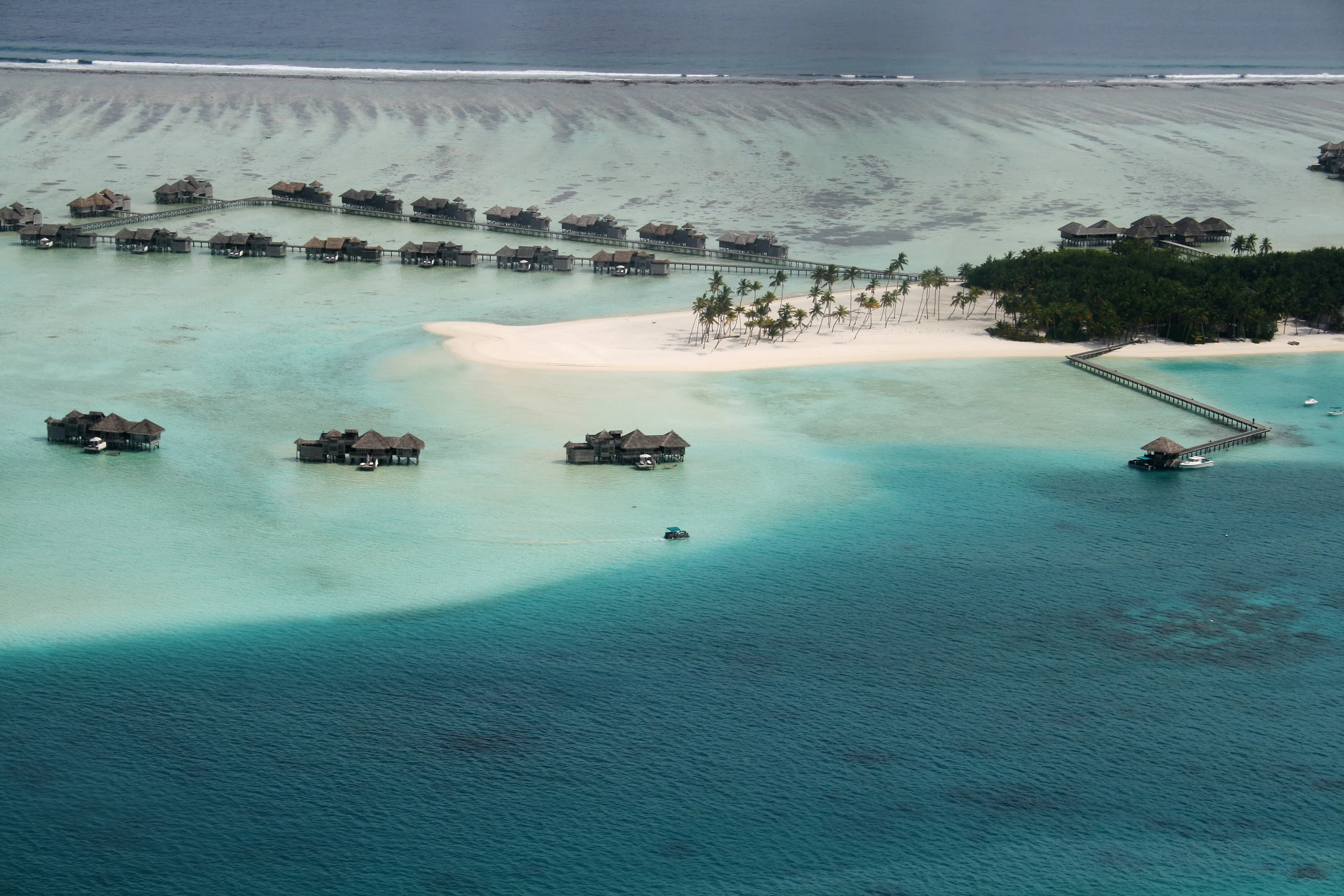

Two units in one category may differ in wind, wave sound, sun, view and boat traffic. Ask for zone and orientation, not category alone. Is the terrace shaded in the afternoon Can guests hear the generator, restaurant, jetty or water-sports operation How does the beach change by season A fixed villa number may not be guaranteed,
but priorities can be ranked accurately. Someone who values shelter above sunset should state it before allocation rather than hoping the most photographed side is also the most comfortable.
An overwater villa delivers view, direct water access and emblematic architecture. It can also mean longer walks, greater exposure, audible boardwalks and less shade. A beach villa offers sand and vegetation, but may encounter foot traffic or seasonal shoreline changes. Families need precise information about rails, depth and supervision. Choose by the way the day will unfold:
morning coffee, children’s play, changing after a swim, evening privacy. The most expensive category is not necessarily the room in which life feels easiest.
“House reef” may begin outside the villa, beyond a channel or only after a short boat ride. Entry, current, depth, visibility and coral condition vary. Ask the marine or dive team about marked access, supervision, seasonal limits and suitability for the traveller’s level. Images may be old or made on another side of the island.
A responsible resort will not promise particular wildlife encounters. It will explain how guests can experience the reef with restraint, suitable skills and a clear understanding of conditions.
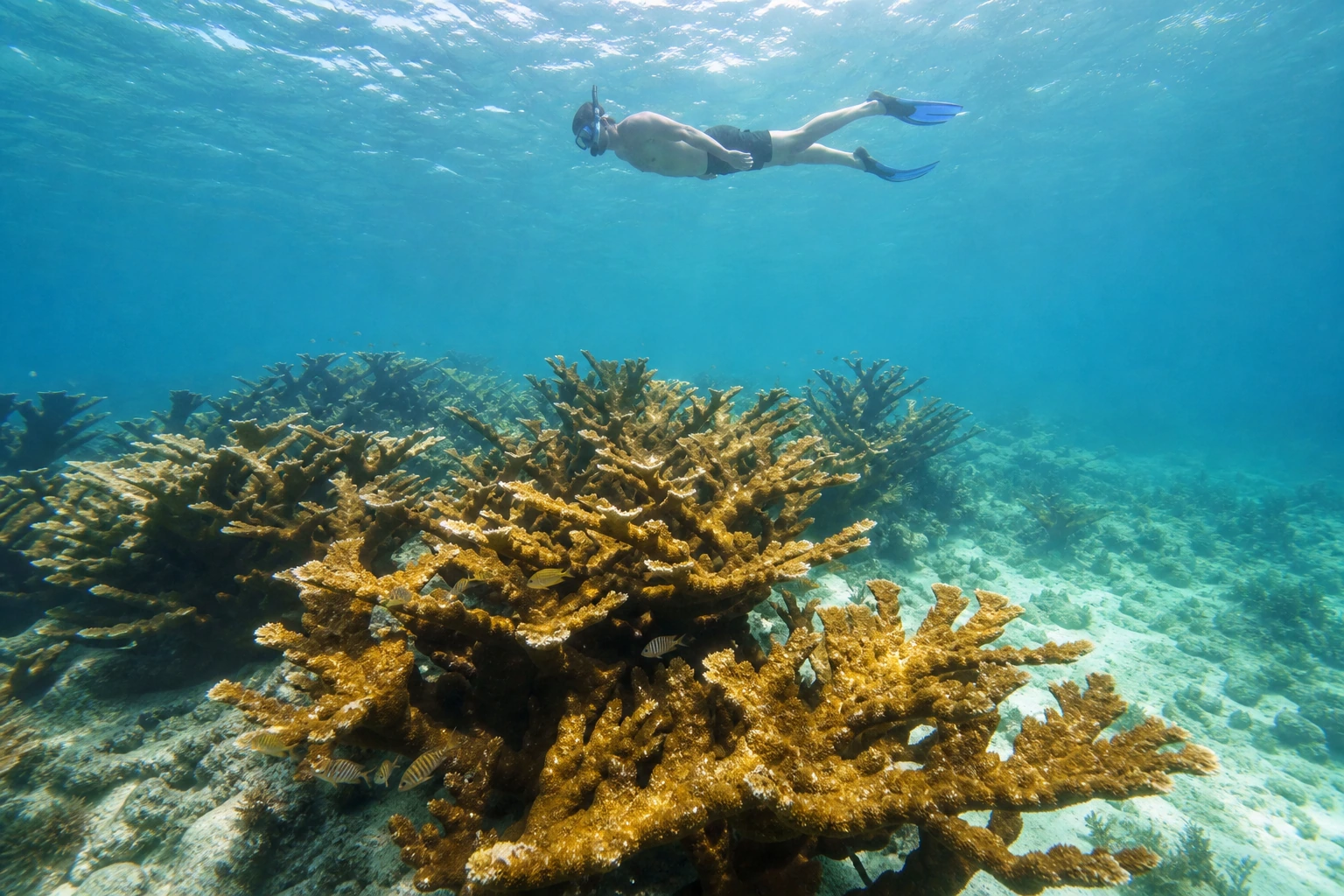

Turquoise water may be shallow, coral-strewn, current-affected or unsuitable at certain hours. Ask about footwear, breakwaters, boat lanes and designated swimming zones. One family may need a calm lagoon while an experienced swimmer seeks depth. Developed with the UN Environment Programme, Green Fins sets recognised environmental standards for diving and snorkelling operations. That makes operator practice part of the hotel decision: briefing quality, anchoring, wildlife interaction and reef protection matter as much as the colour of the water.
A single-resort island can be full, sociable and visible from its main jetty. Privacy comes from villa spacing, vegetation, path design, service access, neighbouring sightlines and rules on drones or visiting boats. Ask whether day guests, yachts or outside diners arrive. Total separation can also be limiting for travellers who enjoy spontaneous restaurants and local exploration.
Define the desired freedom: remaining undisturbed or being able to leave easily. These are different luxuries, and boat-only access can favour one at the expense of the other.
A resort with several restaurants, DJs, water sports and communal dining has a different energy from a quiet island of a few villas. School holidays, weddings and groups can alter that rhythm. Ask about ages, dress, evening programme, music and use of the main pool. A family resort is not automatically wrong for a honeymoon;
villa location and divided spaces may matter more. A credible recommendation describes not only who is welcome, but how much social contact the traveller is likely to encounter.
Supply and environmental practice reveal maturity
Water, energy, food, spare parts and waste must arrive by sea or be handled on site. That affects menus, freshness, reliability and environmental impact. Allergies and medical diets require early discussion of ingredients, storage and kitchen competence. A long menu does not prove resilient supply; a concise one executed superbly may be stronger. Drinking water,
laundry, power stability and technical redundancy also count. On a remote island, hidden infrastructure is not a back-of-house detail. It is central to the luxury proposition.

“Eco island” and “regenerative luxury” are insufficient descriptions. Ask about water production, wastewater, power, refuse, purchasing, reef management and local employment. Green Fins provides an internationally recognised framework for diving and snorkelling operators; any membership or certification should be current and verifiable. Examine anchoring, feeding, wildlife contact and access to sensitive zones. Good environmental practice appears in daily decisions and guest briefings, not only in a report. Isolation makes a resort’s footprint more visible, not less important.
When boat excursions, diving and the beach pause, the villa, spa, gym, library, food and service remain. Are paths covered and indoor spaces generous Can a child enjoy a wet day without parents inventing a programme A small island may consciously offer less, but should describe that honestly. Compare properties through the imagined lens of wind and rain,
not only the perfect aerial view. That is when seclusion becomes either shelter or confinement, and architecture begins to matter more than the lagoon photograph.
Length of stay, total cost and stranding risk
The more complex the final sector, the less persuasive a very short stay becomes. Two nights after a long-haul flight and fixed launch can contain more transition than rest. Not every island supports ten nights either. Consider restaurant range, activities, physical space and appetite for stillness. A stopover before or after the island is often wiser than pairing two remote resorts.
A split stay earns its transfers only when the second setting adds a genuinely different experience and the two access chains connect cleanly.
Boat transfers may be mandatory and charged separately. Price return sectors, private alternatives, night supplements, waiting, children, taxes, luggage, road-to-pier transport and any intermediate hotel. What meal basis applies What do diving, spa, excursions and a flexible departure add A lower room rate can become the more expensive holiday once compulsory logistics and dining are included.
Compare the complete door-to-door cost and a realistic daily spend, not simply the nightly villa figure displayed in search results.
What happens when conditions prevent arrival or departure Who pays for extra nights, a missed airline flight or another route Are hotel and boat terms one contract or two The UK FCDO’s travel checklist advocates suitable insurance and preparation for unexpected events. For an island stay, contact, decision time, cost allocation and last safe return should be documented.
The hotel cannot command the sea, but it can demonstrate professional disruption management before the traveller commits non-refundable funds.
Create a one-page island brief
For each candidate, record embarkation point, crossing time, vessel, timetable, last connection, weather fallback, baggage, mobility, medical access, island scale, villa zone and total price. Add house reef, swimming conditions, guest mix, wet-weather depth and environmental practice. This allows a famous island and a quieter alternative to be compared on equal terms.
Deluxetargets can turn the brief into a recommendation based on the traveller’s actual rhythm – not the most dramatic aerial image, but how arrival and stay perform on a real day.