
Greece is not a single cruising ground. The open passages of the Cyclades, greener Ionian islands and accessible Saronic Gulf create very different weeks. A successful charter therefore does not begin with a list containing Mykonos, Santorini and Hydra. It begins by deciding how much wind, passage time, harbour life and spontaneous change the guests will genuinely enjoy.
Choose the Greek cruising ground first
A route can look compact on a screen and feel ambitious at sea. Exposure, prevailing direction, shelter, harbour capacity and return base determine which islands belong in one week. Establish the desired character first: active sailing, short swimming hops, historic ports or remote anchorages. Then test the wish list.
Trying to include every celebrated name may produce more motoring and transfers than time in the places that were meant to justify the yacht.
White villages, sparse terrain, hard light and the open Aegean define their image. Greece’s official tourism site divides the Cyclades into northern, central, southern and Small Cyclades, a reminder that this is not one short loop. Passages can be exposed, ports animated and distances more significant than an island-dotted map suggests. The region suits guests who value sailing and route flexibility above a guaranteed sequence of placid bays.
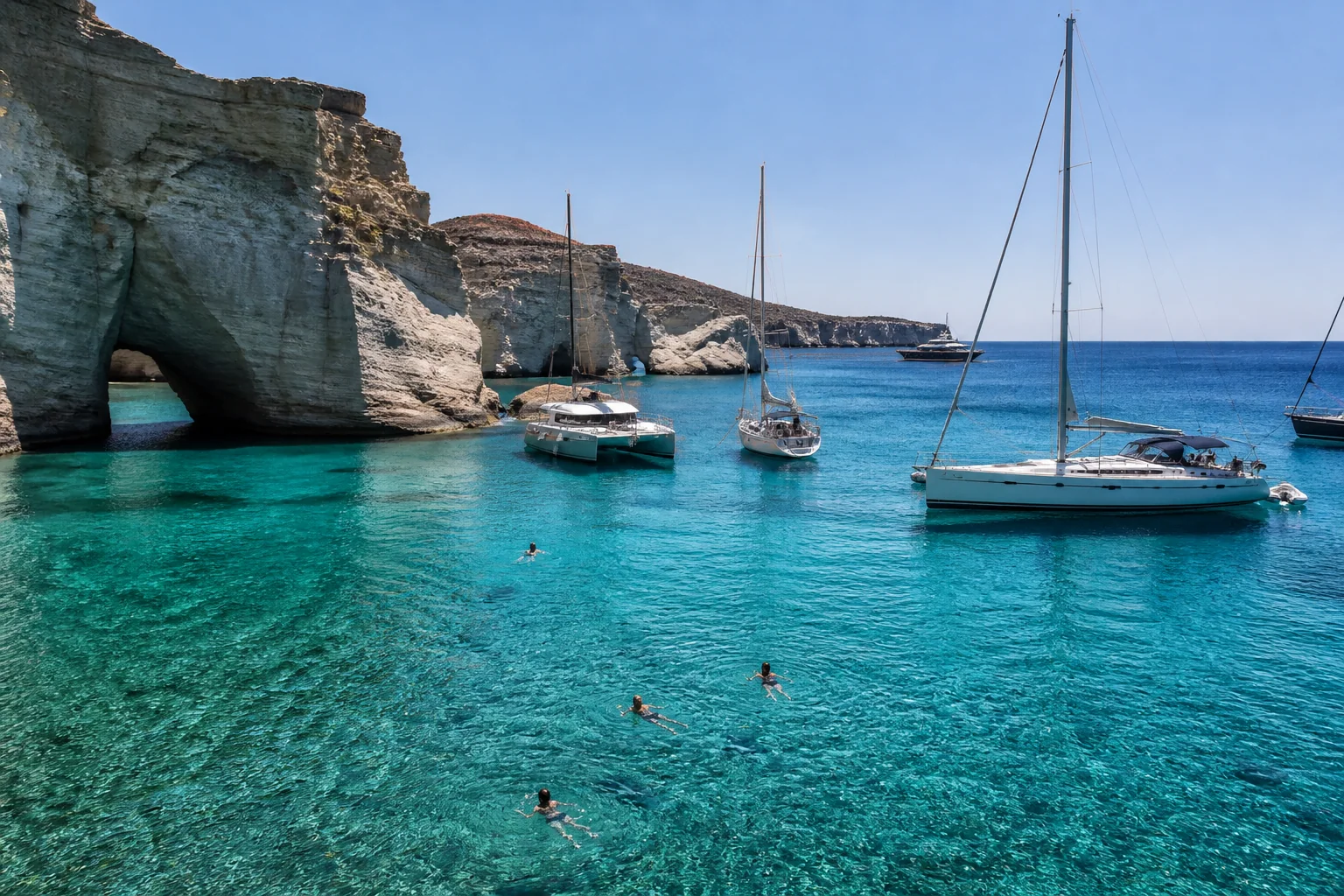
Corfu, Paxos, Lefkada, Ithaca, Kefalonia and Zakynthos sit west of mainland Greece. Greener landscapes, numerous sheltered areas and often shorter hops make the Ionian attractive to families and first-time charter guests. Gentler does not mean immune to weather or operational risk. Local conditions and crew still govern the day. Its strength is rhythm: a morning swim, manageable passage and taverna evening without requiring every sector to become a sporting event.
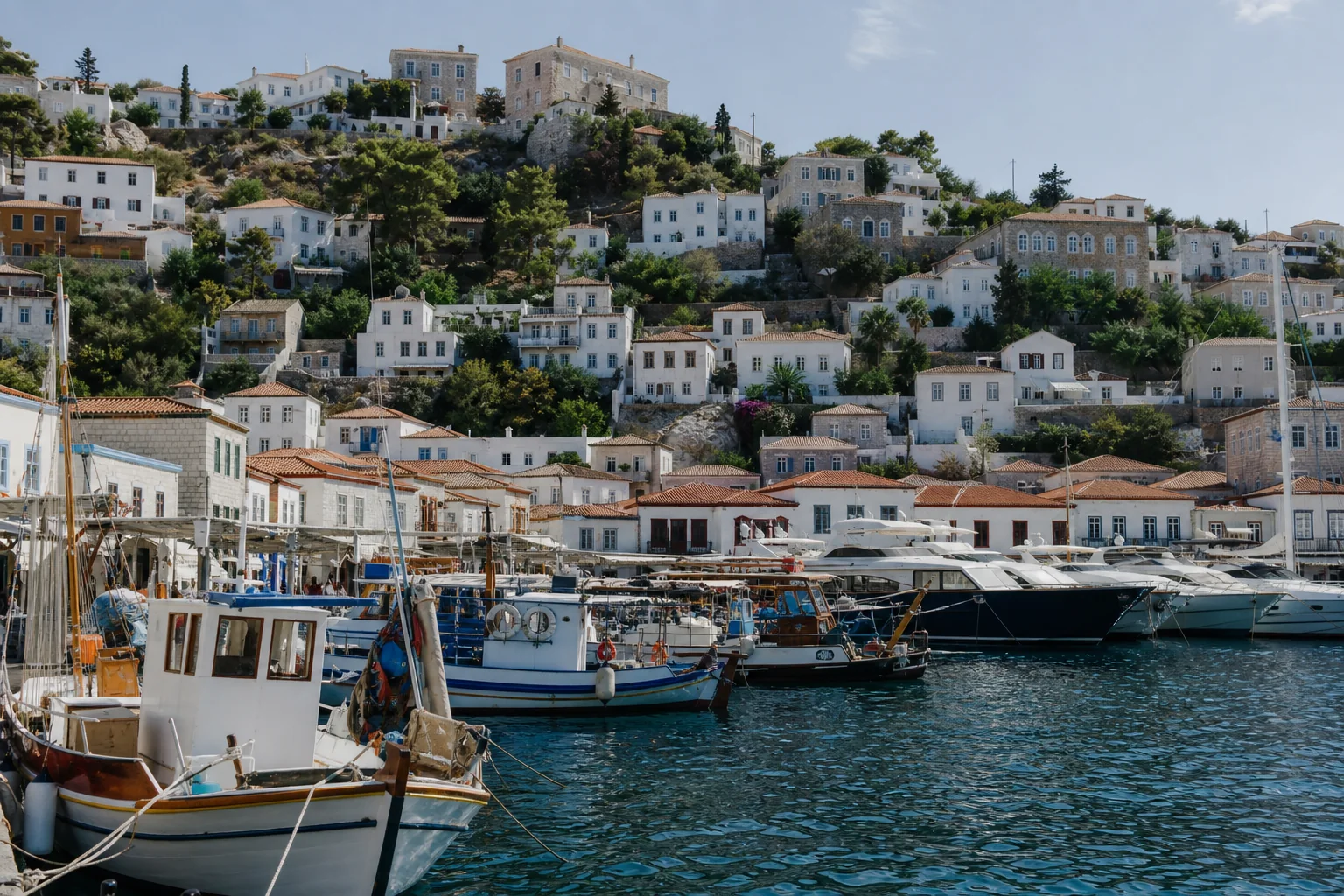
Aegina, Poros, Hydra and Spetses connect naturally with Athens and the eastern Peloponnese. Visit Greece highlights proximity to Attica and port infrastructure towards Nafplio and Porto Heli. The area works when a long positioning day is undesirable or culture matters. It is not automatically empty. Popular harbours fill and weekends change traffic. A selective route with one quiet anchorage can feel more considered than collecting a new port every evening.
The southeastern Aegean Dodecanese links Rhodes, Kos, Symi, Patmos and Leros through a distinct history and architecture. The Sporades farther north offer a greener setting. Neither should be treated as an afterthought to a generic “Aegean” itinerary. Airports, charter base, return and passages shape a viable week. Travellers who know the Cyclades can find another Greece here, not necessarily an easier one. The specific sea remains more important than the category name.
Route, wind, season and home port
The responsible crew decides according to weather, sea state, berths, machinery and guests. A good proposal therefore combines core desires with attractive alternatives. Identify two islands that truly matter and several substitutes of equal interest. A detour may create the better day; an extra night in harbour may be the prudent choice. This is not diminished service. Luxury afloat is the ability to alter course without making the holiday feel like a cancelled version of itself.
The Hellenic National Meteorological Service publishes forecasts, warnings and marine bulletins for Greek waters. Its bulletins also caution that gusts and individual wave heights can exceed summarised values. Guests should not turn that information into personal navigation decisions. The captain and operator assess the passage. A phone app cannot replace official sources or local experience. Ask when daily briefings occur, who makes the final decision and how a route change will be communicated.
The Aegean’s summer northerly is not a decorative footnote. It can bring rewarding sailing, stronger gusts, different anchorages and a changed order of islands. Effects vary by sea area, landform and day; fixed calendar promises are unreliable. A high-summer Cyclades charter requires acceptance of flexible routing and possible harbour days.
Guests prioritising calm swimming and short hops should assess a more sheltered region or another period. Weather cannot be ordered to fit; the journey can.
May, June, September and October can bring fewer crowds and more pleasant shore visits, but water temperature, evening air, daylight, restaurant operation, ferries and charter supply differ. An August photograph says little about a May night on deck. Use historical patterns and current local information for the chosen region without interpreting either as a guarantee.
A swimmer, active sailor and cultural traveller will rank the same month differently. The right season is the one whose compromises suit the day.
Athens, Lavrio, Corfu, Lefkada, Kos and Rhodes create different transfers and opening sectors. A base close to an airport may not serve the desired islands efficiently. One-way availability and fees require written confirmation. Consider airline schedule, baggage, road transfer, embarkation and return flight together. A final morning containing five hours of positioning is not a seven-day holiday. A hotel night before or after the yacht can turn weather margin from stress into design.
Boarding includes inventory, safety, cabins, provisioning and crew discussion. After a late flight, little daylight may remain for a demanding passage. A calm first night near the base can establish the week properly. The yacht leaves next morning with rested guests rather than forcing a headline island into day one. Confirm when the vessel is actually ready,
when departure is operationally possible and how crew rest is handled. Champagne on the aft deck cannot replace the briefing.
Yacht, crew, cabins and privacy
A sailing monohull gives direct sailing sensation and heel, with less horizontal living space. A catamaran offers broad shared areas, shallow draft and often a greater feeling of stability, but takes more berth width and moves differently in seas. A motor yacht adds range and speed at a higher fuel profile. Length alone does not establish comfort.
Compare layout, crew quarters, noise, air-conditioning, tender, stabilisation and current condition. The correct yacht follows party and region, not the largest sun deck.
On a bareboat, the charterer carries navigation, manoeuvring, weather and onboard responsibility within applicable qualifications and rules. A skippered or fully crewed charter transfers major duties to professionals and changes the day’s structure. Verify operator, flag, registration, insurance, crew qualifications and contract. The Hellenic Professional Yacht Owners Association lists professional yachts and legal information, but membership cannot replace individual due diligence. “Fully crewed” needs names, roles and a clear scope of work.
The captain ultimately governs safety, route and operation. Their manner of communication also shapes the week. How are preferences gathered, changes explained and competing expectations managed An excellent captain says no early when required and immediately presents an appealing alternative. Guests should never apply pressure to override weather, safety or rest decisions.
Service reaches its highest level when operational boundaries appear as a natural part of a well-designed charter rather than a confrontation.
A yacht “master” is not equivalent to a hotel suite. Request bed dimensions, access, headroom, storage, bathroom, ventilation, light and proximity to engines or generators. Are crew and guest spaces genuinely separate How many cabins are equal for adults, and who receives the compromised berth Review recent plans and photographs of the specific vessel, not merely the model range. Over a week, quiet air-conditioning, dry towels and reliable showers matter more than decorative stone.
Guests share routes, decks, meals and sound. Friends who travel well on land may need more retreat at sea. Are there two independent seating areas, shade and a place for a private call When does crew work pass through guest zones How much sound travels between cabins A larger yacht does not guarantee privacy if every movement crosses one salon. Plan communal and separate time, including a shore day when not everyone must follow the same programme.
Children, mobility and motion
Age, swimming ability, flotation devices, rails, stairs, nets, tender and water toys must fit the family. Crew should define where and when children can move; supervision cannot remain an assumption between parents and staff. Current UK travel advice for Greece stresses close supervision around water, local warnings, safety demonstrations and knowing how to summon help.
A kids’ activity list cannot compensate for an unsuitable layout. Short sectors and early swims may be more valuable than the most photogenic island.
Gangways, stairs, narrow doors, moving decks and tender boarding differ from a hotel. Describe mobility, devices and assistance needs before selecting a yacht. Are handrails, a suitable cabin and safe shore transfer available Historic quays can be uneven. Accessibility should not be inferred from a spacious aft deck. Confirm every transition and accept when another vessel, harbour or land-based itinerary provides the more dignified answer. A compromise discovered after embarkation is too late.
Even a large catamaran does not eliminate movement. Guests should discuss personal medical questions with a qualified professional; this article is not medical advice. Practically, cabin position, fresh air, a light first sector, hydration and a region with alternatives can help the itinerary. Medicines may have side effects and should not be casually recommended by crew.
The party should state honestly who is sensitive. That does not weaken the trip; it prevents discomfort becoming its organiser.
Provisioning aboard and dining ashore
Will guests breakfast aboard, eat lunch under way and dine ashore, or expect the chef to prepare several dinners The answer determines galley, storage, budget and crew time. Complete preference forms with priorities rather than an unlimited wish list. Allergies, religious requirements and medical diets need direct confirmation and honest boundaries. Local produce is desirable,
but supply on small islands varies. Strong provisioning balances favourite essentials with flexibility and avoids purchasing food simply to decorate the yacht.
Part of Greek cruising is choosing a harbour taverna on the day. Popular ports and large parties may still need advance planning. Secure two priority tables and leave room for crew knowledge and circumstance. Does the restaurant require a tender, early berth or set menu A famous address should not justify a poor passage or abandoning a beautiful anchorage. The route serves the journey. Dinner enriches it but should not become the navigational objective.
Moorings, marine protection and onboard rules
A harbour brings villages and tavernas close, along with neighbours, lines, noise and heat. A mooring may be quieter and is used according to local rules. At anchor, space increases but shore access depends on the tender. The captain chooses based on conditions, depth, seabed, room and regulation. Guests can express preferences, not demand a guaranteed anchorage. A considered week combines sociable ports and quiet nights without requiring a different headline setting every evening.
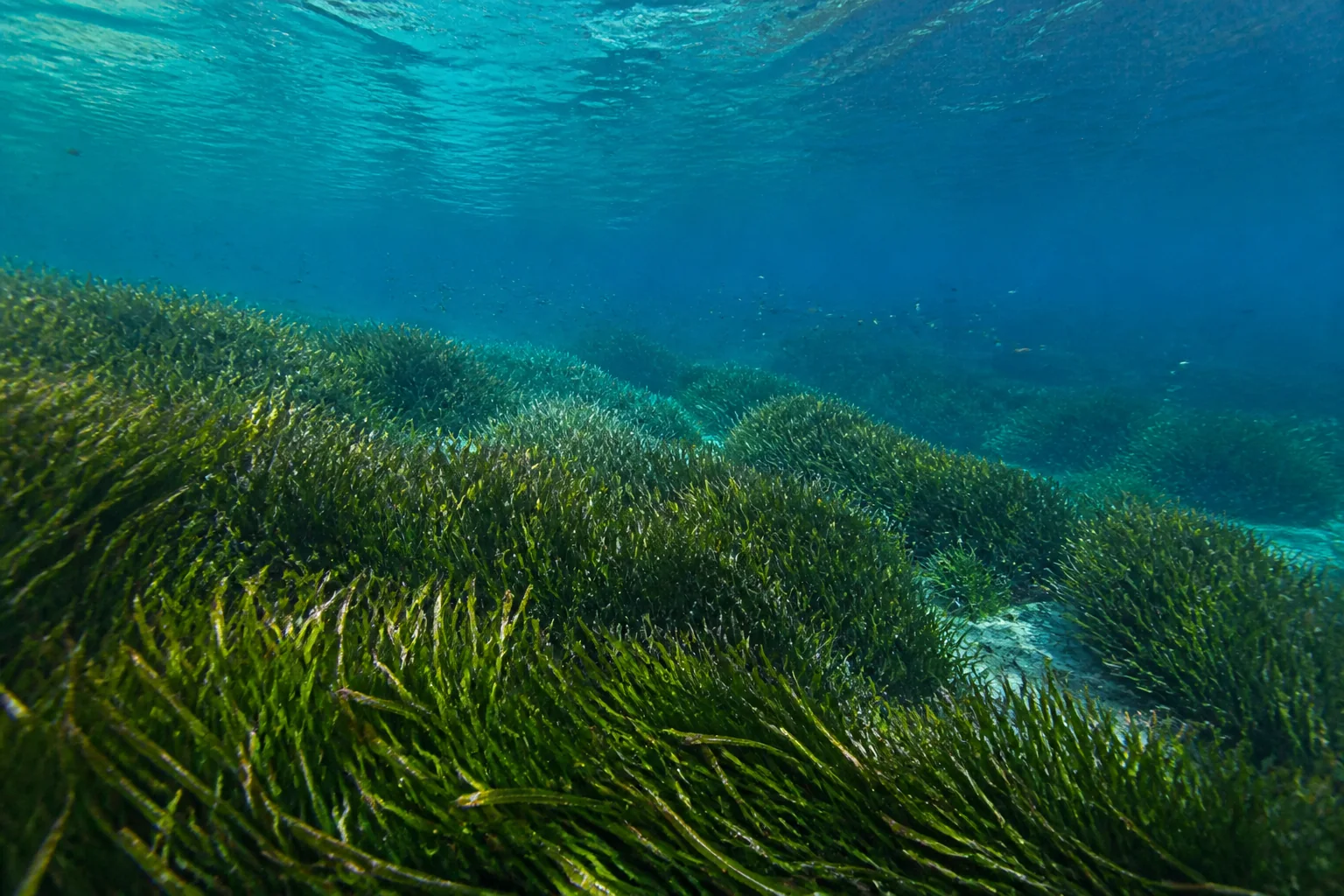
Mediterranean seagrass Posidonia oceanica forms ecologically important meadows. The EU’s EMODnet marine network explicitly recommends avoiding anchoring on seagrass. Ask how crew use charts, authorised moorings and local protection rules. A position farther from the beach may be the better choice. Responsible yachting is larger than reusable bottles: anchoring, waste, wastewater, energy, speed and behaviour ashore all count. The beauty of a bay is not permission to damage the habitat that created it.
Unknown depth, rocks, traffic, wind and current need local assessment. UK advice for Greece recommends licensed water-sports providers, completed paperwork, a safety demonstration and a known method of calling for help. Aboard, crew decide when engines are safe, ladders set and supervision ready. Tendering, diving, towing, jet skis and e-foils have different rules and insurance.
A calm-looking bay is not an unregulated private pool, and a premium toy does not reduce the need for instruction.
Shade, drinking water, clothing, rest and cooling influence comfort more than another water toy. Determine how much deck is genuinely protected at midday and whether cabins remain comfortable when generators are reduced. Children and heat-sensitive guests need predictable refuge. Shore visits to archaeological sites should avoid the strongest heat where opening hours permit.
A good charter uses morning and evening fully and does not feel obliged to fill the middle of every day with activity.
Delos, ancient sites, monasteries and villages enrich a voyage, but have opening hours, ticket rules and sometimes restricted access. Verify current official information and a qualified local guide where useful. Avoid placing several immovable visits on consecutive days. If weather changes the port, there should be another cultural narrative. A yacht’s strength is access, not the obligation to collect every famous site. A long evening in a small harbour may be equally memorable.
Budget, contract and the weather day
Tax, fuel, berths, food, drinks, communications, transfers, crew gratuity and a contractual advance for operating expenses may sit outside the rate. Terms and accounting depend on the agreement. Ask what is included, how funds and receipts are handled, how balance is returned and which currency applies. Sailing yachts still consume fuel through generators, air-conditioning and motoring. A lower headline can produce the higher week. Compare realistic use rather than the rate printed on page one.
Who is the contracting party and operator, which yacht is guaranteed, where may it cruise and what happens if it fails Review deposit, liability, cancellation, substitute vessel, technical defect, weather, medical evacuation and baggage. UK guidance recommends cover for the itinerary, planned activities and emergency costs. Personal travel insurance does not replace yacht insurance or a sound charter agreement. Do not sign against a model photograph while year, condition and registration of the actual vessel remain unclear.
An additional harbour night can hold a market, museum, cooking session or genuine rest. Ask the crew for appealing alternatives in each region before departure. An itinerary with one possible highlight feels defeated by change; a voyage with several narratives remains complete. Keep at least one day without an immovable objective. It can become an extended anchorage,
an early port or the margin needed for the return base. Flexibility is not empty time. It is the yacht’s central luxury.
A one-page charter brief makes the decision testable
Record region, desired islands, acceptable passage time, yacht and layout, crew roles, embarkation, weather authority, alternatives, children or mobility needs, food, water sports, total budget, contract and insurance. Add two essential experiences and several equivalent substitutes. Deluxetargets can use this brief to compare yacht and cruising ground for the party. The best Greek route is not the one with most islands, but the one that still feels exactly right after a change of course.