
Private-island resorts
“Private island” is a geographical description. Whether a resort feels genuinely private depends on villa density, sightlines, paths, service, visitors and the exact position of the accommodation you book.
An island is not yet privacy
Water creates distance from the mainland, not necessarily from other guests. A tiny island can be densely built; a larger one may feel remarkably intimate because vegetation, terrain and circulation do the work. Even a resort with very few villas has arrival times, restaurants, boats, staff and stretches of beach that everyone favours.
“Private island” should never end the selection process. It should begin a spatial investigation.
Visual privacy means freedom from direct views. Acoustic privacy protects against voices, music and service traffic. Social privacy allows a guest to breakfast or swim without repeatedly meeting the same people. Operational discretion concerns names, habits and movement. A property can excel in one layer and remain surprisingly open in another.
North Island states that it has 11 villas; The Brando describes 35 villas and a residence. Those numbers do not create a ranking. What matters is the length of coastline they occupy, whether villas are staggered or face one another and which paths move between them.
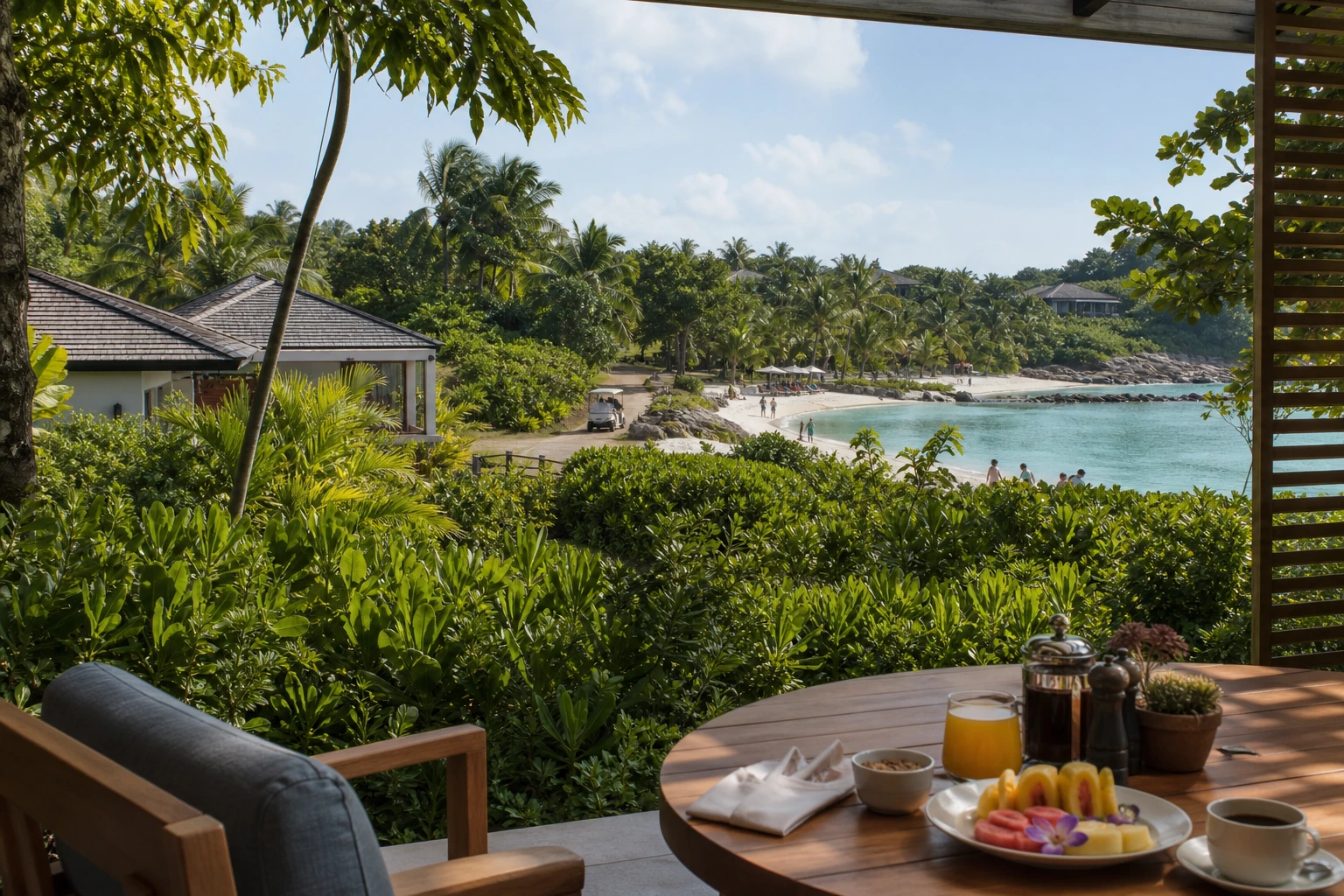
An aerial image helps, but it may be old or flatteringly green. A current site plan and photographs taken at eye level are more useful than the most dramatic drone shot.
Two villas may stand far apart and still look directly into each other. A staggered plan, a change in level and dense planting can create persuasive refuge at closer range. Do not ask only, “How many metres?” Ask, “What can I see and hear from the bed, pool, bathroom and beach seat?”
Private gardens, which North Island highlights around its beachfront villas, can provide the decisive filter. Yet palms grow, hedges are cut and storms open new sightlines. Recent material from the exact villa matters more than a general category photograph.
Infinity pools often occupy the property's most exposed edge. Neighbouring villas, beach walkers, boats or a higher path may overlook them. Anyone who wants to swim unobserved during the day should examine lateral views and changes in elevation, not merely the ocean panorama.
Beach, hillside and overwater follow different geometry
A beach villa offers the most immediate rhythm: step outside barefoot, swim, return to the shade. Its frontage is also the island's most natural thoroughfare. Guests walk, children play and water-sports equipment arrives. A broad, little-used section can feel private; the prettiest main beach rarely does.
Elevated villas gain perspective and separation. Petit St. Vincent explicitly distinguishes hill and bluff positions from beach cottages. The price of retreat may be steps, longer routes, buggy dependence and stronger wind. For families with young children or travellers with limited mobility, the most secluded address is not always the most generous.
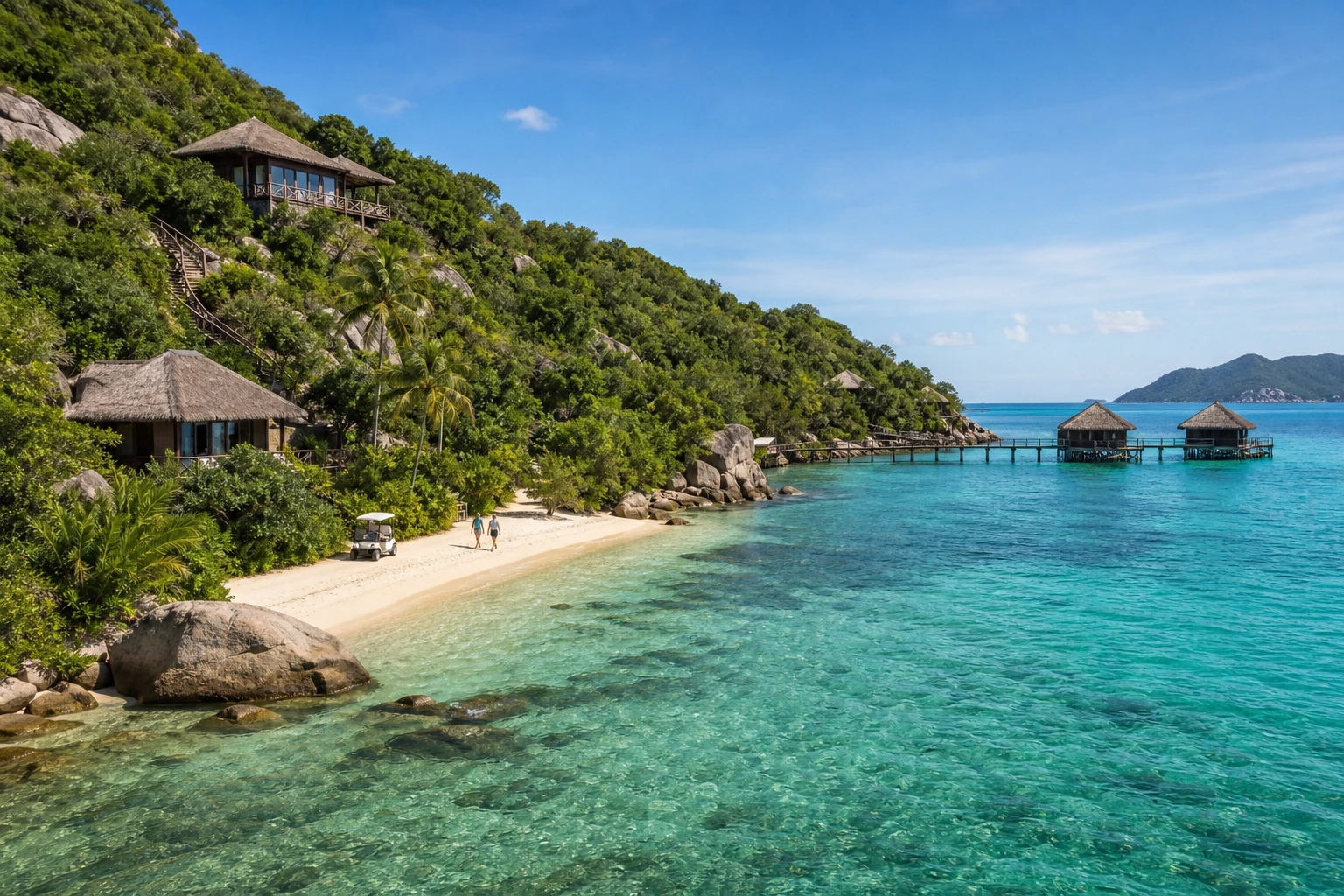
An overwater villa appears to face endless blue, yet most stand along a communal jetty. Service buggies, neighbours and new arrivals pass behind; side terraces may sit closer than photographs suggest. The end of the pier receives less traffic, but restaurants and beach become more distant.
Greater seclusion means longer service routes and more exposure to wind and waves. Boat noise travels easily across water. Before promising silence, ask about supply runs, generators, seaplane paths and the nearest dock.
Arrival, visitors and social spaces
Boats and aircraft do not appear only for your transfer. New guests, excursions, baggage and supplies generate movement every day. A villa beside the jetty may have an extraordinary view and still be the island's busiest address. The transfer schedule belongs in the location review.
Petit St. Vincent's official FAQ currently notes access for visiting yachtspeople and day-use guests. That does not make it a lesser resort, but it does refine the promise. Travellers expecting an island without outsiders must have the visitor policy confirmed explicitly.
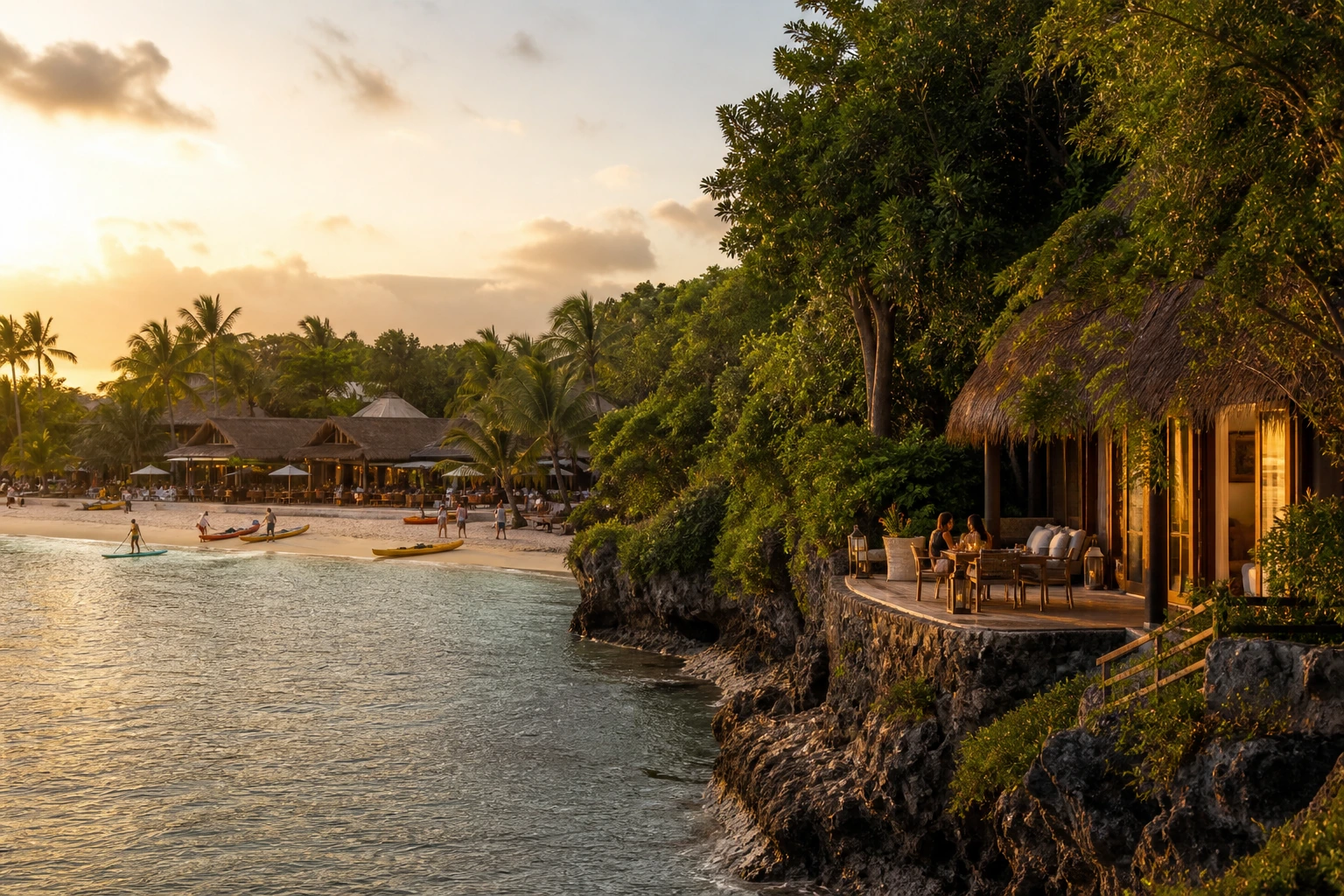
Calm water, sunset, restaurants and water sports draw people to the same shore. The villa on the signature beach may be less private than one on a narrower or windier side. The better choice depends on whether the guest values the postcard view or an undisturbed daily life.
One restaurant brings everyone together at similar times. Several spread guests out, but create paths and more service traffic. In-villa dining can return evenings to private ground; verify how frequently it is available and whether the kitchen and service genuinely support it.
Service can manufacture privacy
Petit St. Vincent describes a flagpole system through which guests communicate discreetly with staff from their cottage. It is an instructive example: privacy is not only distance. It is service that offers closeness without requiring constant visibility.
One contact can quietly coordinate arrival, restaurants, activities and departure. Frequent knocks, changing staff or unsolicited theatre feel invasive. Agree whether communication should arrive by message, telephone, signal or personal visit.
Laundry, minibar, housekeeping, engineering and room service all need routes. A villa at a junction or close to back-of-house space sees more operation. The useful map shows not only where guests walk, but where the resort works.
Audience, sound and time of day reshape quiet
An adult resort can be social, musical and bar-led. A family resort with separate beaches and intelligent zoning may feel very calm. The decisive signals are daily tempo, audience, the number of large villas and the positions of pool, bar, kids' club and water sports.
Parents value protected water, connected bedrooms and a short route to food and activities. A remote bluff villa may be romantic but impractical. Good family privacy allows children freedom without a procession of guests or service vehicles outside the door.
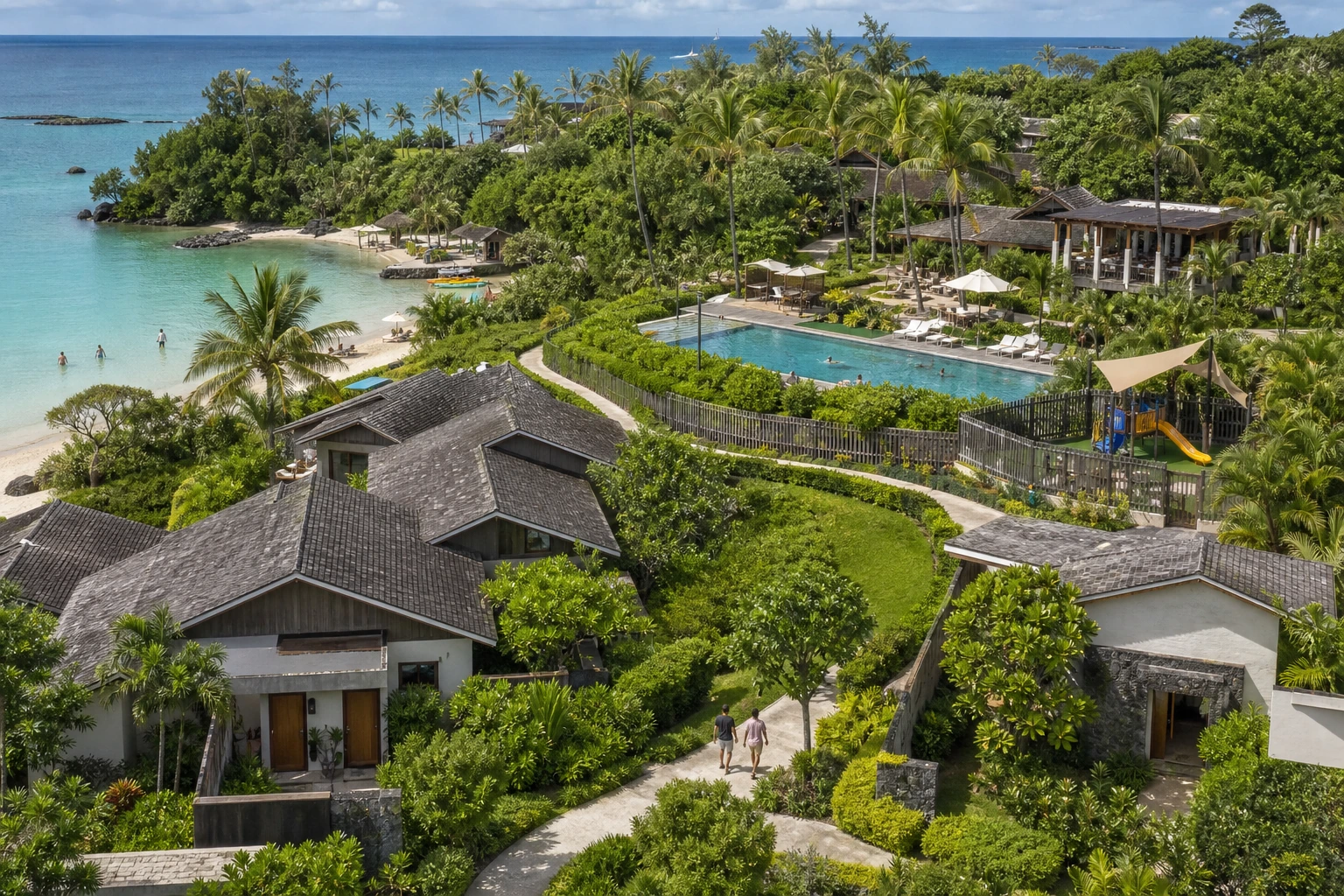
On a tiny island, the same guests may meet several times a day. A larger resort with 35 well-distributed villas can offer more anonymity than ten homes around one beach. Scale and intimacy are not opposites when routes, planting and facilities are dispersed thoughtfully.
Water carries engines and music; wind carries voices; dense foliage blocks sight better than sound. Locate generators, staff housing, bar, event lawn and boat channel. The lee side may also sound very different from the more photogenic sunset coast.
A beach can be empty at breakfast and the centre of the island after lunch. The jetty rests between transfers, the restaurant empties in late morning and the spa path becomes busy before dinner. Good advice considers not only the place but the timetable flowing through it.
Within one category, neighbours, foliage, sun, surf, walking route and visibility differ. If the precise number cannot be guaranteed early, secure at least a zone or a written priority list. “Best available” is not a privacy strategy.
Ask for the view back towards the villa, both sides of the terrace, the entrance from the path, the boundary with the next plot and the beach to left and right. A brief current walk-through tells more than twenty perfectly curated images.
The questions behind a credible recommendation
Which villa has the least lateral exposure Who passes its beach or jetty Which operating and arrival routes sit nearby Are day visitors or visiting yachts permitted What has changed in vegetation, building or neighbours since the published images were made
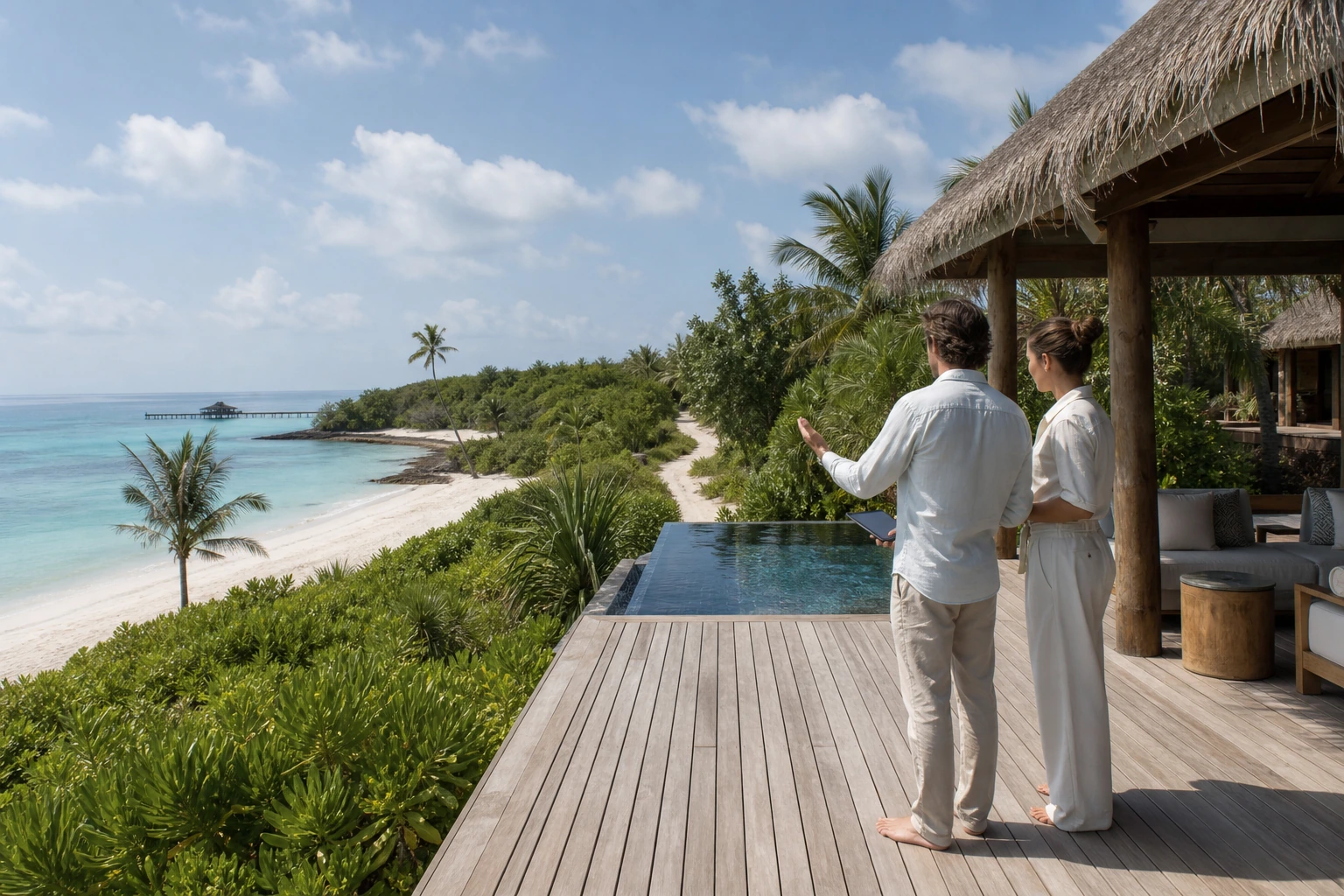
Travellers needing stronger control of pool, garden, kitchen and visitors should examine a stand-alone residence. It may create clearer boundaries without requiring a whole-island buyout. Beach, water, entrance or resort facilities may still be shared, so “private” needs the same precise definition.
If other guests, day visitors and shared facilities must be excluded entirely, the question returns to the exclusive-use model examined in MAG-124. That is a different product, with its own staffing, contract and operating logic—not the next room category.
It does not stop at island and villa name. It explains the geometry: neighbours, routes, beach use, service, audience and daily rhythm. It offers current evidence, marks what remains unconfirmed and presents an alternative with a different privacy logic.
We do not choose the island with the fewest villas. We choose the place where the desired kind of quiet can credibly exist. For one guest that is the distant hillside; for another, a protected beach villa close to lunch; for a third, a larger island on which anonymity is possible.
No normally operating resort is empty of people. The convincing private-island hotel organises itself so intelligently that guests choose when to join island life. That agency—not water on every side—is the real form of privacy.