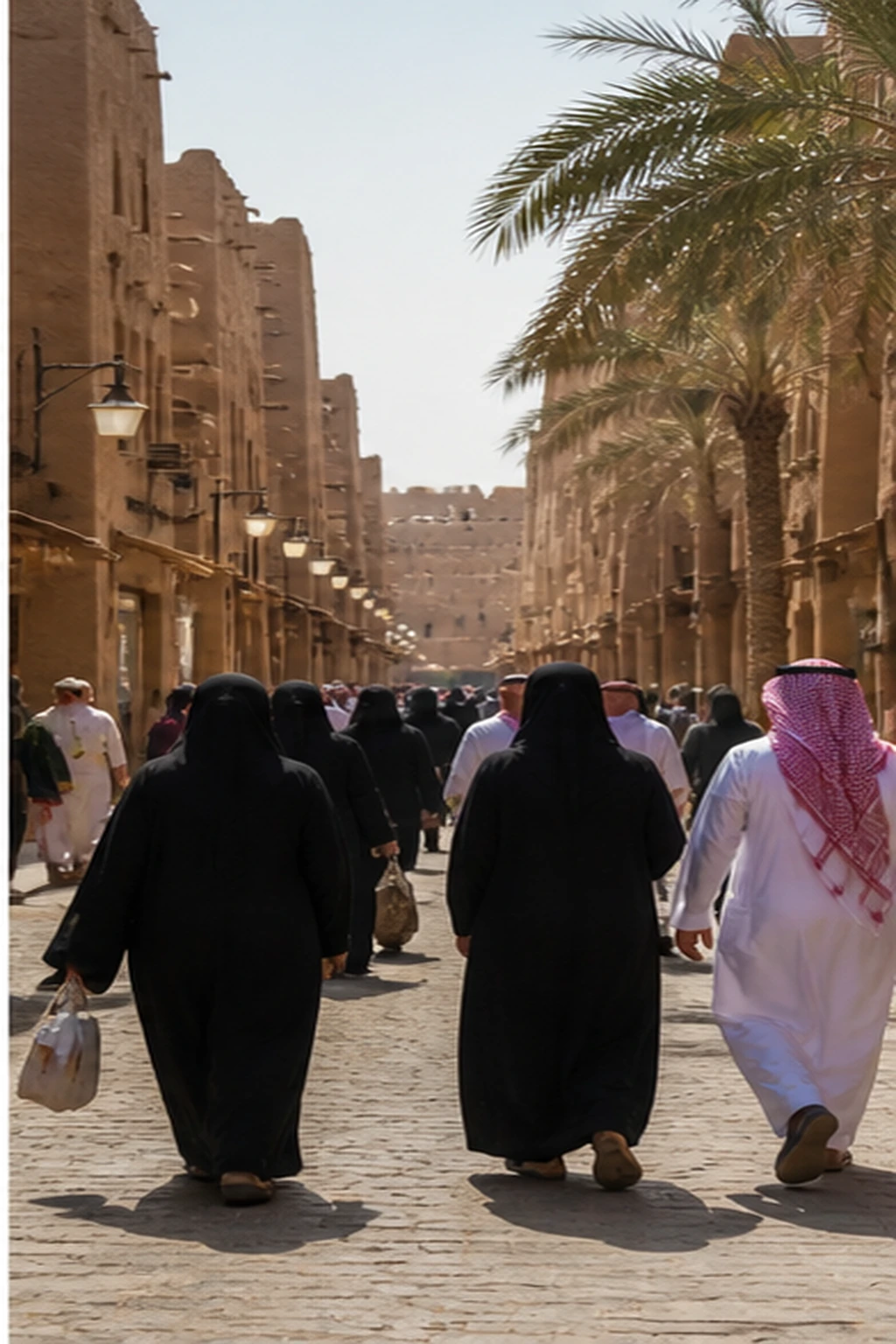
Saudi Arabia travel planning: dress code, distances and expectations decides whether the journey will be fascinating or exhausting. The country is large, climatically demanding and culturally changing. Luxury here doesn't mean ignoring everything, but rather preparing expectations so carefully that guests can move around safely, respectfully and freely on site.
Anyone planning to visit Saudi Arabia should not treat Riyadh, Jeddah, AlUla, Diriyah, Hegra, Red Sea, domestic flights, private guides, dress code and heat as secondary issues. It is precisely these details that determine whether a program appears confident. The best trip is not the one with the most points, but the one with the clearest logic.

Quick facts for travel planning
- Best time to travel
- October to March, with a clear heat test for April and selective summer stops.
- Planning focus
- Clothing, trails, private guides, domestic flights, hours, weekends and resort eligibility.
- Ideal duration
- Minimum seven nights for Riyadh and AlUla with rest; ten nights with coast.
- Risk
- Too direct comparisons with Dubai, too many distances and not enough cultural briefing.
Dress code without uncertainty
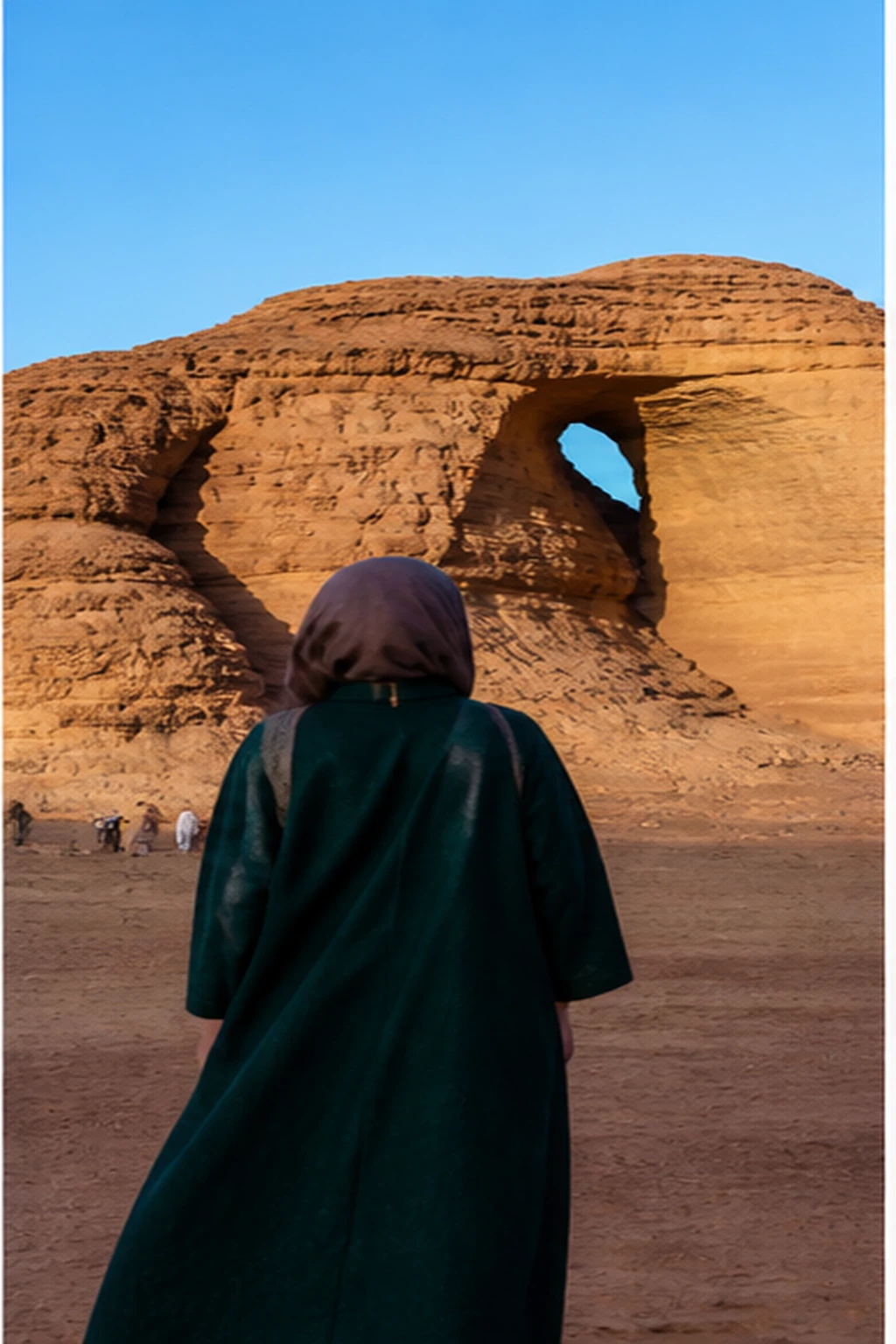
The dress code is the first question for many guests. It doesn't need to be dramatized, but it needs to be taken seriously. In Riyadh, Diriyah, AlUla and Jeddah, neat, understated outfits are the best choice. Shoulders, length, fabrics and situations should be discussed in advance. This takes away uncertainty and prevents guests from constantly checking themselves.

For women and men: less beach logic, more city elegance. It can be more relaxed in resorts, but not in cultural programs, restaurants or official places. A good suggestion does not give abstract rules, but rather concrete packing instructions for each section: Riyadh different from AlUla, desert different from Dinner, Red Sea different from Old Town.
Read distances correctly
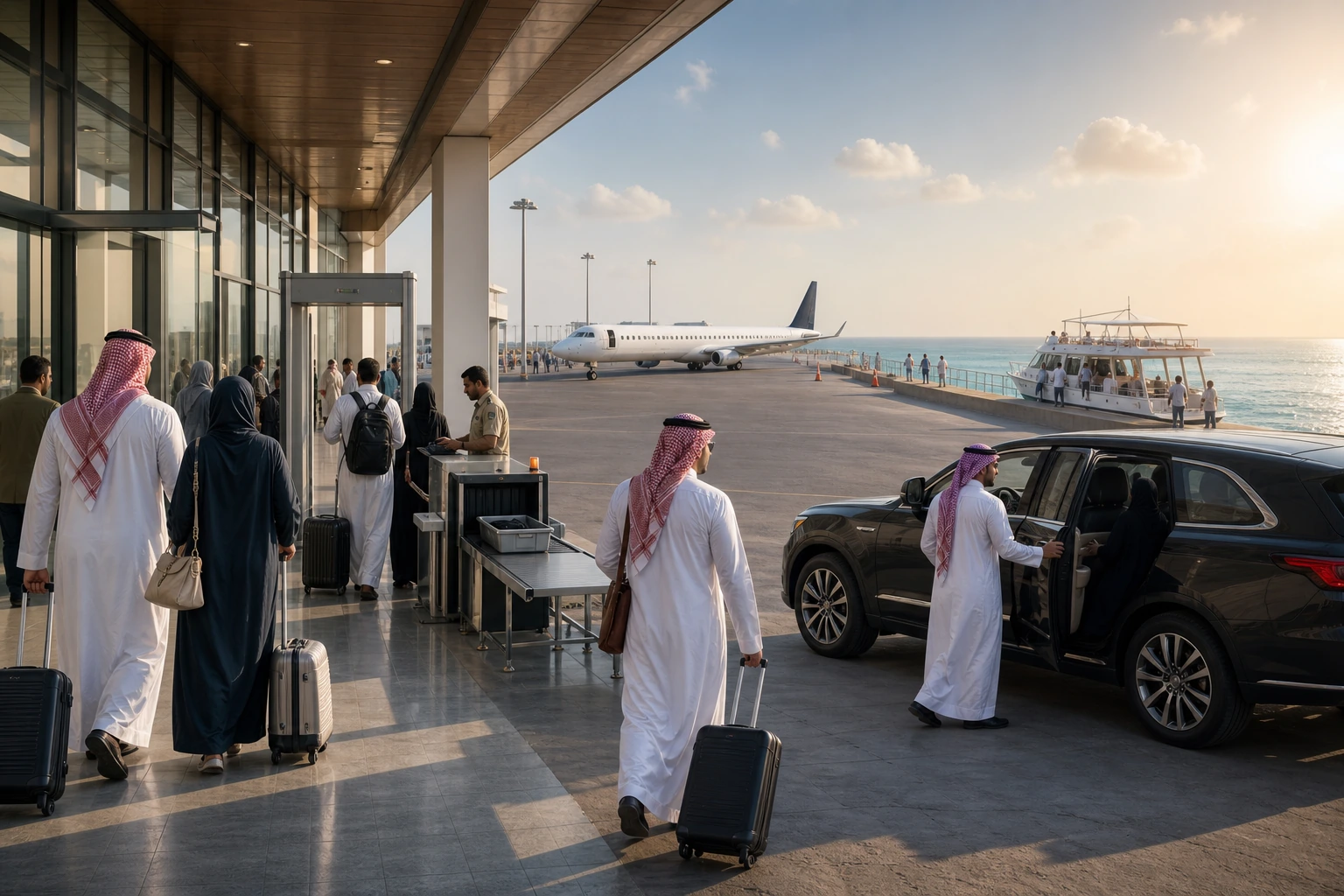
Saudi Arabia is often underestimated on the map. Riyadh, AlUla, Jeddah and the Red Sea are not located next to each other like city districts. Domestic flights, travel times, airport transfers, security windows, luggage and heat change the day. Anyone who only reads these paths as lines in the program is planning too much.

A good route consciously builds in buffers. After arriving in Riyadh, a busy cultural day should not immediately follow. In AlUla the landscape needs light and time. On the Red Sea, the journey to the resort must be planned so that the first evening is not lost. Distances are not a detail here, but rather the architecture of the journey.

| Planning point | Why important | Better solution | Clarify before request |
|---|---|---|---|
| Dress code | Uncertainty costs lightness. | Specific packing list for each stage instead of general rules. | Riyadh, AlUla, Jeddah, check resort and dinner separately. |
| Domestic flights | You determine the pace and recovery. | Fewer regions, better times. | Luggage, change, transfer, fast track. |
| Private guides | Context makes Saudi Arabia understandable. | Fewer program items, better leadership. | Language, topics, access, breaks, daylight. |
| New resorts | Soft openings can vary. | Check operational maturity, not just renderings. | Restaurants, spa, beach, transfer, scope of services. |
Top 10 hotels for a trip to Saudi Arabia
About PrivateUpgrades Four Seasons Hotel Riyadh, Mandarin Oriental Al Faisaliah Riyadh, The Ritz-Carlton Riyadh, Assila Jeddah, Shangri-La Jeddah, Banyan Tree AlUla, Habitas AlUla, Six Senses Southern Dunes, The St. Regis Red Sea Resort and Nujuma Ritz-Carlton Reserve should be checked depending on the route. What is important are the operating phase, location, transfer logic, restaurant offerings and the question of whether the hotel is suitable for the cultural stage or for relaxation.

Expectation: What Saudi Arabia is and is not
Saudi Arabia is not another Dubai and is not a classic beach destination with some culture. It is a country under construction, with great ambition, impressive landscapes and moments that remain in need of explanation. Anyone who knows this will travel more relaxed. If you expect a completely standardized luxury product, you should choose your route, hotels and service particularly conservatively.

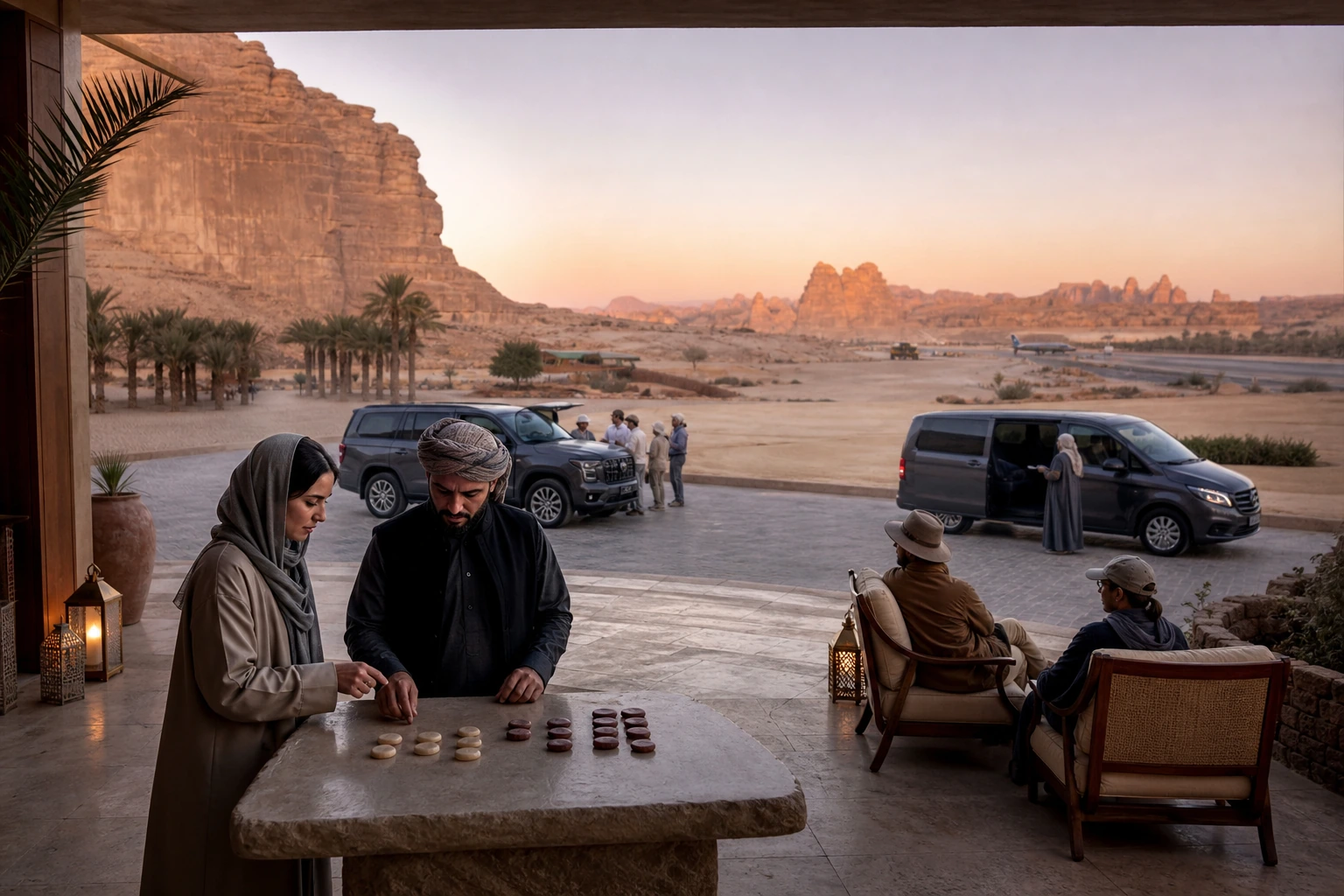
That's exactly where the appeal lies. AlUla can be magical when Hegra, rocky landscape, evening light and guide come together. Riyadh can surprise if architecture, diriyah, restaurants and contemporary are read well. Jeddah needs timing and a guide who doesn't cover the old town and modernity as a mandatory program.

Where do extra costs arise?
Costs apply to private transfers, fast track, guides, special access, domestic flights, baggage, changes, private dinners, resort transfers and additional nights. For new resorts, it must also be clarified what is actually open: spa, restaurants, beach areas, activities and kids' offers.

A trip to Saudi Arabia is not ideal if guests expect maximum flexibility every day. Many good experiences require preliminary clarification. This is not a disadvantage, but part of the quality. The clearer expectations, clothing, routes and breaks are planned, the freer the trip will feel on site.
Before a release, we check Riyadh, Diriyah, AlUla, Hegra, Jeddah, Red Sea, dress code, domestic flights, guide quality, resort readiness and heat against the specific date. Only when these points fit together does a list become a reliable journey.
Not ideal though Planning guests in Saudi Arabia and Dubai, booking new resorts without checking or underestimating distances. Then a shorter route with better briefing is almost always the more luxurious solution.
How to prepare guests elegantly
Good preparation should not make you anxious. It should allow guests to remain relaxed on site. The briefing should therefore be concise, specific and situation-related: What do I wear in Riyadh What fits in AlUla How formal is a dinner When are shoulders, length and fabric important Which topics are better not discussed casually Where is taking photos sensitive
A set of rules that is too long creates uncertainty. A good briefing provides security. It explains why restraint is more elegant in some moments, without making the country exotic or difficult. Very demanding guests in particular appreciate this clarity because it creates dignity and lightness.
Which distances are most often underestimated?
Riyadh to AlUla is not a short hop in the travel experience, even if the flight doesn't seem long. Airport routes, security time, luggage, transfers and heat make it half a day of travel. Jeddah only makes sense to add to a route if it really has a program. Depending on the resort, the Red Sea needs its own transfer logic and must not be planned like a classic city beach.
Many weak programs fail not because of Saudi Arabia, but because of insufficient buffers. A country this size needs breaks. If you plan the trip like a combination of European cities, you will lose exactly what makes Saudi Arabia strong: space, landscape, light and the chance to understand places with a good guide.
What cost traps arise from false expectations
Cost traps arise for last-minute changes, additional transfers, private guides, fast track, special access, domestic flights, resort transfers and additional nights. They also arise when guests notice that a stage was planned too tightly and has to be rebuilt on site. Then flexibility becomes expensive.
Soft opening expectations can also generate costs. If a resort does not yet offer all restaurants, spa areas or activities in a stable manner, it needs alternatives. This could be a different house, a different time of travel or a shorter coastal route. The better suggestion is to state these limits before booking.
Which alternative is quieter?
The quieter alternative is often a route with less symbolism. Riyadh and AlUla managed cleanly can be stronger than Riyadh, AlUla, Jeddah and Red Sea in too few nights. A desert resort with a good guide can be better than a beach resort that doesn't work logistically. A later travel date can bring more luxury than an early look at a new resort.
For guests looking for maximum planning, Oman or the Emirates combination may be quieter. For guests seeking new culture, desert and change, Saudi Arabia remains more exciting. This cross-check is part of an honest consultation because it sharpens the inquiry and prevents disappointments.
Merian conclusion: Dress code and distances are part of luxury
In Saudi Arabia, planning is not a dry preliminary step, but part of the experience. Dress code, distances, guides and expectations decide whether guests move freely or constantly readjust. If you prepare these points properly, you won't make the trip smaller, but bigger.
A top article must therefore not only inspire, but also answer questions that arise shortly before an inquiry: How long to stay Which route Which hotels Which rules Which costs Which alternative Who is it not suitable for? It is precisely these answers that turn a beautiful text into a decision-making guide.

The right briefing before departure
A good Saudi Arabia briefing is concrete and calm. It explains clothing, behavior, photography, tipping, drivers, guides, restaurant times, prayer times, weekends and heat. It also tells where guests can be more relaxed and where they should be more formal. This distinction is more important than any blanket rule.
Different information is needed for Riyadh than for AlUla. In Jeddah the journey seems different again, at the Red Sea again. If you know these differences in advance, you will not travel cautiously, but confidently. It is precisely this sovereignty that is part of the comfort of a new luxury destination.
Which booking decision should be made first?
The first thing that is chosen is not the hotel, but the pace. This is followed by the route, guides, flight times and only then the specific category. Those who first fixate on a resort often build the trip around a name. A better question is which stage creates the most value: Riyadh for context, AlUla for landscape, Jeddah for coast and history or the Red Sea for relaxation.
The alternative should always be considered. If heat, flight times or resort readiness are not suitable, an extra night in AlUla, a stronger guide in Riyadh or a later coastal trip may be better. A good suggestion protects the guest from the most expensive but not the most suitable solution.
Why expectation management is crucial to purchasing here
Saudi Arabia requires more explanation before booking than many established luxury destinations. This is not a flaw, but part of the journey. Anyone who knows why an early start in AlUla is worthwhile, why Riyadh is not just transit and when a resort still seems too young will make better decisions.
The request should therefore always include an alternative: a shorter route, a later date, a different resort or a stronger guide. This second option prevents guests from realizing that the most spectacular solution was not the most suitable.

The final booking filter
Before the final request, it should be clear which situations the guest wants to avoid: uncertainty about clothing, transfer days that are too long, too few breaks, immature resorts or culture without explanation. These red lines are not a minor matter. They decide whether Saudi Arabia appears sovereign.
Availability should only be checked once the dress code, distances, guides, flight times, resort readiness and alternatives have been answered. Then the trip will not only be exclusive, but understandable. It is precisely this clarity that is the real luxury in Saudi Arabia.
What should not be improvised on site
In Saudi Arabia, guests shouldn't wait in the car to figure out how long the day will be, what clothes will fit or whether a resort really offers all the services they want. These questions belong before booking. Then private guides, drivers, hotel team and route seem like a single process instead of many subsequent corrections.
The first full day is particularly important. If you plan too much immediately after you arrive, you will lose attention and patience. It is better to have a quiet start with a good guide, clear food logic and a program that allows the guests to arrive. This is exactly what creates trust in a goal that is still new for many.
FAQ about Saudi Arabia travel planning
What should you know about the dress code?
Plan carefully, cautiously and according to the situation. Riyadh, cultural locations, desert and resort need different packing logic.
How many regions fit in a week
Usually two, a maximum of three with very good flight logic. Riyadh and AlUla are often stronger for a week than an overloaded tour.
When is a private guide important?
Almost always at Kultur, AlUla, Diriyah and Jeddah. Without good context, a lot of things remain decorative instead of understandable.
Conclusion on Saudi Arabia travel planning
Saudi Arabia will be strong if the trip is honestly prepared. Dress code, distances and expectations are not side notes, but the difference between insecurity and confident luxury.