
A mixed winter holiday succeeds not where non-skiers can “find something to do”, but where everyone enjoys an independent, rewarding day and the group reunites without logistical theatre. Village structure, pedestrian mountain access, transport and bad-weather depth matter more than piste mileage.
The wrong question is: how many activities are there
Lists of sledging, spas and shopping sound generous but reveal little about daily life. The real test is whether experiences are accessible without ski boots, a car or constant escort. Three excellent activities are of limited value if they require advance booking, blue skies or a long taxi ride.
A remote hotel on an exceptional piste may be perfect for skiers and an island for their companion. A successful mixed trip therefore needs two qualities at once: frictionless access to the snow and a village substantial enough to reward a day beyond the lifts.
“Non-skier” is not a useful personality type. One guest wants winter walks, another art, long lunches, wellness or silence. Mobility, altitude tolerance, children, dogs and comfort with cable cars all change the answer. Record each traveller’s ideal morning, bad-weather day and firm limit.
Start at the exact hotel entrance. What lies within a five-minute walk: a compelling café, promenade or railway station, or merely an icy road On a luxury holiday, spontaneous independence is more valuable than a brochure of activities that turns every outing into a transport operation.
Pedestrian mountain access is the great equaliser
Cable cars that accept foot passengers make shared lunches and panoramic rendezvous possible. Yet not every lift permits pedestrians, and not every summit station has a safe path or late return. Timetable, final descent, reservation rules and accessibility require confirmation for the specific dates.
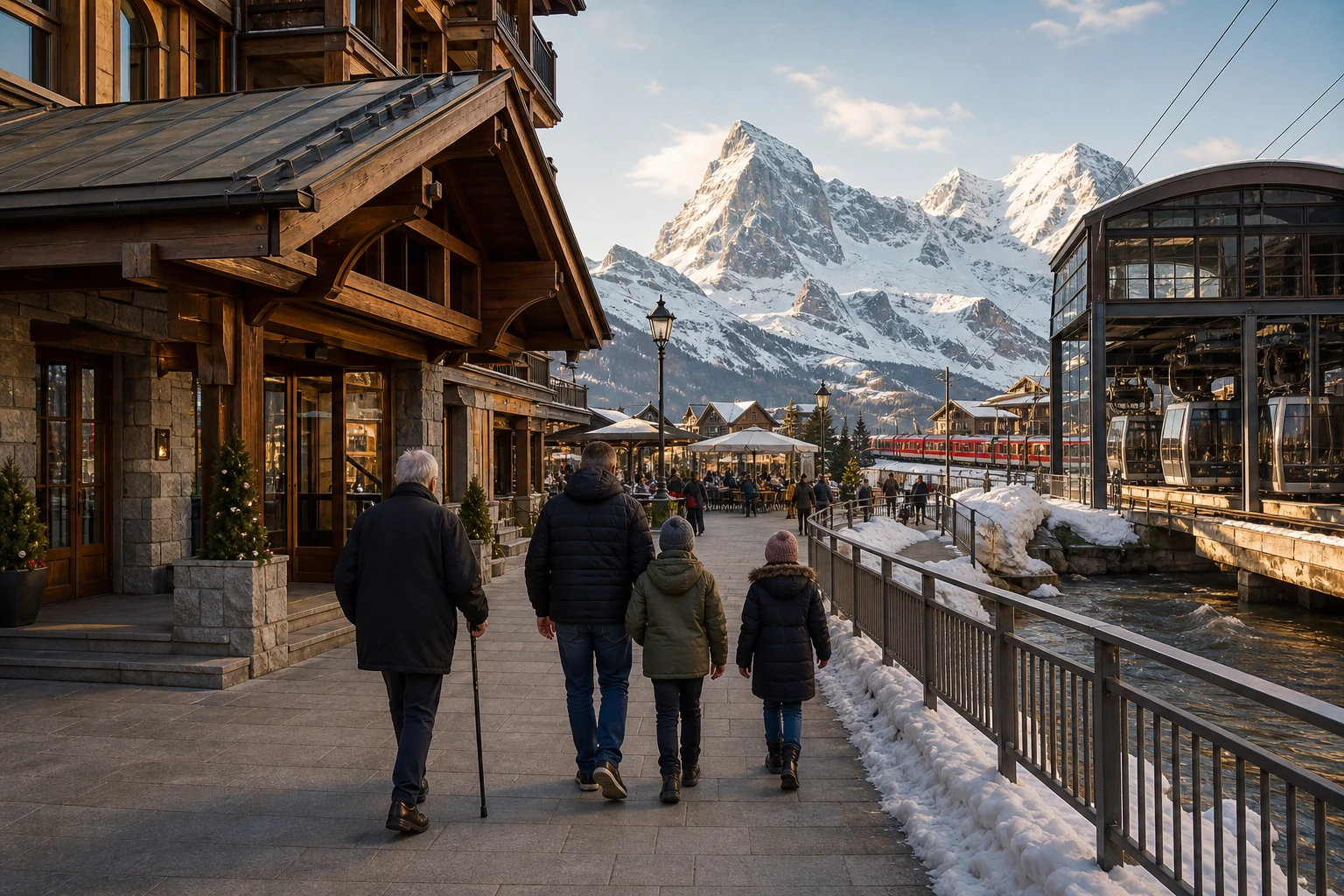
A marked winter walking route is not a cleared city pavement. Gradient, ice, footwear, weather and altitude still matter. Ask for current condition, distance and return options. Snowshoeing is a distinct activity, not a substitute for a comfortable route for a guest with restricted mobility.
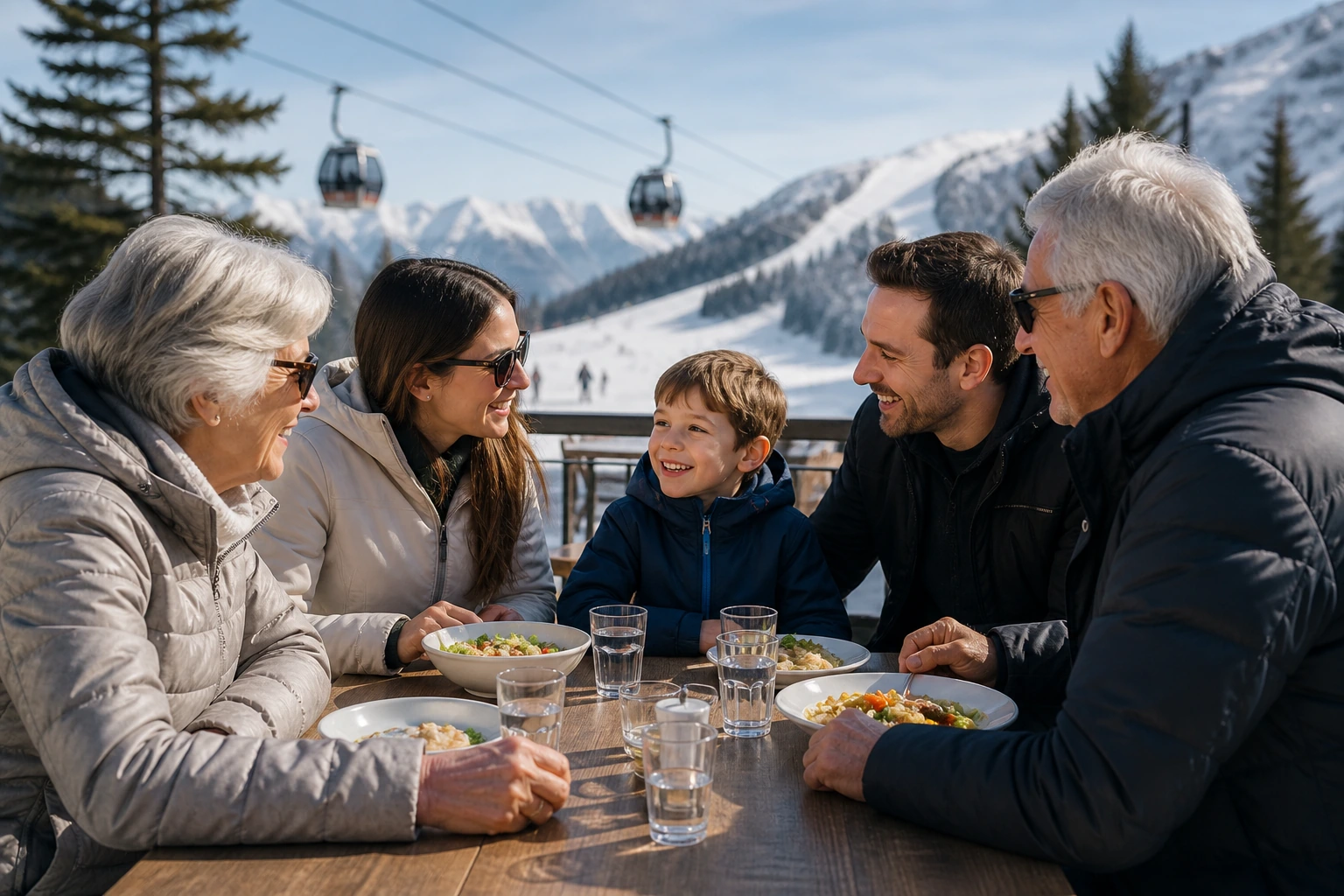
The most satisfying group ritual often happens at midday. Choose restaurants skiers can reach by an appropriate piste and walkers by public lift. Do not schedule every day: two beautifully engineered mountain lunches create more connection than a week in which everybody waits for everybody else.
Zermatt and St Moritz: Swiss independence in two forms
Zermatt combines rail arrival, a dense village and dramatic mountain perspectives for guests without skis. Winter walks and pedestrian lift journeys can form real itineraries. Its strength is scenery plus autonomy; its weakness is gradient, distance and reliance on electric taxis when the hotel location is wrong.
Travellers expecting level, comprehensively cleared streets can underestimate the terrain. A hotel described as “in the village” may still be awkward for the station or preferred lift. Request entrance-to-station, restaurant, railway and meeting-point timings, taking snow and evening shoes into account.
St Moritz suits guests who want to combine views, hotels, galleries, food and excursions. Rail expands the possibilities across the Engadin. The resort itself is dispersed: Dorf, Bad, lake and mountain access are not interchangeable. The right address follows the daily rhythm, not simply the prestigious postcode.
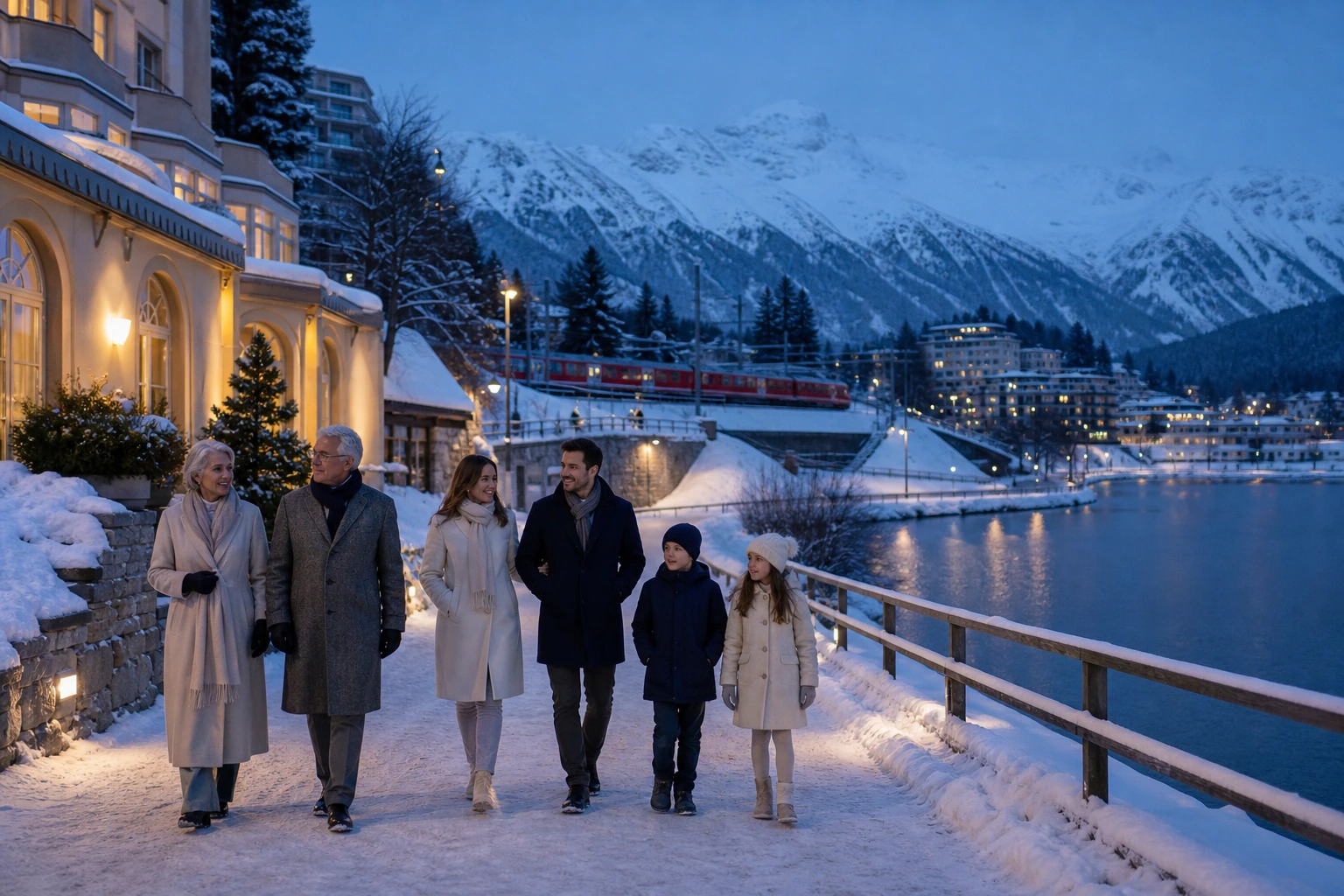
The valley is an asset, with winter landscapes, rail outings and restaurants across several settlements. It also demands planning. A seemingly simple excursion may involve a connection or return transfer. Good advice treats the Engadin as a network rather than reducing the trip to St Moritz alone.
Megève and Courchevel: village life versus orchestrated service
Megève has a historic centre, cafés, boutiques and restaurants capable of sustaining a day without sport. For mixed couples, this often matters more than maximum altitude. The essential distinction is whether the hotel is genuinely walkable to the centre or positioned in an outlying lift corridor; both may carry a Megève address.
A lively town absorbs variable winter scenery better than a purpose-built ski station. Skiers must still assess elevation, connections and current conditions separately. Non-skiers gain from village depth, while skiers should never treat that strength as a snow guarantee for future dates.
Courchevel 1850 offers top-tier hotels, dining and polished access to mountain experiences. It works well when the group regards the hotel and its service as part of the destination. Yet the settlement is less naturally walkable than an old town, while cost and reservation pressure are considerable.
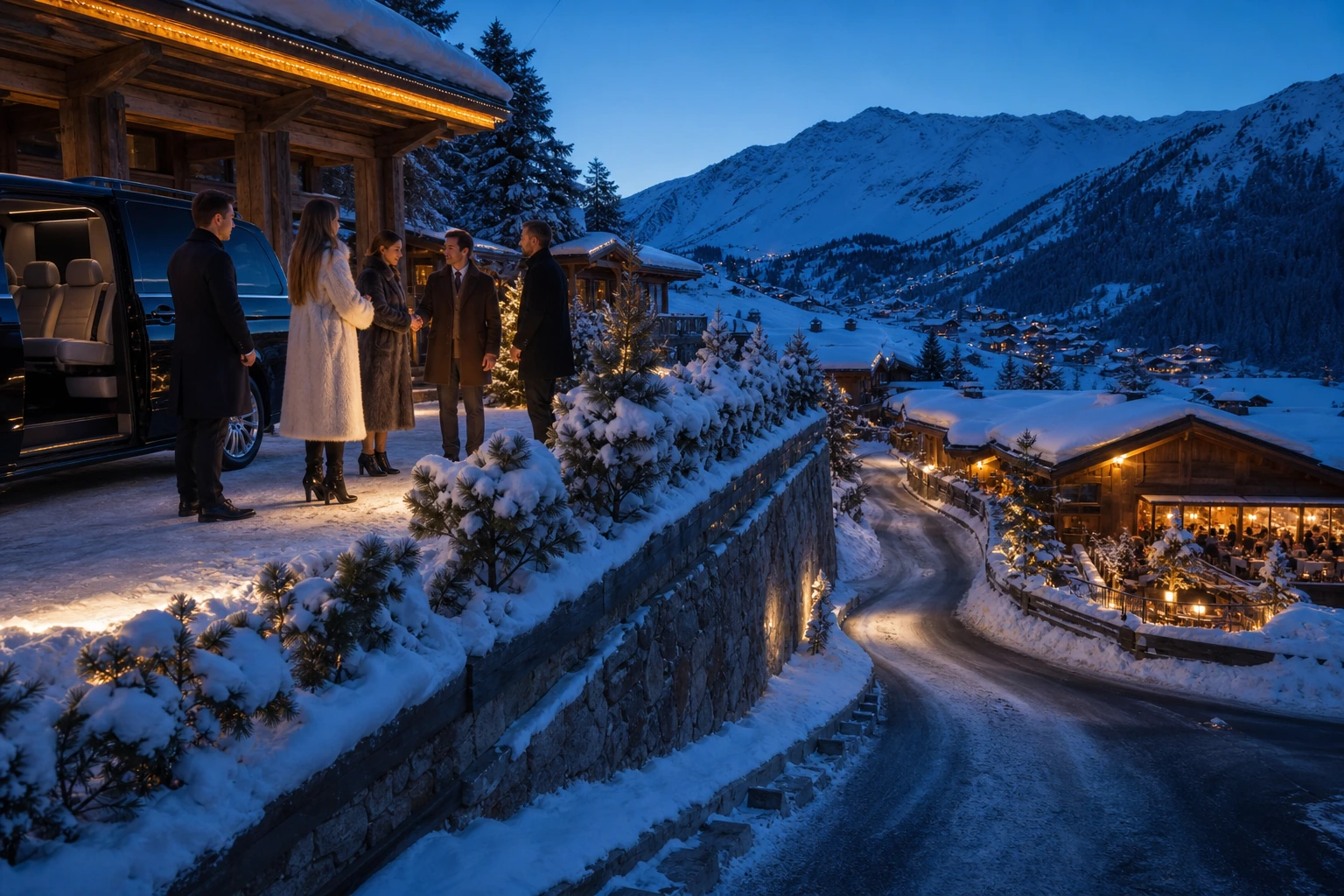
Its different levels have distinct atmosphere and access. A restaurant that appears nearby on a map may involve a road, incline or shuttle. Confirm the precise village, building position and evening transport. The Courchevel name alone cannot solve a mixed group’s daily geography.
Lech, Gstaad, Kitzbühel and Cortina: four different winter towns
Lech provides a compact, cultivated winter setting with strong hotels and walking possibilities. Zürs is more overtly ski-led. Lech usually gives non-skiers greater variety, but even there the side of the road and stretch of village influence comfort. Buses help without always replacing true walkability.
Gstaad is compelling when part of the party experiences winter socially rather than athletically. Its promenade, hotels, railway and neighbouring villages foster independence. Ski terrain is distributed; ambitious skiers should examine transfers and preferred sectors rather than expecting one continuous mega-domain.
The medieval centre, railway and restaurants give non-skiers an authentic place rather than a resort compound. Kitzbühel remains a significant ski destination. Location needs precision: proximity to the old town, Hahnenkamm gondola and station are three different advantages that seldom coincide perfectly.
Cortina brings a lively centre to one of Europe’s most cinematic mountain settings. Walks, aperitivo and excursions can occupy non-skiers with dignity. Skiers should understand that sectors do not behave like one seamless carpet of lifts. Road traffic and transfers are part of the experience, especially at peaks.
Hotel type matters as much as resort
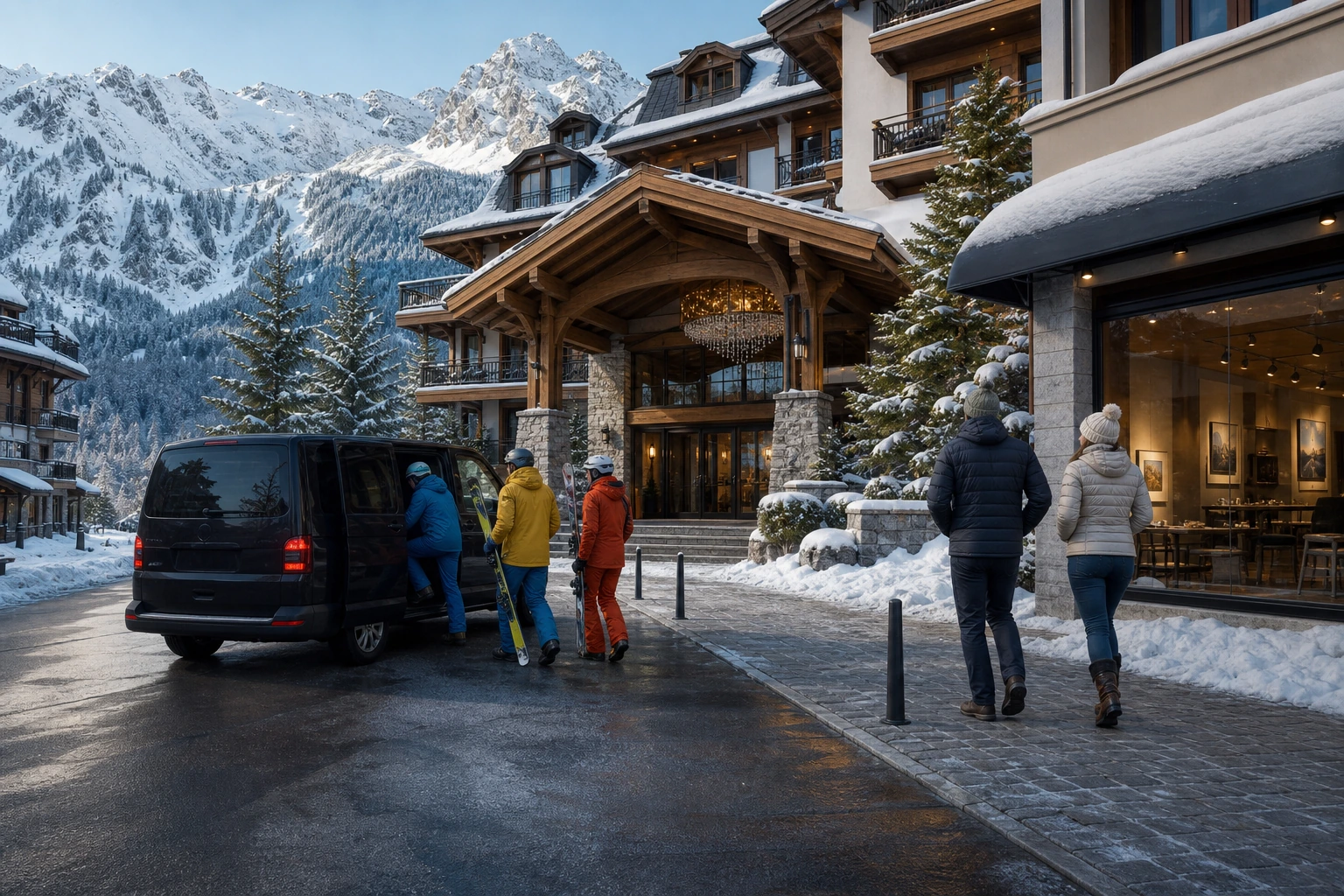
A large retreat may offer a spa, pool, library and several restaurants while limiting freedom beyond its doors. A town hotel creates autonomy but asks more of skiers. For mixed parties, a property near the centre and transfer point often beats the most spectacular ski-in/ski-out hideaway.
When only half the party skis, everyone may pay for an advantage that isolates the others. A first-rate shuttle paired with a central hotel can be more equitable. Compare not only room rates but lost time, taxi reliance, lunch options and the freedom of each traveller.
Bad weather is the honest stress test
Imagine a day of wind, flat light or upper-lift closure. Is there a museum, confirmed spa slot, shopping, gastronomy, scenic rail outing or private excursion “Stay at the hotel” counts as luxury only when the building, public rooms and food are genuinely designed to support it.
One treatment can elevate an afternoon but cannot automatically replace five ski days. Check pool hours, quiet areas, day-spa rules and availability. Thoughtful planning combines wellness with personal routines instead of presenting it as compensation for the guest excluded from the sporting programme.
After separate days, the group wants to reconvene easily. A celebrated restaurant is less attractive when taxis are scarce or the walk home climbs sharply. Reserve selectively, preserve unscheduled nights and decide whether the hotel bar and village centre represent two incompatible social worlds.
Mobility must not be politely ignored
Walking distance, steps, ice and altitude are not minor details. They determine whether an older guest remains independent. Assistance, adapted vehicles and accessible mountain lifts must be confirmed directly with operators; a general claim of “accessibility” is not a service guarantee.
Ski school, lunch and collection govern the day more than adult preferences. A non-skiing parent should reach the meeting area without crossing a hazardous piste. Ask for the exact location, child transport, toilets and the route used in poor weather before choosing the hotel.
How two holidays become one
Plan anchors rather than constant togetherness: breakfast, two mountain lunches, one shared excursion and selected evenings. Leave freedom between them. The most elegant trip does not maximise group time; it removes guilt, waiting and the need to renegotiate every day.
Seven proofs before booking
Request a map marking hotel and essentials, genuine walking times, pedestrian-lift rules, current winter paths, bad-weather options, evening transport and a plan for the final operating day. Add every guest’s personal boundaries. All information needs checking for season and travel dates.
Zermatt rewards scenery-led groups, St Moritz varied explorers, Megève village devotees, Gstaad social travellers and Kitzbühel town-and-sport combinations. Lech brings calm, Courchevel 1850 orchestrated luxury and Cortina Italian energy. No ranking can replace the right micro-location.
The editorial verdict
A resort does not work for non-skiers because it owns a spa or shopping street. It works when independent days, worthy alternatives and effortless reunion are built into its geography. Here, luxury means freedom: each traveller can meet winter on personal terms.
The enquiry that produces better answers
State skier numbers and ability, non-skier interests, mobility, appetite for shared lunches, evening rhythm and dates. Ask for two suitable resorts with the hotel location explained rather than requesting the “best” ski destination. That is how a winter journey begins to belong to everyone.