
Beach villa and hillside villa describe the position of a room. An island transfer describes the route to an entire resort. Separate those levels and the choice becomes clearer: how close to the water do you wish to live, how high above it — and how far may the hotel be from the next reliable transport node
Three axes, not three categories
Water distance, elevation and access can combine in any way. A beach villa may sit in an accessible Phuket bay or on a remote island; a hillside villa above an airport transfer or beyond a chain of boats. Do not compare three labels. Make three independent decisions.
It should show villa, reception, restaurants, beach, pool, spa, children’s area, pier, service routes, neighbouring land and contours. An aerial image complements rather than replaces it. Ask for the current version after renovations, coastal change or construction. Marketing maps can shorten both distance and gradient.
At 07:00, morning light and service routes matter; at 14:00, shade and pool temperature; at 18:00, sightlines and restaurant traffic; at 23:00, waves, music and buggies. A sunset photograph answers one moment. Test every preferred villa number against the full day.
The beach villa: proximity with consequences
Some villas overlook the beach through vegetation, others open a gate to sand, others sit behind a public path. Establish metres, steps, door, lounger area and real access. “Oceanfront” may be a rocky coast without swimming; “beach access” may mean a shared route.
Barefoot access to water, return to one’s own pool, children without a buggy ride and a morning swim before breakfast are its strongest arguments. Guests using the beach daily experience the value. Those spending most time at spa, on excursions or at the main pool may pay for a benefit they mostly photograph.
At low water, sand may be broad, rocky, muddy or covered in seagrass; at high water it may reach a wall or vegetation. Request current images of the same villa zone at high and low tide and the real swimming period in the travel month. A tide table is not a swimming guarantee.
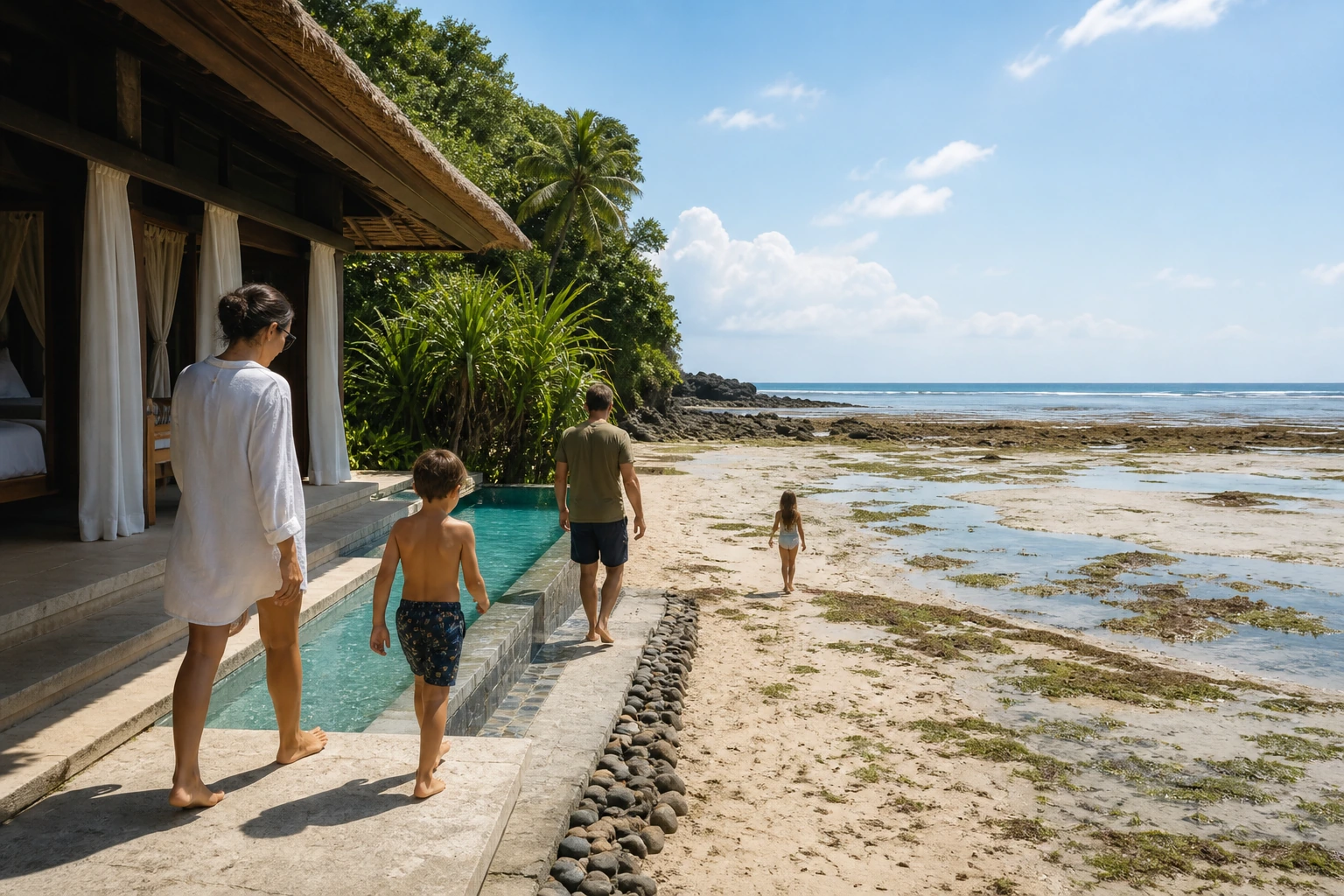
Boats, fishers, walkers, vendors, neighbouring resorts and day visitors may use the shore according to local law and operation. A beach villa is not automatically visually private. Check distance, planting, boat lane, loungers, access points and events without denying other users’ legitimate rights.
Surf can soothe or dominate sleep. Wind moves palms, loose fittings and sand; beach grooming and boats may begin before breakfast. Ask about façade, door seals, bedroom position and seasonal exposure. “Quiet by the sea” is personal judgement, not a plan characteristic.
Air-conditioning, dehumidification, mosquito management, textiles and door discipline shape comfort. Open doors connect inside and out while changing temperature and insect entry. Test maintenance and personal tolerance. Chemical treatments or repellents require individual medical and environmental care.
Visibility, children and service in the front row
Paths, boats and neighbouring loungers may overlook pool and terrace. Dense planting protects while removing outlook and sun. Request real sightlines from lounger, water and bedroom height. A private pool means exclusive use, not automatic visual screening.
Pool and sea are both outside the door. Lock, alarm, fence, night light, direct sight and supervision need exact answers. Swimming ability replaces neither barrier nor care. The benefit is a flat day; the risk is a child independently reaching two bodies of water.
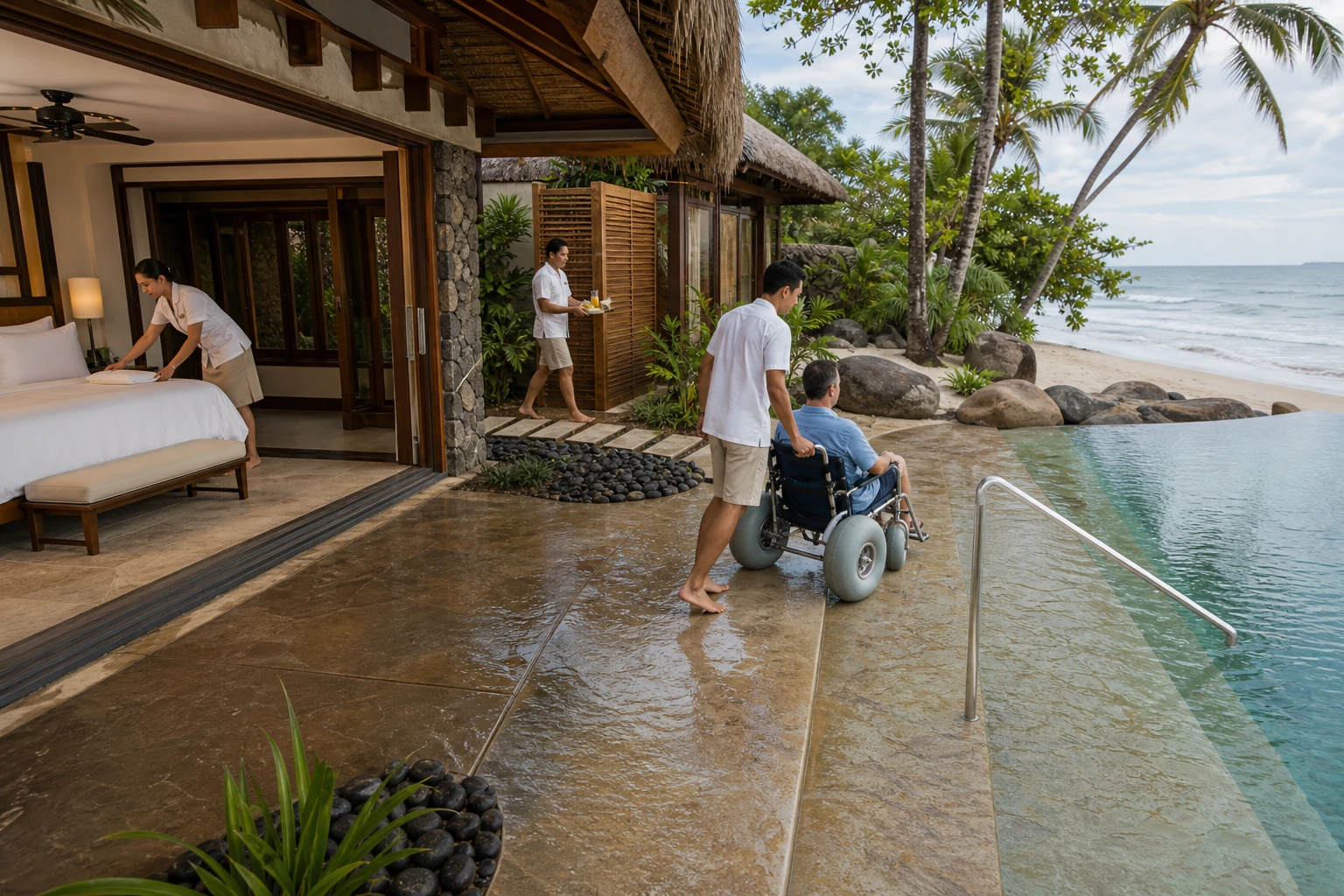
Sand, thresholds, soft paths, wet stone and beach steps may be harder than a lift in a main building. Ask about door width, bathroom, pool entry, restaurant route and all-weather alternative. A wheelchair on sand needs appropriate surface and assistance, not only a ground-floor villa.
Breakfast carts, housekeeping, pool care and engineering must reach the villa. Does the service path pass behind the bedroom or in front of the terrace A remote beach villa may mean slower response; a central one more movement. Geometry explains service friction better than the butler title alone.
The hillside villa: distance and perspective
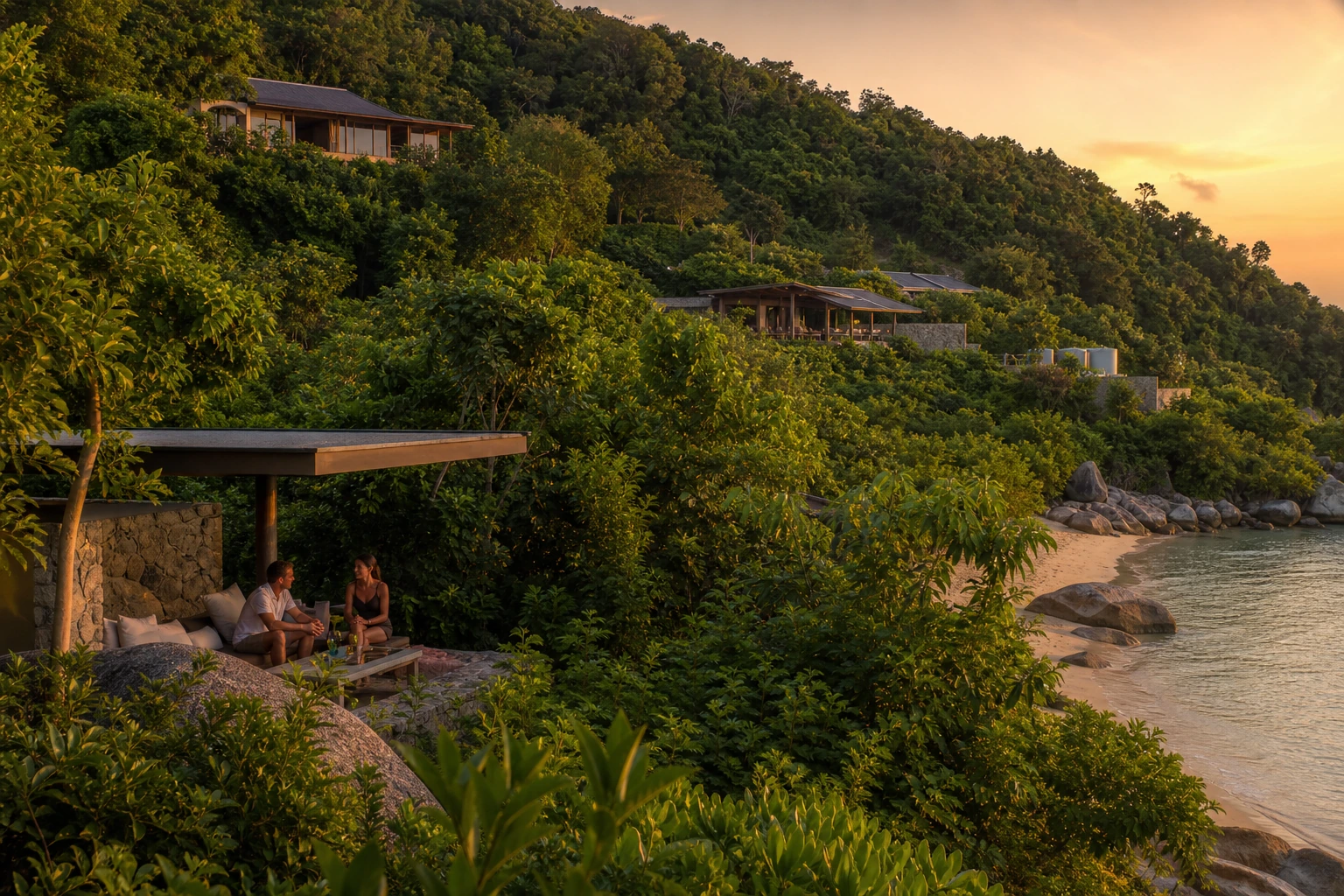
It may command sea, islands and sunset while beach traffic disappears. Elevation can bring breeze and fewer passers-by. Every journey then becomes vertical. The question is whether guests will use the outlook and accept the movement required between spaces.
At the top, the view may be theatrical, the wind stronger, the route longer and other roofs visible. Mid-level positions combine outlook with access; lower hillside villas sit nearer the beach and paths. Ask for height in metres rather than “upper” or “panoramic”.
Morning or afternoon sun changes bedroom, pool, air-conditioning and terrace use. A ridge can accelerate wind; vegetation protects and removes view. For the travel month, establish orientation, sun hours, shade and seasonal windward side. A warm pool without sun is not assured.
How is it ordered, what is the wait at dinner or check-out, does it run at night and in rain, can it carry stroller or wheelchair A private buggy changes the answer. Guests who value spontaneous walking may experience every call as friction; others welcome door-to-door travel.
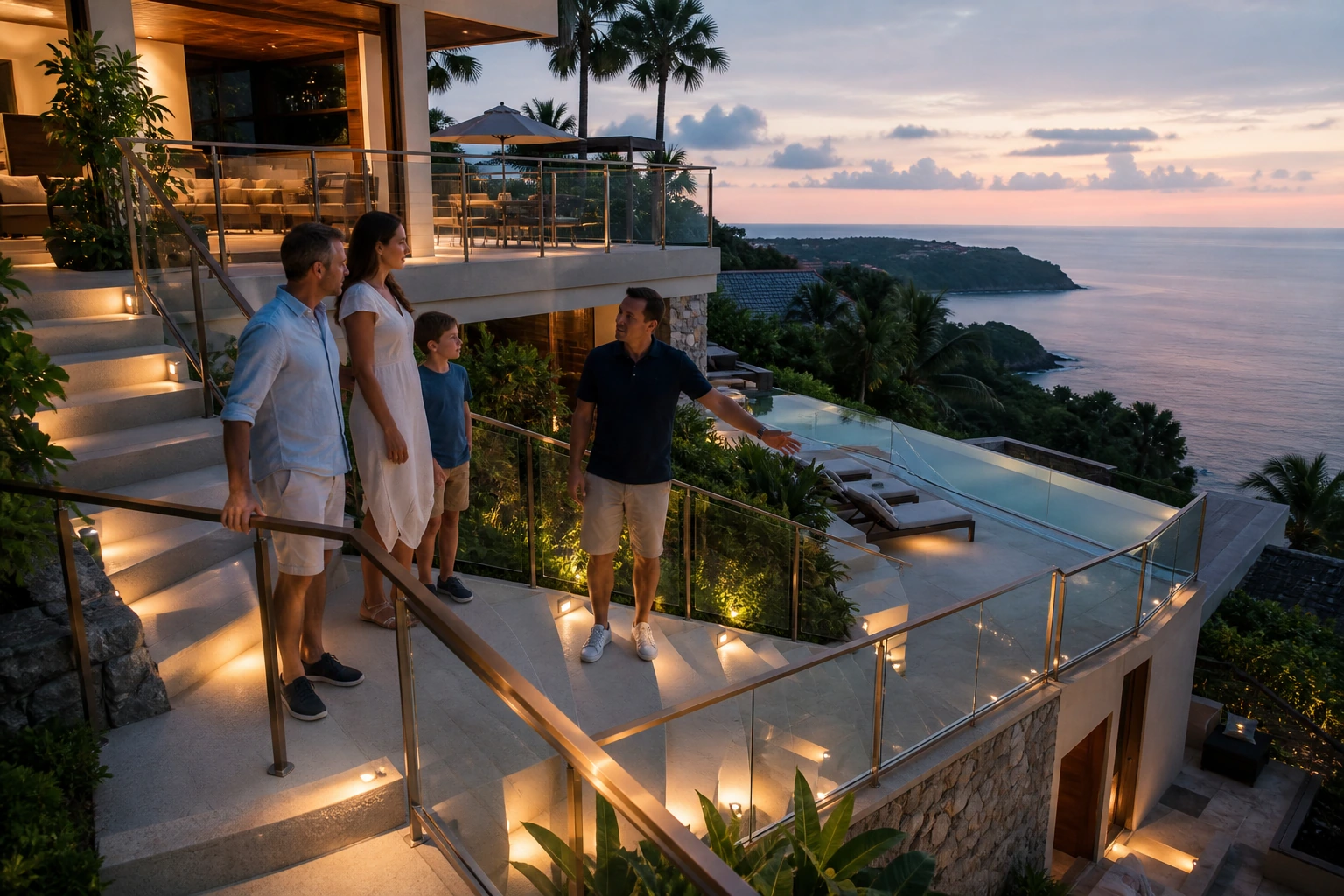
“A few” may mean twelve or eighty, with further levels inside. Request number, handrail, lighting, surface and alternative. Knees, circulation, pregnancy and balance deserve data. Individual medical assessment belongs to qualified professionals.
Pool edge, rail, level change, wet stair and darkness matter to adults and children. Ask about barriers, visibility, depth and distance to the drop. Dramatic architecture is not safety evidence. A flatter, less spectacular villa may be the more luxurious decision.
Privacy and operations on a slope
A hillside villa sees far and may be seen from villas, restaurants, paths or drones above. Inspect terrace, pool, bathroom and bedroom in both directions. Vegetation, angle and level protect better than distance alone.
Room service, ice, luggage, engineer and housekeeping use buggies or stairs. Heavy rain slows paths. Confirm delivery time, covered transitions, power/water backup and contact method. A remote panorama should not turn every small request into an expedition.
Buggies, brakes, radios, restaurant music and pumps travel differently across a slope. Engineering may sit at the top, a beach club below. Ask about functions above, below and beside. The widest view line may also be the widest sound line.
Drainage, slippery routes, visibility, buggy operation and wind protection become more important than panorama. Ask about covered access, in-villa dining, power backup, leak history and closures without expecting a weather promise. A good resort remains spatially and gastronomically persuasive on a wet day.
The transfer chain is part of the villa choice
It describes how dependent the entire resort is on flight, boat, pier and weather. The villa on that island may still be beach or hillside. This distinction avoids a common mistake: remoteness is treated as proof of a better villa when it first means a more complex arrival.
Who watches international flight, domestic sector, vehicle, pier and boat One responsible party should see delays and coordinate alternatives. Confirm telephone, meeting point, tickets, buffers and final departure. Five premium segments without overall ownership do not make a seamless trip.
Light aircraft and boats impose limits on weight, shape and water protection. Hard cases, strollers, diving or photographic equipment require review. Bangkok storage or repacking into soft bags may be necessary. Medicine, documents and valuables travel under operator and security guidance.
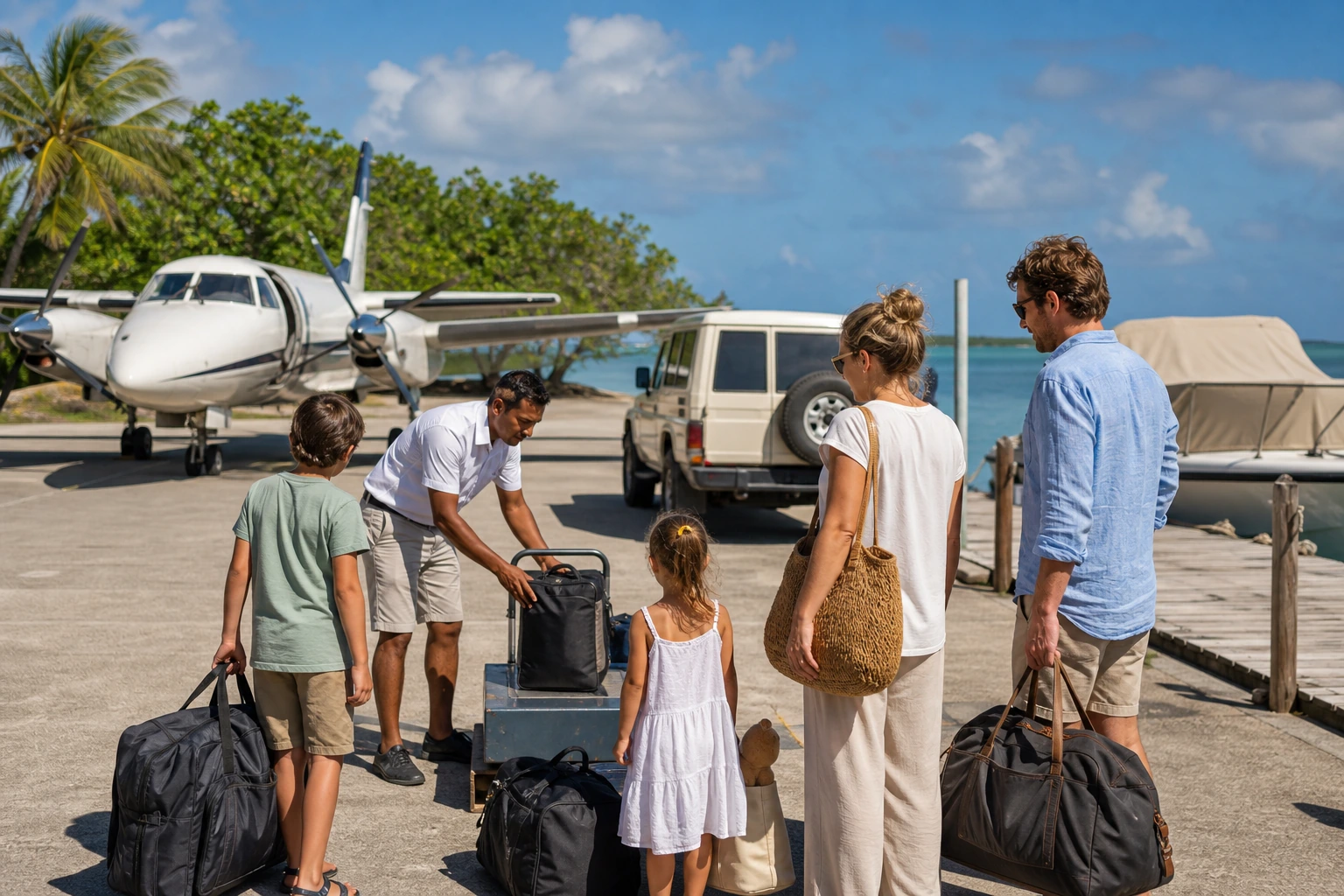
A boat may not run at night or may reject a landing in weather. The route then needs an airport hotel, mainland base or alternative. Design this before departure and clarify cost/insurance. A remote island immediately after long-haul arrival, without buffer, is needlessly fragile.
Medical distance, provisioning, duration and total cost
Resort clinic, staff, boat, helicopter, mainland road and hospital form a chain with varying capability. Known needs warrant qualified medical and insurance review. “Doctor on call” states neither response time, equipment nor evacuation cover.
Fresh produce, special food, wine, pool engineering and medicines reach an island on supply schedules. A good resort manages this; last-minute requests remain harder. Allergies and essential brands are briefed early. Restaurants and wet-weather depth must sustain the intended stay.
A complex air/boat chain rarely rewards three nights. Seven to ten allow arrival, weather margin and resort life to settle. An accessible beach or hillside hotel may fit five nights within a tour. Count usable days between first arrival and final departure.
Private transfers, baggage, intermediate hotel, full board, boats, cancellation and evacuation insurance may matter more than villa rate. Request a complete out-and-back figure and weather terms. Translate “complimentary transfer” into operator, sector, shared/private, timing and baggage.
A remote island needs energy, water, waste management, supplies and transport. Ask for measurable systems, local employment, marine protection and reporting, not timber aesthetics. Beach and hillside resorts also deserve whole-operation assessment. Luxury and responsibility are compatible, never automatic.
Couples choose by privacy, not elevation
A screened beach villa may be more intimate than an exposed panorama pool; a hillside villa quieter than the first row. Sightlines, paths, restaurant proximity and desired spontaneity decide. A couple living every sunset on its terrace values differently from one swimming in the sea at dawn.
Beach proximity removes buggies but doubles pool/sea exposure. Hillside creates separation while adding steps and transport. A remote island strengthens shared time and limits alternatives. Review age, supervision, connecting rooms, meals, medical route and whether everybody wants the same island day.
The best view for the most agile guest is not the group standard. Choose for the person with the greatest mobility, sleep or dietary need, then create privacy around them. Two nearby mid-level villas may outperform one monumental multi-storey residence.
Four Thailand models make the choice visible
Trisara illustrates the private hillside villa close to Phuket infrastructure; Four Seasons Koh Samui the vertical bay resort; Six Senses Yao Noi a boat arrival with Phang Nga perspective; Soneva Kiri the full distance of an island universe. These are models, not rankings. Operation and categories require dated confirmation.
The decision matrix has twelve questions
Ask: sea every day Panorama more important Step limit Buggy acceptable Children by water Screening Tides Dining outside Transfer duration Night/delay plan Medical distance Minimum stay Weight every answer. The best position compromises least on the three highest priorities.
Prove the exact villa before payment
Confirm number/zone, current plan, real images, view, sightlines, sun, pool, steps, buggy, beach/tides, service route and works. For islands, add operator, baggage, buffer and Plan B. Only this dossier turns “beach”, “hill” or “island” into a dependable booking.
The most luxurious position fits the lived day
Choose beach for immediate use, hillside for perspective and distance, remote island for deliberate staying. None wins universally. If the villa works at 07:00, 14:00, 18:00 and 23:00 and the transfer survives disruption, the position is right.