
An art hotel is more than a lobby furnished with large canvases. It can be a museum in which one sleeps, a collector’s house, an architectural manifesto or a public cultural project with rooms. The most compelling addresses are distinguished not by the number of famous names but by intent, context and the ability to experience art meaningfully.
The selection at a glance
- Museum and hotel
- Benesse House, Naoshima
- Collector’s house
- The Fife Arms, Braemar
- Architecture and Africa
- The Silo, Cape Town
- Grand-hotel collection
- The Dolder Grand, Zurich
- Public museum hotel
- 21c Museum Hotels, United States
| Hotel | Model | Why it matters | Check before booking |
|---|---|---|---|
| Benesse House | Museum and hotel as one work | Tadao Ando, landscape and site-specific art | Building, museum calendar and island transfers |
| The Fife Arms | Curated collector’s house | Historic work, contemporary commissions and Braemar | Room character, tour and seasonal rhythm |
| The Silo | Adaptive reuse above a museum | Industrial architecture, contemporary African art, Cape Town | Window/room position and Zeitz MOCAA access |
| The Dolder Grand | Collection within a grand hotel | More than 100 works and historic/new architecture | Public and guest-only areas |
| 21c Museum Hotels | Public museum plus hotel | Free access and curated contemporary art across several cities | Location, current exhibition and desired hotel level |
Benesse House: sleeping inside the idea
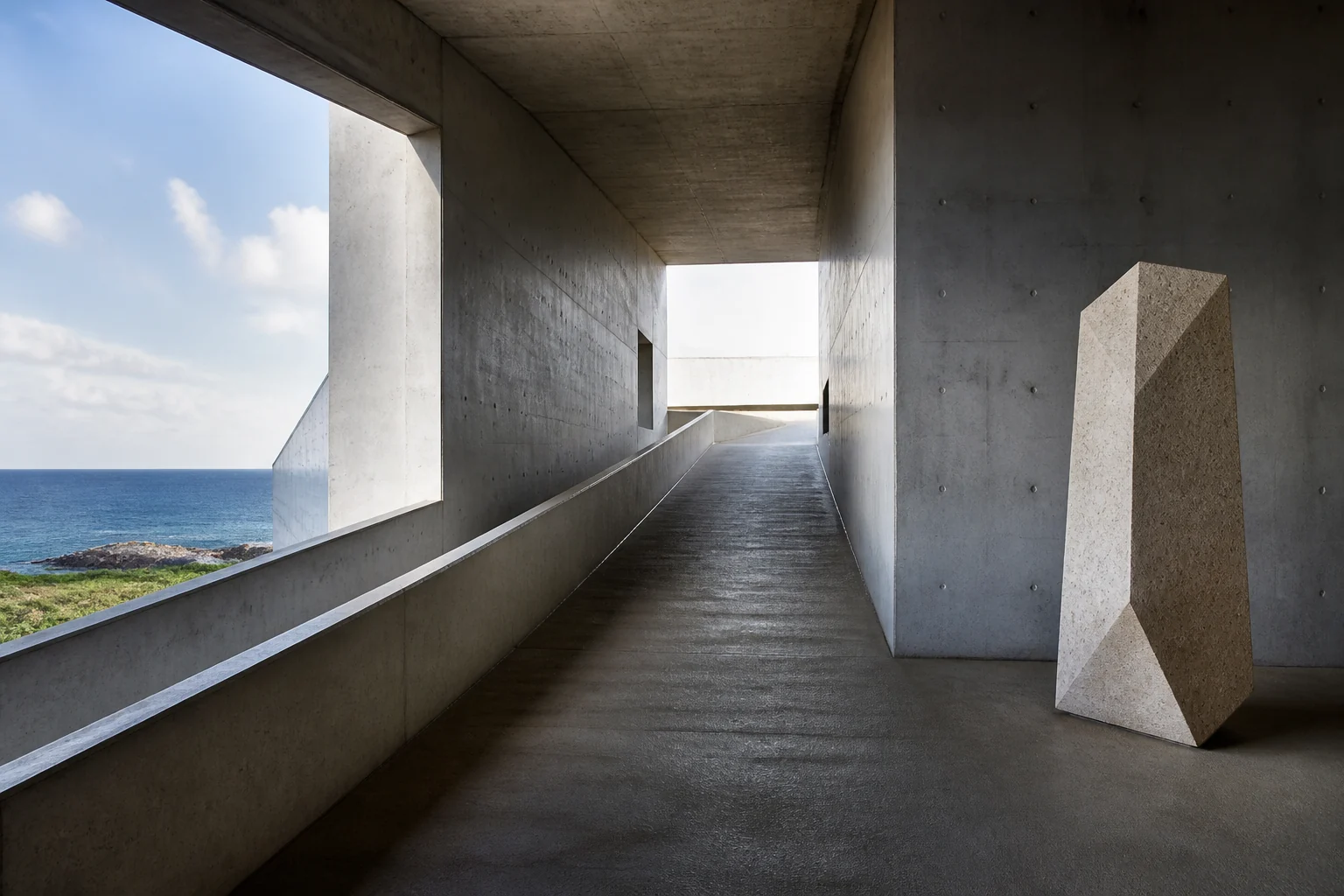
Benesse House Museum opened on Naoshima in 1992 around the coexistence of nature, art and architecture. Tadao Ando’s building overlooks the Seto Inland Sea; the collection and site-specific installations are the purpose of the place rather than decoration. In the Museum accommodation, individually arranged guest rooms contain works from the collection.
The journey demands planning. Naoshima is not an improvised city night. Ferries, luggage, tickets, art-site closure days and the choice of Museum, Oval, Park or Beach shape the stay. Two nights permit more than a hurried checklist.
The Fife Arms: a hotel as collectors’ biography
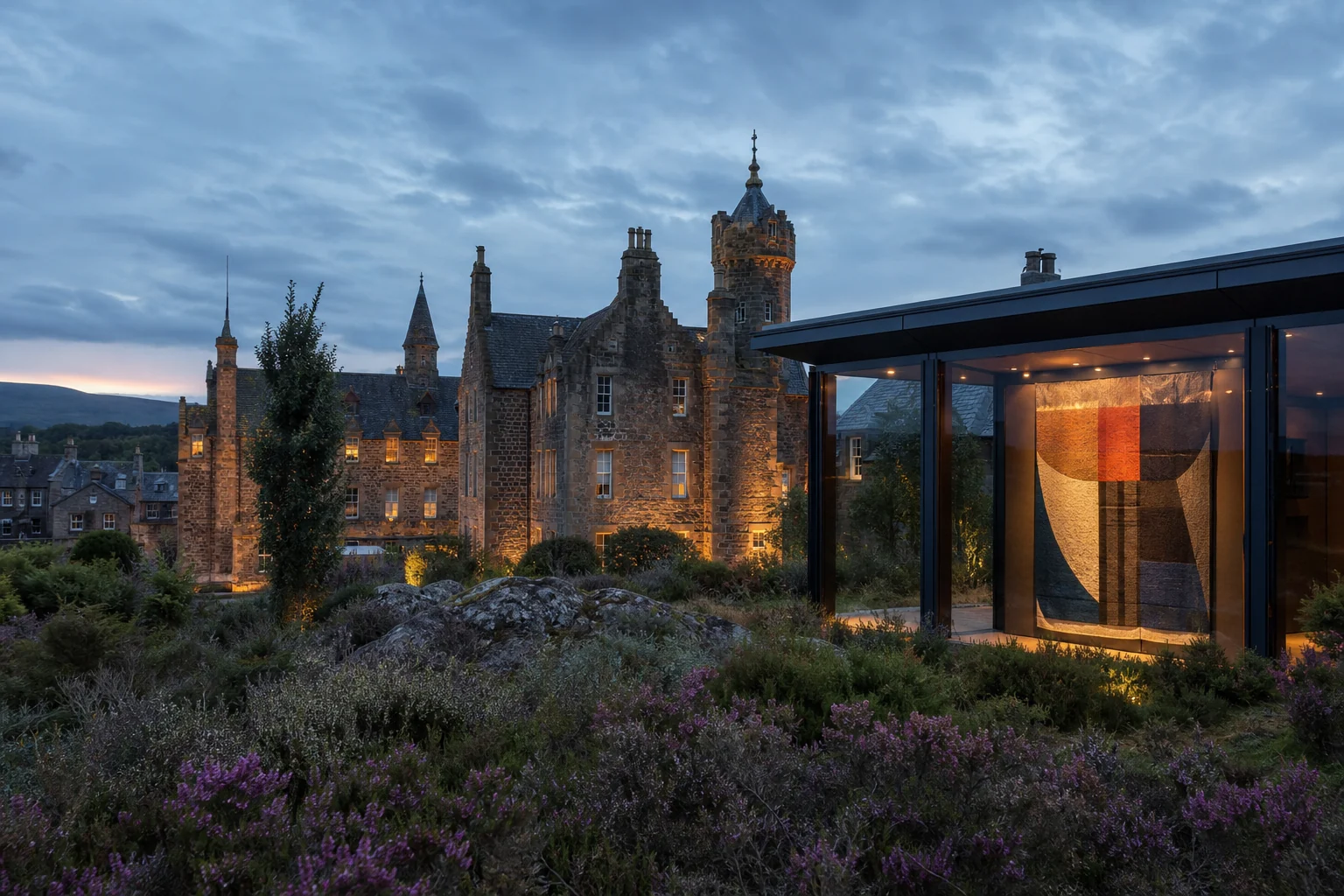
Iwan and Manuela Wirth, co-founders of Hauser Wirth, have curated in Braemar a dense conversation between nineteenth-century art, contemporary work, special commissions and local history. Residencies and works made for the hotel connect the collection to the Highland landscape rather than merely to the market.
Abundance is part of the experience. A traveller seeking minimalist calm may find it intense. Someone interested in the exchange between Victoriana, contemporary art and Braemar should leave time for a tour and for the village beyond the hotel.
The Silo: art above the museum
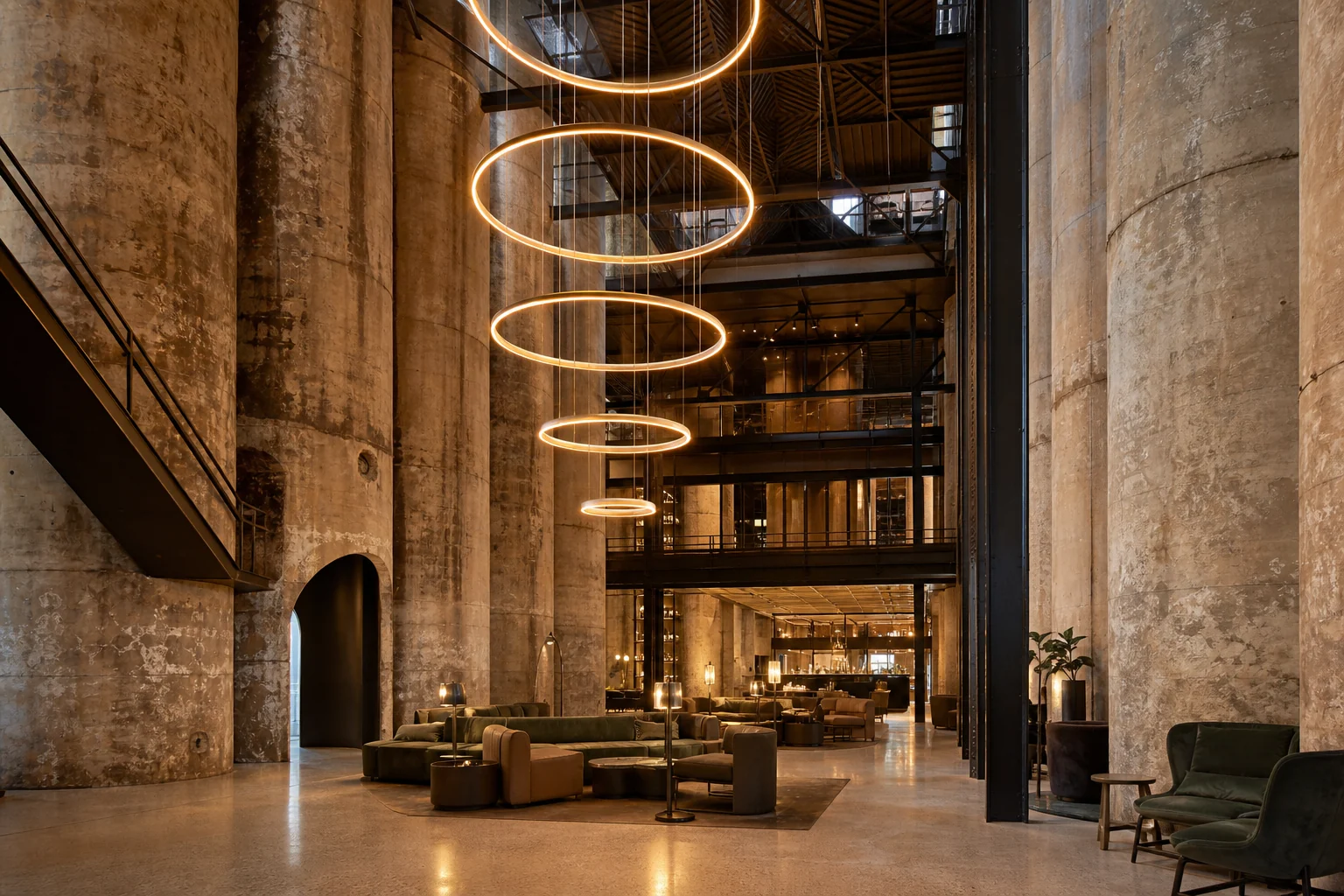
The Silo occupies six floors above Zeitz Museum of Contemporary Art Africa in the former grain silo at the V&A Waterfront. Its bulging, pillowed windows and adaptive reuse give the hotel a powerful architectural identity; Liz Biden’s interiors respond with colour and contemporary African art.
Proximity to the museum is the decisive advantage, but does not automatically include admission or access. Hours, tickets and exhibitions are separate. Within the hotel, choose the exact suite for outlook and window geometry, not simply size.
The Dolder Grand: a collection in operation
The Dolder Grand describes more than 100 works by 90 artists. Many occupy public spaces, while others are on guest floors. Swiss positions sit beside international names; Foster + Partners’ wings, built from 2004 to 2008, engage with the historic hotel.
This is a different encounter from a museum. Art appears on the route to a restaurant or spa. A considered tour is therefore more useful than casual name-spotting. The collection does not replace Zurich’s museums, but can frame them elegantly.
21c: when the public belongs to the concept
Across several American cities, 21c Museum Hotels combines hotels and restaurants with free, curated contemporary-art museums. The model is less private than the collector’s hotel: local residents are intended to use the exhibitions alongside overnight guests.
The individual properties and hotel standards vary. That public energy can appeal to art travellers; a guest seeking a conventional resort should compare more carefully. Location and current exhibition matter more than the umbrella brand.
Collection or decoration
A substantive collection names artist, title and date, and usually has curatorial responsibility. It has an organising idea, documentation and a conservation approach. Decoration remains anonymous or is selected largely by colour and scale.
Both can produce a handsome room, but they are not equivalent. A hotel should not claim museum quality without intelligible attribution and interpretation.
Architecture must still work as a hotel
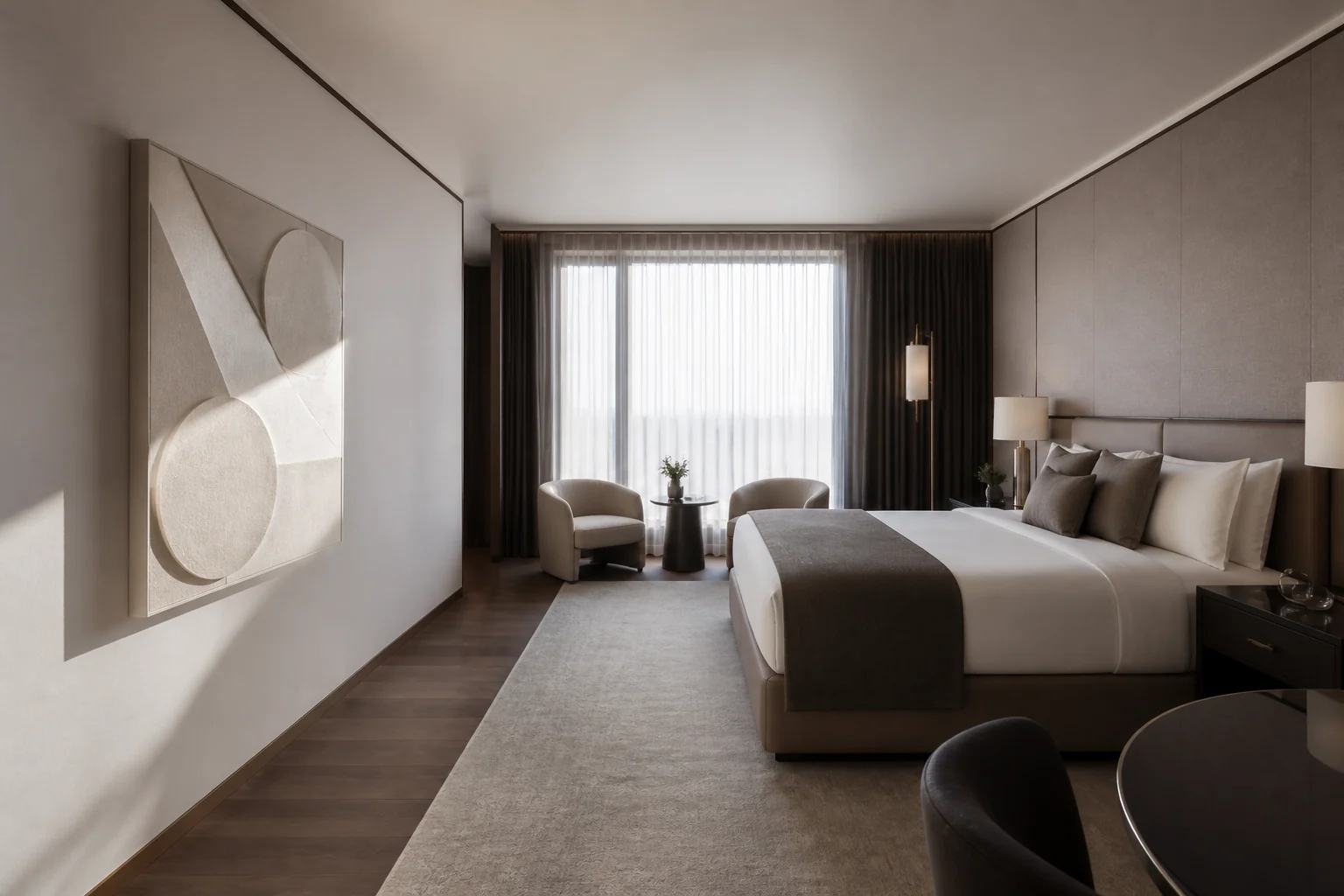
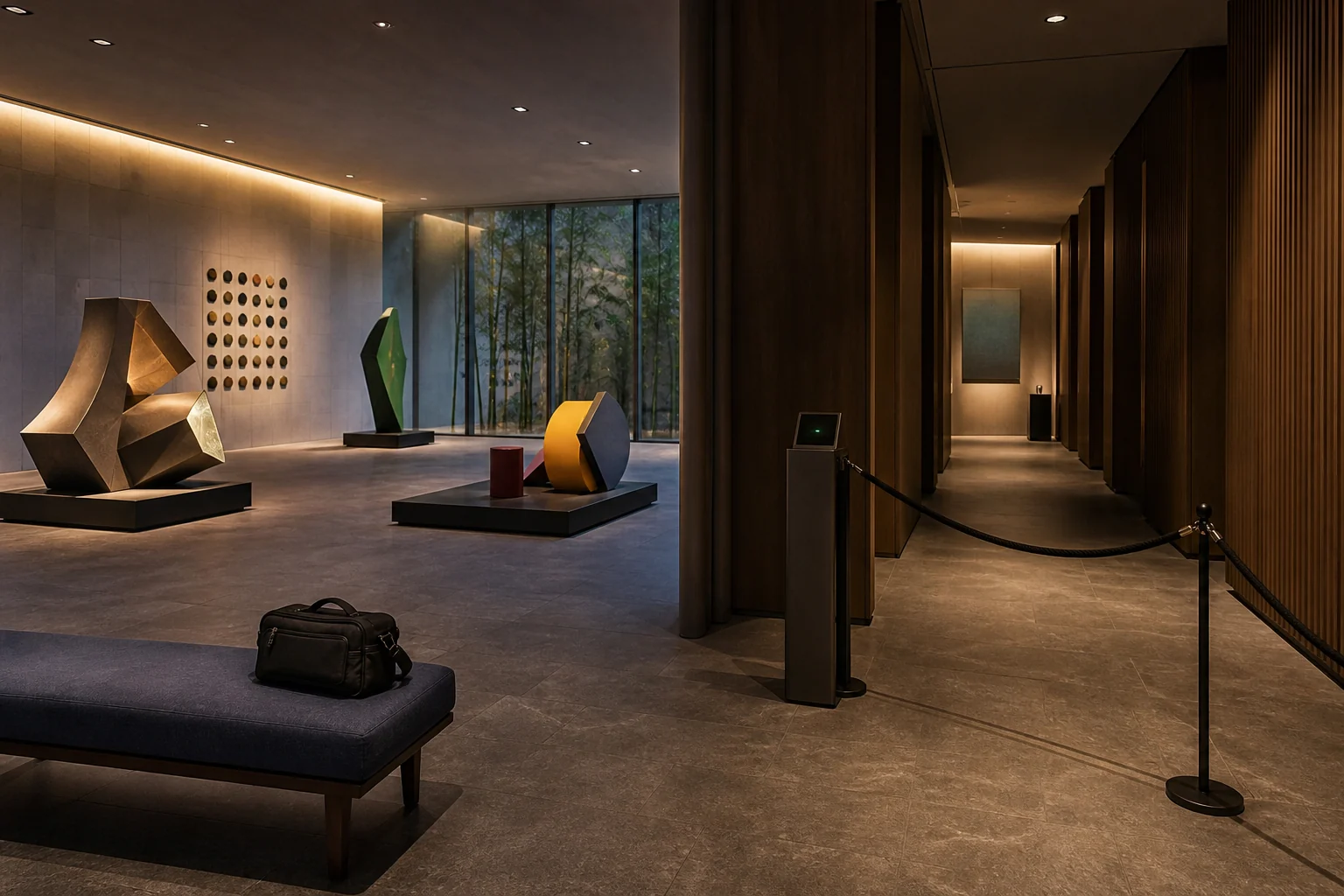
An iconic building does not guarantee sleep. Windows, acoustics, movement, lighting and service remain relevant. In an art hotel another question arises: is the room part of the concept or a neutral retreat Is there natural light, and can the work be viewed without obstructing ordinary use
Choose category according to function. The most famous room is not necessarily the quietest.
Public, private or guests only
A lobby work may be freely accessible while another sits on a protected guest floor. Tours, studios, archives or residencies may be seasonal or by appointment. Strong planning confirms those boundaries in advance.
Photography is a separate right. Hotel permission does not automatically allow an artwork to be published.
How to build an art journey with space
A strong hotel is an anchor, not an entire daily programme. One museum, one gallery district and unhurried time at the hotel are often enough. Closure days, timed tickets, daylight and journeys govern rhythm more than the length of a wish list.
On Naoshima, island mobility matters; in Cape Town, the relationship between the Waterfront and wider cultural landscape; in Zurich, the balance between hotel collection and city museums. Context turns a hotel into a journey.
Questions before reserving
- Who curates the collection, and is there a current work list
- Which areas are open to guests or the public
- Which works are present in the confirmed room category
- Are tours available, and in which language
- Which museum days, tickets and transfers require separate booking
- What are the photography and publication rules
- Which room position combines access to art with quiet
The Deluxetargets recommendation
Choose according to the encounter you want. Benesse House lets architecture and art become landscape; The Fife Arms tells the biography of collectors and place; The Silo joins adaptive architecture to contemporary African art; the Dolder brings a collection into grand-hotel life; 21c opens the museum to the city. The best address does not merely decorate curiosity—it deepens it.