
Tuscany is not one cypress-framed landscape but a sequence of very different journeys. Florence, Chianti, Val d’Orcia, Montalcino and the coast need their own time. The elegant itinerary connects no more than three country bases, a few serious estates and carefully placed restaurant nights — with enough open hours to become a stay rather than a tasting list.
Tuscany contains several different journeys
Florence demands walking and cultural appointments; Chianti brings winding distances between villages; Val d’Orcia asks for landscape and slowness; Montalcino concentrates the wine conversation; Bolgheri follows a separate coastal axis. Treat them all as simply “Tuscany” and driving is underestimated. Choose the journey first and the famous hotel second.
They allow two nights in Florence, three in Chianti and four or five around Val d’Orcia and Montalcino. Bolgheri or the Maremma needs another two nights or must replace a zone. With seven nights, Florence and one country base are stronger. Every extra hotel takes an arrival, a repack and part of a day.
One city, one northern and one southern country property create a legible arc. Each hotel should hold several days through breakfast, pool or garden, dependable dining and short journeys to the principal plans. An itinerary of five prestigious hotels collects lobbies rather than Tuscany.
Florence is an opening chapter, not a day trip
The Uffizi, Accademia, churches, artisans and restaurants cannot be folded elegantly into one long drive from the countryside. Two city nights provide one complete cultural day and an evening without a waiting driver. Museum reservations, closing days and current admission rules come before dinner planning.
A central hotel buys walking freedom and spontaneous aperitivi. A property in Fiesole or above the city buys view, garden and retreat, but requires a shuttle or car. Villa San Michele illustrates that threshold. Following its recent renewal, current rooms, dining, transfers and seasonal operation need fresh confirmation.
Chianti, Val d'Orcia and Montalcino need different rhythms
The landscape between Florence and Siena looks close on a map, yet bends, villages and estate drives extend every day. Select the base around the estates actually reserved, not around “Chianti” in a hotel name. Two visits on opposite sides of the zone rarely leave a gracious afternoon.
The official consortium identifies estates within the delimited area. A wine address, country hotel and generic “Chianti experience” are not automatically the same thing. Verify producer, appellation, meeting point and host. The Black Rooster on a bottle does not replace an individual reading of the estate.
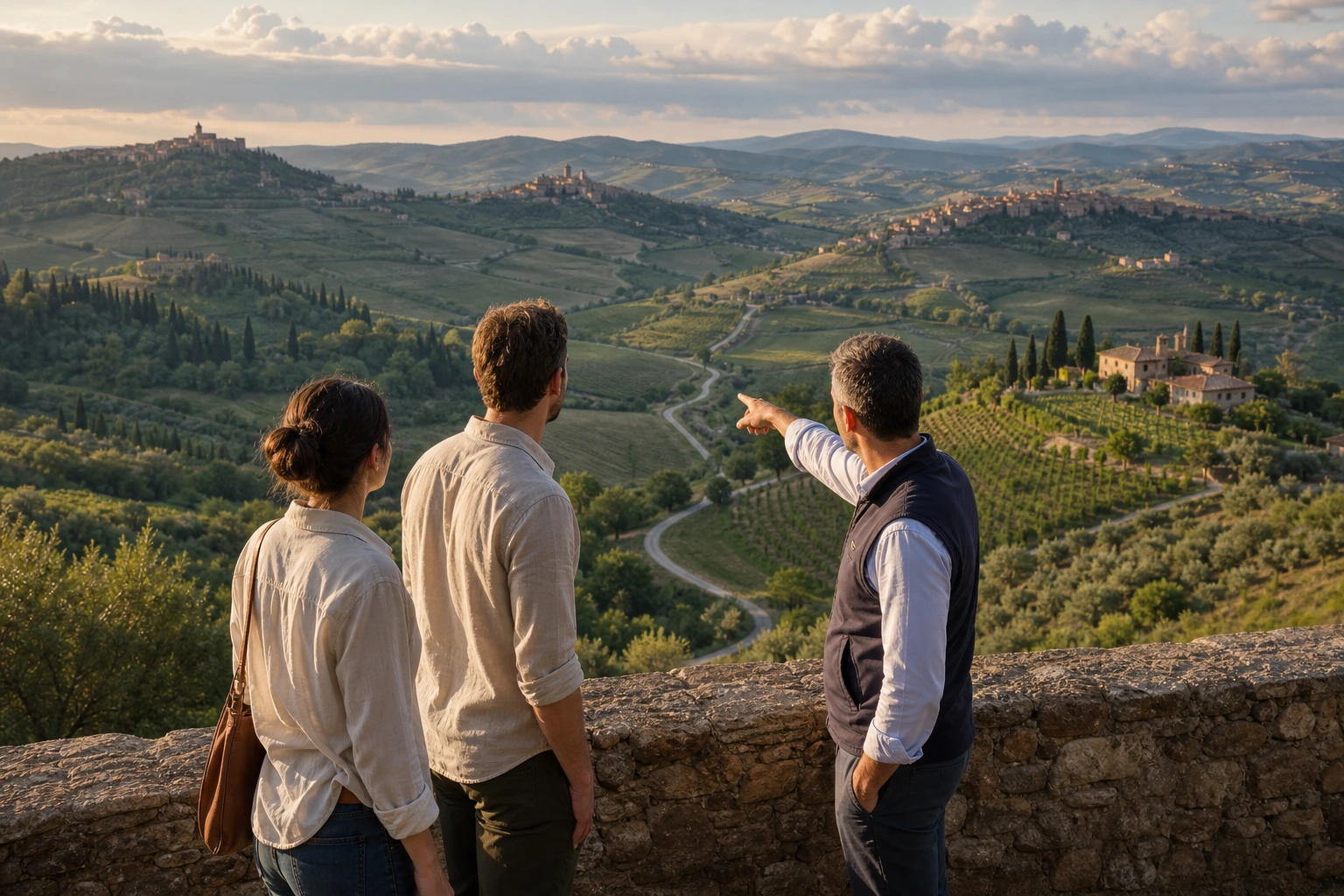
UNESCO describes a Renaissance model of agriculture, settlement and governance, not merely a photogenic backdrop. Pienza, San Quirico, secondary roads, fields and the Via Francigena deserve slow movement. A dash to a famous cypress bend is less interesting than a day in which landscape, village and food are read together.
Brunello visits differ by elevation, soil, style, cellar and conversation. Plan two contrasting producers and an unhurried lunch, not four tastings. The Brunello consortium is a sound starting point for current producer and origin information; each estate confirms access, language, host and purchase conditions directly.
Bolgheri and the coast form a separate chapter
The wine zone near the Tyrrhenian coast joins plains, the cypress avenue, international varieties and proximity to the sea. It is not a plausible quick addition to Montalcino. Travellers prioritising Bolgheri need a coastal or Maremma base and should begin with the official consortium rather than a random driver’s list.
Argentario, the Maremma and the more northerly Bolgheri coast have different roads and seasons. A coastal hotel can introduce lightness after wine days, but it requires more nights. Hotel Il Pellicano or La Roqqa are coastal possibilities, not “Florence hotels”; their role is defined through sea access, room position and transfer.
Villa or estate hotel: choose friction deliberately
A sound villa is not only a place to sleep. It supports breakfast without a clock, pool, laundry, a late lunch and dinner at home. It particularly suits families or friends staying five nights or more. For a fast route of daily restaurants and estate appointments, a service hotel is often easier. MAG-186 examines that accommodation decision in depth.
House manager, daily cleaning, chef, groceries, drinks service, pool care and night contact may be included, on request or absent. Verify hours, days off, menu planning, food mark-up, gratuities, climate control, pool heating and technical response. Privacy comes from agreed service windows rather than unspoken expectations.
Winery, room, restaurant, spa and driver coordination may share one address. That saves travel, but can also keep the guest from seeing the region. Decide whether the estate should be a complete destination or a convenient base. An excellent house tasting does not replace the contrast of two independent producers.
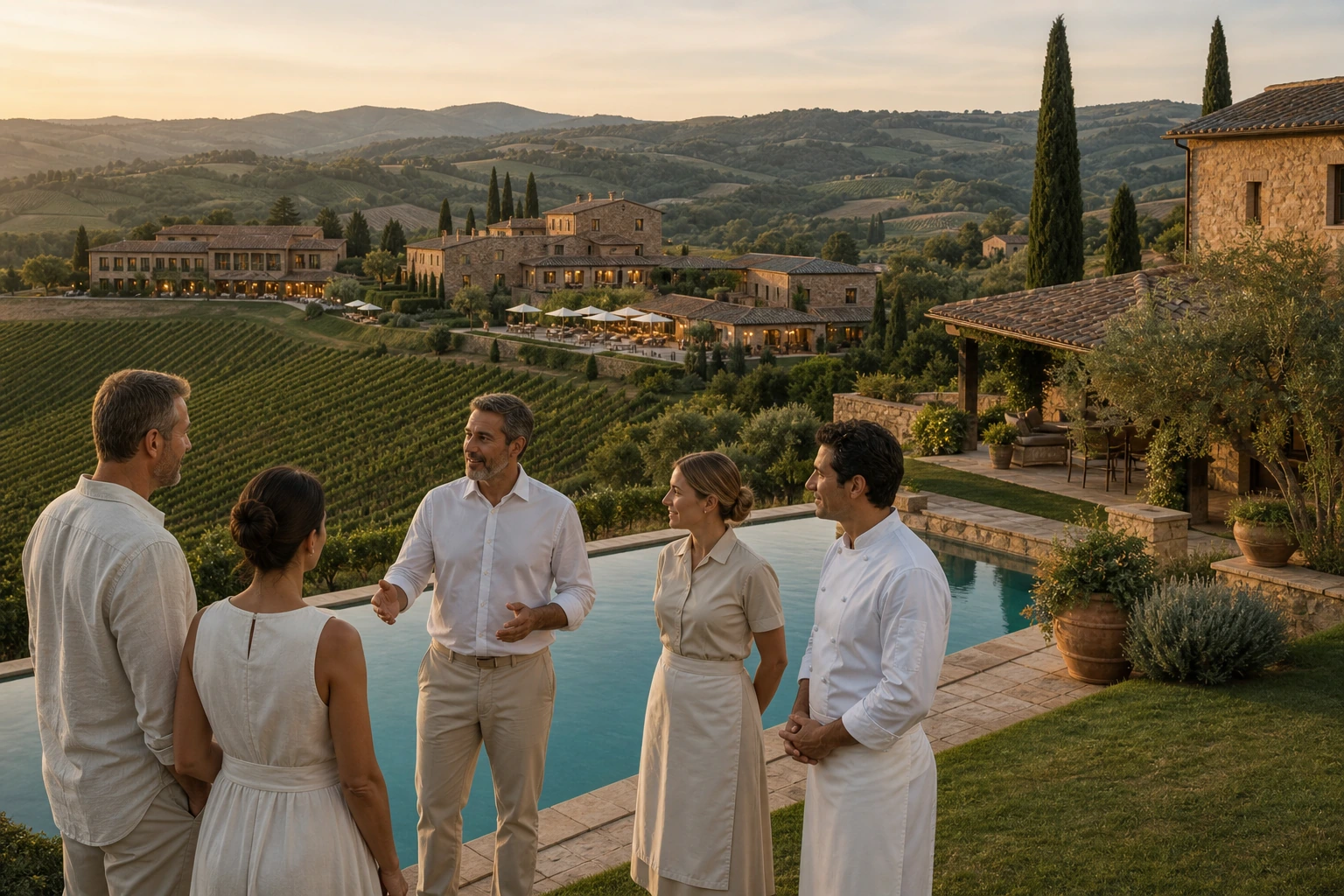
“Siena”, “Florence” or “Tuscany” in marketing may cover a broad driving area. What matters is the real time to the booked estates, villages and restaurants in both daylight and evening conditions. Ask for a current map rather than straight-line distance. ZTL restrictions, parking and the final driveway belong in every plan.
A striking cellar may run a polished tourism circuit; a modest family property may offer a remarkable conversation. Assess host, focus, vineyard access, tasting depth and group size. The visit must fit the guests’ knowledge and curiosity. A private tour does not necessarily mean the winemaker or owner will lead it.
A wine day needs context, a driver and confirmation
A serious visit includes the drive, vineyard, cellar, tasting, conversation and often purchase arrangements. Two appointments leave room for lunch and concentration. Three or four create sensory fatigue and fragile timing. Wine can be sampled, water taken and wine spat; a professional driver remains the safe answer.
Begin with an estate able to explain origin, soils and vintages clearly. The second may be smaller, more specialised or stylistically contrasting. Comparison then replaces name collecting. Share language, prior wine experience, preferred styles, buying interest and maximum duration before the day.
Many estates receive visitors only by arrangement; harvest, bottling, holidays and private events change access. A confirmation states date, time, address, contact, language, duration, price, cancellation and wines included. “The driver knows someone” is no substitute for a documented appointment.
The service resolves alcohol, narrow roads, parking, luggage, buffers and the return after dinner. Verify vehicle, air conditioning, luggage space, hours, overtime and local knowledge. Self-drivers should avoid alcohol and understand current road rules. The journey between estates is part of the experience, not incidental cost.
Standing in a group, private at a table, with a cellar visit, from barrel or across mature vintages are different products. Ask about number and type of wines, water, bread, seating and sales pressure. A vertical tasting rewards experienced guests; newcomers often learn more from fewer wines explained precisely.
Destination, tax, customs, minimum order, temperature, insurance, delivery time and damaged-bottle policy belong in the written offer from merchant or estate. Rules change; this guide offers no legal or customs advice. Buyers of special vintages document the bottle, condition, price and responsible shipping partner.
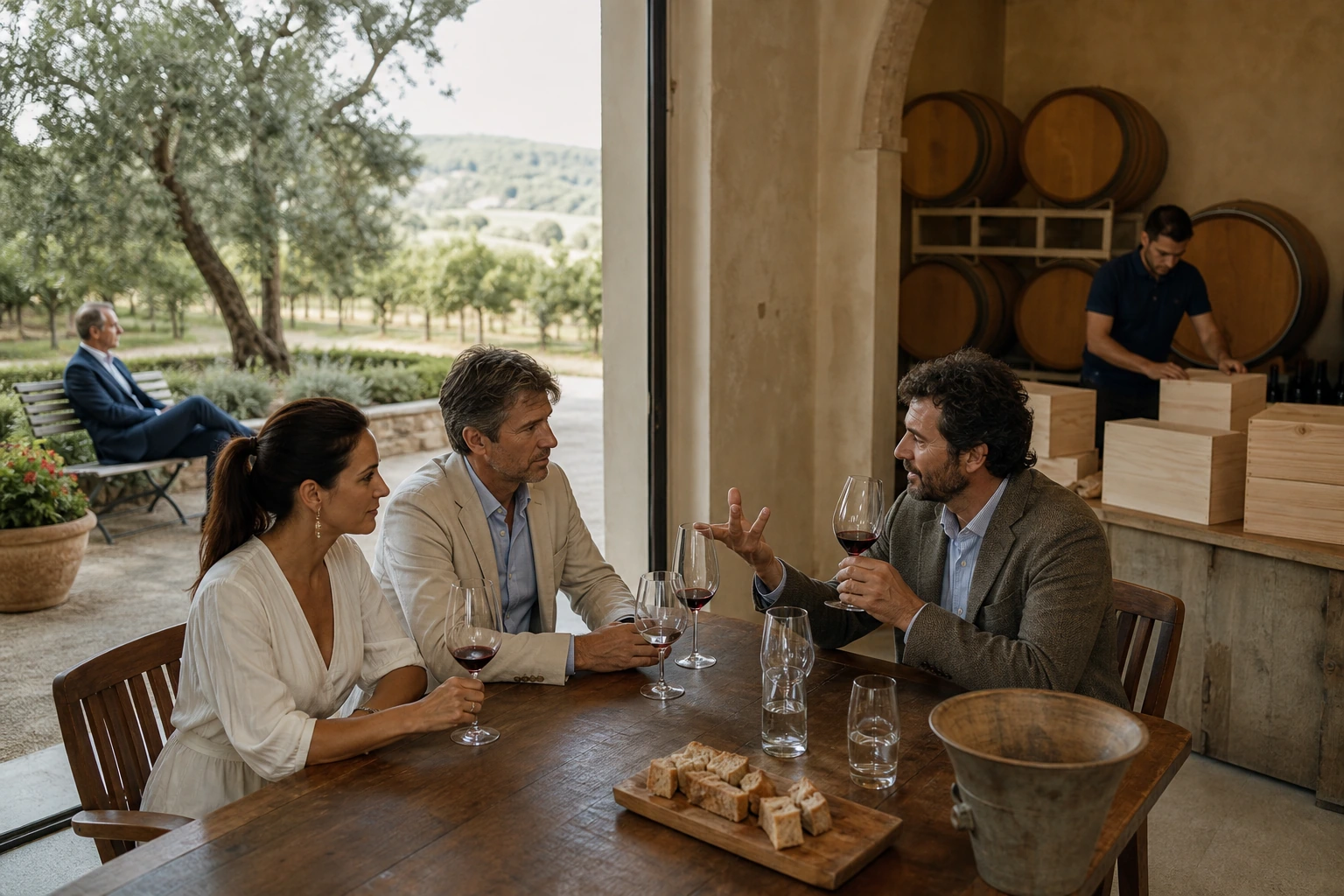
Timing varies by zone, variety and year. During vendemmia, cellars can be compelling while staff and access are under pressure. A harvest visit must be expressly permitted and safely arranged. Expected dates are no guarantee; the estate supplies current information close to the appointment.
Four seasons, four daily rhythms
April through the early weeks of June brings gardens, longer light and often comfortable visits, but rain and cool evenings remain possible. Pools, air conditioning, restaurants and seasonal hotels may not all be operating. Confirm dates and preserve a cultural or spa alternative for wet hours.
Early visits, long lunch, pool time and late dinner work better than driving in the greatest heat. August can bring city closures, country high season and coastal density at once. Climate control in the exact bedroom, shade beside the pool and mosquito management become genuine quality questions.
Grapes, markets and changing light make September and October attractive. Estates are also busy, restaurants full and weather less stable. Reserve the essential appointments early, but do not let harvest imagery govern the trip. The best conversation may occur after picking, when the team has time again.
Many country hotels, pools and seasonal restaurants reduce or close while Florence and selected year-round estates become calmer. Verify heating, open dining, spa, daylight and evening transport. A rural hotel without a convincing night can feel isolated however beautiful its architecture.
Fine dining as an accent, not an evening programme
Two major menus in ten nights are often enough. Trattoria, market, villa dinner and a simple plate after a wine day belong between them. A tasting menu needs appetite, time and a safe return. Making every night “important” erases nuance and spontaneous local discoveries.
After museums, a city restaurant reached on foot makes sense; after two estates, the hotel or villa kitchen may be better. A remote destination restaurant deserves an open afternoon and dedicated driver. Sitting time, menu duration and road are planned as one reservation. The most famous name is wrong when it pressures the whole day.
Country roads are lighter, transfers easier and the kitchen can show equal precision with less late-night load. A long lunch also leaves a calm pool evening. Verify whether the full menu is served and when the kitchen closes. Any onward driving belongs to a sober professional.
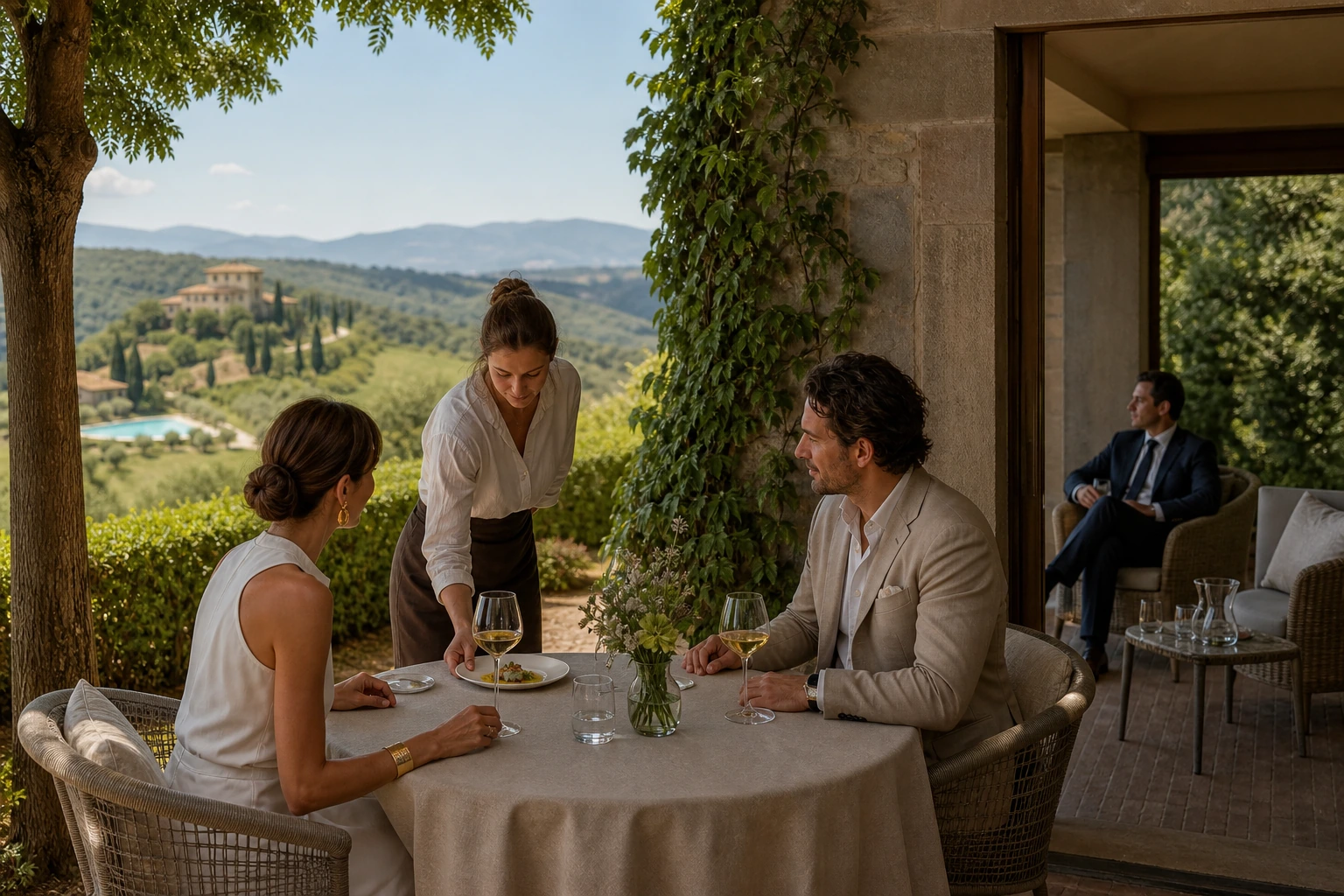
A cellar day does not need a complete pairing sequence at dinner. A reduced pairing, selected glasses or one bottle for the table may be more coherent. Water, food, medication and individual tolerance matter. Alcohol volume is not evidence of a serious culinary journey.
The restaurant must confirm in writing whether it can safely accommodate an allergy, coeliac disease or another medical diet. Preference, intolerance and life-threatening allergy are not interchangeable. Cross-contact and spontaneous substitutions matter in complex menus. The operator and qualified clinicians assess suitability, not a travel article.
Five estate stays with five different functions
Its official presentation joins an organically managed estate, wine activities, accommodation and farm-to-table dining. Il Borro therefore demonstrates days with little transfer. Room, winery visit, restaurant and riding or other experiences still need separate confirmation; “on the estate” never means automatically included.
The Rosewood property models a broad estate with hotel, villas, wine and dining in the Montalcino context. Its strength lies in integration and space for several nights. Verify villa position, internal transport, accessibility, exact winery experience and restaurant openings. Reputation is not a substitute for the right room or rate.
The castle hotel can connect Florence, Siena, estates and recovery when appointments are geographically grouped around it. It is not permission to drive into every corner of Tuscany each day. Confirm shuttle, restaurant days, spa hours and real journey time to each producer. A rest day should work at the hotel.
The estate near Siena illustrates a country base where garden, production, hotel and ambitious cooking belong together. Travellers coming for a particular restaurant confirm opening, menu, table, duration and transport as carefully as the bedroom. Awards and culinary concepts require a current check before publication.
Its position above the city joins view and retreat but changes spontaneous access to museums and central dinners. It suits guests who visit Florence in deliberate windows and return to green space. Anyone wanting to walk out each evening is better served by a true city-centre base.
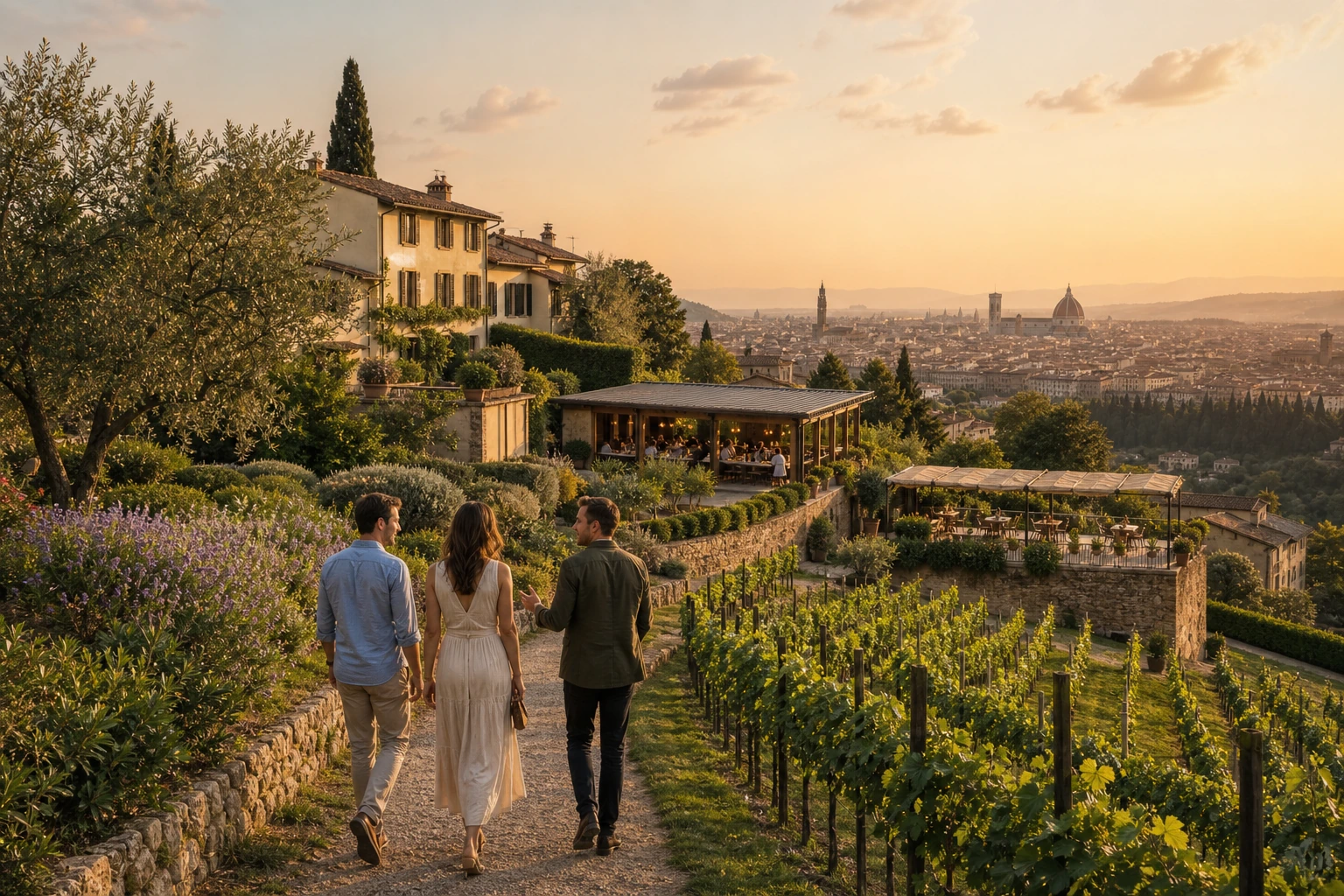
A persuasive route releases tension
Begin with two nights in Florence, continue with three in Chianti and four around Val d’Orcia or Montalcino. Add Bolgheri or Maremma only with another two or three nights. In reverse, the coast can be a gentle opening; the flight from Florence or Pisa should decide the final direction.
After city and wine, the journey needs a pool morning, an hour in a village or lunch with no sequel. Open time also absorbs weather, fatigue or a moved appointment. Luxury is available time. An “empty” hour already consumed by a two-hour drive is not a pause.
Families, mobility, total price and confirmation
An estate with garden, short visit and sound lunch can work; several silent barrel rooms rarely do. Verify age rules, children’s programme, pool barriers, connecting rooms, drives and meals. Childcare is never assumed. A villa pays when it solves play space and early dinner, not simply because the party is large.
Florence, hill towns, cellars and historic hotels may involve uneven ground, steep drives and many levels. Ask about vehicle access, drop-off, lift, toilets, seating and alternative visit. “Ground floor” may not be level from the car. Measurements and photographs are stronger than general assurance.
Add hotel or villa, staff, provisions, driver, overtime, guides, tastings, shipping, restaurant prepayment, gratuities, ZTL or parking and cancellation. A remote address can create more daily logistics than the room-price difference. Compare the entire itinerary, not isolated nights or menus.
Bases and real drive times; exact rooms or villa; staff and pool; two estates per wine day; host and language; tasting format; driver; restaurant menu and table; allergy acceptance; shipping; seasonal operation; total price and cancellation. Only when these align is the Tuscany journey genuinely curated.
The best Tuscany journey leaves the horizon alone
Florence brings cultural density, Chianti access, Val d’Orcia landscape, Montalcino depth and Bolgheri coastal contrast. Villas create shared daily life, estate hotels reduce friction, and fine dining marks a few high points. The art is not to possess everything, but still to notice where one is between two appointments.