
A good Alpine summer has nothing to prove. Clear air, long light and high peaks do not require a daily tally of vertical metres. The decisive choice is not the most famous ski resort, but a place where railway, mountain lift, lake, hotel and view can form a complete day. Choose well and there is no need to hike through the landscape in order to feel inside it.
The unhurried Alpine summer at a glance
- The best base
- A hotel with terrace, spa, serious dining and a view, with station, lake or mountain lift accessible without a complicated transfer.
- The most reliable period
- Generally late June to September; hotel and lift seasons need separate confirmation for the exact dates.
- The essential room request
- Not simply a mountain view, but a quiet orientation away from deliveries, works, the main road and evening terraces.
- The common mistake
- Booking a winter name and discovering that the preferred hotel, lift or restaurant is closed in summer.
The landscape should be accessible without performance
An active mountain holiday begins with routes. A restorative one begins with transitions. How does the guest move from train to hotel Does the terrace catch morning sun Can a railway reach altitude without a long approach Is there a lake walk that need not become a sporting target And does rain still feel like part of the holiday
The ideal hotel is not necessarily remote. A hideaway on a slope may require a vehicle and waiting time several times a day, while a house in the village allows spontaneous coffee, rail journeys and dinner. Yet a central hotel beside traffic and nightlife may lose the very calm sought in the mountains. Location has to be read as a daily routine rather than a pin on a map.
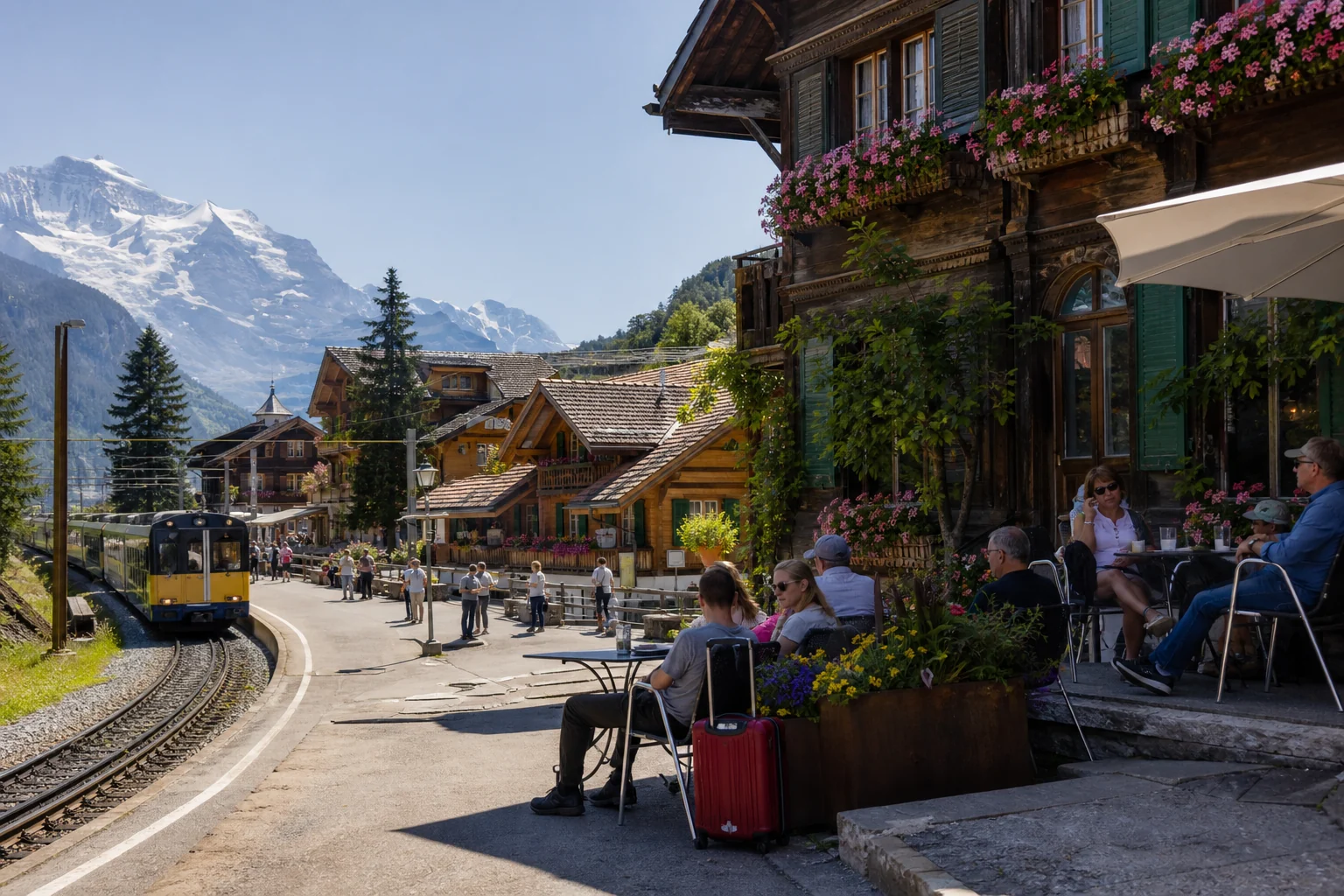
The Engadin: space, lakes and altitude without a summit obligation
The Upper Engadin is unusually persuasive because its landscape is both horizontal and vertical. Lakes, a broad valley floor and the Rhaetian Railway open wide views without turning every day into a hike. Scenic rail journeys through the UNESCO World Heritage landscape begin in St. Moritz, Samedan and Pontresina; mountain railways reach Corviglia and Corvatsch, while the circuit of Lake St. Moritz supports an intentionally easy day.
For the classic grand-hotel experience, Kulm Hotel sits centrally and combines lake views with easy access to St. Moritz. Suvretta House is quieter and more self-contained outside the centre, though spontaneous village visits are more likely to involve the hotel transfer. This is not a ranking. Kulm suits guests who want to move between hotel and town; Suvretta suits those for whom the hotel itself is the destination.
The season is more precise than the word “summer” suggests. Official 2026 openings illustrated the difference: Kulm published a window from mid-June to late August, while Suvretta House ran from early July into mid-October. A golden-autumn journey can therefore involve a different hotel landscape from July.
Gstaad: a gentler rhythm
Gstaad and the Saanenland feel less emphatically high-Alpine than Zermatt or the Upper Engadin. That is part of their appeal for an unhurried stay. Villages, rail, modest excursions, mountain restaurants, wellness and culture sit close together. Overnight guests can use regional public transport through the Gstaad Card, and cable cars give access to views and lunch without requiring a serious walk.
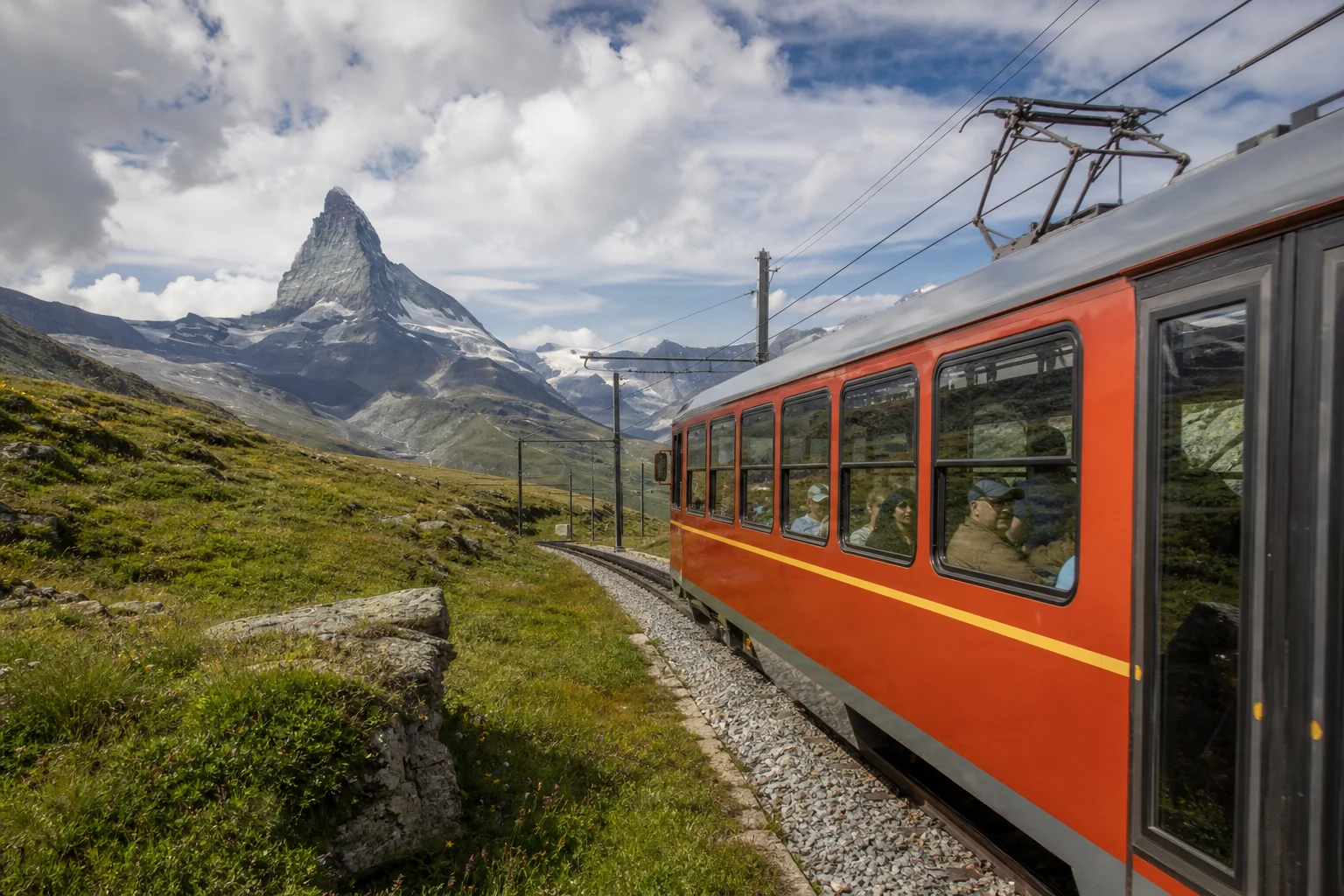
The Alpina Gstaad is a secluded contemporary resort built around a Six Senses Spa. Gstaad Palace derives more of its character from grand-hotel life, terraces, summer events and its position above the village. Both are seasonal. Their official 2026 summer windows broadly ran from mid-June to early or mid-September, making the particular week relevant to restaurants, cultural programming and the energy of the resort.
Travellers wanting deep quiet should not automatically choose a major event week. Tennis, polo and music are part of Gstaad’s summer and create welcome life for some guests. A quiet-facing room and a few days’ distance from headline dates may achieve more than the highest room category.
Zermatt: spectacular, provided the arrival is choreographed
Zermatt is car-free. Private vehicles end in Täsch, followed by train, taxi or limousine. The arrangement keeps the village calmer but requires a clear baggage and hotel handover. Travellers with several cases, children or reduced mobility should have station reception and electric transfer to the hotel explicitly booked.
The advantage for non-hikers is exceptional mechanical access. The Gornergrat Railway reaches 3,089 metres, and other lifts offer high-mountain perspectives without a prolonged climb. Weather and altitude remain real variables. A flexible plan preserves a lower day for the village, spa and dining rather than treating every lift journey as an obligation.
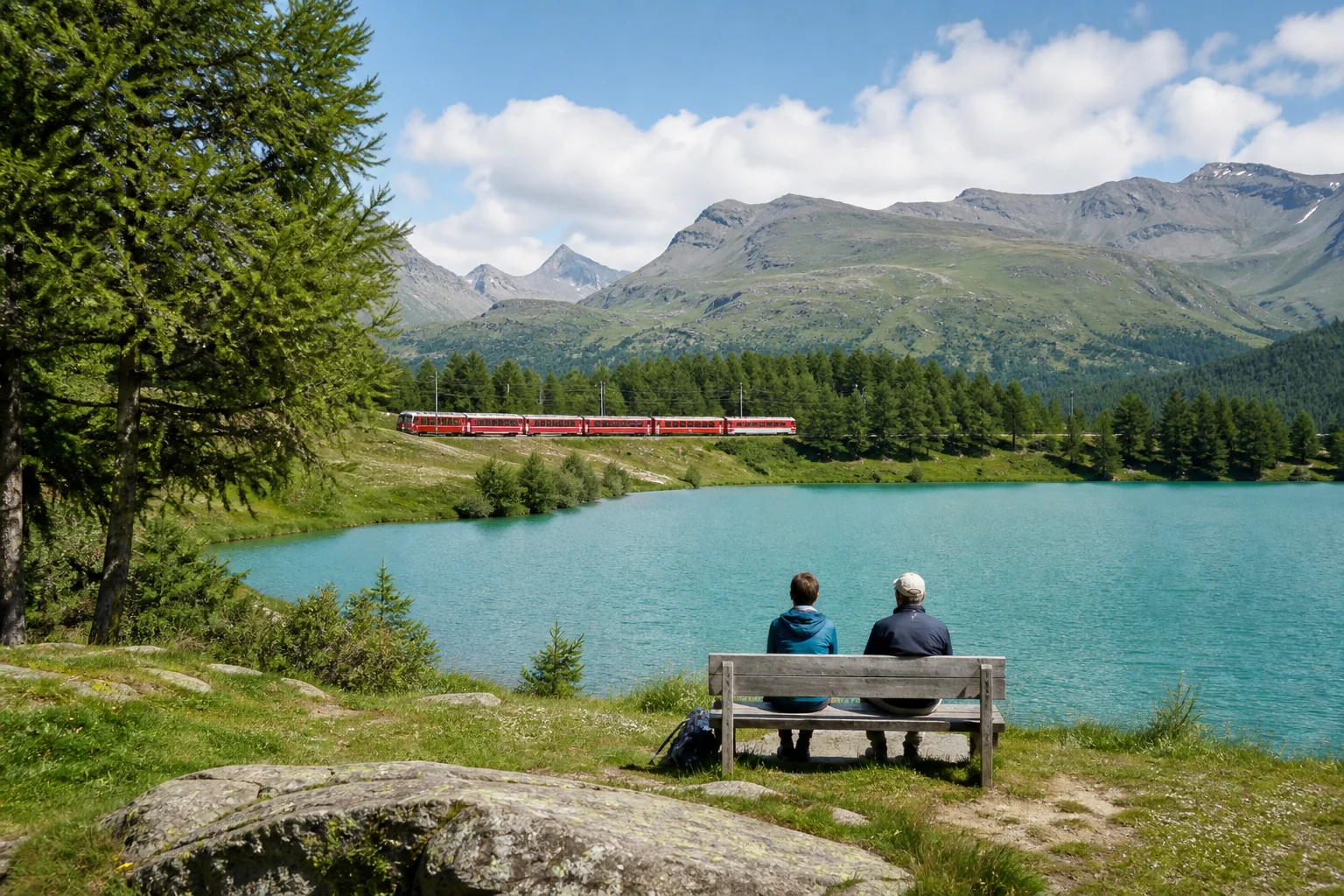
Mont Cervin Palace sits conveniently within the village and has a substantial spa and multiple restaurants, suitable for guests who value short routes and traditional infrastructure. The Omnia presents itself as a quieter mountain lodge above the centre; its access and vertical position should be discussed carefully where mobility is a concern. The relevant distinction is not the more dramatic photograph, but the ease between station, room, village and dinner.
Andermatt: a complete hotel for variable weather
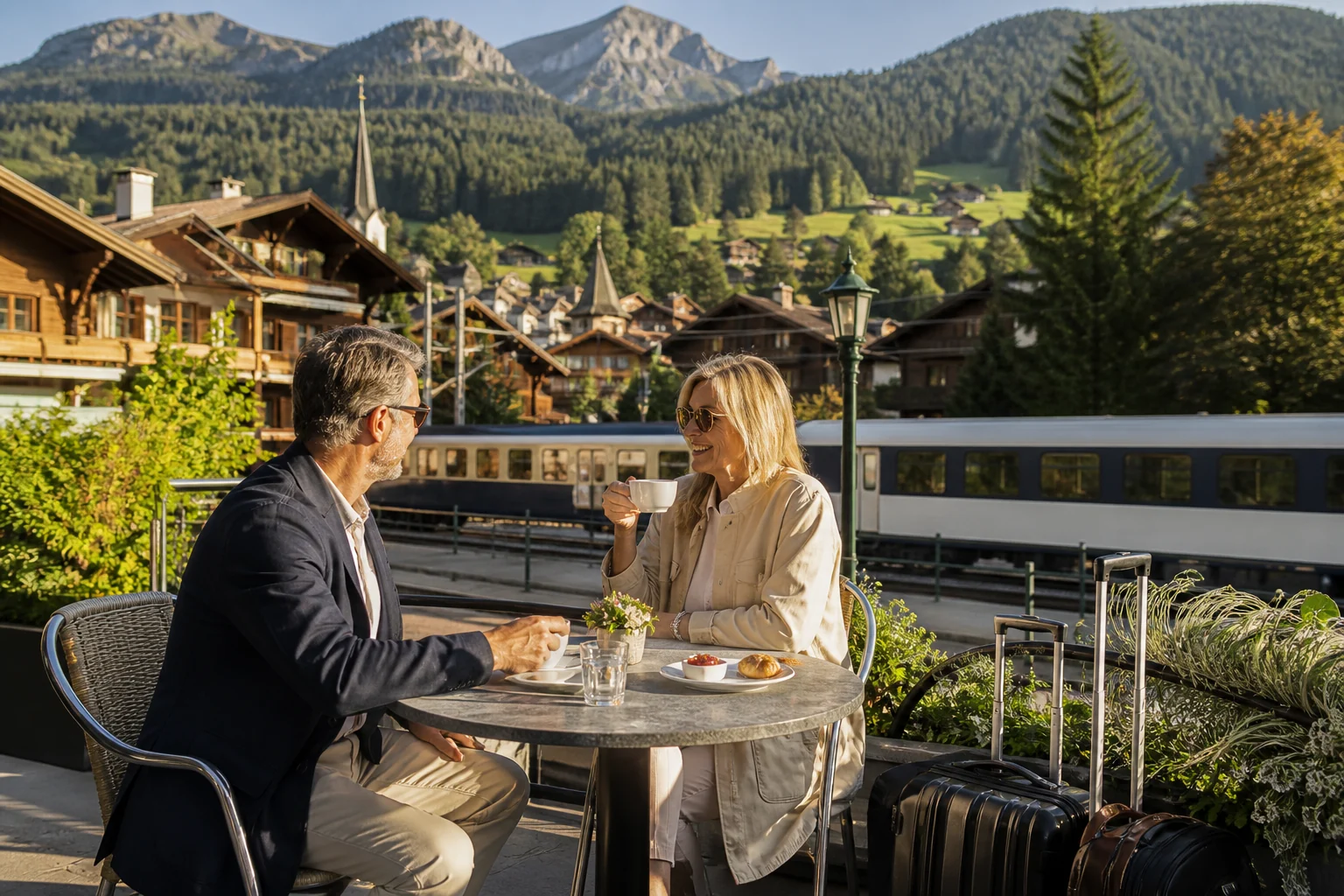
Compact and rail-connected, Andermatt works well for travellers combining pass scenery and train outings with generous time at the hotel. The Chedi Andermatt functions as a destination in itself, with large rooms, restaurants, spa and an interior that can carry a cool or rainy day. It removes the pressure to justify every morning with an excursion.
Andermatt continues to evolve. Room aspect, current works and traffic conditions belong in the enquiry alongside view and balcony. Guests expecting only an untouched historic village should understand that the experience now combines old Andermatt, newer resort development, railway and pass roads.
| Base | Strength without hiking | Watch for | Hotel character |
|---|---|---|---|
| St. Moritz / Engadin | Lakes, railway landscape and several mountain lifts | Short and differing hotel seasons | Central grand hotel or quiet out-of-town retreat |
| Gstaad | Villages, culture, wellness and gentle excursions | Events calendar and room orientation | Contemporary spa resort or lively palace |
| Zermatt | High-mountain railways and a car-free village | Transfer from Täsch, altitude and weather | Central classic or secluded lodge |
| Andermatt | Rail, mountain passes and a strong all-weather hotel | Current construction and road aspect | Self-contained luxury resort |
A day that does not need to achieve anything
A satisfying rhythm can consist of breakfast on the terrace, a railway or cable-car ride, a long lunch and two hours in the spa. The next day may need no more than a lake, a book and an early dinner. Quality comes from choice: the view is available, but nobody has to earn it.
The hotel needs substance to make this possible. A small treatment room, one closed restaurant or an exposed terrace will not sustain four quiet days. Confirm indoor pool, relaxation areas, lunch, library or lounge, room size, balcony, summer temperature control and dependable room service.
What should be confirmed before booking
- Exact operating dates for hotel, restaurants and intended mountain railways.
- The transfer chain from station or car park, including baggage.
- Room orientation, sunlight and view, plus distance from roads, terraces and works.
- Which facilities genuinely operate on rainy days.
- Whether spa, pool and restaurants admit day visitors or groups.
- How far ahead mountain restaurants, cultural events and transfers require booking.
- Which realistic outings require little walking.
The Deluxetargets view
Choose the mountain feeling first: the high open space of the Engadin, Gstaad’s gentler social rhythm, dramatic Zermatt or Andermatt’s weatherproof concentration. Only then choose the hotel according to location, season and its ability to sustain a complete day.
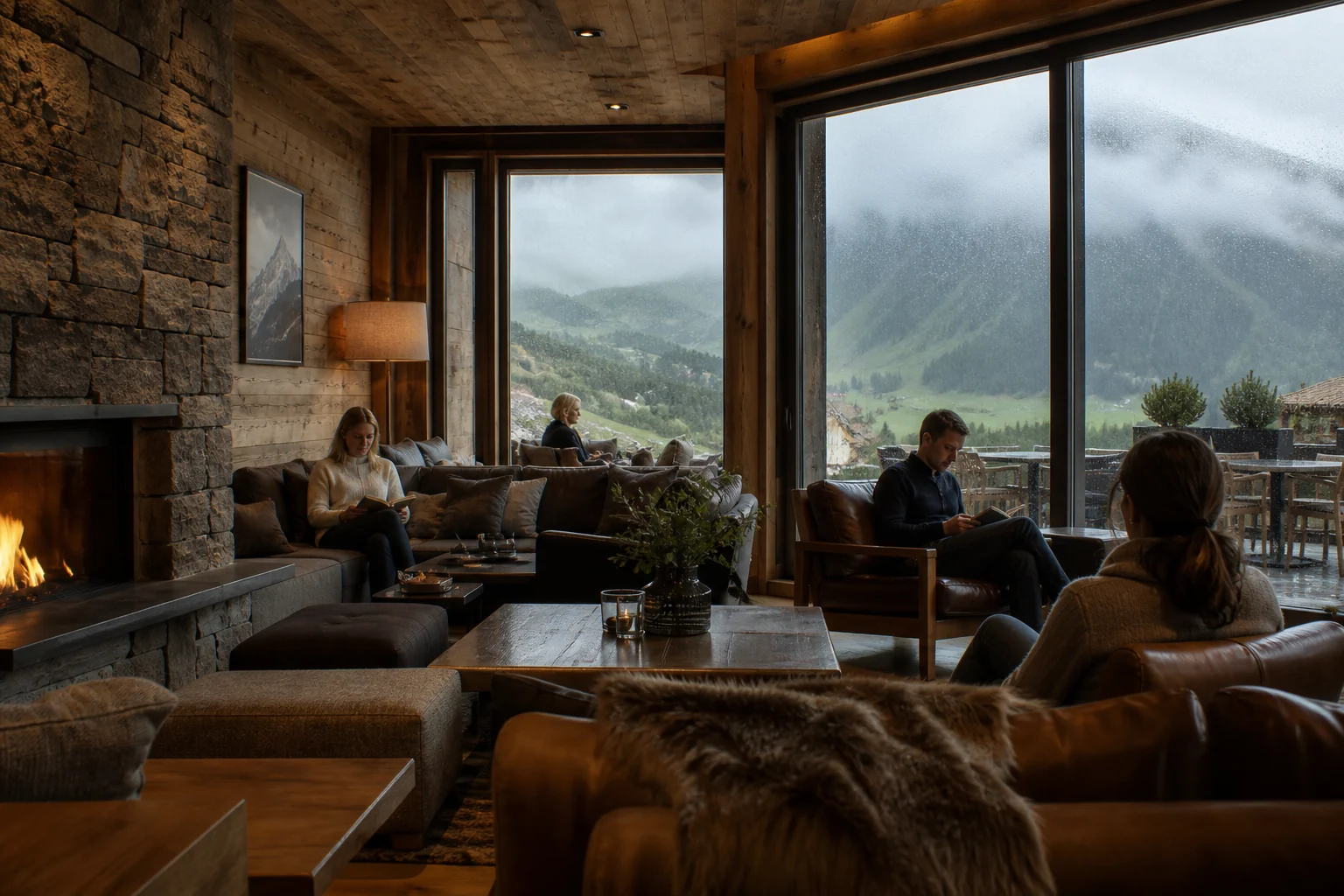
The most luxurious Alpine summer is not the one with the longest activity list. It is a stay in which the mountain railway remains spontaneous, rain is not a disappointment and the view begins as the balcony door opens. Rest arrives when the landscape is available without becoming an assignment.