
A successful Alpine summer is not measured in summits per week. It joins paths appropriate to the traveller with a hotel serious about recovery and a village that still works during thunderstorms or on tired legs. Luxury appears when activity and rest receive the same quality of planning.
The mountain is not a neutral wellness space
Clear air and open views can feel restorative, but altitude, sun, storms, wet ground and uneven terrain remain real. A sophisticated stay acknowledges conditions without dramatics. The aim is not absolute safety through inactivity, but better decisions before every day.
The right resort begins with a walking profile
“We like hiking” is an inadequate brief. Describe typical duration, ascent, surface, balance, exposure tolerance, knees, pace and preferred pauses. A guest happiest on a broad three-hour valley path needs different terrain from someone who enjoys short, steep mountain trails.
Eight kilometres may be easy or demanding. Gradient, exposure, path width, loose stone, roots, snow patches and descent decide. Official grading, current condition and local guidance matter more than an app's predicted time or an elegant photograph.
It taxes knees and concentration, particularly after a long lunch or in rain. Check whether a lift can assist, when it closes and whether the route to its station is open. A cable car is a planning tool, not a guaranteed rescue from an overambitious day.
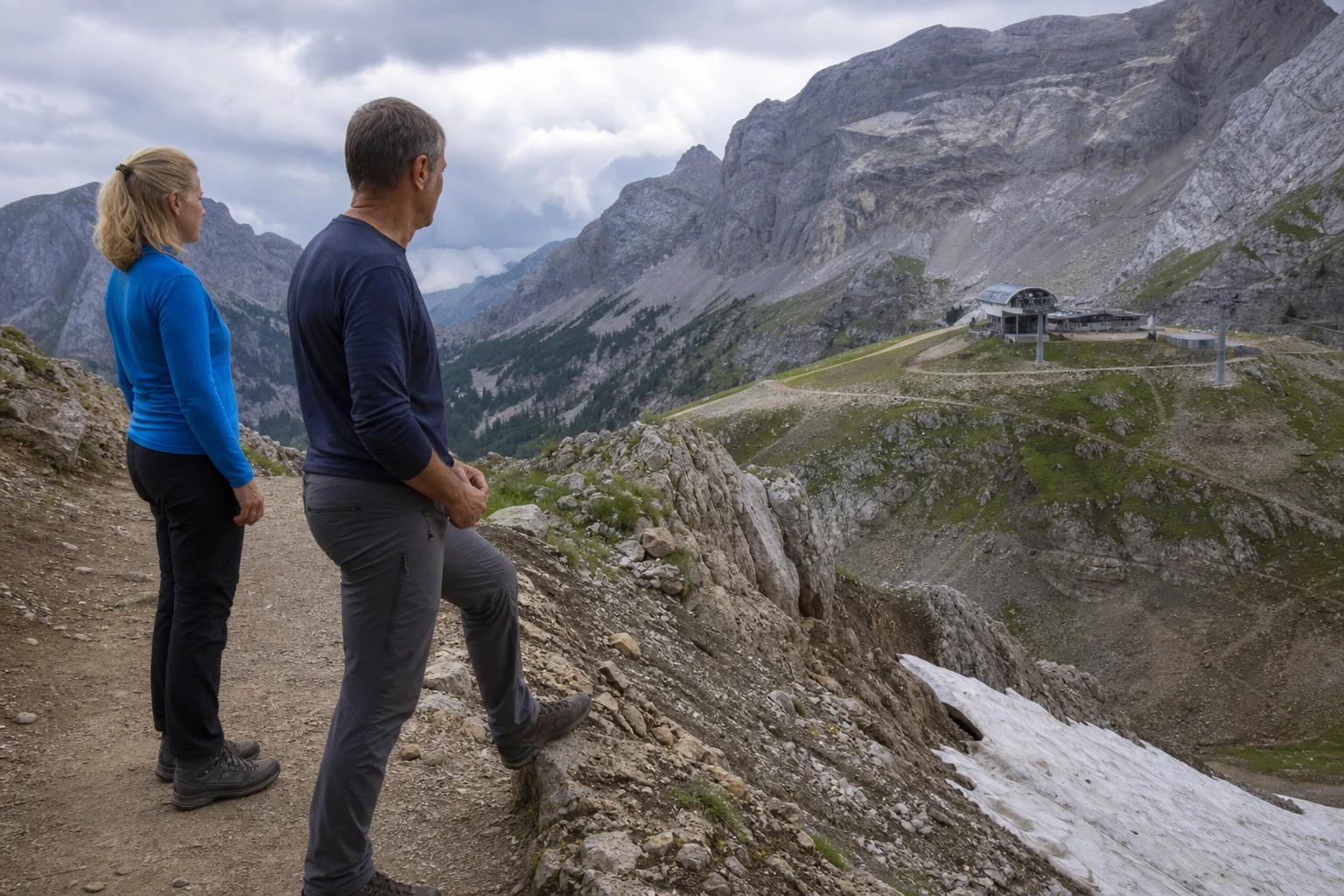
A bedroom significantly above a guest's normal elevation may affect sleep, pulse and appetite. Arrival should remain quiet; even the first walk need not make a sporting statement. Travellers with symptoms or known medical concerns should seek appropriate advice and respond conservatively on the ground.
The best walking base is rarely the highest
An elevated hotel may own the view while making every restaurant or village visit dependent on a lift. A valley base can open several directions and easier alternatives. Choose altitude according to daily rhythm rather than the panorama in the booking image.
Ask for the precise start from the hotel door. Does it cross a busy road, require a bus or climb a steep feeder section A strong location offers at least one beautiful walk without a transfer and several others through simple public transport.
Season, final descent, maintenance, wind and thunderstorms govern access. Dogs, pushchairs and bicycles may travel under particular rules. Obtain the current summer timetable and design a day that remains worthwhile if the highest section does not operate.
An early start is not an athletic pose
Mornings often bring cooler air, quieter trails and greater time reserve. In storm-prone periods they can be decisive. The specific forecast and local warning remain authoritative; no general rule substitutes for judgement on the actual travel day.
Agree who changes route and departure: guide, lift operator, local host or party leader. Summits, ridges, exposed paths and watercourses can become particularly problematic. When official warnings or qualified local people advise against a plan, changing it is not a lost holiday.
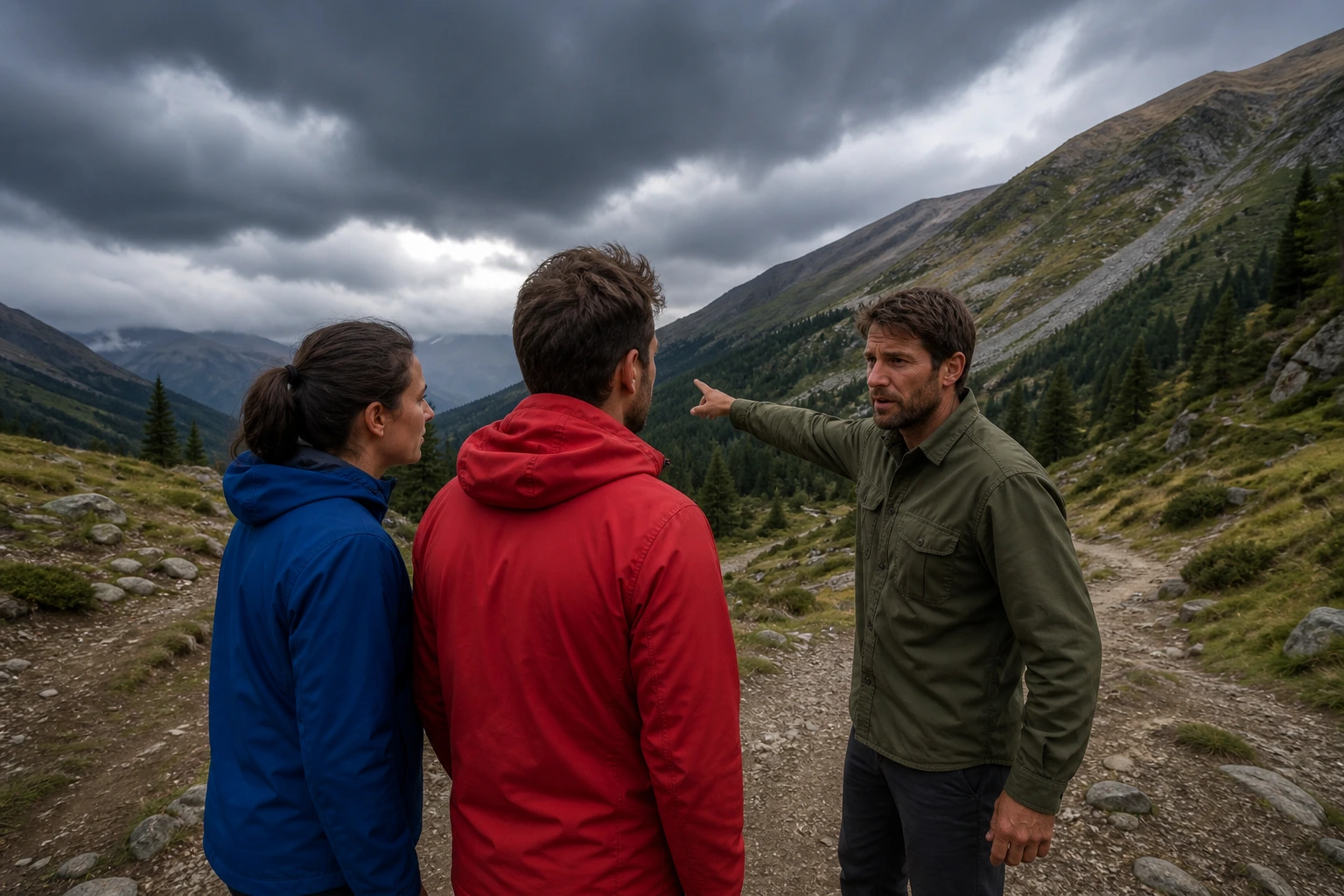
Elevation may offer relief but does not guarantee coolness. Solar exposure, south-facing slopes, lack of shade and warm nights alter comfort. Assess room temperature, shading, water, early starts and wooded alternatives instead of planning around one average figure.
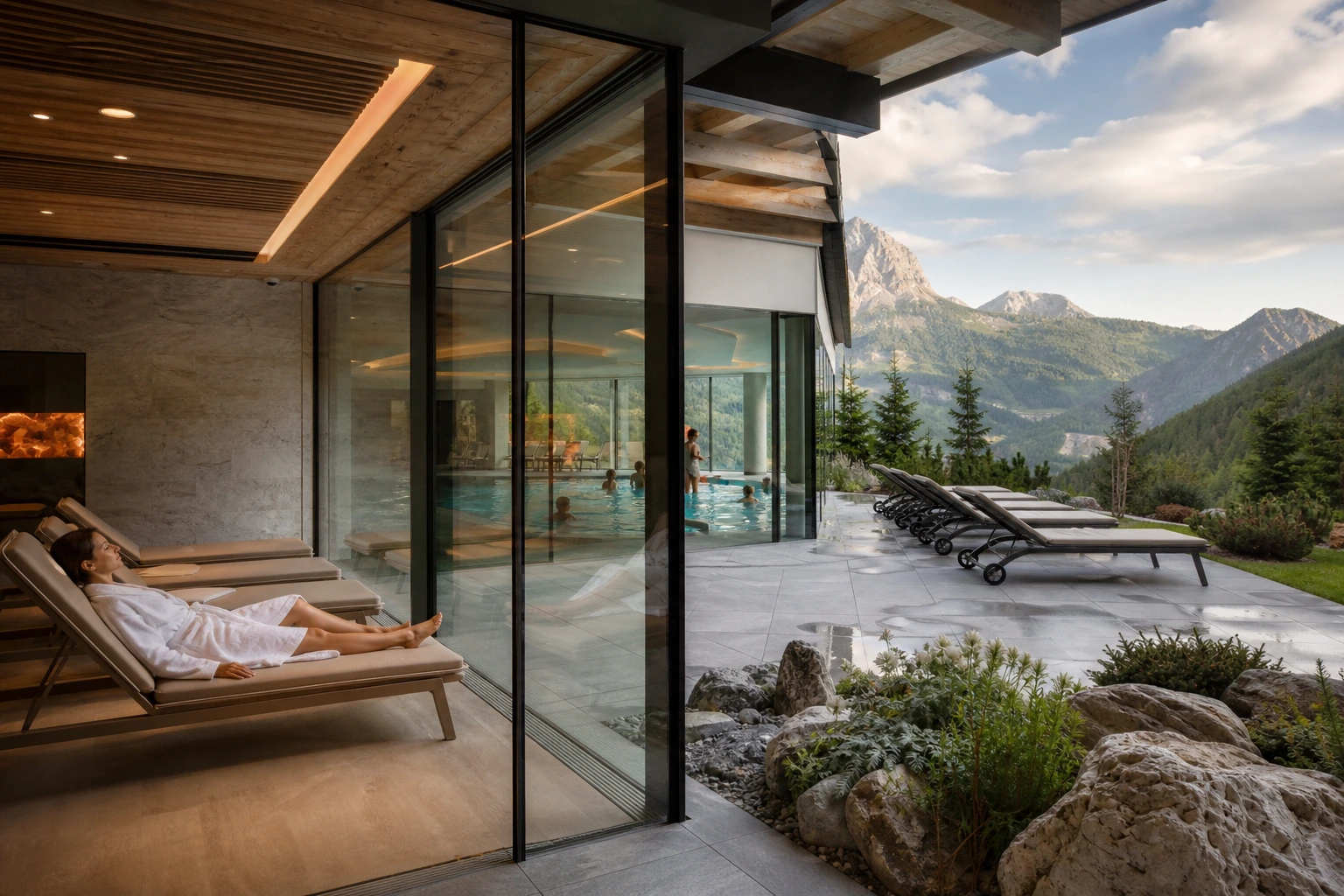
A property succeeds when a wet day does not feel cancelled. Convincing public rooms, spa, pool, library, food and a sensible valley excursion matter more than an activities catalogue. Confirm which facilities actually remain open and bookable in poor weather.
A recovery day belongs in the active plan
Rest need not begin only after somebody is exhausted. A quiet afternoon following two active days protects the group's appetite for walking. Massage and heat may feel pleasant but do not replace medical assessment of pain or injury.
Family hours, music, day-spa visitors and terraces change atmosphere. Examine quiet zones, operating times and proximity to rooms. Travellers seeking silence may gain more from a smaller spa with well-defined areas than from the most cinematic infinity pool.
Blackout, temperature, mattress, balcony, drying space and a quiet floor plan matter. Mountain view may also bring morning sun, restaurant terrace or deliveries. Request a precise orientation away from road, bar, mechanical plant and events rather than relying on “quiet room”.
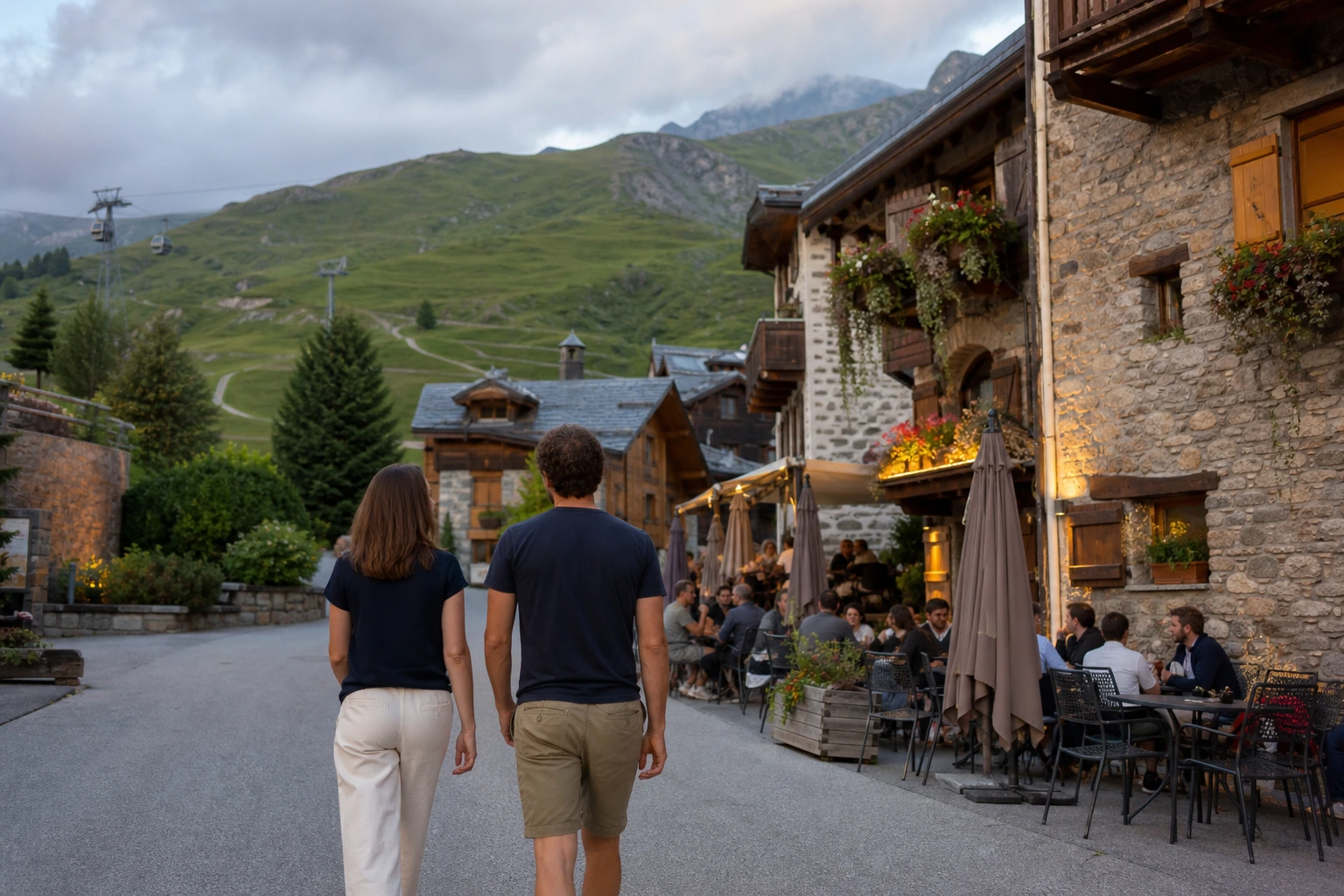
Alpine settlements are working communities. Farming, church bells, construction, motorcycles and festivals belong to the season in varying degrees. Research them rather than promise absolute silence. Genuine calm is the right position within a living place, not its artificial shutdown.
Engadin and Lech: Alpine breadth beyond winter
Lakes, valley paths, rail and elevated access support different abilities. That makes the region valuable for parties travelling together without walking identically. The precise village matters: St Moritz, Pontresina and Sils create different relationships between hotel, trail, lake and station.
Summer reveals paths, meadows and a quieter village rhythm. Hotel and lift seasons, plus road or hillside position, are decisive. Travellers expecting the density of winter service should confirm exactly which restaurants and facilities work during their week.
The Dolomites, Megève and Zermatt: three summer propositions
The mountains' form is extraordinary, yet valleys and passes create driving time. Choose a base according to desired walking sectors rather than the broad Dolomites name. A hotel near one lift can reduce daily transfers; celebrated sunrise locations still require early, safe logistics.
Village life, food and less severe terrain suit travellers combining movement with social pleasure. Weather and seasonal operation remain variable. Its strength is not maximum wilderness but the ease of returning from a path to a substantial place.
Rail and lifts open immense perspectives while the village remains car-free. Luggage, electric transfer, altitude and busy corridors demand exact planning. Those seeking quiet should inspect room orientation and time of day as carefully as the celebrated view.
A private guide is not a prestige accessory
A strong professional can reconcile level, pace, weather, trail condition and group differences. Confirm qualification and scope for hiking, mountaineering, via ferrata or glacier travel; these are not interchangeable. The right person refuses the wrong route and proposes a better day.
Children do not automatically accept a reduced adult itinerary. Short stages, water, animals, lifts and visible objectives can motivate. A second carer or flexible return allows ambitious adults to continue without forcing the slower party to perform.
A lake, railway, village, spa or mountain restaurant should be independently reachable. The party can separate in the morning and reunite easily later. A remote hikers' hotel without alternative mobility may feel surprisingly restrictive to companions.
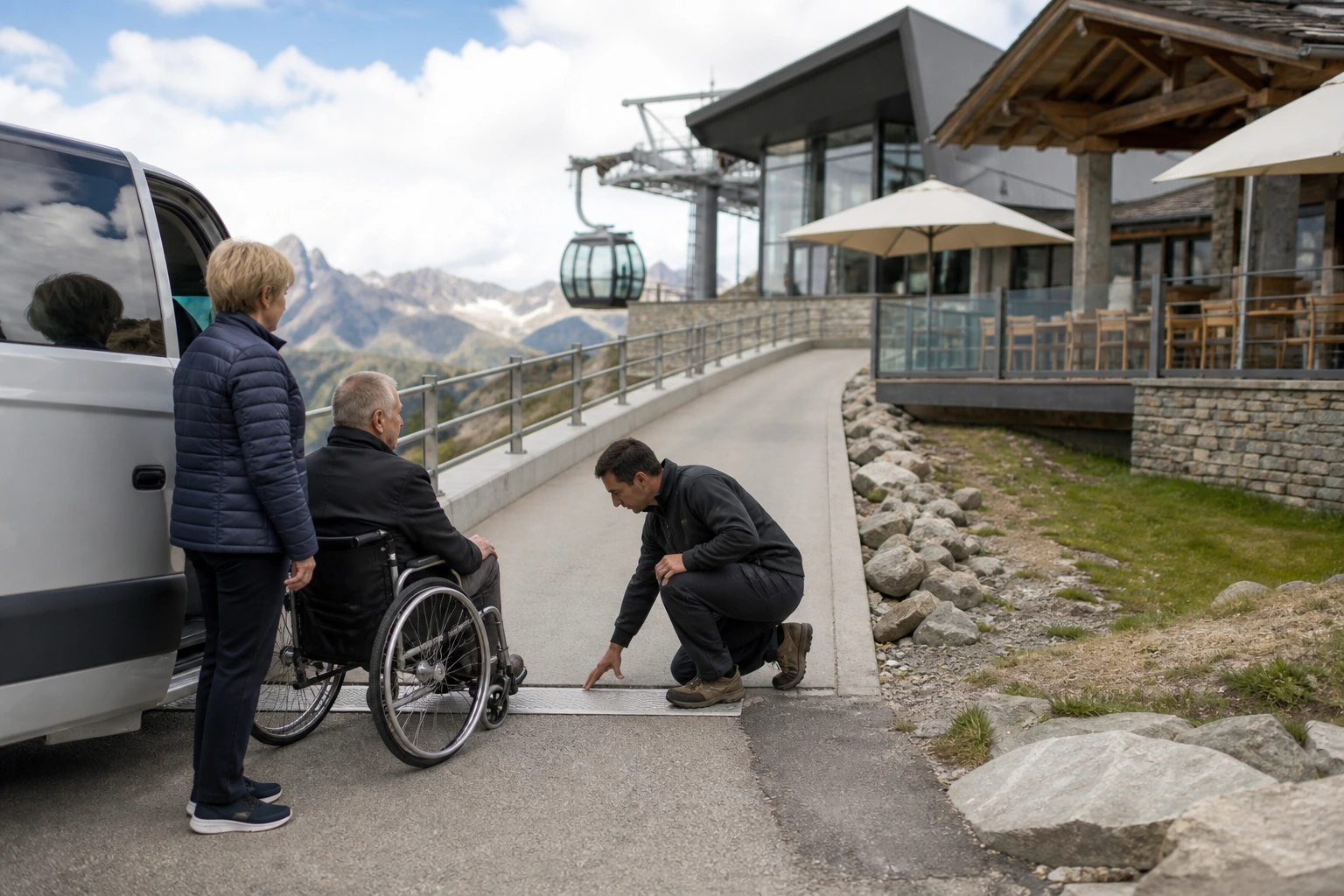
Vehicle, station, lift, surface, gradient, toilet and restaurant form one chain. Mountain transport and viewpoints have different conditions. Request specific measurements and assistance; a general wheelchair icon proves no complete excursion.
Lead rules, grazing animals, wildlife protection, lift policies, heat and water all matter. Restaurant, spa and housekeeping arrangements may restrict hotel access. Current local rules and respectful conduct around livestock or protection dogs take priority over leisure plans.
Pack for weather, not the lobby
Gripped footwear, rain and warm layers, sun protection, water and a small emergency reserve belong even on an easy day. Equipment must fit the route; a complimentary hotel backpack may not. Rental, poles and shoe service should be confirmed before arrival.
The ideal week remains asymmetrical
A possible pattern is orientation, medium walk, light valley or cultural day, longer route, free afternoon and one final flexible highlight. Weather may reorder everything. Luxury is a booking and transport structure that permits adaptation instead of imprisoning the guest in a rigid programme.
Seven proofs before booking
Obtain full hotel and lift operating dates, exact path access, suitable route categories, current condition, weather and retreat plan, qualified local contact and precise quiet-room position. Add the party's mobility, children, dogs and non-walkers.
The editorial verdict
Luxury in the Alpine summer is not a contest between activity and idleness. It is a daily exchange between movement, attention and recovery, adjusted to weather and people. The best resort opens a good path – and asks nothing more of the guest afterwards.