
The Amalfi Coast looks effortless from the water. Its logistics are not. Positano has no conventional yacht basin, Capri becomes a transport interchange in high summer, anchoring rules around Punta Campanella vary by zone, and swell can turn a famous beach club into the wrong idea for the day. A good itinerary therefore refuses to cling to a wish list. It combines secure nights, elegant tender journeys and the one hotel pause that offers more ashore than another bay.
The coast at a glance
- Ideal duration
- Five to seven nights for Capri, Nerano, Positano and Amalfi, with room for weather and berthing availability.
- The calmer period
- Late spring and September can be more comfortable than July and August; openings and weather must be checked for the actual week.
- The operational key
- Not every night off the most famous town, but a blend of harbour, protected anchorage and a credible alternative route.
- The common mistake
- Booking restaurant, beach club and hotel transfer without aligning captain, tender distance, swell and return journey.
The itinerary begins with the correct embarkation port
Naples, Castellammare di Stabia, Sorrento or Salerno may each be the sensible place to embark or disembark, depending on yacht, crew change and onward travel. The most glamorous address is not automatically the most efficient. A start south of Naples can reduce sailing time; a start inside the Bay of Naples may place Capri more naturally into the first or last day.
The charter route should be agreed as a set of building blocks rather than an immutable order. Capri, Nerano, Positano and Amalfi remain the core, but the captain needs freedom to rearrange them according to wind, swell, berth confirmation and guest rhythm. A yacht correctly positioned in shelter early in the day produces more luxury than an ambitious schedule of late tenders.
Capri: one island, two very different experiences
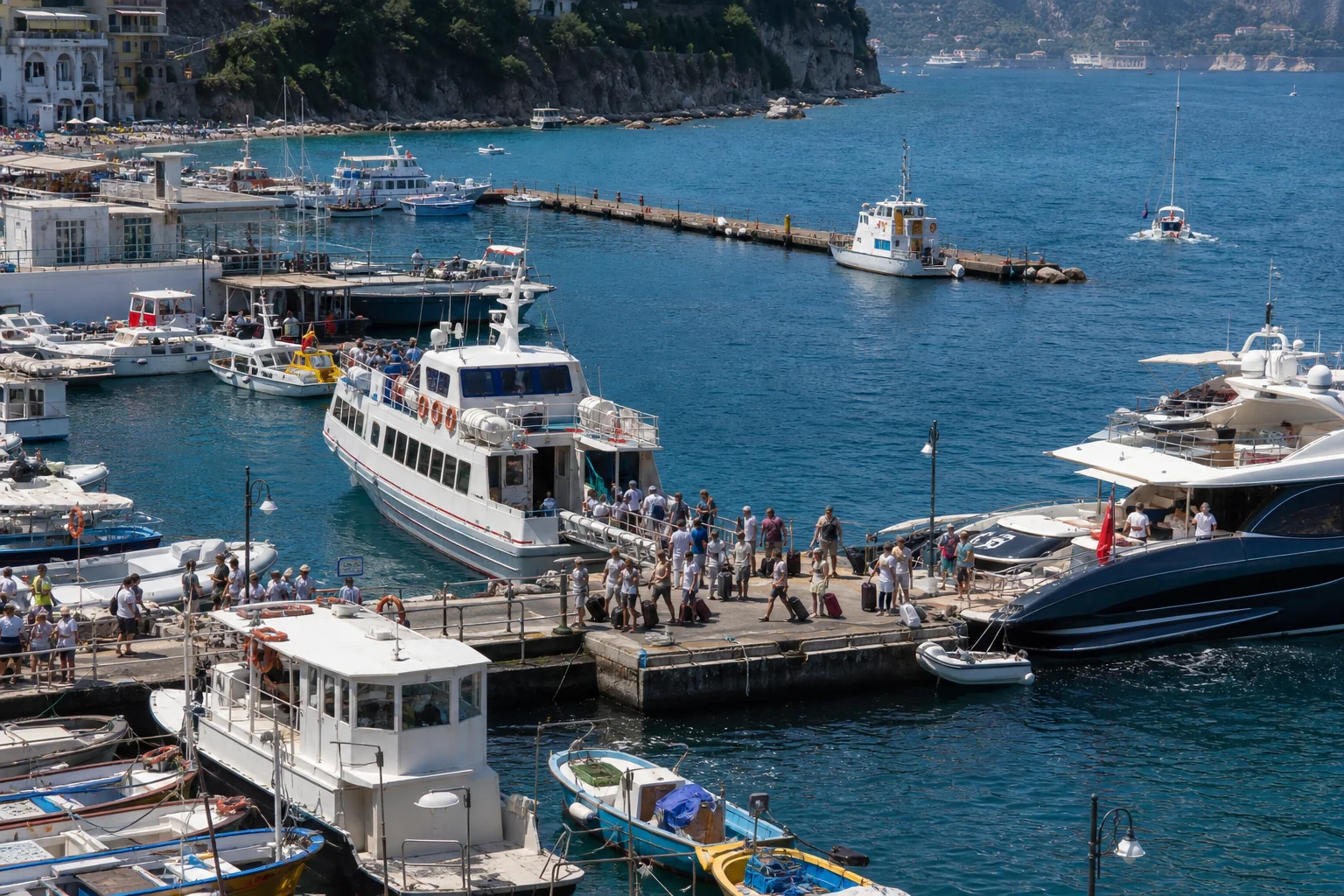
Marina Grande is the practical entrance to Capri and its busiest point. The official Porto Turistico di Capri publishes approximately 300 berths, depths up to eight metres and capacity for yachts up to 60 metres, although availability is particularly tight in sought-after weeks. A confirmed berth simplifies baggage and a long day ashore, but places the yacht in the centre of ferry and harbour activity.
At anchor, the island presents a more beautiful face but going ashore and returning depend more heavily on tender operations. The Blue Grotto, Faraglioni and Marina Piccola should not be compressed into one generic “Capri day”. A calmer rhythm separates early water time, lunch and an evening ashore – or deliberately removes one of them.
La Fontelina beneath the Faraglioni is an iconic daytime address with a defined season and reservation system; for 2026 the club published an opening from mid-April to mid-October. The table is only half the booking. Arrival and return have to work with sea conditions, and the captain should value the final practical tender movement above a desired lunch duration.
Nerano and Punta Campanella: lunch requires navigation
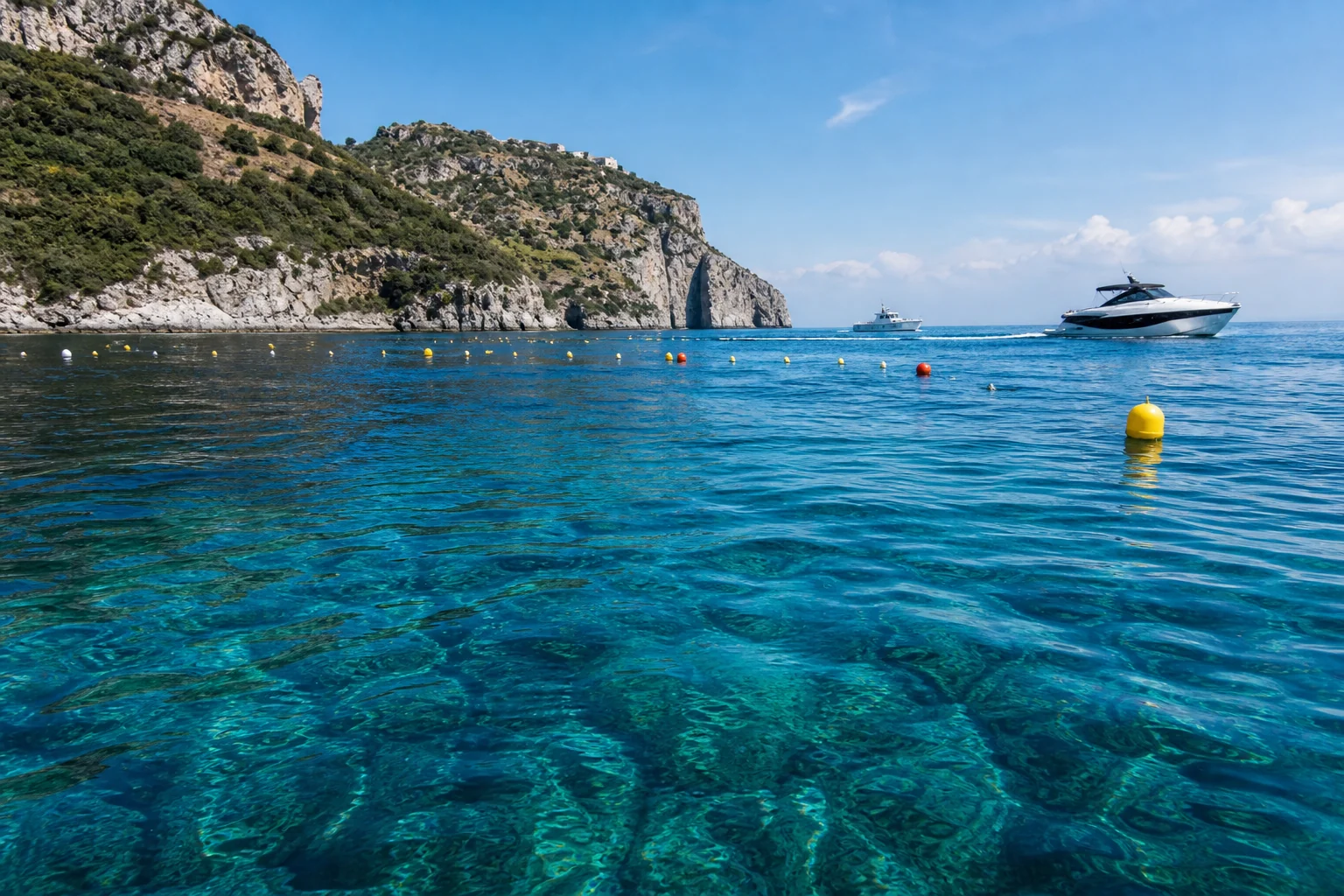
Nerano is compelling for a long lunch because restaurants such as Conca del Sogno sit at the water and the yacht remains close. Yet this is also where the Punta Campanella marine protected area begins. Rules differ by zone and may restrict navigation, anchoring and commercial activity. The captain must check current regulations, authorisations and mooring fields; an open patch of sea is not permission to drop anchor.
The best plan does not allow lunch to control the entire nautical day. An early swim, confirmed buoy or safe position, tender movement in daylight and an alternative restaurant ashore prevent three beautiful hours from creating a late and uncomfortable return.
Positano: a buoy rather than a conventional marina
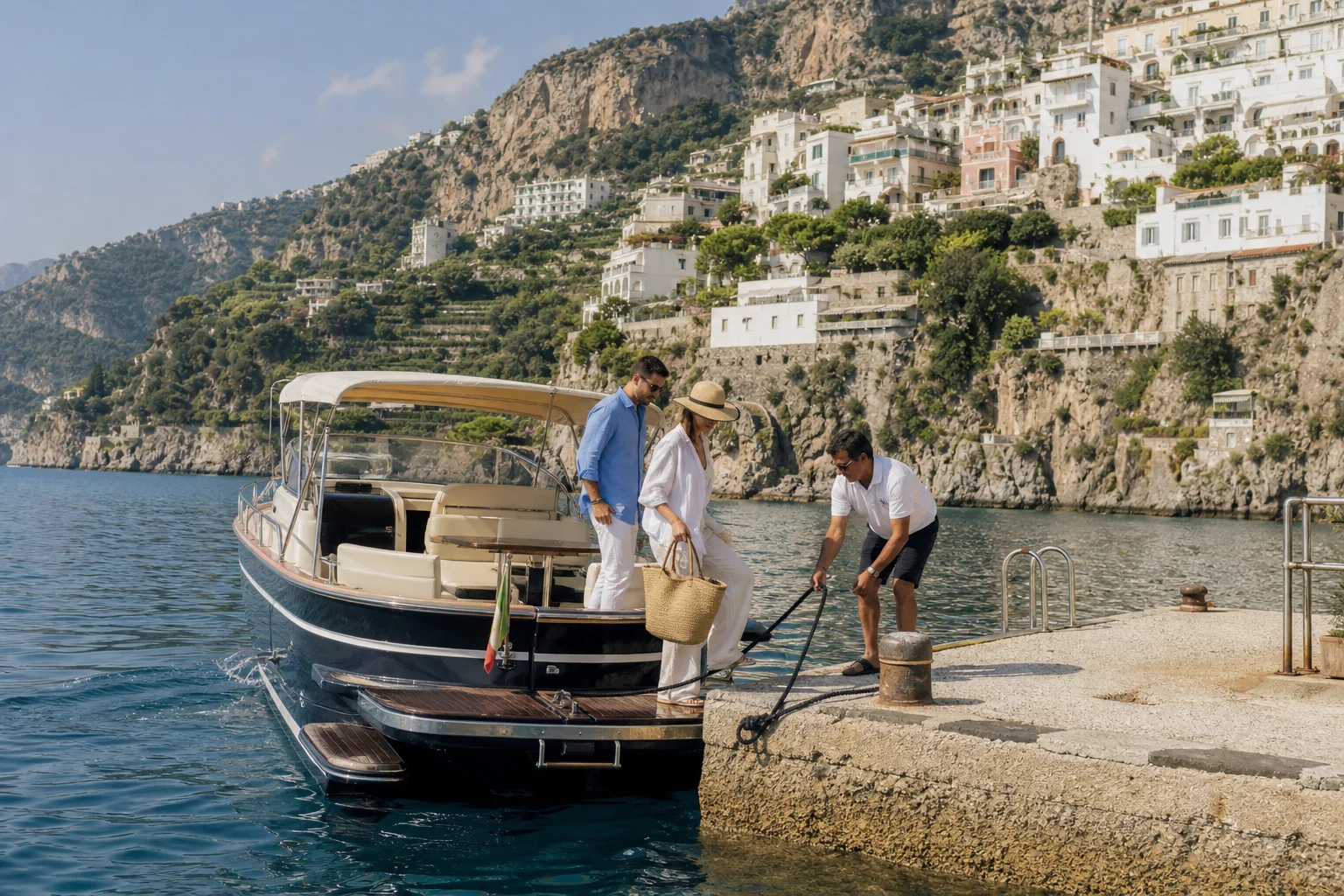
From the water, Positano becomes the perfect theatre, but it has no traditional harbour basin for a quiet night alongside. Marina di Positano operates a buoy field for pleasure boats and yachts up to 50 metres and connects it to shore by tender. The arrangement is functional while remaining exposed to weather and swell.
Guests land at one of the coast’s densest points. A photograph, lunch and shopping visit shares the same space with ferries, day visitors and excursion boats. Early arrival or a later evening can be more civilised than the middle of the day. Arienzo Beach Club, outside the centre, offers an alternative rhythm, but space, boat transfer and return to the yacht still need to be treated as one booking chain.
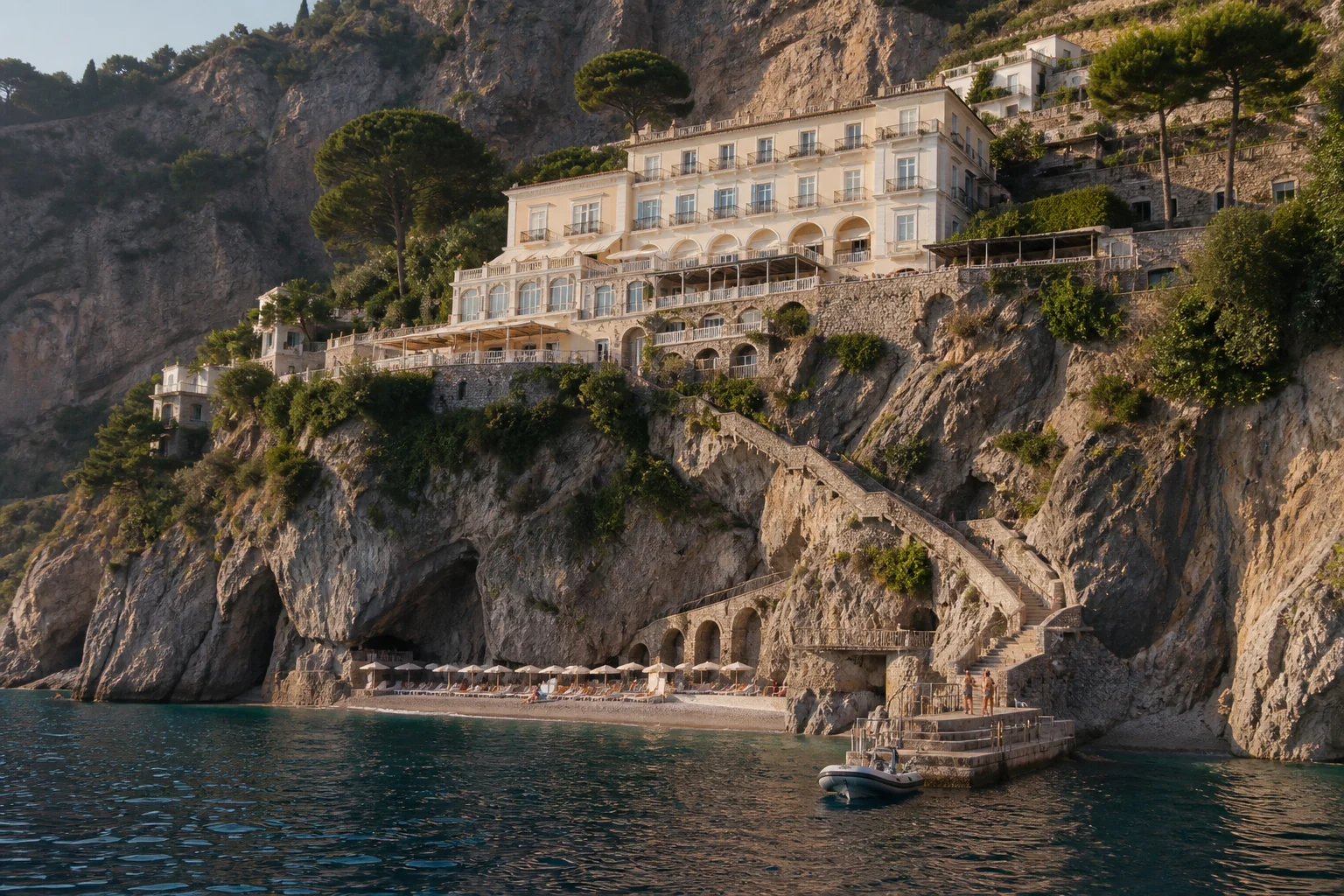
For a night ashore, Il San Pietro di Positano can be more intelligent than staying in the centre. Located outside town, with a beach club and boat experiences, the hotel allows the coast to be enjoyed without constant stairs and road traffic. The hotel does not replace the yacht; it provides a considered counterpoint.
Amalfi and Ravello: harbour or hotel pause
Amalfi offers genuine but limited berthing. Marina Coppola and other local operators publish capacity for yachts around 34–35 metres. Larger vessels or full dates require another solution. Even with a berth confirmed, ferries and day traffic shape the harbour; its value is direct access to Amalfi and the road up to Ravello.
Borgo Santandrea west of Amalfi is particularly strong in a hybrid itinerary. The hotel confirms a private dock with direct access to its beach club, pool and seaside restaurant. Lunch or an overnight can therefore be integrated from the water without first crossing the main town. Ravello, by contrast, derives its appeal from distance above the sea.
A night in its gardens creates quiet and a change of perspective, while requiring a well-planned car transfer from Amalfi.
| Format | Strength | Risk | Best for |
|---|---|---|---|
| At anchor | Privacy and immediate contact with the sea | Swell, anchoring rules and tender dependence | Quiet mornings and flexible days |
| Harbour berth | Secure shore access and simple logistics | Noise, scarcity and high seasonal charges | Long Capri or Amalfi evenings ashore |
| Beach club | A defined lunch-and-swim day | Fixed reservation under variable weather | Guests who value atmosphere over seclusion |
| Hotel night | Change of scale, spa, gardens and deeper land time | Duplicated logistics and unused yacht time | Longer charters or exceptional water-access hotels |
When the yacht becomes too much
A party planning a different hotel restaurant, several excursions and late nightlife every day may be using the yacht as an expensive transfer. Travellers susceptible to seasickness, very young children or guests with reduced mobility may also find repeated tender movements tiring. A strong coastal hotel with two carefully chosen boat days may then be the better trip.
The yacht is at its best when water and rhythm are the purpose: a morning swim, a slow relocation, lunch ashore or aboard, and only selected evenings in town. More than one fixed highlight each day removes the ease from this coast.
Costs that belong to the route
Beyond the charter fee, local taxes, APA, fuel, harbour and buoy fees, deliveries, transfers, gratuity and possible repositioning can apply. Capri and Amalfi berths may absorb a significant part of variable spending in high season. Fuel use is driven not only by distance but by speed, generators, tender operation and repeated repositioning.
The captain accounts for operating expenses, yet guests determine through their plan how those expenses arise. The brief should identify the two shore moments that are indispensable and where harbour comfort matters more than a night at anchor.
What must be confirmed before departure
- Embarkation and disembarkation with transfer, baggage and time buffer.
- Preferred harbours and realistic alternatives for yacht length and draught.
- Current protected-area, anchoring and mooring-field rules.
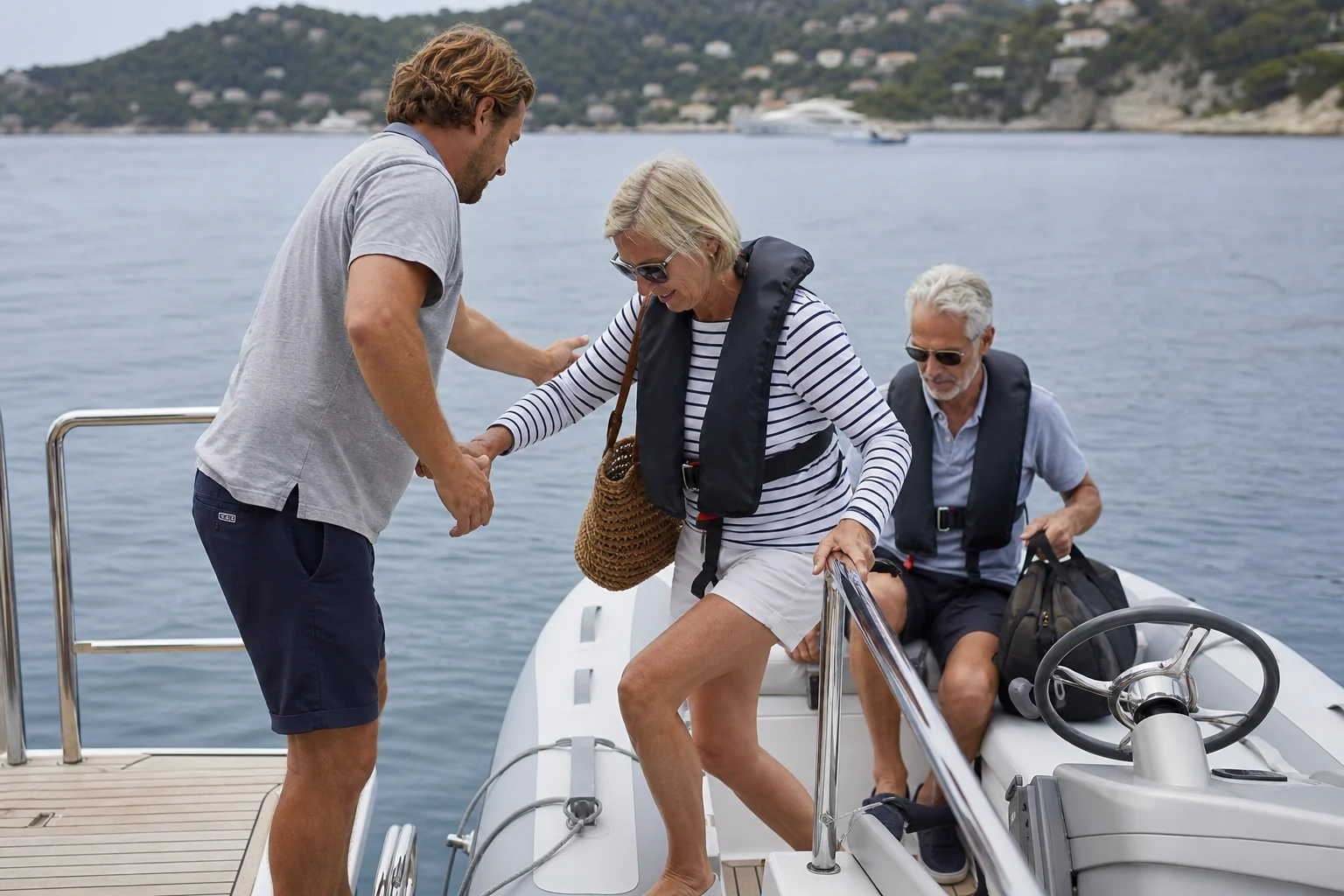
- Tender capacity, weather protection, night operation and safe boarding.
- Beach-club and restaurant terms after a weather cancellation.
- Guest mobility on steps, shingle and a moving tender.
- APA budget for fuel, berths, food and spontaneous changes.
The Deluxetargets view
Do not plan the Amalfi Coast as a collection of famous reservations. Establish two strong shore days, a flexible Capri strategy, one protected day of rest and at least one route that does not collapse in swell. The captain decides safety; the travel plan must leave enough room for that responsibility to be exercised elegantly.
The finest charter does not connect the greatest number of names. It lets Positano work from the water, reaches Capri before the heaviest traffic, keeps lunch in Nerano movable and understands when Borgo Santandrea, Il San Pietro or a night in Ravello adds more depth than another buoy. On this coast, luxury is first of all timing.