
Mallorca becomes far more interesting when it is no longer treated as a single beach destination. Palma asks for a different pace from the Tramuntana; Santanyí calls for a different hotel from Port d'Andratx. The most rewarding itinerary joins only a few precise contrasts: city and countryside, stillness and sociability, a private finca and one beautifully orchestrated day beside the sea.
Read Mallorca through the rhythm of the day
Palma's lanes, Deià's terraces, the central plain and the coves of the southeast offer distinct holidays. Trying to experience all of them from one address turns the island into a sequence of car journeys. A considered trip begins with a region and a desired rhythm. Hotel, finca and beach club are then chosen as parts of one geographical composition, not as a collection of names gathered from fashionable lists.
The concise route rule: four nights usually need one base, whether Palma, countryside or coast. Seven nights can comfortably hold two chapters. Ten nights create room for a third perspective, perhaps the Tramuntana and southeast after Palma. A beach club should remain one well-planned day. It is rarely a sound reason to organise an entire Mallorcan journey around a sunbed.
Place the airport, preferred coves, restaurants, markets, walks and villages on a map, then calculate real drives with parking, mountain roads and evening traffic included. A supposedly central hotel can be poorly positioned for what matters to you. Guests who want dinner in Palma every night need a different base from those who walk at sunrise and remain by a finca pool after lunch. Geography is often more consequential than a hotel ranking.
Palma, the interior and the coasts follow different logic
Two or three nights allow the city to work at its best: architecture, galleries, shopping, bars and restaurants sit close together, and a hire car can wait until departure for the countryside. Palma suits a journey that should gather energy before slowing down. Travellers seeking only landscape and silence can omit it without regret. A luxurious itinerary never needs to include a sight or city simply because convention says it should.
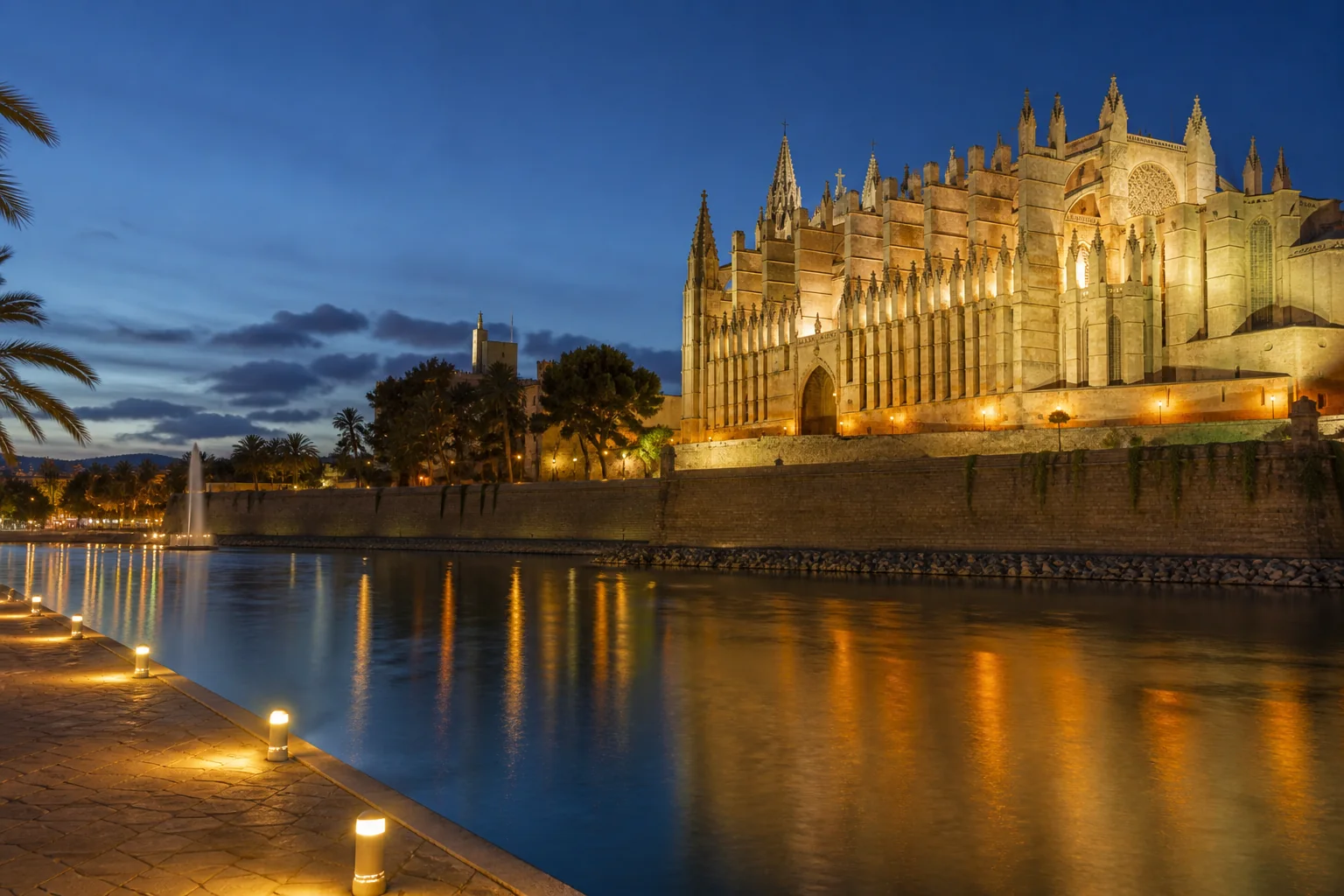
An old-town address turns the neighbourhood into the hotel's extended lobby. Sant Francesc Hotel Singular, set close to the cathedral, Almudaina, La Lonja, galleries and restaurants, illustrates the value of being able to step outside and explore on foot. The trade-offs may be restricted access, bells, compact rooms or difficult parking. Confirm valet arrangements, lift access, courtyard position and rooftop seasonality rather than judging only the design photography.
Among fields, olives and small towns, the pleasures are unhurried breakfasts, time by the pool and short local excursions. A private finca works for families or friends; a finca hotel or agroturismo brings service and a social pulse to a similar landscape. The relevant distance is often the journey to dinner, not the number of kilometres to the sea. Daily cross-island outings quickly reduce a retreat to a parking place between activities.
Es Racó d'Artà presents workshops, agriculture, craft, walking, meditation, spa and food as parts of the stay rather than optional decoration. This kind of address makes sense when guests genuinely engage with its programme or consciously do very little. Leaving after breakfast and returning at night means paying for a world one never inhabits. The luxury of a retreat is not remoteness alone; it is permission to spend meaningful time on the property.
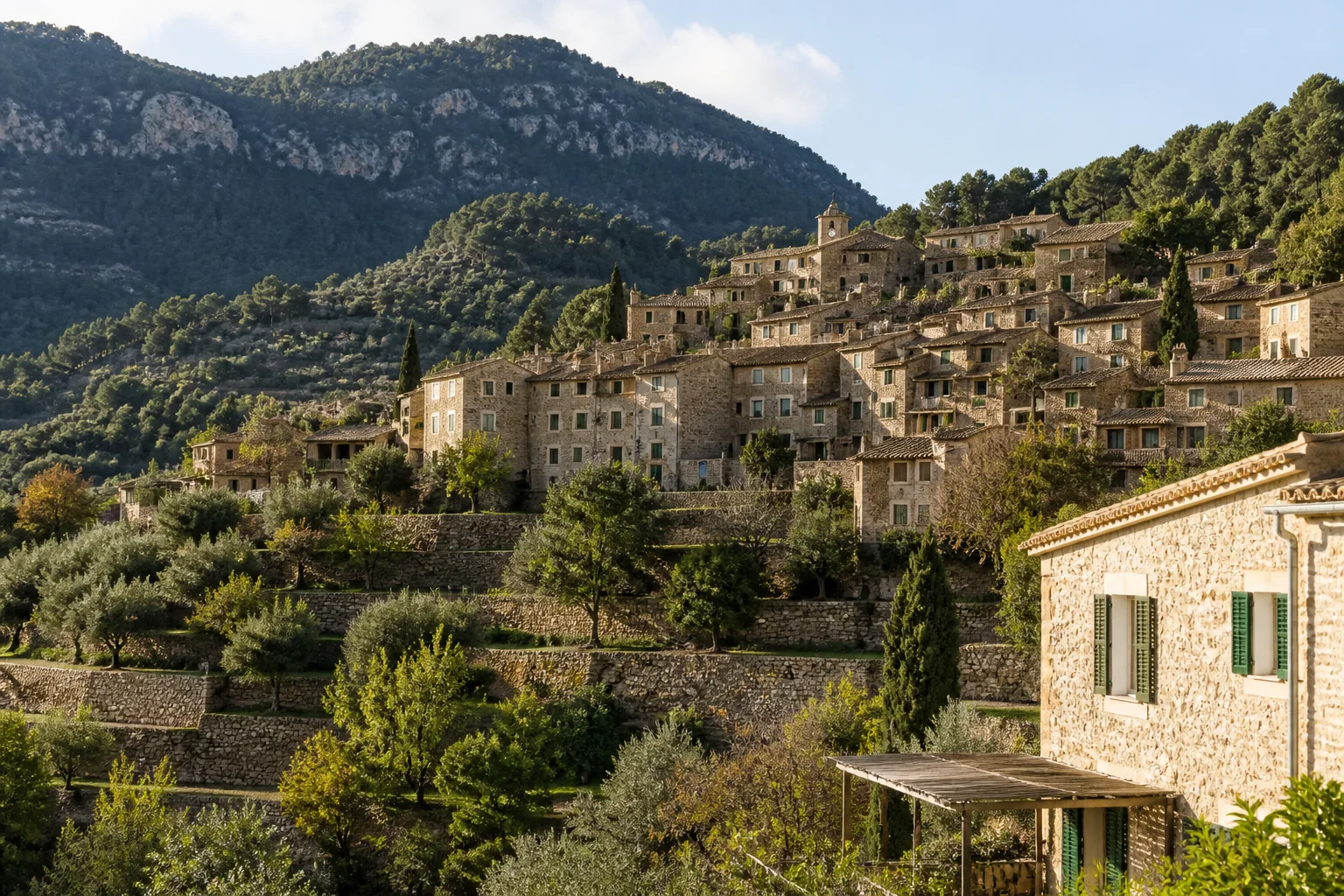
The UNESCO-listed cultural landscape is formed by mountains, terraces, villages and historic water-management systems. Roads are beautiful but winding and slow. A base near Deià, Valldemossa, Sóller or Banyalbufar suits walks, viewpoints, long lunches and a small number of chosen coves. Repeated drives to the southeast make little sense. The itinerary should become smaller here so that the landscape, rather than the schedule, can feel expansive.
Its artistic history, restaurants and mountain setting exert a strong pull, but summer brings scarce parking, crowded roads and sought-after tables. A hotel in or near the village removes much of that friction; a villa outside offers privacy while increasing the need for a driver. Deià rewards travellers who accept its pace.
Important dinners should be secured early and paired with a safe return rather than treated as spontaneous stops on an island tour.
Around Pollença, Port de Pollença and Alcúdia are broad beaches, sheltered water, cycling routes and access towards Formentor. The area works particularly well for families and longer stays, while feeling entirely different from the stony intimacy of the west. Decide whether you want to sleep in a historic town, beside a harbour or directly on the beach. Those three settings create very different evenings despite their relative proximity on the map.
Santanyí brings together a lived-in town, market, galleries and access to several coastal pockets. Can Ferrereta demonstrates how a 17th-century townhouse can combine pool, spa and considered dining with life beyond the hotel door. It suits travellers who resist both an isolated villa and a large resort. In high summer the coves and parking areas fill early; the elegant plan begins before the busiest traffic and leaves the afternoon unforced.
Port d'Andratx, Cala Llamp and the coast towards Palma bring together boats, restaurants, hillside villas and established clubs. This is practical territory for guests wanting polished, outward-facing days and short journeys between selected addresses. It is less persuasive for total rural seclusion. Hillside rooms may have exceptional views but many steps and no simple sea access. A blue horizon from the terrace never guarantees an effortless swim.
A beach club is a travel day of its own
On Mallorca the term can mean a restaurant with beach loungers, a cliffside pool, an urban sea platform, a hotel enclave or a music-led daytime venue. Some provide direct bathing access; others primarily offer a view and a pool. Check terrain, audience, volume, shade, children policies, minimum spend, towels and changing facilities. Discovering at arrival that “beach” means a ladder into deep water is not a detail for non-swimmers.
Gran Folies occupies the rocky slope of Cala Llamp, combining loungers, pool, restaurant and access to the water. It is conceived as a full day on the hillside, not as a conventional barefoot walk along sand. Steps, exposure to sun and sea conditions all affect comfort. The dramatic setting may be ideal for adults and confident swimmers, while young children or guests with limited mobility require a more exact assessment before booking.
Mhares combines pool, loungers, dining and sunset on the coast south of the city. An address like this can open or close a journey elegantly when luggage, showering and flight times have been solved in advance. It is not a substitute for a beach day if soft sand and shallow entry are essential. Its strength is the feeling of a final Mediterranean afternoon within comparatively easy reach of Palma and the airport.
At many clubs a sunbed does not guarantee the desired restaurant table, and a lunch booking gives no claim to a front-row lounger. Categories, arrival windows, cancellation terms and minimum spends differ. Coordinate both elements and confirm whether a deposit is credited to the bill. The most expensive position is not automatically the best: reliable shade, less music and easier access may be worth considerably more than proximity to the water.
A late-morning arrival, swimming, a long lunch and an unhurried afternoon usually feel more generous than attempting two venues. A sunset-oriented club may call for a later start. Ask when the kitchen, music and light change character.
Spending ten exhausted hours in the first row is not inherently more luxurious than making the club a focused four- or five-hour highlight and returning to the hotel while the day still feels pleasurable.
Dress for the terrain, not just the restaurant: linen and sandals may work at the table but not on steep rock or wet ladders. Water shoes, a hat, light cover-up and dry pouch often matter more than another outfit. During a hotel transfer, luggage should never remain visible in a vehicle; a driver with secure storage makes the stop genuinely relaxed. Confirm a shower and private changing option if dinner or a flight follows directly.
Ask whether entry is over sand, rock platform, steps or ladder, and establish depth, shelter from waves and lifeguard provision. Access may close in rough conditions while the restaurant and pool remain open. For a non-swimmer, a sea view is not a bathing facility. Families need explicit rules and close supervision.
Good planning describes the physical journey from lounger to water rather than relying on the colour of a bay in a photograph.
Mallorca does not need to deliver a monument every afternoon. A shaded table, excellent local produce and three hours without another appointment may become the most memorable day of the trip. Boutique hotels and clubs differ in culinary ambition, volume and pacing. Discuss menus, allergies, kitchen hours and table position early, then leave space around the meal. Luxury is also the confidence not to hurry towards the next reservation.
A prearranged car removes parking searches, navigation, evening fatigue and the need for one guest to abstain. Spontaneous taxis are not guaranteed in peak season or when a club closes. Establish the meeting point, waiting policy and direct contact, particularly at steep or restricted sites. A hire car remains ideal for flexible days; a driver can be added for Palma dinners, wine visits, mountain restaurants and beach clubs. The two belong comfortably in one itinerary.
A traditional llaüt or comfortable motor yacht reveals coves without parking pressure and creates distance from activity on shore. Departure harbour, wind, shade, swimming stops, crew, catering and return time all need precise discussion. Start from the coast that fits the itinerary rather than sending guests across the island before breakfast.
An uncertain forecast also needs a worthwhile land alternative and cancellation terms that are understood before the deposit is paid.
Four, seven or ten nights
A Palma boutique hotel supports culture, restaurants and one selected coastal day. A finca or small hotel in Santanyí, Artà or the Tramuntana supports regional exploration and retreat. Combining both within four nights often sacrifices too much time to arrival, packing and departure. Choose one principal desire and, at most, a strong contrasting day. A short Mallorca trip improves when it is not treated as a compressed version of a full week.
Two nights in Palma followed by five in the countryside is a persuasive sequence: first the city on foot, then a car and a slower tempo. Seven nights in one region can be equally right when the hotel or finca has sufficient depth. Place the beach club within the relevant geographical chapter, not at the opposite end of the island. On transfer day, coordinate luggage, car collection and lunch so that an entire holiday day is not lost.
Palma, Tramuntana and southeast can now form a coherent progression if each stop receives at least three nights. A family might choose the north instead of the city; a couple may combine Palma, retreat and coast. More than three hotels rarely creates additional luxury. Repetition has value: returning to a favourite cove,
recognising the morning café and enjoying an evening without directions are how an itinerary begins to feel like a stay.
Season and travelling party reshape the hierarchy
Outside high summer, walking, cycling, Palma, spa and the interior become more important. Pools and beach clubs may operate seasonally or with reduced services; water and evenings are cooler. In exchange, roads, villages and restaurants often become more comfortable. Opening dates and pool heating must be confirmed for the specific year. An October visit should not be sold through the promise of a July photograph, but appreciated as a calmer Mallorca of its own.
Shallow water, short transfers, a kitchen, laundry, pool safety and flexible meals usually outweigh the appeal of a fashionable address. A private finca can be excellent when safety and service are explicit; a boutique hotel works when rooms connect and circulation is easy. Choose clubs for shade, entry to the water and sound level. The strongest family itinerary protects empty afternoons and does not require children to maintain an adult social timetable.
A Palma weekend of galleries and restaurants can lead directly into a silent country hotel, creating the feeling of two journeys without a long transfer. One boat day or beach club adds a sunny, social counterpoint. The key is not to reserve every evening in advance. Couples also need room to return spontaneously to a bar, beach or hotel terrace. Freedom becomes more valuable, not less, when every available address is tempting.
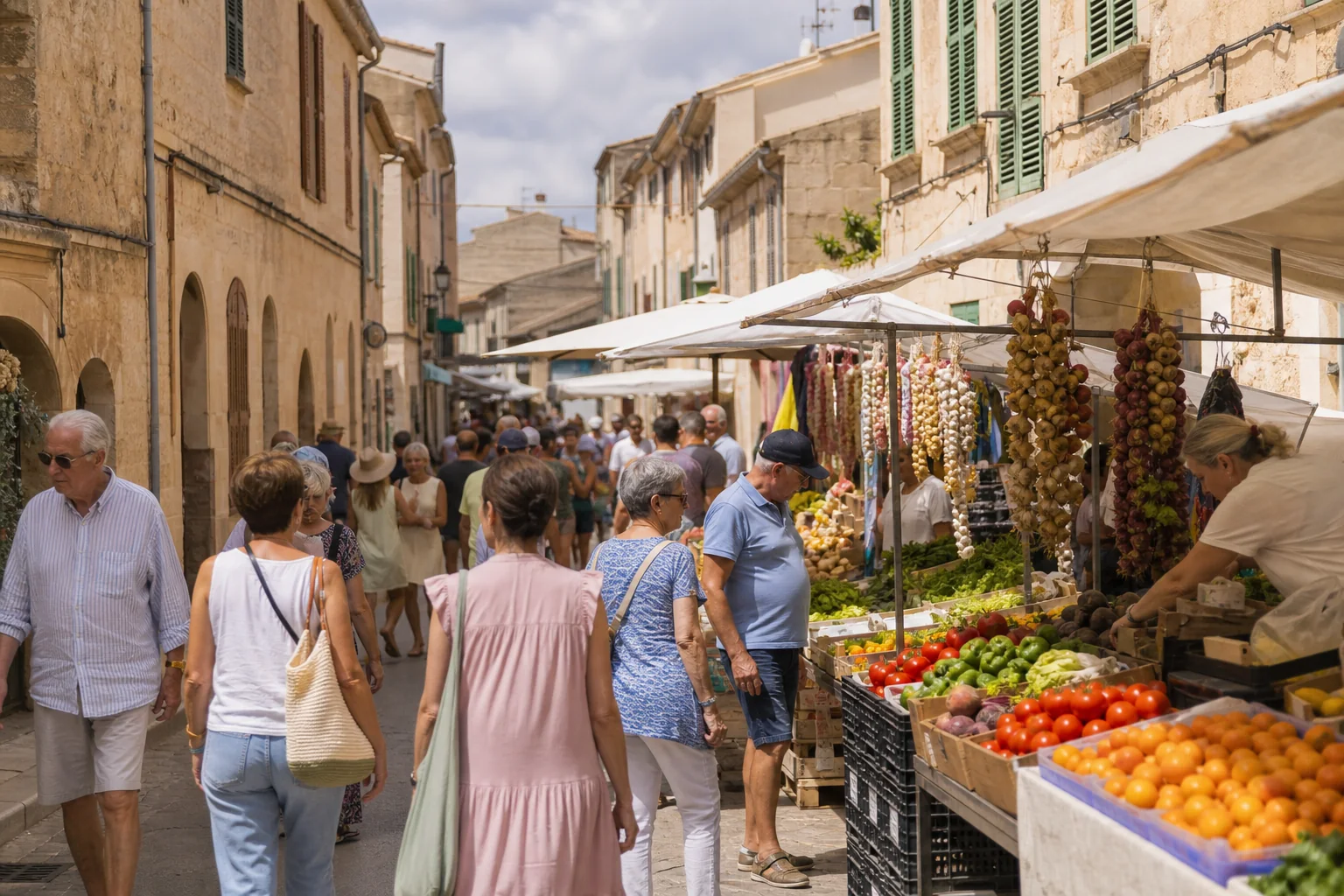
Santanyí, Pollença, Artà and Sineu have their own weekly rhythms, residents and traffic. Arrive early, move respectfully and allow the market to lead into lunch or a quieter look at the town. A finca stay benefits from local produce, but buying food is part of daily island life rather than staged folklore. When choosing ceramics, textiles or provisions, ask where and how they were made instead of seeking only the most photogenic stall.
Avoid mistakes and brief the journey clearly
Too many regions, cross-island drives every day, a club without the correct lounger, dinner without a return car and a finca with an unclear service level are common failures. So is the assumption that every celebrated cove will feel serene in August. The correction is simple: fewer bases, geographically grouped days, confirmed arrangements and protected empty time. The quality of a journey is never proved by the number of addresses completed.
Define duration, preferred regions, desired balance of stillness and activity, type of beach, willingness to drive, restaurant style, children's ages and mobility. Accommodation, club, driver and boat can then be tested on one map and within one daily rhythm rather than in isolation. Season, opening hours, deposits and cancellation terms must remain subject to current confirmation. The resulting route gives its transitions the same care as its headline moments.
Mallorca does not require a longer list; it requires a clear and personal composition. Palma brings density, the Tramuntana landscape, the interior stillness and the right beach club one gleaming social day. A finca and a boutique hotel are not rivals but tools for different chapters. Deluxetargets chooses region and rhythm before address, allowing the island to remain generous and the journey to feel assured rather than hurried.