
Five-star après-ski is not a champagne price or a volume setting. It is a graceful transition: from the last run to a good table and later to the hotel, without wet ski boots, uncertain transfers or one party expecting three different evenings. Courchevel, St. Moritz, the Arlberg, Verbier and Zermatt each master a different version of that transition. The best resort is therefore not the most famous, but the one whose social energy suits the trip.
Après-ski at a glance
- The long lunch
- Courchevel 1850 or St. Moritz, when terrace, table and music matter more than the final run.
- The real party
- Verbier or St. Anton, when live music, dense crowds and a late progression through bars are actively desired.
- The elegant finish
- Zermatt, Lech or a strong grand hotel, when spa, fire and dinner should take the lead.
- The essential plan
- How every guest returns safely to the hotel after lunch or a party without skiing.
Courchevel 1850: après-ski as a staged afternoon
In Courchevel 1850, après-ski often begins over lunch. A table at an altitude restaurant such as Le Cap Horn is not a short stop but may take possession of the afternoon: south-facing terrace, long menu and guests who are not waiting for the last lift. In the village, bars, palace hotels and dinner can merge almost without a seam.
This format suits travellers who enjoy visibility, service and a carefully constructed sequence of tables. It is less successful for a party that also wants to ski seriously. A late lunch removes time from the mountain; alcohol and a final ski descent do not belong together. Driver, hotel transfer or confirmed lift return must be resolved before the first drink.
Hotel position shapes the evening more than room size. A genuine ski-in/ski-out property can simplify the transition, while an address in the wrong village creates daily driving and waiting. Courchevel consists of several villages and elevations. “Courchevel” alone is not a sufficiently precise location.
St. Moritz: mountain club meets grand hotel
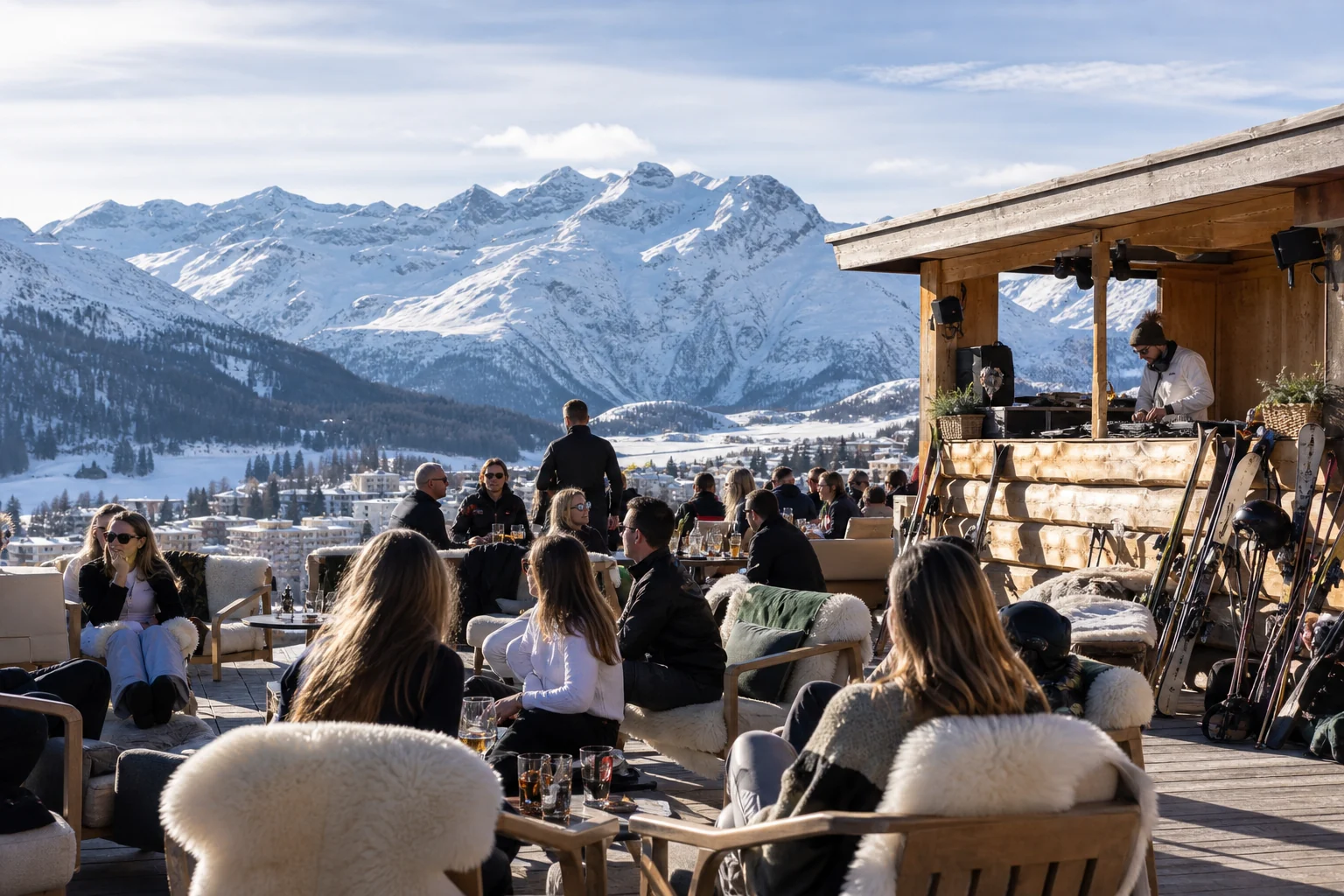
St. Moritz stages après-ski in a more cultivated and less linear way. Paradiso Mountain Club combines food, cocktails, music and an extensive wine and champagne programme above the valley. The evening can continue in Chesa Veglia, a palace bar or a private event. Its strength is the combination of mountain setting and grand-hotel society.
That does not automatically mean quiet. Weeks around polo, White Turf, the gourmet festival or holidays change the audience, traffic and availability. Guests seeking the energy should plan themselves into it. Those wanting an elegant drink without the need to be seen need a calmer hotel bar and a room away from event spaces.
Paradiso clearly promises eating, dancing and music. That is how it should be read: a mountain club, not a silent hut. Return depends on operating hours, mountain transport and an organised vehicle. A table without a return plan is not a complete reservation.
The Arlberg: between Hospiz Alm and MooserWirt
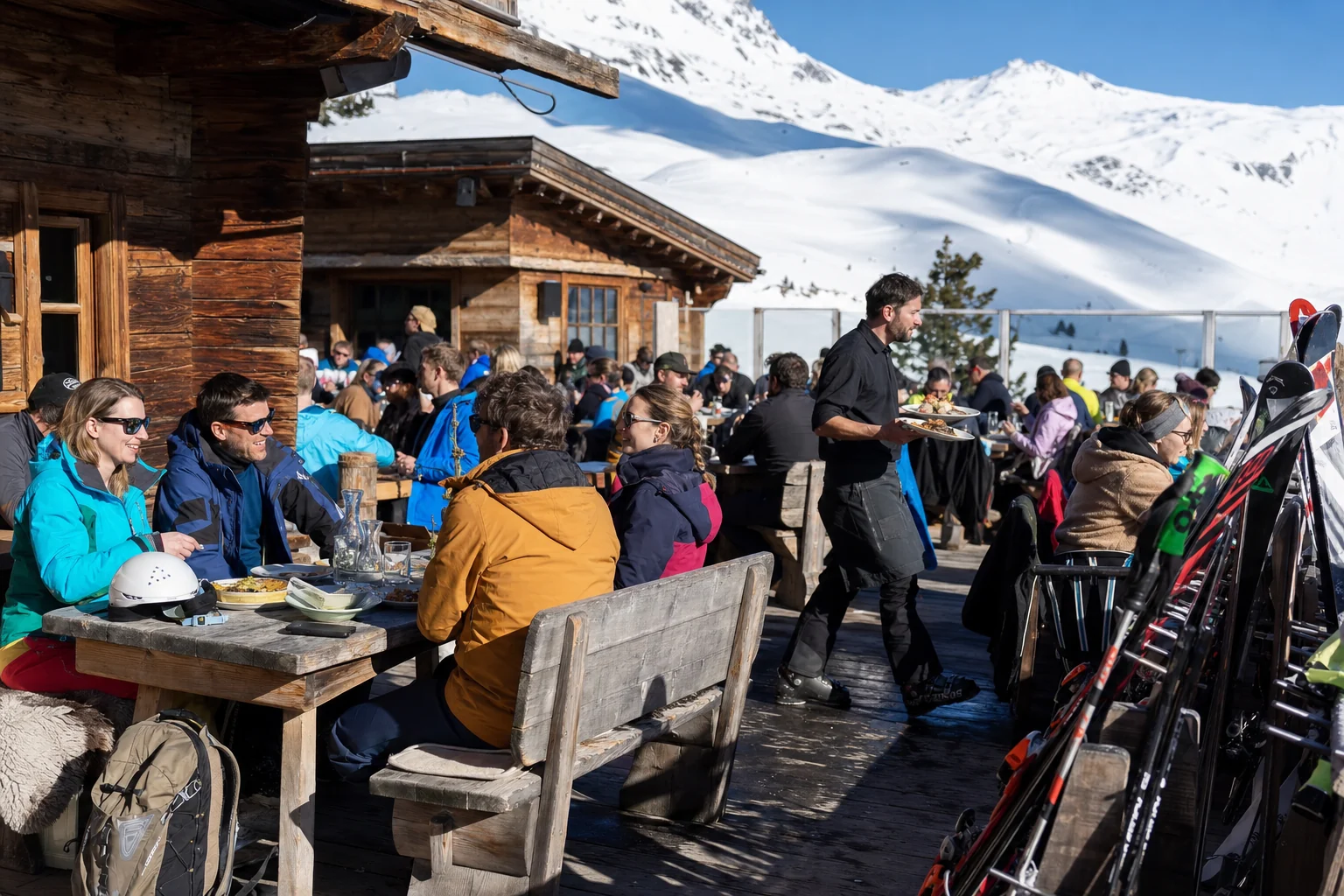
Two very different cultures sit close together on the Arlberg. Hospiz Alm in St. Christoph offers a sun terrace, elevated Alpine food and a sociable lunch. MooserWirt in St. Anton describes itself with humour as a legendary ski hut and builds its reputation on DJs, beer and densely packed après-ski. Both are authentic; only one may suit a particular afternoon.
Lech and Oberlech provide the quieter counterpoint: strong hotels, bars within the property, an earlier spa and dinner that need not follow a mass party. For a group with divided expectations, a Lech hotel plus one deliberately chosen Arlberg day can be more intelligent than a week in the centre of the loudest scene.
The return route deserves particular attention. Many classic Arlberg venues sit on or above a piste. Nobody should plan to ski down after drinking. Last lift, taxi access, pickup point and possible road restrictions need advance confirmation.
Verbier: energy without translation
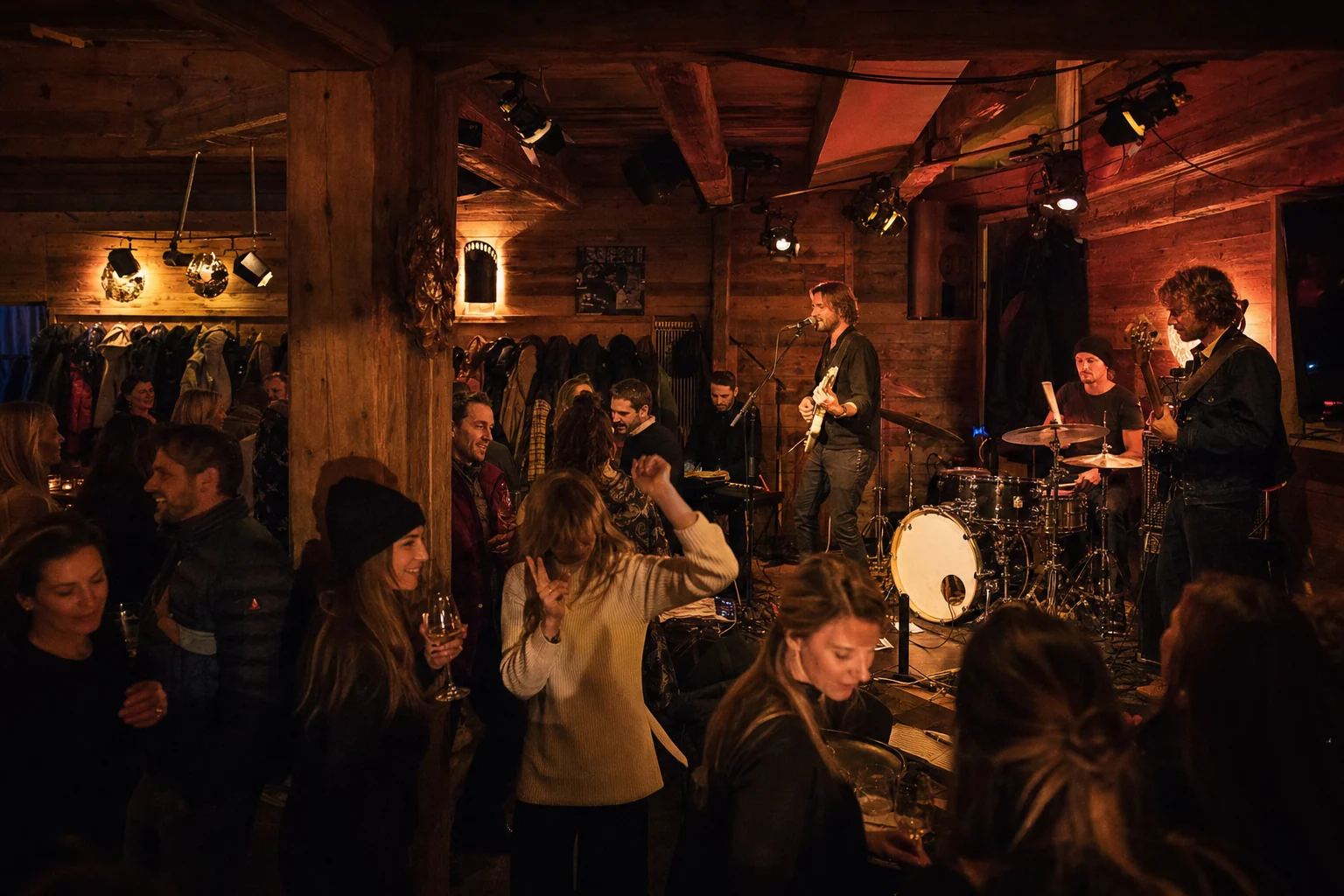
Verbier is direct. Farinet announces live bands, happy hour and dancing on the bar; W Off Piste sits at the foot of the slopes and translates the ski day into cocktails and music. Travellers looking for an international, open and highly social scene require little explanation here.
That makes the hotel decision more important. A central address keeps routes short but puts nightlife outside the door. An outlying chalet can create calm while requiring a driver every evening. For several generations, a hotel with its own spa, bar and restaurant is often more resilient than a remote chalet with one shared living room.
Verbier is less suitable for travellers who interpret five stars as formal stillness. Its luxury lies in freedom, a large ski area and social mobility. Quality comes from a reserved table, intelligent ski storage and a driver, not from trying to remove the energy.
Zermatt: the most convincing transition from piste to hotel
Zermatt offers an unusually natural sequence. CERVO sits at the end of a run and describes two terraces with live sessions and DJ sets. Guests can finish the ski day there and then remain in the resort or descend by lift into the village, reducing the break between ski boot, drink and evening.
For a quieter interpretation, plan one long mountain lunch and return to The Omnia, Mont Cervin Palace or another substantial hotel for spa and dinner. The car-free village helps the atmosphere but requires precise electric-transfer and baggage planning. Here too, access and position matter more than abstract star status.
| Resort | Mood | Strongest moment | Not ideal for |
|---|---|---|---|
| Courchevel 1850 | Staged, culinary, visible | Long lunch and palace evening | Guests focused on maximum ski time |
| St. Moritz | Social and grand-hotel led | Mountain club followed by hotel bar | Spontaneous trips during event weeks |
| Arlberg | From elevated terrace to mass party | A deliberately chosen hut day | Groups without a shared volume level |
| Verbier | International, direct, energetic | Live music and a central bar progression | Formal quiet |
| Zermatt | Organic and hotel-connected | End of piste, terrace, spa | Guests impatient with electric transfers |
The table is only half the planning
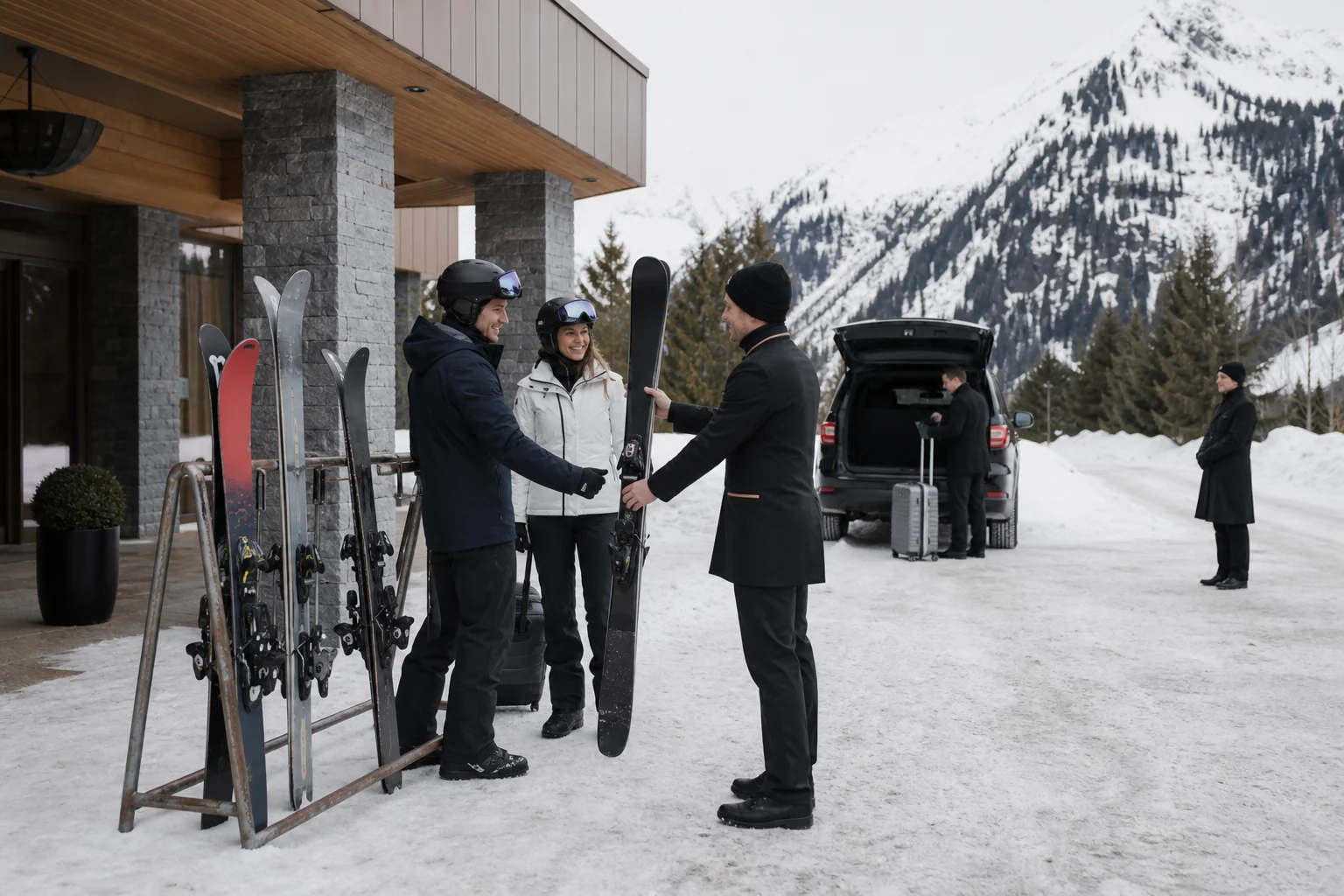
A strong après-ski day aligns table time, instructor, equipment storage, change of clothes, driver and dinner. A lunch at 2pm can make an 8pm dinner unrealistic. A party arriving in ski boots needs a different entrance and cloakroom plan from hotel guests who change first.
The group should not be forced to remain together. Two guests may want to ski until the lifts close, others want music at three and a third part wants the spa. A good arrangement allows separate returns and one later shared meeting point.
What must be settled before booking
- Which atmosphere is wanted: lunch, music, dancing or a quiet hotel bar
- Is the venue reached on foot, skis, lift or only by vehicle
- How does every guest return safely after drinking
- Is there minimum spend, prepayment, a fixed seating time or cancellation rule
- Where do skis, boots, helmets and changes of clothes remain
- Which guests need an earlier or separate transfer
- Does the later dinner still make sense after lunch
The Deluxetargets view
Define après-ski not as compulsory entertainment but as the desired social temperature. Courchevel and St. Moritz can stage an entire afternoon. Verbier and St. Anton deliver a genuine party. Lech and Zermatt allow a softer transition into spa, fire and dinner.
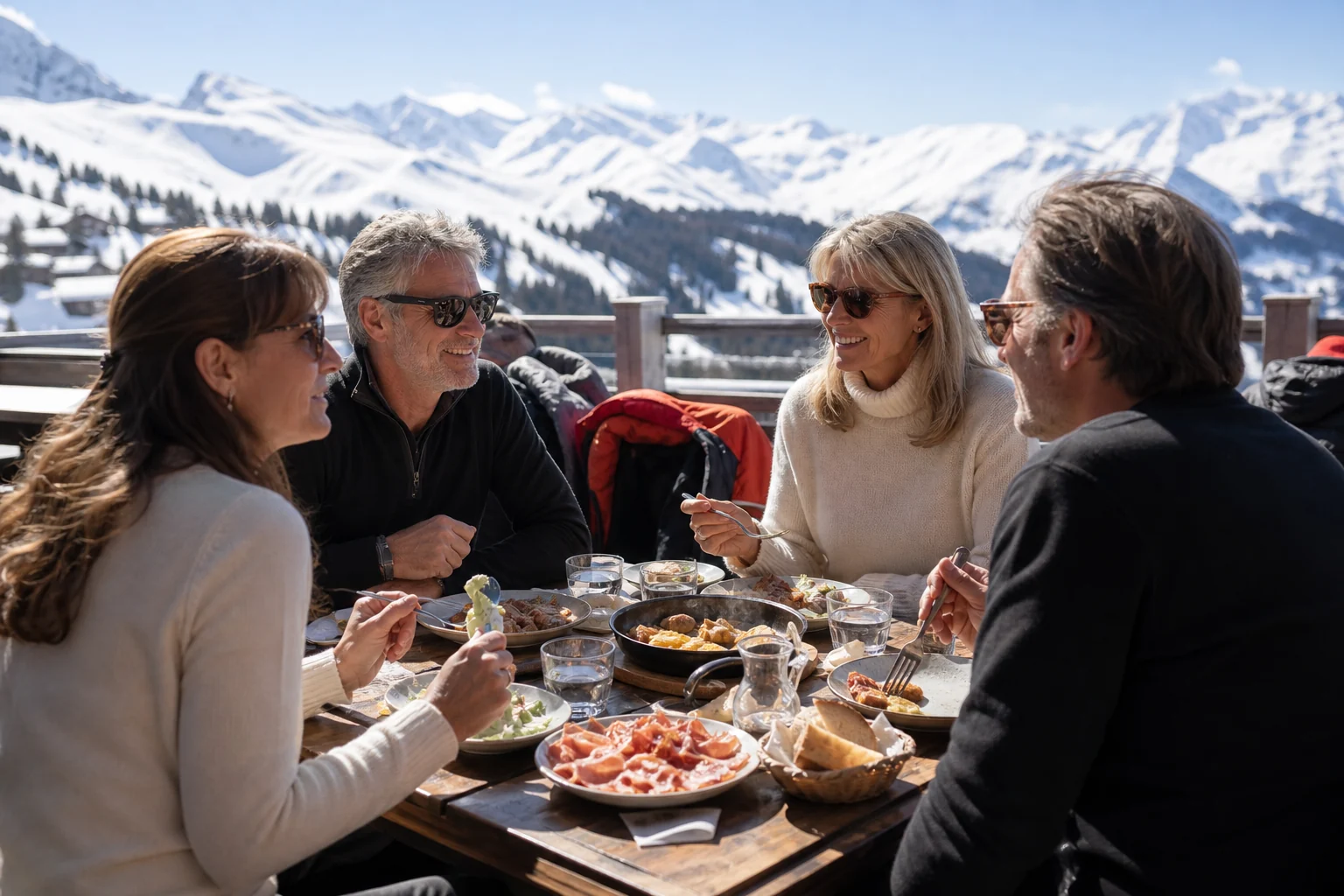
Five-star quality becomes visible after the final glass: skis are stored, the driver knows the pickup point, nobody has to descend while impaired and the hotel receives the party without reorganising the evening. Luxury is not the label on the bottle. It is the elegance of the return.