
A good Bhutan itinerary is measured in energy, not kilometres. Sleeping altitude, curves, passes, daylight, the substance of a transfer day and the attention left on arrival matter more than distance. Add drive times as if this were Europe and the result is a full spreadsheet and an exhausting journey.
Treat every inter-valley transfer as a travel day in its own right and guests experience more, even with fewer appointments.
Four rules for a journey that holds together
- Sleeping altitude before pass altitude
- Acclimatisation is shaped principally by where the night is spent, not only by the highest photographic stop.
- One transfer, one anchor
- One substantial visit or walk is usually enough on a driving day. Three compulsory stops turn landscape into logistics.
- Two nights are the minimum
- One night per lodge means packing almost daily. Three nights can be especially valuable in Gangtey, Punakha or Bumthang.
- Buffer is part of the programme
- Weather, roadworks, ceremonies and flight changes are not planning failures; they are normal variables in Bhutan.
Draw the altitude line before choosing hotels
Paro is roughly 2,200–2,300 metres above sea level, Thimphu around 2,300 metres, Punakha much lower at about 1,200 metres, Gangtey and the Phobjikha Valley around 3,000 metres, and Bumthang generally 2,500–2,700 metres. A lodge may sit above or below its valley town. These approximate figures guide route design; they are not a medical guarantee.
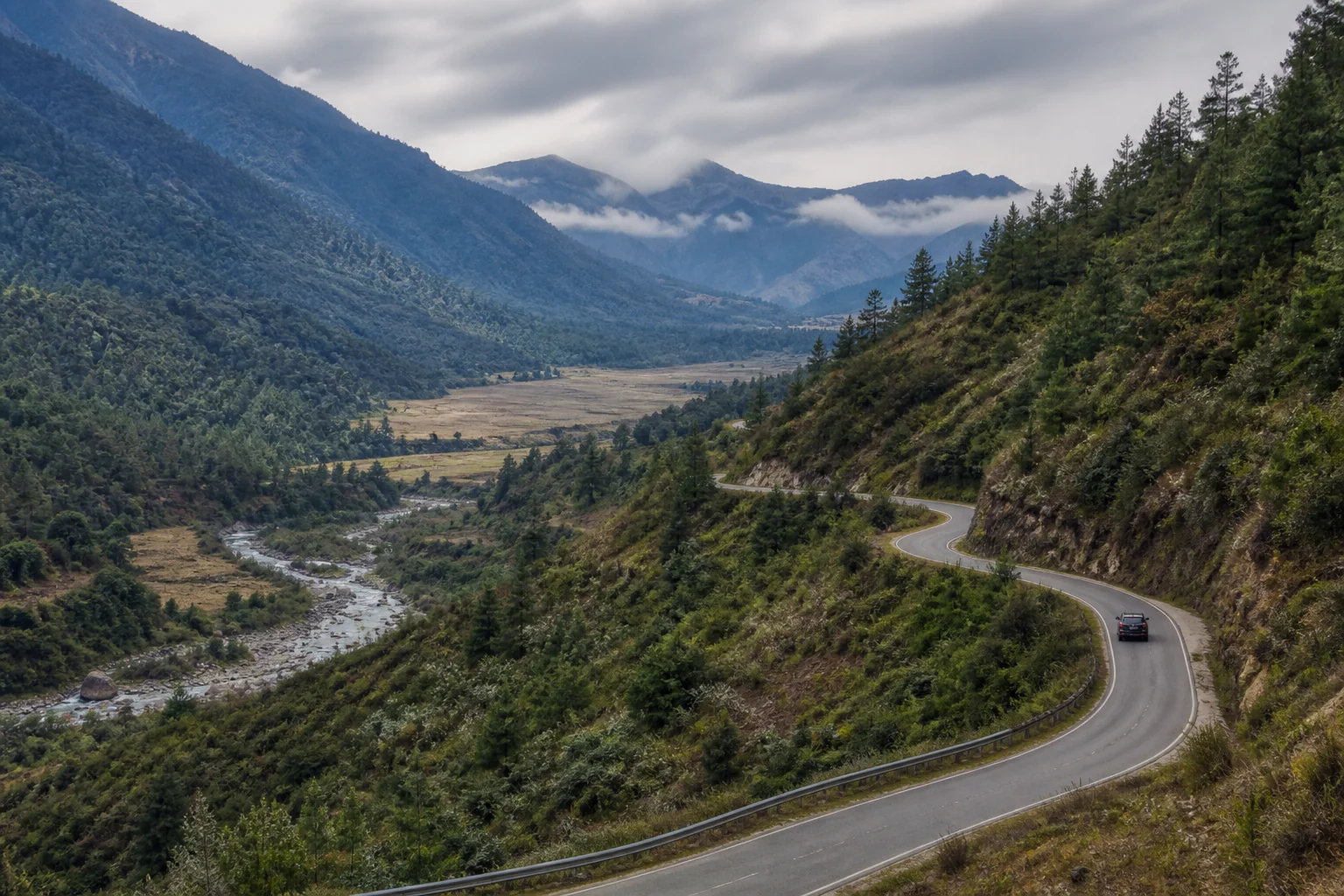
A western circuit can therefore create a useful natural progression. After Paro or Thimphu, Punakha drops to a lower and warmer elevation before the ascent to Gangtey. A rapid move from a low valley to a high sleeping altitude can feel very different. The vehicle covers the elevation effortlessly; the body still has to adapt.
| Region | Approximate elevation | Role in the journey | Planning consequence |
|---|---|---|---|
| Paro | 2,200–2,300 m | Arrival, culture, Tiger’s Nest | Keep day one light; never schedule the major hike on arrival |
| Thimphu | around 2,300 m | Capital and contemporary context | A sensible early stop without a maximal first-day programme |
| Punakha | around 1,200 m | Warmer valley, dzong and rice fields | A restorative lower stage between higher regions |
| Gangtey | around 3,000 m | Phobjikha landscape and walks | Quiet first night; assess wellbeing before a demanding hike |
| Bumthang | 2,500–2,700 m | Sacred heartland | Include only with sufficient nights and a flight buffer |
What altitude guidance means for a luxury itinerary
The CDC Yellow Book identifies the first three to five days as particularly important for acute acclimatisation. Unacclimatised travellers can develop symptoms at sleeping elevations from approximately 2,450 metres. Risk is influenced more by sleeping altitude, ascent rate and previous response than by fitness or the calibre of the hotel.
General advice to limit sleeping-altitude gains above 3,000 metres is most relevant to Bhutan treks and high-altitude specialist programmes. For a conventional lodge circuit, the practical interpretation is simpler: keep arrival gentle, limit alcohol initially, avoid maximum exertion during the first 48 hours and never hide symptoms beneath a full schedule. Preventive medication belongs in an individual medical consultation, not a generic packing list.
Drive times are planning blocks, not promises
Bhutan’s roads are spectacular, but average speed says little about fatigue. Curves, passes, construction, fog and stops reshape the day. A time printed by a hotel applies to its own route and operating conditions. Aman’s current circuit, for example, describes about two hours from Punakha to Gangtey, five hours from Gangtey to Bumthang and a 45-minute domestic flight from Bumthang to Paro. These are useful references, not guaranteed timetables.
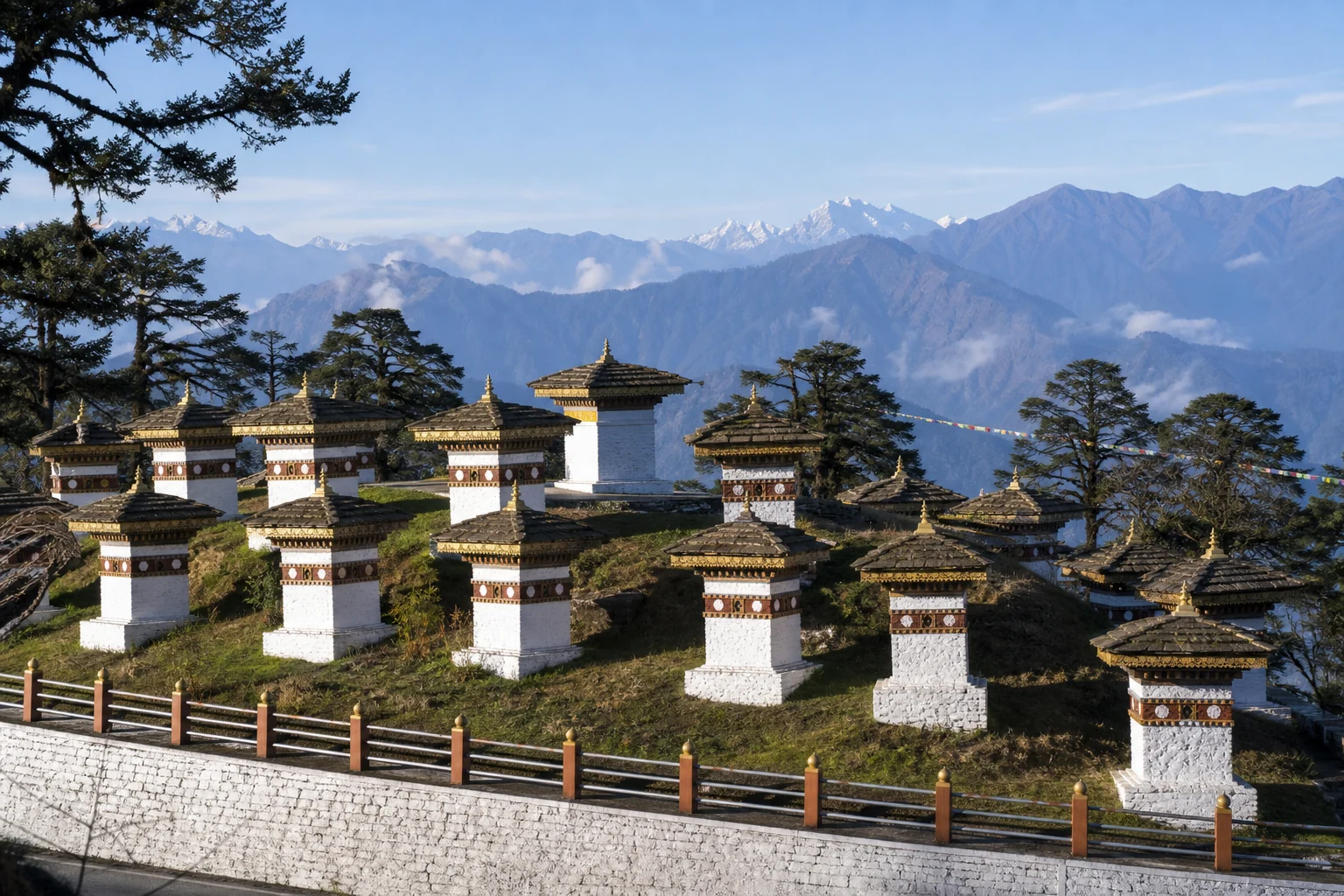
In advisory work, a range is more honest than a minute-perfect commitment. The pure driving time needs room for bathrooms, a pass, lunch, road delays and an unplanned observation. If every pause is marketed as an “experience”, the journey becomes an endurance exercise.
Ask about curves in the first conversation
A guest may tolerate five hours on a motorway and struggle after two hours on a mountain road. Motion sickness, back problems, frequent-break needs and resistance to early departures belong in the initial briefing. Vehicle choice, seat position, fresh air, a smooth driver and sensible meals all matter.
Travel-sickness medication should be discussed individually with a clinician or pharmacist because some options cause drowsiness. For a very sensitive traveller, a shorter western Bhutan journey may be more rewarding than reaching Bumthang at any cost. A domestic flight removes road hours but adds dependencies on weather, baggage limits and schedule.
The anatomy of a good transfer day
- Early, not punishing: leave enough daylight without making every holiday morning pre-dawn.
- One cultural anchor: a dzong, monastery or substantial village walk.
- A proper lunch: picnic or local cooking, rather than repeated hurried snacks.
- Arrival before evening: time for tea, a shower, spa or quiet walk.
- No compulsory post-check-in event: a ritual or sunset dinner remains optional when the road runs long.
Two nights or three Let the lodge set the rhythm
Two nights provide only one complete day. That is enough for a defined priority, but not for a major hike, multiple monasteries, spa and free time together. Three nights create two full days: one active, one cultural, with room for weather or fatigue.
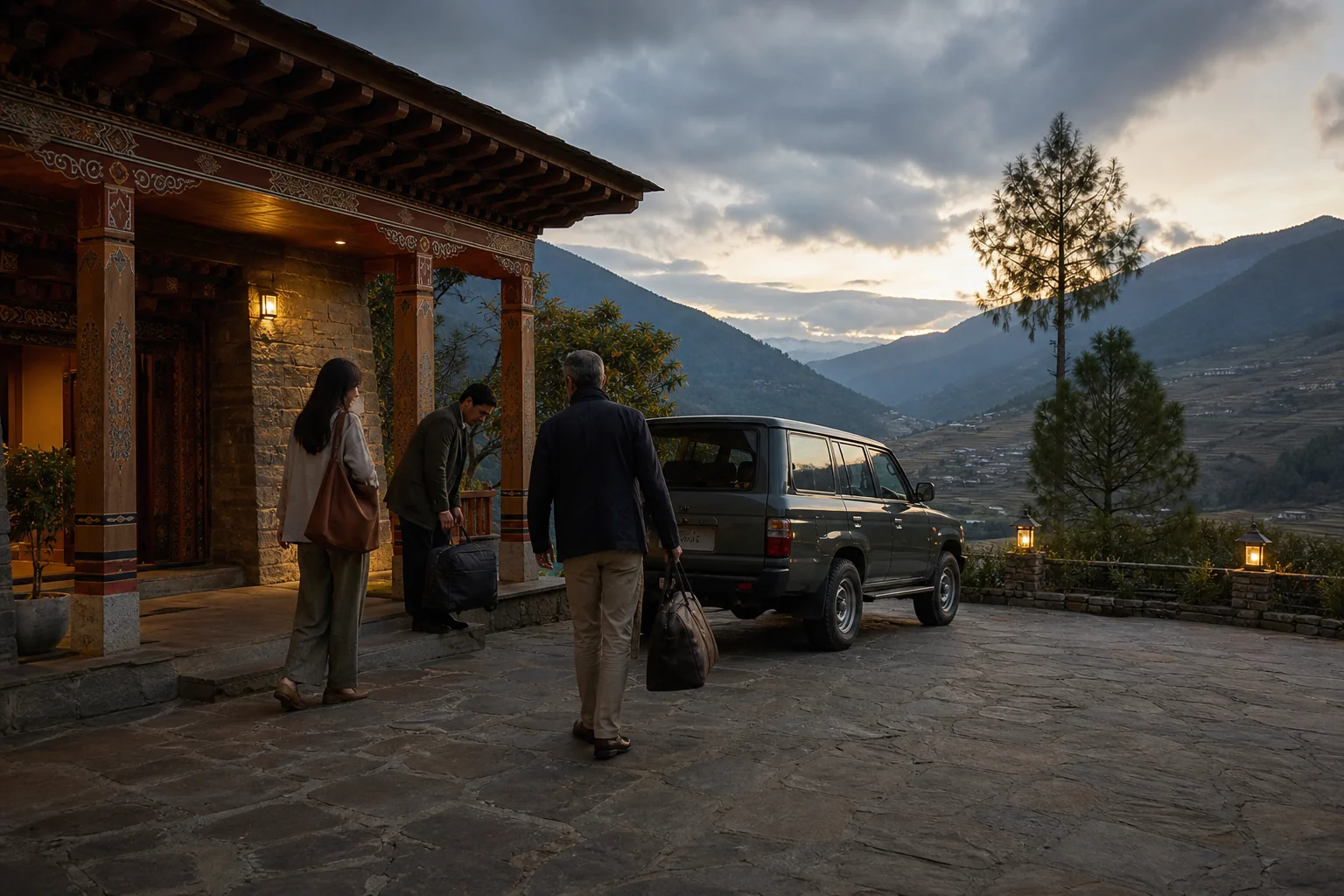
Paro often deserves three nights when Tiger’s Nest, the dzong, museum and a calm conclusion must coexist. Gangtey changes profoundly with a third night because its valley is more than an overnight backdrop. Punakha can be focused into two, but a third works well for longer walks, rafting or a slower pace. Bumthang should not be reduced to a one-night tick on a first journey.
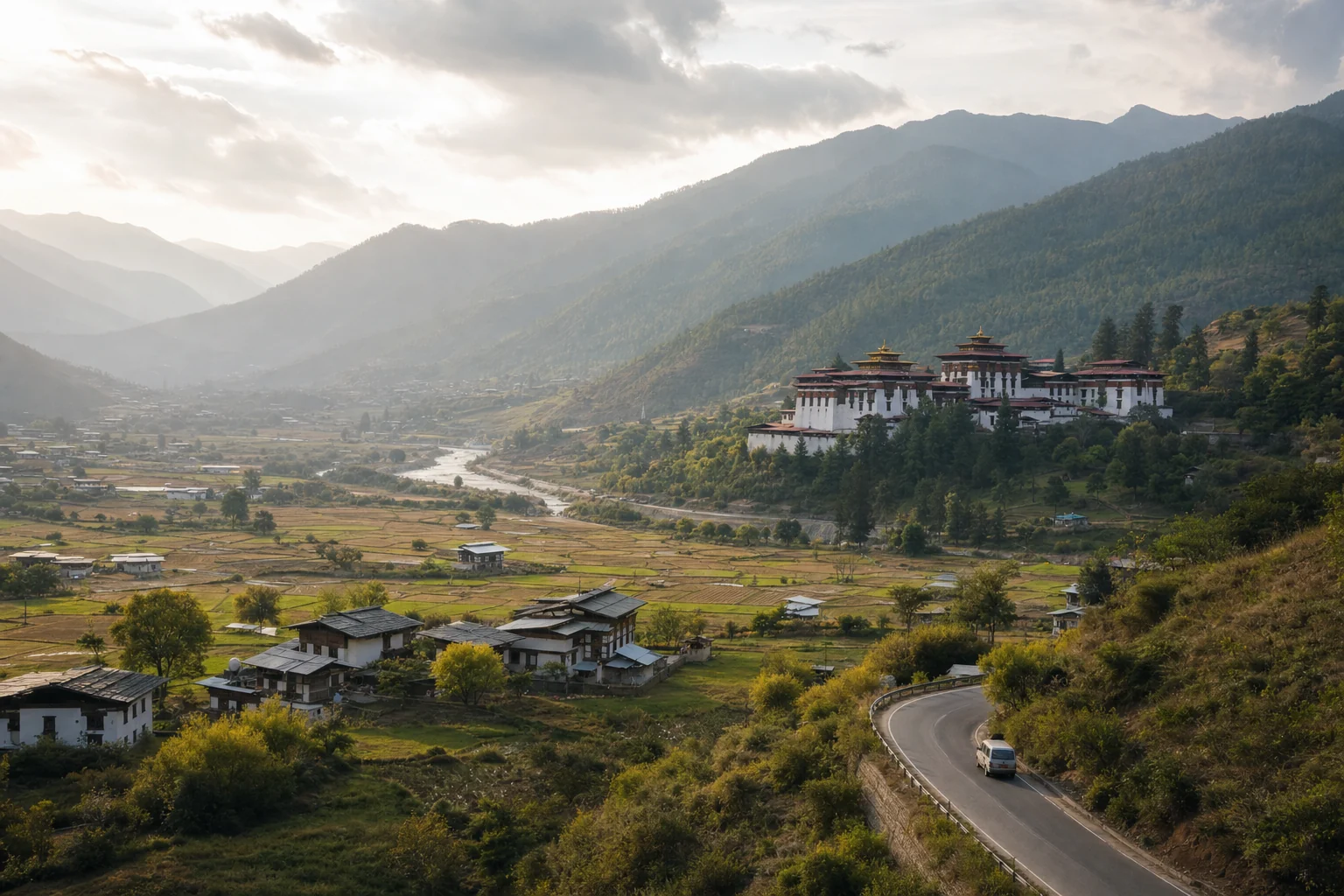
A realistic nine-night rhythm
| Day | Night | Focus | Deliberately omitted |
|---|---|---|---|
| 1 | Thimphu | Arrival, transfer, short walk | No major sightseeing list |
| 2 | Thimphu | Capital, crafts and contemporary context | No long altitude hike |
| 3 | Punakha | Transfer over Dochu La and one key visit | No late-evening commitment |
| 4 | Punakha | Dzong, valley and gentle activity | No hotel change |
| 5 | Gangtey | Scenic transfer and calm arrival | No demanding hike |
| 6 | Gangtey | Valley walk and monastery | No same-day return drive |
| 7 | Paro | Transfer with one flexible stop | No Tiger’s Nest after the drive |
| 8 | Paro | Tiger’s Nest or an equal alternative | No second compulsory appointment |
| 9 | Paro | Culture, spa and a free half-day | No new region for the list |
| 10 | – | Departure with a clean buffer | No tight self-connecting flight |
Tiger’s Nest needs its own energy day
Aman’s current 14-night journey allocates four to five hours to the Taktsang hike. Regardless of hotel, it deserves a full and flexibly managed day. Breakfast, trailhead transfer, ascent, stairs, pauses, descent and return consume much more than the quoted walking time.
The preceding day should not involve an extreme arrival, and the evening should not depend on an immovable gala dinner. The guide needs a genuine alternative for anyone who turns back—or chooses not to start—because of fitness, weather or symptoms. A Bhutan itinerary is not validated by every guest reaching the same point.
Bumthang: drive in and fly out
Travelling overland to Bumthang and flying back to Paro can create an elegant one-way narrative: landscapes evolve slowly, while the return saves time. It works only when the flight day, baggage allowance and weather buffer are properly arranged. Connecting to an international departure in the same narrow window is an avoidable risk.
Travellers avoiding domestic flights need additional nights for the road back. If those nights do not exist, omit Bumthang rather than hollow out the western valleys. Editing a route is not a defeat; it is a mark of judgement.
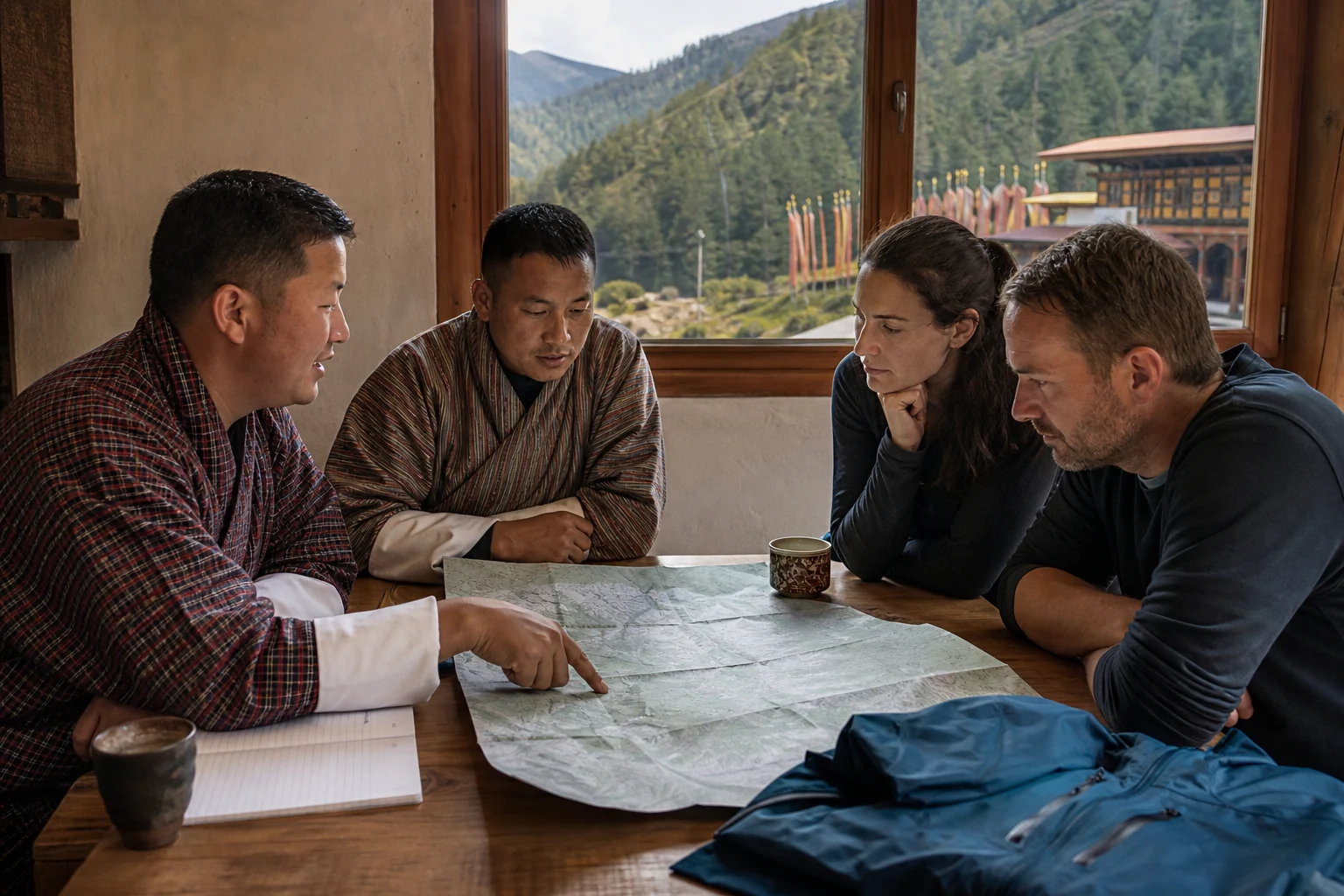
The evening briefing
- Departure time, expected road block and likely arrival.
- Sleeping altitude, highest passage and physical effort.
- One non-negotiable priority and the stops dropped if delayed.
- Clothing, shoes, photography rules, cash and bathroom access.
- Weather, road state and likely local changes.
- Everyone’s wellbeing, without pressure to “push through”.
The Deluxetargets view
The best Bhutan stage ends not with the final appointment but with energy left for the evening. We therefore design sleeping altitudes and transfer blocks first, assign two or three nights to each lodge second, and add individual visits last. A free half-day is usually more luxurious than another valley name in the proposal. Bhutan rewards not the fastest route, but the one that gives equal attention to the country and the traveller.