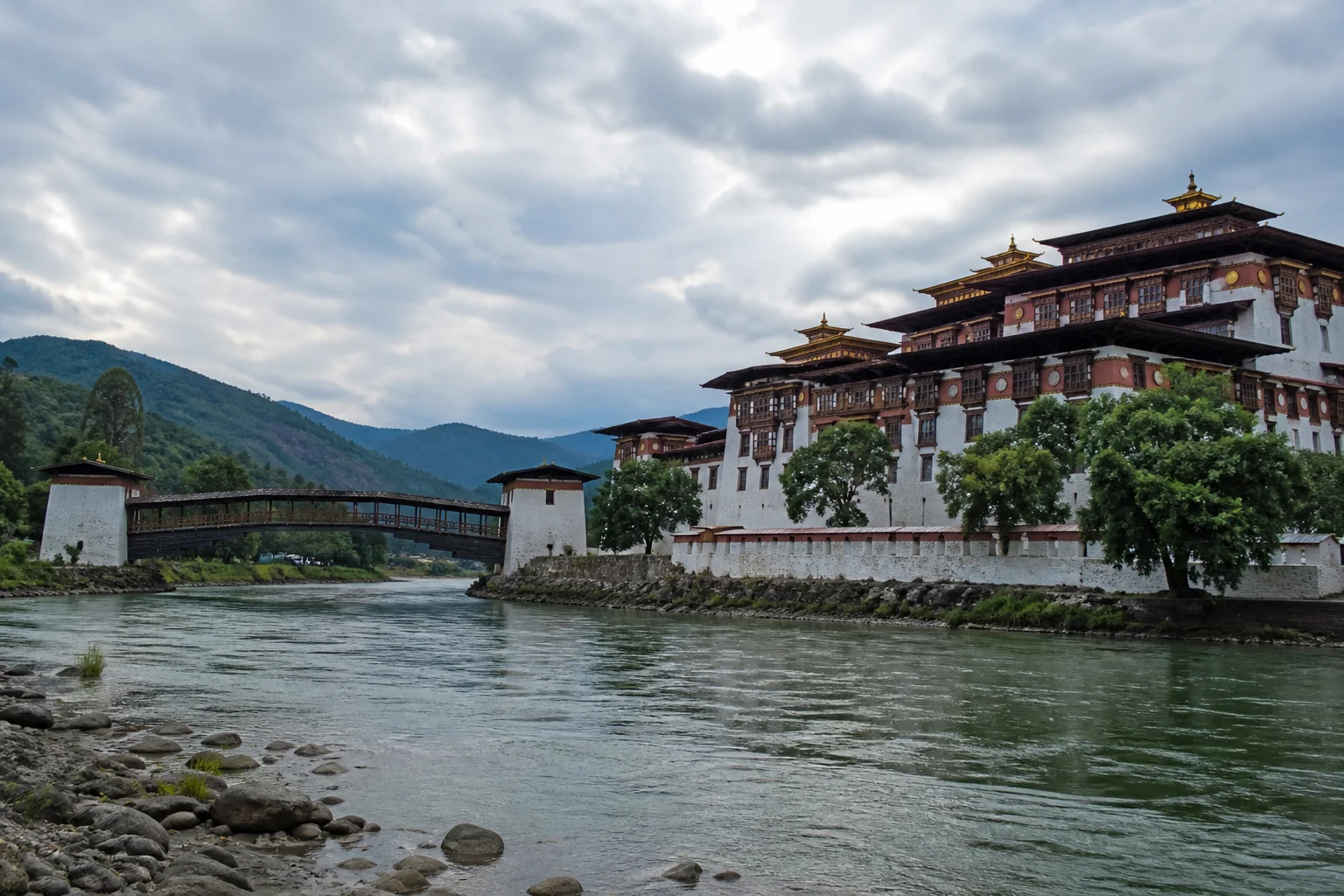
Bhutan’s greatest luxury is not remoteness alone, but an itinerary spacious enough to allow real attention. Compress too many valleys, lodges and monasteries into one week and the journey becomes a sequence of mountain roads. Choose the route, guide and daily rhythm with care and spirituality needs no staging. Bhutan asks more preparation than many luxury destinations; that precision is part of its reward.
- 5–6 nights
- Paro with Thimphu or Punakha: a concentrated introduction, not a comprehensive Bhutan journey.
- 7–9 nights
- Paro, Punakha and Gangtey: the best-balanced first visit, combining culture, landscape and time to arrive properly.
- 10–14 nights
- Add Bumthang for greater cultural depth, accepting full transfer days and more complex logistics.
- The priority
- An exceptional guide, private vehicle and fewer hotel changes matter more than a long sightseeing list.
Exclusivity means something different in Bhutan
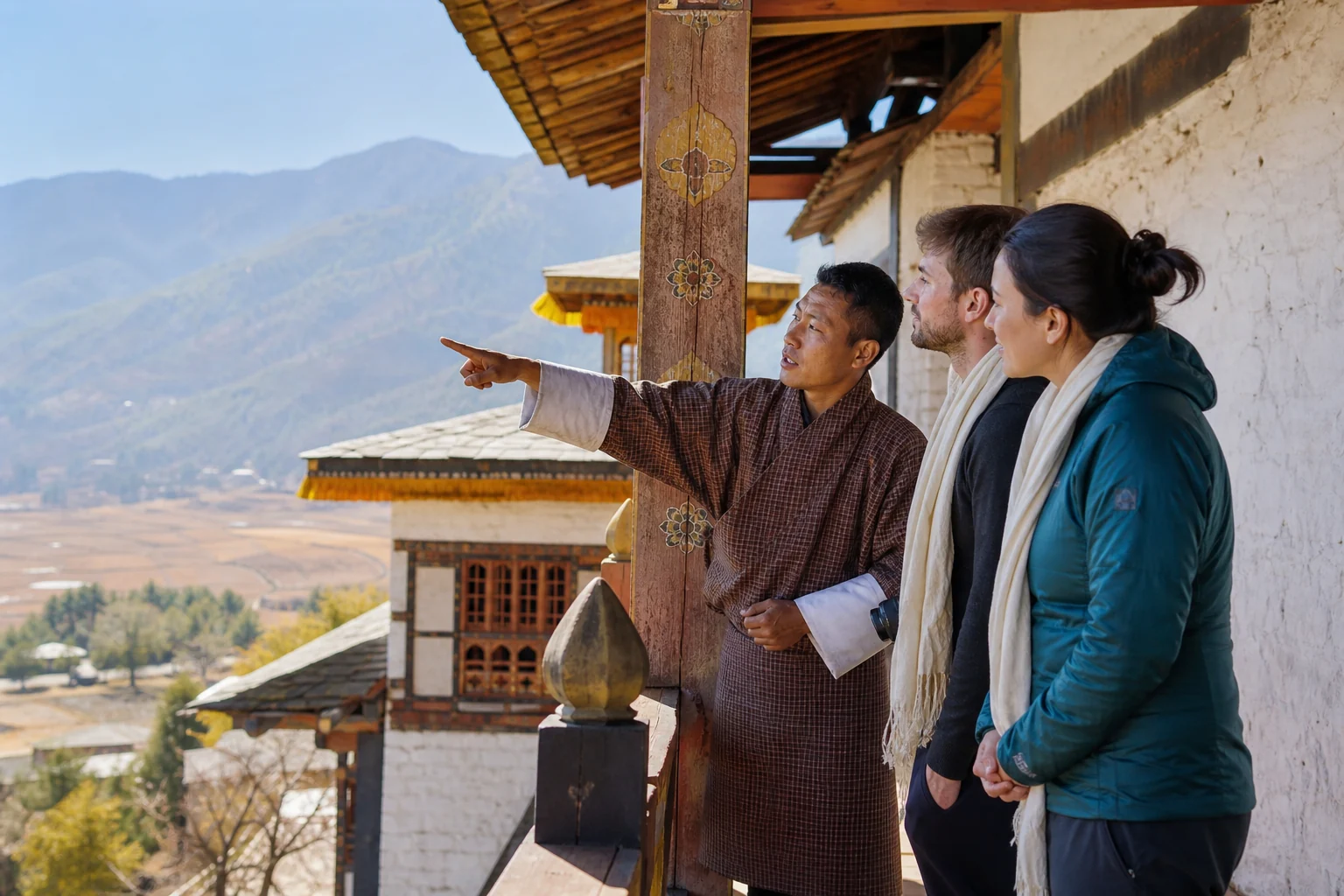
Bhutan is not a destination where money automatically buys empty temples, private monuments or improvised access. Dzongs, monasteries and ceremonies belong to religious and civic life. A well-designed journey respects opening hours, local protocols and ordinary routines instead of asking the country to pause for its guests.
Exclusivity comes from quality: a guide who can explain context and read a room; a driver experienced on mountain roads; a lodge that resists over-programming; and enough time to remain after a ceremony rather than rush to the next photograph. Silence is not a guaranteed amenity. Festivals, prayers, village life and construction are also part of the real Bhutan.
Visa, visitor levy and current planning essentials
Bhutan’s official travel guidance requires most international visitors to obtain a visa before travel. The current visa application fee is US$40. The Sustainable Development Fee is currently US$100 per adult per night, with concessions for children. It is not an all-inclusive tourism tariff: hotels, guide, vehicle, meals, flights and entry fees are costed separately.
Official guidance says correctly completed visa applications are usually reviewed within five working days, but this is not a reason to leave the process late. Passport validity, insurance, flight inventory and charges should be reconfirmed before booking because rules can change. Travel insurance has not been mandatory since April 2024, although Bhutan’s tourism authority continues to recommend it strongly.
The guide is not an accessory
Visitors are generally required to be accompanied by a certified guide, and all treks require an accredited operator or guide. This can be one of the journey’s greatest advantages. Guide selection has more influence on a Bhutan trip than a room upgrade. Knowledge of Buddhism, architecture and history matters, but so do discretion, language, fitness and the judgment to know when interpretation adds value—and when quiet is better.
Before departure, the advisor should brief interests and limits in writing: religious history or contemporary society, photography, demanding hikes, food, mobility and preferred pace. A private vehicle and driver are the most comfortable way to travel; self-drive rental is not available.
Route one: 5–6 nights for a focused introduction
With less than a week, the itinerary should remain deliberately small. Paro is essential because it has Bhutan’s only international airport. Pair it with either Thimphu for museums, contemporary life and political context, or Punakha for warmer air, rice terraces and the great dzong at the confluence of the Pho Chhu and Mo Chhu rivers.
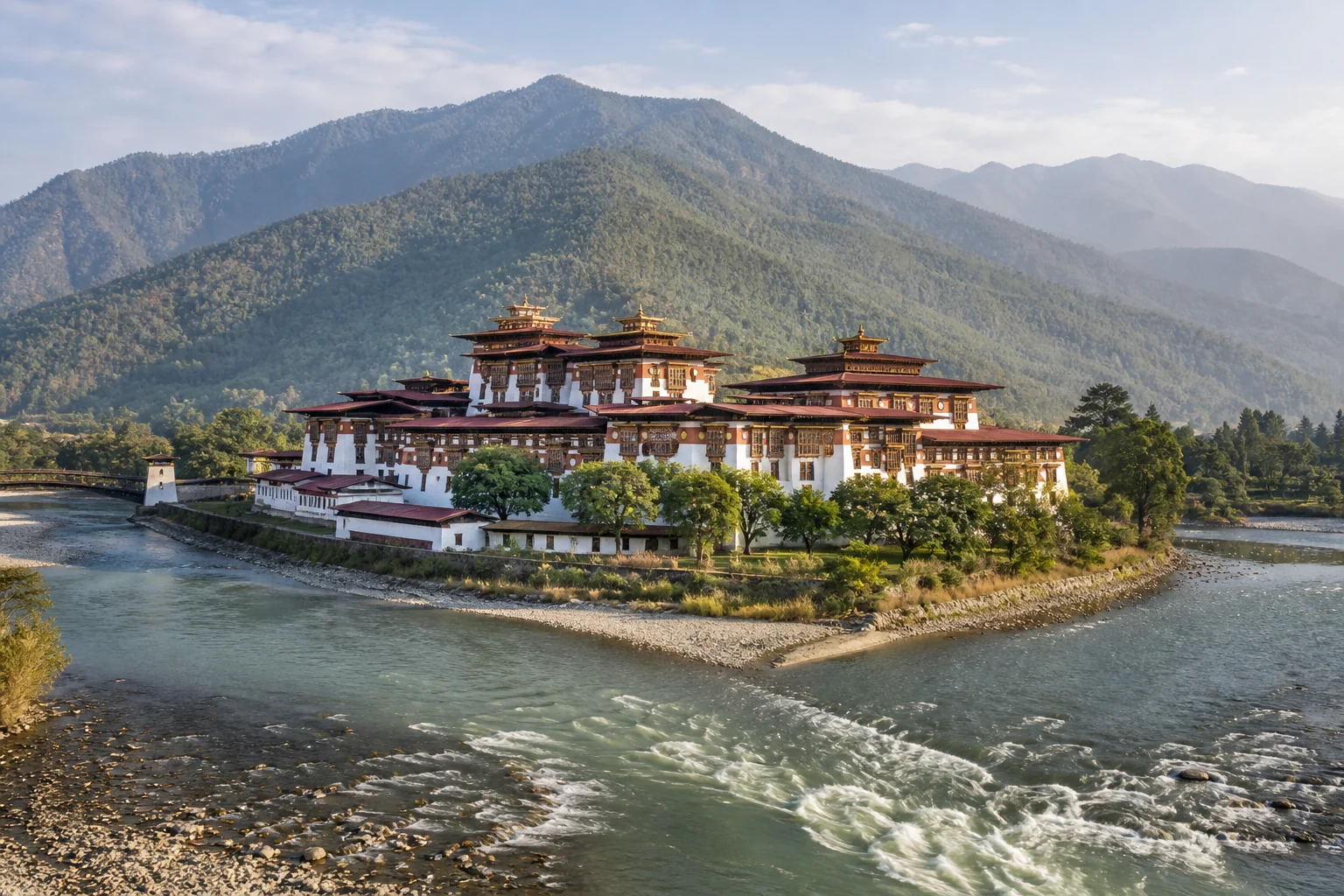
It is possible to touch all three western valleys in five nights, but rarely elegant. A better rhythm keeps arrival day light, gives the second region a full day and schedules the Tiger’s Nest hike only after some acclimatisation and an honest fitness assessment. Guests unable to make the steep climb deserve a worthwhile alternative, not an improvised morning left at the hotel.
Route two: 7–9 nights for the best balance
For a first high-end Bhutan journey, Paro, Punakha and Gangtey form an unusually coherent sequence. Punakha brings more subtropical vegetation and monumental architecture; Gangtey opens into the broad Phobjikha Valley. Here, the quiet promised by travel marketing can arise from landscape and time rather than a crowded wellness schedule.
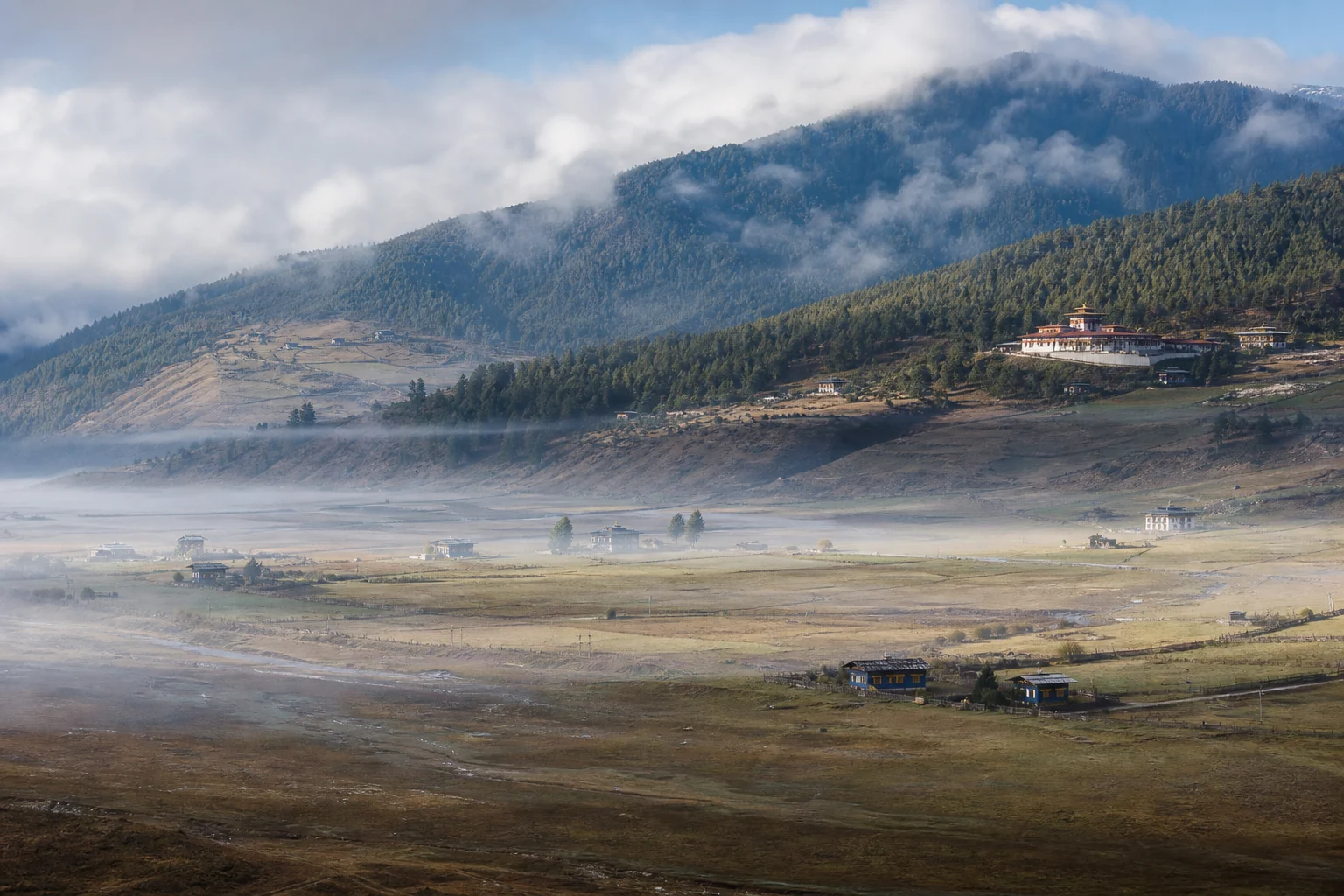
At least two nights in each lodge prevent the trip from being governed by packing and check-in. Three nights make sense where walks, monasteries and an unscheduled afternoon need to coexist. Thimphu can be a day visit or an additional night when contemporary Bhutan matters more than maximum scenic stillness.
Route three: 10–14 nights with Bumthang
Bumthang is not simply another pin on the map. The region contains some of Bhutan’s most important sacred sites and has a different spatial character from the west. Reaching it requires long overland sectors or a carefully coordinated domestic flight. Weather and schedules must remain variables, not promises.
This route suits travellers who do not regard transfer time as wasted and who value cultural depth above constant novelty. It requires a buffer before the international flight home. If Bhutan is combined with India, Nepal, Thailand or Singapore, the onward connection should not depend on a minimal transit window.
Which lodge serves which journey
Amankora is built around a seamless multi-lodge circuit. Five lodges in Paro, Thimphu, Punakha, Gangtey and Bumthang offer continuity of service, with defined journeys for different stay lengths. One operational detail matters in 2026: Amankora states that its Paro and Punakha lodges will close for refurbishment from 15 May to 15 September. Availability must therefore be checked before the route is promised.
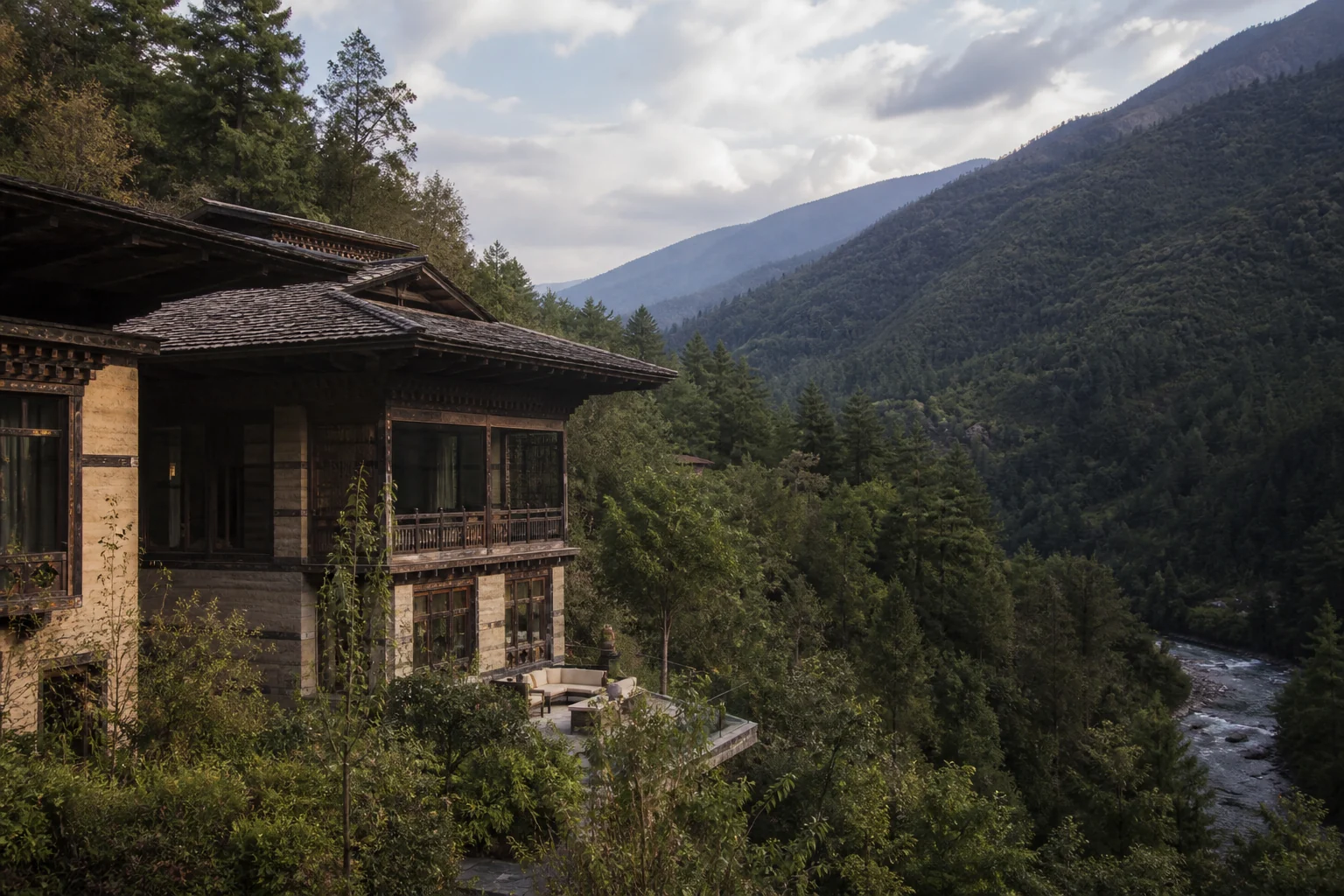
Six Senses Bhutan also links five lodges across the principal valleys, with a more overt wellness and design identity. Guests may stay at one lodge or travel through all five; a private guide, driver and vehicle create the logistical framework. It suits travellers who want ritual, spa and landscape to form one daily narrative.
COMO Uma Paro and COMO Uma Punakha create a focused two-lodge combination. COMO’s seven-night itinerary includes scenic drives, nature walks and monastery visits. Paro is approximately ten minutes by road from the airport, making it a practical, gentle beginning or a calm final stop.
Gangtey Lodge is not a circuit but a singular place, set above the Phobjikha Valley with views towards the monastery, farmhouses and blue-pine forest. Travellers who do not want one brand throughout the journey can use it as a strong two- or three-night landscape anchor.
The best season depends on the Bhutan you want
Autumn, broadly from late September to late November, brings clear days, festivals and strong mountain visibility, along with high demand. Winter from late November to March can be crisp, clear and sunny, but also means frost, cold rooms outside the luxury sector, and snow or strong wind at altitude. Spring works well for flowers and active itineraries.
The June-to-September monsoon turns the landscape intensely green and can feel quieter, but it raises the risk of landslides, flooding and disrupted roads or services. It is not the wrong season; it simply demands flexibility and buffers. A festival should drive dates only after viewing arrangements, local significance, hotel pressure and traffic consequences have all been assessed.
Tiger’s Nest: a highlight, not a test of worthiness
Taktsang, the Tiger’s Nest, is spectacular and emotionally important to many visitors. The hike is not a decorative stroll. Altitude, steep ground, stairs and weather require preparation. It is usually better later in the itinerary, once the body has adjusted to elevation and the daily rhythm.
A good plan discusses fitness, knee issues and previous altitude response in advance. Horses cover only part of the ascent and do not solve every mobility question. Acute altitude symptoms, illness or unsafe weather should end the attempt without bravado. Travellers with relevant medical conditions or uncertainty should seek individual medical advice before the journey.
Respect is part of the luxury
- Dress modestly in dzongs and monasteries; remove shoes or headwear when instructed locally.
- Ask before photographing people, ceremonies and interiors. Permission to enter is not blanket permission to photograph.
- Do not treat monks, rituals or villagers as bookable scenery.
- Arrange donations and private blessings through the guide and within local protocol.
- Protect unscheduled time. Not every quiet moment requires meditation, a picnic or a staged ritual.
Who Bhutan is for—and who may prefer elsewhere
Bhutan suits travellers who want landscape, religion and society to be understood together; who can trust a guide; and who value comfort without expecting every uncertainty to disappear. It is less suited to those seeking spontaneous nightlife, short direct flights, a new hotel every night or guaranteed privileged access.
Luxury cannot remove mountain roads, weather or altitude. That is precisely where good planning proves its worth: it does not promise control over Bhutan, but creates the space for Bhutan to have an effect.
The Deluxetargets recommendation
For a first visit, we would usually begin with seven to nine nights across Paro, Punakha and Gangtey, allowing two or three nights per place and one deliberately unplanned half-day. The first decision is not a hotel brand. It is a conversation about fitness, interests, desired depth and tolerance for transfers. Only then should lodges,
guide, flights and sequence be chosen. The aim is not the fullest possible Bhutan itinerary, but the one that remains vivid long after returning home.