
The finest Lake Como boat day is shorter than many itineraries suggest. One villa, a considered lunch and unhurried time on the water are enough. Compress Bellagio, Varenna, Balbianello, Como and several restaurants into a day and the luxury disappears into the timetable.
The workable formula
- Duration
- Five to six hours; longer only with a real pause.
- Culture
- One villa properly, not three gardens at speed.
- Lunch
- A reserved table with confirmed landing and timing.
- Weather
- Set the route with the captain that morning and protect the return.
- Fallback
- Define a land transfer or shorter central-lake plan in advance.
The central lake carries the most elegant rhythm
Tremezzina, Bellagio and Varenna form the logical core. Villas, gardens, villages and hotel terraces sit close enough for the day to feel like a journey rather than a sequence of transfers. Guests based in Como at the southern end must consciously allow for the longer run north; from Tremezzo, Menaggio, Bellagio or Varenna the experience begins more immediately.
The hotel location therefore shapes the route more decisively than any generic top-ten list.
The central lake is therefore often the most coherent, not universally the best, area. A guest based in Como with three free hours may enjoy a sheltered local circuit more than a rushed run north. Varenna also creates a different shore logic from Tremezzo. Calculate the route from the actual jetty, including the return, rather than from an iconic centre point on a map.
Choose a villa; do not collect them
| Villa | Strength | Logistics | Best for |
|---|---|---|---|
| Villa del Balbianello | Peninsula, loggia, garden and Guido Monzino collection | Pre-book ticket and access; landing is not admission | First visit, architecture, photography |
| Villa Carlotta | Botanical garden and museum at Tremezzo | Public access; allow for garden walking | Garden enthusiasts, Tremezzina base |
| Villa Monastero | Long waterfront garden and house museum in Varenna | Combines with the village; seasonal opening | Varenna, landscape and walking |
Villa del Balbianello is managed by FAI as a destination in its own right. The water taxi from Lenno is not operated by FAI, so a private boat and an entry ticket are separate services. Villa Carlotta also publishes changing seasonal hours. Every visit must be confirmed for the date.
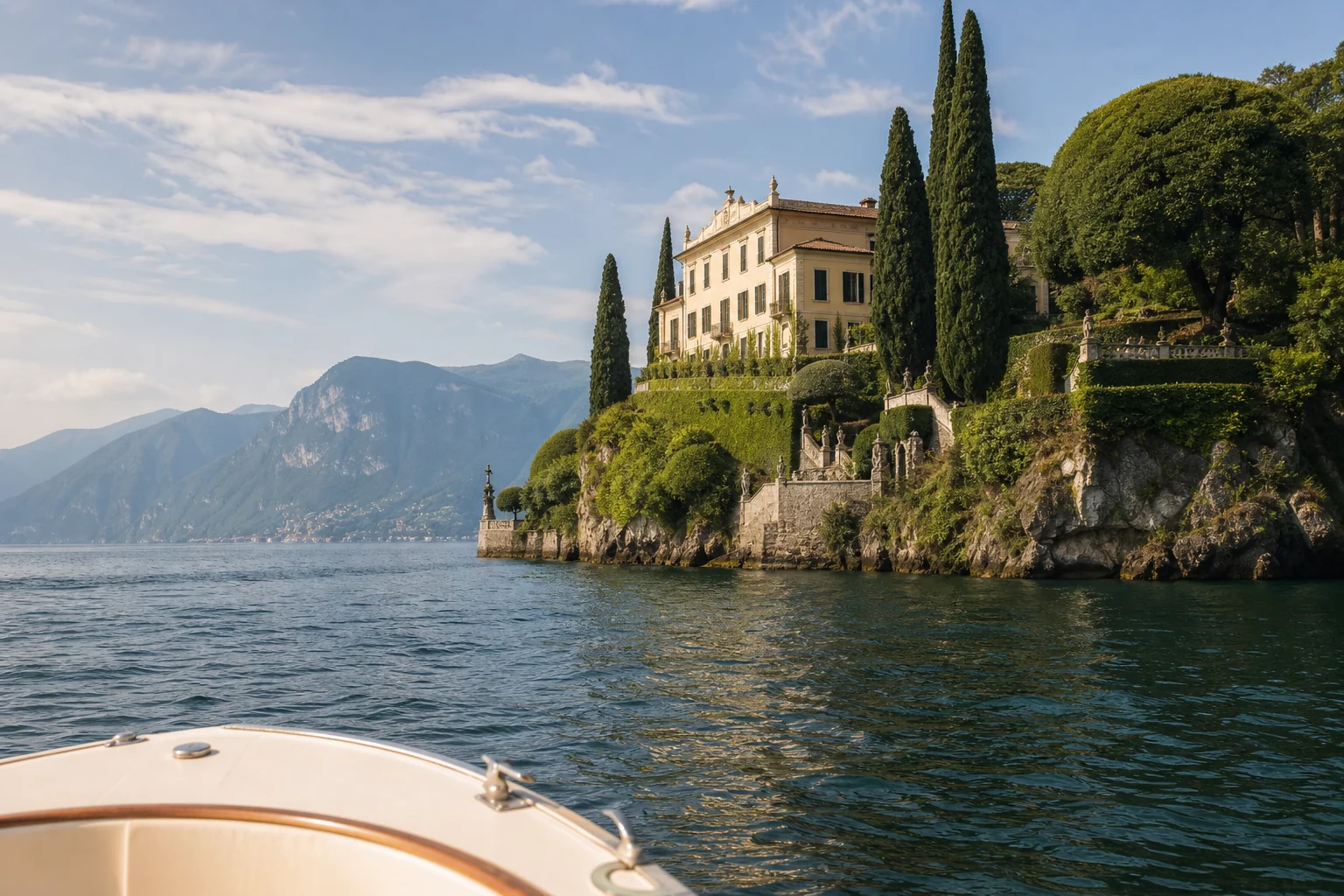
The sample day selects Balbianello because peninsula, garden and interiors form one clear cultural anchor. That is not a ranking. Carlotta may be more logical for botany and a Tremezzo base; Monastero combines a long waterside garden with Varenna. Verify not only opening and admission but entrance, authorised landing, tour, gradient, steps, walking length and how much time the guest genuinely wants to spend on foot.
Select the boat for the guests, not the photograph
An open classic runabout can be superb for two to four mobile adults. With young children, uncertain weather, strong need for shade or a longer route, protected seating may be the more luxurious choice. Safe boarding, shade, comfort, life-saving equipment, storage and credible capacity matter more than polished timber.
The captain must be commercially authorised and familiar with local landings. A hotel jetty does not mean every boat can use it at any time. Vessel size, water level, traffic and local rules can change the handover.
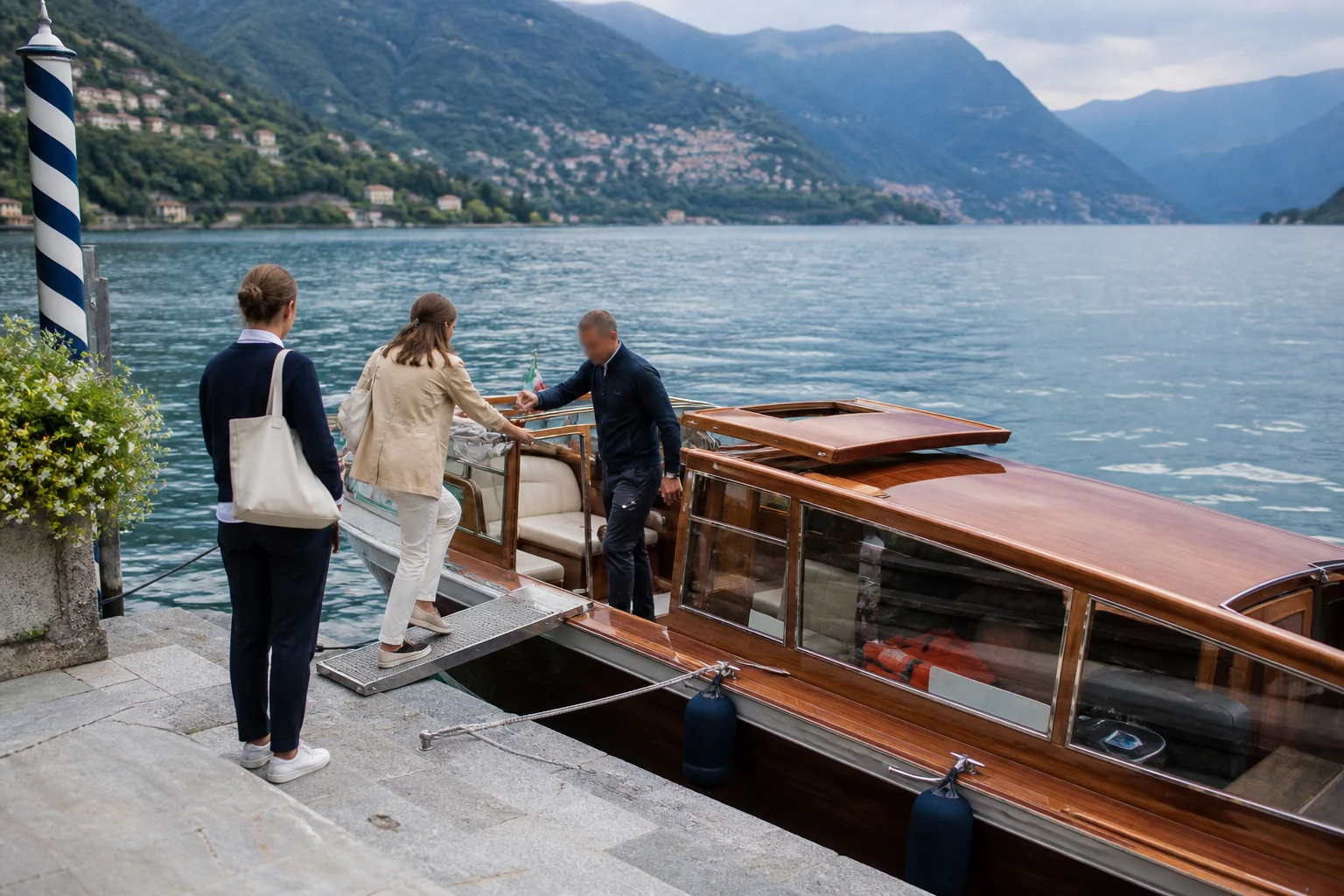
Elegant vessels still serve different needs. A low runabout gives intimacy with the water but limited shelter and perhaps no washroom. A larger cabin boat can provide shade, wind protection and a lavatory, yet may handle small jetties less easily. Guests need secure seats without resorting to bow or side decks under way. Confirm fuel, drinks, towels, heating or blankets and the safe operating capacity with the captain.
Lunch is the anchor of the day
A lakeside meal needs more than a restaurant reservation. Confirm the drop-off, walking distance, expected arrival and collection together. A one o'clock table is meaningless if the jetty is occupied or a villa tour runs long.
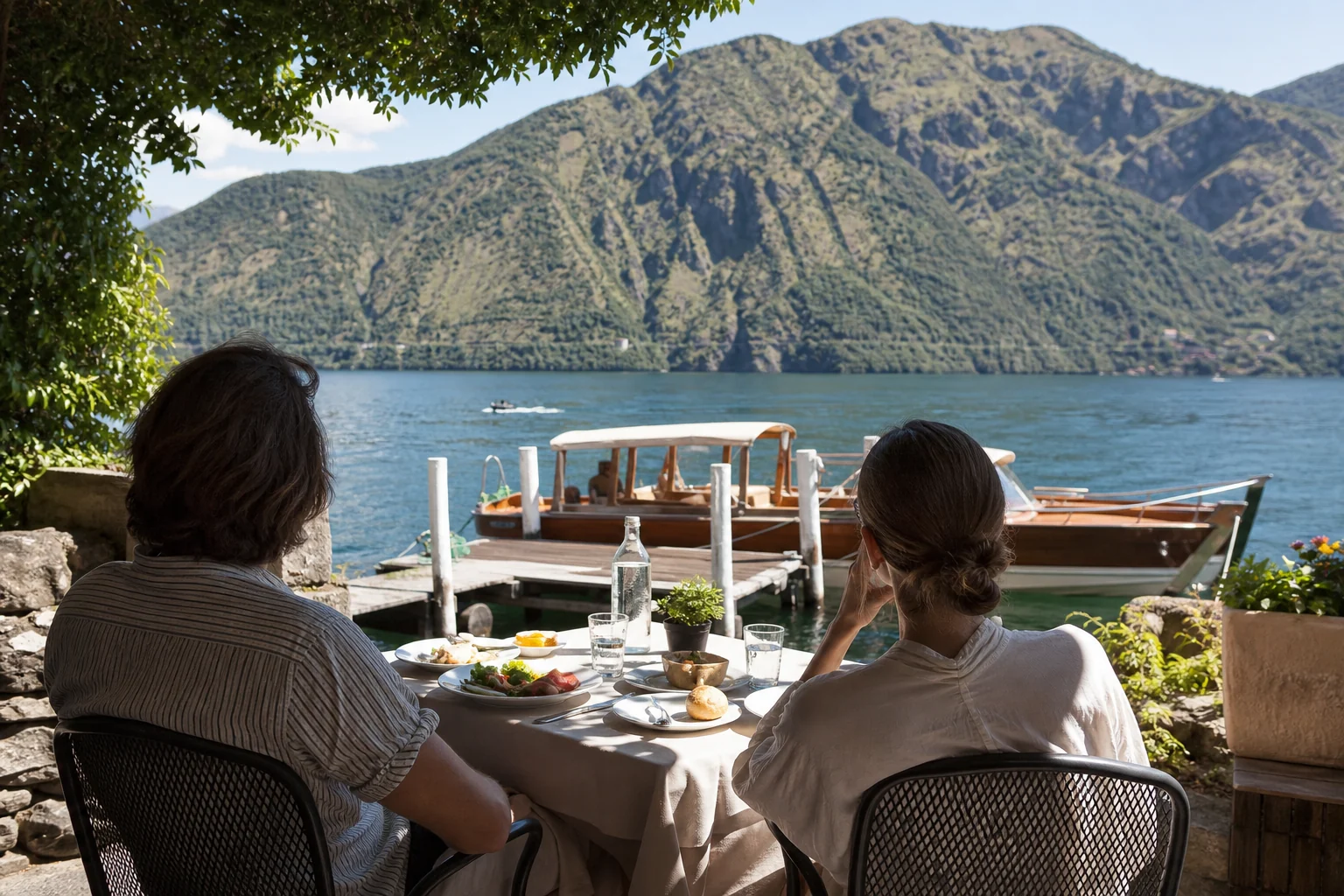
The strongest sequence is often a villa in the morning, lunch at the centre of the day and a flexible return with one short village or swimming window. Aperitivo first and culture under deadline reverses the logic.
The restaurant should confirm whether the booked vessel may use its jetty, whether a tender or road transfer is required, and whom to call after delay. Give both the table and collection a time window. Ninety minutes keeps lunch light; a long menu can become the day's centre, but then the villa or return route contracts. Kitchen, boat and guest should be working from the same plan.
Weather planning starts with the return
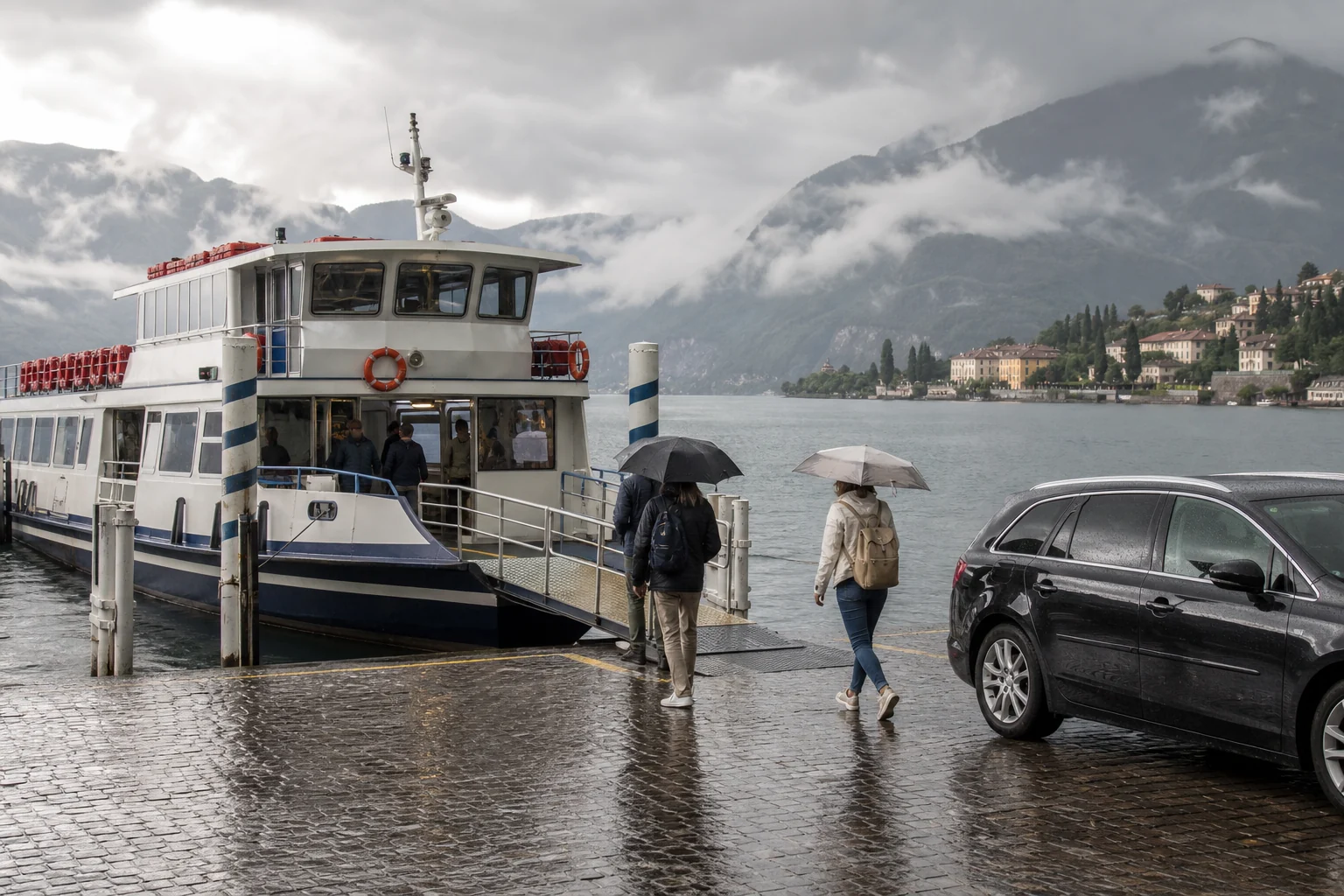
Wind, thunderstorms, wave state and visibility can change locally on an Alpine lake. Navigazione Laghi itself warns that scheduled services may be suspended in poor weather or strong wave motion. The public ferry is therefore not a guaranteed weather substitute for a private boat.
A good captain sets the safe range that morning and monitors conditions. When the outlook is uncertain, remain in the central lake, remove the most exposed passage and place lunch closer to the hotel. The guest buys safe time on the water, not an inflexible circuit.
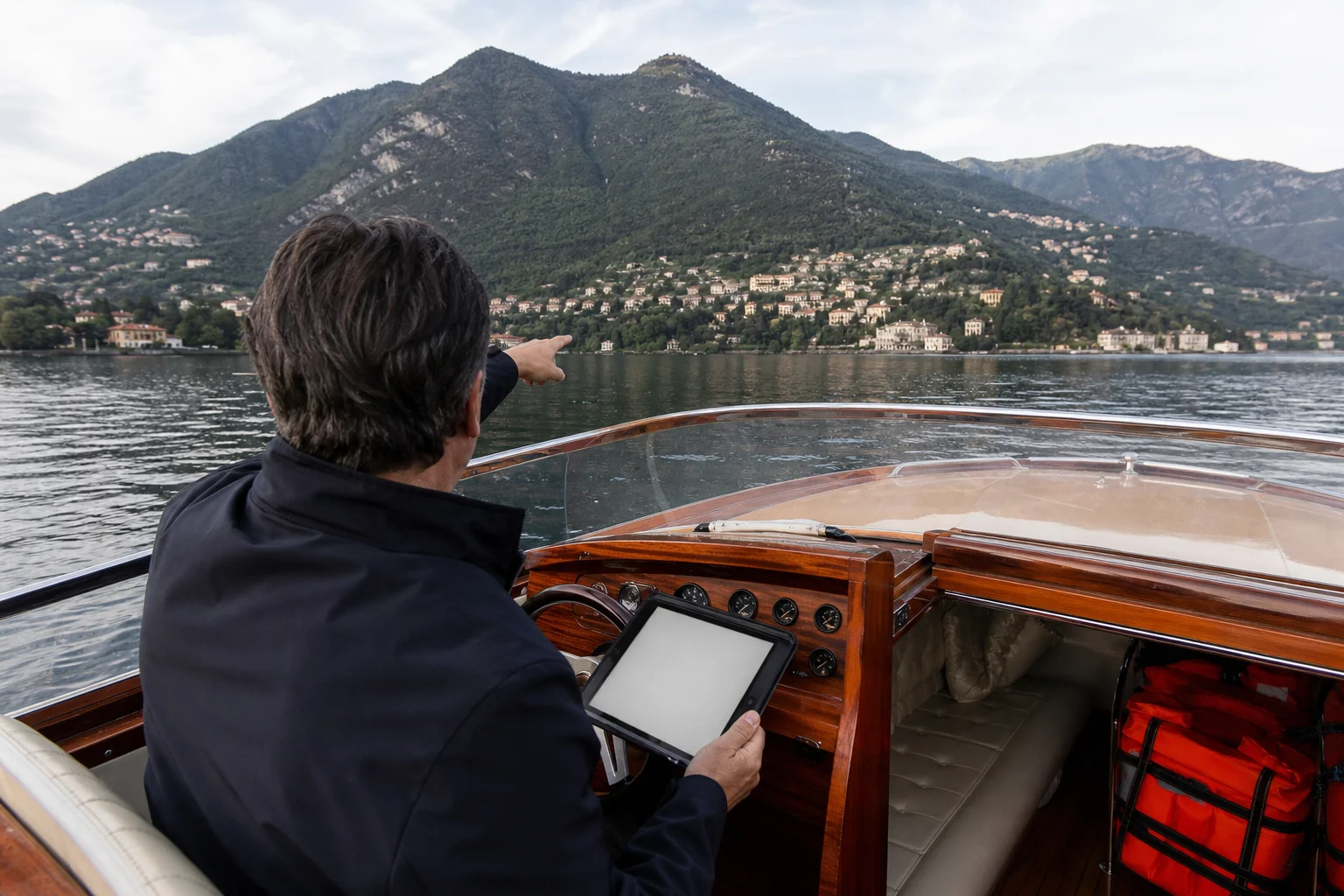
The fallback has three levels: shorten on the same shore, use an alternative safe landing with a prearranged car, or move to a complete land day when departure is unwise. Public ferry service is used only when current operation and accessibility are verified. No contingency should assume that another form of transport will run normally through the same adverse conditions.
Two structures that genuinely work
The cultural day
Leave after breakfast, visit Villa del Balbianello or Villa Carlotta, lunch in Tremezzina or Bellagio and return quietly past the villa façades. One short village walk replaces a second museum.
The lighter lake day
Start later, cruise the central lake, take a long lunch, continue to Varenna or Bellagio and return with weather margin. This suits guests who value landscape, conversation and hotel time above interiors.
Swimming is a bonus, not a guaranteed appointment
The captain selects a safe position according to traffic, wind, water temperature and local conditions. Not every shore offers a comfortable entry, and not every boat makes reboarding easy. Towels, footwear, flotation support and dry layers are agreed before departure. If the water is cold or the route busy, removing the stop does not diminish the day.
Swimming is approved on the day. The engine is secured, the ladder prepared and one person remains aboard; children and uncertain swimmers use the support specified by the operator. There is no jumping into unknown water or swimming near heavy traffic and landings. A guest seeking only a quiet cool-down may be better served by the hotel pool than by forcing a lake stop.
Mobility and clothing need a brief
Historic villas, garden paths, steps, low jetties and a moving boat demand more mobility than a hotel lobby. Knees, balance, wheelchairs and pushchairs must be discussed before vessel selection. Non-slip shoes, a light wind layer, sun protection and little hand luggage are more elegant than unsuitable resort dress.
What must be confirmed in writing
- Exact vessel, captain, capacity and weather protection.
- Hotel jetty or alternative meeting point.
- Villa ticket, time slot and access method.
- Lunch, landing, walking distance and collection.
- Poor-weather, shortened-route and land-transfer plan.
- Cancellation terms if navigation is unsafe.
- Mobility, children, swimming and luggage.
Add operator licence and insurance, total price, overtime, fuel, tax, drinks, towels, admission, guide, gratuity and payment status. Route and duration are a planned service, not a safety guarantee. The agreement says who cancels for weather, which refund or rebooking follows and whether the captain may shorten without guest approval. That final authority must be unambiguous.
The Deluxetargets recommendation
Plan five or six hours, choose one villa and keep the afternoon flexible. Place lunch and the return so the captain can shorten the route without ruining the day. The result is not a record number of stops, but the moment Lake Como becomes landscape again.
A four o'clock return is not wasted luxury. It leaves a shower, terrace and unhurried evening while the lake remains one coherent memory. The extra stop added only because an hour appears free increases traffic exposure and return pressure. A good captain recognises when the day is complete, and turns for home.