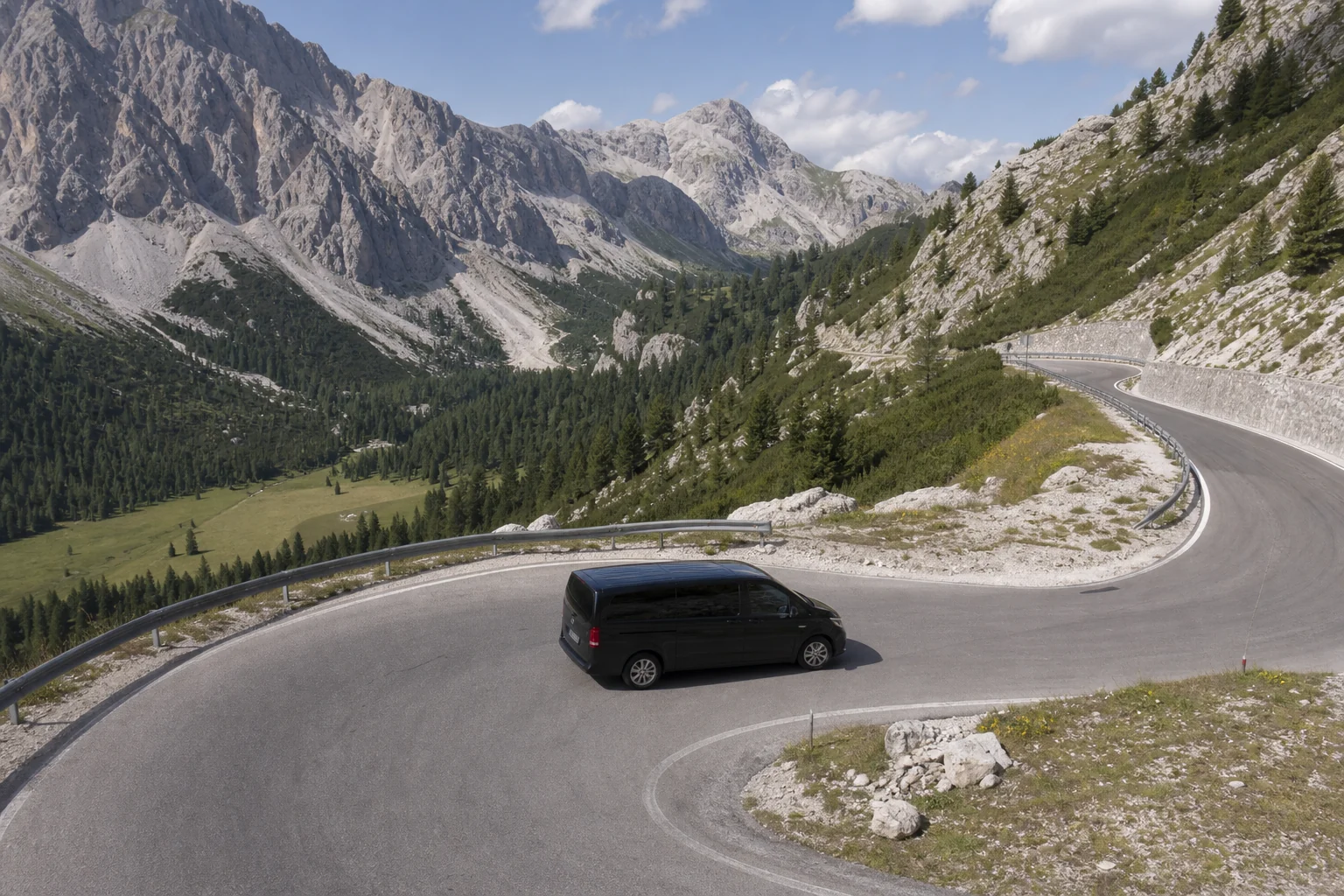
A calm Dolomites route begins not with a chauffeur, but with fewer hotel changes. The finest vehicle cannot rescue a restless seven-night itinerary across three valleys. Choose one or two bases, align arrival and departure with different transport gateways, and check passes on the day: the reward is more mountain time and fewer lobbies, suitcases and hairpins.
Three decisions that shape the journey
- One or two bases
- At least three, preferably four nights in each hotel
- The right transport model
- Self-drive, point-to-point transfer or chauffeur for the changeover day only
- A linear route
- Do not return to the arrival airport when another exit genuinely works better
This article solves the movement. For the regions, design hotels and dining profiles themselves, read Luxury hotels in the Dolomites: design and dining.
The short answer: use the chauffeur for the move, not every day
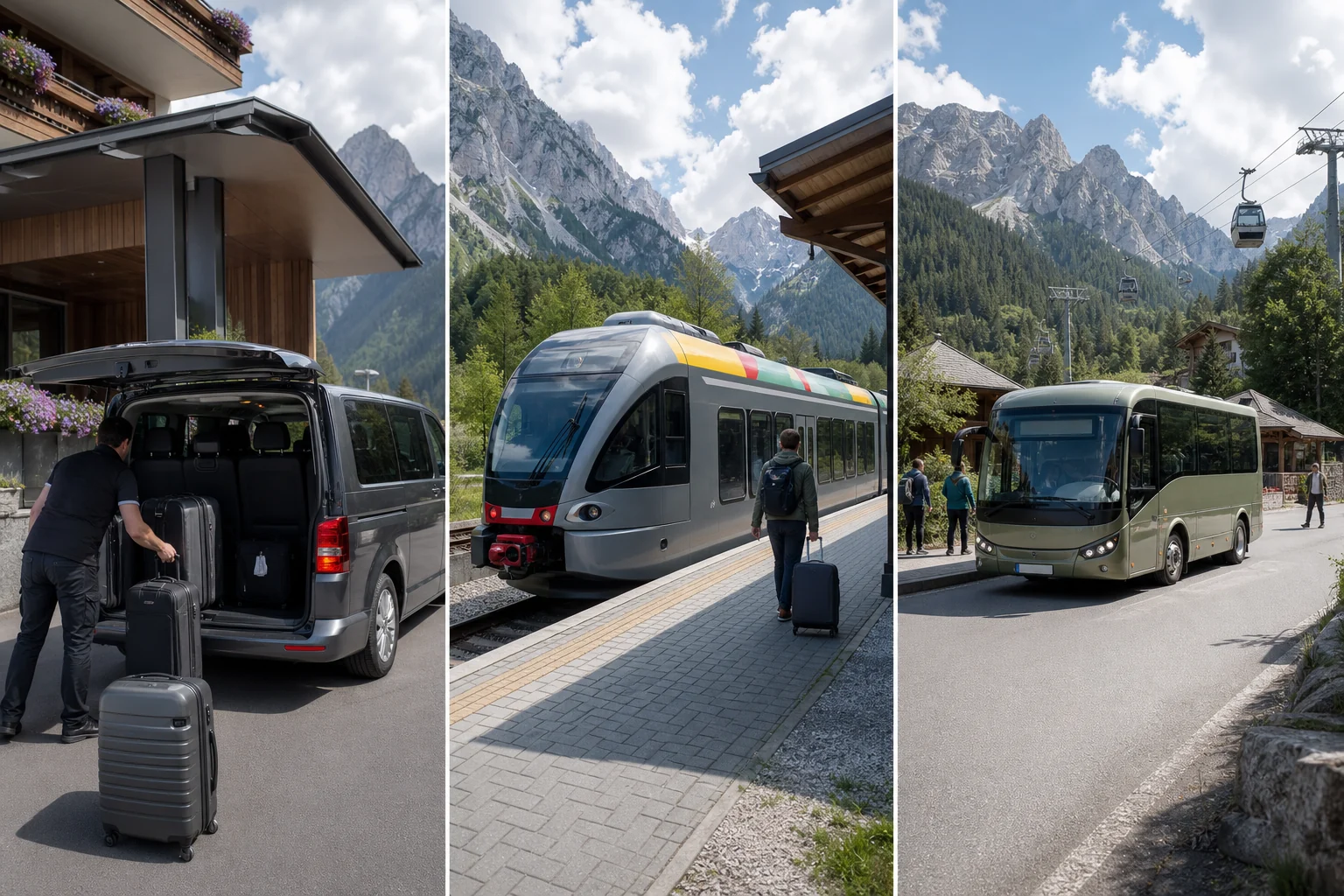
Within Alta Badia, Cortina or Val Gardena, many days work with a hotel shuttle, local bus, lift, guide and walking. A private driver adds most value on airport arrival, a hotel change with luggage or a transfer designed around selected stops. A car waiting outside all week creates cost without automatically creating freedom.
Self-drive suits travellers familiar with mountain roads who want spontaneous stops and equipment at hand. Point-to-point transfers suit a clear two-hotel route. A chauffeur for the full changeover day is valuable when pass, viewpoint and lunch are part of the experience – if weather and traffic support the plan.
| Model | Strength | Weakness | Best for |
|---|---|---|---|
| Rental car | Maximum flexibility and luggage stays with you | Driver sees less; parking and passes add strain | Experienced mountain drivers with fluid day plans |
| Point-to-point transfer | Simple, clearly costed, no idle vehicle | No spontaneous stops without a new agreement | Airport plus one hotel change |
| Chauffeur on move day | Route, lunch and luggage under one responsibility | Waiting, hours and detours increase cost | Two bases joined by a deliberate scenic day |
| Rail/bus plus transfer | Relaxed and useful within the region | Timetable, connection and baggage require discipline | Longer stay at one well-chosen base |
Alta Badia alone or with Brixen/Plose
The calmest option is one hotel in San Cassiano, Corvara or La Villa. Hikes, pistes, huts and restaurants are then planned locally. One arrival transfer enters the valley; hotel shuttle, bus, taxi and guide carry the week; another transfer closes it.
Alta Badia’s official mobility information names Bruneck as the nearest railway station, a little over 30 kilometres away, with several bus services each day. Brixen and Bolzano are roughly 65 kilometres away; buses, shuttles and taxis cover the final section. The South Tyrol Guest Pass may include regional public transport depending on the property and current rules.
This model is particularly persuasive for winter, families and food-focused stays. A day in Cortina can be added, but does not need to become an obligation. Checking another valley every second day defeats the point of the base.
Three nights above Brixen and four in Alta Badia create a linear journey with two distinct moods. Arrive by rail in Brixen or Bolzano, or through Innsbruck with a transfer. On changeover day, a private driver continues to San Cassiano or Corvara; departure can use Bruneck, Bolzano or Innsbruck.
Do not overload the transfer with three sightseeing detours. An early lunch or a short walk is enough. Confirm when the second hotel will accept luggage or make the room available. A major tasting menu does not belong on that evening.
Venice, Cortina and Alta Badia or car-light Alpe di Siusi
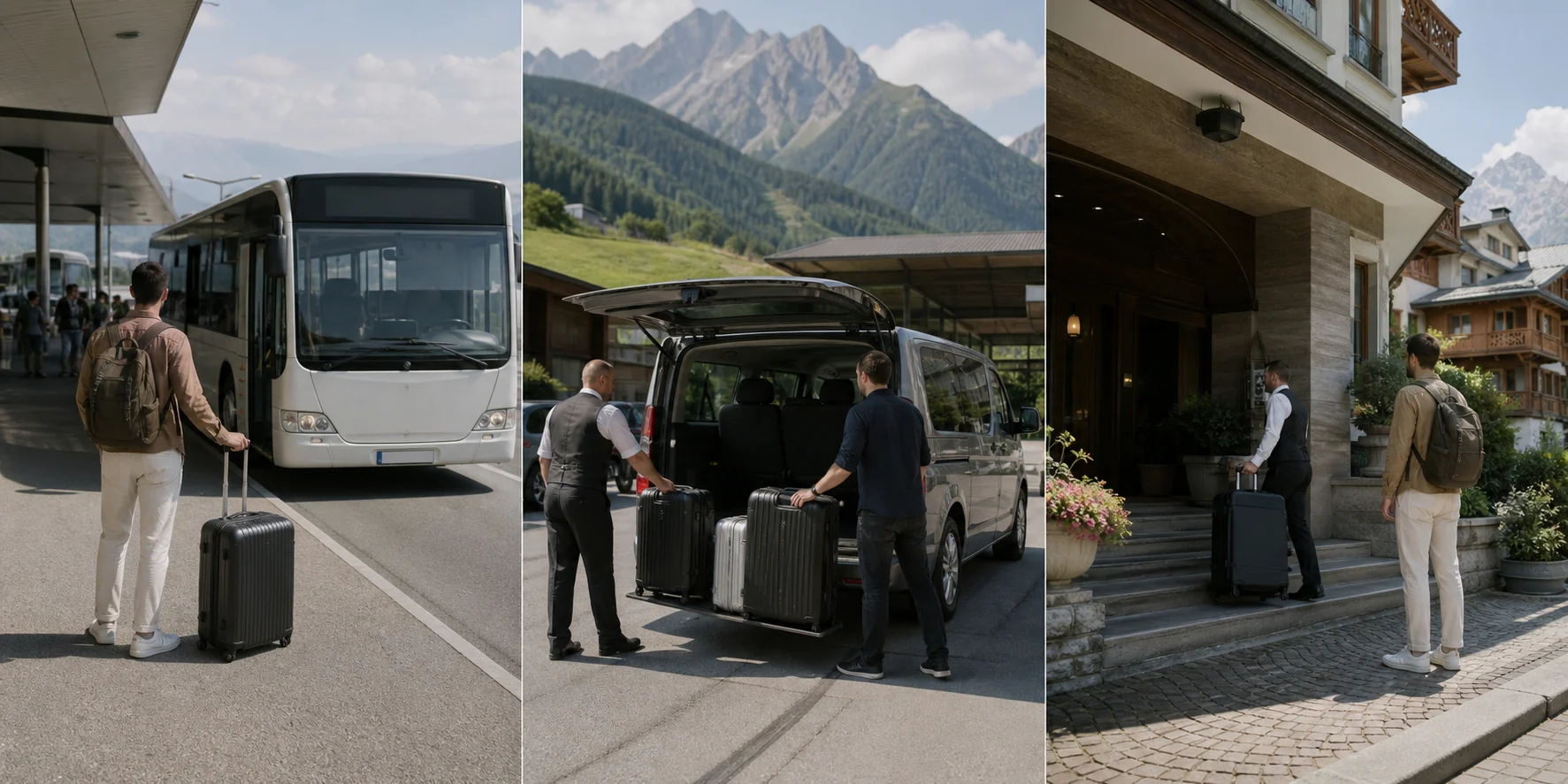
Venice is a logical entry for the eastern and central Dolomites. Cortina Express publishes a direct, daily, year-round service from Venice Airport to Cortina, without a change, of around two hours. A private transfer is more comfortable after a late flight, with substantial luggage or for door-to-door service, but not automatically faster.
After three nights in Cortina, a driver continues to Alta Badia by the most appropriate route that day. Falzarego and Valparola are geographically persuasive, never guaranteed open. Departure may be through Innsbruck, Bolzano or Venice depending on flight and pass conditions. A linear exit saves an unnecessary return only when the flight schedule and ticket logic work too.
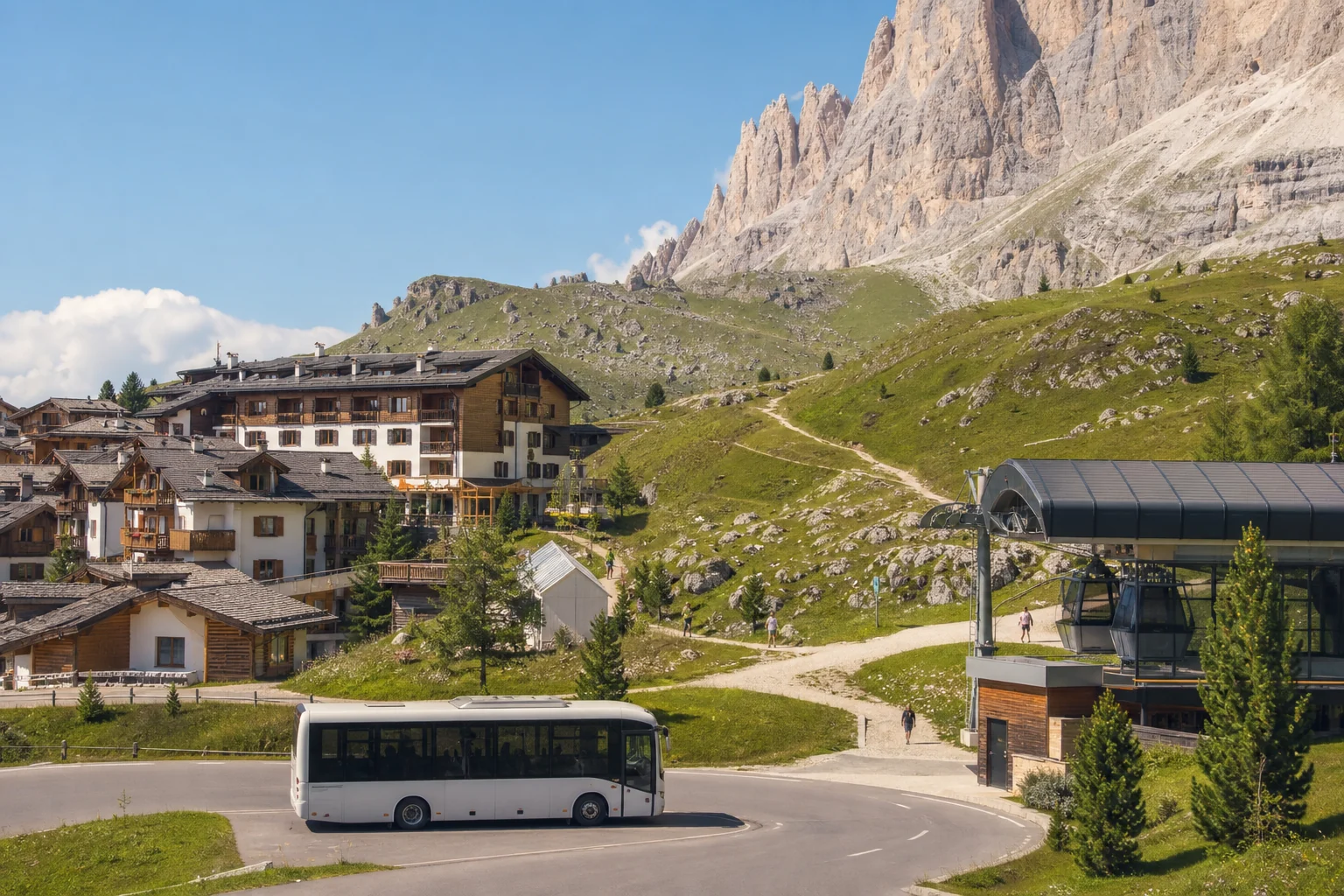
On Alpe di Siusi, the car quickly becomes the wrong instrument. The official region explains that private vehicle access is restricted. From summer 2026, parking requires online reservation; the road to Compatsch is closed to private vehicles between 09:00 and 17:00. Cable car and bus are expressly recommended.
Hotel guests and the periods between operating seasons may follow different rules, which the property must confirm. Anyone staying on the plateau should use it as a habitat: walking, cross-country skiing, downhill skiing, spa and nearby dining. Daily descents contradict the reason for choosing it.
The private driver needs a precise brief
“Luxury vehicle for four” is insufficient. The brief lists number and dimensions of cases, skis or bicycles, child seats, preferred language, mobility limitations, meeting point, flight tracking and every stop. In winter, confirm tyres, chains and experience on the proposed route.
Commercial terms matter too: included driving time, waiting, extra kilometres, tolls, parking, driver meals or accommodation, cancellation and the response to a closed pass. A chauffeur is not automatically a mountain guide. Hiking, via ferrata and off-piste activity need the appropriate qualified professional.
The same driver is pleasant, but not always efficient
One chauffeur learns the guests, luggage and rhythm. Across several days, however, empty running, accommodation and legal rest periods accumulate. Regional partners for each segment can be more efficient. What matters is one operating contact coordinating handovers and flight changes.
Vehicle and driver details should arrive in good time, though an equivalent operational substitution may be reasonable. Service standard matters more than the illusion of one person waiting outside the hotel for seven days.
Passes and maps do not replace operating mountain knowledge
Gardena, Sella, Pordoi, Campolongo, Falzarego, Valparola and Giau connect remarkable landscapes, but their condition changes the journey. Snow, heavy rain, works, congestion and events extend driving time or close roads. South Tyrol’s official guidance recommends checking accessibility and condition.
Summer 2026 illustrated the principle: the Maratona dles Dolomites and Dolomiti Bike Day temporarily closed several passes to motor traffic at the same time. Such days are superb for cyclists and poorly chosen for a hotel move on the same axis. Check the event calendar before travel and again 48 hours prior.
A navigation estimate does not fully account for viewpoints, cyclists, slower vehicles, weather, parking and a restorative stop. A proposed secondary road may be unsuitable for a large van or anxious passenger. The local driver decides from official information and conditions.
Build reserve without arbitrarily doubling every drive. The buffer before an international flight is greater than before a hotel change. A prettier pass must never place the homeward flight at risk.
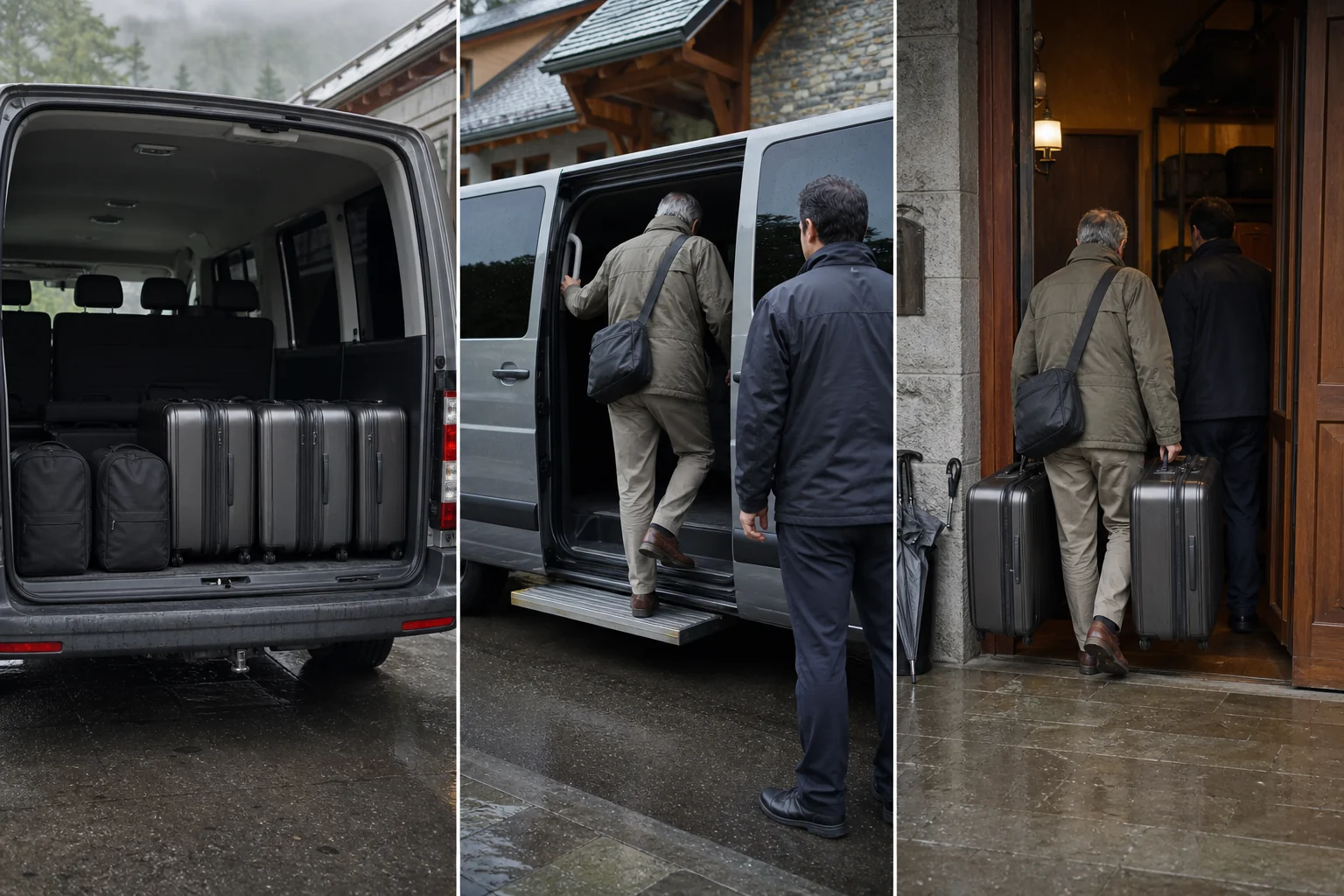
Hotel changes, luggage, children and winding roads
An 11:00 check-out and 15:00 check-in create a natural window. Count and label luggage, then confirm it in the vehicle. Medication, documents, valuables and clothing for the day remain in hand baggage. The driver knows whether the next room or luggage store will be ready.
A good changeover contains no more than one principal stop. Too many viewpoints turn comfort into an excursion with suitcases. In rain, the walk becomes an early lunch or pre-arranged spa access; the plan needs a weatherproof version.
Four guests with large cases, ski helmets and winter boots need more than an elegant saloon. A high-quality van is often more luxurious because nothing sits on a passenger seat and access remains easy. Bicycles require a suitable rack or separate transport.
One medium case and a day pack per person are usually sufficient for a week when laundry is available. Luggage is never left unattended in a vehicle overnight. Hotel and operator state in writing who is responsible at each stage.
Child seats are ordered by age, weight and fitting type, not simply “two children”. Regular stops, water and a forward view help guests sensitive to bends. A long transfer immediately after an early flight is rarely an elegant family plan.
Older guests need an easy step into the vehicle, sensible walking distances and time between car and room. Accessibility cannot be inferred from vehicle category. A route can remain visually grand and physically gentle.
Winter and summer need different mobility
Alta Badia describes elevations from 1,000 to 2,000 metres and states the need for winter tyres or snow chains. Guests who do not routinely drive in alpine conditions begin more calmly with a professional transfer, particularly after an overnight flight or in falling snow.
A rental still works for experienced drivers with changing day plans. It needs correct tyres, chains, storage and confirmed parking. Four-wheel drive improves traction; it replaces neither tyres nor judgement.
July, August and event weeks bring motorcycles, bicycles and day visitors. A chauffeur removes the strain but sits in the same queue. An early start, local bus or lift may be more elegant than a black vehicle at peak time.
Do not collect mountain passes as a driving circuit. A chauffeur can support a linear hike with different start and finish points; many days work better with a local guide and public connection. The object is time in the mountains, not time in the car.
The transfer quotation must be complete
A sound quotation specifies vehicle and capacity, route, date, meeting time, flight monitoring, waiting, stops, child seats, equipment, supplements and cancellation. “Meet and greet” includes the precise location. Contact numbers work on the travel day.
The lowest price is not automatically best, nor is a flat day rate. A fixed price is clean for direct journeys. A time-and-distance framework is more honest for a scenic day. Gratuity is explained culturally and contractually, not silently assumed.
The Deluxetargets view
For seven nights, we recommend one Alta Badia base or two bases with at least three nights each: Brixen/Plose plus Alta Badia, or Cortina plus Alta Badia. Transfers handle arrival and departure; a private driver shapes the hotel move only when the road itself belongs to the experience.
We treat gateway, pass status, event calendar, vehicle, luggage and plan B as one chain. When nobody has to drive every day, but every necessary journey has a clear owner, the route becomes calm without sacrificing useful spontaneity.