
The solo hotel brief
A beautiful hotel becomes genuinely luxurious for a woman travelling alone when arrival, room position, access and service are designed with quiet precision—without turning independence into a security theatre.
Five stars are not an operating manual
A hotel may have a renowned restaurant, significant suites and impeccable linen while still being the wrong address for one guest arriving alone at midnight. Star ratings and awards describe parts of a hospitality experience; they do not guarantee a particular entrance, room location, visitor policy, transfer procedure or response to discomfort. These details must be verified separately.
The right question is not whether a property is “safe for women”. No hotel can make that absolute promise. Ask how it operates: who controls access, how a caller is screened, what happens when a key is lost and who has authority at 02:00. Luxury is revealed through process long before it is expressed through marble.
Read the map beyond the hotel pin
Location is experienced from pavement level. A prestigious address may face a multilane road, sit behind a dark park or empty after offices close. Another hotel may offer a less dramatic façade but allow an easy walk to restaurants, pharmacy, museum and licensed taxi rank. The final three hundred metres often matter more than the distance to the airport.
Review the route at the hours the guest will use it. Is the entrance visible Does a second door close overnight Where does a car actually stop Are there steps, arcades or a service lane between vehicle and lobby A hotel should answer these questions factually, without insisting that the neighbourhood is “perfectly safe”.

Pre-arrival, transfer and check-in protect identity and privacy
Good service begins before the guest’s name appears on a welcome screen. The hotel needs flight details, mobile number, arrival method, approximate time, room-location preferences and any accessibility or medical information the guest chooses to share. It also needs clear instructions on discretion: do not announce the room number, do not disclose that the guest is alone and do not connect visitors or callers without consent.
This is not a request for exceptional treatment. It is a normal service profile. Keep the note short enough to be read and precise enough to act upon. Sensitive information should not be copied into broad operational emails or casually repeated across departments.
A name board is not proof of identity; names can be observed in an arrivals hall. Before landing, the traveller should receive the driver’s full name, mobile number, vehicle make, colour and registration, plus the exact meeting point and a hotel or operator number to call if anything differs. The driver should know a verification detail that is not publicly displayed.
When plans change, the hotel must communicate the replacement through an authenticated channel. The traveller should never feel obliged to enter a vehicle because someone confidently claims the booking. If contact fails, she remains in a staffed public area and calls the official number. A polished limousine does not remove the need to verify it.
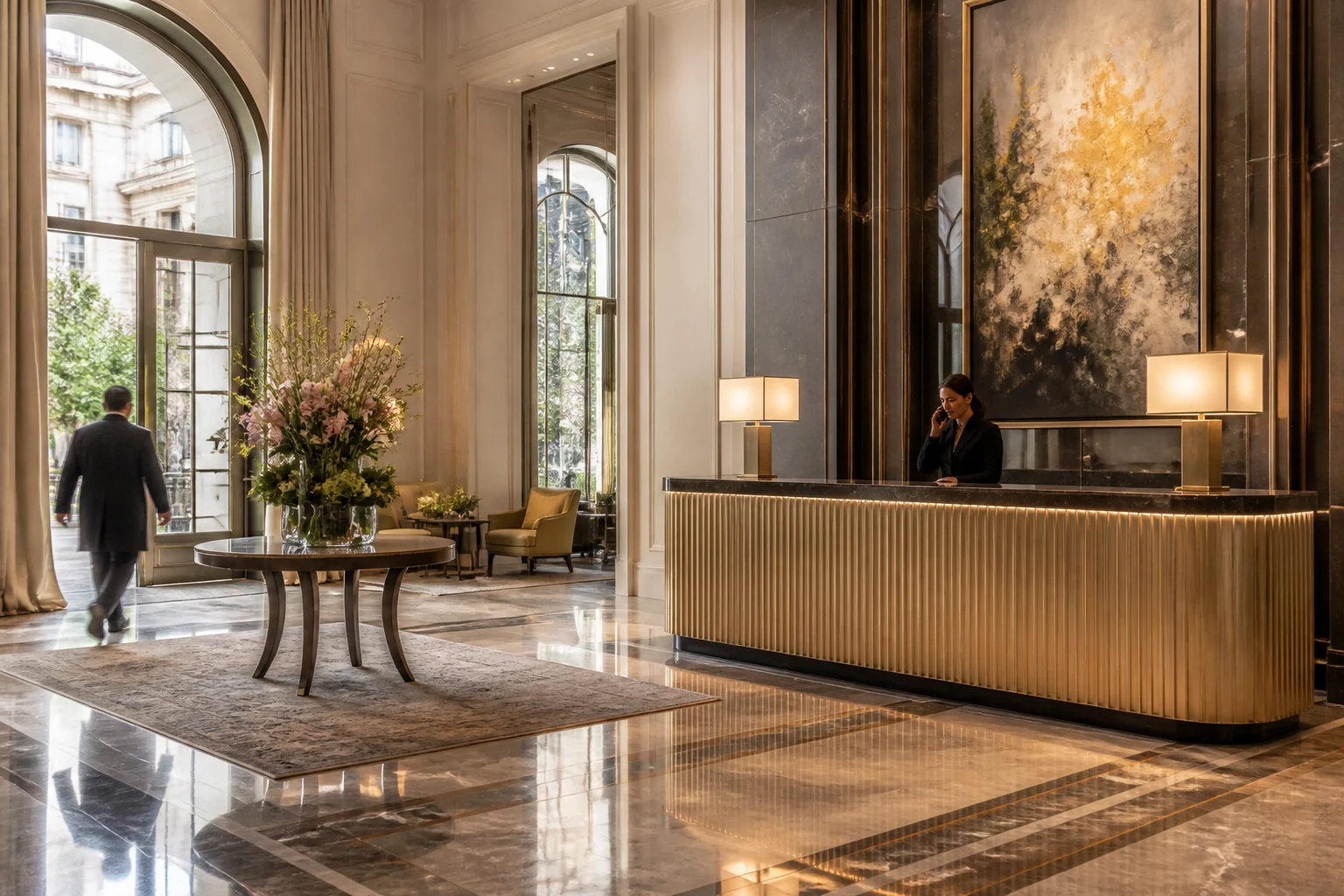
The desk can confirm address and contact data discreetly rather than speaking them across the lobby. The room number is shown, not called out. If the guest prefers to finish registration seated in a quieter area, that can be elegant, but she should still understand where reception, exits and lifts are located. A theatrical escort through empty corridors can be less reassuring than clear orientation.
The team should explain how lift access works, whether any doors lock after a certain hour and how to contact a decision-maker. It should not use “Mrs” by assumption, ask why the guest is alone or treat a companion’s absence as a problem to solve.
Room position, access, visitor control and housekeeping
No floor is universally best. A ground-floor terrace may be delightful and too exposed for one guest’s preference. The top floor may be quiet and distant from staffed areas. A room beside the lift can feel visible; one at the end of a long exterior corridor can feel isolated. Connecting doors, fire stairs, service cupboards and public terraces all change the context.
The brief should express the guest’s priorities rather than prescribe a mythical “safe floor”: interior corridor, away from a connecting door, not adjacent to a public lift landing, near or far from the main building, with a balcony only if access is controlled. If the assigned room feels wrong, moving her promptly is better service than explaining why it should feel right.
Before unpacking, check that the door closes and locks, the secondary latch works, the peephole is clear and windows or balcony doors secure properly. Test the room telephone or the hotel’s official messaging channel. Locate the emergency information and count the route to the nearest exit rather than relying entirely on memory. Note any connecting door.
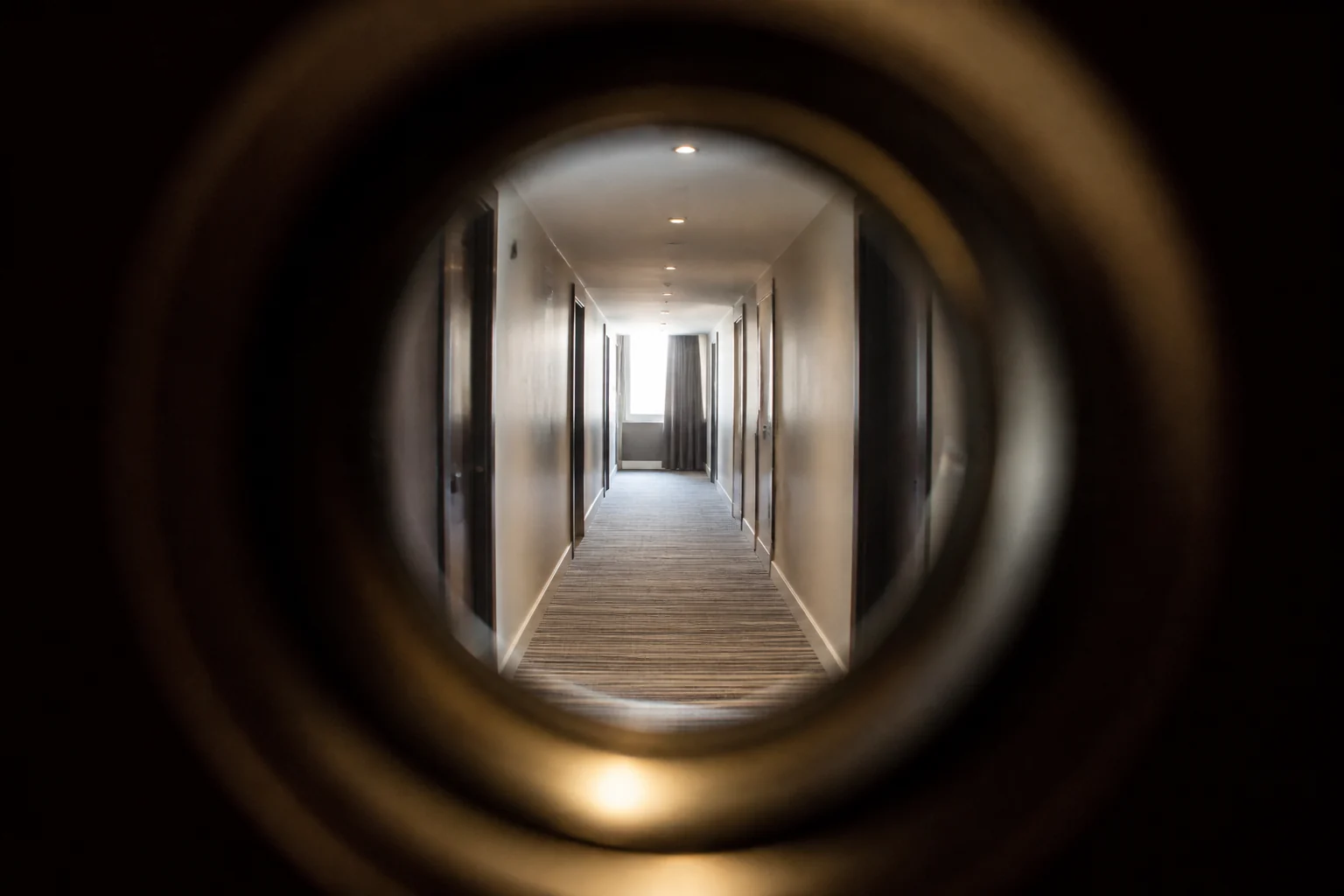
If a seal, lock or window is defective, call from inside and request a remedy or a new room. If the room looks unexpectedly occupied or disturbed on return, do not enter to investigate; go back to a staffed area and ask hotel security or management to attend. Calm procedure is more useful than alarm.
Modern access systems vary. Some lifts require a room key; others allow public movement to restaurants or spa floors. A digital key is convenient but makes a charged, functioning phone essential. A lost key should be reissued only after identity verification, and the old credential should be cancelled. Staff should never state the guest’s room number while replacing it.
Do not write the room number on the key sleeve if the guest prefers otherwise; store it privately on the phone. A beautiful old hotel with physical keys may operate securely, just as new technology can be poorly managed. Procedure matters more than novelty.
The hotel should not confirm that a named person is staying there. External calls can be routed to voicemail or connected only after the guest accepts them. Deliveries remain at the desk unless specifically authorised. A visitor should never be given a key or room number; the guest decides whether to meet in the lobby or register them under the property’s policy.
When someone knocks claiming to be staff, use the peephole and call reception through the official number to verify the visit. This is especially relevant for unexpected maintenance, minibar or luggage requests. Genuine staff will understand the pause.
A solo guest may value service and still want control over entry. Agree on a cleaning window, use the privacy indicator and request advance notice for maintenance or special deliveries. Turndown should not become an unannounced evening intrusion. When the “do not disturb” sign remains in place unusually long, the hotel may follow a welfare protocol; its process should be respectful and clearly explained.
Valuables, documents and sensitive work materials should not be left in view. A room safe may reduce casual exposure but is not an absolute guarantee. For high-value jewellery, cash or devices, ask what insured storage the hotel actually offers and what documentation is issued.
In-room and solo dining reveal service intelligence
Room service is sometimes a welcome retreat, not a sign that the guest is afraid to dine out. The hotel should identify the arriving staff member, announce the delivery and respect the guest’s preference for a handover at the door or full table setup. The room number and solo status should not be spoken in a public corridor.
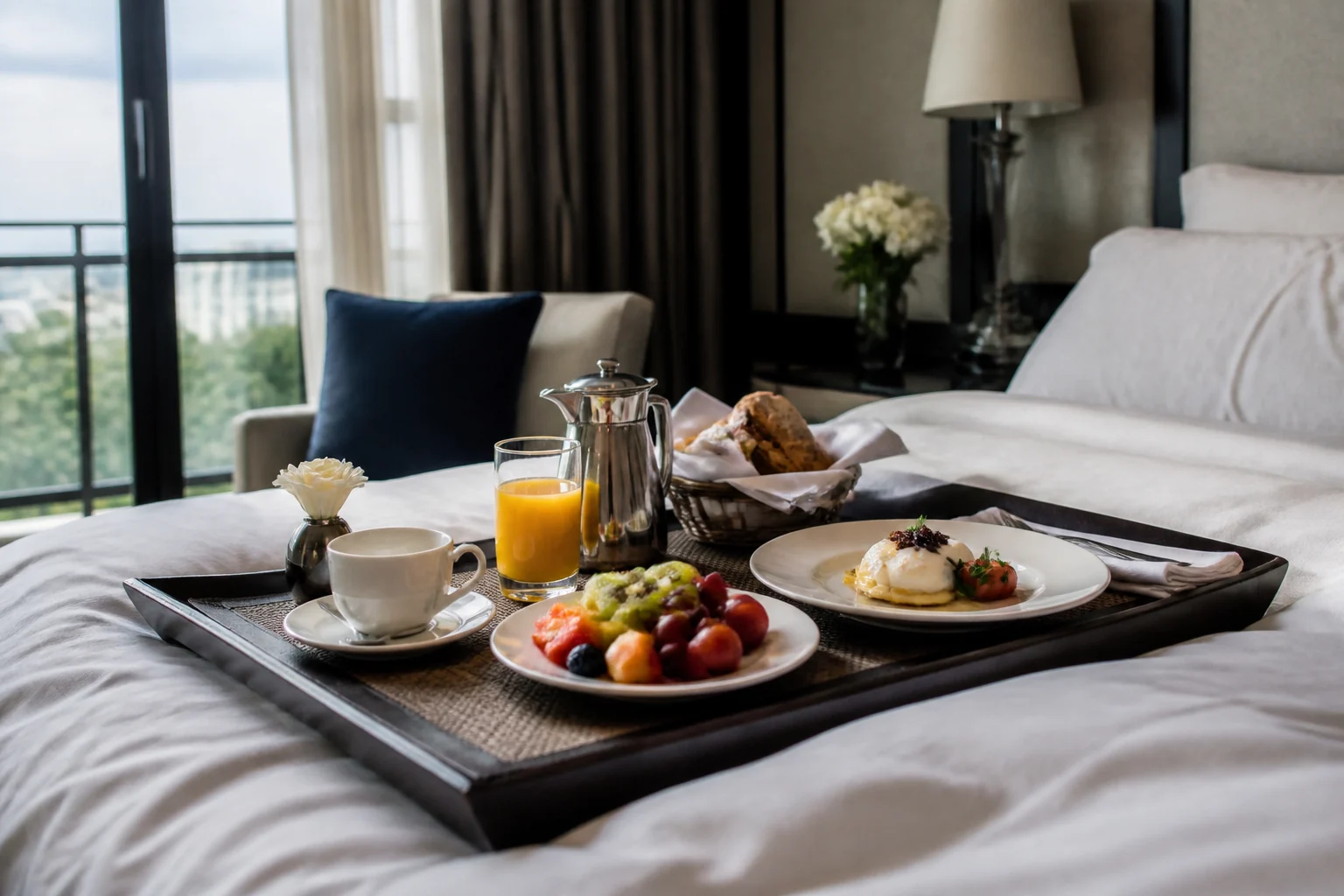
Ordering through an official app can be convenient, but dietary requirements and delivery times still need human accountability. If a tray collection is requested, the guest should not have to open the room repeatedly to unexpected knocks.
The weakest hotels treat one guest as incomplete: a poor table, compressed meal and repeated question about a companion. The best ask what atmosphere she prefers. Counter, banquette, terrace edge, bar or a quiet table with a view can each be right. A reservation should be held with the same respect as a table for four.
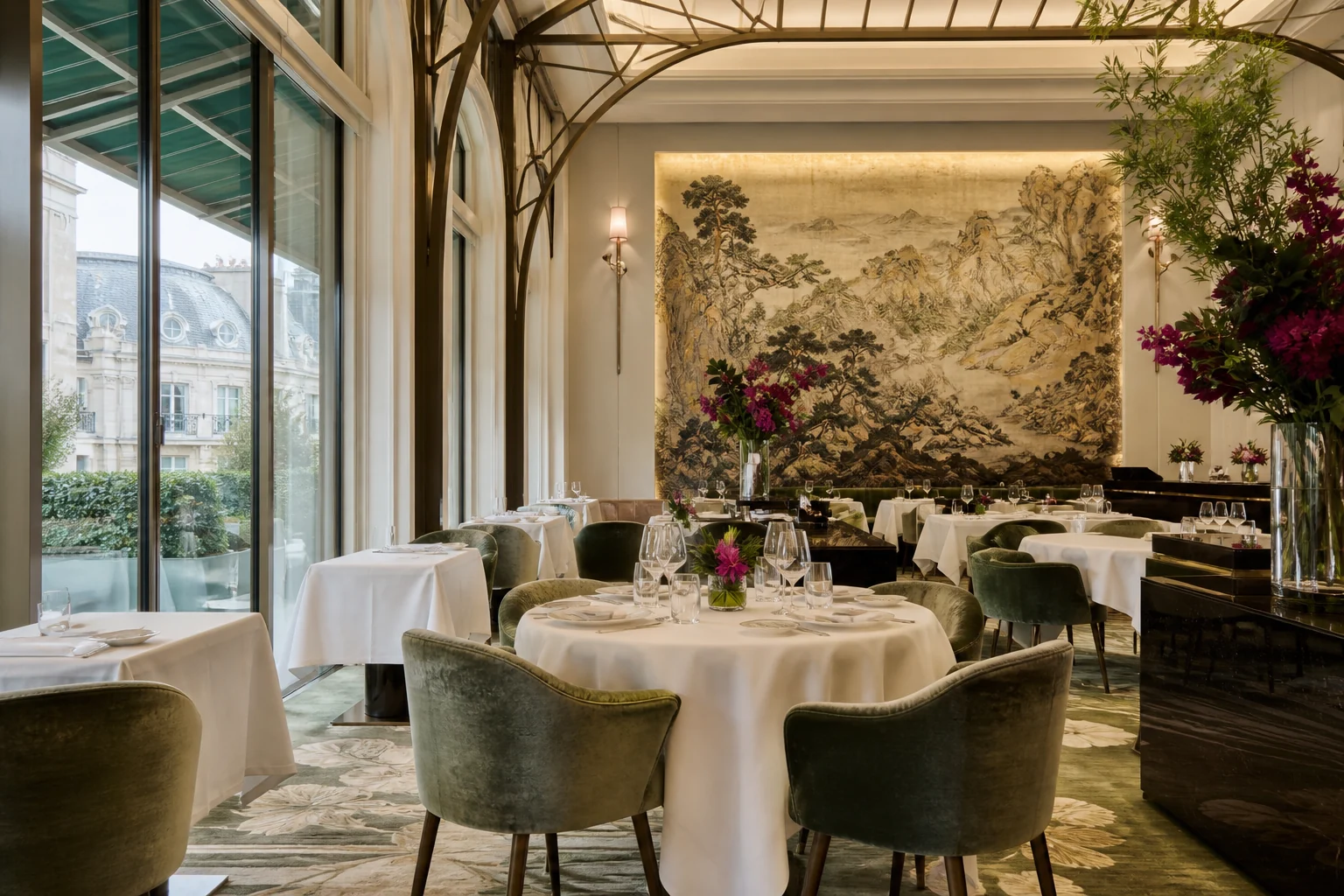
Staff may offer conversation, a newspaper or menu guidance without hovering. The bill is never used as a pretext to hurry. Where the restaurant is a social room for the city, the traveller gains optional connection without sacrificing privacy.
Spa, pool, gym and villa need the same clarity
Spa treatment details, therapist preference and changing arrangements should be confirmed before the appointment. A guest should know whether wet areas are mixed, what clothing is expected and how she returns to the room. At a remote resort, the walk from spa to villa after dark may need internal transport.
The gym’s opening hours and staffing matter when access is 24-hour. Pool staff should not announce a guest’s room number when signing a bill. None of these details is dramatic; together they determine whether the property feels composed or careless.
Private pools, garden walls and distance from the lobby look luxurious on a floor plan. They can also create long buggy waits, isolated paths, unobserved entrances and slow access to help. A woman travelling alone may love that privacy—or prefer a suite in the main building. The correct choice is personal, not gendered.
Before accepting a villa, confirm the distance to reception and restaurants, lighting, internal transport after dark, mobile and room-phone coverage, staff-entry protocol and emergency response. “More private” should never be sold as “better” without this context.
Late returns are planned before dinner
The hotel should advise which entrance remains open, where a taxi may stop and how the guest will identify an official hotel car. If the neighbourhood becomes empty, a short vehicle transfer may be wiser than an untested walk. The return plan belongs in the evening reservation, not as an improvised decision outside a venue.
A doorman who notes the arriving vehicle and a desk that recognises the guest add quiet continuity. They should not ask publicly whether she is returning alone. If someone follows or causes concern, the guest enters the staffed lobby rather than continuing to the lift.
Service recovery and a clear response to harassment
When a guest says a room, staff interaction or visitor has made her uncomfortable, the first response is action: move her to a staffed area, stop unauthorised access, offer a room change and involve a manager with decision-making authority. Debate, minimisation and forced confrontation increase the burden on the guest.
The hotel can document the incident, preserve relevant records and explain next steps without promising an outcome it cannot guarantee. If police, medical care or consular help is appropriate, it should assist while respecting the guest’s decisions. A complimentary drink is not a substitute for a corrected process.
Unwanted comments, persistent contact or boundary violations by staff, drivers, other guests or contractors should be taken seriously. The traveller does not owe politeness at the cost of comfort. She can leave, request another staff member, cancel a service or ask the hotel to prevent contact.
Local law and available recourse differ by destination, which is why official advice matters. The hotel’s role is not to make legal claims but to protect the guest from further contact, provide accurate information and retain records. A brand promise is meaningful only if it survives an uncomfortable moment.
Medical support and digital discretion must be specific
“A doctor is on call” can mean many things. Ask who answers at night, expected response time, nearest appropriate clinic, ambulance route and language support. In a remote resort, boat, aircraft or road access may be weather-dependent. The guest’s insurer may require a particular assistance provider before treatment or evacuation.
Essential medication, allergy information and insurance contacts remain accessible to the traveller. The hotel may hold helpful notes with consent, but sensitive medical data should be shared only as necessary. Wellness is not a substitute for medical capability.
Guest names should not appear on public welcome boards or visible paperwork without permission. Wi-Fi portals, messaging tools and digital keys deserve the same care as physical documents. The traveller uses official hotel channels rather than QR codes or messages of uncertain origin, and verifies payment requests independently.
A room safe does not make a device digitally secure. Use strong device access, current software and a trusted connection for sensitive work. If a laptop contains confidential business information, the trip may require a separate security protocol beyond ordinary leisure advice.
Arrival routine and questions for the hotel
- Confirm the desk, main exit, lift and after-hours entrance.
- Ask that the room number and solo status remain private.
- Inspect door, secondary latch, peephole, windows and any connecting door.
- Test the room phone or official hotel chat and save the external hotel number.
- Locate the nearest emergency exit and read the evacuation information.
- Place passport, medication and essential contacts where they are controlled and accessible.
- Agree on the first evening’s return transport before leaving the hotel.
The questions an advisor should put to the hotel
- How is the driver identified, and what happens if the flight or meeting point changes
- Can the room be assigned to the requested corridor, floor context and distance from staffed areas
- Are there connecting doors, public terraces or exterior corridors
- How are callers, visitors, deliveries and replacement keys screened
- Which entrance operates after dark, and can the hotel arrange a verified return car
- Who has decision-making authority overnight if the guest requests a room change
- What medical support is genuinely available and on what timescale
The finest service makes freedom feel ordinary
A woman travelling alone should not be made to feel fragile, remarkable or administratively difficult. She should be able to arrive late, dine beautifully, decline conversation, invite a friend to the lobby, ask for a different room and return from the theatre with the same ease as any other guest.
That is the standard: not visible protection, but competent hospitality. When the hotel’s people and processes work, the guest stops thinking about the mechanics and begins to inhabit the journey. Discretion becomes not a special favour, but the atmosphere of the stay.