
Jet lag is often designed into a journey before anyone boards the aircraft. A connection may look elegant on paper yet deliver its passengers at precisely the wrong hour for the first important day. The body clock cannot be negotiated away, but a thoughtful itinerary can reduce the conflict between biological time and the schedule waiting at the destination.
The body clock sets the itinerary
A dry cabin, prolonged sitting and a short night can leave anyone tired after a long flight. Jet lag is more specific: the internal circadian clock remains aligned with the point of departure while daylight, meals and appointments already follow local time. Sleep, alertness, digestion and mood may all be affected. A flat bed, a shower and good hydration improve comfort,
but they do not reset that clock by themselves. This distinction keeps expectations sensible. The aim is not to land untouched by travel; it is to prevent avoidable conflict between the hours when the body expects sleep and the hours in which the trip needs to function.
On a two-week holiday, settling into local time is usually useful. On a two-night visit built around evening engagements, complete adaptation may be neither possible nor desirable. Retaining part of the home schedule and placing demanding work in biologically stronger hours can be the more intelligent choice. Start with three questions: how long is the stay,
at what local time must you perform, and does the itinerary return home or continue across more time zones Trying to force a new rhythm at every brief stop can create more disruption than it solves.
Flying east usually asks the body to advance its clock and sleep earlier; flying west generally delays it and lengthens the day. Most people find delay easier than advance. The CDC Yellow Book uses broad average adjustment rates of about one hour per day eastbound and one and a half hours westbound. These are planning estimates,
not personal promises: chronotype, age, sleep debt, route and previous travel all matter. Direction nevertheless explains why the same traveller may cope well with New York yet struggle with Singapore. A successful strategy should never be copied blindly from the previous long-haul trip.

The size of the time difference indicates the scale of the adjustment, but the first fixed appointment determines its consequence. An arrival-night dinner creates a different problem from an 08:00 board presentation. A dawn safari is not equivalent to a beach stay with no timetable. Before choosing the flight, mark the two or three non-negotiable moments in the first 48 hours.
Then work backwards: when should the first full night occur, when is daylight useful, and when can a temporary dip in performance be tolerated Jet lag becomes much easier to plan when translated from a number of hours into a real arrival sequence.
Design the flight around the arrival day
An excellent lounge, a fashionable hub and a new seat cannot rescue the wrong arrival pattern. Compare the journey from the final calm hour at home to the moment the destination room is genuinely ready. A 06:00 landing appears to gift a full day, but may instead create eight homeless hours before check-in.
A late arrival can be gentler if immigration, transfer and the evening routine remain simple. Price and duration are only two criteria; add realistic sleep opportunity, local arrival time, ground transfer, confirmed room access and the purpose of day one.
The classic eastbound overnight suggests that the lost hours can simply be slept through. Yet boarding, meal service, cabin lighting, turbulence and preparation for landing often leave far less rest than the published duration implies. A midnight departure followed by a morning arrival can begin the local day after a brief, fragmented sleep. It may still be the best option,
but only when the arrival day is protected. Some travellers fare better with a later departure, a longer undisturbed rest window or an evening arrival. Choose according to sleep that is likely to happen, not sleep theoretically available between take-off and landing.
Travelling west tends to suit the body’s preference for a later clock, yet it carries a different trap. A morning departure from Europe and afternoon arrival in America may look easy; biologically, the traveller has already lived through most of an evening while the destination expects several more waking hours. Daylight and gentle movement can help,
but a packed dinner programme rarely does. Protect the first evening and aim for a bedtime that is early without being extreme. Staying out late to prevent predawn waking often merely exchanges one poor night for a depleted following morning.
A stopover is not a treatment in itself. It becomes useful when it divides a punishing journey into two coherent stages, provides a proper sleep opportunity or turns transit into a meaningful chapter. Two or three nights can work beautifully if the sequence of time zones makes sense and the programme remains light.
A detour in the opposite direction followed by another overnight flight may add confusion instead. Do not ask only whether the city is attractive. Check whether arrival, hotel transfer, room access and onward departure leave at least one calm, usable day.
Landing at 23:00, clearing formalities, driving 45 minutes and setting an alarm for 05:00 is not recuperation. It is another fracture in the journey. Even an airport hotel has limited value if baggage collection, terminal changes and early check-in divide the night. For a single overnight, every operational detail matters: is luggage checked through,
is the hotel airside, when does boarding begin, and can breakfast be obtained without sacrificing sleep If the answer leaves no substantial rest block, a direct service may be the more luxurious decision.

What to adjust before departure and on board
When practical, sleep and waking can move in small steps during the two or three days before departure: earlier ahead of eastbound travel, later before westbound. Roughly an hour a day is a useful framework rather than a rule. Forcing an early bedtime before a full working day may lose more sleep than the exercise gains.
A well-rested departure is preferable to a theoretically perfect schedule undertaken badly. Meals and light exposure can move gradually too. Preparation should soften the transition, not ensure that the holiday starts with fatigue accumulated at home.
Once airborne, make one clear decision: the planned sleep block, meals and watch follow the destination. This does not require accepting every cabin service. If the destination calls for sleep, a multi-course dinner at the biological equivalent of 02:00 may be a poor exchange. If wakefulness is useful, maintain light and mild activity deliberately.
A pre-ordered light meal, a later snack or skipping service can be more effective than following the airline’s entire choreography. An eye mask, earplugs and a familiar wind-down routine remain more valuable than most elaborate travel gadgets.
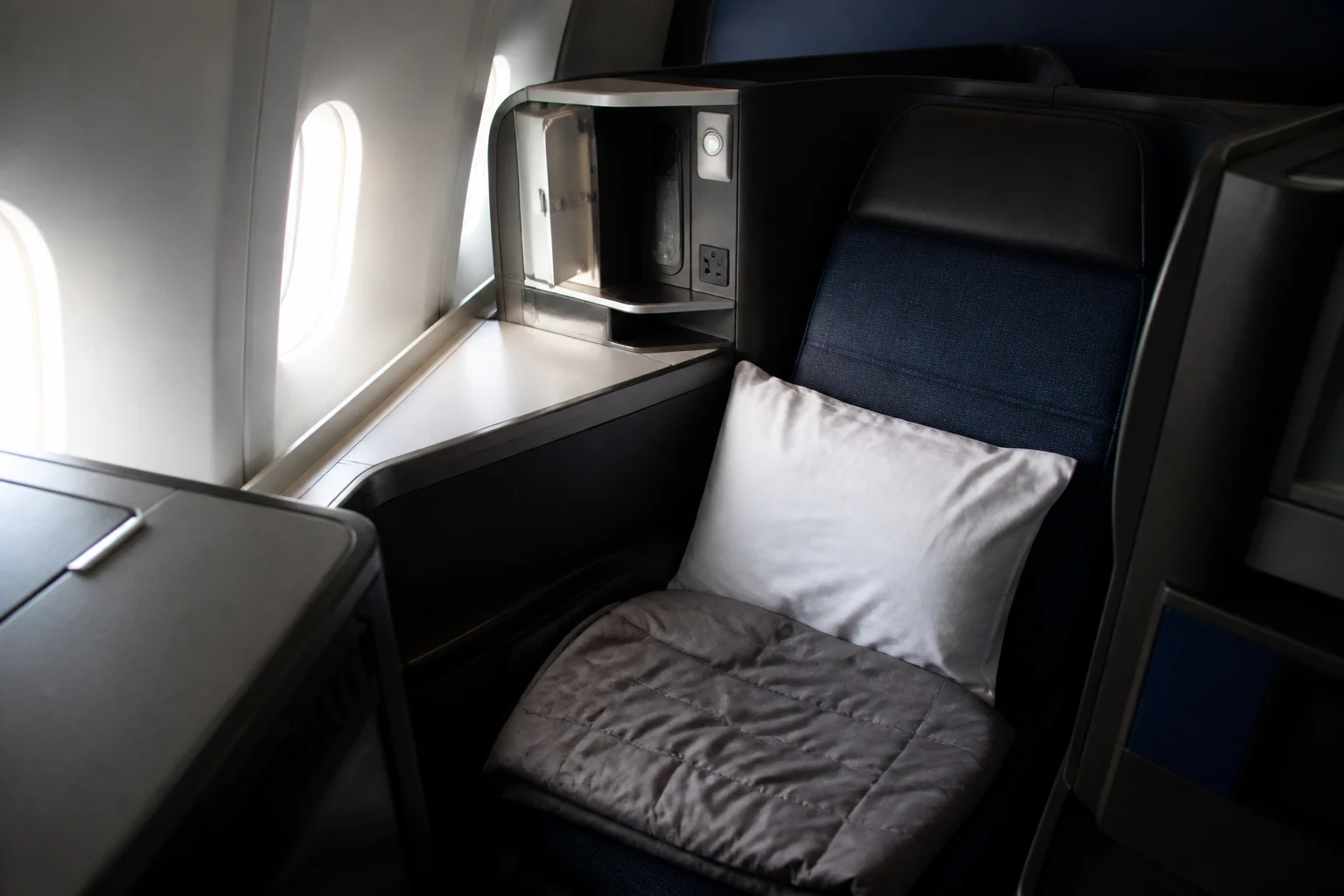
Business or first class can provide privacy, a horizontal surface and a less stressful ground experience. Those are meaningful advantages and may substantially improve the chance of arriving rested. They do not remove circadian misalignment, particularly if sleep and light occur at unhelpful times. Economy is not automatic failure either: a considered seat,
one protected sleep block and an empty first day can achieve more than a premium ticket attached to an overloaded schedule. The true value of a better cabin is controllable comfort, not a medical guarantee.
Regular water intake is sensible because dry air and prolonged travel are physically uncomfortable. Hydration does not, however, shift the circadian clock. Alcohol is equally unreliable as a sleep strategy. It may make falling asleep easier while fragmenting the quality of that sleep and increasing dehydration or next-day fog. A glass with dinner need not become a moral issue,
but it should not be mistaken for treatment. Light meals and steady hydration support physical comfort; the central adaptation work is still done by sleep timing, light exposure and the local schedule.
Light and darkness are the strongest time cues
Light tells the brain when the day is meant to occur. Used at the right biological time it can support adaptation; used at the wrong time it may move the clock in the unwanted direction. Advice to seek as much sun as possible immediately after landing is therefore too crude. Morning light is often useful after eastbound travel and later-day light after westbound travel,
but large shifts can make the calculation more complex. For a high-stakes trip, an individual schedule from a reputable clinical or evidence-based tool is worthwhile. At minimum, connect bright light deliberately with the intended waking window.
If light is a signal, controlled darkness is part of the same plan. A proper eye mask, effective blackout curtains and dimmed hotel lighting before the intended bedtime are not minor amenities. Sunglasses can reduce unwanted bright exposure during a transfer, though wearing them throughout the day defeats the purpose when daylight is needed to adapt.
Screens and brilliant bathroom lighting also count. The goal is not to spend arrival day in a cave, but to establish a clean contrast: bright and active during the chosen waking period, calm and dark before the chosen night.

Medication and caffeine require precise timing
Melatonin can be useful for jet lag, but timing is central. Taken carelessly, it may create sleepiness at the wrong hour or shift the clock in an unhelpful direction. Supplement quality and regulation also vary between markets. This article therefore gives no personalised dose. Travellers who use medication, are pregnant,
have underlying conditions or repeatedly experience severe sleep disruption should speak with a physician or pharmacist before the journey. A bottle purchased in an airport is a product, not a circadian plan.
Prescription hypnotics, sedating antihistamines and other agents may cause next-day impairment, confusion, falls or interactions. An unfamiliar environment, immobility and alcohol add complexity. Travellers with an established clinical plan should discuss its use across time zones with the prescribing professional. Trying a new sedative for the first time at 35,000 feet is unwise.
Persistent insomnia, extreme daytime sleepiness and significant medical conditions deserve proper assessment rather than an escalating collection of travel remedies.
Coffee can support alertness during the hours when it matters. Without timing, it merely postpones fatigue. Caffeine remains active for several hours and can compromise the first local night even when the last espresso feels distant. Use it selectively in the destination morning or early afternoon rather than continuously in response to every dip.
Travellers who consume little caffeine at home should not suddenly increase it in flight. The best use reinforces the intended waking period while leaving a generous margin before bedtime.
The first day establishes the rhythm
The most effective protection is often an empty diary. Avoid scheduling decisions that demand precision, patience or social performance immediately after arrival. Daylight, a gentle walk, simple food and a controlled early evening are more useful than heroic sightseeing. On a business trip, arriving one night earlier may produce more value than buying a more expensive seat.
On holiday, do not place the rarest experience at dawn on the first morning. Day one is not wasted time; it is the investment that makes the rest of the journey available.

The urge to sleep for several hours after landing can be overwhelming. A long afternoon nap reduces the pressure needed for the first local night and may prolong the adjustment. If safety and basic function require rest, a deliberate 20- to 30-minute nap is often the better option. Set an alarm, open the curtains afterwards and add gentle activity. Anyone profoundly sleepy should not drive or attempt a risky excursion. Adaptation is never more important than immediate safety.
A room that is genuinely available on arrival, quiet placement, blackout curtains, suitable meal times and a frictionless transfer are part of jet-lag planning. “Early check-in subject to availability” is not a dependable answer after a 06:00 landing. Where the first day matters, booking the preceding night may be justified;
the hotel must then be told to hold the room rather than treat the reservation as a no-show. A lengthy spa ritual straight off the aircraft is not universally restorative. For many travellers, a shower, light meal, controlled nap and quiet evening work better.
The one-page jet-lag brief
Record direction of travel, number of time zones, length of stay, intended local bedtime and the three most important commitments in the first 48 hours. Add realistic onboard sleep blocks, desired periods of light and darkness, the latest caffeine time, transfer duration and confirmed room access. Keep medical questions in a separate line and resolve them before departure.
Then choose the connection for its effect on the first complete day rather than for prestige alone. Jet lag cannot be ordered out of a journey, but an itinerary that respects biological time feels markedly more generous from the first morning.