
Reading private aviation well
An empty leg can be an exceptional opportunity. It remains the shadow of another flight—and changes as soon as that primary mission changes.
An empty leg begins with a dependency
Route, date and aircraft appear to fit exactly. Yet the sector exists only because the jet must position for another task. If that mission moves or disappears, the opportunity may do the same.
It is a positioning flight without the principal paying passengers, often before or after a charter. The operator may sell available capacity. Timing and route arise from operational necessity rather than the empty-leg buyer’s wishes.
Price, reduction and inclusions vary by operator, aircraft, route and urgency. Percentage promises are marketing, not a rule. The relevant figure is an all-in total compared with realistic alternatives.
The certificated air carrier operates the flight. A broker arranges; a platform lists. Air Operator Certificate, aircraft holder, contracting party and recipient of funds must be distinguished.

Commercial operation requires the appropriate approvals held by the actual operator. EASA presents the Air Operator Certificate as a core element of that system. The passenger should know whose AOC governs the specific flight.
Route, window and cancellation risk remain inflexible
The aircraft flies where it is needed. A nearby alternate airport can change the value entirely. Access, operating hours, handling and onward travel belong in the calculation.
Crew planning, the primary charter, slots and operations may create a range rather than a fixed minute. Anyone protecting a connection, wedding or meeting needs written limits and a credible alternative.
The empty-leg customer does not control the flight before or after. That external dependency distinguishes it from a full charter. Contract and communication must explain the result of any change.
Some offers provide a refund but no replacement aircraft. Others distinguish cause and timing. Money back is little comfort when only an expensive full charter remains at short notice.

A normal charter provider may seek another aircraft subject to contract. Replacing an empty leg often creates a new positioning task and destroys the price logic. Any duty to substitute must be explicit.
Empty legs are commonly one-way. Without a secure return or onward plan, only half the journey exists. Scheduled premium travel, rail, full charter and an extra hotel night should be evaluated at the same time.
Aircraft, baggage, pets and catering
Cabin height, seats, lavatory, baggage hold, range, Wi-Fi and boarding differ greatly. “Private jet” is not a cabin category. Registration or exact type and configuration belong in the confirmation.
A smaller jet affects seats, luggage, range and fuel stops. A larger one may require different airports. The contract should state permitted substitution and when a customer may refuse.
Skis, golf bags, pushchairs and hard cases do not fit merely because their combined weight is acceptable. Door, hold shape, passengers, fuel and balance all matter. Dimensions and quantity need approval before purchase.

Operator policy, documents, entry rules, cleaning and airport procedures govern carriage. Species, weight and paperwork should be accepted in writing for the actual flight.
An empty leg may appear late. Menus, allergies and delivery options can therefore be limited. Confirm availability and cost rather than assuming full-charter catering flexibility.
Handling, weather, crew duty and payment
Airport fees, terminal, parking, de-icing, night surcharges and passenger handling may be included or separate. The quote needs an all-in line and a rule for later operational costs.
The preferred business airport may close at night or lack a slot. Relocation extends ground travel. The supposedly direct journey must be measured door to door.
Fog, wind, storms, snow and visibility affect airport and route. Crew and operator decide under regulation and conditions. Private status creates no meteorological exemption.
Work and rest limits protect safety. If the primary mission runs late, duty time may delay or prevent the positioning sector. The customer’s contractual outcome should be clear.
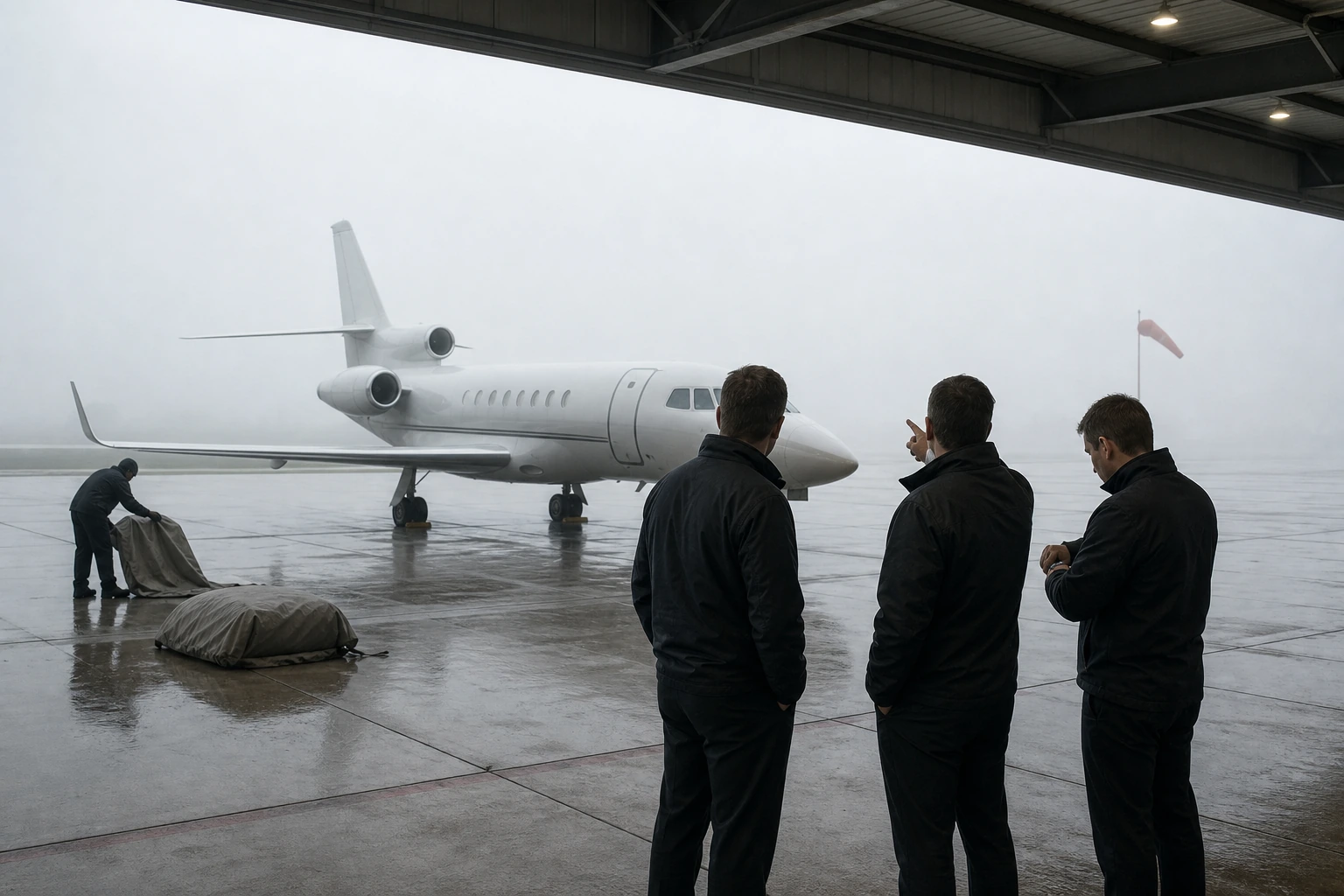
Details can move while the main charter develops, or another buyer may commit. Speed must not replace diligence. Operator, contract, cost, passengers and luggage still require review.
Who holds the money, when is it due and how is it returned Broker terms and the operator’s contract may differ. A low price is useless when responsibility disappears between companies.
The climate claim needs a system perspective
The physical flight produces emissions and other climate effects. Whether a sale has no influence on positioning cannot be proved universally. Empty capacity should not be described as impact-free travel.
Matching can use unoccupied capacity without automatically changing demand, fleet positioning or system design. Environmental language needs defined boundaries and evidence, not merely an unused cabin.
Which journeys can carry the opportunity
A traveller able to adjust date, airport and return may find an excellent match. The journey can change without compromising an important event. Uncertainty is then consciously priced in.
A wedding, cruise departure, medical appointment or board meeting tolerates last-minute failure poorly. Full charter or scheduled travel with alternatives usually protects the purpose more effectively.

Where non-arrival has serious consequences, guaranteed scope, replacement network, operational control and contract matter more than opportunity. An empty leg may supplement the plan, never support it alone.
Eight questions and a prepared alternative
Who operates What does the sector depend on Which departure range applies What happens after cancellation Is replacement owed Which jet flies What is all-in How do return and ground transfer work
A flexible scheduled ticket, cancellable hotel, driver and reachable full-charter quote create resilience. Plan B should not begin when the cancellation message arrives.
We treat empty legs as opportunistic inventory, not a discount label. Only when operator, dependency, contract, jet, baggage, total cost and return align does free positioning become a sound travel decision.