
Croatia looks seductively compact on a chart: historic towns, islands and coves appear only a short run apart. A fine charter is not created by collecting the greatest number of names. It chooses one coherent cruising ground, protects the best hours ashore and leaves weather, national parks and captain enough room. The result is a journey with rhythm rather than an island circuit.
Choose the cruising ground and rhythm first
The Adriatic coast is not one yacht route. Istria and Kvarner, Zadar with Kornati, Central Dalmatia from Split, and the south around Korčula, Mljet and Dubrovnik carry different distances, landscapes and shore life. Forcing Kornati, Hvar and Dubrovnik into one week turns the holiday into transit. Choose the region first. A yacht expands freedom within a well-designed ground; it does not make geographical leaps inherently luxurious.
Should days begin in quiet coves, end in historic towns, revolve around sailing or include visible social stops Do guests want a harbour nightly or two days without a restaurant booking A fast motor yacht extends the radius but raises fuel and tempts longer runs. A sailing yacht makes passage the experience; a catamaran offers volume and shallow access.
Only after daily pattern, distance, cabins and season are clear should the vessel be compared. The finest yacht is wrong when its tempo destroys the desired calm.
Reading Dalmatia from Split to Kornati
Split and nearby Trogir are logical gateways for Šolta, Brač, Hvar and Vis. International access and charter infrastructure simplify handover and provisioning. The historic city should not disappear between airport and gangway. A night before or after protects against flight delay and gives Split proper time. Trogir offers a smaller historic frame and access to several bases. Confirm the actual marina: “Split departure” can in practice mean a berth well beyond the centre.
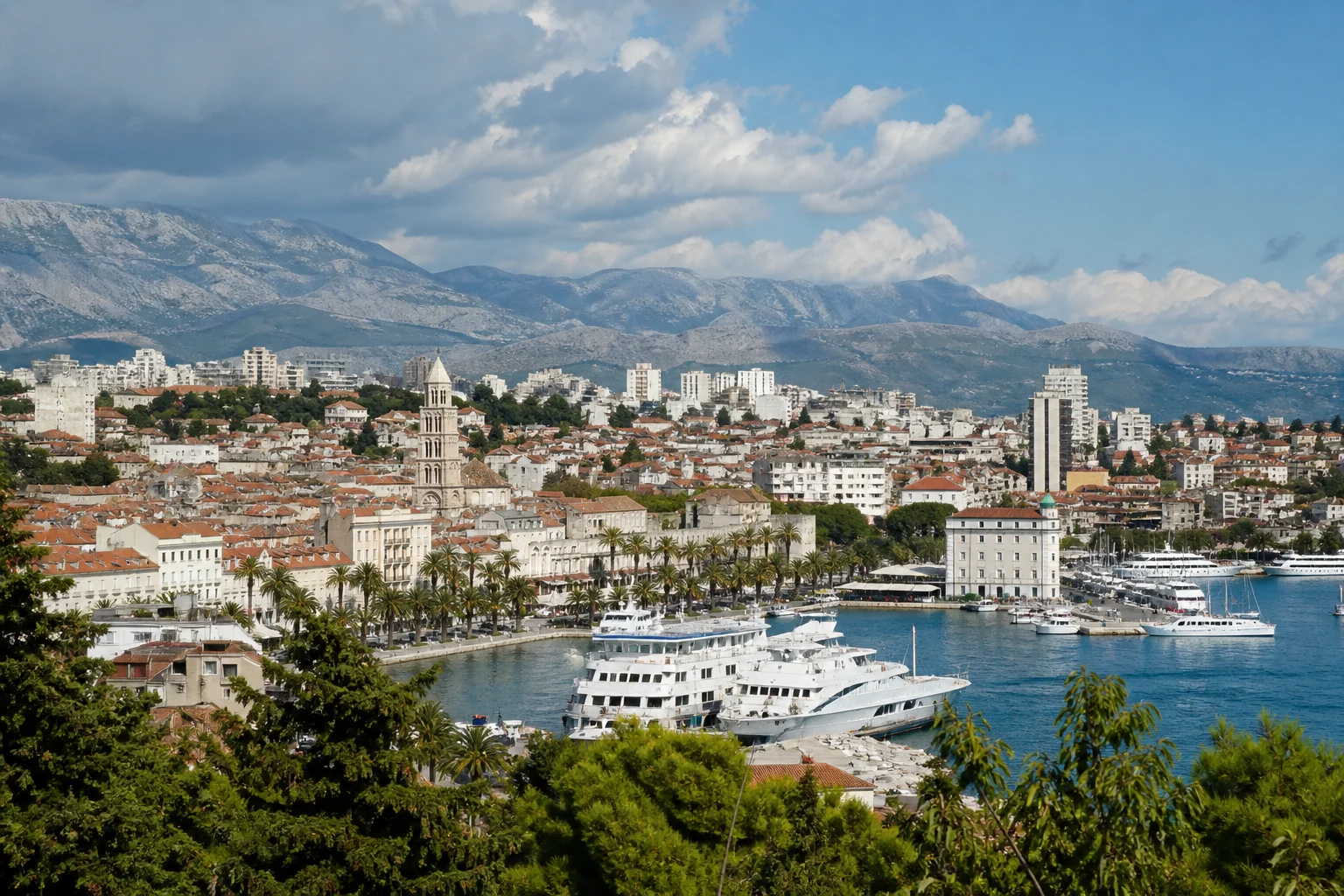
Šolta lies close to the mainland and can provide a gentle opening without an immediate long passage. Small ports and coves allow guests to learn crew and yacht. Brač is larger and more varied, articulated by towns, stone landscape and beaches. Bol is famous but not the only perspective. Wind, berth and desired excursion determine the right coast.
Touching both islands in one day wastes their purpose. They should establish pace and atmosphere, not merely fill night one.
Hvar is often reduced to harbour, restaurants and nightlife. The long island also contains villages, vineyards, quieter coasts and bays telling another story. Hvar town suits one energetic evening but in high season requires planning and a realistic berth or tender arrangement. Travellers seeking calm need not remove Hvar; they need another location. A strong route decides whether the social evening is a centrepiece, a short episode or absent altogether.
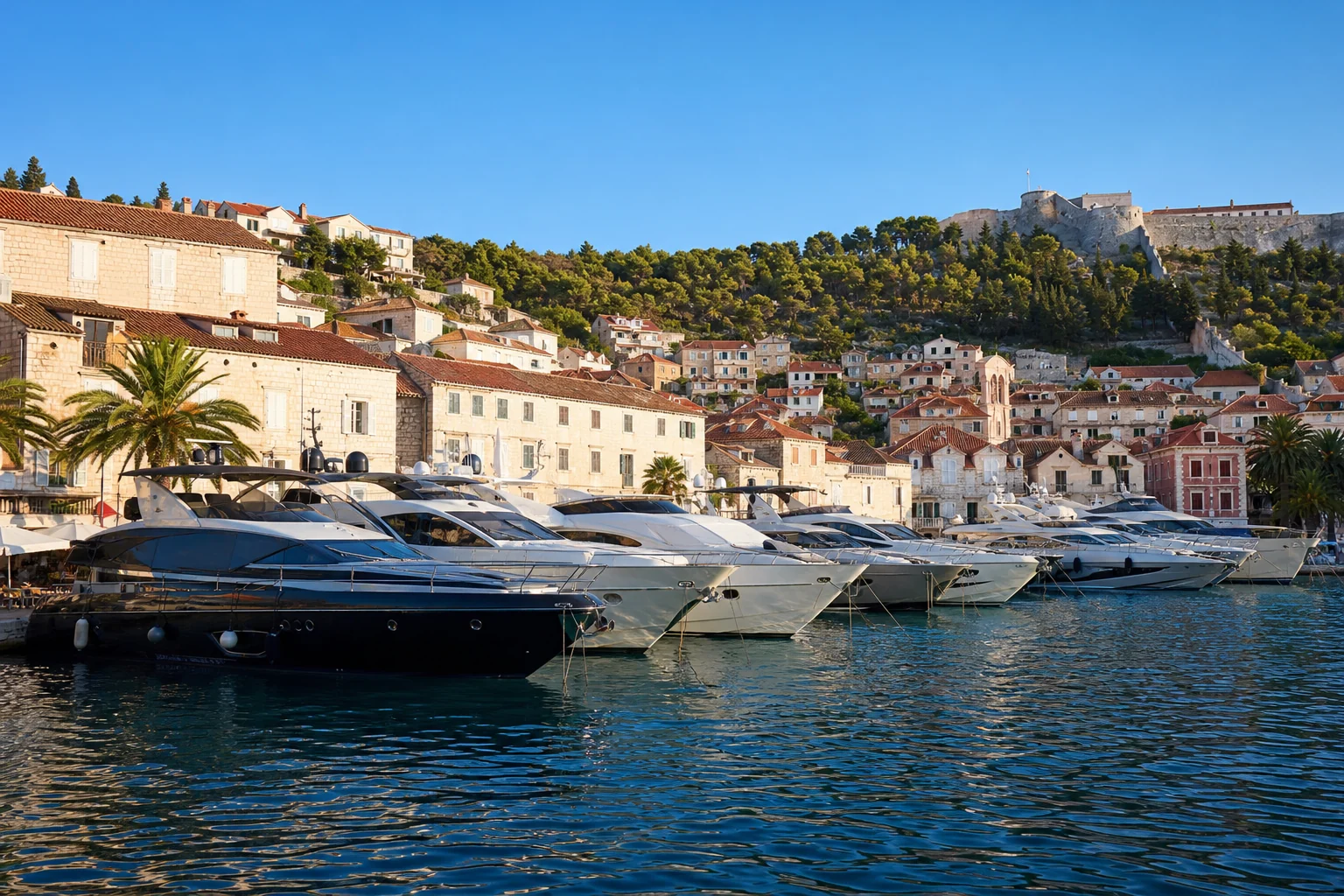
The chain opposite Hvar offers coves, swimming and a visual counterpoint to town. Proximity on the chart does not guarantee stillness. Wind, swell, traffic, holding, buoys and overnight conditions influence the position. An island restaurant is elegant only when arrival and return remain safe and comfortable. Captain and crew decide whether to overnight there, anchor elsewhere or approach Hvar another way. The reservation follows nautical reality.
Vis sits farther offshore and consequently feels more autonomous. Historical layers, wine, small towns and a less immediate mainland connection give the island weight. Passage can become demanding in weather, so Vis should not be squeezed between fixed dinners. Two nights or one complete day allow harbour, interior and coves to connect. A guest chasing only one celebrated photograph invests too much travel. Treating the island as a chapter creates one of Central Dalmatia’s strongest contrasts.
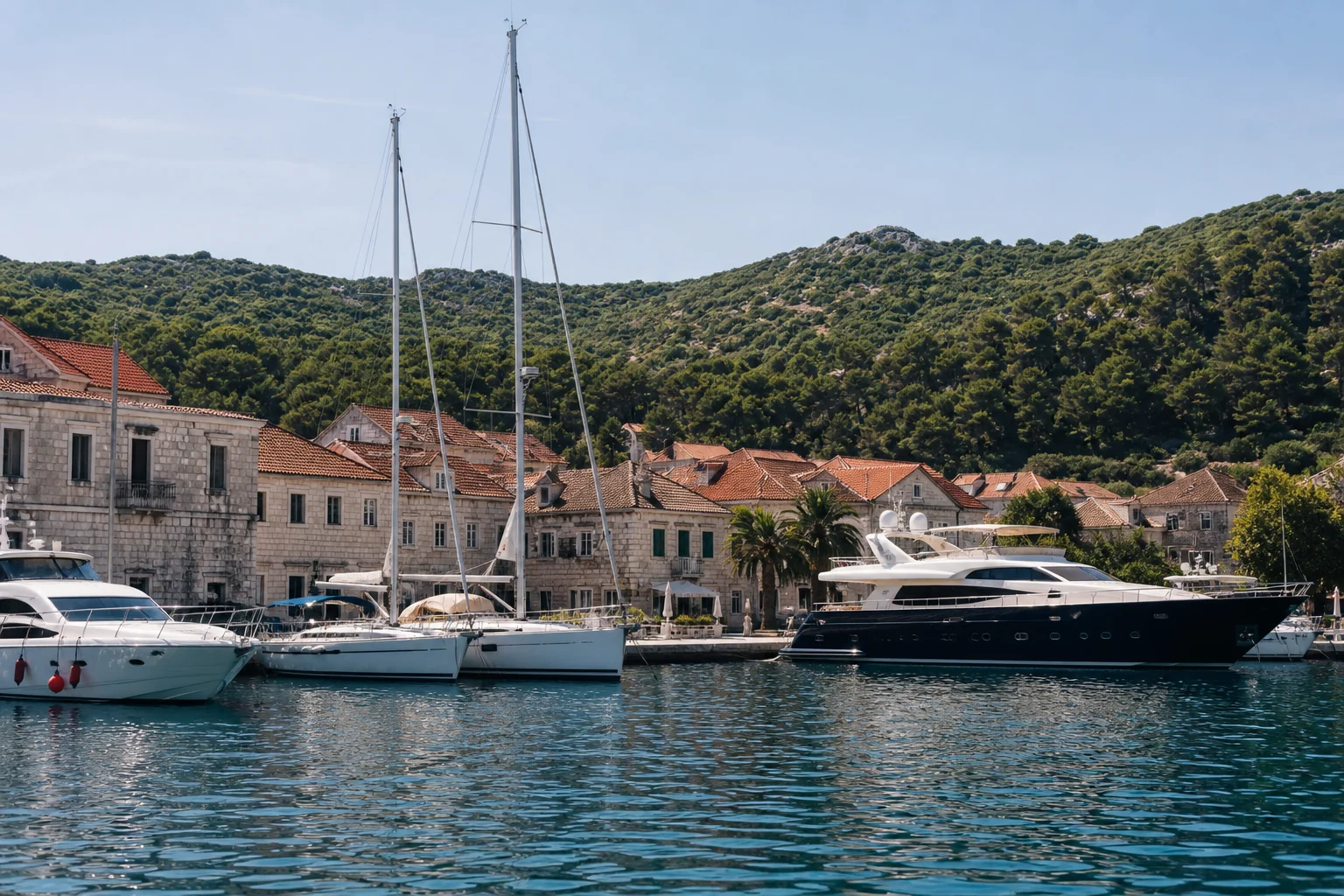
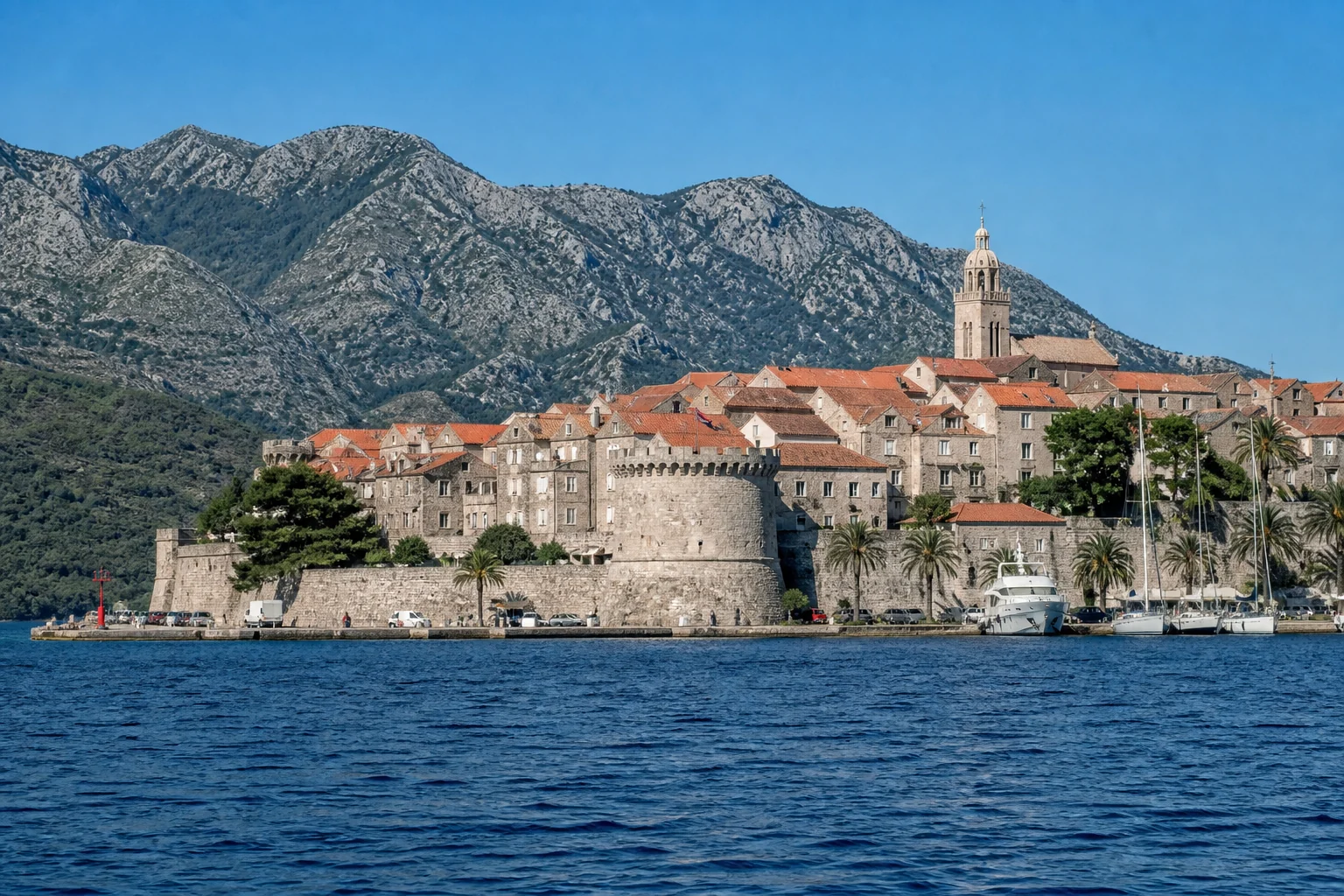
Korčula town offers a memorable water approach, historic fabric and satisfying evenings ashore. The island combines culture, wine and coastline, but it is not next door to Split. During a short return charter, distance may dominate. Korčula works better within a southern one-way story or as a focus with Mljet and Dubrovnik. Town then receives evening and morning, the hours when a historic place sheds much of its daytime audience.
The national park in western Mljet includes land, lakes and marine areas. Yachts require the relevant permission and vessel ticket; anchoring and berthing are zoned. Park guidance publishes a five-knot maximum within 150 metres of shore and additional restrictions for inner waters. Seagrass meadows should be avoided when anchoring, while sewage and oil discharge are prohibited. These rules do not diminish Pomena, Polače or the lake landscape. They are the structure that preserves them.
Dubrovnik is too significant to be inserted between the last passage, luggage and airport. The old city deserves early morning or evening, a good guide and perhaps a hotel night. As the finish of a one-way charter, it gives the journey a clear arc; as the distant turning point of a short return week,
it creates pressure. Berth and transfer to the centre require exact checking. A final night ashore may be more comfortable than filling the last hours afloat with departure formalities.
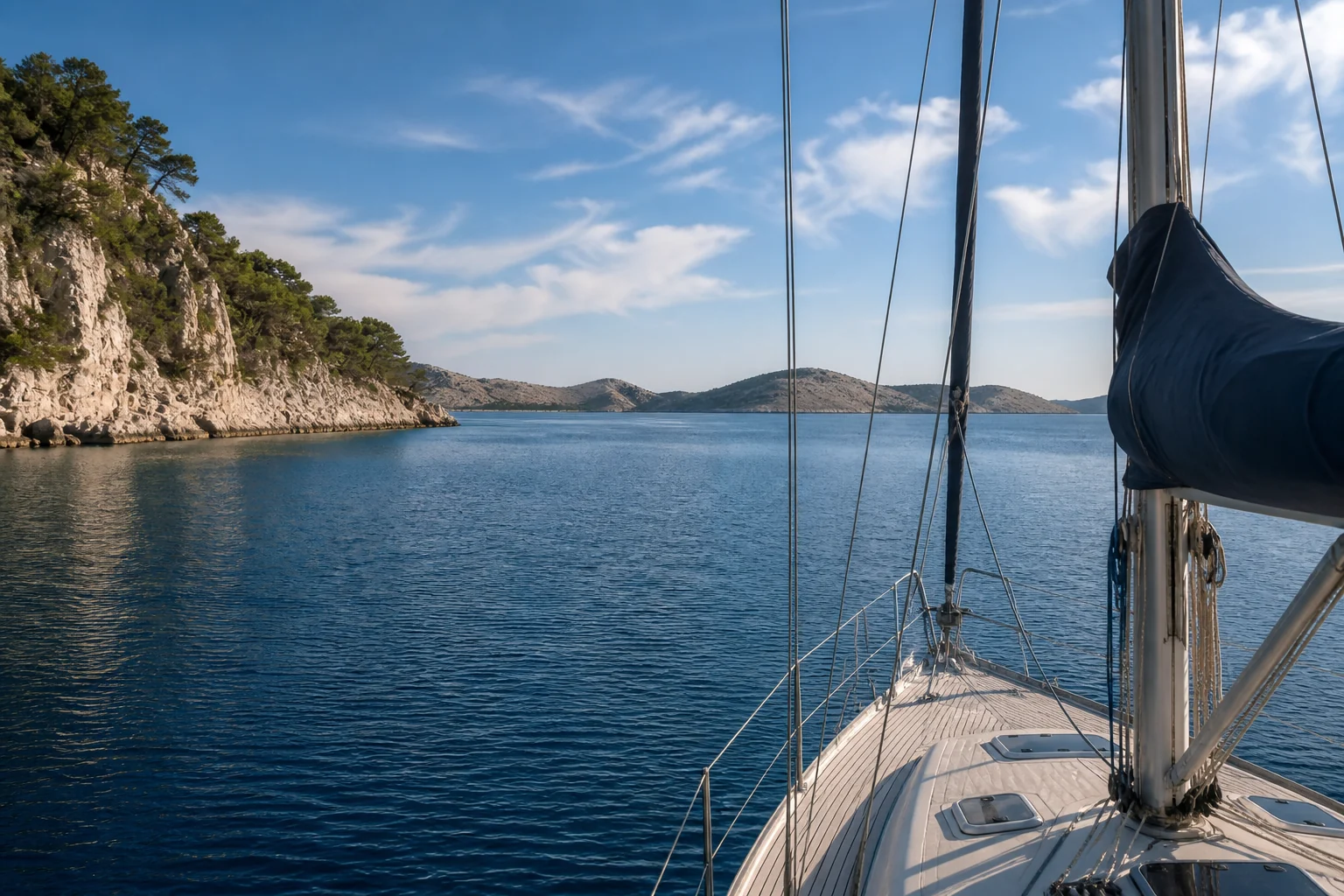
The Kornati archipelago is not a quick addition to Hvar. It belongs to a northern ground from Zadar, Šibenik or another suitable base. Bare stone forms and close navigation create an aesthetic distinct from lively Dalmatian towns. Sailing is excluded from strict-protection zones; anchoring and overnight stays are limited to bays listed by the park.
Marked paths and diving rules apply. A Kornati journey is built around landscape and seamanship, not an ambitious restaurant list.
One-way route or return to base
A one-way route between Split and Dubrovnik can avoid retracing water. It requires a vessel offered in both ports, coordinated crew, possible delivery or redelivery costs and suitable flights. Returning to base is simpler and can be elegant for a smaller island circuit. Judge the door-to-door balance, not the line alone. If one-way logistics require an extra hotel night, that may still be valuable when the night enriches the journey rather than repairs it.
Choose yacht type and operating model together
A motor yacht extends range and controlled comfort, paying for speed through fuel and a different relationship with passage. A sailing yacht suits guests who want wind and movement to form the day. Catamarans create broad communal space, shallow draft and family logic, though their motion remains distinct. Gulets offer sociable decks and crewed living,
while cabins, service and technical standards vary widely. Vessel type follows ground and guests. No category is automatically the most luxurious.
A fully crewed charter places navigation, cooking and service with professionals. A skipper runs the vessel while food and daily service may remain more guest-led. Bareboat requires accepted qualifications, current experience and responsibility for yacht and weather decisions. A certificate alone does not prove comfort in narrow harbours, crosswind or bora. Charter company and authorities assess documents. Guests wanting a holiday rather than an examination should see crew as access to a richer cruising ground.
Wind demands a flexible route
Bora can arrive strongly and gust from land, jugo bring longer swell and humid conditions, while summer maestral shapes many afternoons. These patterns are orientation, not forecast. The captain uses the current official Adriatic marine report and local observations. A sound route has sheltered alternatives and does not force a long passage for dinner. Flexibility is not absence of plan; it means the purpose of a day can be achieved somewhere safer.
Moorings, protected waters and restaurants
Each creates another night. A marina offers supplies, shore power and simple access, but can be dense and lively. A town quay puts the yacht inside the evening and its noise. A buoy reduces some anchoring concerns when system and load suit the vessel. An open anchorage brings quiet while demanding holding, room and suitable weather. Fees and bookings change. Captain decides safety; guests clarify whether town life, convenience or silence should carry the night.
Kornati and Mljet are protected landscapes with tickets, zones and conduct rules. Kornati lists specific bays for anchoring and overnighting; Mljet regulates movement, speed and permission. Diving, hiking, fishing and fire may be restricted or licensed. Current rules are checked before entry. A yacht has no entitlement to every position. Respect for seagrass, waste-water restrictions and quiet is not administrative clutter but part of credible luxury travel.
Croatia has excellent konobas, hotel restaurants and tables in historic towns. Too many fixed bookings turn each afternoon into a deadline. Choose two or three culinary anchors and leave other evenings open. Ask about tender access, docking, return and weather cancellation. Simple fish close to a secure bay can make a finer evening than a famous address reached through an uncomfortable transfer. Food should deepen the route, not govern it.
What the journey really costs
Fuel, marinas, buoys, park tickets, food, drink, local charges, delivery and other expenses may sit outside the rate. Any advance for onboard expenses is contract-specific; universal percentages say little without a vessel. Fast long runs and frequent marinas change the budget. A serious quotation separates base, tax, likely operating cost and optional wishes. Gratuity is explained as convention rather than hidden fixed fee.
The group and season set the pace
Children benefit from short passages, safe swimming, shade and evenings that do not always end late ashore. Older guests need honest assessment of gangway, tender, stairs and cobbles. Friends should allocate cabins and allow different interests before boarding. A catamaran creates room but is not automatically safe without supervision. Crew are not nannies unless contracted. A fine route permits subgroups without making every shore decision bind the whole yacht.
July and August bring heat, long days, full harbours and an animated coast. June and September may combine warm water, less density and a calmer rhythm, without guaranteeing weather. Spring and later autumn bring cooler air and sea, while flights, openings and services change. The best period depends on whether swimming, sailing, restaurants or historic towns lead. Use current flight schedules, vessel availability and the real season of desired shore addresses rather than averages alone.
The one-page Croatia yacht brief
Record dates, airports, cruising ground, embarkation, guests, cabins, budget and vessel type. Rank quiet coves, sailing, historic towns, restaurants, parks and watersports. Name three essential experiences and the maximum acceptable passage share. Add mobility, children, food, crew style and hotel nights. Clarify contract, operating cost, qualifications, fees, weather alternatives and park rules. Then keep sequence flexible. Croatia becomes luxurious when the route does not show everything, but leaves enough time for the right places.
Describe what a good day should actually feel like. Should the yacht move to a new cove before breakfast while guests sleep, or should every passage be experienced Is a historic town worth visiting in afternoon heat and peak day traffic, or should the yacht remain at anchor until early evening How many nights may be governed by restaurant bookings These answers determine whether Hvar,
Vis, Korčula or Kornati belongs in the plan. They also help the captain recognise an equivalent alternative when weather changes, rather than merely deleting a name.
Finally, inspect the proposal for repetition disguised as variety. Three town-quay evenings, several short swim stops and two historic centres can reproduce the same day despite different coordinates. A strong week needs contrast: one night inside a town, one genuinely quiet anchorage, a rewarding sailing passage, a protected-landscape day and time that carries no next appointment.
Consider the weakest conditions too. If an afternoon wind cancels a bay, does the itinerary still contain a satisfying walk, village or sheltered swim If every morning already belongs to the next destination, the route is too tight. The finest Croatia charter leaves fewer island names but clearer memories.