
A yacht can be the freest place in the world for a family—or a week of permanent vigilance. The decisive detail is not the largest beach club, but a vessel whose circulation, crew, lifesaving equipment and daily rhythm suit these particular children. Luxury planning therefore begins long before the itinerary.
A family charter works when four elements are tested together: the yacht's real safety profile, an explicit division of responsibility between parents and crew, an age-appropriate rhythm and an itinerary with reserves. A safety net, nanny or toy inventory cannot replace that foundation.
Not every yacht is a family yacht
An exquisite vessel can be wrong for young children. Open stairs, wide rail gaps, an unsecured swim platform or cabins remote from the parents change the assessment. Family suitability belongs to the actual yacht, not its price bracket.
Acceptance of babies or toddlers depends on owner policy, insurance, flag, cruising area and captain. An advisor confirms every child's age for the proposed yacht rather than turning an old quotation into a general promise.
The crew runs the vessel, navigation and operation. It does not automatically assume personal supervision of children. Unless qualified childcare has been expressly contracted, a named adult remains responsible at all times.
The captain decides on passages, tender use, swimming, water sports and weather changes. A safety decision cannot be overruled by an itinerary, a guest preference or a reservation that has already been paid.
Sound selection uses a current deck plan, photographs, video and a written assessment from captain or manager. Rails, doors, stairs, decking, pool, spa, lift, galley, machinery access and swim platform are read at a child's level.
Rails, circulation, stairs and swim platform
Height is not the only question. Gaps, horizontal footholds, furniture beside a rail and blind corners may all matter. “High bulwarks” is less useful than documented dimensions and intelligible onboard rules.
A net may reduce particular openings; it does not make a deck childproof. Yacht, captain and competent installer must consider feasibility, attachment, escape routes, drainage and approval. An improvised fitting is not a luxury service.
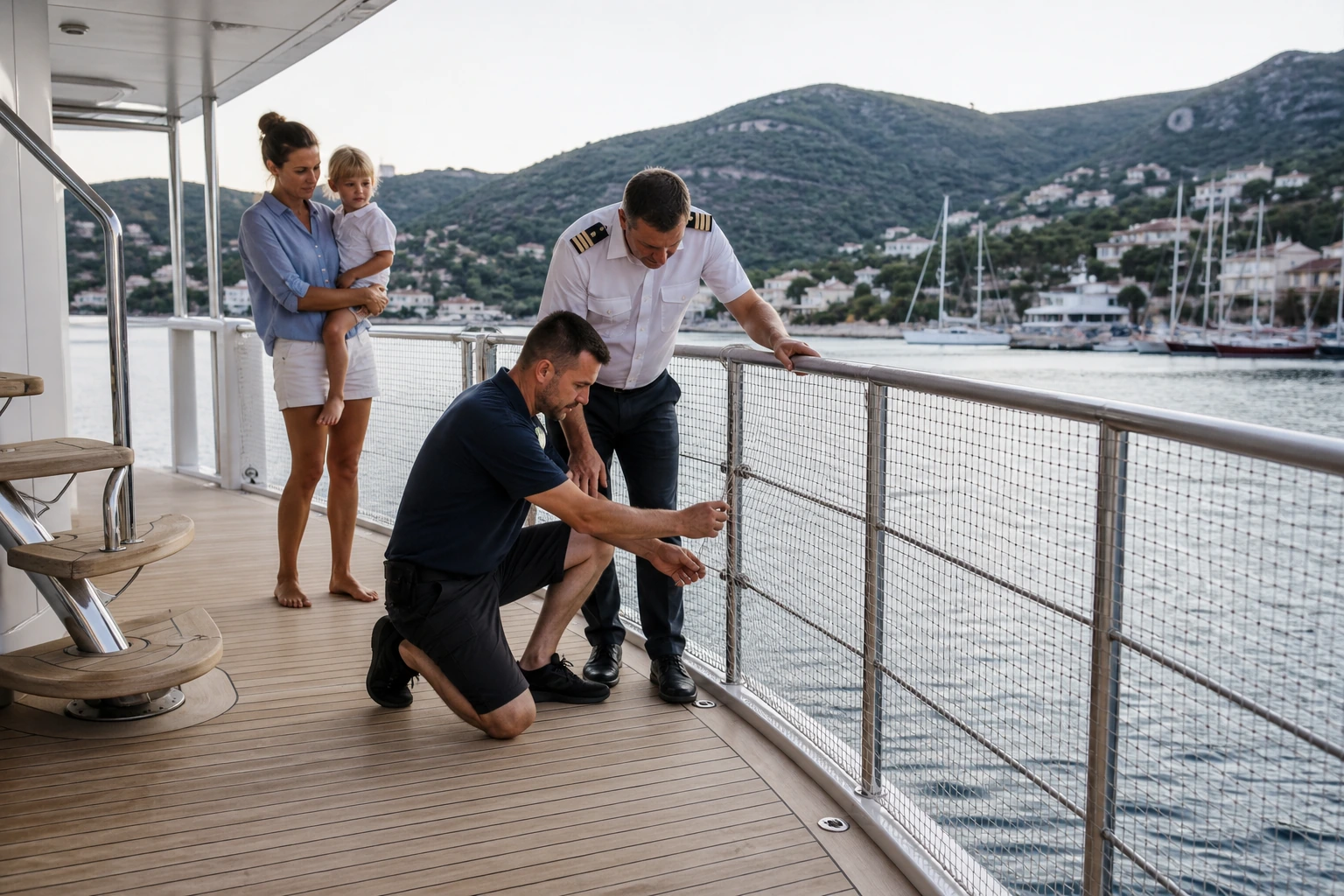
Steep steps, heavy doors and thresholds become more demanding in motion. The route between parent cabin, children's cabin and bathroom should remain short, illuminated and clear of movable objects after dark.
Hydraulic platforms, garage doors and tender operations belong in crew hands. Children enter only after permission and with direct supervision. “Closed” and “ready for use” are not the same condition.
Lifejackets need size, type and a wearing rule
The US Coast Guard emphasises size, weight, intended activity, condition and secure fit; adult equipment may not work for a child. International and local rules differ, so the yacht must confirm the exact approved equipment carried.
Assign each child a device, fasten it correctly and check it under competent supervision. It should not ride above the chin or ears. Label, service condition and intended use must match the activity.
The terms do not describe identical performance. Some buoyancy aids require a conscious swimmer; some lifejackets support head and airway differently. Crew selection follows regulation, water and activity—not colour or comfort alone.
Inflatable devices require maintenance and are not automatically appropriate for children or non-swimmers. Manufacturer labelling, regulatory approval and the captain's decision precede personal preference.
Rules for deck, tender, harbour manoeuvres, water sports and night operation are set before the trip. Legal duties vary, and the yacht may impose a higher standard. Readily accessible equipment only saves a child when it is worn at the critical moment.
Briefing, supervision, nanny and family-experienced crew
A short briefing in language they understand explains permitted areas, handholds, doors, tender behaviour, swimming permission and alarms. Children should be able to ask questions and repeat the rules; fear and nautical jargon are poor teachers.
Families may benefit from a visual plan: green for open areas, amber only with an adult, red for crew alone. It supports the briefing but never replaces supervision or the captain's instructions.
“Everyone is watching” often means nobody is. For swimming, deck play and shore visits, one person is explicitly named and the handover is explicit. Alcohol, sleep or a distracting call ends that person's capacity to supervise.
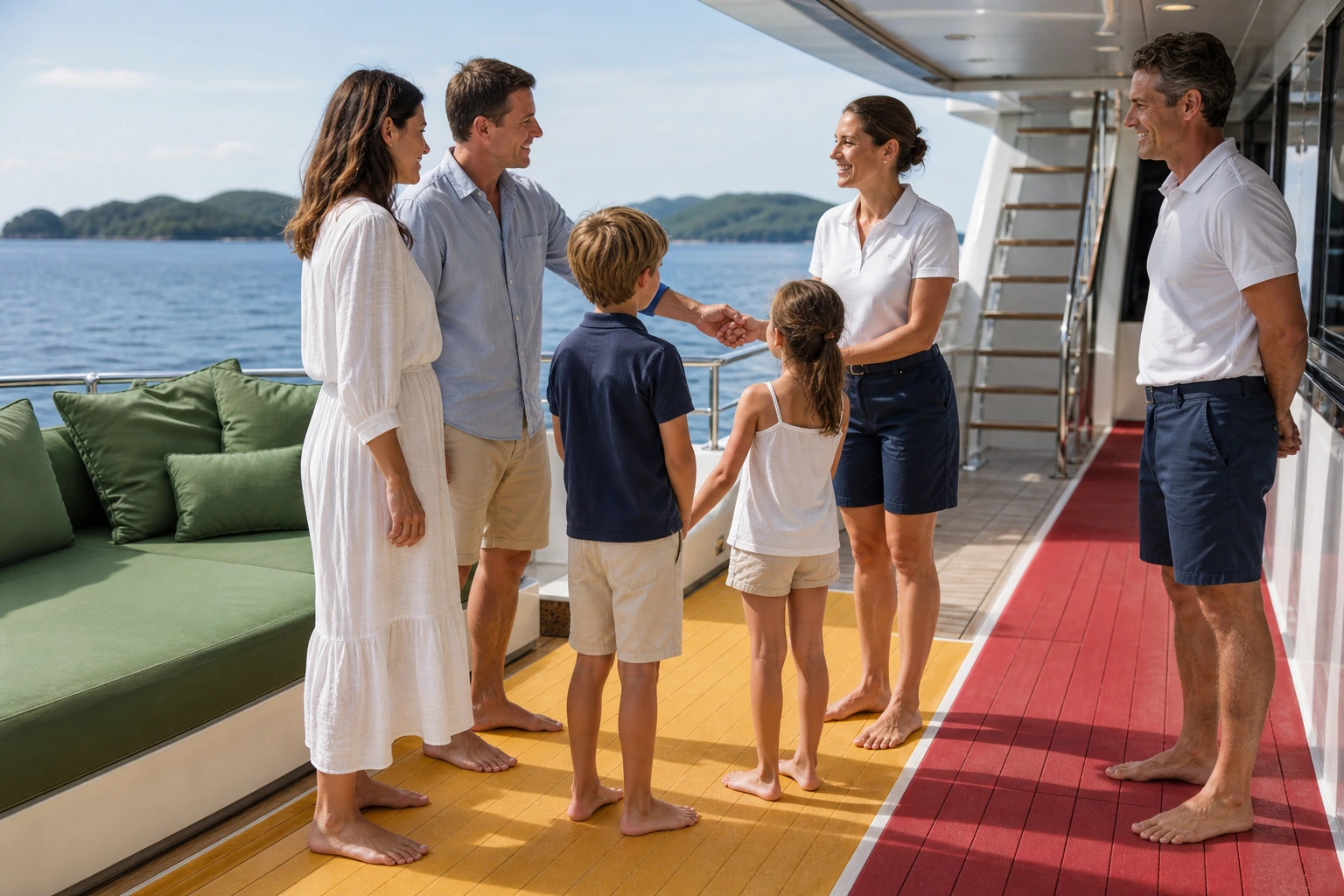
A travelling or hired nanny can give parents space but is not yacht crew unless the contract says so. Qualifications, references, duties, hours, insurance and emergency competence require their own review.
An additional person needs a legal guest berth or an approved crew arrangement. Crew cabins are not automatically available. Passenger limits, immigration, work and insurance questions must be resolved before signing.
“Child-friendly” appears in specific answers: which age groups have sailed, how do early meals, swimming control and tender boarding work A good crew understands its limits and does not promise casual babysitting.
Chef, cabins, noise, tender and land transfer
Excellent family cooking is neither a children's menu nor a tasting menu every night. The chef combines familiar dishes, flexible timing and serious ingredients. Allergies and cross-contact are addressed precisely, never treated as preferences.
Proximity may matter more than square metres. Parents assess bed height, bunks, latches, ports, bathroom, climate control and noise. A spectacular master suite is little comfort when a toddler sleeps two staircases away.
Babies and small children need an age-appropriate, professionally recommended sleep solution that accounts for vessel motion. Travel cots or restraints are reviewed by the child's clinician and the yacht before departure; sofa cushions are not a substitute.
Cabins near engines, anchor gear or crew traffic can interrupt sleep. A current general arrangement plan and the captain's experience tell more than the cabin category in a brochure.
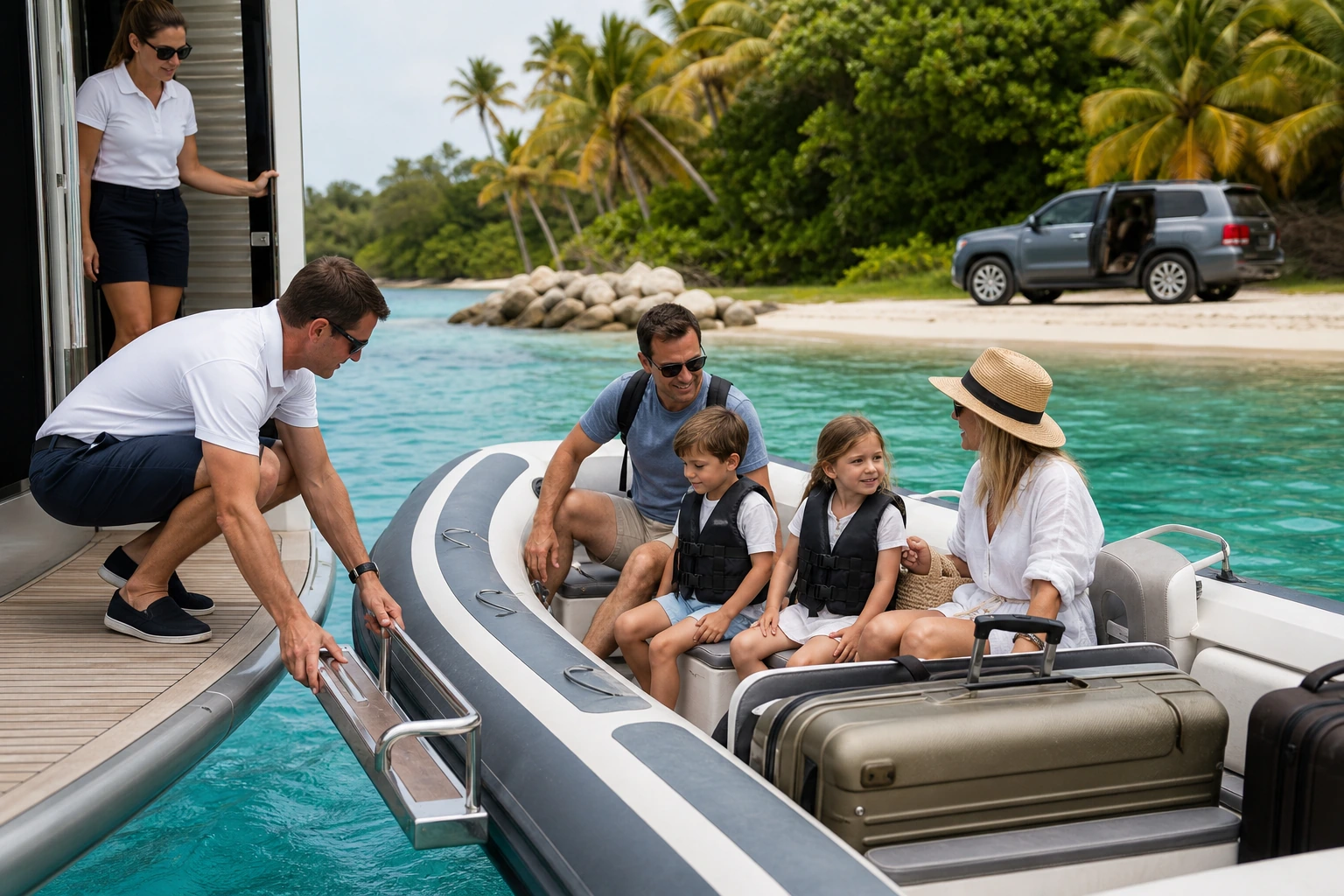
Boarding, seating, lifejacket, baggage and weather follow crew instructions. Children remain in assigned positions beside their supervisor throughout the manoeuvre. Wet steps and moving pontoons are never rushed.
Child seat, drive time, road standard, heat and luggage belong in the itinerary. A brief tender ride followed by a long car transfer can overturn the family's entire day.
Swimming, propellers, pool and age-appropriate toys
The captain opens the water and area after considering current, traffic, depth, weather and machinery. A named observer watches actively, rescue equipment and exit are ready, and swimming ability never cancels supervision.
Nobody enters the water on an assumption. Only the crew confirms that operation is secured and swimming permitted. Children learn never to approach platform or tender without a clear release.
Shallow water, covers, overflows and wet decking still present hazards. Use, temperature, supervision and closure need rules. A pool on a yacht is not a staffed kids club.
SUPs, Seabobs, towables and personal watercraft require different skills, protection and rules. Age, manufacturer limits, local law, insurance, weather and crew permission decide—not the brochure wish list.
Where an activity or manufacturer requires protection, the equipment must fit and be correctly adjusted. An adult set tightened down is not automatically a child's solution.
Motion sickness, sun, allergies, medicine and insurance
The CDC says susceptibility rises after age two and often peaks between seven and twelve. A calm child in the tender does not prove that a long open-water passage will be comfortable.
A horizon view, less reading or screen use, sufficient sleep, fresh air and a lower-motion position may help. The CDC recommends behavioural measures first for children. Any medication requires individual clinical advice.
Effective drugs may sedate, be unsuitable or trigger paradoxical agitation. Dose, trial and contraindications do not belong to crew or magazine judgement. Excessive sedation of a child can be dangerous.
Shade, protective clothing, age-appropriate sun protection, water and pauses are designed into the day. A breeze can disguise heat. For babies, medical conditions or uncertainty, the child's clinician sets the health plan.
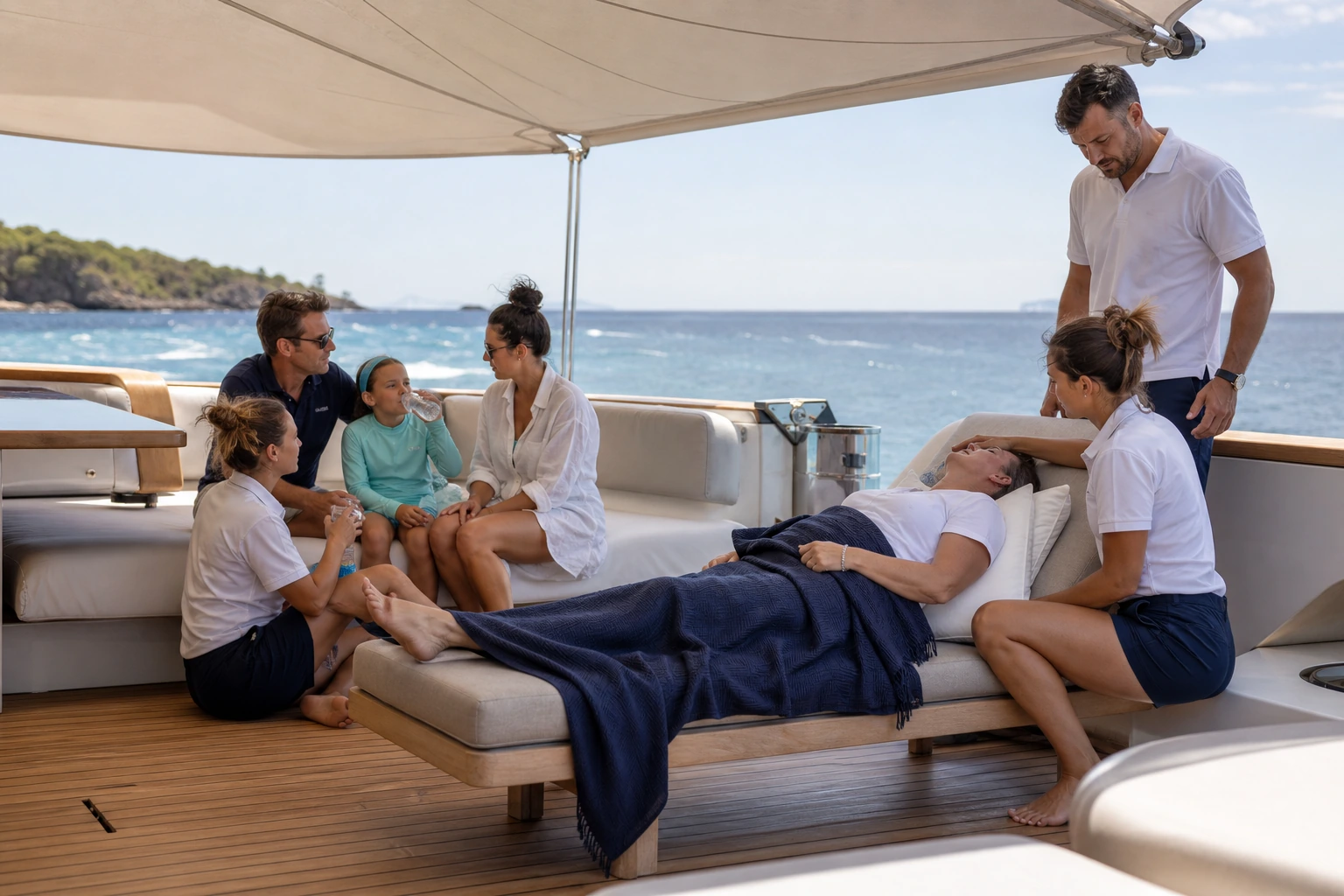
The yacht receives a clear, confidential list of allergies, chronic conditions, medicines, storage and emergency action. Original packaging, adequate reserve and clinical documents travel with the parents rather than disappearing into checked luggage.
Distance from qualified care, communications, weather and evacuation options should fit the children's age and health profile. A first-aid-trained crew is not a floating paediatric hospital.
Travel, medical and evacuation cover must include the area and planned activities. If a child travels without every legal guardian, consent documents may be required. Verify the precise rules for the itinerary.
Route and daily rhythm follow the youngest tolerance
The longest possible passage is rarely the best one. Short legs, sheltered water, alternate harbours and flexible swim stops give the captain options and preserve family energy.
An open half-day is not wasted programme. It allows wind to pass, sleep to recover or a favourite anchorage to last. Family luxury is often created by subtraction rather than compression.
Early breakfast, short passage, protected swim, lunch, nap and an easy afternoon can work. It remains an example, not a template; sleep, sea state and mood lead.
Participation adds meaning: plot the course, learn a knot, snorkel or make a short shore visit. Safety is presented not as a bundle of prohibitions, but as the condition for real responsibility.
A private retreat, connectivity, water sports and a voice in the plan may matter. Rules for night decks, tenders, alcohol, shore leave and social posts are nevertheless agreed before departure.
Children need movement, grandparents secure circulation and parents relief. Lift, handrails, cabins, shade and tender access are assessed as one system. More volume alone does not reconcile the needs.
Privacy, screen time, APA and security deposit
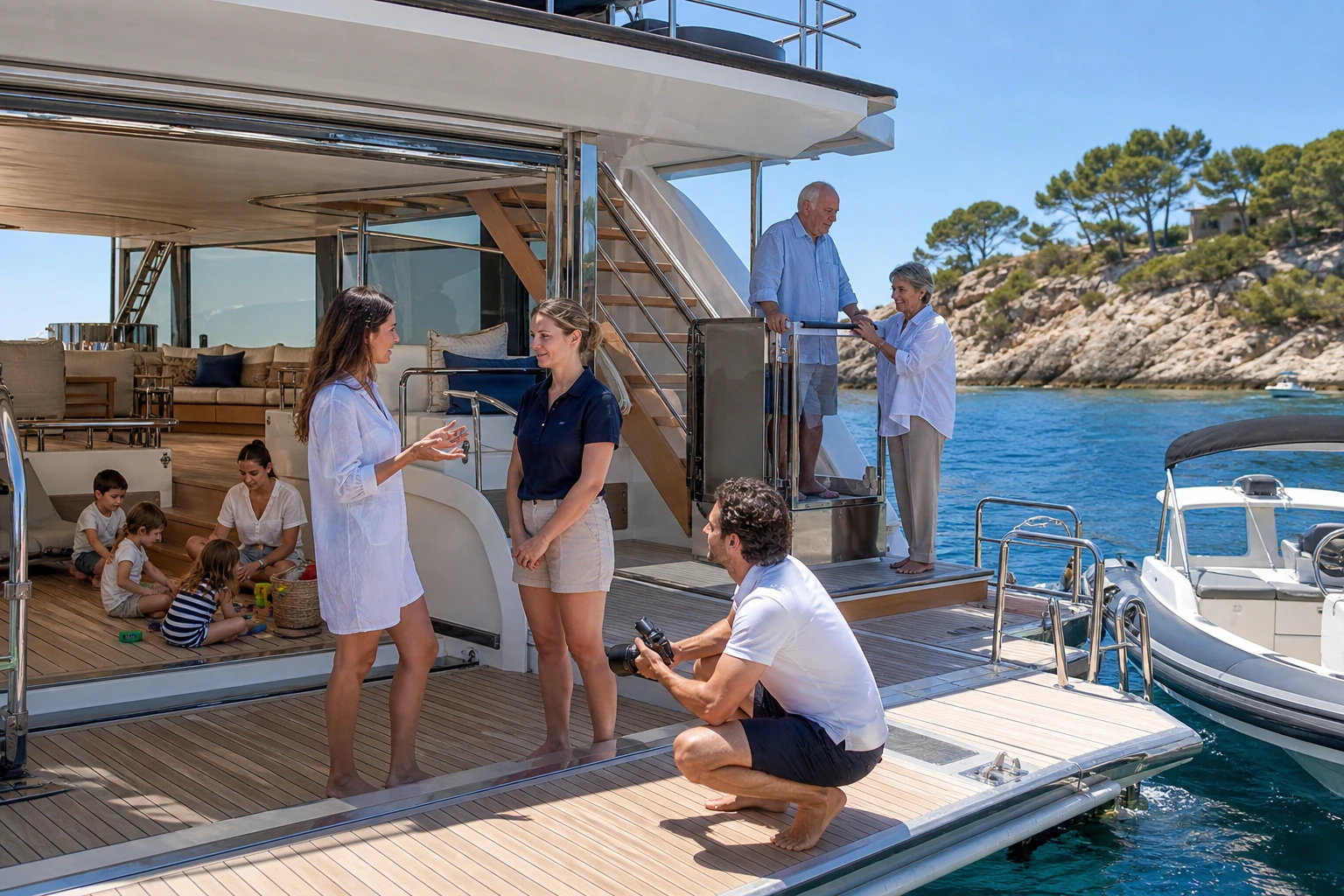
Crew and guests agree photography, video and social-media rules. Names, live location and children's schedule should not drift into public posts. Professional imagery requires consent and secure handling.
A film in bad weather or a tablet during a quiet hour can rescue the day. Safe use, charging and a shared limit matter. Looking down at a screen while underway may aggravate motion sickness.
Special provisions, tender runs, laundry, childcare, marinas and activities alter the budget. They should be modelled before booking. The APA is an advance account, not a fixed fee; its full logic belongs in the contract review.
Children do not automatically raise a deposit, although owner rules and contract may define risks. Fixed furniture, restricted areas and toy use should be explained without treating families as presumptive damage claims.
When a resort or small ship is better
For very young children, complex medical needs, widely divergent routines or parents who do not want active supervision, a resort with day boats may be the more luxurious answer. That is good advice, not a failure of the yacht idea.
A kids club, several restaurants, larger indoor areas and medical infrastructure can matter more than exclusivity. The right travel format reduces responsibility rather than simply increasing prestige.
Questions and red flags before the enquiry
What are the children's ages, heights and weights Can they swim Who supervises them What medical, sleep and food needs exist Which spaces, lifejackets, cabins, childcare berths and activities have actually been confirmed
Pause at “fully childproof”, vague parental responsibility, unlabelled lifejackets, improvised netting, no bad-weather plan or toys without age and insurance checks. Guaranteed routes and medical promises from crew are equally troubling.
The verdict
The best family yacht disappears as a logistical problem. It gives children room without romanticising risk, and parents calm without hiding responsibility. When vessel, crew, supervision and rhythm fit precisely, safety does not feel severe. It feels natural.