
A chalet can be the freest expression of a winter journey: a house reserved for one party, a table on its own rhythm and a team able to shape each day around weather and mood. Yet a beautiful building is not automatically a private hotel. Location, layout,
staff and contract make four separate promises—and luxury exists only when all four work together in the actual week of travel.
House, location and snow reality form one product
The guest first rents a building. Around it sits an operation: people, purchasing, transport, maintenance and local relationships. The third product is the contract, which defines performance, responsibility and risk. Photography can show the first and says little about the other two. Compare more than floor area and bedroom count.
Who is the counterparty Who will operate the property this season Which services are guaranteed and which are merely requested This separation explains genuine price differences and prevents hotel-level assumptions being attached to a domestic-looking house.
A ski-led group of friends needs different strengths from three generations, Christmas in residence or a confidential executive stay. Begin with the desired day: first lift, long breakfast, dinner together, childcare, spa or privacy. Decide how much togetherness is wanted. Should the house gather everyone around one table, or provide separate rooms where different generations can withdraw Bigger is not inherently better.
Surplus rooms can disperse a group and remove atmosphere, while a compact plan with excellent circulation may support the occasion beautifully.
“Close to the centre” and “above the village” are not useful coordinates. Request real times to lift, ski school, restaurant, pharmacy and a walk—at breakfast, in ski boots, after dinner and during snowfall. Ask for the exact map pin, altitude, gradient and traffic pattern. A peaceful hillside may require a vehicle for every coffee;
a central chalet may hear deliveries or a bar at night. The best position follows the party's daily life rather than the most cinematic view.
The phrase may mean a groomed run at the door or a narrow track, traverse or connection that works only with sufficient snow. Confirm entry, return, difficulty and suitability for beginners and children. Must skis be carried Is the route groomed, snow-made and usable after lessons How does a non-skier reach the house The written sequence matters more than the label.
For a mixed party, an assured driver operation may create greater freedom than nominal slope access that only expert skiers can enjoy.
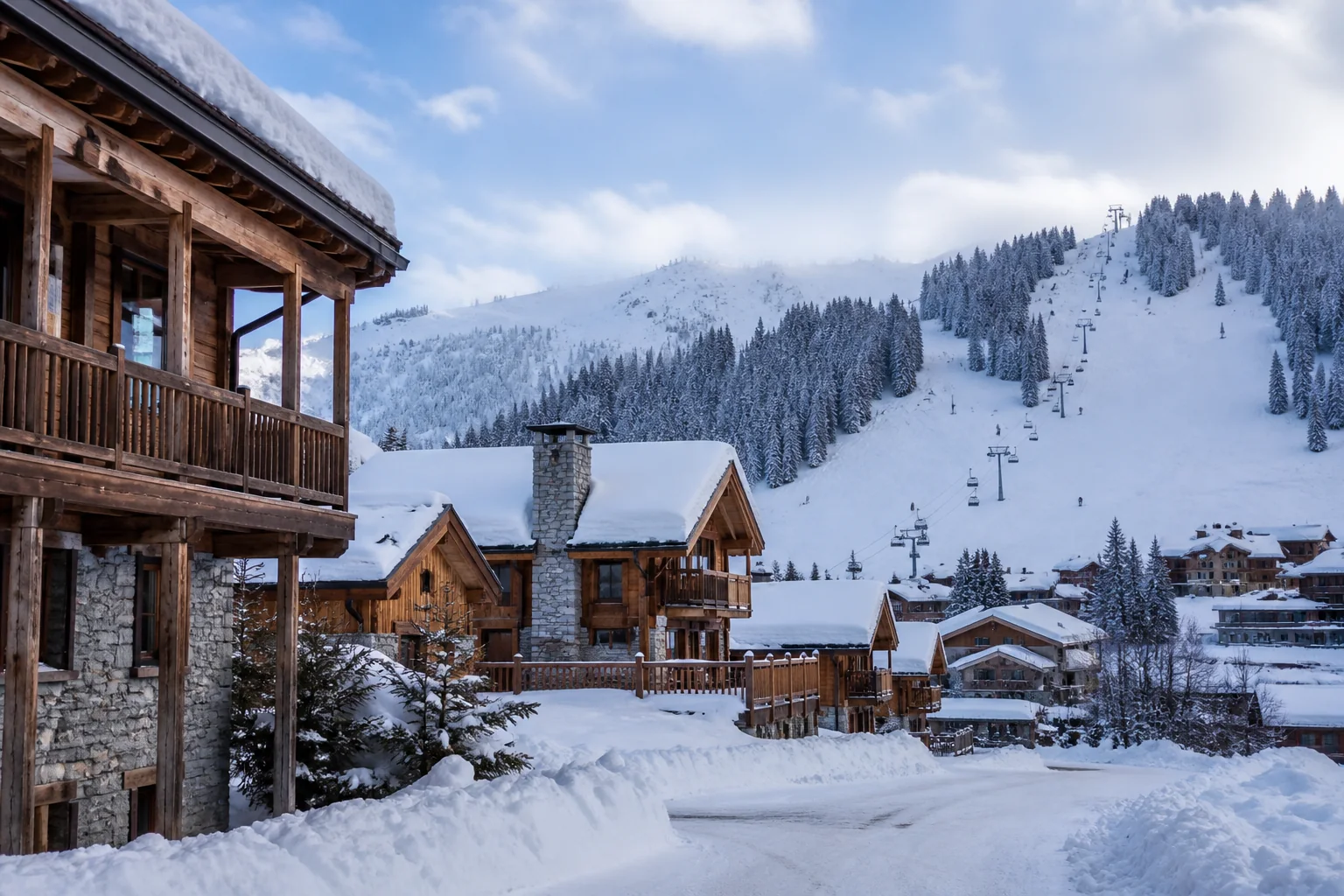
Many alpine failures occur between the main road and the door. Is the approach public or private, cleared and lit Does it require four-wheel drive, chains or a local permit Can a large van turn, and where is luggage transferred during heavy snow In car-free resorts, rail, electric vehicle and porterage form part of the itinerary.
There must also be a plan for a blocked road or late arrival. A remote sanctuary loses elegance when guests and provisions must be improvised up the hill.
Altitude and season provide context, not a guarantee. A valley return, linking lift and chalet access may face different conditions from the main ski area. Current intelligence comes from lift operators, authorities and official avalanche services; Switzerland's SLF publishes snow and avalanche information through White Risk. Off-piste decisions belong to a qualified local guide working from the current day.
The chalet proposal should contain credible alternatives for wind, rain or lift closure rather than infer safety and certainty from last winter's photography.
The plan and daily movement decide the stay
“Six bedrooms sleeping twelve” can describe six comparable suites or four good rooms and two child-sized cabins. Obtain a current plan with bed widths, ceiling height, windows, bathrooms, stairs and connecting doors. Which rooms adjoin kitchen, plant room or staff quarters Are any accessed through another bedroom Adult friends often require parity; families may value proximity more. The honest allocation determines whether guests settle immediately or renegotiate status and privacy after arrival.
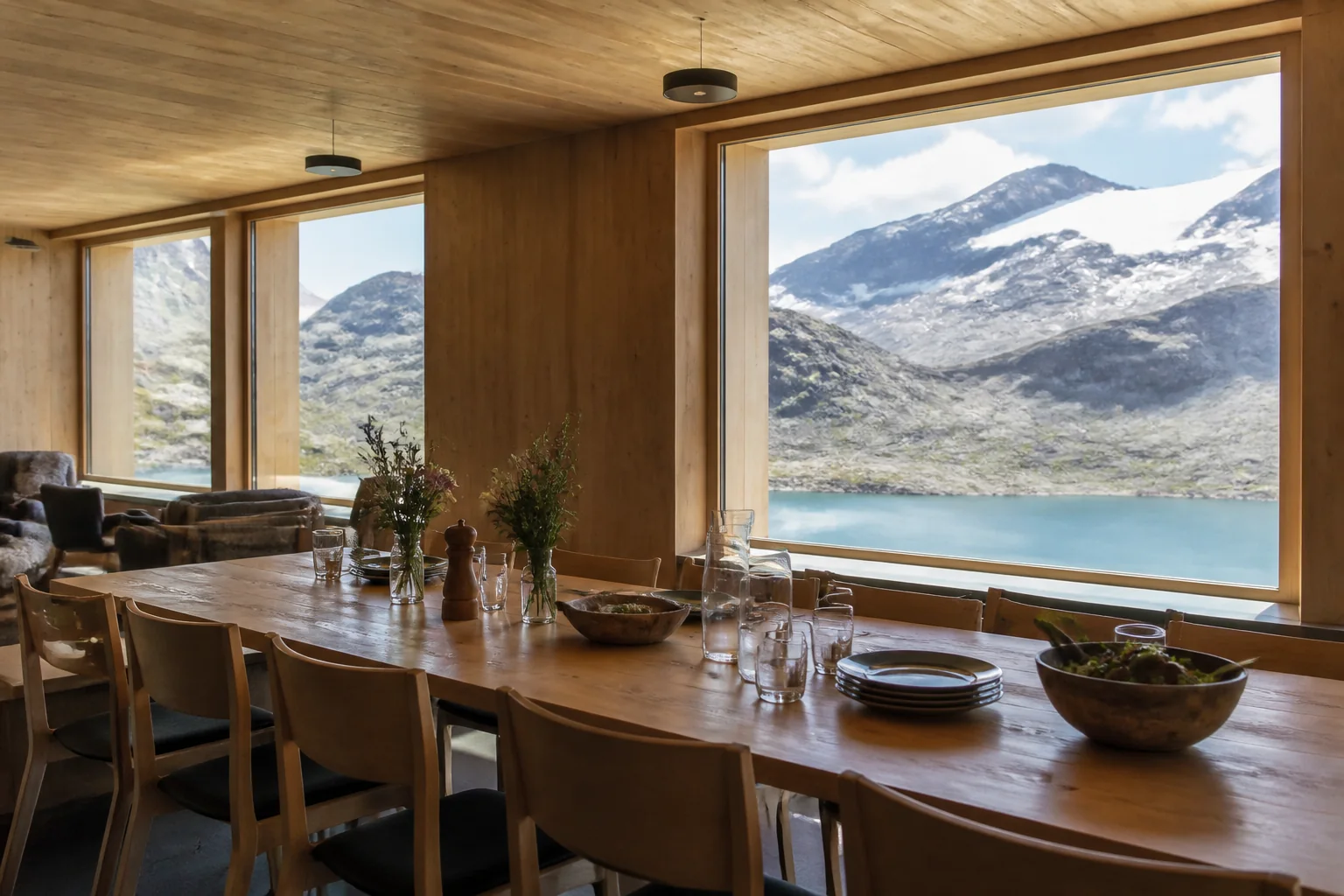
A private bathroom might contain a bath without shower, an open shower within the bedroom, a tiny cubicle on a half-level or only a WC. Marketing often photographs the principal bathroom and omits the rest. Confirm shower, bath, basins, door, toilet and accessibility for every room. Water pressure and simultaneous hot-water capacity matter when ten guests return from skiing.
A chalet with fewer excellent bathrooms may be more comfortable than a larger property whose “en suites” exist principally in the description.
Stair gates, windows, open fires, pool covers, balcony gaps and road access require inspection. Age and sleep pattern shape bedroom proximity, blackout and sound separation. Which cots, beds, high chairs and car seats are actually confirmed Childcare needs qualifications, language, references, working hours and a clear emergency protocol. A playroom in the basement offers little if toddlers cross several unsecured stairs to reach it. “Family friendly” is not a room-by-room safety assessment.
An internal lift does not solve ice outside, entrance steps or a narrow bathroom. Describe functional needs: maximum walking distance, wheelchair dimensions, transfer assistance, roll-in shower, rails and a step-free sleeping level. The chain from airport or station through vehicle, drive, entrance, bedroom, living room and restaurant must work. Current measurements, photographs and a live video are more reliable than “wheelchair accessible”. The same planning becomes valuable when a skiing injury temporarily changes mobility.
A wide-angle image can exaggerate a salon without proving that twelve guests may sit, dine and talk comfortably. Verify actual seating, table length, kitchen relationship, lighting and sound transfer to bedrooms. One open hall can be magnificent at dinner and confrontational at breakfast. A library, television room or quiet corner gives generations freedom. Music and events may be limited by house or village rules; an isolated appearance does not make the chalet a licensed party venue.
Wellness must work under real conditions
Confirm pool, sauna, steam room and hot tub by dimensions, temperature, hours, privacy and maintenance condition. Who monitors water quality, explains controls and responds to failure Are surfaces slip-resistant, rails present, ventilation adequate and child access secure A treatment room does not guarantee an available therapist. Treatments, credentials, cancellation terms and travel charges are separate services. Wellness space is valuable when it operates; a beautiful photograph does not compensate for a cold pool on arrival.
Staffing is an operating system
The label may describe a resident team or one host in the morning with contractors on call. Request roles, hours, days off and cover: manager, chef, host, housekeeping, chauffeur and perhaps childcare. Is anyone reachable at night Do staff live in, and with what access and privacy Some resorts share personnel between properties. The relevant question is not how many uniforms appear on arrival, but whether the rota supports the party's day reliably throughout the stay.
Private chef may mean full board, breakfast plus dinner or selected days. Set menu process, children's food, allergies, drinks, shopping, restaurant nights and the chef's rest day. Are provisions included, charged at cost or marked up Who sources special wine An open kitchen also affects noise and privacy. Strong chalet chefs translate local produce into the group's rhythm;
they need not stage a long tasting menu every night. The ability to make something simple beautifully and spontaneously is often the higher luxury.
Daily service may include beds and bathrooms but exclude personal laundry, turndown, cleaning after guest-cooked meals or constant playroom order. Agree scope, time window and privacy. Where do wet ski clothes dry How often are towels and linen changed Is there a guest machine or paid laundry On longer stays, pantry and household supplies also matter. Discreet housekeeping is not limitless invisible labour; it is a planned service with clear expectations on both sides.
“Driver included” says nothing about vehicle, seats, child restraints, hours, mileage or wait times. Confirm restaurant trips, ski school, neighbouring villages and airport transfers. One vehicle for twelve is rarely flexible when the party splits. A concierge can coordinate, but cannot guarantee a sold-out restaurant or guide. Before arrival, priorities become a realistic plan; in residence, one authorised contact should consolidate changes rather than twelve guests messaging suppliers independently.
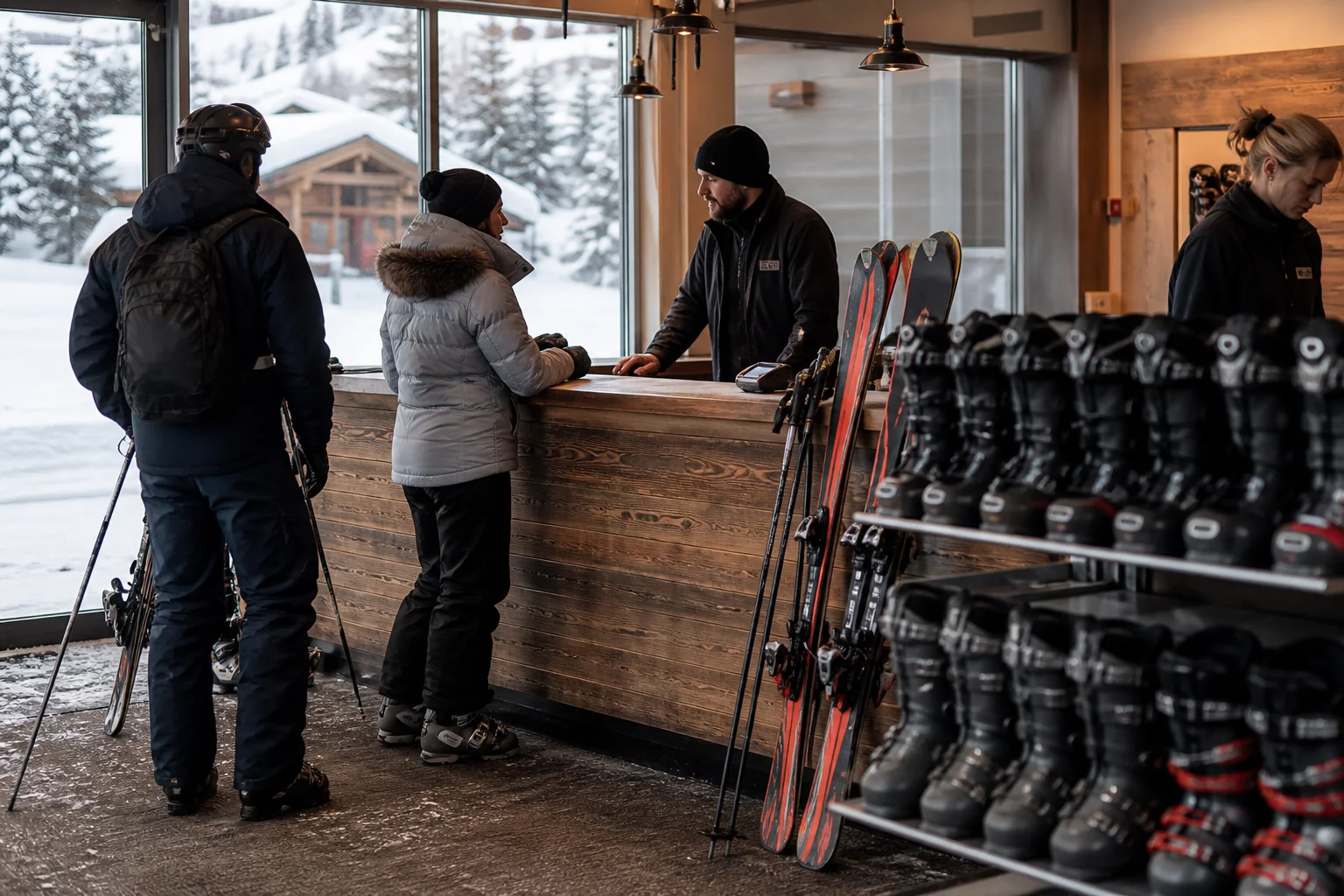
Rental equipment, boot fitting, passes, lessons, guides and transport should form one sequence. Does fitting happen in residence When are boots adjusted, where do they dry, and who replaces faulty equipment Are passes delivered or collected Children need group levels, meeting points and return arrangements. Off-piste equipment and decisions belong to the qualified guide and current conditions. A frictionless first morning is frequently worth more than another decorative feature in the house.
Privacy, technology and safety
Ask who controls the property, cameras, keys, alarm and guest data. Exterior cameras and sensors must be disclosed; recording in private interior spaces is unacceptable. How many staff and contractors enter Is there a proper safe and discreet vehicle access High-profile guests may need an alias, delivery protocol and approved staff list. Security should calm the journey, not dramatise it. Passport copies and medical information are shared only for a defined purpose through agreed secure channels.
“High-speed Wi-Fi” needs a current test where guests work and stream, not beside the router. Ask for speed, mobile backup, power history, printer, adaptors and support. Audio, television, heating, blinds and lights should function without an hour's instruction. Smart-home systems must not compromise privacy. Who repairs them on a holiday For confidential work, a separate room may matter more than a cinema. Technology feels luxurious when it disappears into the day.
A timber property with fireplace, kitchen, sauna and many sleeping guests requires credible safety management. Obtain confirmation of smoke and, where relevant, carbon-monoxide detection, extinguishers, escape routes, emergency lighting, maintenance and local checks. Legal duties depend on location and use; official sleeping-accommodation guidance illustrates why systematic risk assessment may be required. Guests need a brief orientation and emergency contacts. Concealing a detector for aesthetic reasons is not a benefit if nobody knows whether it works.
Read the contract, cost and failure risks
Owner, rental agency, chalet operator, local manager and travel organiser may be separate companies. The agreement should identify the full legal entity, address, payment route, governing law and accountable contact. Who owes the accommodation, who supplies staff and who responds when one service fails For substantial advance payment, account and company must correspond. A polished website is not a counterparty.
Combining accommodation with other travel services can, depending on structure and jurisdiction, create package-travel obligations; this requires case-specific confirmation.
The weekly figure may include staff, taxes and operating costs—or the building alone. A sound schedule identifies heating, final cleaning, local tax, food, drink, driver, fuel, spa, laundry, gratuities, concierge, extra guests and agency fees. “On request” must be translated: included, available for a charge or merely capable of being sourced. Only the total cost of the intended service model permits a fair comparison. A cheaper property staffed externally can finish more expensive and less reliable.
The contract should state amount, due date, payment method, release deadline and permissible deductions. A joint check-in records existing damage, inventory and faults, ideally with dated images. Who assesses damage, which evidence is supplied and how can the guest challenge it Normal wear is not damage. A card hold and bank transfer carry different consequences.
Events, pets and children may bring additional terms; these belong in the negotiation before payment, not in a debate after departure.
Terms should distinguish guest cancellation, chalet unavailability, failed services, travel disruption and poor snow. A lift closure does not automatically make accommodation unusable; an inaccessible road may be different. What substitute can be offered, at what standard and distance What happens if the chef, pool or heating fails Insurance should be tested against the actual cancellation exposures.
“We always find a solution” is reassuring conversation, not a remedy, until it appears as a workable mechanism in the agreement.
A stand-alone rental may bring different protections and contacts from a qualifying combination of accommodation, transport and other travel services. EU package rules can provide pre-contractual information, organiser responsibility and insolvency protection, while separately booked services do not automatically receive the same regime. Whether a particular chalet arrangement qualifies depends on seller, structure and jurisdiction. Before paying, the traveller should know who organises each service and what protection actually applies.
A live tour tests the photography
Before a substantial deposit, request a current video walk-through at a time relevant to light and noise. It should cover approach, entrance, every bedroom and bathroom, living room, kitchen, boot room, wellness, staff area and view. Ask when professional photographs were taken and what has changed. Wide lenses, a lit fire and night scenes can disguise proportion.
A video is not a building survey, but it tests whether description, plan and reality align. Unanswered points are confirmed in writing afterwards.
The one page before the search
The brief names party and room allocation, purpose, dates, ideal day, exact location logic, ski ability, mobility, children, food, staffing, privacy, vehicles, wellness, budget and absolute exclusions. Add contractual priorities, cancellation exposure and bad-weather alternatives. Deluxetargets can then verify building, map pin, approach, floor plan, current imagery, operator, team, inclusions, counterparty and substitute mechanism. Only after that does an attractive chalet become a responsible recommendation for this particular group.