
The Matterhorn is omnipresent in Zermatt and still cannot be ordered like room service. Cloud, angle, neighbourhood and hour matter as much as the booked category. The rest of the stay works the same way: luxury comes not from a roll call of famous addresses, but from a precise sequence of rail, luggage, mountain access, lunch and retreat.
The short answer
Zermatt becomes easy when four choices are made early: hotel or genuinely serviced chalet, position relative to the principal mountain gateway, a specifically confirmed view and dining arranged with weather reserves. “Matterhorn view” and ski-in/ski-out alone leave the important logistics unresolved.
Car-free means rail, Täsch, luggage and an electric last mile
Private vehicles stop at Täsch. Zermatt Tourism currently directs guests onward by shuttle or taxi; the train takes twelve minutes and is generally scheduled every twenty. Timetable and operation should be reconfirmed before travel.
Parking, charging, unloading and the transfer into the shuttle require a reservation or clear assignment. A chauffeur to Täsch does not automatically solve the final sector to the hotel door.
Travelling via Visp and the Matterhorn Gotthard Railway brings guests to Bahnhofplatz. The comfort lies in an unbroken baggage plan: connection, porter or hotel collection is known before departure.
E-taxi, hotel shuttle, e-bus, carriage or walking handle local distribution. Snow, gradient and luggage alter apparently short distances. Collection needs a time, meeting point and working number.
Skis, boots, pushchairs and large cases are counted rather than assumed. An early train, late check-in or hillside chalet needs storage and a named person who will actually complete the delivery.
Three mountain gateways with three daily rhythms
Sunnegga-Rothorn, Gornergrat and Matterhorn Express open distinct days. Their valley stations are not together. A good address is judged relative to the favoured gateway, not Bahnhofstrasse alone.
The underground funicular serves the Sunnegga side; the official operator places Sunnegga at 2,288 metres. For many ski days and summer walks, proximity to this station is a genuine daily advantage.
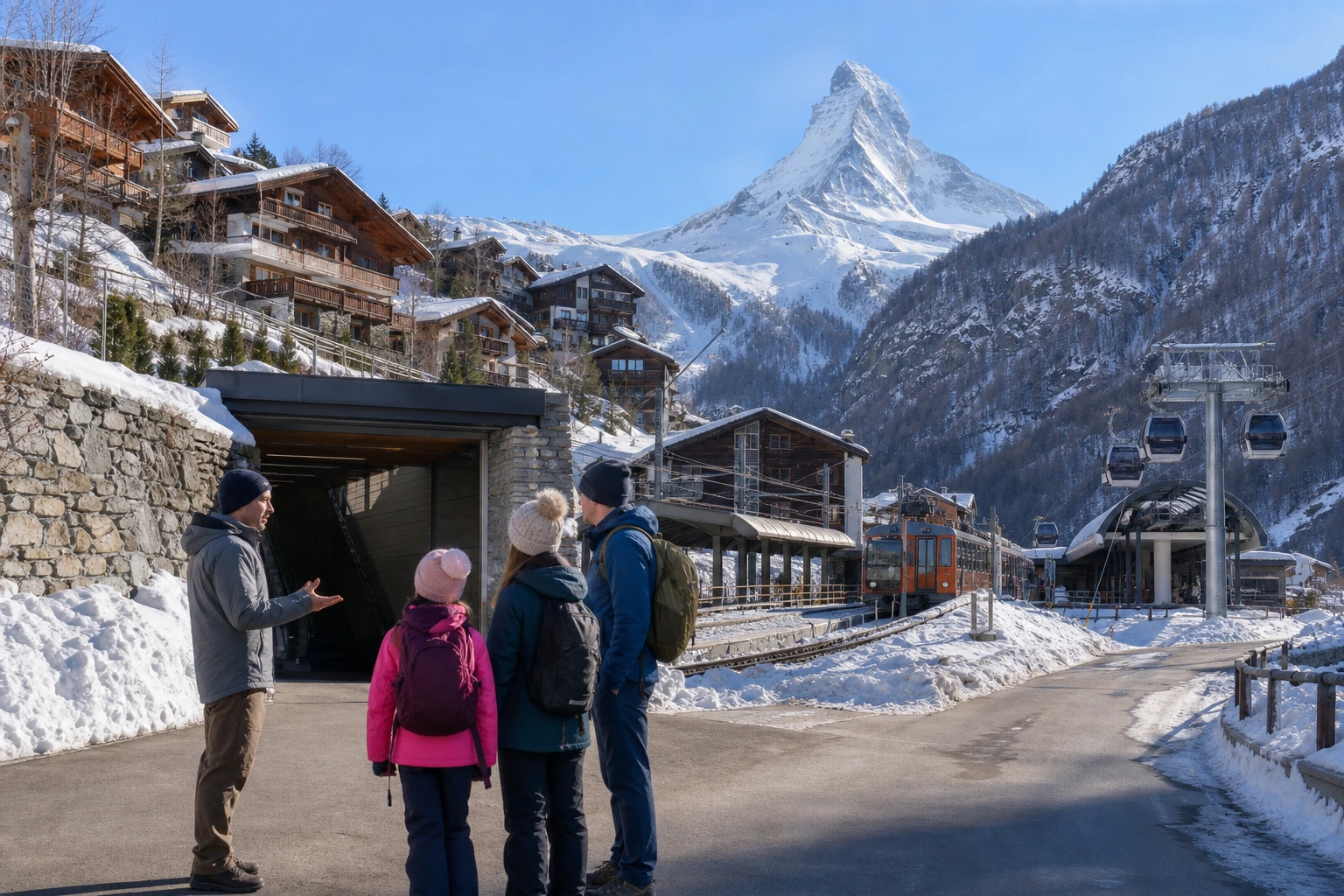
The cog railway starts near the main station and, according to Gornergrat Bahn, reaches 3,089 metres in about 33 minutes. Views, intermediate stops and return follow timetable and weather; a lunch reservation must fit both.
The base for Furi, Schwarzsee and the high-alpine sector sits at the other end of the village. Guests starting there daily may value Winkelmatten or a strong shuttle more than proximity to Gornergrat.
Cross-border skiing or pedestrian travel toward Cervinia depends on wind, operating status, ticket, equipment and hours. Lunch in Italy should never become an immovable centrepiece.
Zermatt Bergbahnen publishes current lifts and pistes. “Winter”, “summer” and “year-round destination” cannot replace that daily check. Maintenance, wind and snow can close one axis.
Centre, Winkelmatten, elevation and Riffelalp
Station, shops, bars and many restaurants remain walkable. Guests who enjoy spontaneous evenings may live better here than in a remarkable chalet where every meal becomes a transport project.
Quieter residential ground and proximity to the Matterhorn Express can simplify a family or sporting week. Gradients, e-bus and centre distance still require honest winter timing.
An elevated site offers view and calm while depending on lift, tunnel, e-taxi or footpath. Private access is part of the product; if it closes or finishes early, the stay changes.
Staying on the Gornergrat line means accepting a mountain resort rhythm. Railway timetable, last access, luggage, dining and altitude should be desired as a whole—not mistaken for a central hotel location.
Hotel, chalet, service scope and house rules
A hotel consolidates reception, breakfast, spa, housekeeping and concierge. A chalet provides exclusivity only when staffing, food, transport, cleaning and technical support are real. Privacy without operation is merely more organisation.
“Fully staffed” is translated into roles: chalet manager, chef, host, housekeeping, driver and perhaps childcare. Hours, days off, overtime and replacement for absence belong in writing.
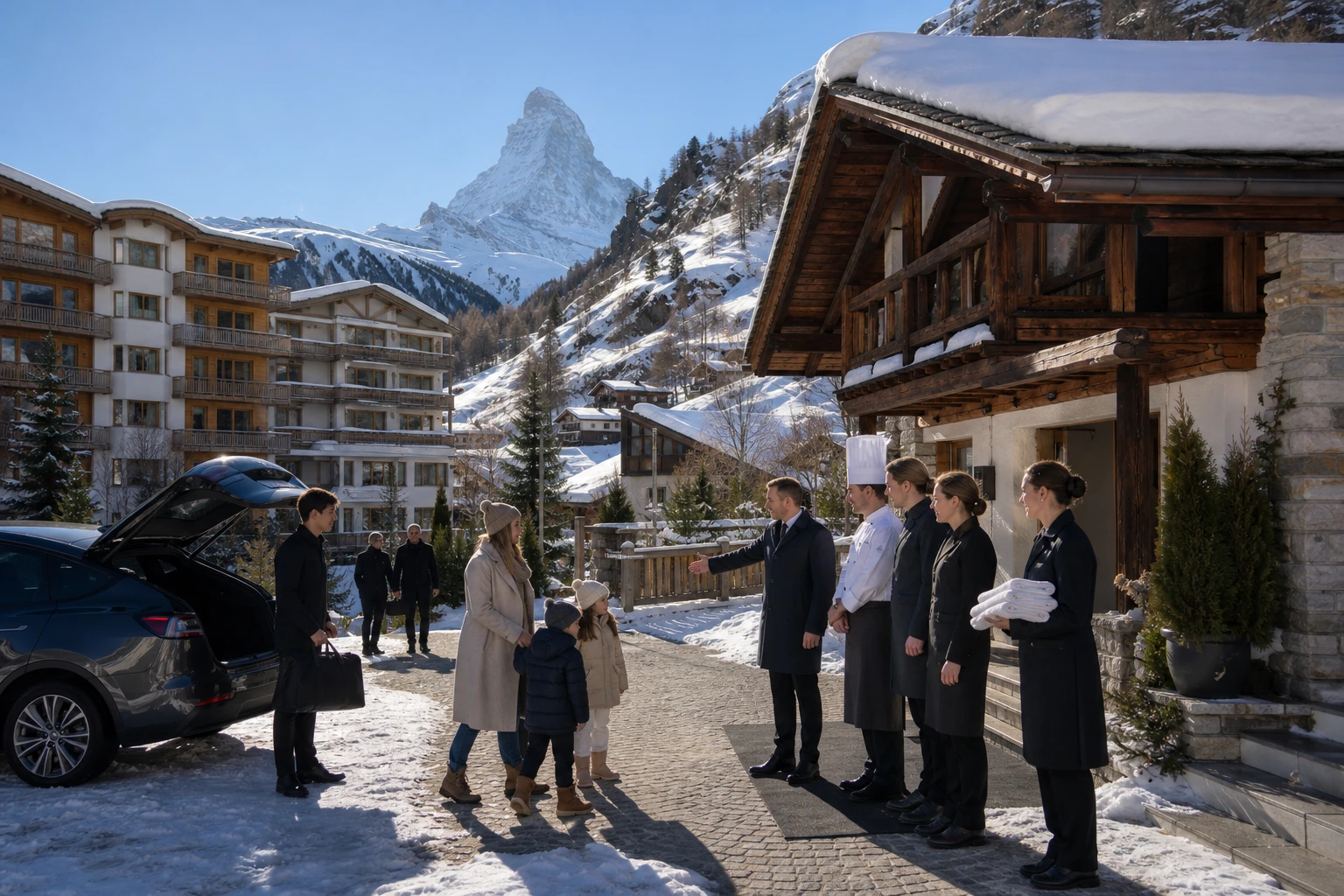
A beautiful house without daily service can suit independent guests. It must not be budgeted as a private hotel. Breakfast, shopping, waste, laundry, snow clearance and emergency contact require owners.
Chalet groceries, wine and specialist products often sit outside rent. Advance, procurement margin, receipts, cellar, leftovers and reconciliation should be explained before deposit.
“Driver service” may mean an electric vehicle, permitted zones and defined hours. Journeys, wait time, night charge and alternatives need precision; private cars remain excluded.
Damage, events, smoking, pets, occupancy and spa use follow the agreement. A large deposit is not automatically unreasonable; an undefined deduction process is.
Matterhorn view, hotel type and exact room category
“View” may be frontal, oblique, partial or visible only from a balcony. Room number or category, floor, orientation, obstruction and an unretouched current photograph should be confirmed.
Cloud and snowfall may hide the mountain for days; that is not a service failure. A good stay therefore has substance without its photographic window: room, fire, spa, food and location must stand alone.
Heritage houses in the village, architectural addresses above it and high-altitude resorts answer different needs. Mont Cervin Palace, Grand Hotel Zermatterhof, The Omnia, CERVO and Riffelalp are useful archetypes, not a fixed ranking; current services still need review.
View, balcony, connecting door, renovation, bathroom, noise and access vary within one property. A good booking fixes the relevant category rather than trusting the brand alone.
Ski-in/ski-out, boot room, meeting point and altitude
The phrase can describe a marked piste, a short traverse or access dependent on adequate snow. Inbound and outbound route, difficulty, opening and beginner alternative require separate confirmation.
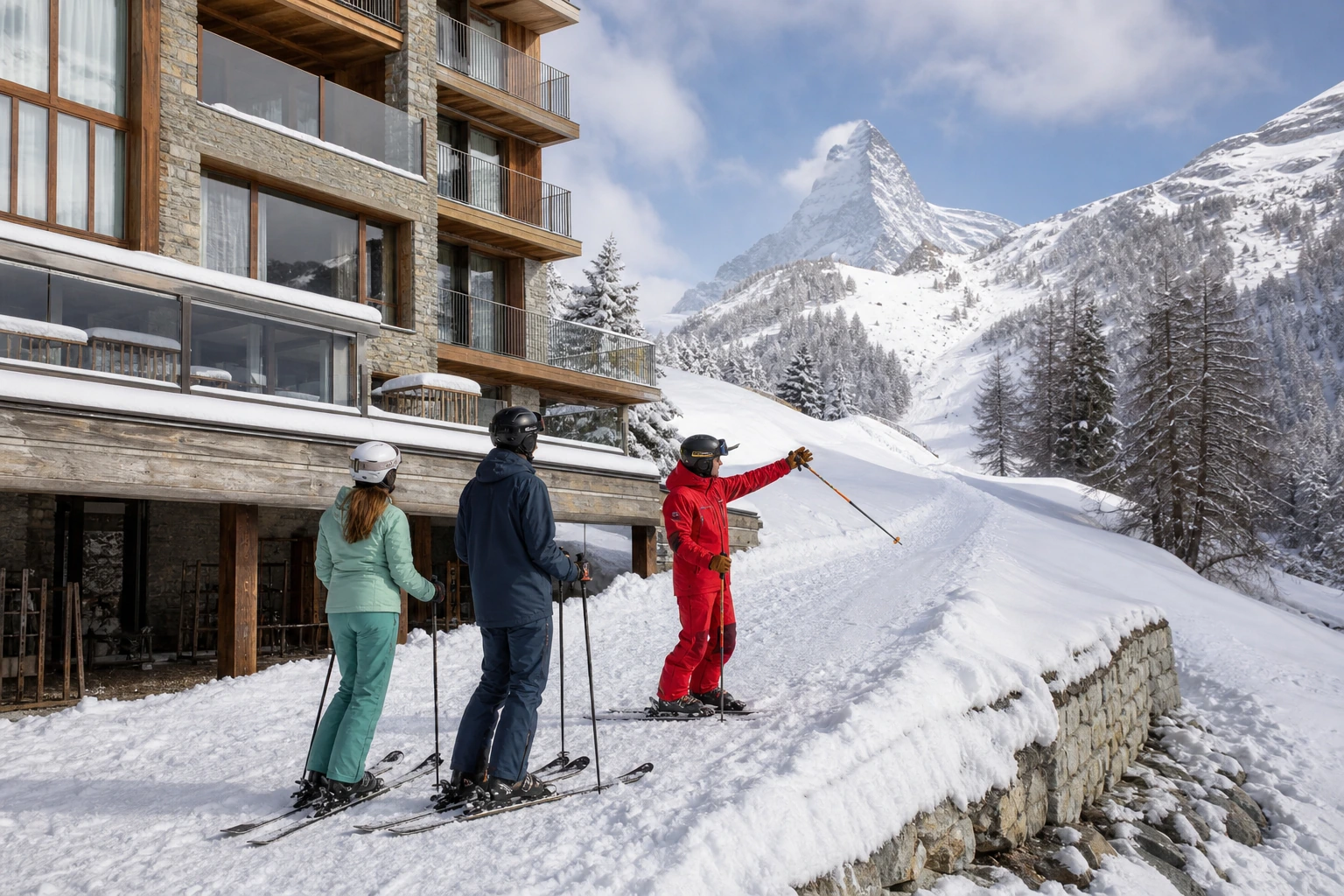
Heated dryers, personal storage, rental delivery, distance to the lift and ski-service collection are small details with large effect. Beautiful lockers without an operating flow do not save time.
A good guide matches level, language and group dynamics but needs a sensible start. Meeting point, equipment, lift axis, duration and weather cancellation should be confirmed together.
Freeride, glaciers and alpine routes belong with qualified local guides and current assessment. SLF directs travellers to White Risk for live snow and avalanche information. A hotel forecast replaces neither bulletin nor guide.
The village lies well below Gornergrat and Matterhorn Glacier Paradise. The CDC notes that high-altitude day trips returning to a lower sleeping altitude are less stressful, but responses remain individual. Symptoms should not be dismissed as ordinary fatigue.
Arrival, equipment fitting, highest viewpoint and a long tasting menu need not occupy the first 24 hours. A quiet first evening protects sleep, appetite and the following mountain day.
Fine dining, mountain lunch, allergies and Valais wine
The current Michelin selection spans creative tasting menus and regional mountain cooking. Distinction and name are not enough: style, duration, opening day, cancellation and return route all matter.
Alpine Gourmet Prato Borni, Brasserie Uno, Capri and After Seven currently appear in the Michelin selection. Current distinction, season, format, child policy, dress, prepayment and allergy process require direct confirmation.
The Omnia, Potato, La Muña, ad lib, Bazaar and Madre Nostra illustrate the range in the present selection. A list is not curation: after a long day, shorter and livelier may be the more intelligent dinner.
Chez Vrony, Zum See, Aroleid and Marmo are currently included around Zermatt by Michelin. Ski, rail or foot access, last return, weather, table position and duration should be reserved as one plan.
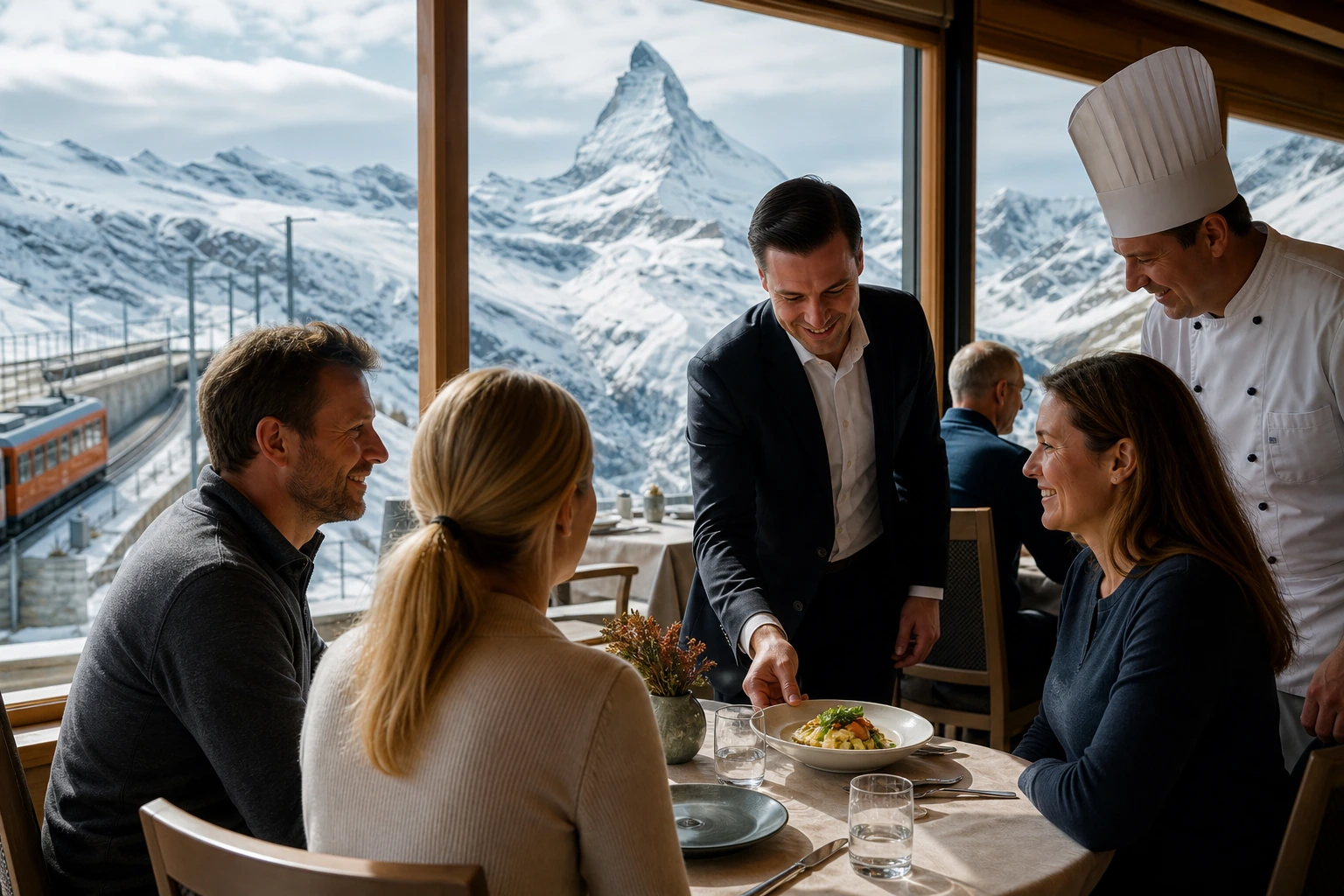
A fixed table on the wrong sector creates haste. Either build the ski day around lunch or retain flexibility. Wind and lift closure need a fair cancellation arrangement.
These are clarified directly with restaurant or chalet chef before confirmation. “Vegetarian available” says nothing about cross-contact or medical allergy. Adaptations and limits belong in writing.
A local bottle may anchor the stay more powerfully than an international trophy vintage. Price, year, decanting and chalet delivery deserve the same care as the menu.
Non-skiers, summer, families, wellness and bad weather
Gornergrat, winter paths, spa, village culture and a mountain lunch can work when operation and access align. A non-skier should not be designed merely as company for dinner.
Walking, Gornergrat, lakes, mountain railways and long evenings create a different rhythm. Trails, ascent, thunderstorms, works and seasonal opening require current checks.
Quiet can be valuable while hotels, restaurants and lifts may reduce operation. “Zermatt is open” says little about the exact combination a guest expects.
Ski school, childcare, rooms, early dining, equipment storage and short routes belong together. A hillside chalet can be superb when transport does not consume every pause.
Lift, steps, e-taxi access, bathroom, spa and altitude matter to older guests; children need effortless starts. The best address lets both groups act independently.
Pool, sauna and treatment should not fill every evening by default. Hydration, recovery and individual health lead. No spa should promise a medical effect or instant altitude adaptation.
A good property needs enough interior, spa, food and service to carry a storm without panic programming. A flexible treatment, long lunch and village walk may be more luxurious than forced altitude.
First stay, weekend or longer journey
Four or five nights leave room for arrival, two mountain axes, a reserve and one important dinner. The sequence remains a working plan; weather and energy make the final edit.
With two nights, choose one mountain side. Equipment waits, transport is fixed and only one table is essential. Guests attempting Gornergrat, Italy, spa and three menus mostly experience transit.
A week can combine village life, mountain days and calm. A hotel move is worthwhile only for a genuinely different location or operating model; otherwise it spends baggage time and breaks rhythm.
Total budget, cancellation, proof questions and red flags
Transfer from Täsch, e-taxis, mountain railways, equipment, instruction, lunches, tasting menus, wine, spa and chalet food budget need separate visibility. Peak dates also alter minimum stay and cancellation.
Hotel, chalet, instructor, restaurant and railway use different rules. Weather does not automatically create a free cancellation. Every high-value item needs a deadline and alternative.
How do we continue from Täsch Who owns each bag Which mountain door shapes the trip Is the exact view confirmed What does the chalet include Which restaurants, lifts and instructors are open, reserved and cancellable
Pause at a guaranteed mountain view, vague ski-in/ski-out, chalet “service” without hours, Italy lunch without weather plan and restaurant lists without opening days. A transfer ending at Täsch is not a complete arrival.
The verdict
Zermatt feels most luxurious when its complexity has been quietly organised. Luggage is waiting, the right mountain begins nearby, lunch sits on the route and cloud takes nothing from the stay. The Matterhorn remains the grand performance—but not the only idea.