
The loveliest night of a yacht charter can begin in a silent bay and unravel through swell, a wind shift or generator vibration. A marina may look less romantic yet deliver the most relaxed evening of the week. The meaningful question is not how the berth photographs at sunset, but how safely, quietly and appropriately it carries guests through to morning.
The night begins with shelter and purpose
A well-designed charter uses both for different purposes. A marina brings direct shore access, services and predictable logistics; an anchorage offers distance, swimming and the rare pleasure of waking before the coast comes alive. The better night depends on weather, coastline, yacht, crew, guest priorities and the following day. Fixing every overnight stop before embarkation mistakes a wish list for a navigational plan capable of surviving real conditions.
The concise answer: begin and end where transitions are easy. Use a suitable marina for a city evening, provisioning or an important land connection. Remain at anchor only when shelter, seabed, swinging room, environmental rules and guest comfort align. A sophisticated itinerary does not disguise its flexibility; it allows captain and crew to choose the right solution for the right night.
A photogenic bay is not automatically an overnight anchorage. Coastal shape, wind direction, swell, depth, holding ground and surrounding traffic determine whether it remains persuasive after midnight. A harbour can also admit movement or noise in an exposed position. The captain interprets forecasts, local effects and actual observations. Guests judge the decision by their sleep the next morning; the camera completed its work several hours earlier.
What a marina genuinely does better
A confirmed berth provides a gangway to shore, simplifies boarding, supports deliveries and makes restaurants, walks or cars accessible without a tender. Shore power, water, waste reception, sanitation and technical support may be available depending on the marina and yacht. None is universal. The central benefit is a controlled transition, particularly on embarkation and disembarkation days, for late land plans or whenever mobility makes a small moving boat unnecessarily difficult.
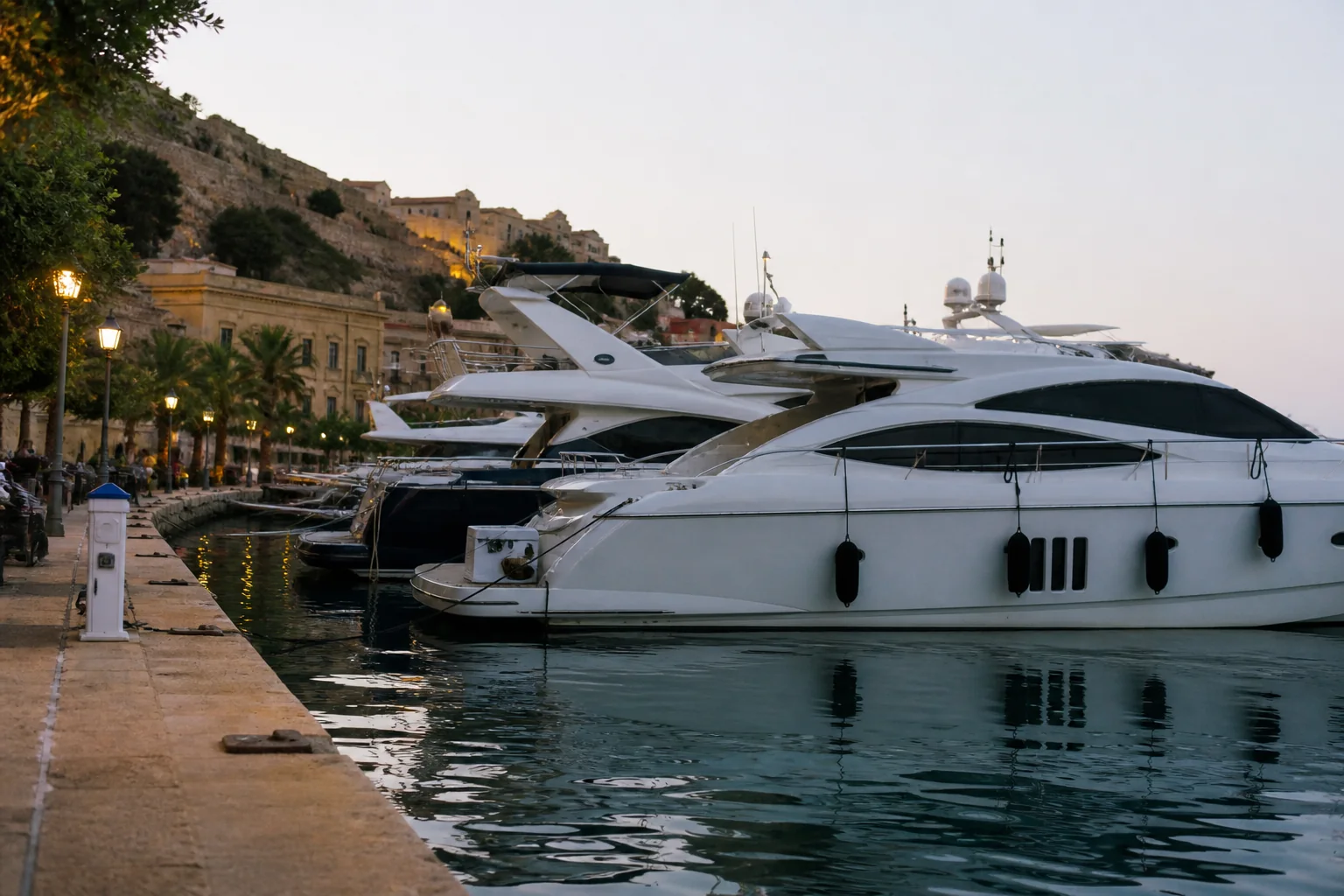
Mooring lines work, fenders complain, neighbouring decks entertain late and delivery vehicles arrive early. Harbour lighting can reach a cabin, while wash may enter despite an apparently protected basin. A celebrated address guarantees neither privacy nor sleep. Some berths sit inside a social waterfront; others face the entrance and more movement. Equating “marina” with a stable night ignores micro-location and operations. The assigned berth matters almost as much as the harbour name.
Proximity to the gate is convenient for shore visits but may increase pedestrian traffic. Fuel dock, shipyard, charter base, nightclub and service road each produce a different rhythm. An outer wall can bring a better view and less protection. Larger yachts add questions of length, draught, electrical load and manoeuvring room. A diligent broker or captain asks not merely whether space exists, but what exact position is offered and what surrounds it overnight.
Shore power varies by connection, voltage and capacity; water, waste handling, fuel, connectivity and vehicle access differ. Blue Flag places water quality, waste management, safety, accessibility and environmental information among the central criteria for certified sites, but even certification does not confirm technical suitability for a specific yacht. Crew and agent verify connections, hours, fees and pre-arrival requirements. Infrastructure is an advantage only when its particulars have been matched to the vessel.
Embarkation brings luggage, welcome, safety briefing, preferences and route discussion. Disembarkation adds packing, accounts, vehicles and fixed flight times. A berth removes unnecessary tender journeys and exposure to changing conditions from both transitions. That is not less luxurious than a final bay; it is often more considerate.
Guests who climb into a moving tender on departure morning may realise too late that the prettier last night created the least graceful farewell.
A long dinner, old-town walk or concert becomes easier when guests can return aboard on foot. A tender after dark requires a safe landing, suitable weather, available crew and an agreed schedule. Evening clothes, purchases and guests with limited balance all fare better on a quay. Choose the harbour because it unlocks a worthwhile night ashore, not only because its name carries status. The best marina removes friction from the desired experience.
Anchoring means distance and continuing decisions
When conditions settle, the relationship with the coast changes. The last day boats depart, water remains around the hull and breakfast begins before a transfer is required. A swim, a book and dinner on deck acquire an intimacy even a famous marina cannot reproduce. This pleasure needs no extra entertainment.
An anchorage feels luxurious when its quiet can actually be inhabited rather than interrupted by a programme that insists on leaving immediately.
Sunsets are widely available. The rarer experience is first light before excursion boats, beach music and day traffic arrive. Guests swim from the stern while breakfast is prepared or drink coffee over an unbroken surface. An overnight anchorage is most rewarding when the next day does not demand an early passage. Leaving at six forfeits the hours that distinguish staying overnight from merely stopping for an afternoon swim.
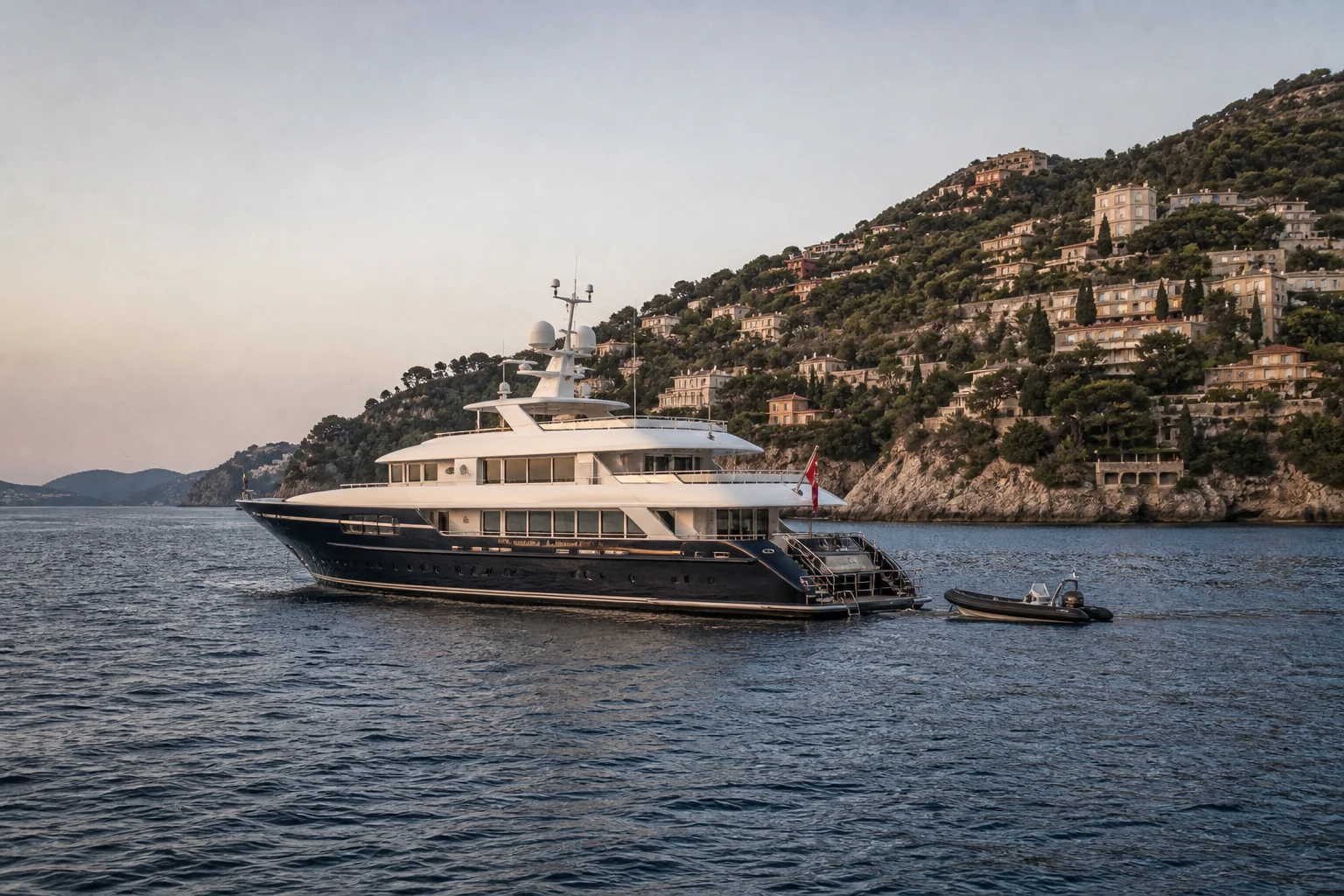
Sound travels easily across water. Other yachts, fishing boats, shore roads and restaurants may remain audible. Anchor watch, chain, tender, air conditioning and generators introduce sounds aboard the yacht itself. Navigation and deck lighting also mean complete darkness is neither possible nor always permitted. Promise distance and closeness to nature, not silent isolation. Experienced crew and honest language protect guests from a romantic expectation the actual coastline cannot satisfy.
Wind strength alone is insufficient. Direction, gusts, local katabatic effects, fronts, thermal patterns and overnight development matter. A bay sheltered at lunchtime may become exposed after a shift. The captain combines official forecasts, local reporting and observation; the choice must remain adaptable until arrival and throughout the night. A Plan B is professional seamanship rather than diminished service. Guests should understand and accept that principle before signing the charter.
Distant weather can send waves into an anchorage under a clear and nearly windless sky. Ferries and fast craft add wash. If the yacht lies side-on, cabins, glasses and stomachs move despite the serene view. This distinction matters especially to light sleepers and motion-sensitive guests. A harbour behind an effective breakwater may then be the clear winner; at other times another side of the island is enough. Light wind and flat water are not synonyms.
Sand, mud, rock and seagrass behave differently and cannot all be used freely. Depth affects the amount of chain required; yacht weight and windage change the load. The captain reviews charts, seabed, room and the actual set of the anchor. Guests need not become technicians, but they should understand why a preferred point cannot be guaranteed. A position slightly farther from the beach may offer materially better safety and environmental protection.
A yacht rotates around its anchor as wind and current change, requiring clearance from rocks, shoals, buoys and neighbours. Boats on different scopes or mooring systems may not swing together. An open bay at noon can become so crowded by evening that an overnight stay is no longer prudent. Exclusivity does not mean forcing a large yacht into the final gap; it means leaving early enough to select a more spacious anchorage or a sound alternative.
The RYA and The Green Blue explain that anchors and traditional swinging moorings can damage sensitive seabed habitats. Posidonia is especially important in the Mediterranean, where local maps, exclusion zones and regulations must be respected. The Balearic Islands provide official geospatial mapping for this purpose. A luxury yacht should never anchor in protected meadow for a shorter tender ride. Care for the seabed belongs inside competent navigation, not in an optional sustainability paragraph.
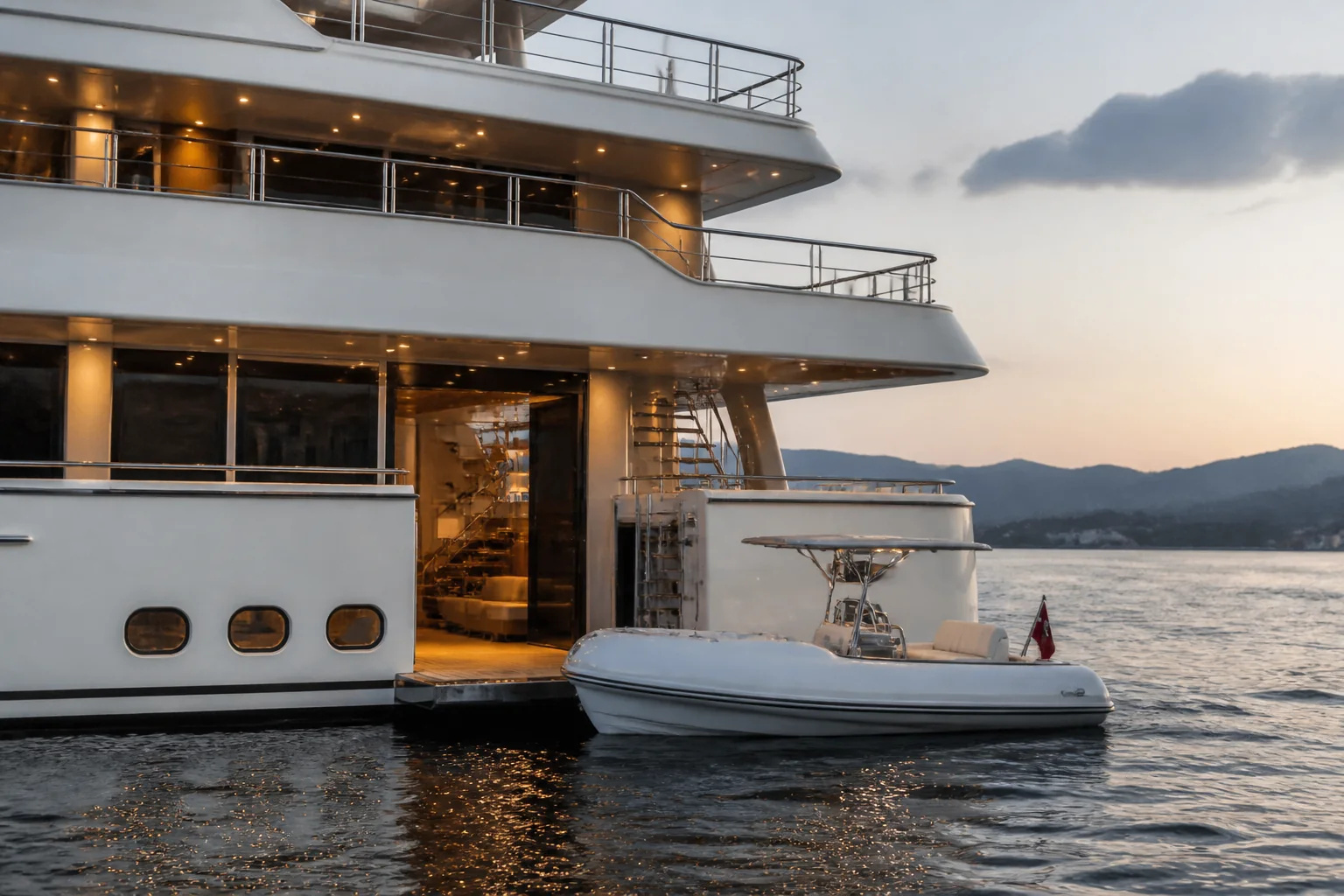
An authorised and suitable buoy can organise swinging room, help protect seagrass and simplify arrival. It does not guarantee maintenance quality, shelter or comfort. Reservation, vessel limits, attachment, fees and inspection must be understood, and the crew still assesses the installation. Buoys in popular regions may be scarce or seasonally managed. A thoughtful route is therefore not binary: it considers marina berth, the yacht's own anchor and a regulated mooring where appropriate.
Charterers define preferences, while safety, vessel operation and weather remain the captain's responsibility. Industry agreements such as the MYBA charter framework recognise this authority. It is not opposition to service; it protects guests, crew and yacht. A good captain explains the reason and offers an attractive alternative—another bay, an earlier departure, a buoy or a marina. Professional leadership at sea is more valuable than rigid loyalty to coordinates proposed months earlier.
Tender, swimming and onboard systems
Distance, darkness, chop, local speed restrictions and the condition of the landing determine whether an excursion remains elegant. A restaurant may appear close from its terrace yet be awkward to reach from the water. Crew scheduling and return windows must also fit service aboard. Moving tenders and wet steps are unsuitable for some guests.
Plan the complete route from yacht to table and back rather than treating “ten minutes from shore” as sufficient logistics.
Visibility, temperature and attention change after dark. A landing can be unlit, gates may close and swell can strengthen. Alcohol, long clothes and inappropriate shoes increase risk. An agreed window and direct crew contact are better than improvised messages from the restaurant. When the evening ashore is the central reason for the stop, a harbour often wins. Romance should not make the most delicate part of the night needlessly complicated.
At anchor the sea begins at the stern, but currents, traffic, local zones and crew permission still apply. Toys require setup, supervision and safe clearance; tender or generator operations may affect the swimming area. Swimming in a marina is commonly inappropriate or prohibited. Guests expecting a daily dawn dip should prioritise suitable anchorages. Families and less confident swimmers require explicit boundaries, not a vague promise that the yacht provides a private sea.
At anchor the yacht must provide its own energy unless its battery and hotel systems are designed otherwise. Cooling, refrigeration and guest services may require generator hours. Sound and vibration vary greatly by yacht and cabin position. Compatible shore power can reduce that load in a marina. Noise-sensitive guests should ask how the selected yacht actually operates overnight and consider it during cabin choice, rather than discovering the answer in the first remote bay.
Family, mobility and sensitive sleep
Young children do not rule out anchoring, but rails, stairs, cabin access, swim rules and tender transfers must work. Parents retain responsibility; the crew is not childcare. A marina makes walks, medical access and supplies easier, while adding an open quay and public movement. Age, swimming ability and experience aboard matter more than a generic family label. First-time charter families often benefit from a sheltered harbour night before progressing to more remote settings.
Stepping into a moving tender, transferring at a low landing and using wet stairs require balance. A marina gangway may be simpler, although slope, handrail and tidal movement still need review. Wheelchair accessibility aboard yachts is highly vessel-specific and must never be assumed. The briefing should identify knee, back, walking or balance limitations clearly. Good planning chooses the most dignified and secure sequence of movement, not the backdrop with the strongest photograph.
A comfortable passage does not prove that a guest will sleep well while the yacht rolls at anchor. Stationary movement can feel different, and a lower midships cabin may help, although layout and noise sources vary. Harbour lights and nightlife create the opposite problem in a marina. Preferences around motion, darkness, cooling and sound belong in yacht selection and cabin allocation, not merely in a route discussion after embarkation.
A strong route plans the nights first
A long passage, late dinner and early departure should not burden the same night. Nor does each day need a new bay. The captain brings together passage time, weather window, servicing and desired morning atmosphere. A short sailing day may end beautifully at anchor; a protected berth may be wiser before a substantial crossing. The route begins with sleep, transitions and margin. Scenic names are added only after those foundations work.
Many charters work well with an embarkation harbour, two sheltered anchorages, one lively marina evening, another quiet night and a berth before disembarkation. This is a rhythm, not a formula: closeness and distance alternate, provisioning happens without urgency and shore evenings remain effortless. Weather may reorder everything. Quality lies in using both worlds deliberately, so guests finish the week feeling neither tied permanently to quays nor governed endlessly by tenders.
Marina charges can vary by season, length, position, electricity, water and services. Anchoring may carry no berth fee, but tender operation, generator use, crew time or a paid buoy remain part of the yacht's operation. Fuel and charter expenses follow the signed agreement and accounting process. Cheaper is not automatically better, while a famous marina is not automatically valuable. Compare the night's total utility: sleep, access, servicing, programme and the following morning.
The brief before charter
Describe desired nights ashore, morning swims, sensitivity to noise or motion, children's ages, mobility and cooling expectations. Ask how the yacht produces power overnight, how tender transfers work and which marina reservations are tentative or confirmed. Discuss mooring options, protected habitats and the response to changing weather. Routing remains the captain's responsibility, but a precise guest profile improves every decision. Flexibility then feels like expertise rather than disappointment.
The better yacht night is the one whose shelter, access and atmosphere suit both the people aboard and the next day. An anchorage may give the journey its most profound morning; a marina may create its most elegant evening and deepest sleep. A mooring buoy adds a valuable third answer. Deluxetargets designs a resilient alternation, leaving room for the captain, respecting the seabed and giving every worthwhile night enough time to be fully experienced.