
Arriving by water
A private pier can transform a journey—or merely decorate a photograph. Its value appears only when one knows which vessel can use it, in which conditions and which piece of travel friction genuinely disappears.
Translate the romantic arrival technically
Arrival by water has its own theatre. Luggage settles into the stern, the road falls away and the hotel reveals itself from lake or sea. Yet “private pier” can mean a shallow swimming platform, a tender landing, a brief arrival stop or a berth where a defined yacht may remain.
Without that distinction, the guest buys an idea rather than a function.
A landing stage enables passengers to step ashore. A tender dock receives smaller support boats. An arrival pier handles hotel transfers and excursions. A proper berth allows a specified vessel to secure for longer and may provide water, electricity, waste handling, security and crew services.
Marketing often blends these terms. A booking confirmation should separate them.
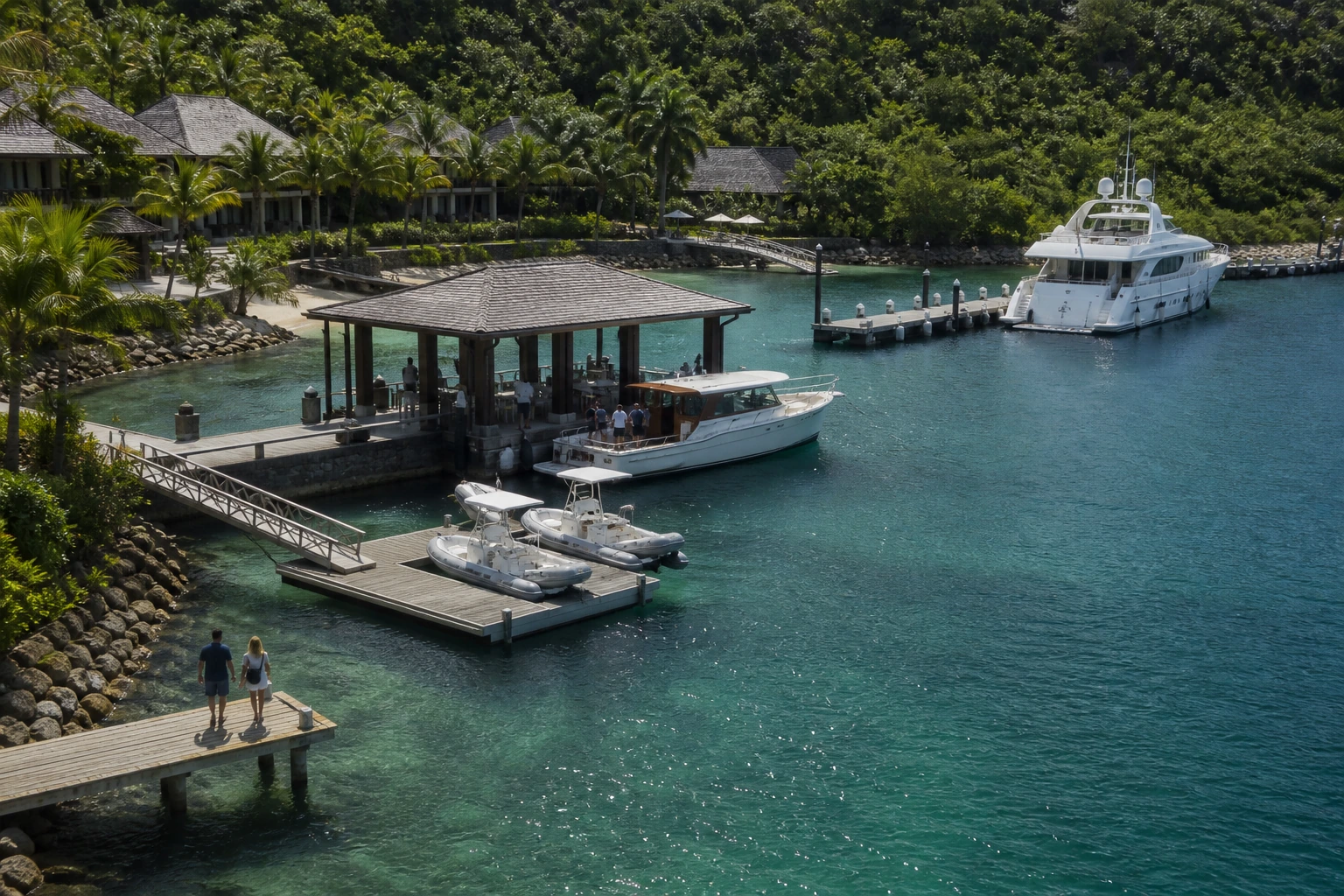
Mandarin Oriental describes Villa Ada on Lake Como as having a private dock for direct access and boat tours—a persuasive convenience for villa guests. Emirates Palace describes a 169-berth marina, a defined yacht-length range and deep-water Gulf access. That is a full yachting operation.
Both are valuable; they serve entirely different travellers.
It matters to yacht owners, itineraries with daily tender movements, lake-villa stays, divers, island-hoppers and parties wishing to move people and luggage discreetly. A lunch or dinner across the water can become a light excursion rather than a logistical undertaking.
A guest who rarely leaves the hotel, dislikes boats or has an excellent road connection may pay for a facility without using it. A pier in front of the villa can also bring engines, staff movement and sightlines. The most photogenic position is not always the quietest.
Vessel, depth, weather and safe boarding
Length, beam, draft, displacement, hull shape and boarding height determine suitability. A dock that receives the hotel's runabout may not suit a superyacht tender. A small wooden launch does not require marina depth or services.
Length without draft, beam, displacement, fendering and turning space is inadequate. The precise vessel specification must reach the operator, harbour master or facility captain. A photograph cannot complete that exchange.
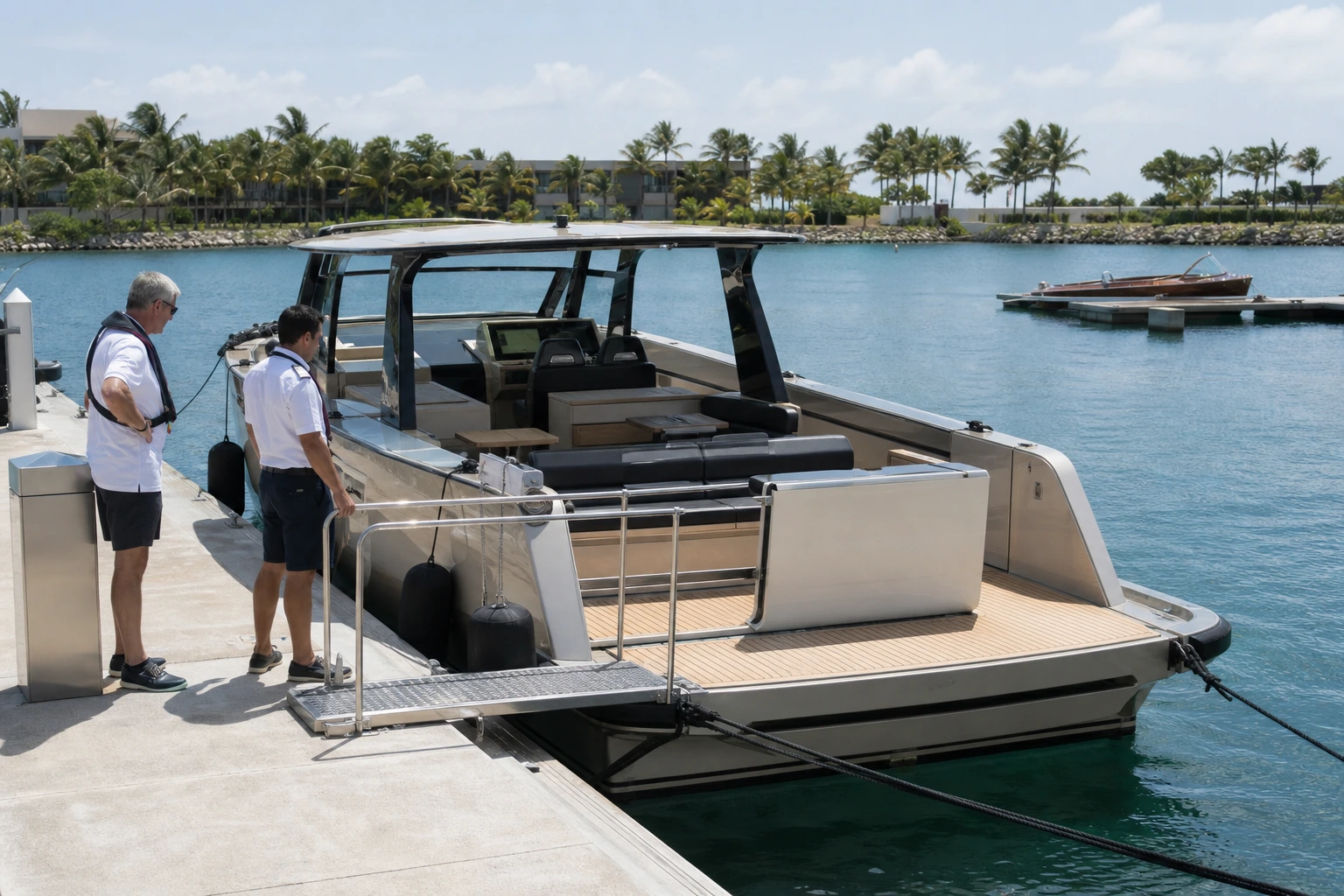
A depth may refer to mean water, low water or a local chart datum. Tide, sediment and season change the margin. “Three metres” becomes useful only when the measurement point, date and water state are known.
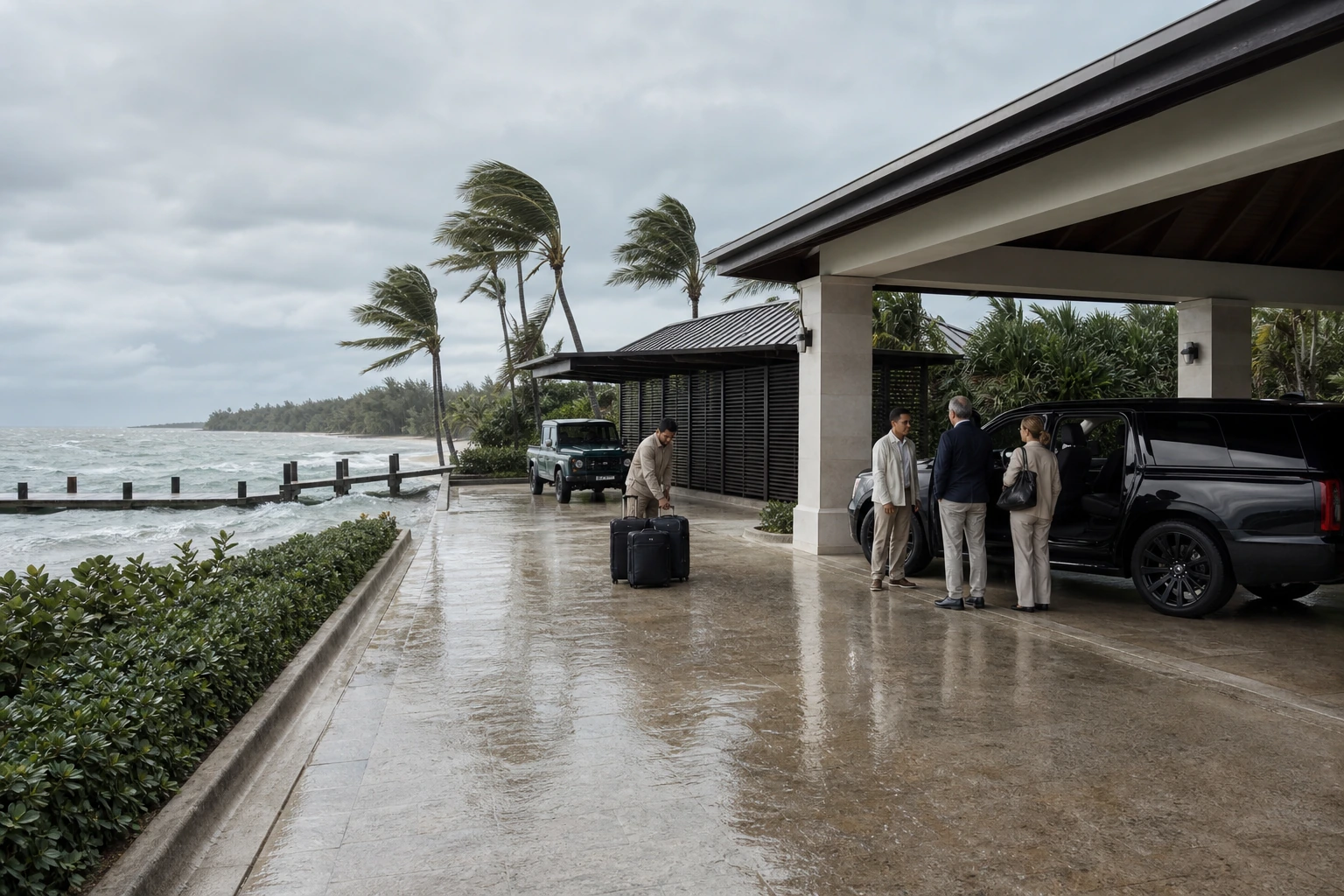
A sheltered dock may be effortless in calm weather and difficult in a crosswind. Long swell makes the height between boat and platform unpredictable. The master or operator decides whether to come alongside; no hotel itinerary supersedes that authority.
Official port-safety guidance stresses appropriate gangways and access. For the guest, that means secure handholds, non-slip surfaces, light, space and a controlled step. A member of staff offering a hand cannot correct fundamentally unsuitable geometry.
“Is it accessible?” needs more than a yes. How many steps are involved Does the gangway move Can a wheelchair remain occupied rather than be carried Is there somewhere to sit while waiting Who assists on a wet deck For some parties, the road entrance is the safer and more dignified arrival.
Two cabin bags are not a family with a stroller, dive cases and eight suitcases. Boat capacity, weight, spray protection, labelling and the route from pier to villa must align. Separate baggage movement can be elegant, provided responsibility and delivery time are clear.
The final metres remain part of the operation
The pier may be at reception, below the residence or at the opposite end of the resort. Steps, a buggy or a long path follow. “Direct boat access” is direct only when the chain is considered all the way to the room.
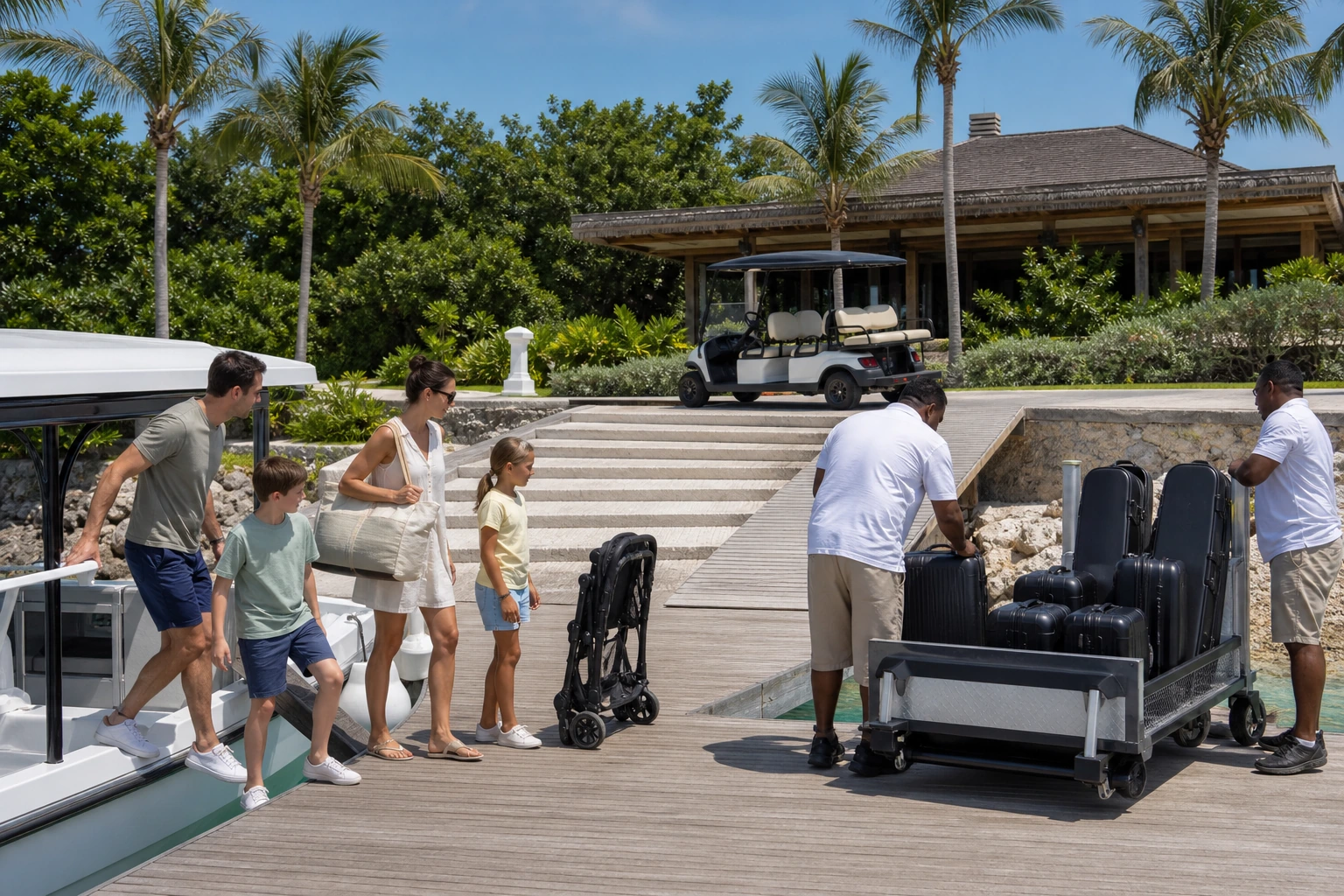
A privately owned hotel pier may still handle transfers, supplies, excursions and other guests. It may face a public waterway. Anyone arriving discreetly should establish use times, sightlines, photography rules and the size of the welcome party.
Boats carry food, linen, engineers and staff. Early engines and trolleys on timber decking are audible from a nearby villa. The pier is both stage and back of house, so its operating hours belong in the room decision.
For a longer stay, owners consider safe lines, fenders, electricity, water, waste, black-water arrangements, fuel, crew access, provisioning, security and engineering support. Without these, the hotel dock may be a useful tender station while the yacht remains at anchor or in a marina.
A tender shuttles between yacht and hotel without bringing the mother ship alongside. It can be flexible, but requires a safe anchorage, capable crew, suitable boats and defined night hours. The movement feels simple to guests while remaining a genuine operation for the crew.
Lights on a pier do not prove that boats may operate after dark. Navigation, local rules, staffing, noise and safety equipment define the window. Anyone planning a return after dinner needs a confirmed last departure and a road alternative.
An international arrival by private yacht remains subject to customs, immigration, port and reporting obligations. Current UK government guidance provides one clear example; each country differs. A hotel can help coordinate formalities, not make them disappear.
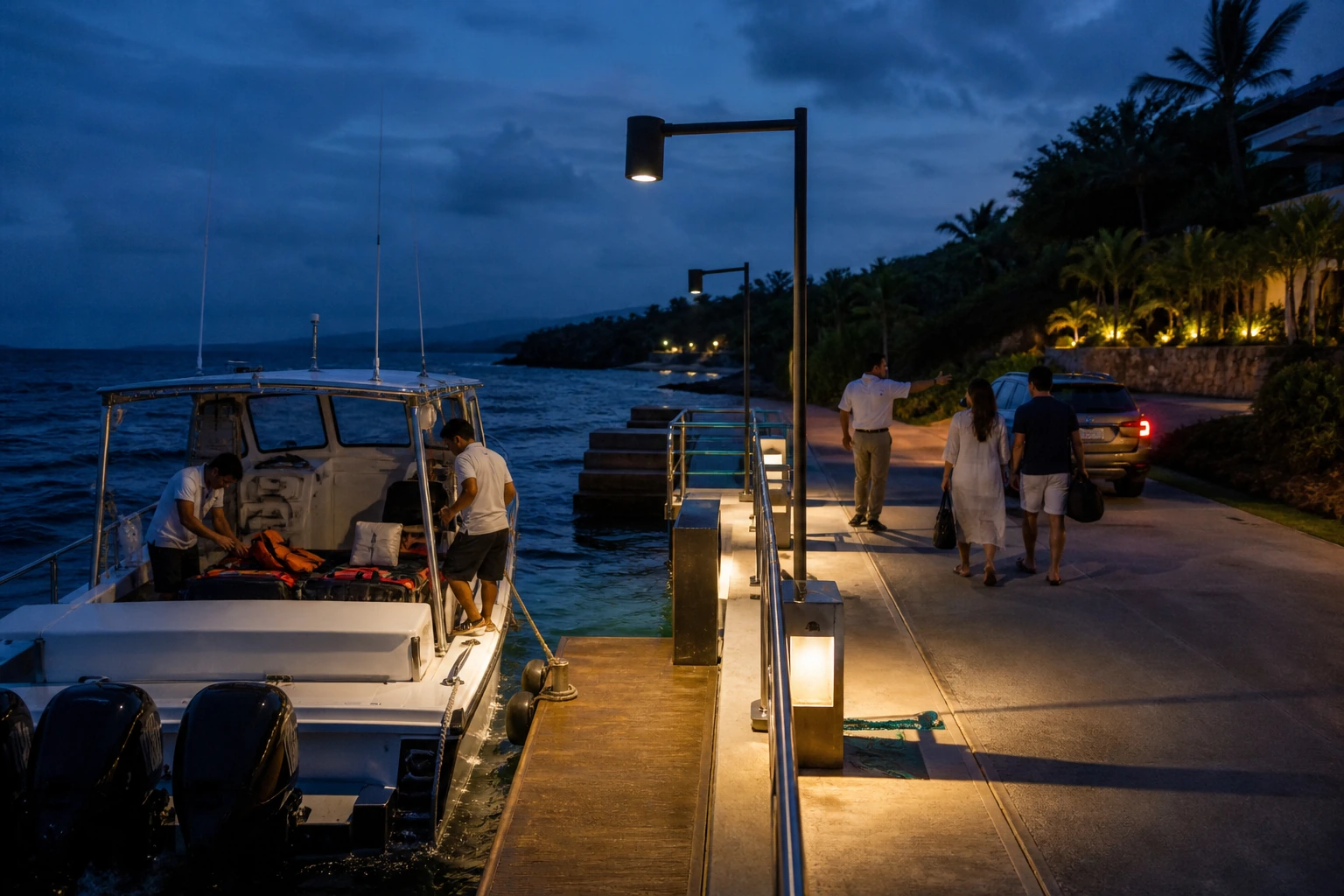
Ownership of a dock does not confer control over surrounding water, channels or traffic. Port authorities, coastguards, facility operators and the vessel's master retain decision-making roles. Good hotels explain this plainly and identify a responsible nautical contact.
When the pier genuinely improves arrival and day
On Lake Como or in Venice, a boat can avoid roads, bends and traffic. On islands it may be essential. In a city with excellent roads, multiple luggage transfers can make it slower. Compare door to door, not merely minutes afloat.
A well-run dock opens restaurants on the opposite shore, discreet swimming coves and easy yacht changes. Its value rises when crew and boats are available at useful notice. A pier without a reliable operator is infrastructure without mobility.
Type, age, weather protection, seating, toilet, storage, speed and crew matter more than polished timber. Ask whether the boat is private, shared or chartered and how waiting, cancellation and substitutes are handled.
An open landing is visible to passing boats. Names on luggage, timing and a large welcome can reveal more than intended. For sensitive guests, a short route, a small reception team and no unsolicited photographs are often more valuable than ceremony.
Which port is used in adverse conditions How long is the road journey Who covers extra cost What happens if guests and bags travel separately The alternative is part of the transfer service, not a later improvisation.
What must be confirmed in writing
Record facility type, intended use, boat operator, vessel specification, draft and limits, operating hours, weather authority, boarding, mobility, baggage, exclusivity, fees, marina and government requirements, crew services, cancellation and alternative route.
Which exact boat can use it In what wind, swell and water-level range Who approves and decides How will the least mobile guest and largest case board Which equal route works when the pier is closed
For yacht owners, a professional marina often offers greater safety, provisioning and crew support than the dock outside a hotel. A short tender or car transfer to the property is not a failure, but the cleaner nautical solution.
We do not ask whether a hotel has photographed a pier. We ask whether the water access fits the journey. For a lake villa it may mean freedom; for an owner, a tender station; for a family, unnecessary complexity. The right recommendation translates the feature into a specific benefit.
The best pier is barely remembered after arrival. It shortens the route, moves people and bags safely and opens the day to the water without noise or uncertainty. Then it is not scenery, but genuine travel infrastructure.