
A bamboo toothbrush and a framed certificate do not make a resort sustainable. The serious questions concern what happened before construction, how land and water are used, where money travels, who holds authority and whether progress can be measured over time. Luxury may be generous. That is precisely why its consequences deserve exacting scrutiny.
Impact needs a boundary, period and baseline
Guests see architecture, service and beach. Many of the decisive effects sit backstage: land conversion, water extraction, wastewater, energy, supply chains, working conditions and community access to coast or countryside. The current GSTC Hotel Standard accordingly joins management with social, cultural and environmental criteria. A credible resort can explain how these dimensions connect rather than presenting one visible gesture as proof of the whole operation.
A large percentage is meaningless until its denominator is known. Did total energy fall, or only energy per occupied room Did water efficiency improve while absolute use rose after new villas opened Does local procurement mean food or all purchasing Useful reporting identifies the base year, organisational boundary, method, occupancy and target. Only then can an adviser distinguish genuine progress from a well-designed number.
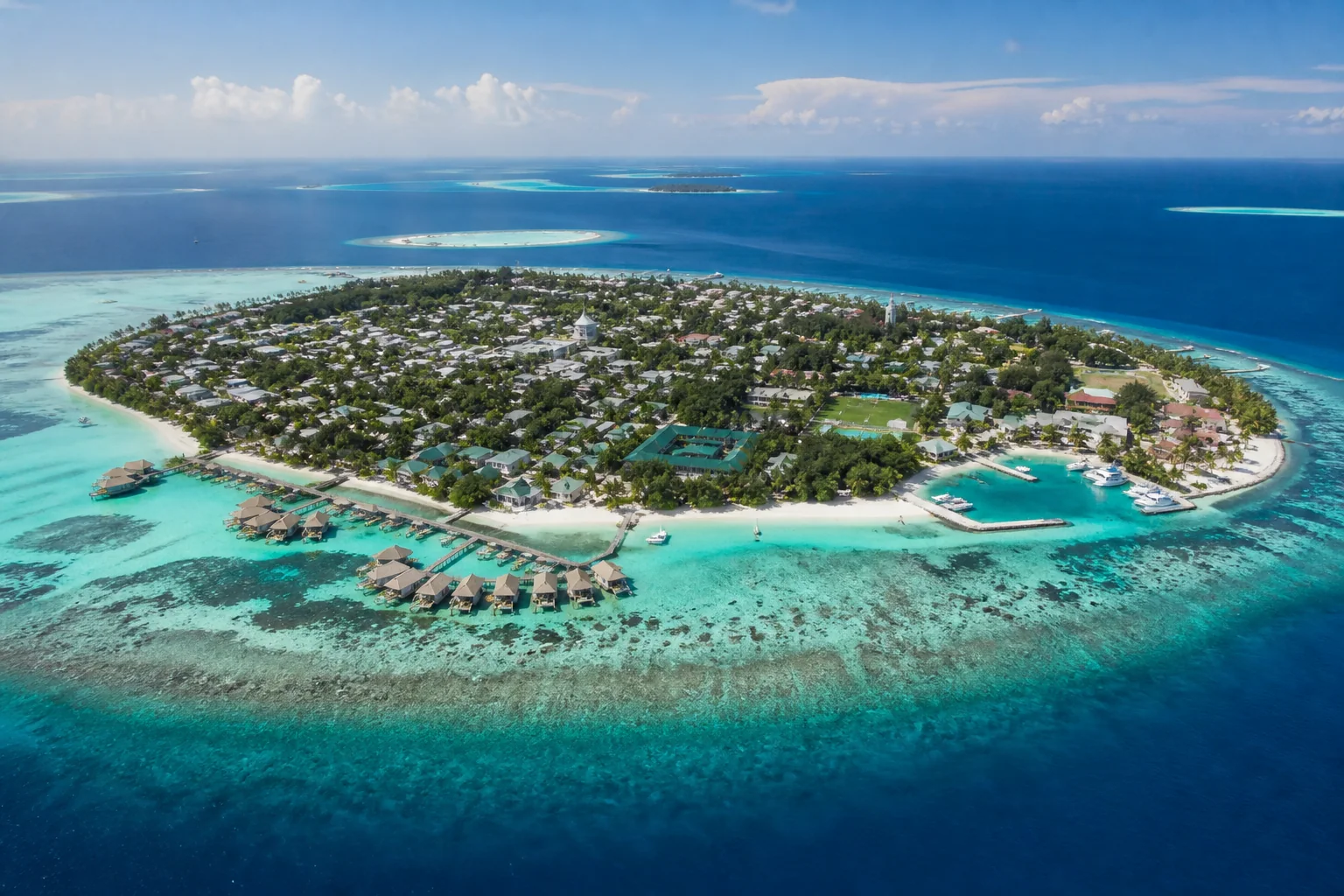
A seemingly self-contained island resort may face harder trade-offs than an urban hotel because drinking water, cooling, waste and staff transport are complex. A mountain retreat has different questions about heating, access and landscape. Sustainability is therefore not a universal score read in isolation. The intelligent question is which risks this particular place creates, and how competently the property manages them.
Solar panels cannot repair a dune removed for development. Examine prior land use, environmental assessment, coastal setback, drainage, vegetation, animal corridors and public access. For conversions, ask how much structure and material were retained. A resort should be able to describe permissions, mitigation and monitoring. Architecture that settles beautifully into a landscape is desirable, but visual discretion is not a substitute for ecological due diligence.
Who owns or leases the site, how was tenure established, and were customary uses recognised On coasts and islands, fishing grounds, paths, grazing or sacred places may be affected. A project can be legally permitted yet remain socially contested. Responsible operators understand the history of their site, document consultation and maintain an accessible grievance process that does not appear only after public criticism.
Water and wastewater in local context
The World Sustainable Hospitality Alliance notes that water stewardship extends beyond direct consumption to purchased products and access to clean water and sanitation for staff and communities. Ask about source, permits, seasonal stress and litres per occupied room, but also absolute volume. One private pool may be manageable; a hundred pools in an arid destination require a much stronger explanation.
Desalination can secure supply, yet it consumes energy and produces concentrated brine. How is the plant powered, where is discharge released and is its effect monitored On remote islands, maintenance, spare parts and emergency capacity matter too. “Our own water” does not mean low impact. A mature strategy combines efficient fixtures, leak detection, suitable planting, reuse and transparent measurement.
Bedrooms, laundry, pools and kitchens all generate effluent. Treatment level, capacity at full occupancy, maintenance, laboratory testing and sludge disposal are central questions. Irrigation reuse is helpful only when quality and soil conditions permit it. A luminous lagoon should not distract from the engineering behind it. Contingency arrangements for system failure are part of luxury operations, not merely an environmental appendix.
Account for energy and climate honestly
Orientation, shade, insulation, cooling, hot water and laundry determine demand before any certificate is purchased. On-site renewables, storage and a credible plan for residual emissions follow. Ask for total consumption, renewable share and a multi-year trajectory. A solar-powered resort can still cool empty rooms extravagantly. Technology becomes meaningful when architecture, equipment and daily operating discipline reinforce one another.

The Hotel Carbon Measurement Initiative provides a consistent way to calculate emissions per occupied room and includes areas such as on-site energy, refrigerants and certain outsourced operations. It does not make every hotel directly comparable, but it improves transparency. Ask what sits inside the boundary, whether laundry or boats are omitted, and whether anyone reviewed the data. A round footprint number without methodology is branding, not evidence.
A resort may improve its own operation while the largest travel component lies in a long-haul flight, private aviation, seaplane or fast boat. That does not automatically invalidate the trip; it calls for complete accounting. Longer stays, fewer property changes and a coherent route can reduce movement per holiday day. A good adviser discusses transport and resort operations separately rather than using one to erase the other.
In hot climates, air-conditioning runs relentlessly. Leaks from some refrigerants can carry substantial warming potential. Serious operators keep equipment registers, check for leakage, train technicians and plan a transition to lower-impact systems. Guests need not inspect a plant room. Yet a resort that publishes paragraphs about straws and cannot discuss refrigerants may be concentrating on what photographs well.
Waste, procurement and quality of work
Colour-coded bins achieve little when packaging reaches an island with no reliable recycling route. Bulk formats, refill systems, supplier agreements and reusable logistics are stronger interventions. Ask which materials are actually processed, by whom and where they finish. “We separate everything” is not a result. Procurement design is where a remote resort can prevent waste before transport and disposal become expensive problems.
Abundant buffets signal generosity but can generate avoidable volume. À-la-carte breakfast, smaller displays, better forecasting and skilled use of sound ingredients can feel more refined. Measurement by kitchen preparation, plate and event reveals different causes. Donation may help where food-safety systems exist, though prevention remains the best result. The elegant solution is one guests experience as freshness and attention, not restriction.
Refillable bottles and dispensers are useful when cleaning and transport are well managed. They say little about construction waste, textiles, packaging or microplastics. A resort should prioritise its largest material risks and test alternatives across a full life cycle. Heavy glass transported over long distances is not automatically superior in every setting. Good materials policy is specific to place and operation.
Local purchasing should be defined by spend, category and distance. Fish from the neighbouring boat sounds ideal but must be legal, seasonal and ecologically appropriate. Regional vegetables may still be water-intensive. Furniture, art, uniforms, cleaning and professional services belong in the same analysis. A credible resort tells the stories of individual makers while also publishing enough structure to show whether those stories are representative.
“Local catch” guarantees neither healthy stocks nor selective fishing. Kitchens should know species, fishing area, season and supplier, exclude vulnerable species and offer intelligent alternatives. Imported fish brings refrigeration and transport into the calculation. A well-curated menu can be smaller, more fluid and more interesting than permanent availability. Rarity should not be sold as prestige when ecology cannot support it.
How many employees come from the region, and who leads departments, finance and executive management Are contracts stable, hours documented, wages fair and accommodation dignified Is training recognised, promotion visible and complaint handling confidential Warm service does not prove fair work. A property with durable social impact develops careers and makes local expertise visible well beyond guest-facing roles.
The guest wing may be flawless while employees contend with long journeys, crowded rooms or unreliable water. Housing, transport, meals, connectivity, privacy and medical access sit inside the social footprint. Island properties should also explain rotations and family time. Personal information remains private, but a professional operator can describe standards, inspections and remedial processes without exposing individuals.
A donation to a school or clinic may be useful, but it does not replace a fair operating relationship. Who selected the project, whose priorities shaped it, who controls funds and how is success judged Enduring programmes give local organisations a voice in goals and delivery. Resorts should separate philanthropy, statutory payments, ordinary procurement and co-designed development instead of combining unlike activities into one impressive impact total.
Local design, art and ceremony should not become atmosphere without context and consent. Artist contracts, attribution, fair payment and the right to decline matter. Community visits work only when hosts set format, group size, photography and income. Respect also appears in what is not opened to guests. A promise of exclusive access must never override cultural boundaries.
Biodiversity, limits and resort density
A sign about turtles or coral is not a biodiversity programme. A useful plan identifies baseline conditions, sensitive species, zones, lighting, noise, invasive plants and measurable objectives. It names who collects data and how management responds. At a coastal property, beach furniture, boat routes and night lighting may matter more than a distant charity partner. The strongest impact starts on the resort's own footprint.
Mangrove, seagrass, dune or woodland restoration is not completed during a guest planting hour. Site selection, native species, hydrology, maintenance and years of monitoring determine whether it works. Ask whether an activity merely satisfies a legal mitigation duty or goes beyond it. Launch photographs are the beginning. Survival rate, area and recovered ecological function tell the consequential story.
Feeding, touching, selfies and engineered proximity are warning signs outside a serious, professionally managed rehabilitation context. Dolphin, whale and turtle excursions also need distance, group size, speed and abort rules. Resorts should audit operators and empower guides to abandon a sighting. An unforced encounter is more luxurious than a guarantee delivered at the animal's expense.
Anchoring, boat corridors, sunscreen, waste and visitor pressure all affect marine space. Mooring buoys can reduce anchor damage when correctly installed and maintained. Snorkelling briefings should explain touch, distance and current. For a house reef, documented condition matters more than the adjective pristine. Comfortable access can coexist with seasonal or spatial closures when an ecosystem needs recovery.
One efficient property can sit within a development pattern that overwhelms water, roads, waste systems and shoreline. Good planning looks beyond the plot at construction, bed growth, public infrastructure and seasonal peaks. An obscure bay is not necessarily the lower-impact choice if rapid development has begun. An established resort connected to functioning infrastructure may sometimes be the more responsible answer.
Sea-level rise, storm, heat, fire, water stress and coral bleaching can affect both operation and host community. Ask whether these risks inform site planning, emergency supply, insurance and guest communication. Coastal defences should not simply transfer erosion next door. A resilient property plans for staff and local services as well as guests. In a crisis, luxury is measured in preparation, candour and responsible decisions.
Certification and three layers of evidence
A logo may signal useful external scrutiny, but it must be legible. Which standard applies, who certifies, is the body accredited, which property is covered and until when Self-assessment, membership and independent certification are not interchangeable. The GSTC Hotel Standard is a global reference framework; any individual certificate still requires a validity and scope check. An award is not an audit.
Strong communication sets out unfinished targets, setbacks and data limitations alongside success. A changed method may alter a result; drought can raise consumption even during efficiency work. The question is whether variation is explained and management adapts. Perfect percentages without context are less persuasive than a clean multi-year series. Transparency does not mean perfection. It means evidence of learning.
For any major claim, begin with a clear policy, recent metrics and an independent or local counterpoint. For water, that might mean responsibility and target, consumption data, then verification or catchment context. For community impact, use agreement, payment flow and the participating organisation's voice. This compact structure makes supplier conversations efficient and separates operating systems from elaborately decorated webpages.
Comfort, villa size, season and cost of change
Deep shade, quiet ventilation, precise service, good repair and seasonal cooking can be both luxurious and resource-aware. Comfort becomes problematic when every empty villa remains chilled, water is treated as limitless or rarity is manufactured for display. The best sustainable luxury does not feel like a lesson. It is carefully designed, offers choice and adds explanation only where context enriches pleasure.
The largest category is not automatically the finest fit. A smaller villa close to shared spaces may cut buggy journeys and cooling demand while improving service. Families may need separate bedrooms but not an unused pool pavilion. Examine occupancy, shade, breeze, privacy and the actual rhythm of the day. Spatial precision is more elegant than booking square metres as a status symbol.
Peak periods put greater pressure on water, energy, staff and destination; very quiet months may undermine viable year-round work. Shoulder seasons distribute demand only if weather, sea, restaurants and transfers still suit the trip. Ask whether employment is continuous and which systems approach capacity seasonally. The right month joins experiential quality to operating reality rather than making a blanket sustainability claim.
Every move adds transfers, baggage handling, cleaning and lost holiday time. Three properties in eight nights produce more names but often less depth. Two genuinely different settings may be worthwhile; consecutive lookalike resorts seldom are. Longer stays allow cuisine, landscape and people to unfold while spreading the cost of arrival. Sustainable itinerary design often begins with the confidence to omit.
The ten-minute check before enquiry
Look for a current sustainability report, a certificate with expiry and scope, water and carbon methodology, named local partners and dated targets. Study the map: neighbours, shoreline, access and surrounding construction reveal much. Record three unanswered questions rather than collecting thirty green claims. Silence is not an automatic conviction, but it transfers the burden to a precise supplier conversation.
Before confirmation, establish room position, current building work, transfer logic, seasonal operation and included services. For impact claims, add standard, audit date, measurement method and project partners. The adviser should label assertions as evidenced, plausible or unresolved. Not every property needs a forensic investigation, but sustainability used to justify a premium deserves proportionate proof.
Sometimes an ambitious nature project is the compelling choice. Elsewhere, a carefully restored, locally run property with modest language and sound infrastructure performs better. Impact depends on place, operation and trip design. Count the quality of answers, not the volume of green vocabulary. A credible host knows its limits and can show what work remains for tomorrow.
We place comfort, beauty and service beside a sober examination of consequence. First come destination, season, length of stay and the travellers' real needs. Then we compare resort model, location, verifiable standards and unanswered questions. The aim is not a moral scoreboard. It is a journey whose quality survives the moment one looks behind the scenery.