
Namibia rewards the cleanest choreography, not the longest list. Hours of gravel can separate two exceptional lodges; beyond a seemingly empty plain lies an ecosystem, not scenery. A journey through desert, coast, Damaraland and wildlife country needs time, appropriate mobility and the confidence to leave one place out.
The route comes before the lodge
Distances look manageable until gravel, a photographic stop, fuel, gate hours and low light converge. Namibia should be read in travel days rather than straight lines. A plan that changes lodge every night turns landscape into transit. Two or three nights at the important places create a morning, an evening and an unscheduled interval — where the sensation of space begins.
Self-drive, private guided vehicle, fly-in or a hybrid shapes the trip more than the room category. Drivers gain independence and experience the transitions, but carry responsibility for navigation, vehicle and timing. A guide removes logistics and adds natural and cultural context. Flying saves long sectors but edits out the in-between. A selective combination is often the most elegant answer.
The classic line connects central Namibia with the Namib, Atlantic coast, Damaraland and Etosha. It works when every detour is not added. The south around the Kalahari, Fish River Canyon and Lüderitz is another arc; the Zambezi region another climate and ecology. Trying to combine all three collects kilometres and airports. Choosing one allows landscape to become narrative.
Read Namibia as a geographical arc
After an overnight flight and formalities, the first drive should not be the most ambitious. Vehicle handover, tyre briefing, provisions, maps and luggage deserve calm. A night in or near Windhoek can be wise for self-drivers. At the end, a buffer avoids the brittle plan of driving from a distant lodge straight to an international departure. Elegance begins with reserve.
UNESCO describes it as the world's only extensive coastal desert dune field influenced by fog. Sand transport, wind, ocean currents, gravel plains, inselbergs and ephemeral rivers form a changing system. This origin alters the visit. Height and colour matter, but so do fog, tracks, geology and the rare adaptations that let life persist across extreme microhabitats.
A lodge beyond an access gate may be excellent yet create a different morning from one with more favourable gate logistics. Opening, transfer vehicle, final sandy section, walking distance and heat need confirmation for the exact date. “Sunrise experience” is incomplete without geography. Careful planning protects the first light from unnecessary driving and expectation stress.
The pale pan, dark trees and red dunes are iconic. That is a reason for restraint. Heat, soft ground, distance and visitor concentration shape the visit. A good guide adds geomorphology and ecology instead of reproducing only the familiar angle. Water, sun protection and an honest pace matter more than completing a portfolio of staged poses.
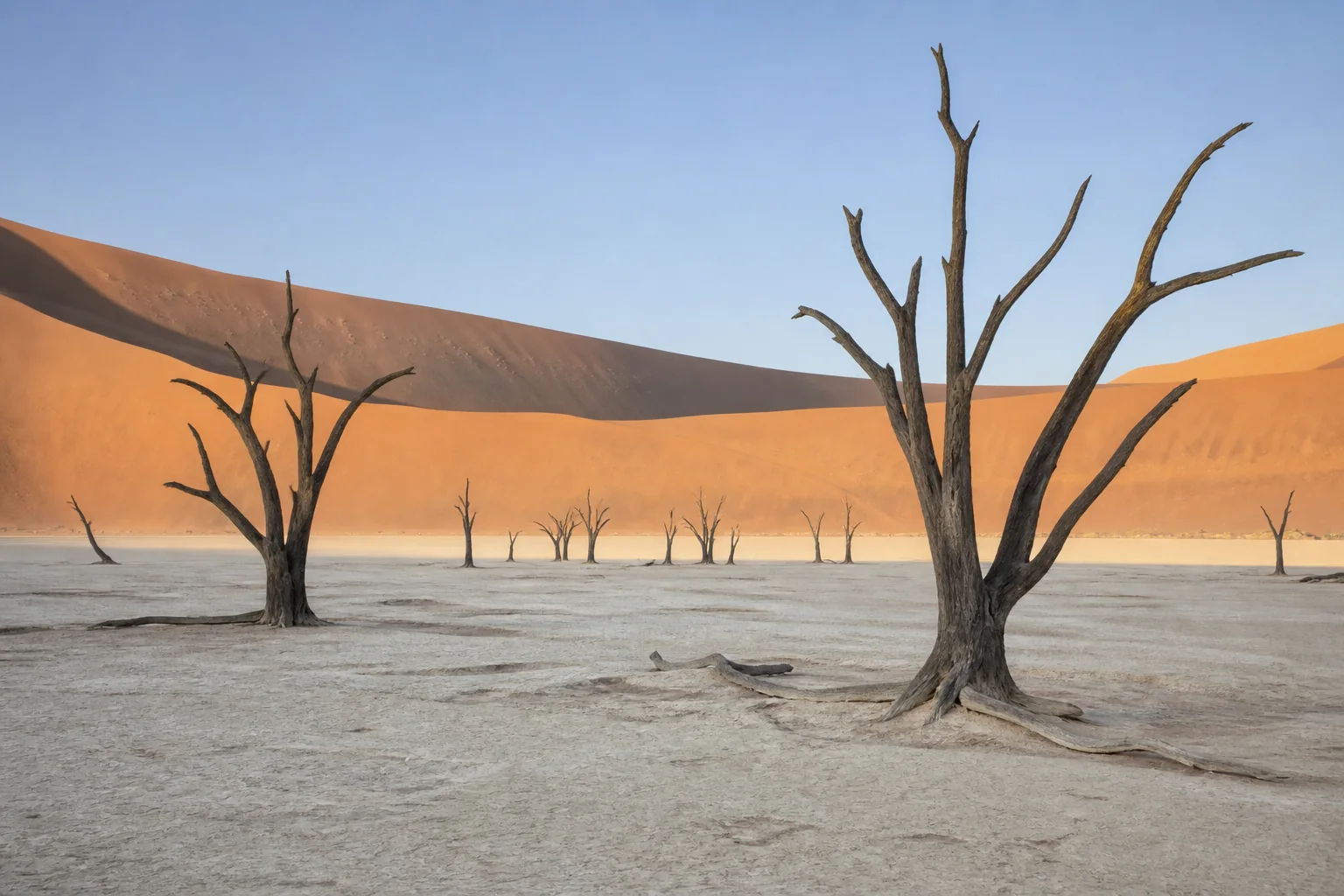
Swakopmund and Walvis Bay bring fog, cool air, urban history, lagoon and marine activities into the route. The contrast with the warm interior is physical; a wind or insulating layer suddenly matters. The coast works as a deliberate shift of tempo — more urban, culinary and operationally flexible than the remote lodge sequence.
Quad bikes, sandboarding and off-road driving can seem consequence-free on empty sand. Specialist species live in that apparent barrenness, and tracks may persist. Choose operators with defined corridors, group limits and a natural-history briefing. A slow guided desert tour may be more absorbing than speed. Luxury lies in learning to see what was invisible.
Rock, dry rivers, immense sightlines and scattered settlements require another way of looking. The region should not merely bridge coast and Etosha. Two nights allow geology, cultural history and a guided search for desert-adapted wildlife without promising a sighting. Here especially, the lodge location determines which landscape can actually be reached.
The UNESCO property Twyfelfontein or /Ui-//aes preserves an exceptional concentration of rock engravings and a long record of ritual practice among hunter-gatherer communities. It is not a quick image stop. A knowledgeable local guide explains motifs, water, movement and conservation. Footwear, heat and the visit window should fit the wider day.
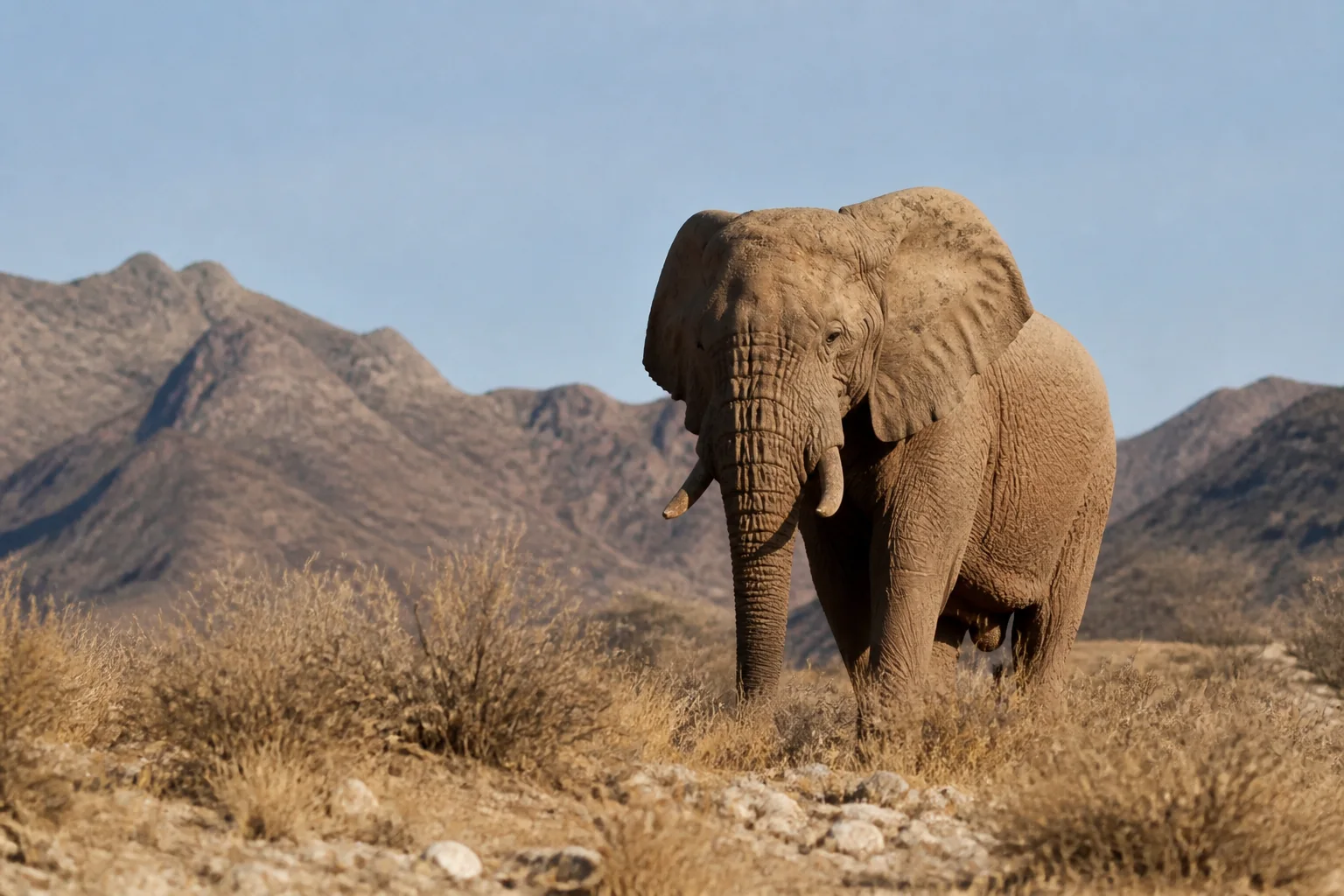
Animals move across large and variable ranges. Rain, water, food and human activity change their position. A lodge can offer skilled trackers and suitable concession access but no honest sighting contract. The day may be long and dusty. Its value also lies in tracks, river landscape and ecological interpretation, not only the final photograph.
NACSO documents Namibia's communal conservancies, where rights over natural resources and tourism income are organised. The word alone does not guarantee a fair lodge relationship. Ask about land status, contract, term, revenue share, local employment and decision body. Strong operators can name the participating conservancy and explain how money or benefit is traced.
The salt pan, waterholes and open vegetation produce a different rhythm from a private reserve. Self-drive offers freedom; a guide reads tracks, weather and behaviour. Two bases can reduce road time and reach different sectors. Gate hours, current roads, water and quiet at a waterhole matter more than adding a new target every hour.
Season, temperature, wind, time and natural water availability alter movement. A floodlit waterhole at camp may be enthralling but remains wild. Noise, flash and constant repositioning weaken the encounter. A good evening leaves room for silence and for nothing to happen. Observation becomes richer when patience replaces a checklist.
Public parks have designated roads, gates and rules; private or concession areas may permit different drives, night activity or walking. Neither is automatically superior. The park conveys scale and public protection, while a private lodge may concentrate guiding and privacy. Combine models only when the distinction adds value rather than repeating the same safari twice.
The Kalahari, Fish River Canyon, Lüderitz and Aus are not a compact extension. Distance, heat and flight or driving logic make them a separate arc. Adding the south to a northern circuit often removes the very slowness that makes it special. On a second Namibia trip it can be the stronger choice: less obligation to icons, more geological space.
Rivers, wetlands, greener vegetation and cross-border safari create a different atmosphere from the Namib and Damaraland. It should not be treated as a short appendix. Season, malaria considerations, roads and neighbouring-country combinations require their own plan. A first desert journey often leaves it aside; a traveller seeking water landscapes builds another route.
Road, vehicle and flight are part of the product
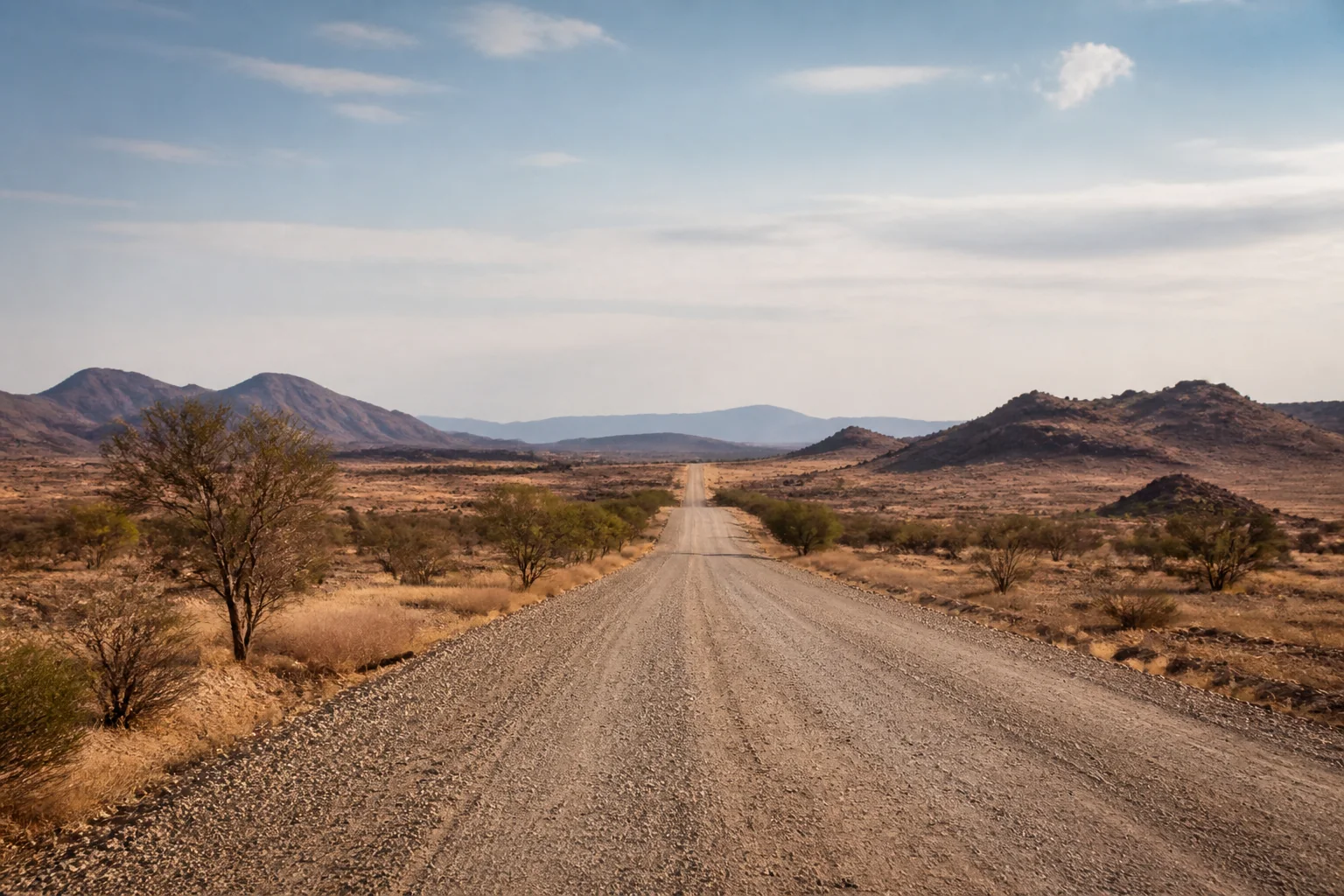
Current UK travel advice notes frequent accidents on gravel and dirt roads, highlights deterioration in the rainy season, and recommends water, current road checks and avoiding night driving outside towns. Speed must sit below what conditions allow, not merely below a posted maximum. Corrugation, loose edges and animals require both hands, distance and daylight.
High seating, robust tyres, proper spares, tools, cooling and range matter more than badge prestige. Four-wheel drive is not essential on every classic road but can add clearance and margin; specific sand sections still belong in local transfer vehicles. Confirm tyre type, spare wheels, jack, compressor and handover instruction. An inexperienced driver gains more from patience than a larger machine.
Rental policies treat glass, tyres, underbody, sand, water, single-vehicle incidents, negligence and recovery differently. UK advice warns that some cover may exclude accidents without another vehicle or animal. Read conditions before payment, photograph the car and save the emergency contact. The most expensive waiver is not necessarily the most complete.
Remote stations can change hours, lose card connection or run short. A sound route identifies realistic fuel points, avoids reaching reserve and carries another means of payment. Water, a little food and offline navigation belong in the vehicle. Security at a stop also means watching car and luggage. Logistics should feel uneventful, not heroic.
Wildlife and livestock are serious hazards beyond towns, while darkness shortens judgment. Plan arrival well before sunset and omit a photographic stop when the margin disappears. A delayed departure is not corrected by speed. A lodge would rather receive a call than wait for a risky final sprint.
Light aircraft shorten long axes and reveal geology from above. They introduce weight limits, soft bags, weather dependence and transfer windows. Flying every sector removes transitions; driving every sector may consume too much holiday. A hybrid can bridge one long connection while preserving the most expressive roads.
Light-aircraft allowances differ from international travel. Confirm weight, size and hard-case rules before booking, not at the airstrip. Camera equipment needs its own agreement. Storage in Windhoek may help. A reduced, interchangeable wardrobe suits the country anyway: dust, temperature change and lodge laundry matter more than formal dressing.
A lodge gains value through location, precision and guiding
How far is the room from the main area and vehicle Which landscape is walkable, and what requires a transfer Is the view strongest in morning or afternoon, and where does wind meet the terrace A spectacular villa may sit unused at midday. Position, shade, acoustics and access to guiding often outperform a larger private pool.
Nights can be cold, days hot and air dry. Good architecture uses thermal mass, shade, airflow and careful dust control. Ask about cooling or heat, hot water, connectivity and power arrangements without expecting an urban system. Luxury is the reliability of what matters and engineering quiet enough not to compete with the landscape.
A beautiful room is visible online; guiding quality emerges in the field. Training, local experience, language, working rhythm and flexibility for private planning matter. A strong guide interprets fog, geology, tracks, plants and current life without filling every silence. On complex routes, a private through-guide adds continuity while lodge guides contribute local depth.
A visit involving San, Damara or Himba communities should not present people as timeless scenery. Who designed the format, controls photography, group size, payment and subject Can hosts decline A worthwhile exchange includes contemporary life, interests and contradiction, not only dress or craft. Private access proves little when local agency is absent.
Namibia's conservation landscape includes national parks, communal and private conservancies, and tourism concessions. Hotel copy should identify the precise model. What land, under which right, with which partner and measurable activity Guest contribution, ordinary lease and voluntary project are different financial flows. An adviser separates them before promising conservation impact.
Pool and shower are obvious; borehole, desalination, laundry and effluent are not. Ask about source, seasonal availability, measurement, treatment and reuse. A lodge can offer comfort and operate carefully, but the balance must suit the place. A towel card is not a water plan. The decisive work is the system behind the room.
Remote lodges work with delivery cycles, cold chains and limited choice. A smaller, exact menu can be better than international breadth. Discuss allergies and specialist diets early. Wine and fresh produce need not be identical every day. Here luxury means preparation, regional connection where sensible and honest communication, not an imitation of a city in the desert.
Season and travelling party set the rhythm
Dry months, heat, rain, coastal fog and cold mornings vary by region. Etosha movement, desert colour and road conditions do not follow one national calendar. Choose timing by route and priority rather than a generic best-month table. Weather, park and road information should be checked again shortly before departure.
Light layers, a warm jacket, wind protection, closed shoes, hat, sunscreen and lip care cover more than a large wardrobe. Dust protection for cameras and compact binoculars improve the day. A head torch can help without encouraging solo night walks. Soft bags support light-aircraft sectors; neutral colours make safari easy.
The strongest frames often sit around the icon: dust in backlight, an empty road, coastal fog or marks in a dry river. A private vehicle offers position and patience but not permission to disturb. Drones, people and protected sites require rules and consent. Confirm locally what is both legal and respectful.
Long gravel days, early starts and heat affect children differently. Two- or three-night stays, pool time, flexible meals and a private vehicle improve the journey. Activity ages and room occupancy must be checked lodge by lodge. Namibia can be exceptional for families when discovery is not confused with a daily endurance test.
Private dinners, a star bed or ballooning can provide accents but remain weather- and operator-dependent. Room position, quiet, good light and free afternoons matter more. Two strong lodges and a lively coastal pause are often more romantic than six dramatic check-ins. Intimacy grows from time, not the density of extras.
Build the route before checking availability
First establish arc, nights, mobility and realistic stages. Then select lodges that fit geographically and editorially. Starting with available prestige names creates a zigzag. An adviser verifies current roads, flights, gates, luggage, vehicle, insurance, fuel and emergency contacts — while preserving enough margin for Namibia itself.
We plan Namibia as a sequence of spaces, not a collection of hotels. Desert needs morning and evening, coast a change in temperature, Damaraland context and Etosha patience. Luxury is the right guide, a dependable vehicle, a well-positioned lodge and a day that does not argue with distance. The journey improves when one unnecessary place disappears.