
Paris does not become luxurious when every famous name is compressed into three days. It becomes coherent when hotel, museum, shopping and dinner share the same geography. A Palace on rue du Faubourg Saint-Honoré tells a different Paris from a contemporary house on the Seine or a Left Bank landmark. Choose the personal orbit first; choose the suite second.
The right bank and the right palace anchor
Right and Left Bank are not cosmetic labels. North of the Seine lie Place Vendôme, Faubourg Saint-Honoré, avenue Montaigne, the Tuileries and many of the classic Palace hotels. To the south, Saint-Germain, galleries, publishing history and Le Bon Marché create a more neighbourhood-led routine. Crossing the river several times each day means experiencing Parisian traffic rather than Paris.
France's Direction générale des Entreprises defines the Palace distinction as an additional recognition available to selected five-star hotels with exceptional location, history, aesthetics, heritage and service. Eligibility is assessed and the property is visited; the designation is awarded for a fixed term. It is not a free synonym for luxury hotel. Nor does it decide which address fits your days.
Le Bristol sits at 112 rue du Faubourg Saint-Honoré in the eighth arrondissement. The official hotel profile combines couture proximity with a courtyard garden, major dining and a rooftop pool. It suits guests who want to walk to galleries or boutiques, then retreat to a residential grand-hotel atmosphere. It is less immediate for repeated Marais or late Left Bank plans.
Ritz Paris occupies 15 Place Vendôme, surrounded by high jewellery and close to the Opéra, Tuileries and rue Saint-Honoré. Here the hotel is part of the programme: historic rooms, bars, spa and a particular social theatre. A guest out from breakfast until midnight is barely using what makes it distinctive. Set aside time inside, or choose a more functional base.
Le Meurice at 228 rue de Rivoli faces the Tuileries axis and sits naturally with the Louvre and first-arrondissement culture. Its official narrative emphasises art, historic splendour and contemporary dining. It works for travellers who want an early garden walk, a tightly edited museum visit and a short return to their room rather than another drive across town.
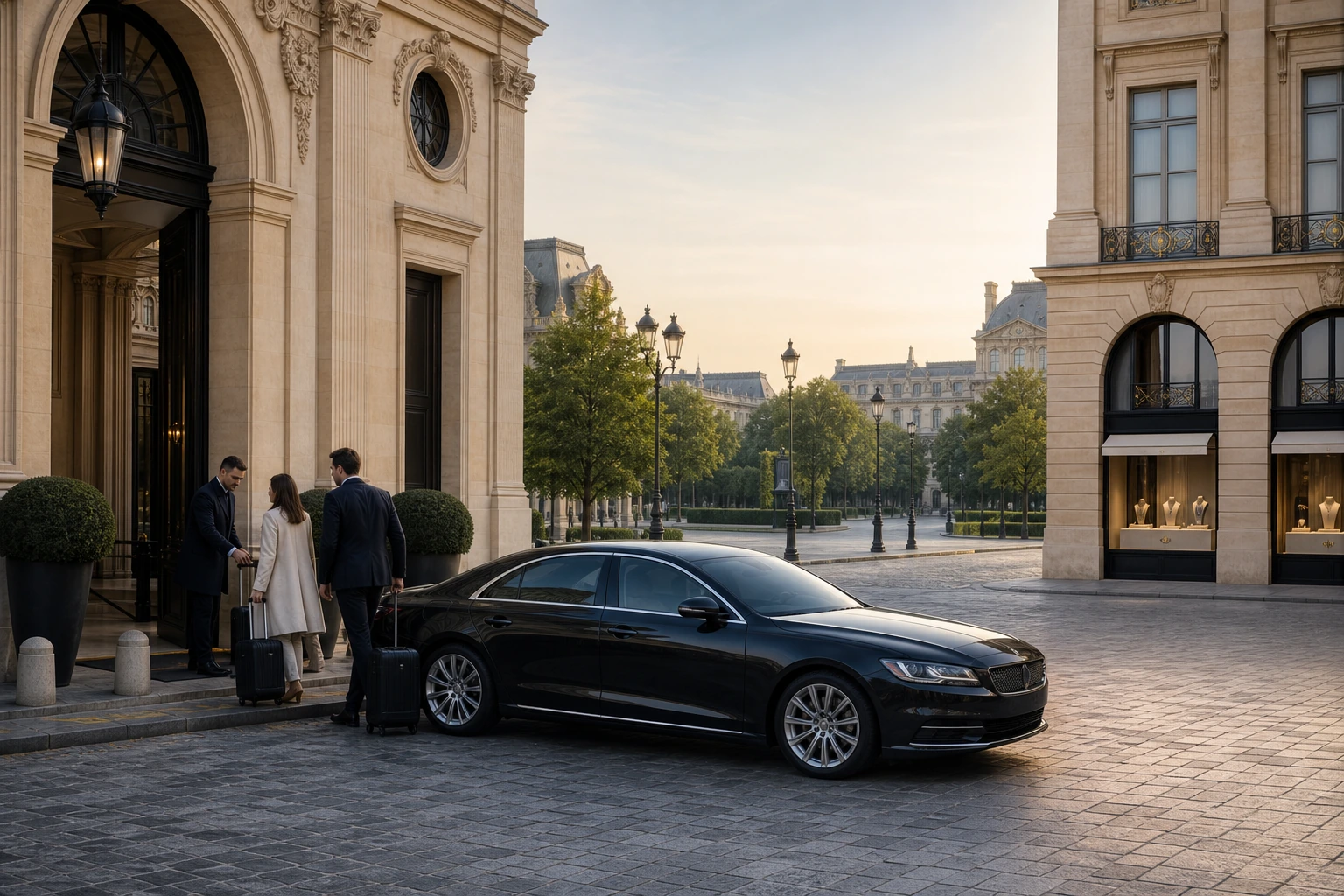
Cheval Blanc Paris occupies the restored fabric of La Samaritaine beside the Seine. Pont Neuf connects the Louvre, Les Halles, the Marais and the Left Bank unusually well. The experience is more contemporary and compact than the traditional grand hotels. It is a compelling choice when views, spa and the urban centre matter more than immediate access to avenue Montaigne.
Mandarin Oriental Lutetia belongs to the Left Bank and Saint-Germain-des-Prés. Its current accommodation pages include balcony and Eiffel-view rooms as well as genuine connecting and family configurations. It suits galleries, books, Le Bon Marché and neighbourhood walking. Guests with daily couture appointments north of the river will accept more transfers in exchange for a different Paris outside the door.
Hôtel Plaza Athénée and Four Seasons Hotel George V inhabit the orbit of avenue Montaigne, avenue George V and the Champs-Élysées. This base supports couture, business meetings, destination dining and polished arrivals. It is less efficient if the Louvre, Marais and Saint-Germain dominate every day. A driver manages distance; it cannot return the time spent travelling between opposite edges.
Location, room position and usable balcony
A celebrated address is not necessarily central to your itinerary. Mark the three non-negotiable places and the restaurants that matter. If two sit within one walkable radius, the hotel should probably anchor that area. Removing an outward and return transfer creates a pause, change of clothes, spa hour or unplanned walk. That time often exceeds the value of a larger suite in the wrong district.
Deluxe, Prestige and Junior Suite reveal little about peace, light or outlook. Ask about courtyard versus street, floor, window, usable balcony, connecting door, lift position and renovation phase. An Eiffel view may be oblique, distant or visible only from one corner. A courtyard can offer beautiful calm. The exact room position is more useful than the generic category ladder.
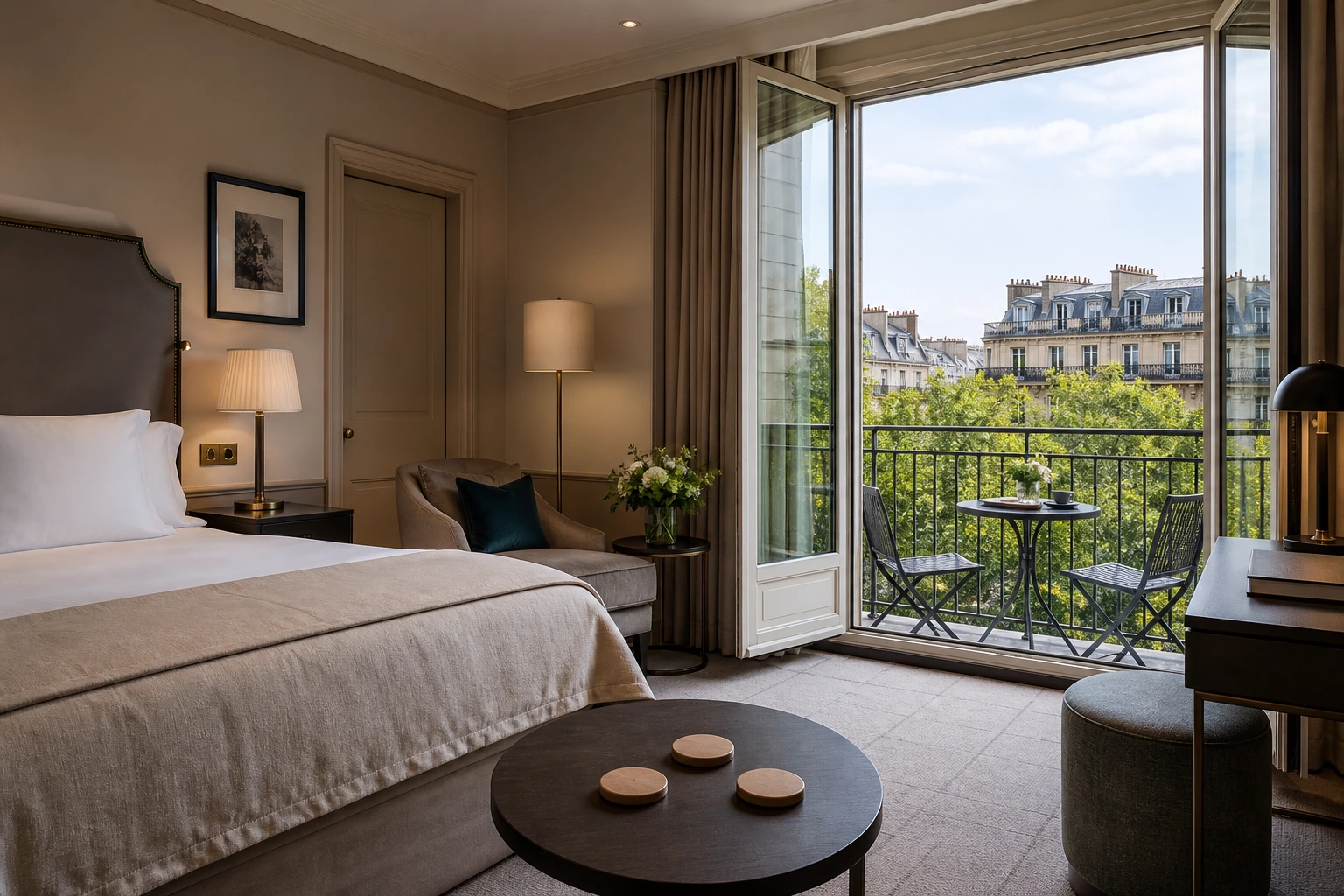
French windows, a narrow step-out and a furnished terrace are easily confused online. If breakfast or an evening drink outside matters, confirm dimensions, furniture and restrictions. Wind, street noise and seasonal arrangements also shape its value. Request imagery from the booked category and written confirmation that the exterior space can actually be occupied.
Organise shopping by object, not logo
Avenue Montaigne concentrates couture and major fashion houses; rue du Faubourg Saint-Honoré mixes fashion, art and discreet addresses; Place Vendôme is high jewellery; Saint-Germain brings design, galleries and smaller discoveries. Paris's official tourism office treats these as separate luxury-shopping districts. Trying to collect all of them in one day produces bags, traffic and decision fatigue.
An appointment can improve selection, language, fitting-room time and privacy. It cannot promise scarce merchandise or a meaningful encounter without a clear brief. Share size, brands, occasion and budget range beforehand. Jewellery may involve identity, security and insurance questions. A strong shopping advisor offers alternatives and knows when to stop rather than turning access into pressure.
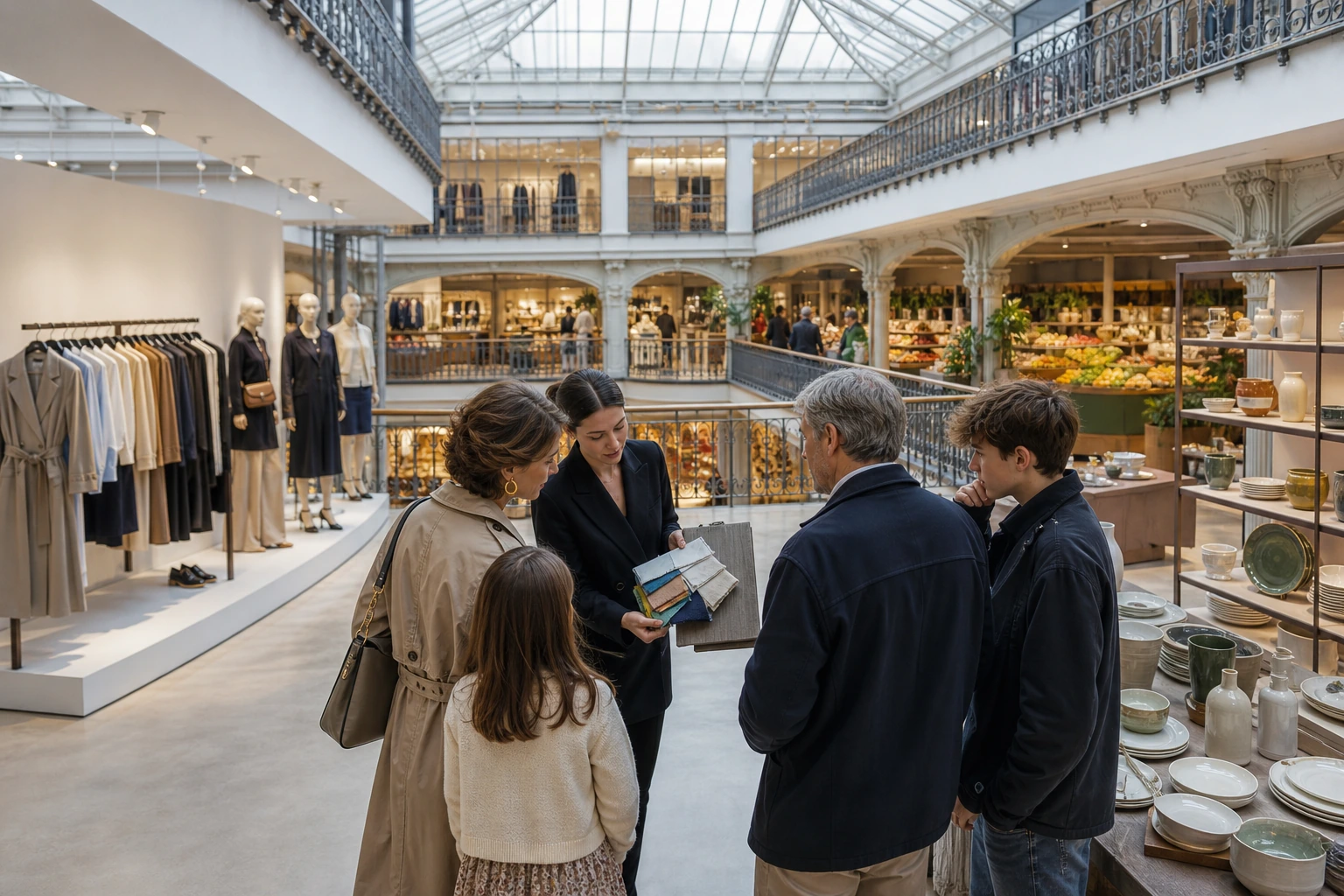
For Left Bank guests, the department store brings fashion, design, beauty and La Grande Épicerie into one coherent radius. It does not replace couture appointments on avenue Montaigne, but it offers breadth and easier logistics for families or mixed interests. Pair it with Saint-Germain and a considered lunch for a complete day that never needs to cross the river.
Cheval Blanc's position within La Samaritaine makes shopping, the Seine and central culture unusually compact. Couples moving at different speeds can separate and meet without complex logistics. Yet travellers looking for independent galleries and neighbourhood texture should leave the building. Convenience is valuable when it supports Paris, not when it becomes a substitute for the city.
Museums need selection and a point of view
The Louvre is currently open every day except Tuesday, with later evenings listed on Wednesday and Friday. Timed tickets are recommended, and reservations were compulsory for all visitors during summer 2026. Recheck conditions for every trip. Once inside, select two or three collection priorities rather than attempt to defeat the building's scale.
The best guide does more than shorten a queue. Ask about academic or curatorial focus, language, pace and the intended narrative. A first visit might follow antiquity, the Renaissance or French statecraft; a collector may want provenance and market context. “Skip the line” is a logistical feature. Intellectual fit is the luxury.
Musée d'Orsay is currently closed on Mondays and stays open late on Thursdays. An evening visit preserves daylight for Saint-Germain, the Seine or shopping. Its collection still deserves selection—perhaps one period, group of artists and the architecture of the former station. Louvre and Orsay on the same day turn culture into an endurance test.
The Orangerie, Musée Rodin, Palais Galliera, Bourse de Commerce or a well-chosen gallery exhibition can resonate more than a second major museum. Decide through interest, temporary programme and district. Opening days, renovation and ticketing change, so research the exact date. Small does not guarantee empty; it allows a more precise composition.
Attention shifts after two concentrated hours. Follow the visit with lunch and a walk that carries its atmosphere: the Tuileries after the Louvre, the river or Saint-Germain after Orsay. A second cultural moment might be an atelier, architecture walk or music. Counting venues is not the same as acquiring cultural depth.
Dining, the Seine and movement follow daily geography
A famous restaurant on the opposite bank can demand two hours of transfer and contingency. At lunch, let cuisine support the route; at dinner, the restaurant may become the destination. Reserve against a realistic museum finish and communicate allergies. A long tasting menu every day underestimates how much energy Paris already asks of a visitor.
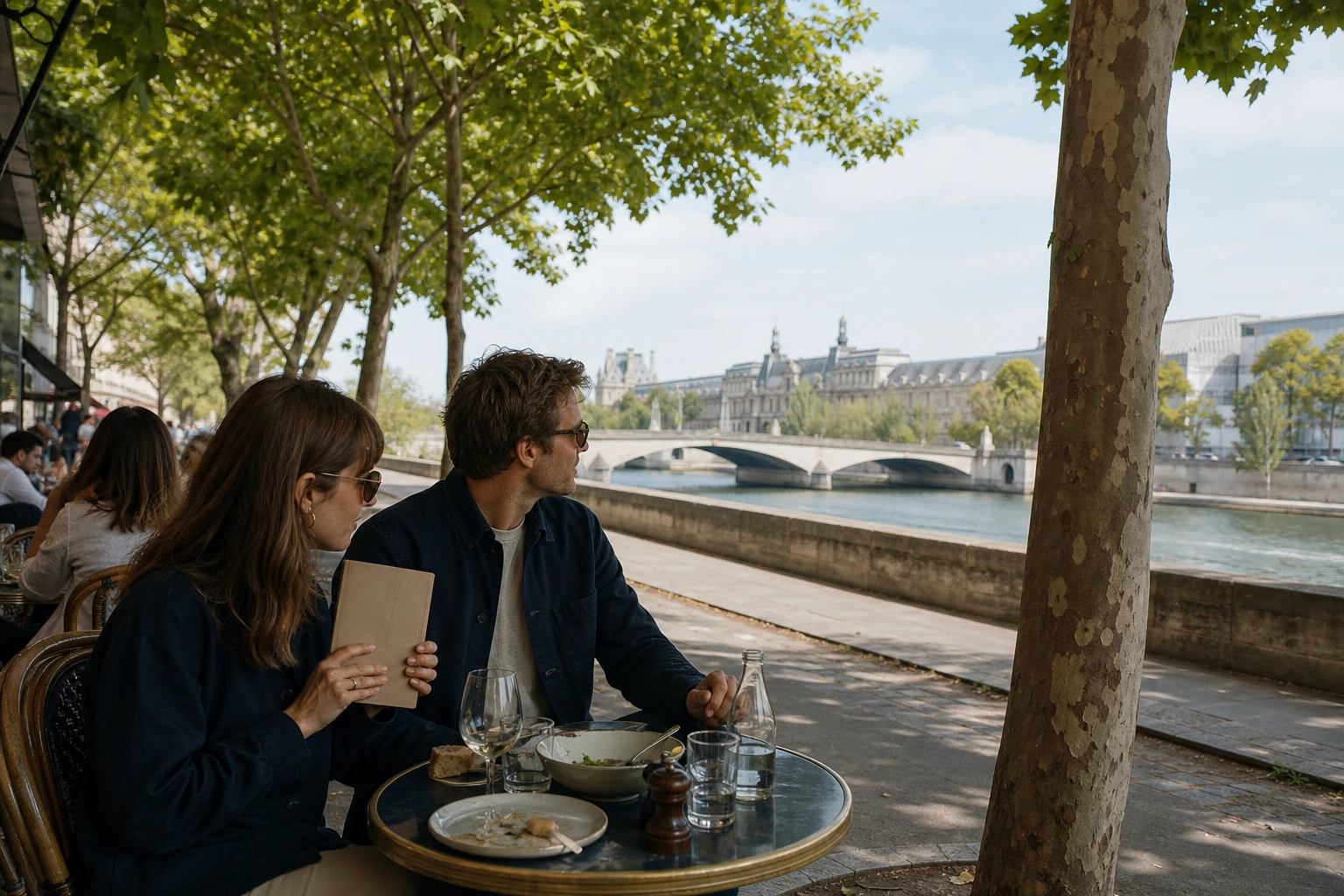
A hotel booking does not automatically secure the desired restaurant, bar table or chef's experience. Le Bristol, Ritz, Le Meurice and Cheval Blanc each have dining with independent demand. Concierges and advisors coordinate but cannot manufacture capacity. Choose one or two important nights early and leave another evening deliberately open.
A private boat can make the city's axes, light and transitions beautifully legible. Confirm vessel, covered space, pier, duration, commentary language and poor-weather policy. A heavy dinner often competes with the view; one excellent drink may be enough. The cruise should carry the day toward the hotel or evening, not create another circular transfer.
A car is valuable for airports, evening clothes, shopping bags and transitions with little margin. In central Paris, congestion, restrictions and difficult drop-offs can make it slower than walking or the Métro. Plan precise set-down points and short pedestrian axes. A vehicle waiting all day is not inherently more elegant than one deployed at the right moments.
Eurostar, Charles de Gaulle, Orly and private aviation create different traffic and energy. An early rail arrival may support lunch and an easy neighbourhood walk; after an overnight flight, a major museum is rarely kind. Luggage, early room access and a salon or spa option should be settled before arrival. Day one should open Paris rather than demand performance.
Calendar, duration and deliberate omission
Fashion weeks and major events increase hotel pressure, traffic and restaurant demand. Some guests want exactly that energy; others need discretion and calm. State the preference. Sunday and holiday opening varies, while individual restaurants often close in summer. Current dates are more reliable than any general claim about the best season.
Three nights can hold one bank, one major museum, one shopping axis and two excellent evenings. Four allow a second district without haste. Five create space for ateliers, Versailles or genuine rest. A short trip that crosses the river repeatedly collects names. A trip that accepts one radius begins to form a relationship with the city.
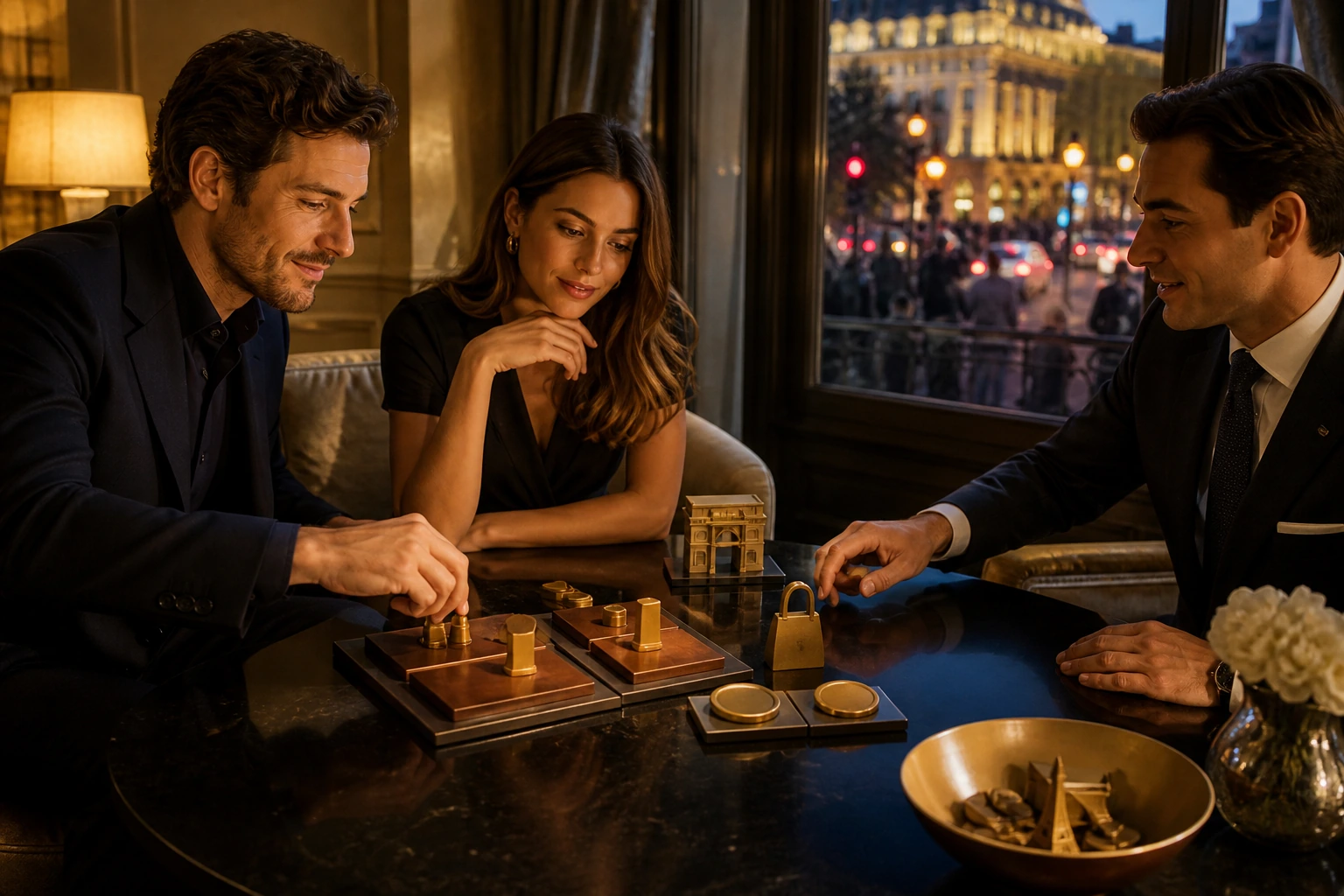
Keep arrival day around the hotel: settle, walk, attend one precise appointment and dine early. Give the second day to the main museum, nearby lunch and a free return window. Let day three combine the priority shopping district with one smaller cultural stop and a major dinner. Closure days—not a rigid template—determine the order.
Connecting rooms, internal doors, breakfast, pool hours and proximity to a garden matter more than bar mythology. Mandarin Oriental Lutetia explicitly lists family rooms and suites with connecting accommodation; other hotels have configurations that need exact confirmation. A courtyard garden or the Tuileries within easy reach may improve family life more than a grander lobby.
Share duration, occasion, preferred bank, three priorities, shopping categories, art interests, evening rhythm, desired outlook, balcony need and willingness to walk. Add arrival, luggage, dietary requirements and discretion. With this, we compare two or three hotels whose location and service reinforce one Paris plan, rather than presenting a meaningless top-ten list.
We begin with one radius and one cultural focus, then place the Palace, room position, shopping and restaurants around them. Leaving out a famous site is not a failure if it allows a museum to be understood, lunch to be enjoyed and the hotel to be experienced. Luxury in Paris is not access to everything. It is the calm of not missing what matters.