
Private safari
A private safari does not buy wildlife or a perfect scene. It buys time: the freedom to wait when something acquires meaning and to move when curiosity lies elsewhere.
Privacy buys rhythm, not freedom from rules
The Serengeti is not a private game reserve and the migration is not a scheduled performance. Rain, grass, water and instinct move animals through a vast ecosystem. Park rules, roads, viewing zones and the guide's judgement still govern the most exclusive vehicle.
Quality comes from travelling more intelligently within those boundaries, not from attempting to defeat them.
In a shared vehicle, breakfast, departure, sightings and return are negotiated. In a private one, the party chooses an early start, a long wait with one animal or a quiet midday at camp. That freedom has particular value for photographers, families and guests who prefer patient observation.
Each lodge may provide an exclusive vehicle for its own stay. A guide who accompanies the whole itinerary learns the guests' interests, pace and communication. A fully private camp extends exclusivity to accommodation and service. A proposal should name these layers separately.
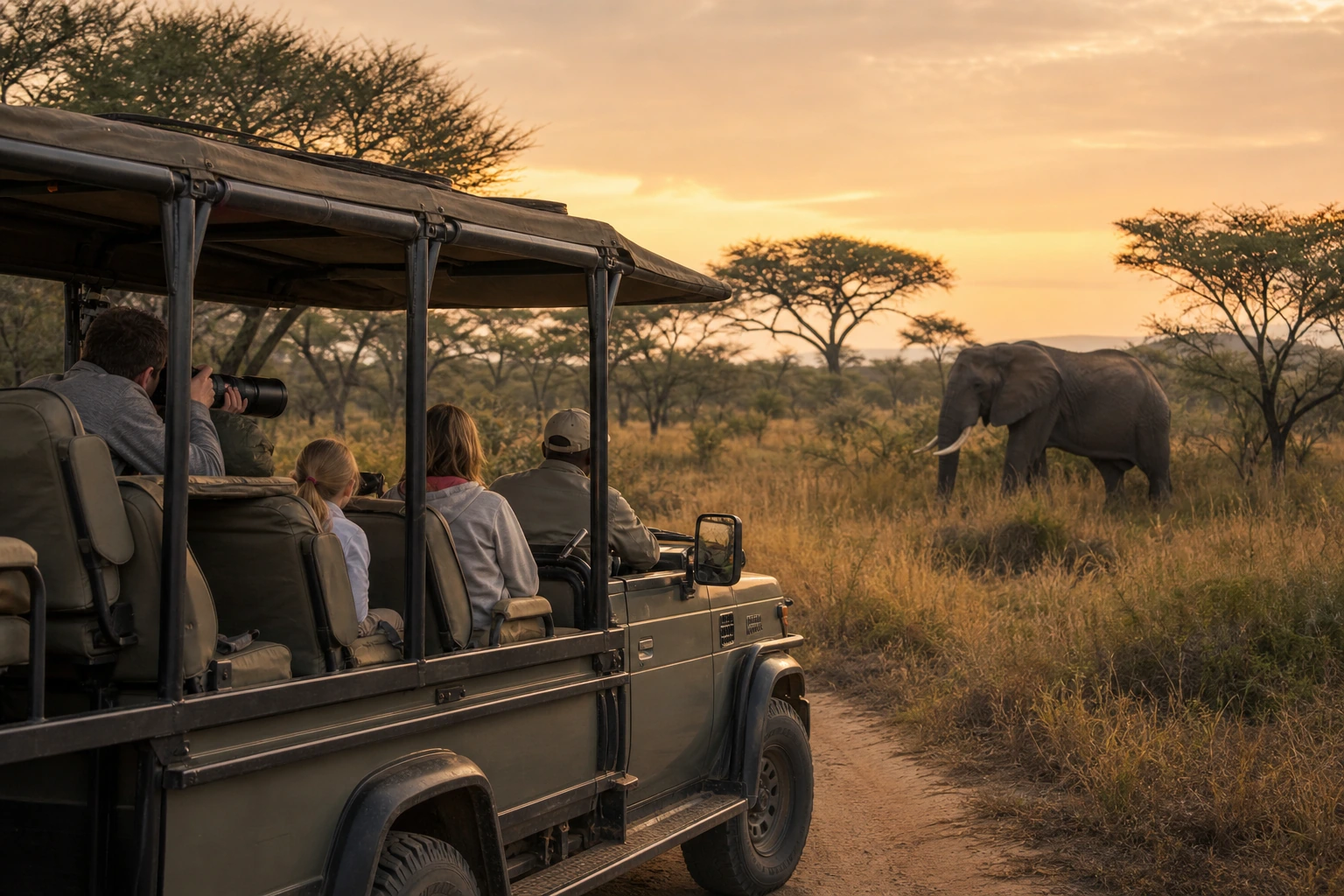
A guide reads tracks, weather, radio traffic and behaviour. More importantly, the best know when an animal needs distance and when a sighting has ceased to reveal anything. They do not manufacture a checklist; they build understanding between landscape, ecology and people.
After several days, one guide knows that a guest prefers birds to a third lion, that a child fades after lunch and which lens needs space. Changing camp no longer means starting again. &Beyond's example of a private guide throughout an overland route illustrates a different product from separate lodge vehicles.
Season and animal movement remain dynamic
Travellers hoping for large herds need a different design from those interested in predators, birds, landscape or fewer vehicles. “Best time” is too blunt. Ask which ecological state and level of visitor density suit the person travelling.
UNESCO describes the annual movement of vast herbivore herds and their predators as one of the ecosystem's defining natural events. Its precise course does not follow a hotel calendar. Rain may move animals earlier, later or differently. A responsible proposal works with probability and alternatives, never guarantees.
Herds may wait for hours or days, retreat or cross elsewhere. Vehicles collect at known points. Building an entire safari around that instant risks traffic and little observation. A better day remains available to what the landscape actually offers.
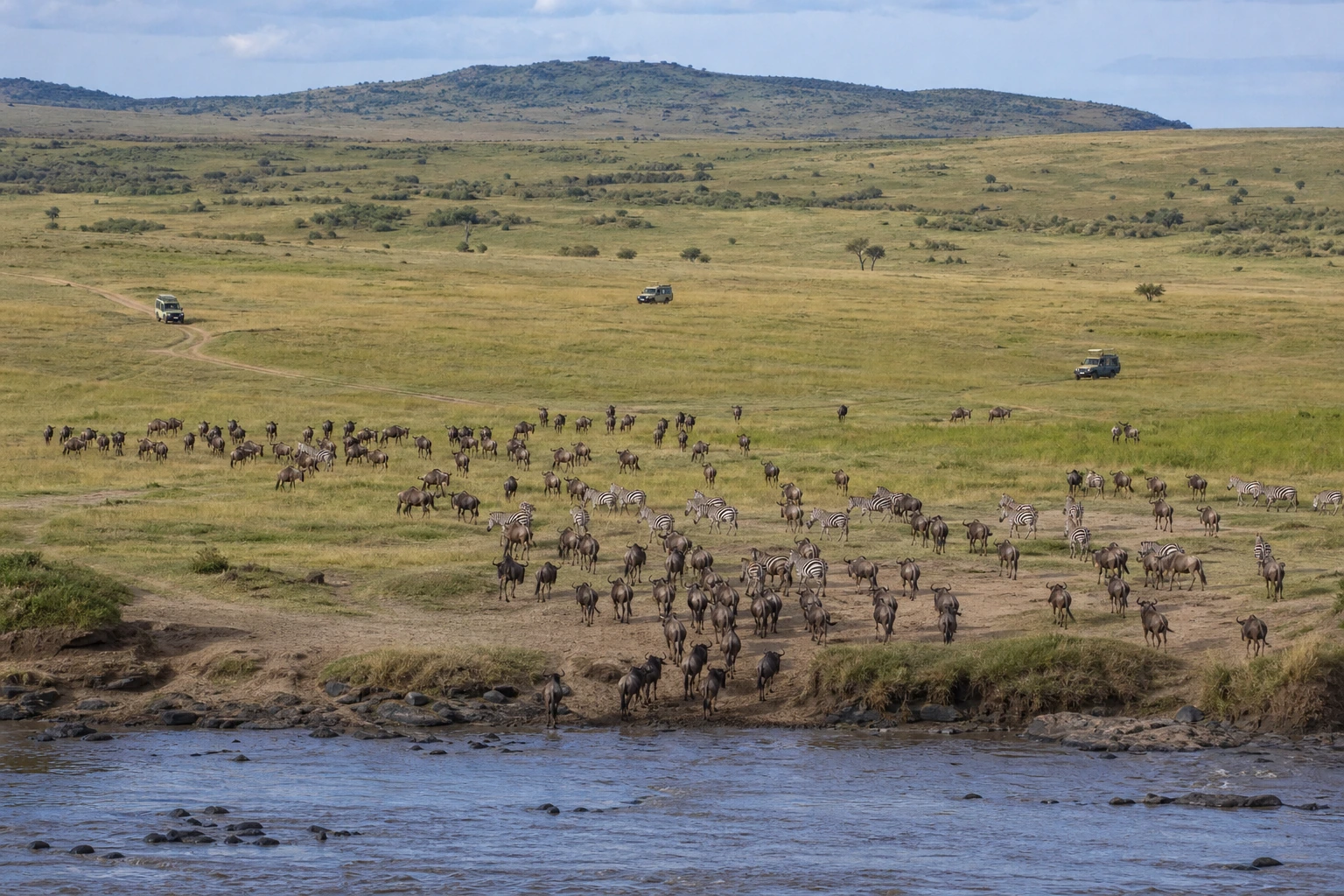
Not every encounter depends on migrating wildebeest. Many areas support resident predators, antelope, elephants and abundant birds. An itinerary that understands this web remains compelling after the great herds have moved on.
Two excellent camps can generate very different safari days in the same week. Distance from habitat, road network, rivers, airstrip and other vehicles determines useful observation time. A beautiful tent is poor compensation for two hours of transfer each morning.
Seasonal camps relocate to serve particular regions sensibly. They do not move every day or sit beside every animal. Position, opening date, access and comfort vary. “Mobile” does not mean an improvised pursuit.
Every camp change brings packing, an airstrip, waiting, flying and a new orientation. Two deep stays may reveal more behaviour and landscape than four celebrated addresses. Luxury is the morning that need not be cut short for an eleven o'clock flight.
The crater is not a quiet appendix to the Serengeti. Gate windows, descent, traffic and concentrated vehicles shape the day. The Ngorongoro authority requires licensed guide accompaniment. A private vehicle offers pace without removing the rules.
Vehicle, sightlines and conservation rules
TANAPA asks visitors to observe respectfully, keep noise low and follow guides. Roads and viewing restrictions differ by area. Exclusivity must never be interpreted as permission to drive closer, pressure animals or secure a position at any cost.
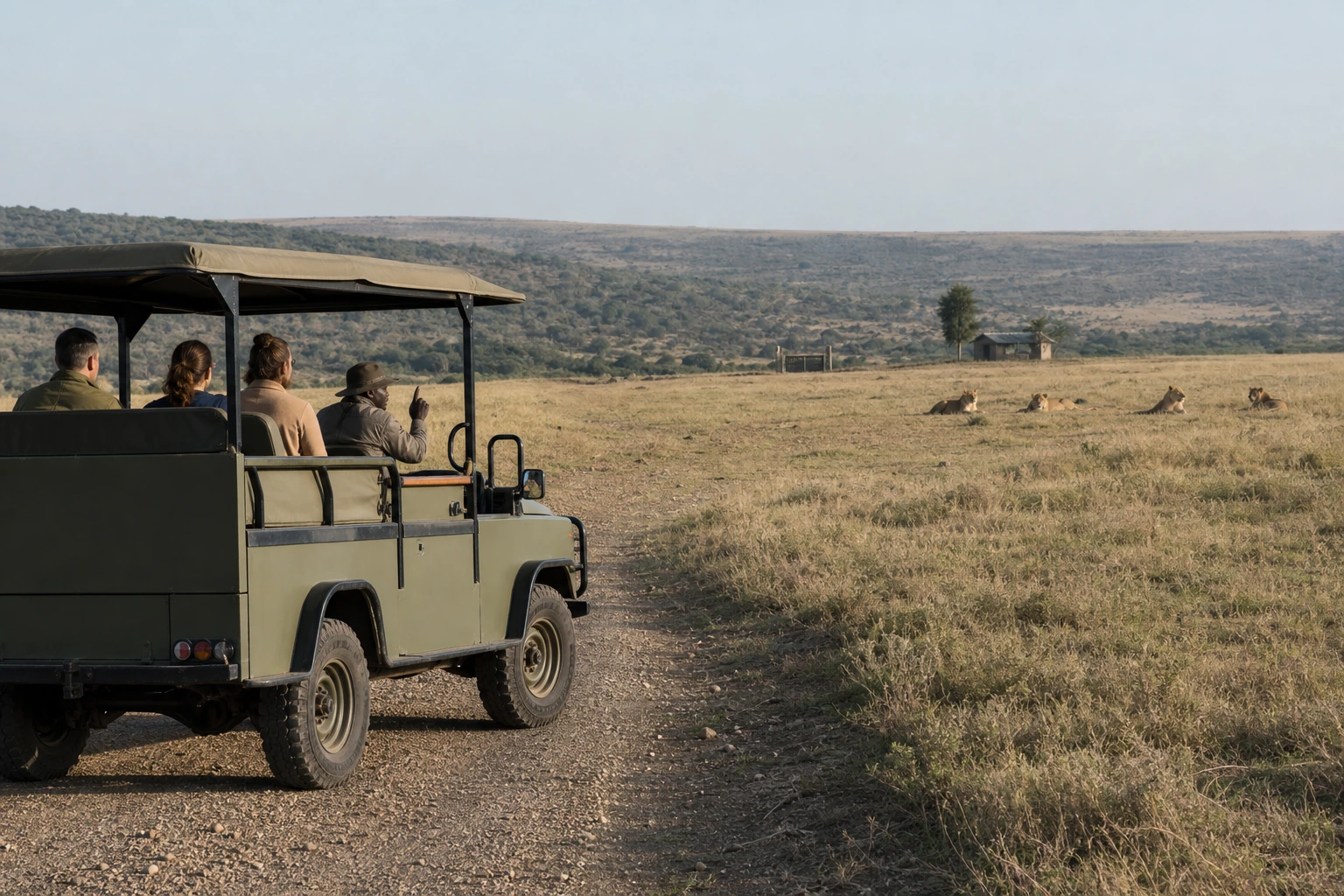
Seating, windows, roof opening, suspension, charging, dust protection, refrigeration and storage shape ten hours more than leather trim. Photographers need room for long lenses and stable supports; families need secure seats and easy entry. Confirm the exact configuration.
A vehicle may officially seat six and offer only four persuasive photographic positions. A compact layout keeps a couple close to the guide; a thoughtful family arrangement prevents a daily argument. Capacity and comfort are different measures.
Solo travellers and sociable couples may enjoy an excellent guide and other curious guests. Privacy earns its cost when pace, children, photography, physical needs or interests diverge. It should be a deliberate freedom, not an automatic luxury upgrade.
Flying saves road time, not complexity
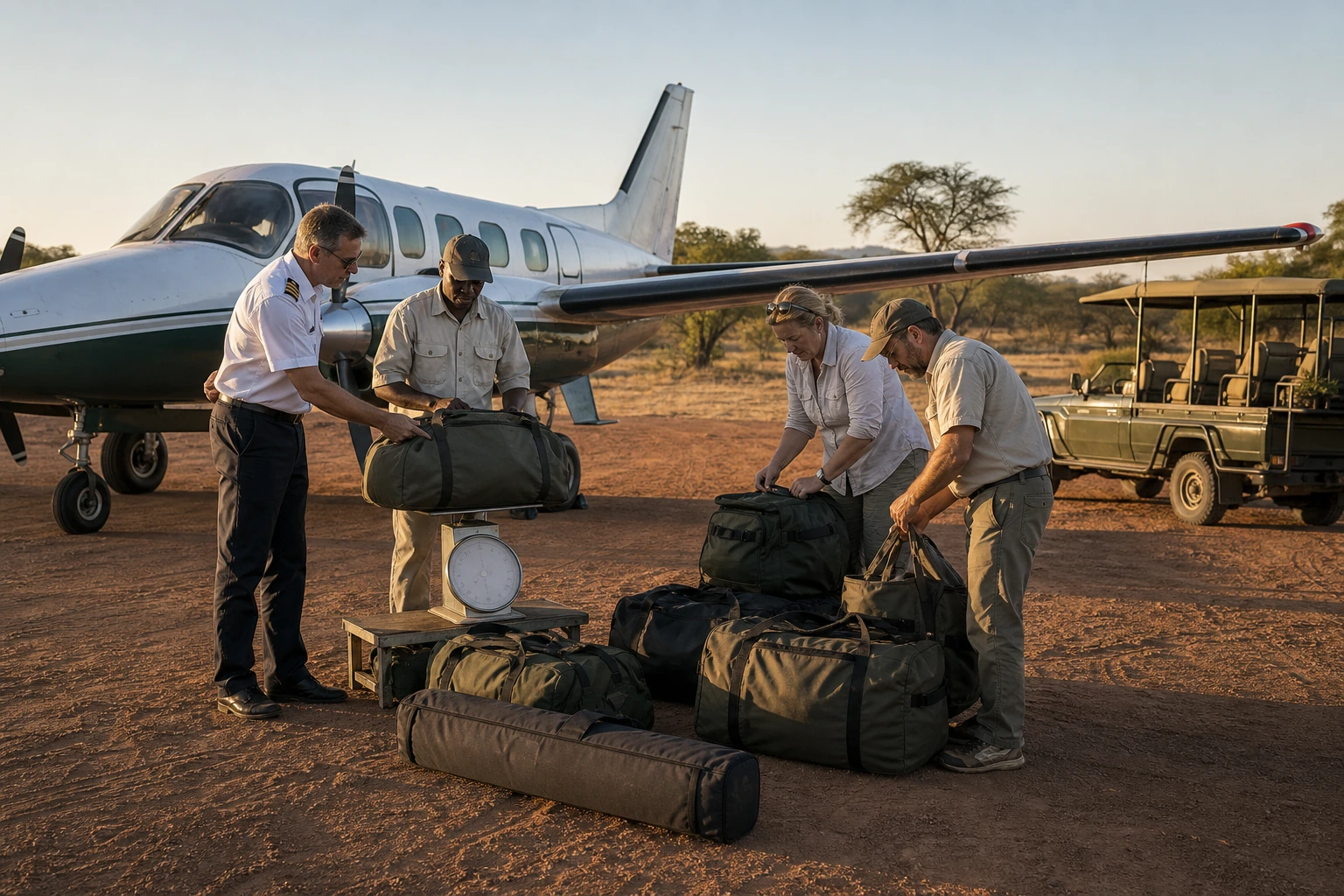
Light aircraft connect distant regions elegantly, but operate through bush strips, carry other passengers and follow weather and logistics. A stated flight may make several stops. Departure times affect game drives; a short distance can consume half a day.
Coastal Aviation currently publishes a total allowance and strongly recommends soft bags. Other carriers have their own rules. Camera equipment may count within the total. Travellers carrying long lenses need a written solution before booking, not at the airstrip.
Early morning and late afternoon are valuable field hours. A poorly placed transfer can remove both twice. Evaluate flights by their effect on observation, not only their geographical efficiency.
Photographers wait longer, move less and think in light, background and position. Beanbags, power, storage and direction of sun become central. A partner without a camera still needs comfort and a view; good design keeps both inside the same experience.
Family, walking safari, health and fees
A private vehicle allows later starts, shorter drives and pauses. It does not replace age rules for walking, balloons, individual camps or other activities. Children belong in the design as travellers with their own sleep, food, attention and safety needs.
Area, concession, age, fitness, armed accompaniment and permission determine whether and how guests walk. Its fascination lies in small things—wind, plants, tracks and distance. Any promise of close big-game encounters misunderstands the format.
Malaria risk, vaccinations, heat, dust, medication, fitness to fly and evacuation cover must be discussed with qualified medical professionals and current official advice. Camps can explain logistics; they cannot replace personal travel-medicine guidance.
Park, concession and conservation charges should appear transparently. Their level and structure change. Good planning identifies what is included, which fee is assessed per guest, night, vehicle or activity and how local conservation and community programmes are described.
What must never be guaranteed
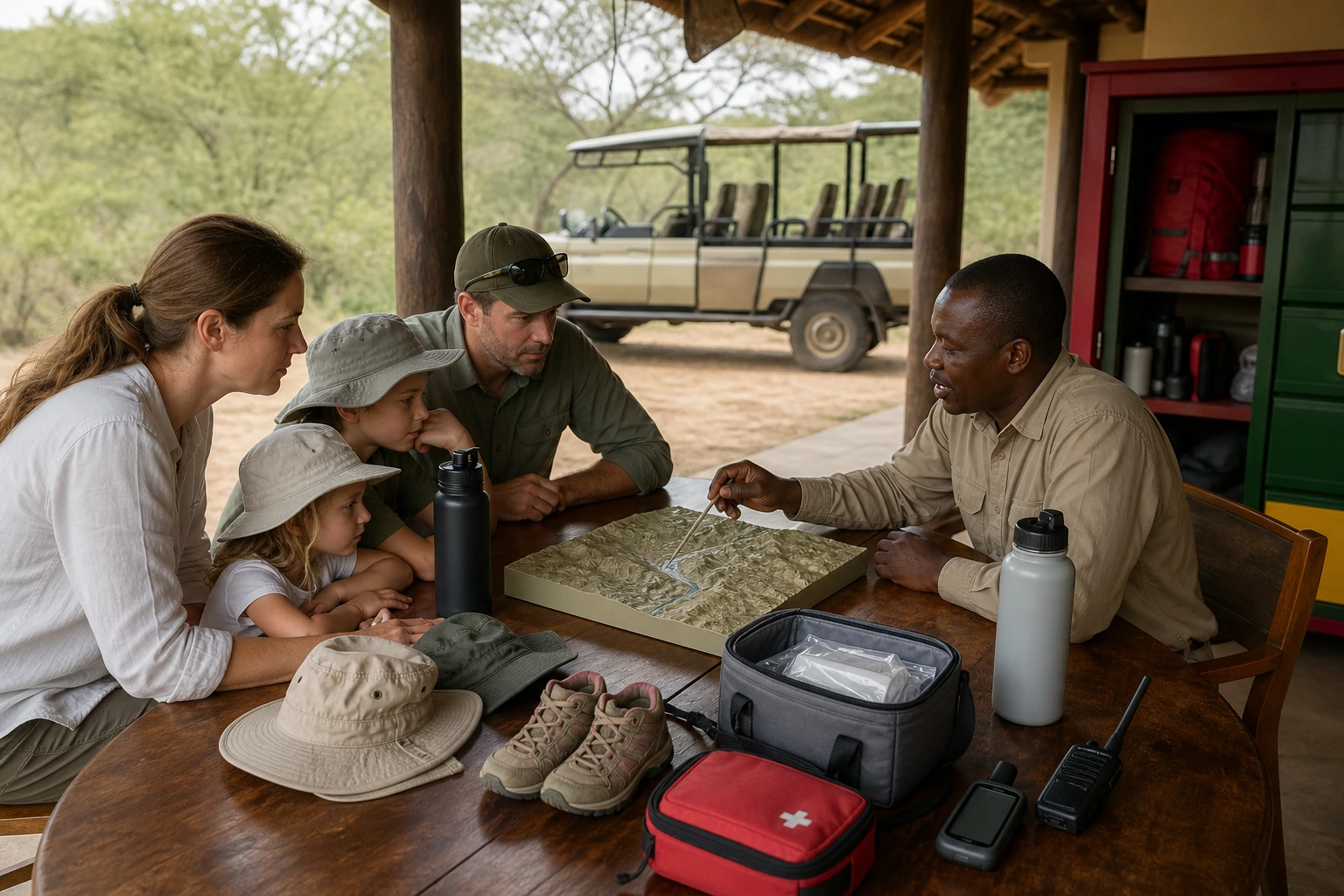
Migration location, crossing, hunt, birth, species, distance, weather and sighting remain uncertain. A good vehicle, qualified guide, realistic camp position, sufficient time and clear logistics can be guaranteed—along with a journey that still has meaning without the famous image.
Why is this camp well placed for these dates Do guide and vehicle remain with us How many complete field days survive the flights Which seats and baggage rules apply What makes the route strong if the expected herd is elsewhere
It promises no animal. It names areas, dates, drives, flights, airstrips, camp openings, guide model, vehicle, baggage, fees, child and activity rules, medical planning and weather alternatives. It also preserves unallocated time.
We do not begin with the most famous lodge, but with the way a guest hopes to observe. Region, depth, guide and vehicle follow. The suite comes later—important for recovery, never a substitute for the right position in the ecosystem.
A private vehicle gives guests the rare option not to move on. Perhaps nothing appears to happen for an hour, until a glance, a call or a shift changes the landscape. Here, uncompromised travel means not more control, but greater attention.