
The image begins long before the shutter
The finest camera is of little use when nine guests compete for one opening or the camp reaches the habitat after first light. A strong photographic safari is designed as a system: ecosystem, season, guide, vehicle, light and equipment the traveller can genuinely master.
Photography starts with the ecosystem
Open plain, dense mopane, flood country and forest create different distances, backgrounds and light. The desired image should select the area before it selects the lens.
Migration, predator action and rare species remain wild. Planning can improve time and probability, but must never treat nature as a commissioned production.
Dust and clarity, green grass, charged skies, young animals or high water tell different stories. Best time is meaningless until the photographic intention is defined.
Camp location is often measured in minutes
Distance from productive habitat, gate hours, river crossings and traversing rights determine whether first light is spent in the field or on an access track.
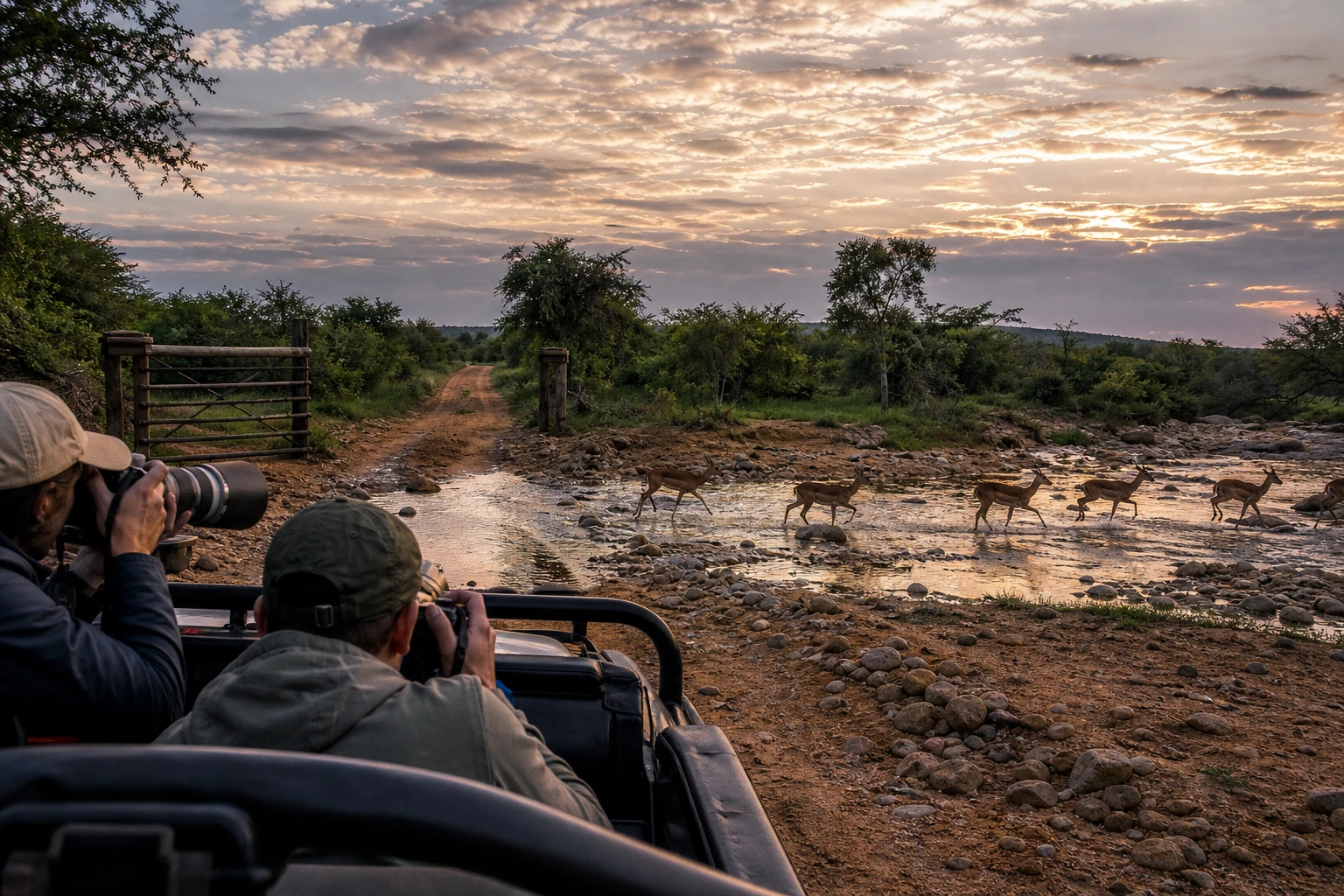
The guide needs visual intelligence
They understand light direction, background, eye level, focal length and patience without pressuring wildlife. Species knowledge alone does not make the strongest photographic guide.
Open side, roof hatch, seat height, door frame and wheelbase alter viewpoint and stability. Confirm the actual model, configuration and maximum operating occupancy before booking.
Three rows may provide six usable outside positions or only two clean sight lines. Rotation, roof supports and the ability to change side belong in the written detail.
A private vehicle buys time, not animals
It permits a long wait, an early return or attention to one behaviour without conflicting interests. Sightings and preferred positions remain unguaranteed.
On a door, frame or roof it creates a quick, low and stable rest. Tripod and monopod work only when floor, space and seating genuinely accommodate them.
A wide-to-medium range on one body and longer telephoto on the other reduce lens changes. Weight, common controls and cabin allowance must justify the advantage.
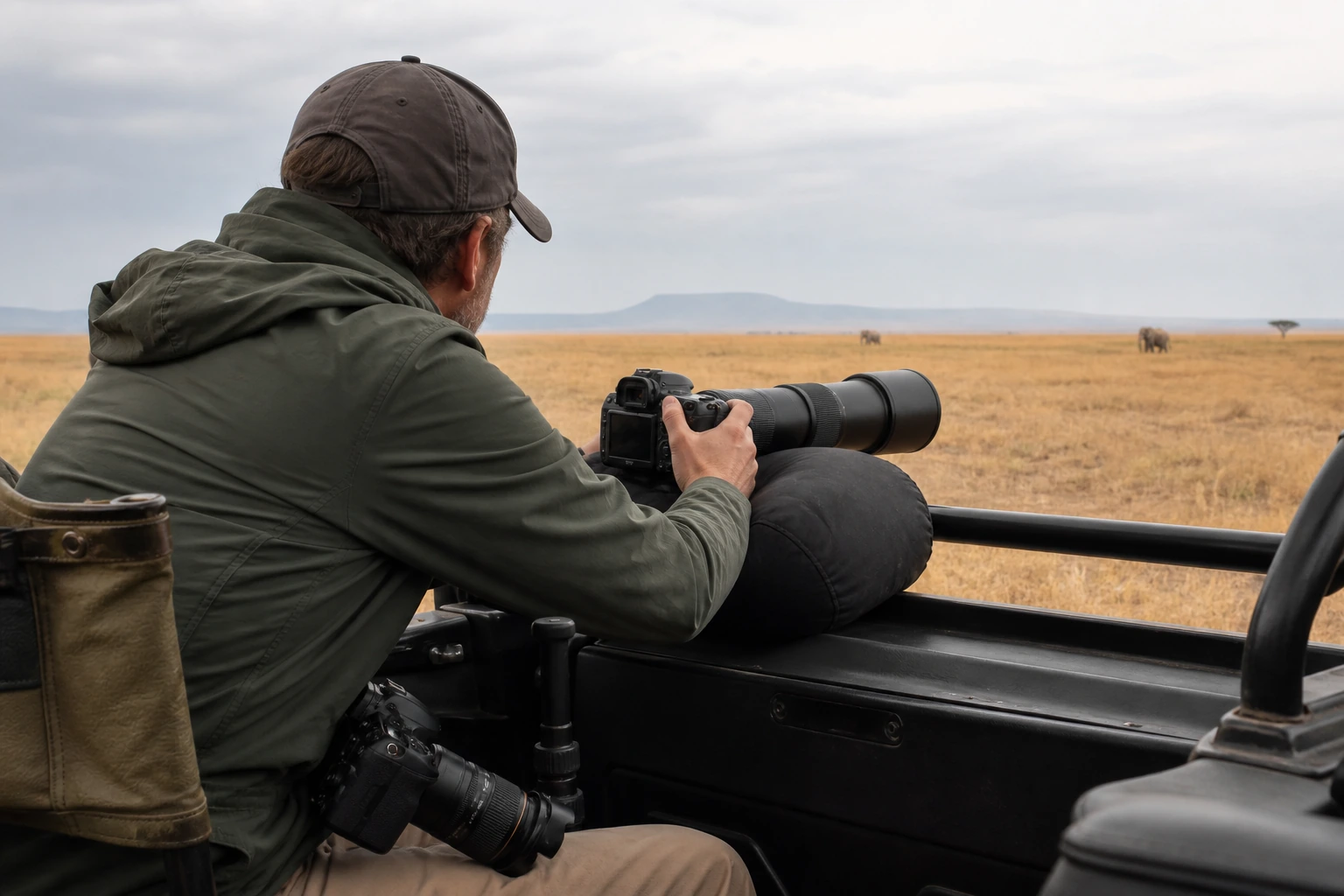
Extreme reach isolates beautifully but compromises orientation, weight and subject changes. A flexible telephoto zoom is often more productive than maximum length at any cost.
Animal within habitat, vehicle track, sky and herd create context. Tight portraits alone can make very different ecosystems look like the same sequence.
A second focal range shows place
A wide aperture helps at dawn and separates backgrounds, yet adds weight and handling demands. The best optic can be moved safely and held steadily for hours.
A bird's launch, direction of gaze and interaction become easier to predict when behaviour is read. Technology reacts quickly; the photographer still decides what movement to expect.
Aperture and speed need balance
Battery, card, clock, lens, exposure and quiet mode are checked the night before. At first light, searching a menu costs more than a slightly imperfect shutter speed.
Dust, breath, fur and grass ignite when vehicle and subject align. Insisting on frontal light alone discards part of the atmosphere of the plains.
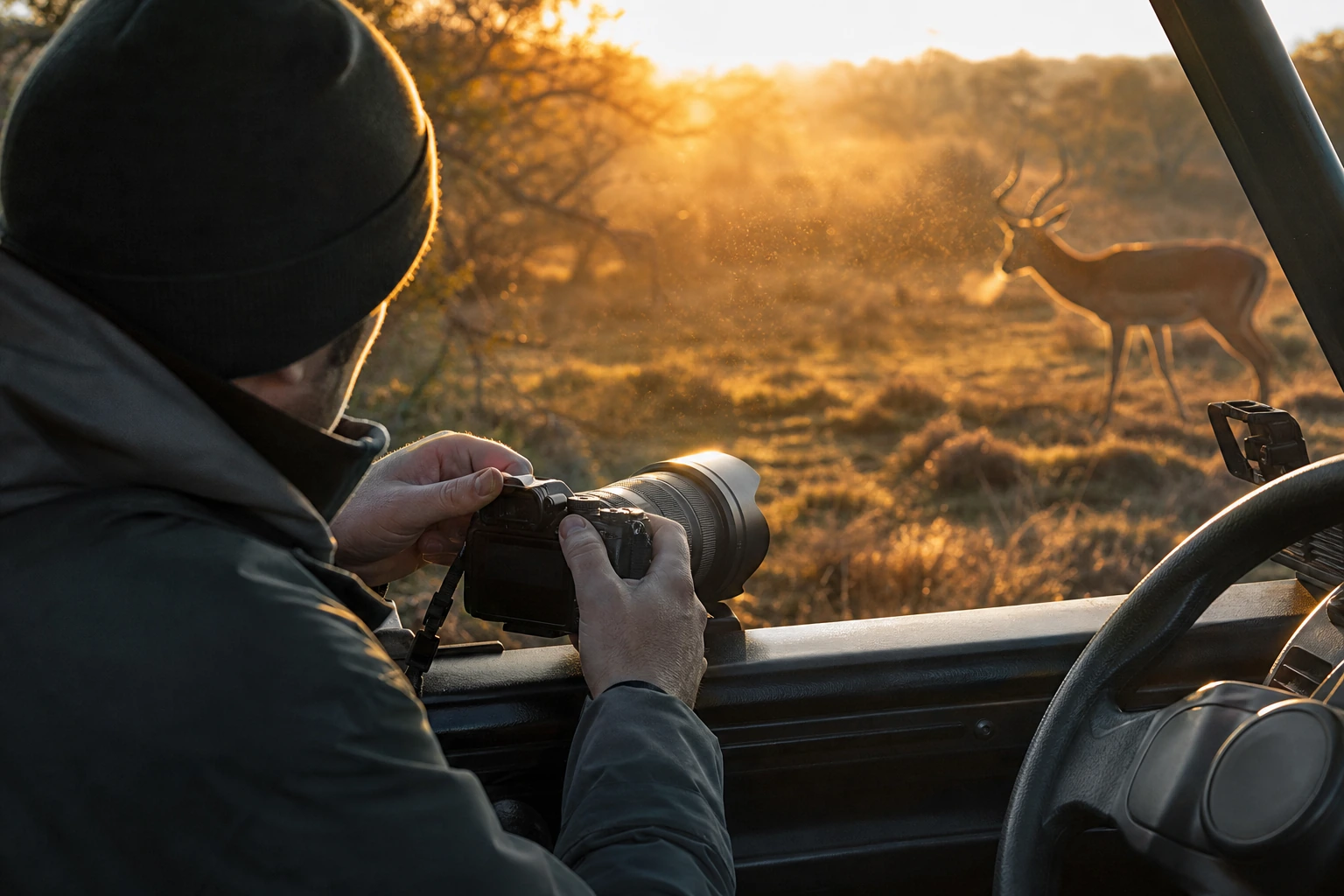
Waterholes, graphic shadow, birds and resting animals can still deliver. A long lunch has value, but rigid golden-hour rules leave possibilities unused.
Rain rewards careful planning
Covers, cloths, condensation control and dry access need a routine. Wet earth, dark skies and reflected light can also produce the journey's most distinctive frames.
Minimise lens changes, cover bodies and clean in shelter. Aggressive maintenance in an open vehicle is more likely to redistribute the problem than solve it.
IATA generally places spare lithium batteries and power banks in cabin baggage with terminals protected. Capacity thresholds, airline and national rules still require checking for every sector.
Light-aircraft operators may impose strict total weight and dimensions. Camera, batteries, medicine and one minimal change must be agreed with the booked operator, not debated at the airstrip.
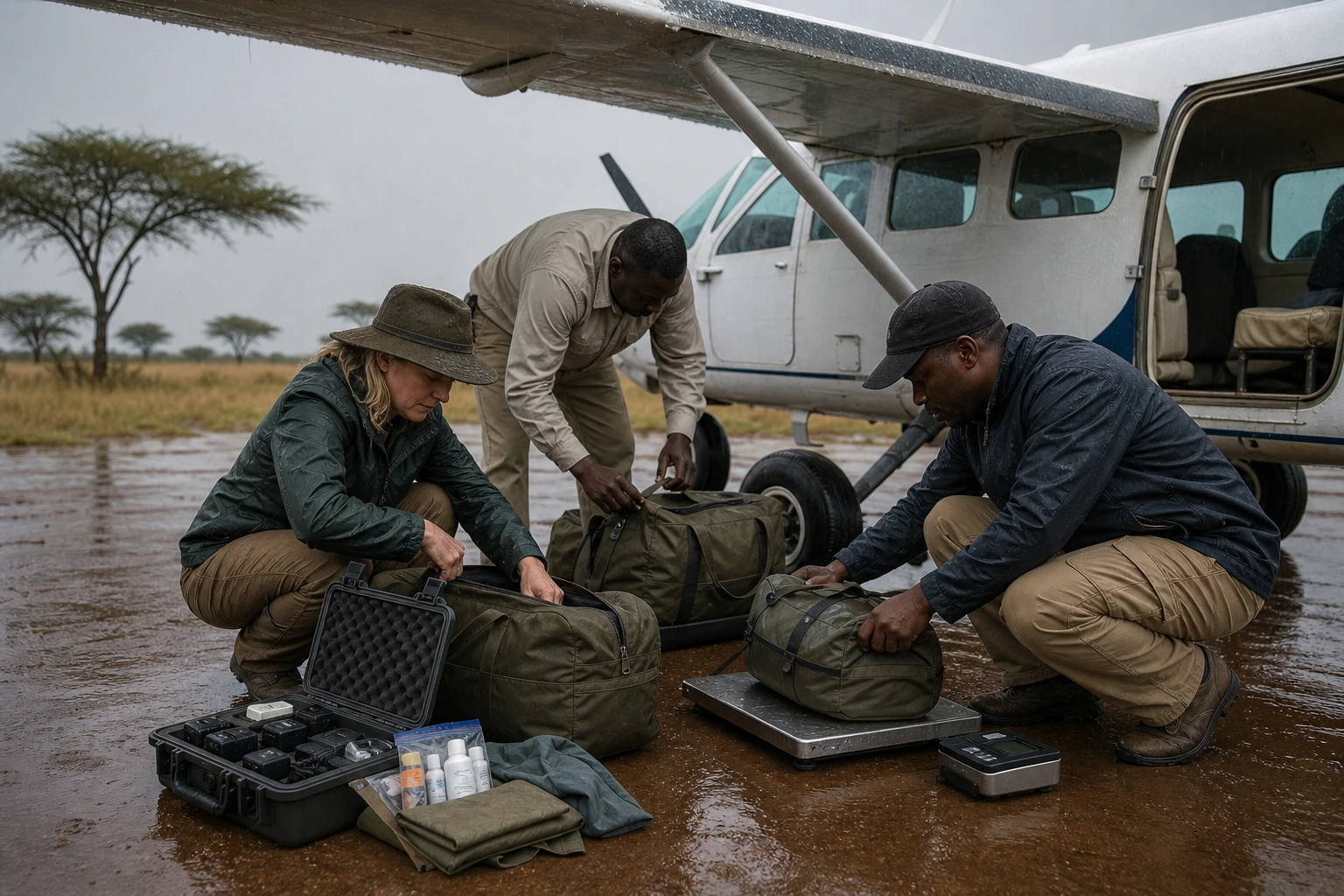
Socket, voltage, adapter, charging hours, generator or solar windows and vehicle power vary by camp. A multi-plug cannot create capacity that is not there.
Backups need separate routes
Cards should not be erased too quickly and drives should travel apart. Yet spending every evening editing can consume the quiet the safari was meant to provide.
A non-photographic partner may want breakfast, observation or movement. A private vehicle, separate activity or agreed rhythm prevents the camera from monopolising the shared day.
No calling, feeding, blocking, chasing or prohibited exit from the vehicle is justified by an image. Distance and guide decisions take priority over focal length and social media.
Park, aviation, lodge and privacy rules may prohibit it or demand permits. Without written authorisation, it stays at home.
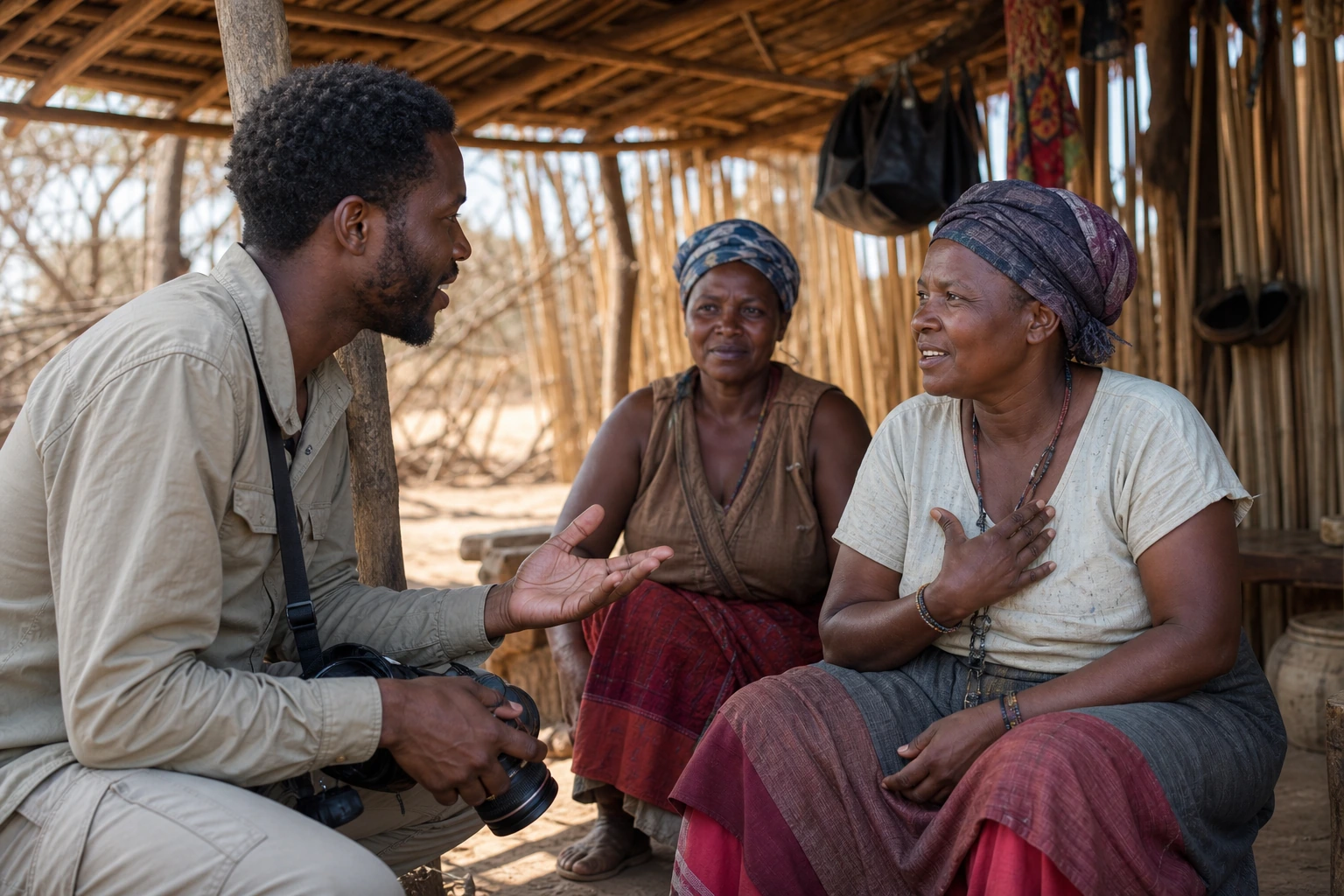
Portraits of staff and communities require informed consent, context and respect. Paying for a visit does not buy blanket permission to photograph.
Aggregate sum, per-item limit, unattended vehicle, dust, water, theft and international repair matter. General travel cover does not automatically protect professional equipment.
The pre-booking photographic brief
Subjects, experience, bodies, longest lens, weight, beanbag, vehicle side, guide, private time, charging, backup and flight limits are considered as one system.
A visual intention is more useful than a species checklist: perhaps scale and weather, an animal within habitat, group behaviour, motion, one restrained close portrait and the human experience of travel without a staged encounter. This vocabulary helps an advisor and guide understand the right ecosystem and rhythm. It also leaves room for what nature actually offers, so a rare sighting does not become the sole measure of a successful journey.
Each evening needs only a short technical and narrative review. Are batteries, cards and clocks ready Is another focal length truly missing, or merely a better position Which observation from the guide could deepen the next morning Answering those questions in twenty minutes protects the files without surrendering the atmosphere of camp. The safari remains a journey, not a continuous production.
The Deluxetargets recommendation
Invest first in the right habitat, three or four nights, a visually fluent guide and a suitably occupied vehicle. Then carry less equipment – but know every control without looking.