
Europe’s great spa towns were not built around a treatment room but around water, architecture and time. The finest stay connects source, bathhouse, grand hotel and town into one quiet ritual — without confusing thermal water with a medical promise or a hotel spa with the baths themselves.
A thermal journey is a system, not a spa weekend
Its value lives between several places: the water, bathhouse, room, promenade, restaurant and the hours left open between them. A generous spa may be lovely without making a hotel a thermal hotel. Conversely, the most persuasive bathing experience may sit in a public institution while the right grand hotel stands a short walk away.
Source, temperature, mineral profile, treatment and actual use in each pool or programme matter. An outdoor pool may contain thermal water, conventionally heated water or a blend. Ask in writing which facilities are currently source-fed. An elegant pool name or a view of steam rising into cold air is not a technical answer.
More minerals, greater heat or longer immersion does not automatically mean greater benefit. Water can feel different on the skin and place different demands on the body. For travel planning, comfortable temperature, calm and sound operations matter more than theatrical numbers. Medical effects belong to qualified professionals, not to unexamined hotel language.
Wellness, balneotherapy and medicine remain distinct
Open bathing, a guided treatment and a physician-led cure are different services. Anyone travelling for a health condition should discuss diagnosis, treatment, staff credentials, suitability and emergency pathways with the responsible clinicians. This guide considers travel quality and structure; it offers no medical recommendation and makes no therapeutic promise.
The Great Spa Towns of Europe join eleven towns in seven countries as one World Heritage property. Their importance extends beyond springs to urban planning, bath architecture, gardens, assembly rooms and a culture of lingering. Baden-Baden, Bath, Karlovy Vary and Vichy are therefore more than settings for a spa: the town itself is part of the ritual.
In an integrated resort, room, water, treatments and dining sit within one system. In the bathhouse model, guests stay separately and visit a public facility. In a spa town, springs, colonnades, parks, clinics and hotels are distributed through the streets. None is inherently superior; each calls for a different room and daily plan.
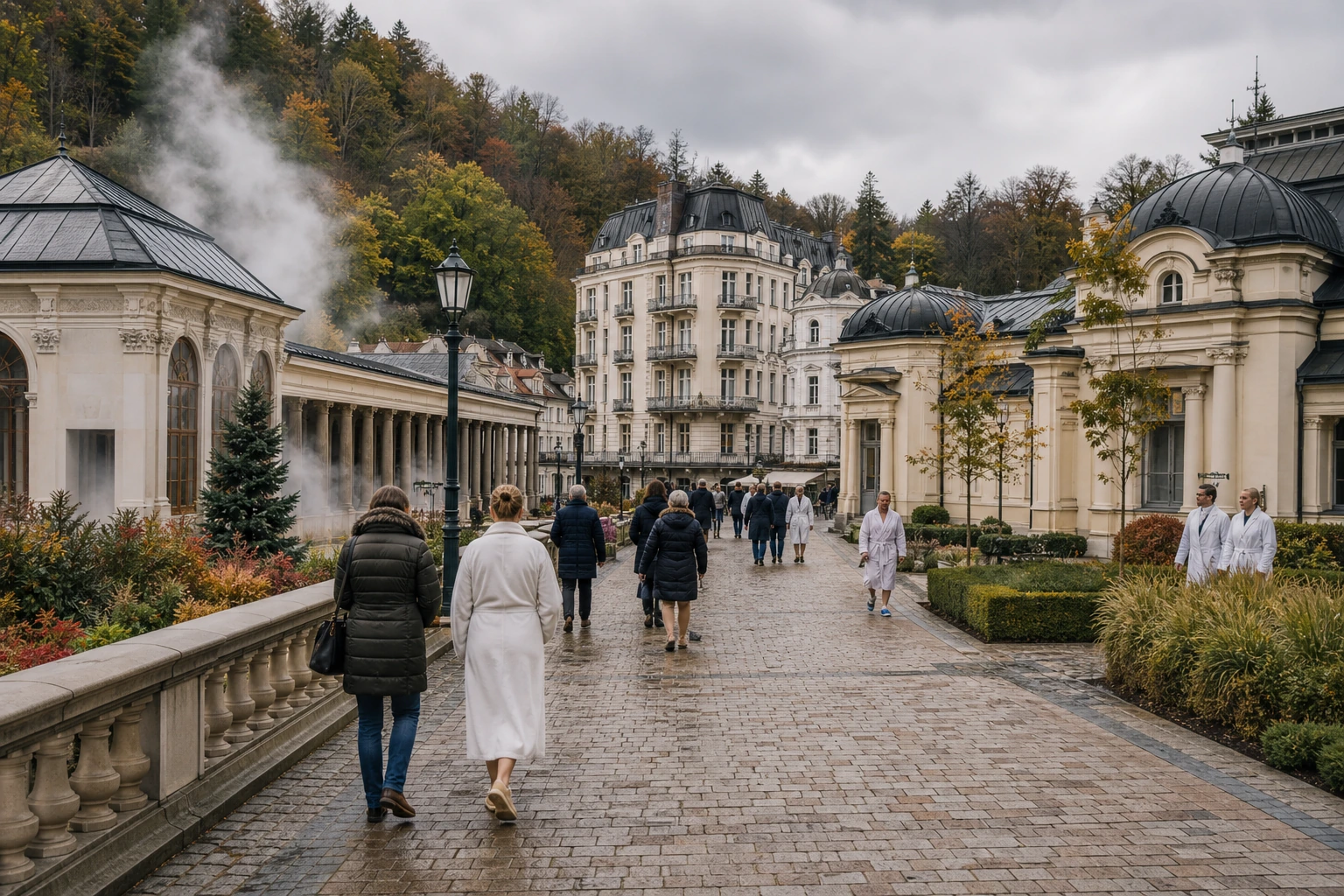
Bathing time and treatment time are not interchangeable
A booked appointment structures a day; open thermal access gives it rhythm. Verify opening hours, entry windows, permitted duration, last admission and re-entry. An extensive treatment menu has little value if the preferred pool closes during the guest’s free hours or requires a reservation that was never made.
Many important thermal baths are public institutions rather than private hotel clubs. That social life is part of their character, yet weekends, holidays and wet-weather days can feel busy. Ask about quiet windows, hotel-guest provisions, capacity controls and reserved areas. Exclusivity should be demonstrated in space and time, never assumed from the room rate.
Very warm water, steam, sauna and abrupt temperature changes do not suit every guest. Pregnancy, cardiovascular concerns, medication and other health factors require individual professional advice. Build in water, rest and a short first session; alcohol and intensive heat are an inelegant pairing. Current house rules and qualified guidance take precedence.
The bedroom is the true recovery room
After heat and water, quiet, blackout, mattress, climate and a short route matter more than extra decoration. A room above an event space or facing the main promenade can undo the cure-town mood at night. Check the plan, lift, stairs, robe route and distance between bed, breakfast, baths and treatment rooms.
Steps, long corridors, protected doors, changing levels and separate wings often form part of a grand hotel’s character. One guest reads atmosphere; another faces a daily obstacle. Accessibility must be confirmed through exact routes, door widths, lifts, showers and assistance. A refurbished bedroom does not prove an accessible end-to-end stay.
Winter brings steam above outdoor water and long interiors; summer opens gardens and terraces and often attracts more day visitors. Shoulder periods can be serene but may carry works, reduced dining or weather-dependent closures. Ask not only about climate but about the operating picture on the exact dates: open facilities, events, construction and seasonal timetables.
Baden-Baden draws strength from separate institutions
The town connects springs, historic cure architecture, parkland and grand hotels without forcing everything beneath one roof. That separation is its distinction. Select bath and hotel independently: the bathhouse for ritual, rules and atmosphere; the room for quiet, position and service. The walk between them is part of the journey.
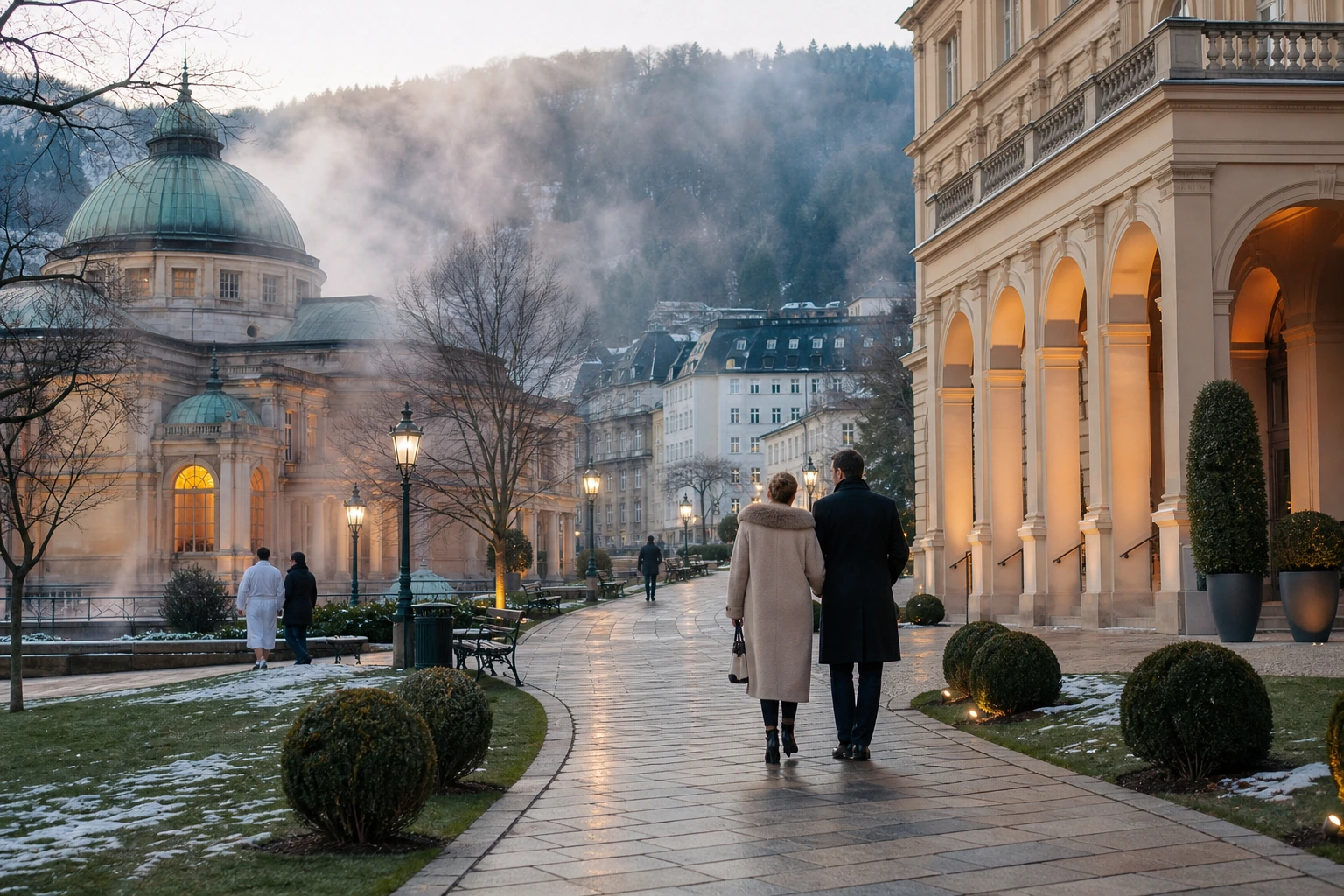
Caracalla Therme offers a more open contemporary circuit across water and sauna areas. Historic Friedrichsbad follows a more choreographed bathing sequence with its own conventions. Current opening, textile or textile-free arrangements, works and procedures need direct confirmation. Two shorter individual visits may serve a couple better than one compromised choice.
Brenners Park-Hotel Spa combines park position, hospitality and its own spa and health world. That does not establish that every hotel pool is spring-fed or that municipal bath admission is included. Following its recent substantial renewal, the precise rooms, facilities and routes available on the travel dates should be confirmed afresh.
Bad Ragaz and Vals: integration or architectural concentration
At Grand Resort Bad Ragaz, hotel, dining, spa, thermal facilities and medically oriented services operate in closer relation. This reduces movement and suits guests who want to keep their day inside one resort. Even so, the booked room category, included areas, treatment access and boundary between leisure and medicine must be read precisely.
The public Tamina Therme has its own entrance, hours, prices and visitor patterns; hotel guests may also use resort facilities. The current connection, inclusion or priority depends on rate and operation. Request a map and a written list: which pool, sauna and relaxation room, how often, and during which hours.
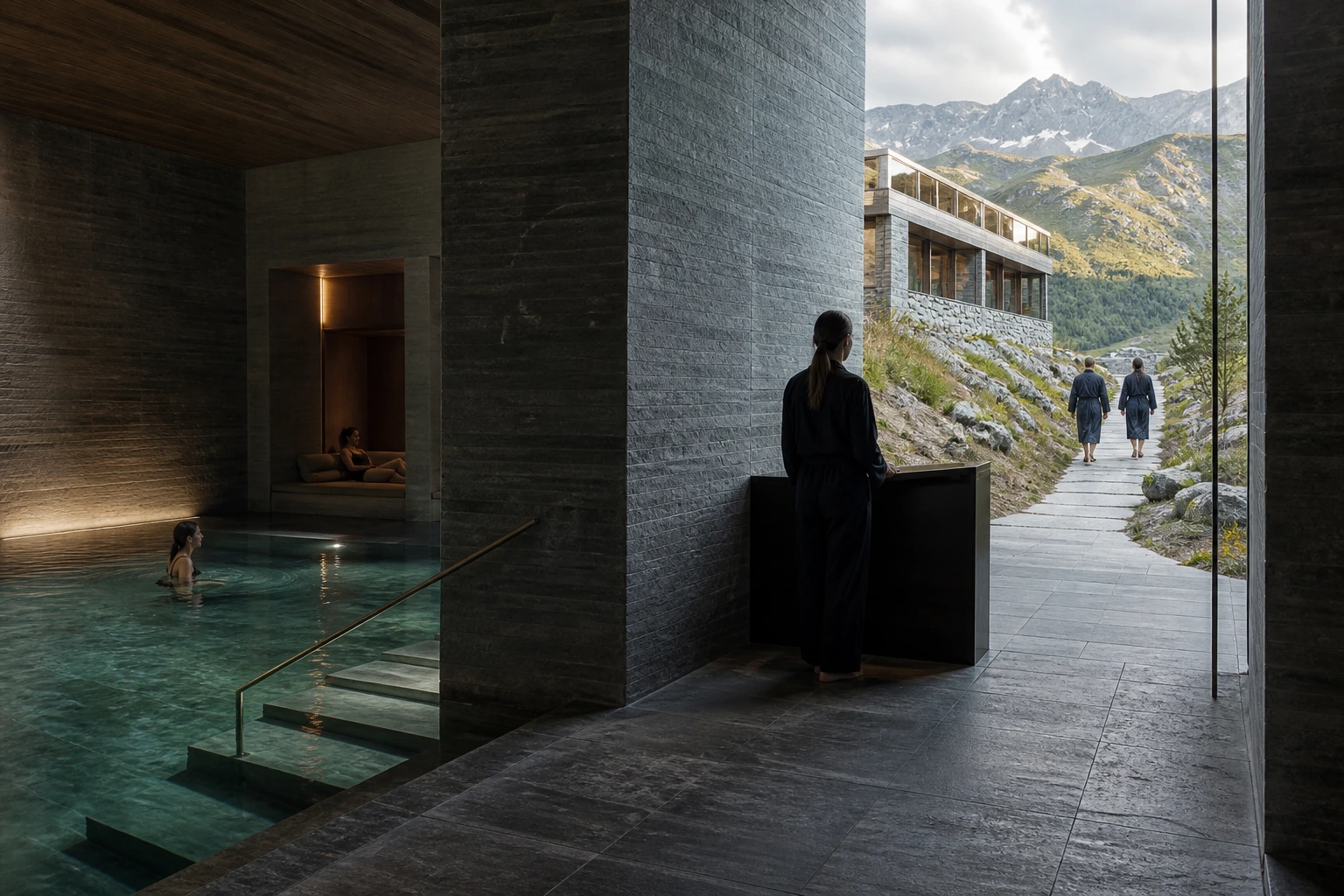
At Vals, stone, light, acoustics and water form the programme. Travellers coming for the thermal baths should resist filling every hour with treatments. A few carefully chosen bathing windows, with sleep, a walk and dinner between them, are more coherent. The effect is spatial and atmospheric; it needs no inflated language of cure.
Hotel and thermal bath are closely related, but room products, bathing hours, guest privileges and outside admission can change. Ask what the exact rate includes, whether early or late windows exist, which age rules apply and whether any closure is scheduled. An iconic photograph does not confirm private or unlimited use.
Saturnia and Bath: landscape or city
Terme di Saturnia derives unusual force from sky, flowing water, vegetation and the sense of a source embedded in landscape. Weather, sun protection, robe routes and outdoor comfort therefore matter. Travellers seeking only air-conditioned treatment rooms miss its point; those who value the outside should preserve generous unprogrammed time.
Hotel offers may include thermal-bath admission while day-spa and club products carry separate terms. Confirm which pools and rest areas belong to the rate, whether reservations are required and when public peaks occur. The region’s famous freely accessible natural cascades are also a different proposition from a controlled resort experience.
Roman history, Georgian architecture and modern bathing culture overlap in Bath. The historic Roman Baths are a museum experience, not somewhere to swim; the contemporary thermal spa is a separate institution. That distinction prevents a common disappointment and creates a satisfying day of history, rest, dining and a precisely timed bathing window.
Thermae Bath Spa is public and maintains its own entry, age and treatment rules. Select accommodation for night-time quiet, walking distance and bedroom quality, not for a vague proximity to thermal heritage. Confirm ticket, treatment and room separately. Weekends in particular reward a realistic schedule rather than hope of spontaneous entry.
Karlovy Vary and Vichy: the European spa town as daily life
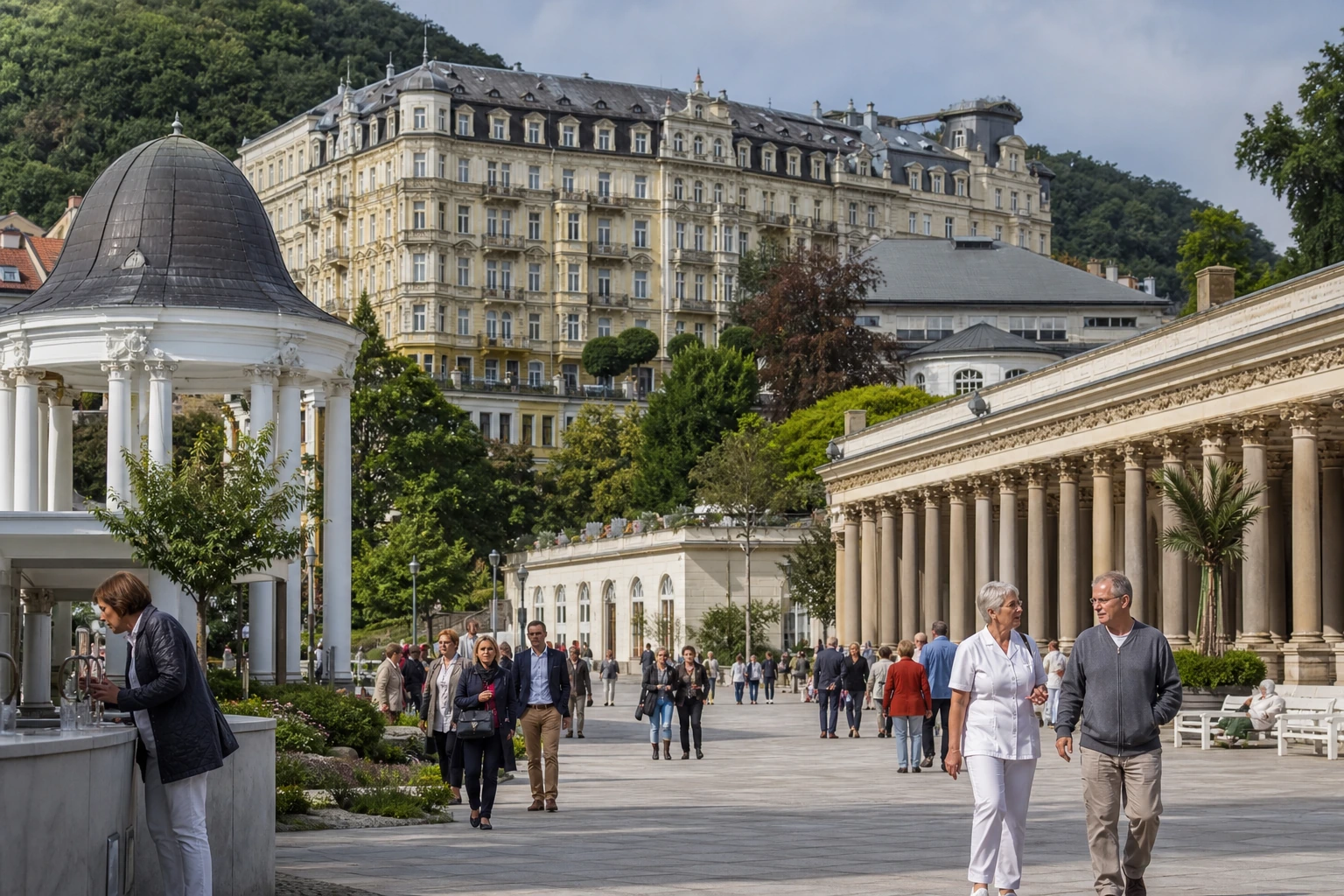
Its colonnades, springs and promenades explain why the European cure was never only about immersion. Traditional drinking cures and medical programmes belong under professional supervision. For the general traveller, the reward is a slower urban rhythm: walk in the morning, read the architecture, eat deliberately, rest, and book only selected treatments.
The hotel embodies Karlovy Vary’s social stage and provides a strong base for the town. History and location do not replace an audit of current spa facilities, water source or external cure services. Ask what happens inside the hotel, what carries medical supervision, and what requires a walk or transfer elsewhere.
Parks, spring pavilions, galleries and cure buildings make Vichy an urban composition. A rewarding stay joins architecture and food with a small number of deliberate wellness or cure appointments. Hotel spa, public spring hall and prescribed medical cure are separate offers. Famous names and tradition must not blur their operational boundaries.
Rules, robe route and treatment rhythm
Ask for a simple table covering the travel dates: hotel-only facilities, public areas, reserved entry windows, supplements and planned maintenance. It reveals whether the stay will be a private retreat or a lively spa-town encounter. Either can be luxurious; only a mismatched expectation produces disappointment.
Europe contains markedly different bathing cultures. Children’s hours, minimum ages, swimsuit pools, textile-free saunas, separated areas and required bathing caps can vary even within one complex. These are neither a quality judgement nor a footnote. Obtain current written rules so couples, families and friends choose the same experience knowingly.
Can a guest travel from room to water discreetly and under cover, or does the route cross a lobby, street and public lift Are there lockers, dry shoes, seating and help with wet clothing These unglamorous details shape winter and reduced-mobility stays more profoundly than another marble treatment room.
A massage after prolonged heat, a late tasting menu after a packed circuit and multiple water treatments in one day can turn recovery into work. Reserve the few non-negotiable appointments first, then protect rest. Cancellation terms, therapist preference, language and health forms should be resolved before arrival.
A thermal stay benefits from reliable breakfast, a light lunch, drinking water and permission to skip a grand dinner. Check service hours between bathing windows and whether room service offers a quiet alternative. Alcohol, heavy food and intensive heat call for restraint; personal medical questions belong with qualified professionals.
Families, generations and accessible routes
“Family-friendly” may mean a children’s pool, limited bathing periods or merely connecting rooms. Ask about the minimum age for every area, quiet zones, supervision, slippery routes and whether adults can take turns using a silent space. A sound family design protects both a child’s curiosity and other guests’ calm.
Grandparents, parents and children need not book the same treatment, but they should meet without complicated transfers. Proximity of rooms, lifts, seating, temperature choice and a flexible restaurant are central. Confirm an accessible alternative from bed to the principal water area, not only an accessible lobby.
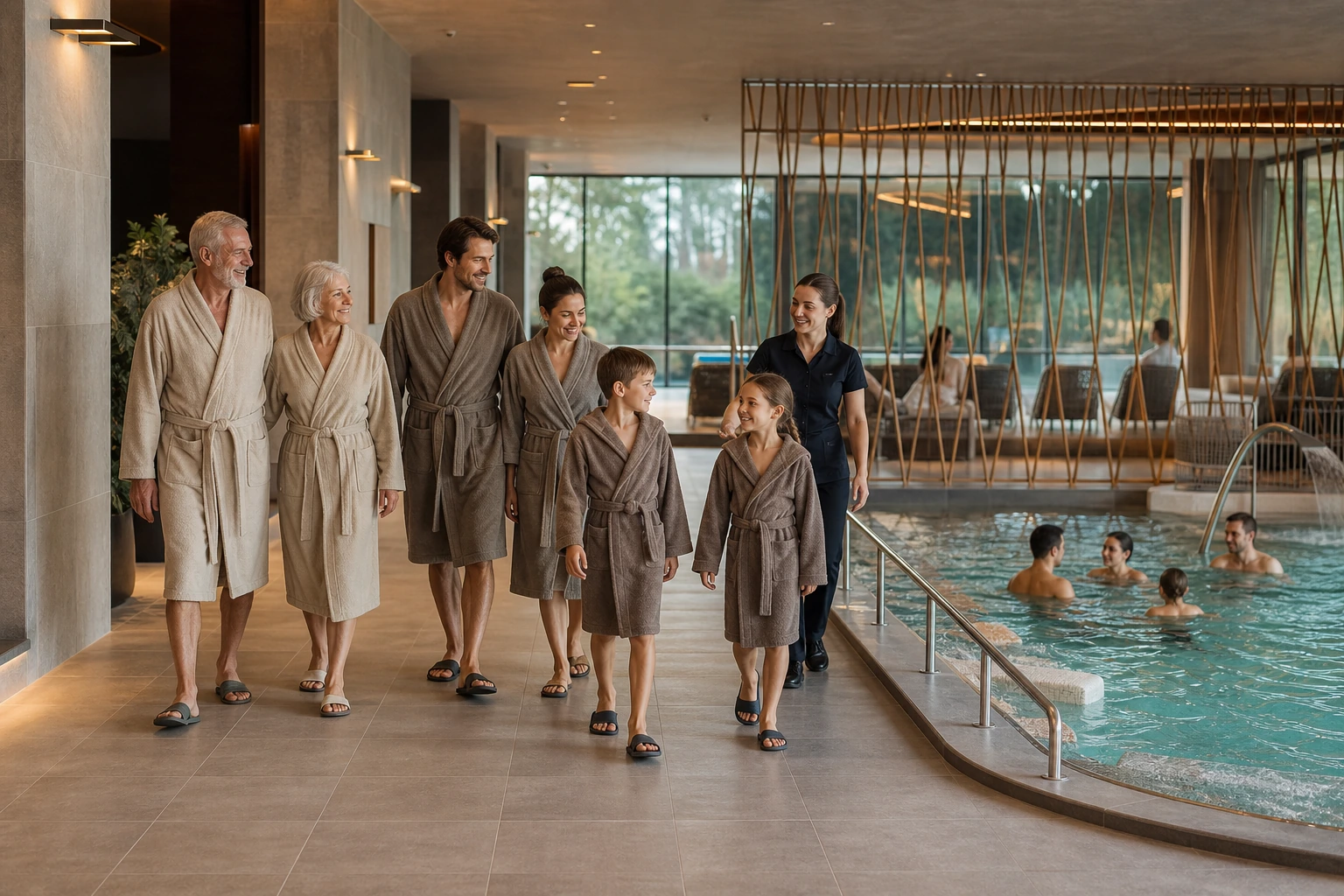
Changing room, shower, pool entry, lift, handrail, non-slip surface, transfer assistance and evacuation plan all matter. A pool hoist alone does not solve the route to it. Guests should state needs precisely; the property should answer with dimensions, photographs and assistance. Qualified parties must assess medical and safety suitability.
Duration, total cost and an intentionally empty plan
Three nights provide arrival, one full bathing day and departure. Four allow two distinct bathing windows and a day for town or landscape. Seven make sense when there is a supervised programme, several treatments or a deliberate commitment to slowness. Duration should emerge from the plan, not a generic wellness formula.
Add admission, reserved windows, treatments, clinical consultations, transfers, parking, robe or locker charges, cancellation exposure and dining. A higher hotel rate can cost less when it includes meaningful access; an attractive rate can become expensive when every bathing element is separate. Compare confirmed totals for the same dates and use.
Day one is for arrival and orientation. Day two pairs an early bath with a long open afternoon. Day three belongs to town, park or landscape. Day four introduces a second bathhouse or one targeted treatment; day five holds a quiet breakfast and departure. Only a clinically supervised programme should restructure this logic.
Which water flows where What does the rate include Who may enter Which times and age rules apply Is a reservation required What is the robe route Which areas are textile-free Where is the room Are there steps What is closed Who holds clinical responsibility What are the total price and cancellation terms
The most elegant spa town is the one whose rhythm fits
Baden-Baden offers the ensemble, Bad Ragaz integration, Vals architecture, Saturnia landscape, Bath urban history, Karlovy Vary the promenade and Vichy the French cure town. This is not a ranking. Luxury appears when water, institution, room, rules and time work without friction for this particular guest.