
The most luxurious Ayurveda retreat is not the one with the longest treatment menu. It is the one that takes a proper history before the first oil application, defines limits, documents what is administered and leaves enough recovery between treatments. In India and Sri Lanka, highly polished wellness resorts and disciplined Ayurveda institutions can occupy the same price range while offering entirely different journeys.
Ayurveda retreats at a glance
- Destination spa
- High hotel comfort with Ayurveda alongside yoga, fitness, sleep and other wellness methods; suitable for a gentle, integrative introduction.
- Physician-led retreat
- Intake, individual plan, repeat consultations and a more regulated routine; less freedom, but a more traceable clinical process.
- Ayurveda hospital
- Treatment determines room, food and daily rhythm. Authenticity and discipline take precedence over classic resort choice.
- The essential test
- Who diagnoses, what are their credentials, what is administered, and how does the property respond to an adverse event or emergency
Ayurveda is not another word for spa
One abhyanga massage or shirodhara treatment may be relaxing, but it does not make a hotel an Ayurveda retreat. A serious programme begins with consultation, health history and a reasoned selection of diet, movement, rest and treatment. Longer or more intensive programmes should include review consultations and a discharge or continuation plan.
In 2022 the World Health Organization published benchmarks for Ayurveda training and practice. They define minimum requirements; they do not establish that every claimed outcome is scientifically proven. The U.S. National Center for Complementary and Integrative Health describes the clinical evidence for many health issues as limited and warns that some Ayurvedic preparations may contain harmful amounts of lead, mercury or arsenic.
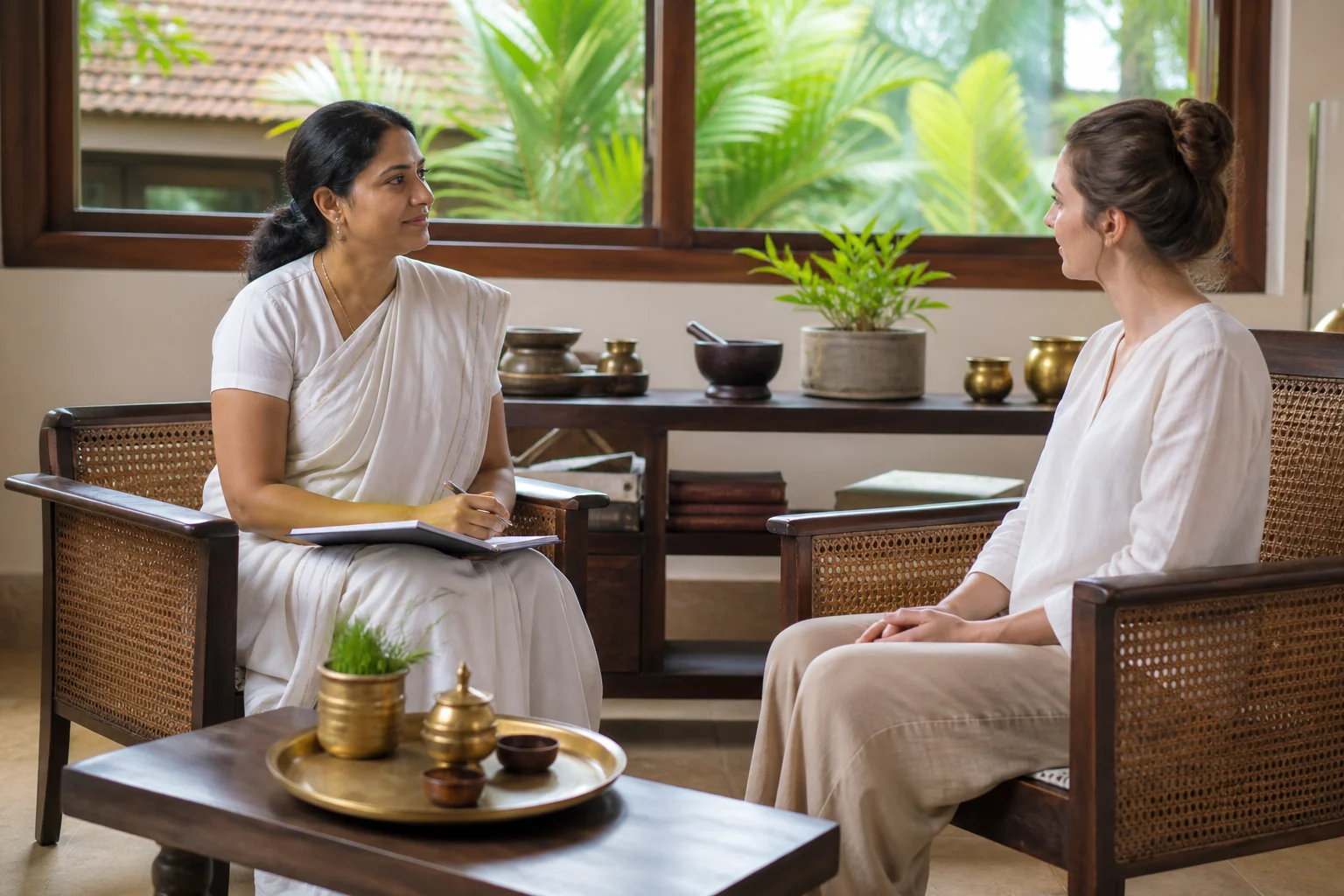
A strong retreat responds to those facts openly. It explains the origin, ingredients and quality controls of its products, asks about all medication and accepts that conventional diagnosis or care may be required in parallel. “Natural” is not a sufficient safety statement.
India: from integrative luxury to an Ayurveda hospital
Six Senses Vana – for integrative depth and exceptional comfort
Vana in Dehradun combines Ayurveda with yoga, Tibetan medicine, movement and contemporary wellness screening. The property describes an arrival consultation and screening from which its doctors plan further treatments. For guests who do not want Ayurveda alone, that breadth is a strength: sleep, fitness and emotional recovery can sit within one journey.
The same variety makes Vana less appropriate for a traveller seeking a strictly traditional Ayurveda course without other systems. The pre-booking discussion should establish how much of the stay will actually be Ayurvedic, which physician remains responsible and whether the programme is restorative or intensive.
Ananda in the Himalayas – for a structured destination spa
Ananda combines palace setting, Himalayan foothills, yoga and broad wellness programming. Its official programmes include seven-, 14- and 21-night formats, with consultations before arrival, on property and after the stay. That creates a planned and comfortable introduction with recognisable hotel standards.
Ananda is particularly persuasive when a couple has different objectives or wants to combine Ayurveda with stress management, sleep and movement. A guest seeking clinically strict panchakarma should establish exactly how the chosen programme is constructed and how much free time, menu choice and external activity remain.
Kalari Kovilakom – when treatment matters more than the resort
CGH Earth describes Kalari Kovilakom as an Ayurveda hospital within a historic palace, with its own clinic. Daily life follows physician decisions, sattvic food, yoga and rest. Alcohol, spontaneous excursions and a conventional holiday rhythm are incompatible with the concept.
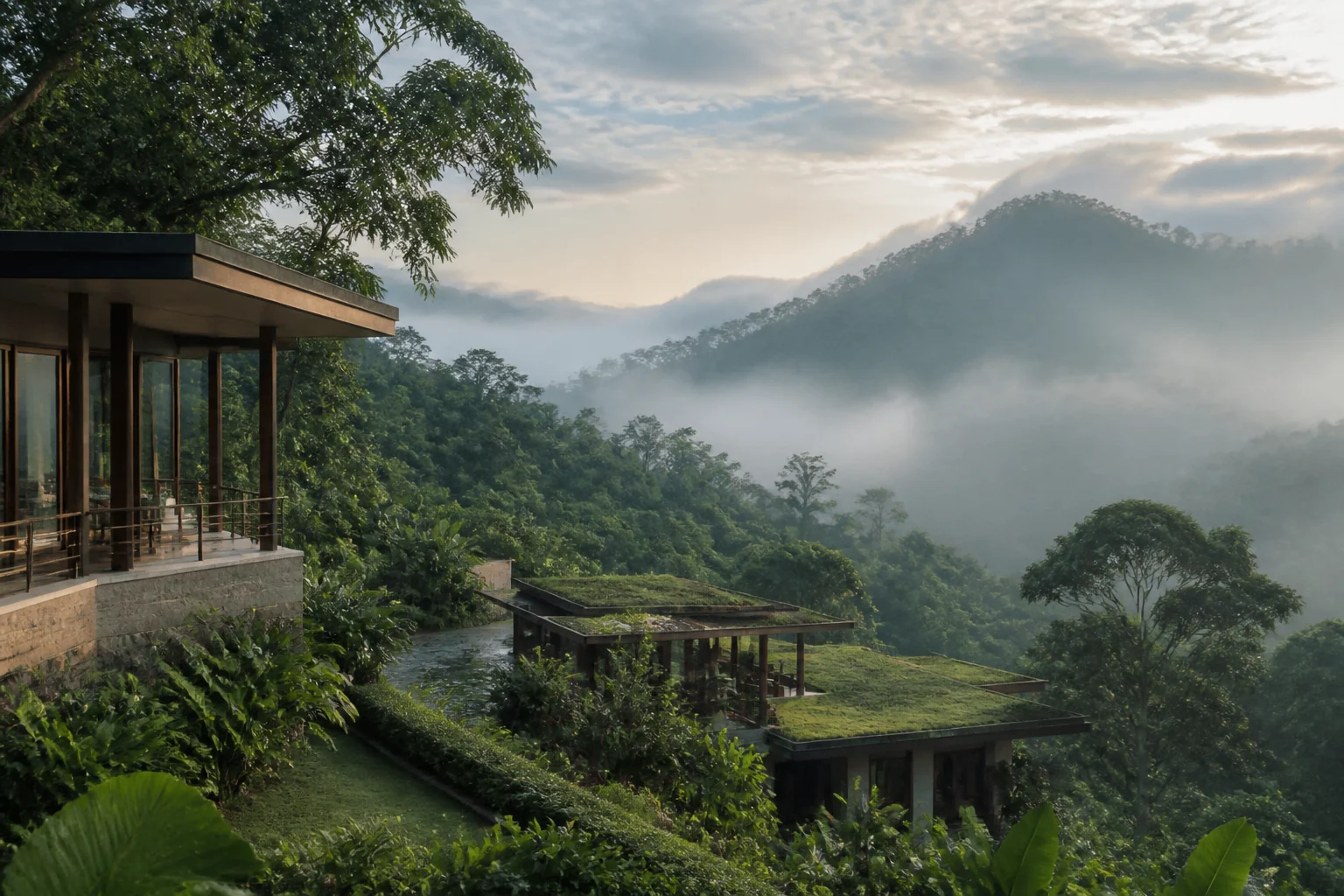
Its luxury lies in concentration, privacy and programme discipline rather than choice. Guests wanting à-la-carte dining at night or a non-participating partner need a different retreat. Anyone considering Kalari should understand medical admission, required duration and daily rules in full before paying.
Sri Lanka: coast, Ayurveda tradition and different degrees of discipline
Santani – for contemporary design and personalised wellness
Santani sits in the hills near Kandy and combines striking architecture, quiet and a personalised Ayurveda offer. The resort describes programmes based on constitution, lifestyle and health goals. Its upland landscape and seclusion create a very different rhythm from a beach property.
It suits guests wanting Ayurveda inside a contemporary wellness concept. Before booking, ask which treatments are physician-led, which preparations are involved and how a medical problem would be managed or transferred from the remote location.
Heritance Ayurveda Maha Gedara – for a clear physician-led day by the sea
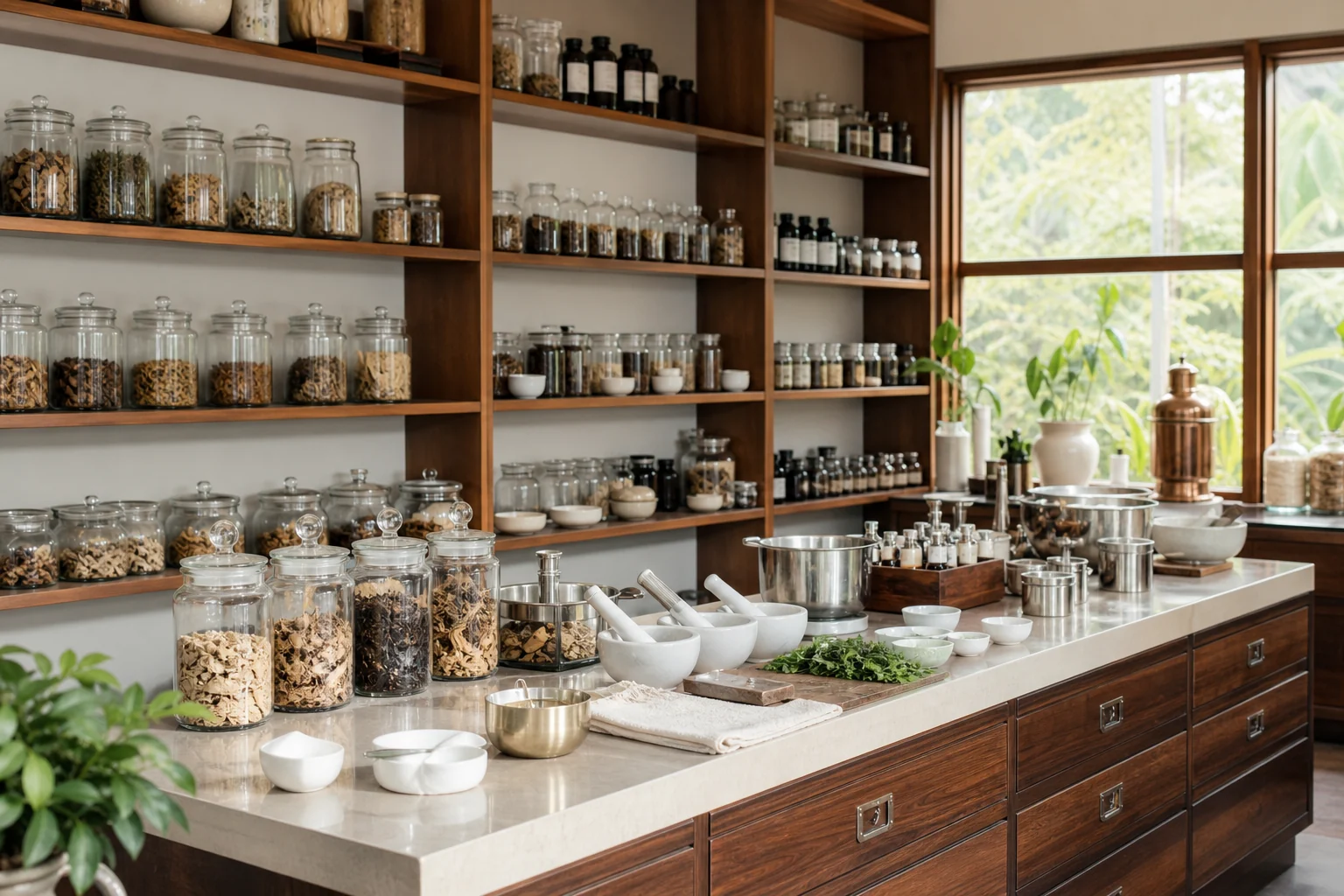
Heritance describes an adults-only property with physician-led programmes, daily treatments, individual food, yoga and meditation. Published doctor profiles make responsibility more visible than it is in a general spa. The resort is larger and more traditional in design than an intimate hideaway, but offers an established routine and coastal setting.
It may feel institutional to travellers placing design, very low guest numbers and absolute privacy above all else. For those wanting daily structure and a recognisable Ayurveda department, the same qualities become an advantage.
Barberyn – a benchmark for authenticity beyond conventional luxury
Barberyn has operated Ayurveda resorts since 1984 and places treatment clearly ahead of lifestyle theatre. Rooms and service should not be confused with a new ultra-luxury property. It nevertheless belongs in the comparison because the quality of an Ayurveda journey cannot be measured by interiors alone.
| Retreat | Strongest quality | Less suited to | Clarify before booking |
|---|---|---|---|
| Six Senses Vana | Integrative breadth and high comfort | A purely traditional course without other methods | Ayurveda share and responsible physician |
| Ananda | Structured destination spa | Guests expecting clinical discipline | Programme depth and actual daily routine |
| Kalari Kovilakom | Consistent physician-led environment | Companions seeking a holiday programme | Admission, duration and restrictions |
| Santani | Design, nature and personalised integration | Guests needing nearby acute medical care | Physician presence and emergency pathway |
| Heritance Maha Gedara | Visible doctors and established routine | Very intimate, highly private stays | Guest numbers, treatment plan and product list |
How to recognise a serious retreat
- A health questionnaire and physician review before or at arrival.
- Named, verifiable credentials for the responsible doctors.
- A written plan covering purpose, treatments, products and reviews.
- Transparent sourcing, ingredients and quality testing for everything ingested.
- Clear contraindications and willingness to refuse or stop a treatment.
- Hygiene, privacy and as much therapist continuity as possible.
- A defined emergency pathway to conventional medical care.
- No promise to cure a serious or chronic condition with certainty.
Who should not take this trip
An intensive retreat is not appropriate for someone intending to reduce medication independently, delay necessary diagnosis or “detox” a chronic illness in a few days. A couple with conflicting expectations – one person following a strict programme and the other wanting a beach holiday – also needs a property that explicitly accommodates companions.
Travellers primarily seeking excellent food, massage and yoga may be better served by a strong wellness resort. That is not the lesser choice. It is more honest than booking a medical-sounding programme whose rules they do not intend to follow.
The Deluxetargets view
Choose the desired degree of discipline first. Six Senses Vana and Ananda translate Ayurveda into broad, highly comfortable wellness journeys. Santani combines it with contemporary stillness. Heritance offers a more explicit physician-led day by the sea. Kalari Kovilakom makes treatment so central that conventional holiday freedom deliberately falls away.
The highest luxury is medical honesty: a doctor who asks questions, a programme that recognises limits, products whose contents can be traced, and a hotel that does not confuse quiet with a promise of cure. Suite, pool and view come after that.