
Bali's rarest luxury is not remoteness. It is choosing the right setting with precision. A villa can be far from the nearest beach club yet still sit beside scooters, ceremonies or construction. A retreat may photograph beautifully but feel too exposed, too programmed or too isolated for the person who booked it. To find the island beyond Seminyak, Canggu and central Ubud, begin with landscape and daily rhythm—not with a list of alleged secret hotels.
Four retreats, four different journeys
- Tabanan
- Rice fields, villages and dark-sand coast; compelling for design-led stillness, less so for nightly restaurant-hopping.
- Menjangan
- National park, mangroves and marine life; a journey in its own right, not a quick excursion from the south.
- East Bali
- Temples, water palaces and Mount Agung's slopes; cultured, spacious and logistically distinct.
- North of Ubud
- Forest, river valleys and rice country; immersive in nature, but neither silent nor conventionally climate-controlled by default.
What “beyond the mainstream” actually means
The meaningful questions start where the map stops. What is the final approach road like Is the immediate setting a lived-in village, a surf coast, a forest valley or a protected landscape How practical is dinner outside the property What happens if a guest needs a hospital at night And is quiet fundamental to the hotel's operation, or simply the moment selected for its photography
Bali is a living island. Roosters, dogs, temple music, processions, farming and motorbikes belong to it as much as the sound of the ocean. Even the most expensive pool villa cannot promise absolute silence. A good advisor distinguishes traffic or building work from the cultural soundscape of a community. The latter is not a service failure. It is part of choosing Bali rather than a hermetically sealed resort.
Tabanan: Soori Bali or Nirjhara
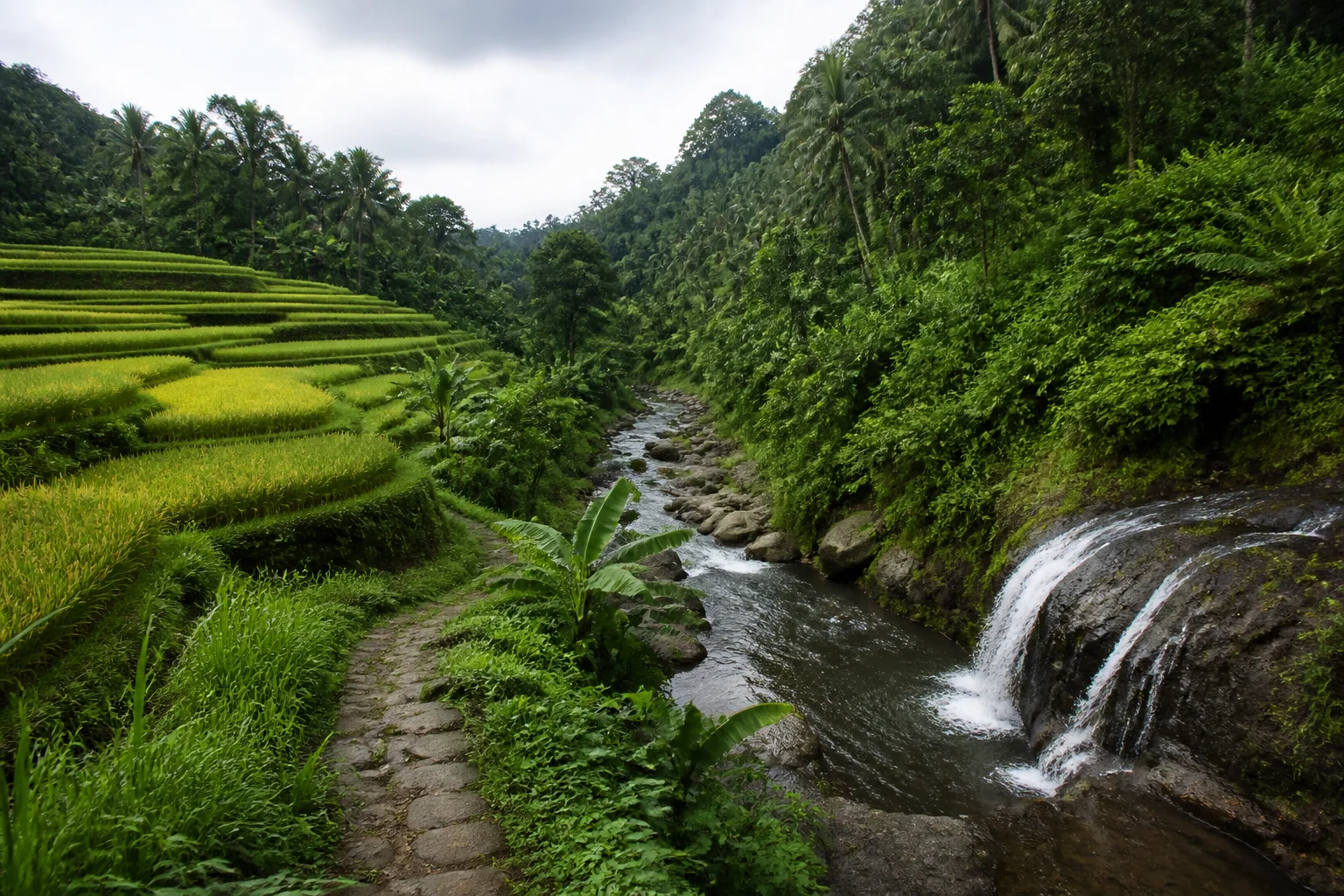
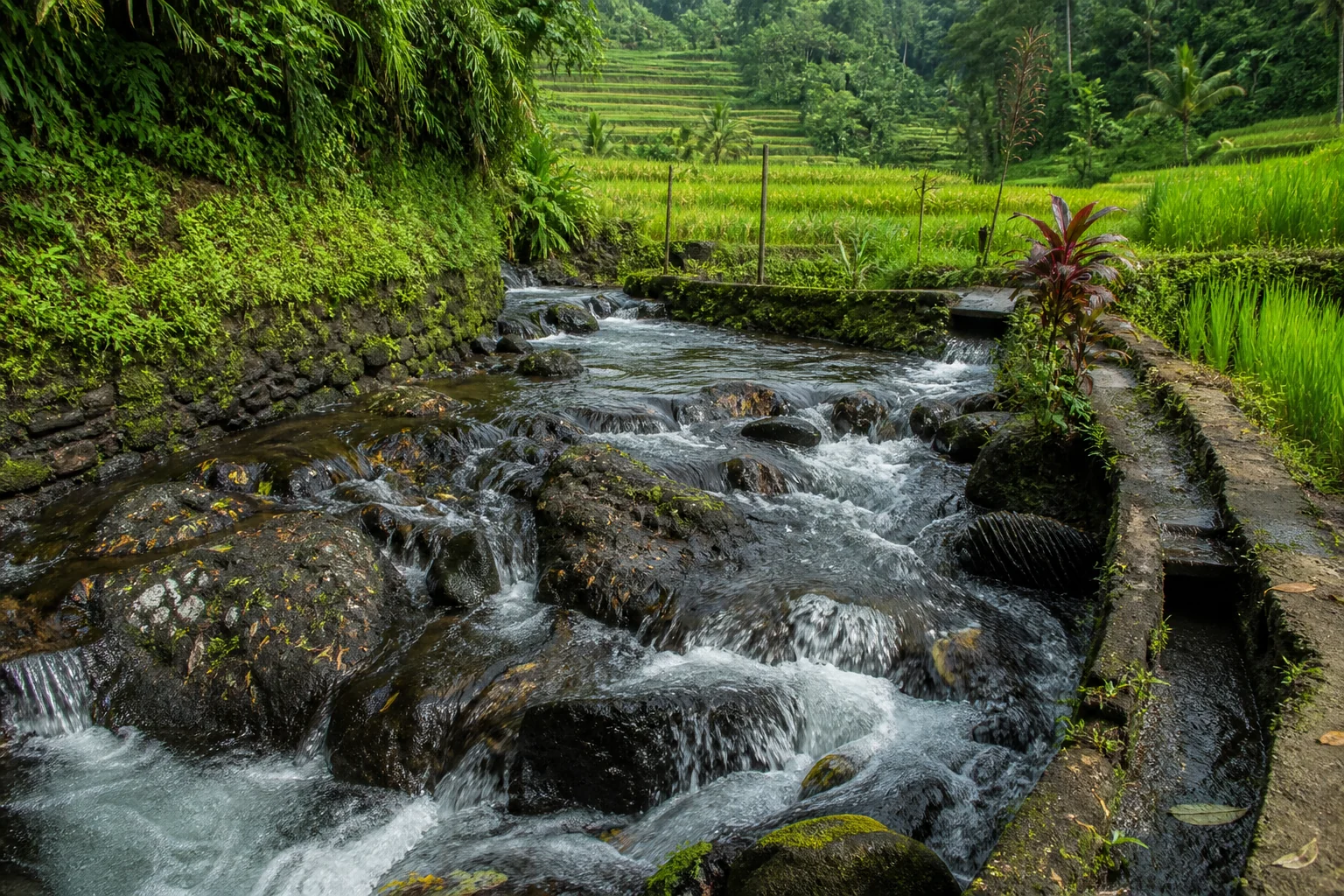
Tabanan suits travellers willing to treat rice fields and village life as a genuine environment rather than a backdrop. West of the heavily developed southern coast, it rewards a slower plan. Guests who want a celebrated restaurant every night may resent the roads. Those content to read, train, swim and take a small number of well-planned excursions can find a far more coherent stay.
Soori Bali: architecture on a black-sand coast
Soori stands on the ocean between rice terraces and Mount Batukaru. It is the stronger choice for disciplined architecture, generous villas and a dramatic coastline. The appeal lies in contrast: low modern lines, dark sand and a broad horizon. This is not automatically a gentle swimming beach; currents and surf require daily local judgement. Soori works best as a destination, using its spa, restaurants and journeys rather than as a base for constant commuting.
Nirjhara: smaller, greener and more inward-looking
Near Kedungu, Nirjhara occupies a landscape of rice fields, river and cascades. The scale is intimate, with canopy suites and river or pool pavilions offering different relationships with the vegetation. Yoga, spa and local experiences provide structure without turning the property into a medical retreat. It is attractive for couples who value a boutique atmosphere over extensive resort infrastructure. Guests sensitive to humidity, insects or natural sound should discuss the exact room's openness and position before confirming.
Menjangan: a nature chapter, not a day trip
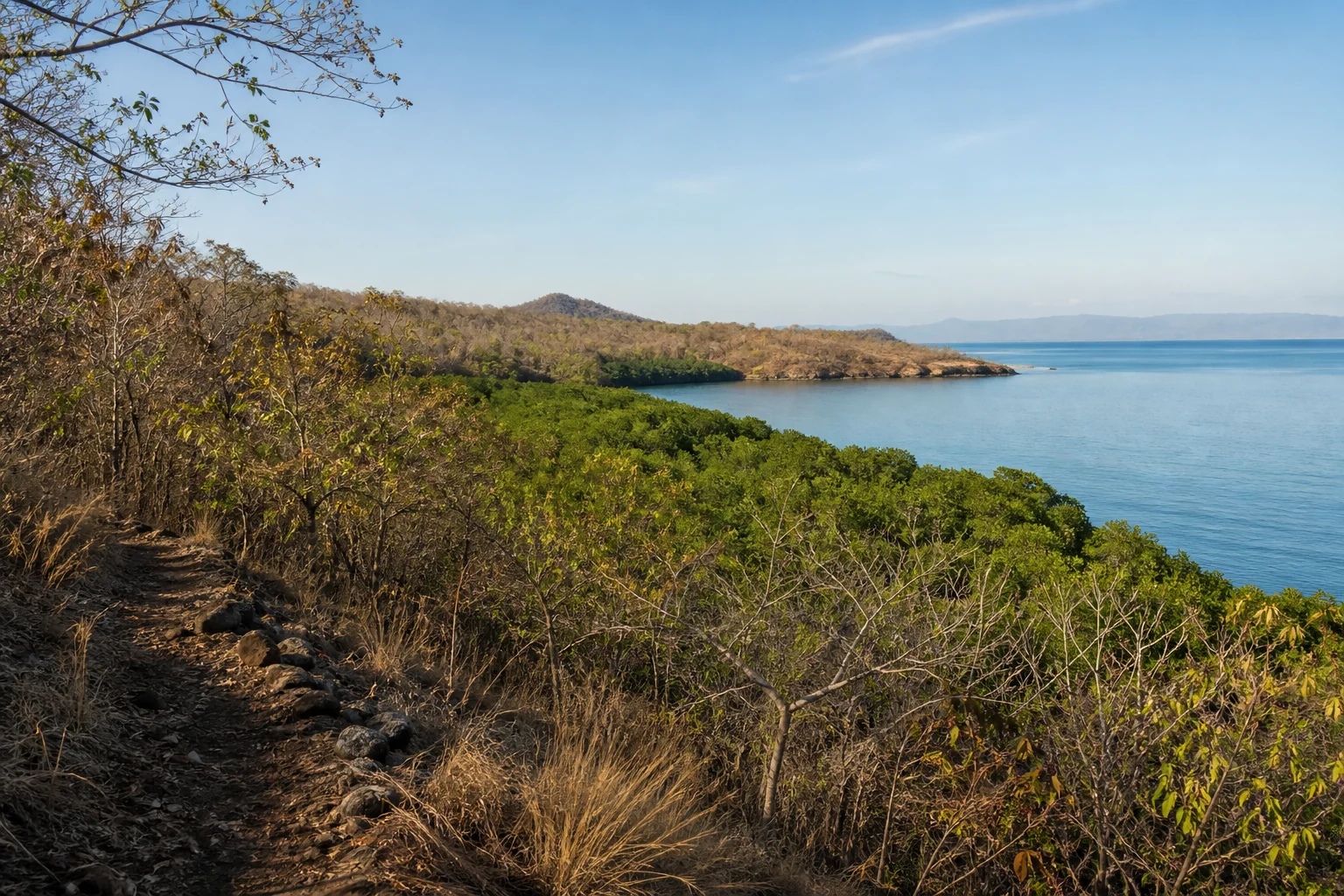
The north-west is not a quieter version of Canggu; it is a different geographic story. Plataran Menjangan sits within West Bali National Park, among forest, mangroves and sea. Snorkelling, diving, kayaking and guided nature experiences give the stay its purpose. Travellers seeking galleries, nightlife and a wide restaurant circuit are in the wrong place. Those drawn to the park and underwater world should grant it several nights.
The long journey should not be edited out of the advice. Menjangan deserves a separate block, ideally without moving straight from a long-haul arrival into a full programme. Comfort also means something different in a protected environment: wildlife, damp air and changing conditions are part of the encounter. Here,
the luxury test is less about how many venues a resort operates and more about the competence of its guides, transfer planning and stewardship of nature.
East Bali: Amankila as a cultivated anchor
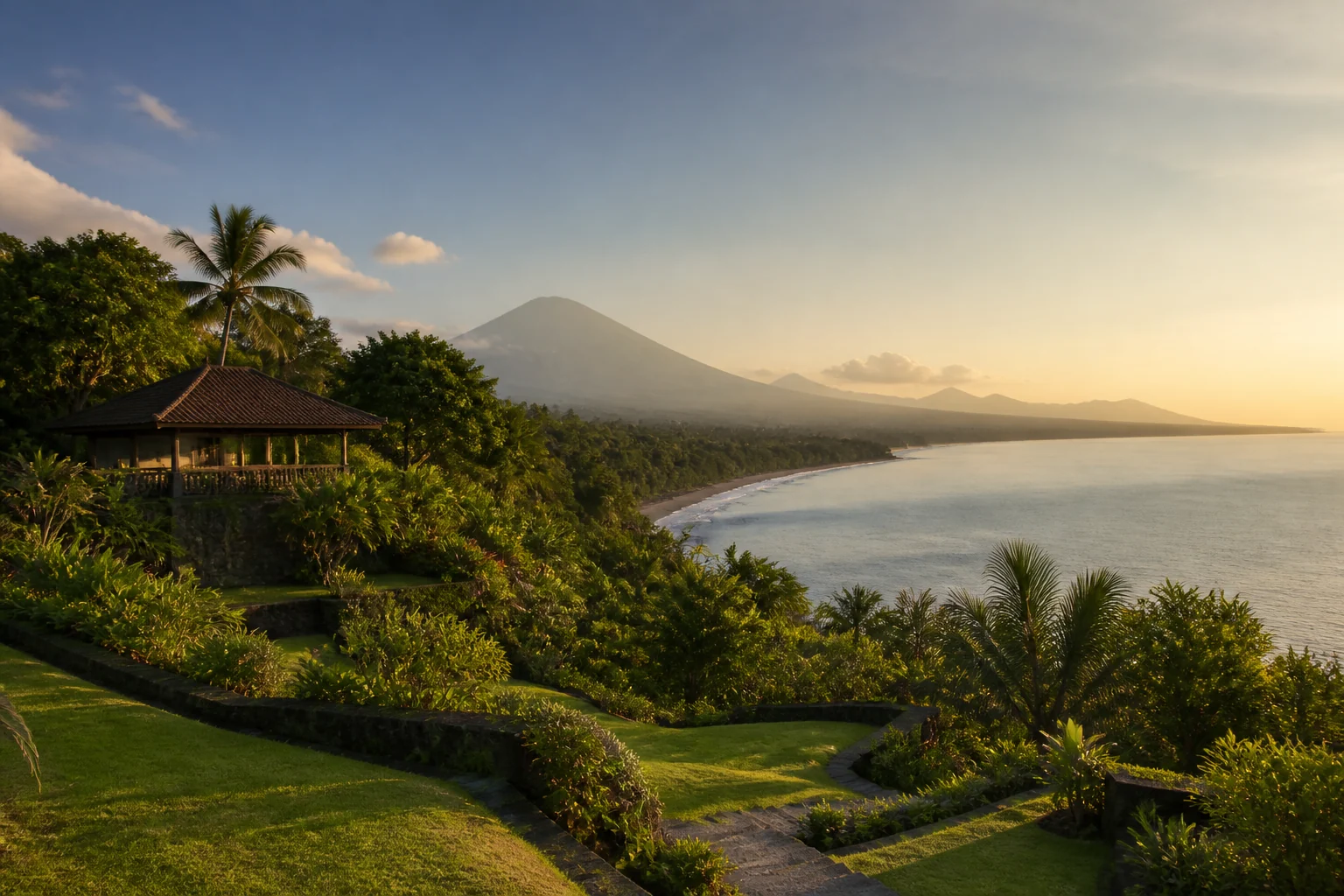
Amankila is set on a wooded hillside above the Lombok Strait near Manggis. Its stilted pavilions, three-tier pool and Beach Club on a private stretch of black sand create a compelling sequence from hill to sea. East Bali opens towards water palaces, villages, temples and maritime excursions without imposing the timetable of a conventional retreat.
It is an assured choice for guests who want calm and complete resort service. It is less suitable when spontaneous dining in the south matters. A beach setting does not guarantee swimmable conditions every day; sea state and local guidance remain decisive. Travellers with reduced mobility should confirm steps, distances and pavilion position rather than selecting on view alone.
North of Ubud: Buahan or Capella
Buahan: radical openness
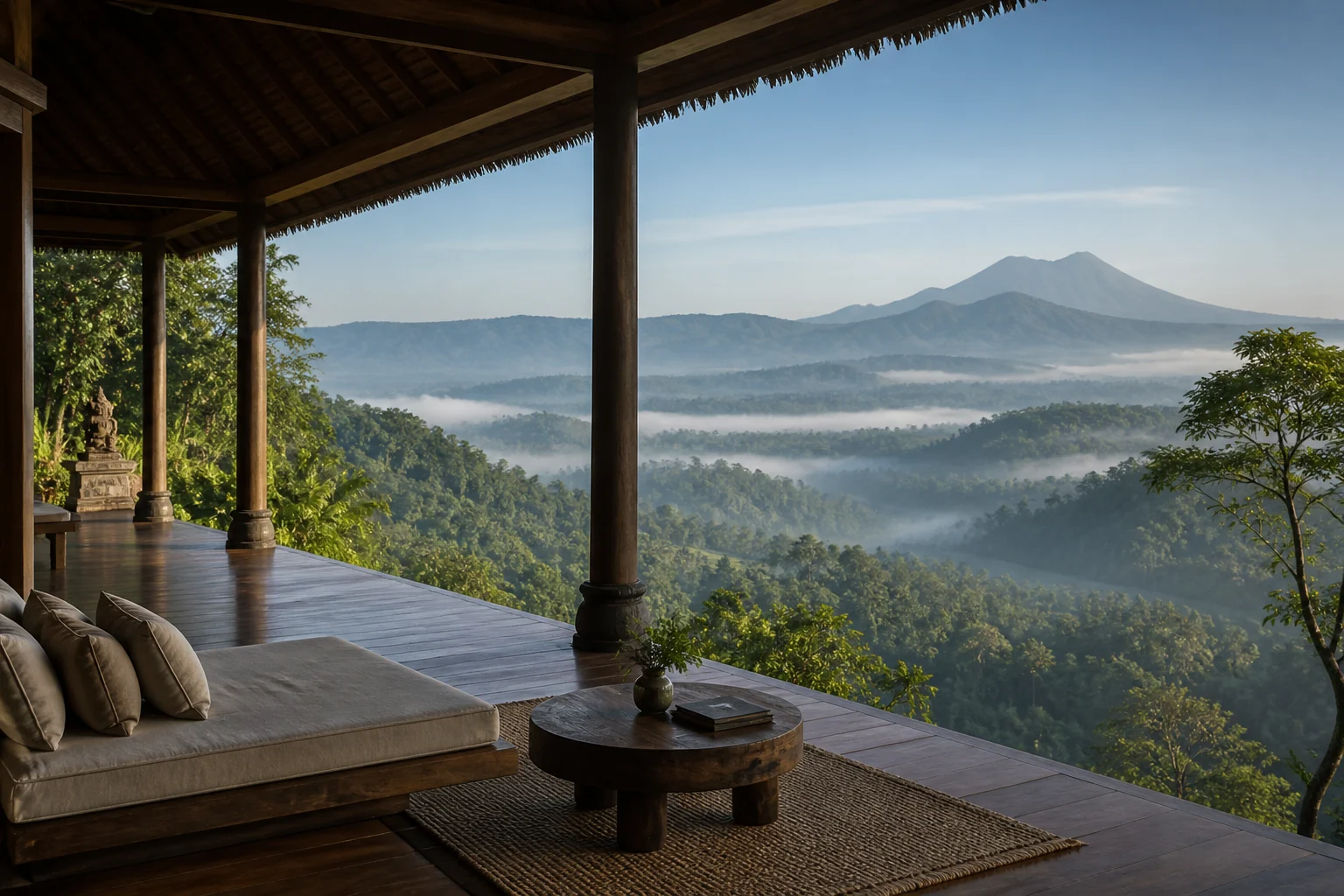
Buahan, a Banyan Tree Escape, is an adults-only retreat in the highlands north of Ubud. “No Walls, No Doors” is not a marketing flourish. Its bales are open to the landscape and deliberately abandon the familiar separation between bedroom and nature. That can feel liberating—or entirely wrong for anyone expecting air-conditioning, acoustic control and a sealed suite.
Buahan asks guests to accept weather, wildlife, darkness and sound as part of the stay. It is not roughing it: private pools, dining, spa and guided experiences provide considerable comfort. The ideal guest wants to inhabit the landscape, not merely photograph it from an attractive platform.
Capella Ubud: a highly composed camp
In Keliki, Capella Ubud interprets the romance of an old expedition camp through theatrical, individually designed tents and a strong service narrative. It is more composed than Buahan and intentionally so. The hotel fits travellers who want nature with atmosphere, dining and a sense of story. Family and age conditions, and the suitability of individual tent categories, should be reconfirmed for the specific dates.
| Property | Compelling reason | Honest reservation | Best suited to |
|---|---|---|---|
| Soori Bali | Architecture, villas and dark coast | Remote; sea not always swimmable | Design-minded couples |
| Nirjhara | Boutique scale, river and rice fields | Natural climate, fewer facilities | Travellers who value intimacy |
| Plataran Menjangan | National park and marine access | Long transfer and chosen isolation | Divers and nature travellers |
| Amankila | East Bali with complete service | Far from southern dining | Guests combining culture and polish |
| Buahan | True open-air living | No conventional sealed suite | Couples ready for nature |
| Capella Ubud | Atmosphere and camp theatre | Curated rather than minimal | Guests seeking character and service |
Villa or retreat: the same view, a different contract
A private villa sells space and autonomy. A retreat adds rhythm, guidance or a designed programme. Villa guests need written confirmation of the house manager's role, chef hours, food accounting, driver arrangements, security and overnight response. “Fully staffed” does not reveal whether a chef is available on demand, groceries carry a mark-up or a vehicle is exclusively assigned.
At a retreat, the equivalent question is what the chosen rate actually includes. Yoga, transfers, treatments, excursions and meals may be inclusive or additional. Guests who prize spontaneity can experience fixed times as constraint; those who want fewer decisions may experience the very same structure as luxury.
Traffic, the calendar and Nyepi are part of the design
Driving times in Bali are conditions, not promises. Rain, ceremonies, road works and traffic change them, so transfers require buffers—especially before an international flight. A secluded hotel may also be a poor first night after a very late arrival if its final approach is demanding.
Nyepi, Bali's Day of Silence, changes the entire island. Movement, light and ordinary activity are extensively restricted, and hotels follow special operating rules. For some, it is the defining experience of a journey; for others, a logistical complication. Check the date and its effect on arrival and departure before flights are issued. Local temple festivals deserve the same respect: they are not disruptions to be engineered away.
Confirm these points before paying a deposit
- The exact villa or room position, orientation, stairs, openness and cooling system.
- Current building work both on the property and immediately nearby.
- A realistic transfer plan with contingency, not only an ideal duration.
- Beach conditions, pool temperature and seasonal restrictions.
- Service hours, meal inclusions, driver provision and age policies.
- Night-time medical procedure and access to suitable care.
- Cancellation and amendment terms for the exact booked rate.
The Deluxetargets verdict
For a first quieter chapter in Bali, Tabanan offers the most elegant balance of landscape and accomplished hospitality. Menjangan deserves its own nature-led segment. Amankila is the most polished anchor in the east. Buahan is the bold choice when openness is genuinely desired; Capella Ubud when immersion should come with theatre and a pronounced service culture.
The strongest itinerary does not collect the greatest number of hotels. It combines at most two or three regions with a clear contrast and gives each move a reason. Bali beyond the mainstream begins when a booking follows the traveller's rhythm rather than the most familiar name.