
The difference between a beautiful Bali villa and a genuinely effortless stay is rarely another bedroom. It is a good brief. A chef, driver and house manager can hold a journey together almost invisibly, provided roles, priorities and boundaries are clear before arrival. The point is not to supervise professionals.
It is to give them enough precise information that the same decisions do not have to be made again every day.
The three key contacts
- House manager
- One operational contact for the daily rhythm, team, expenses, deliveries and changes.
- Chef
- Menus, allergies, food accounting, meal times and expectations for children or special diets.
- Driver
- Vehicle, duty hours, routes, child seats, luggage and realistic contingency.
“Fully staffed” is not a standardised inclusion
High-end villas often provide a manager, chef or cook, housekeepers and garden or pool staff. The actual roster varies widely. A chef may cover breakfast only, with lunch and dinner available by advance request. A driver may be included, bookable on demand or entirely external. Overnight presence, babysitting, spa therapists and security can be complimentary, limited or chargeable.
Ask for the staffing schedule and included hours in the booking confirmation. What matters is not who appears in the villa description, but who is assigned on the booked dates and what the chosen rate covers. No briefing can compensate for a service that was never contracted.

One guest leads—not the loudest group chat
Nominate one guest as the primary contact and the house manager as their operational counterpart. Group requests should flow through that line. Otherwise one person orders breakfast for eight, another moves it to ten, while a third sends the driver a new itinerary. The service then appears disorganised even though the conflict originated with the guests.
The arrival conversation should take no more than 20 minutes. Confirm the first 24 hours, explain the few habits that matter and agree when a short review will happen. One readable page is more useful than a 40-page dossier.
A chef needs decisions, not adjectives
“Light, healthy and local” sounds appealing but does not constitute a menu brief. State breakfast time, coffee and milk preferences, preferred heat level, Balinese dishes the group would enjoy, disliked ingredients, children's portions and the number of meals planned outside. Two or three example dishes communicate style better than a long list of wellness language.
Confirm how food is charged. At some villas, guests place a grocery float and the team provides receipts. Others charge market cost plus a clearly stated handling fee or use priced menus. None of these models is inherently wrong; ambiguity is. Set a spending envelope, an approval threshold and a reporting rhythm.
Allergies require two layers of confirmation
Record an allergy in writing, in a language the kitchen can confidently use, and discuss it in person. Specify the trigger, severity, cross-contact concern and emergency response. “No gluten” can describe a preference, intolerance or coeliac disease; staff should never have to guess. If the kitchen cannot guarantee suitable separation, that limitation must be disclosed before arrival and an alternative arranged.
Medication and the emergency plan remain with the travellers; villa staff do not replace medical care. The house manager should nevertheless know whom to call and which appropriate medical facility has been identified.

The driver plans conditions, not kilometres
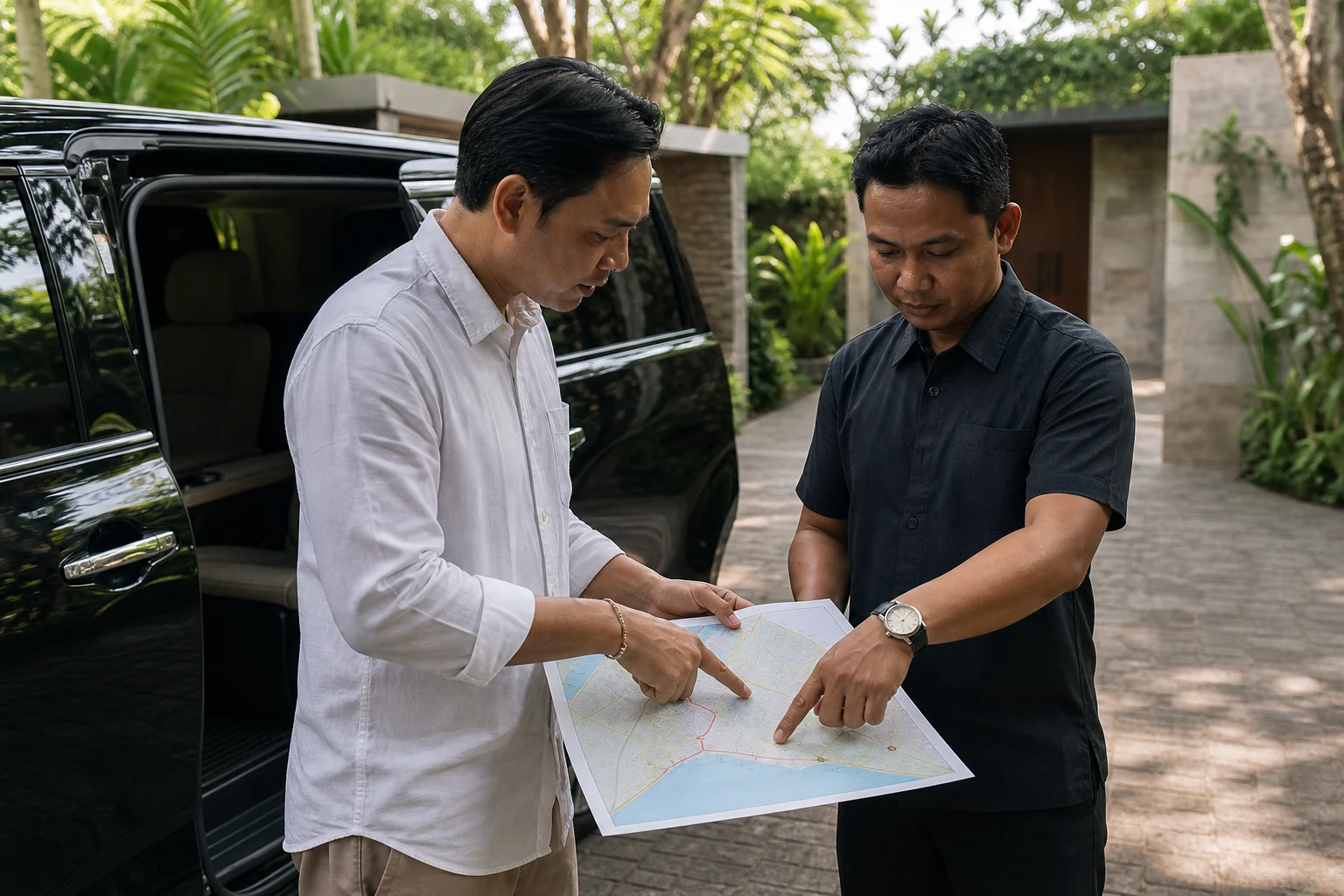
In Bali, a route is rarely just a distance. Time of day, rain, ceremonies, road works and traffic shape the result. Give the driver priorities rather than an hour-by-hour fantasy: what is fixed, what can be dropped and where is the protected window A skilled driver saves the day from unnecessary zigzagging.
Confirm vehicle type, air-conditioning, safe seat count, luggage capacity, child seats, duty and overtime terms, parking or tolls and the arrangement after a late dinner. For a larger party, two vehicles are often more elegant than an overloaded van, particularly when interests or return times diverge.
The house manager protects rhythm and privacy
The house manager converts wishes into a workable day, coordinating housekeeping, kitchen, transport, visiting therapists and deliveries. To do that well, they need clear quiet windows. Should staff remain out of sight during yoga, naps or video calls When may bedrooms be entered Who can access an office, safe area or dressing room Which outside guests and suppliers have been approved

Privacy does not mean sending people away without notice. Define service zones and times instead. If the group wants the villa entirely undisturbed in the afternoon, schedule bedroom service, pool work and shopping in the morning. The team no longer has to improvise between discretion and essential work.
| Role | Send before arrival | Confirm on site | Common mistake |
|---|---|---|---|
| House manager | Guest list, occasion, daily rhythm | Lead contact and approvals | Several guests issue conflicting requests |
| Chef | Allergies, preferences, meal plan | First menus and food accounting | “Healthy” without definition |
| Driver | Flights, fixed events, luggage | Route, buffers and duty time | Too many stops in one day |
| Housekeeping | Room allocation, children, laundry | Service and quiet times | Explaining privacy only after intrusion |
Families, celebrations and several generations
A family brief needs a rooming matrix: who sleeps where, which doors require safeguards, and who needs a cot, bed rail or early dinner Pool supervision remains the adults' responsibility unless qualified childcare has explicitly been contracted. “Staff are present” is not a safety plan.
For a birthday or private dinner, define scale, atmosphere, music cut-off, decoration, menu, outside guests and a wet-weather alternative. Weddings and large events usually exceed the normal villa team's remit; production, permissions, extra kitchen and service staff, and transport need separate planning.

Expenses: small enough for trust, clear enough for control
An agreed house float prevents every coconut from requiring approval. At the same time, set the amount above which the lead guest must be consulted and when receipts will be reconciled. Gratuities are best handed over transparently at the end; ask the manager about local practice instead of rewarding individuals competitively throughout the stay.
Personal data should not sit in an open group chat. Passport copies, medical information and complete flight files go only to the necessary recipients. The service team needs less information than a full travel dossier contains.
The first 24 hours
- Before landing: reconfirm flight status, contact number, vehicle, luggage and any late meal.
- On arrival: take one house tour covering safety, bedrooms and communication.
- Opening brief: align menus, schedule, privacy, expenses and emergency contact.
- First morning: ten minutes of feedback; after that, meet only when something changes.
The one-page brief
- Primary guest contact and deputy.
- Room allocation, children's ages and mobility requirements.
- Allergies clearly separated from food preferences.
- Breakfast window, in-villa dinners and restaurant reservations.
- Fixed appointments, desired activities and one protected free period daily.
- Housekeeping, laundry and privacy rules.
- Expense envelope, approval threshold and accounting preference.
- Emergency contact, insurer and agreed medical facility.
The Deluxetargets verdict
The finest villa team does not appear effortless because it can read minds. It appears effortless because it has a clear mandate. A brief, dependable information line gives professionals room to act while protecting guest privacy. Then the briefing should disappear from view—and the holiday should begin.