
The most important question in yacht charter is not how large the boat is. It is who carries the responsibility on board. On a bareboat, the guests are also the crew. Adding a skipper delegates navigation, but it does not quietly add hotel service. Only a professionally crewed yacht separates the holiday from the operation of the vessel. Understanding that distinction before choosing a yacht prevents the costliest misunderstandings at sea.
The three models at a glance
- Bareboat
- Maximum nautical freedom, with full responsibility for command, safety, manoeuvres, handover and daily life aboard.
- Skippered or lightly crewed
- Navigation and safety are professionally managed; cooking, housekeeping and concierge service are included only when explicitly agreed.
- Superyacht
- A professional operation with defined crew departments, a higher service level, greater range and more extensive infrastructure.
- The common mistake
- Assuming that the larger yacht is automatically the better holiday. The right answer depends on the party, cruising ground, pace and desired service.
Bareboat: freedom that includes the work
A bareboat is delivered without professional crew. Someone in the party commands the yacht and, depending on the cruising area, flag and charter company, must provide appropriate evidence of competence and experience. Requirements are not uniform. Even the International Certificate for Operators of Pleasure Craft is widely rather than universally recognised. Before signing, the charterer needs confirmation of the documents accepted at the actual port of departure and in the intended waters.
The freedom is genuine. Guests choose their own rhythm, cook for themselves, anchor in the bay they prefer and inhabit the yacht as a private home. The responsibility is equally genuine. Weather, passage planning, berthing, the safety briefing, fuel, water, batteries, tender, provisions and the return inspection all become part of the holiday. When the wind rises or machinery alarms, there is no captain to absorb the decision.
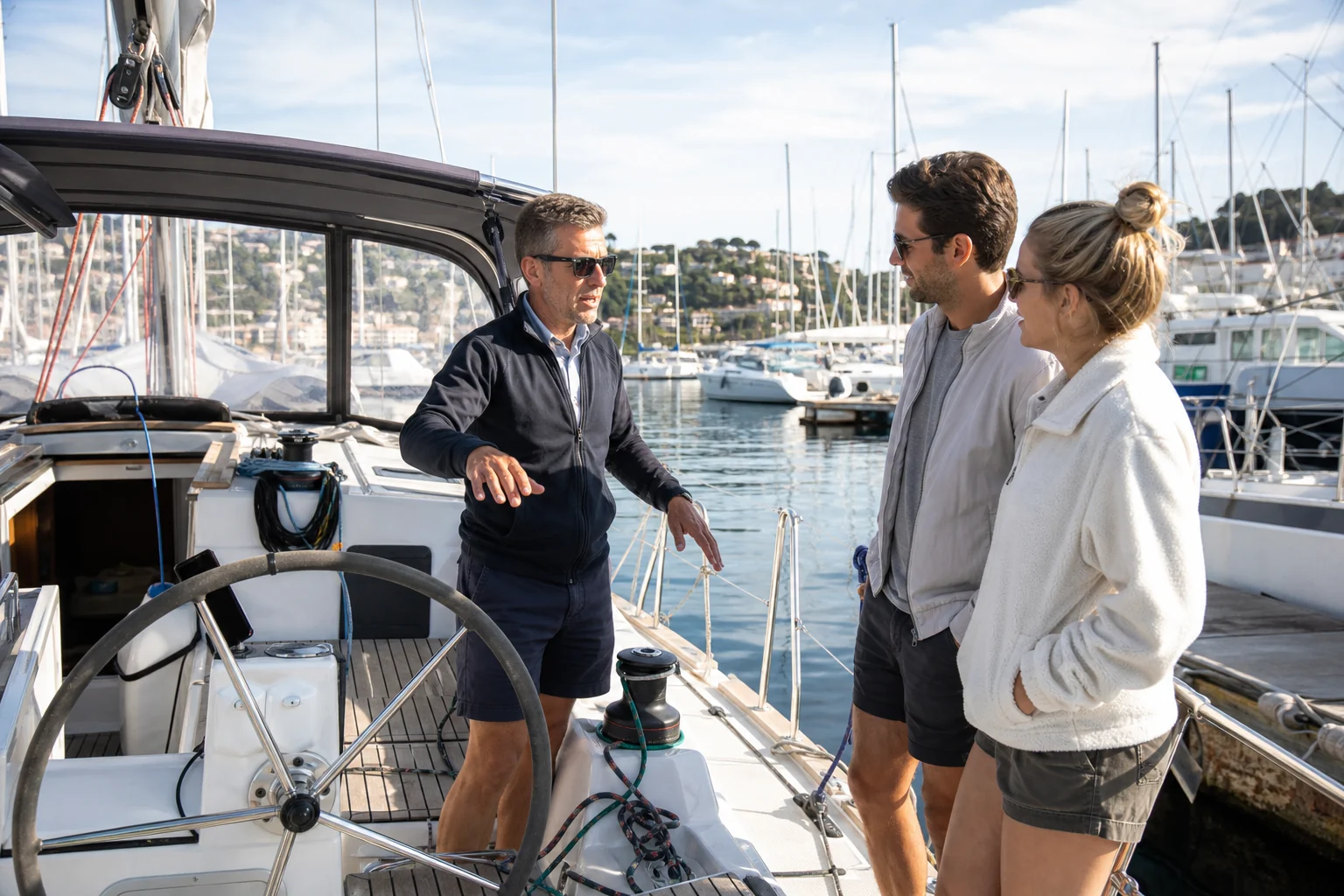
The advertised bareboat rate is therefore only the opening line of the cost. Cleaning, linen, outboard engine, fuel, marinas, local fees, optional equipment and the security deposit may sit outside it. The Royal Yachting Association advises charterers to understand the agreement, insurance, deposit conditions and the pre- and post-charter condition inspections. For competent sailors, this is not administrative clutter; it is part of responsible seamanship.
The middle ground: skippered does not mean fully crewed
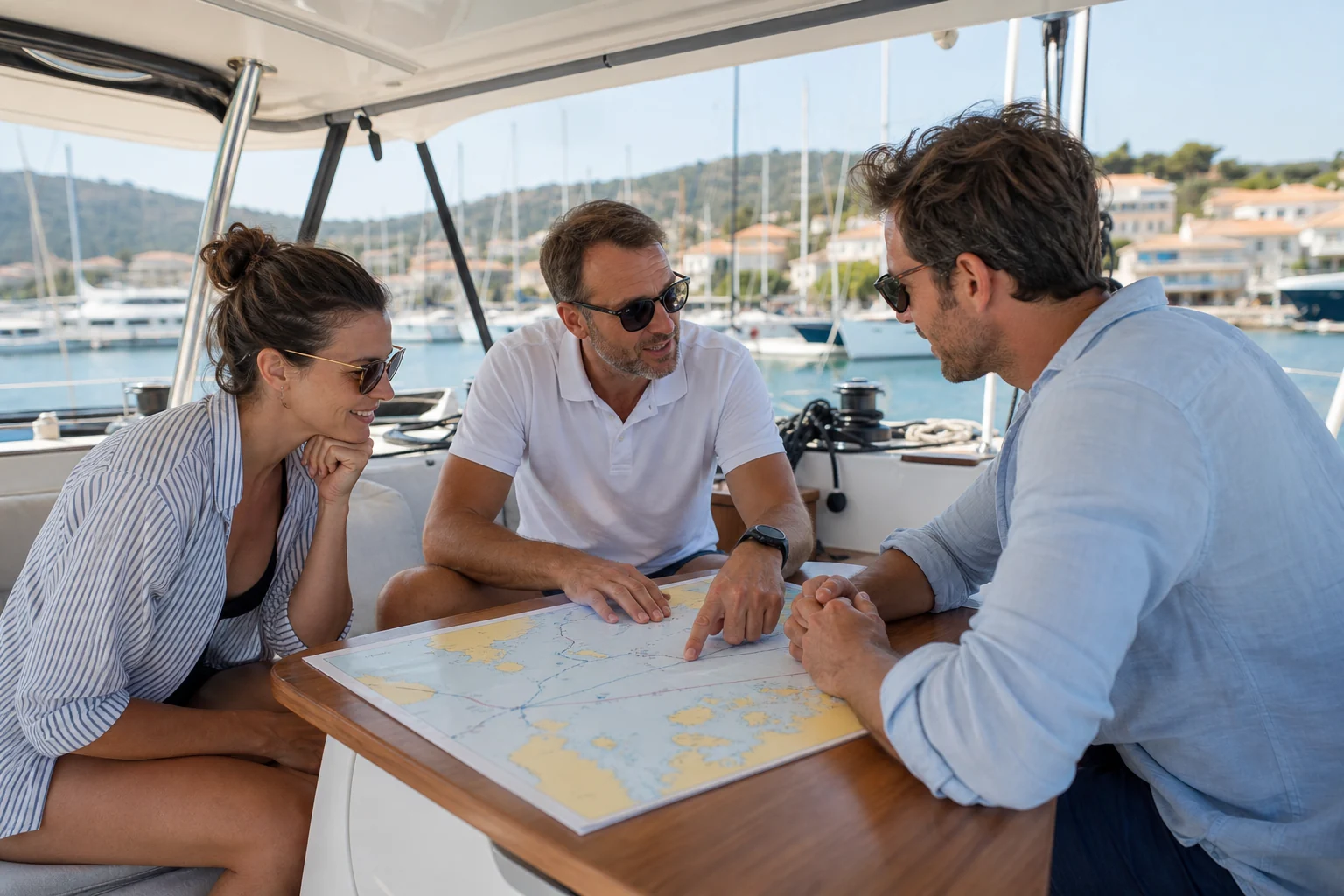
Many guests book a yacht “with skipper” and unconsciously imagine a compact superyacht. A skipper’s primary role is safe command of the vessel. They plan the route, assess weather and harbours, manoeuvre and carry nautical responsibility. It does not automatically follow that someone prepares breakfast, makes cabins, serves drinks, reserves restaurants or supervises children.
On a smaller sailing yacht, the skipper lives close to the guests and needs a designated berth or cabin. Depending on the arrangement, the party may still shop and cook, and usually includes the skipper in its meals. Guests who want greater relief need a host, chef or clearly specified two-person crew. Those positions should appear separately in the offer. “Crewed” is not a globally standardised bundle of services.
This category is excellent for travellers who want an immediate sailing experience without carrying navigation and manoeuvres themselves. It is less convincing when discreet full service, ambitious cuisine and permanently immaculate guest areas are central expectations. The failure is rarely the skipper’s; it begins with an inaccurate idea of the role that was booked.
A fully crewed yacht: separating the holiday from the operation
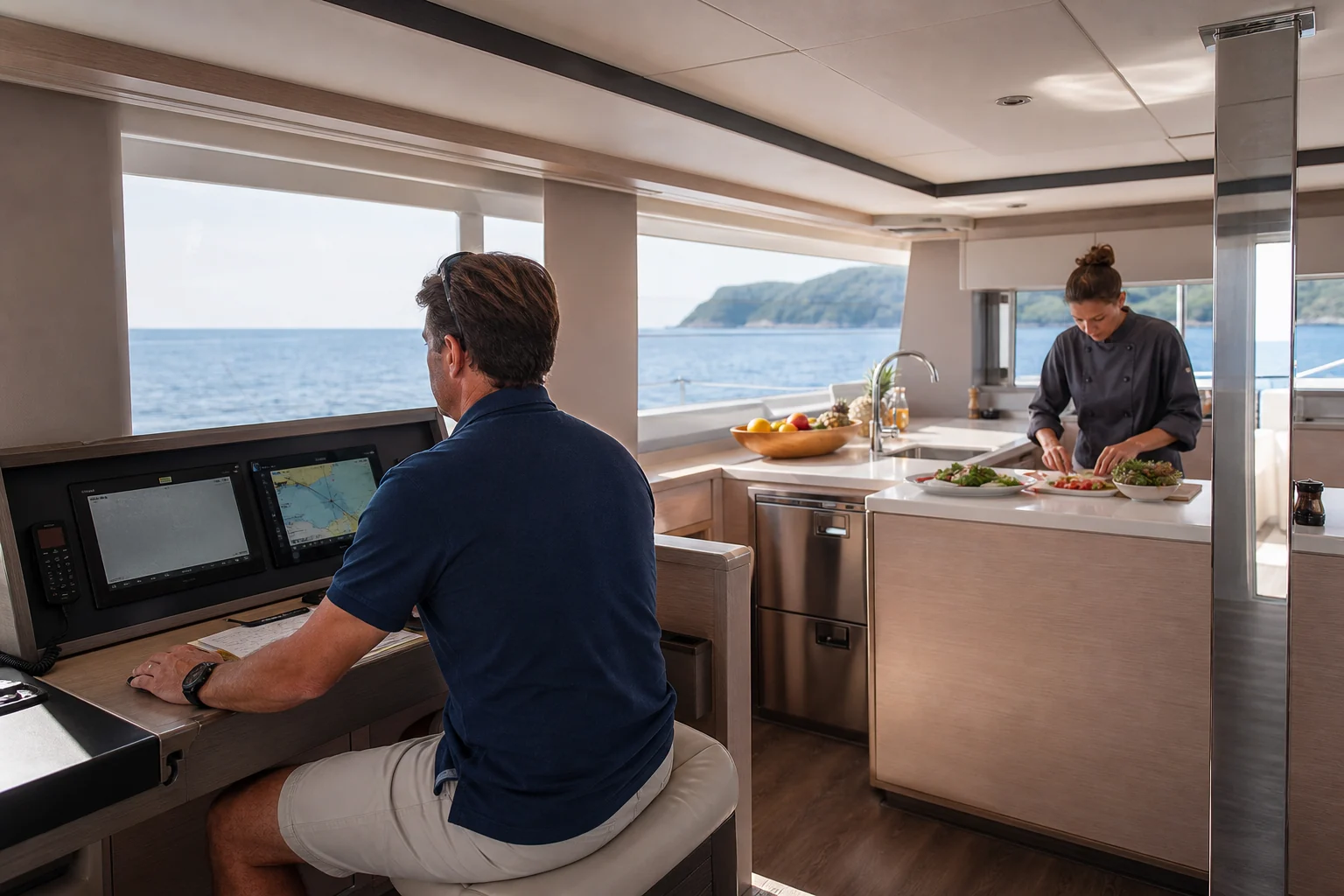
On a professionally crewed catamaran or motor yacht, the captain and crew handle operational life. Depending on size, navigation, deck, galley and interior service have separate responsibilities. Guests still decide how they wish to travel, but they no longer have to run the trip. That separation is the source of ease.
A strong crew does far more than serve at the table. It launches the tender, prepares watersports, monitors weather and the anchorage, coordinates restaurants, maintains guest spaces and judges when its presence is useful or intrusive. Paradoxically, more crew can create more privacy: when circulation routes, crew areas and roles are well designed, the work disappears from the guest experience.
On smaller crewed yachts, quality depends more heavily on individual people. A gifted captain-and-chef team can create an intimate, deeply personal week; an overstretched pair may be navigating, serving and cleaning at the same time. The relevant measure is not simply crew numbers, but their experience, the cabin plan and whether expectations are realistic for the staffing aboard.
What a superyacht actually changes
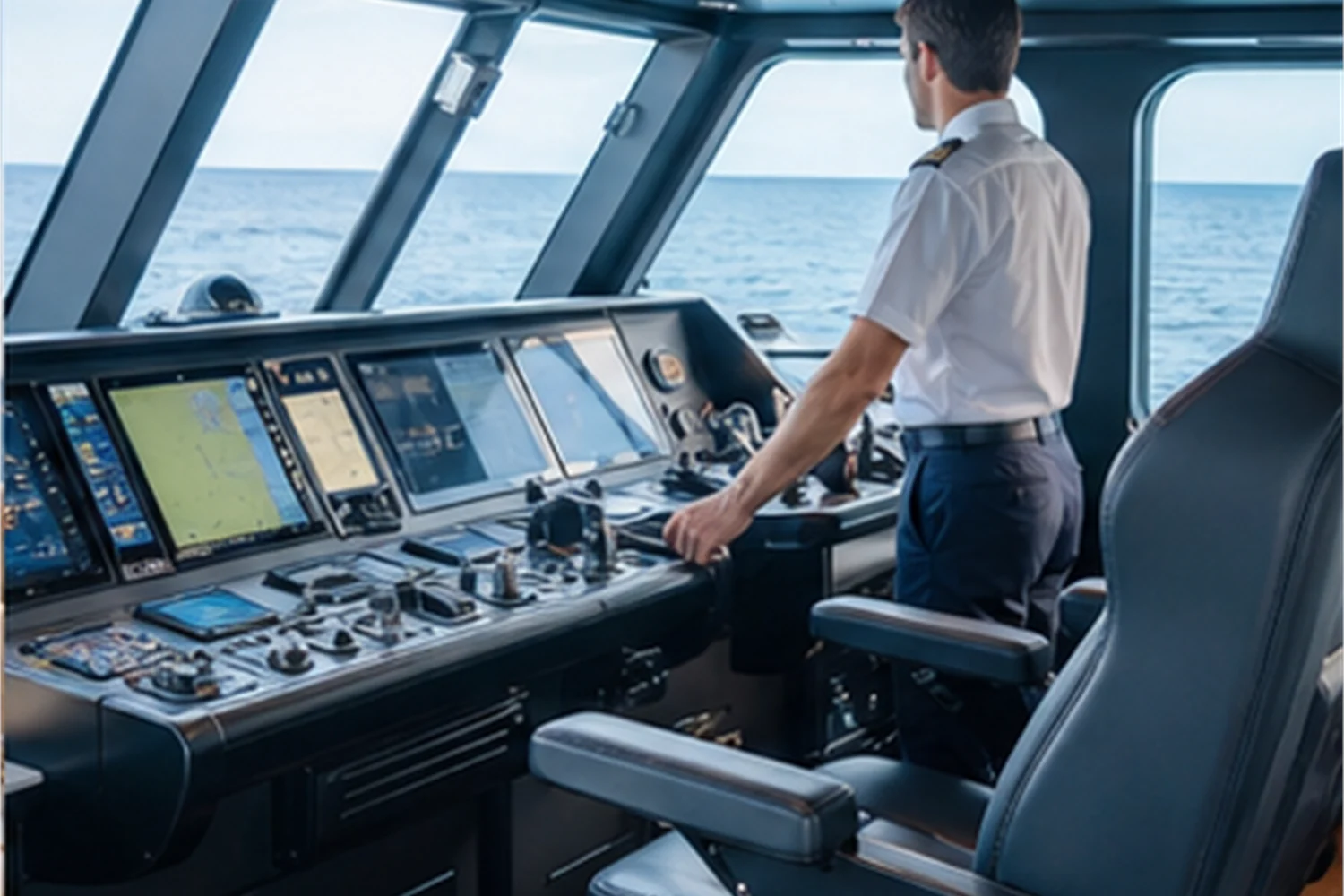
Superyacht is not defined identically in every market, although the term commonly begins at around 24 metres. Editorially, the operational consequences matter more than the number: greater volume, more complex systems, a larger crew and clearer separation between guest and working areas. Often there is better stability, longer range, several dining and living zones,
a broader selection of water toys and a tender able to make shore plans independent of the yacht’s berth.
This infrastructure allows much deeper personalisation. A chef can cater to different diets while interior and deck teams work in parallel. A captain can adapt the itinerary to weather and priorities without every change taking over the guests’ day. For multigenerational families, larger groups of friends or parties with very different routines, that operational capacity is often more valuable than spectacle.
A superyacht is not inherently the better answer. It can be less agile in small harbours, high decks may feel more removed from the water, and some guests prefer the immediacy of a sailing catamaran. Privacy also needs interpretation: there is more space, but more crew travel with it. A careful yacht match therefore considers layout, service routes and crew culture, not just length, year and exterior profile.
Comparing costs: look beyond the weekly rate
Bareboat extras are commonly itemised. A smaller crewed yacht may be partly inclusive in one region and run on an expense-based structure in another. On many superyacht contracts, the charter fee is supplemented by an Advanced Provisioning Allowance, or APA, for variable expenses such as fuel, food and berthing. Established brokers commonly cite a range of 20 to 40 per cent, but the specific charter agreement is the only authoritative figure.

Local taxes, gratuities, travel to the yacht, special deliveries and repositioning may also apply. The useful comparison is therefore not rate against rate, but total cost against the service actually included. An apparently cheaper yacht becomes expensive when crew, transfers, provisioning and requested equipment must be added separately.
| Decision | Bareboat | Skippered / crewed yacht | Superyacht |
|---|---|---|---|
| Nautical responsibility | The guests | The skipper or captain | A professional captain |
| Service | Self-managed | From navigation only to a small crew; verify the contract | Separate deck, galley and interior roles |
| Privacy | No outside crew, but every task remains | Close physical proximity to crew | More crew, usually better service zoning |
| Best suited to | Experienced, active sailors | Couples and families wanting nautical support | Groups with high and varied service expectations |
Which format belongs to which trip
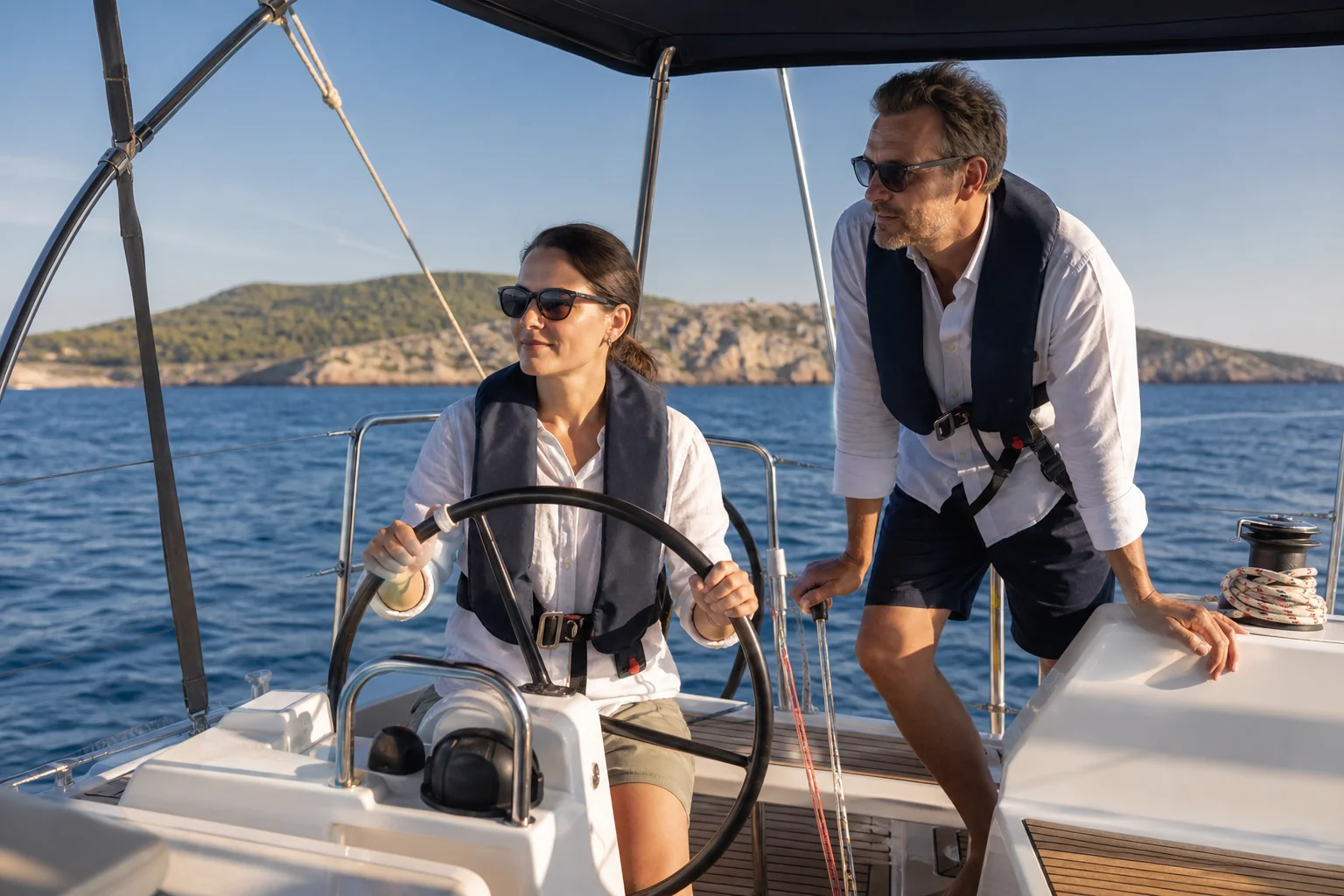
For experienced sailors: Bareboat is the honest choice when commanding the yacht is part of the pleasure and nobody pretends to be a passive guest. Modest daily passages and a familiar cruising area protect that pleasure.
For couples or small families: A yacht with a skipper or small crew retains closeness to the sea while removing navigational pressure. Before booking, establish exactly who cooks, shops and cleans, and where the crew sleeps.
For several generations or a larger group: A fully crewed yacht supports different daily rhythms, more retreat and professional assistance. Mobility, childcare expectations, cabin access and noise separation matter more than glamorous renderings.
The Deluxetargets view
Do not begin with a yacht. Begin with an honest allocation of roles. Who wants to steer Who genuinely wants to cook How much proximity to crew feels comfortable Should lunch be prepared while other guests take the tender ashore And who decides when the forecast and the preferred itinerary no longer agree
Luxury afloat does not necessarily mean maximum length. It means that responsibility, space and service are distributed correctly. For a passionate sailor, that may be a well-maintained bareboat. For a family, it may be a catamaran with captain and chef. For a multigenerational group, only a superyacht may provide enough operational depth. The right yacht is the one whose working reality suits the way the guests wish to travel.