
After a ski day, the body rarely needs the most spectacular treatment. It needs the right sequence. Cool down, drink, eat and establish whether the issue is fatigue or injury. Only then may a gentle massage, warm pool or quiet sauna be appropriate. Recovery can mean less soreness and better rest; it does not mean that an overloaded knee or concussion disappears in the spa.
A sensible sequence
- 0–30 minutes
- Dry clothing, gradual cool-down, fluid and an honest injury check.
- 30–90 minutes
- A light meal, gentle movement and—if all is well—warmth or moderate massage.
- Later evening
- No treatment marathon: eat normally, limit alcohol and prioritise sleep.
- Next morning
- Reassess movement and weight-bearing rather than masking pain with another treatment.
First distinguish tired, sore and injured
Tired legs feel heavy but remain controlled. Delayed-onset muscle soreness generally emerges in the hours after unfamiliar effort. An acute injury more often has a clear moment, sharp pain, instability, rapid swelling or reduced ability to bear weight. Convenience should never blur these categories.
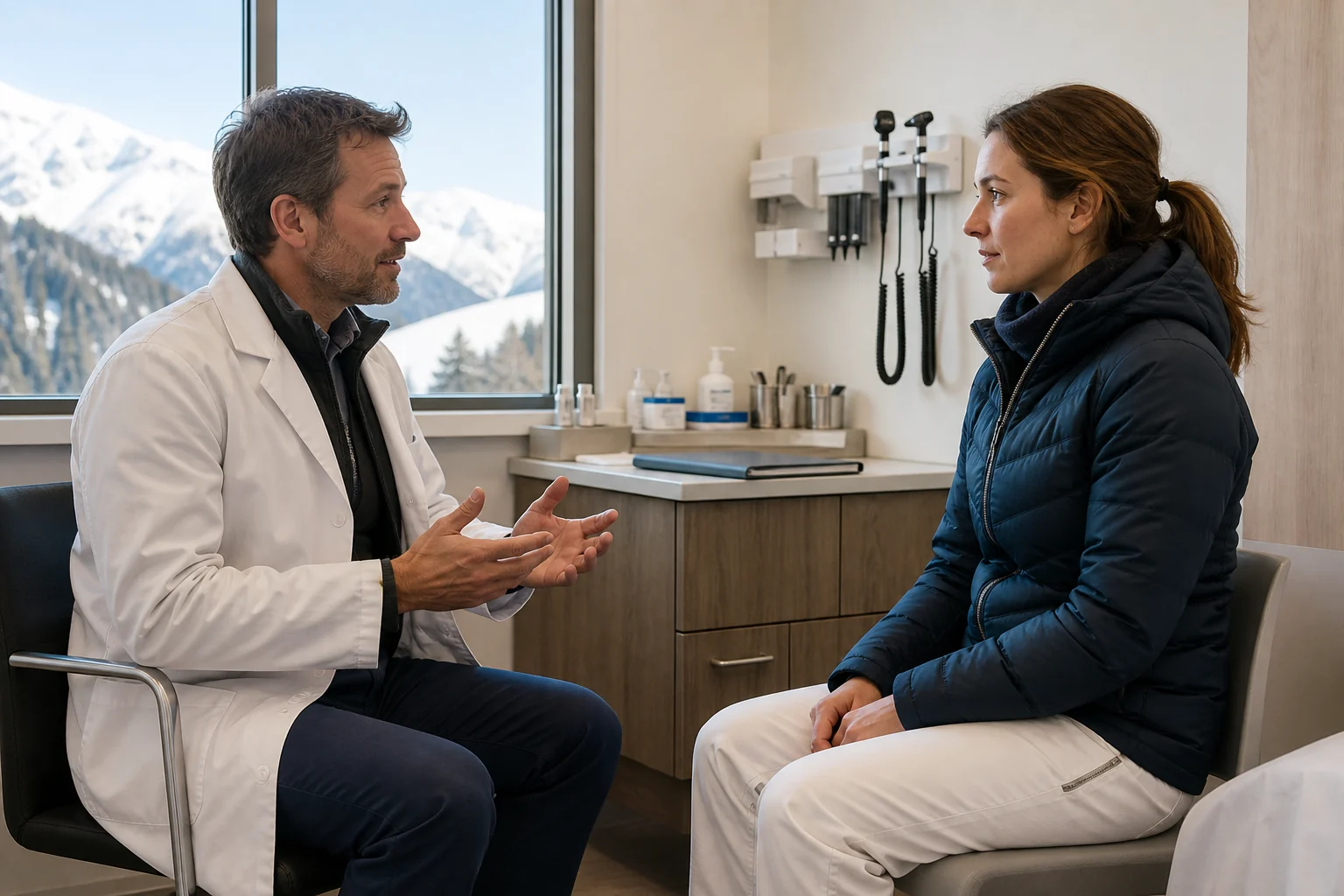
Massage over fresh trauma, aggressive heat on obvious swelling or an ice bath after head impact are not luxury recovery. A good mountain spa asks about falls, symptoms, medication and relevant conditions—and declines treatment when assessment is more appropriate.
Hydration is not decorative spa water
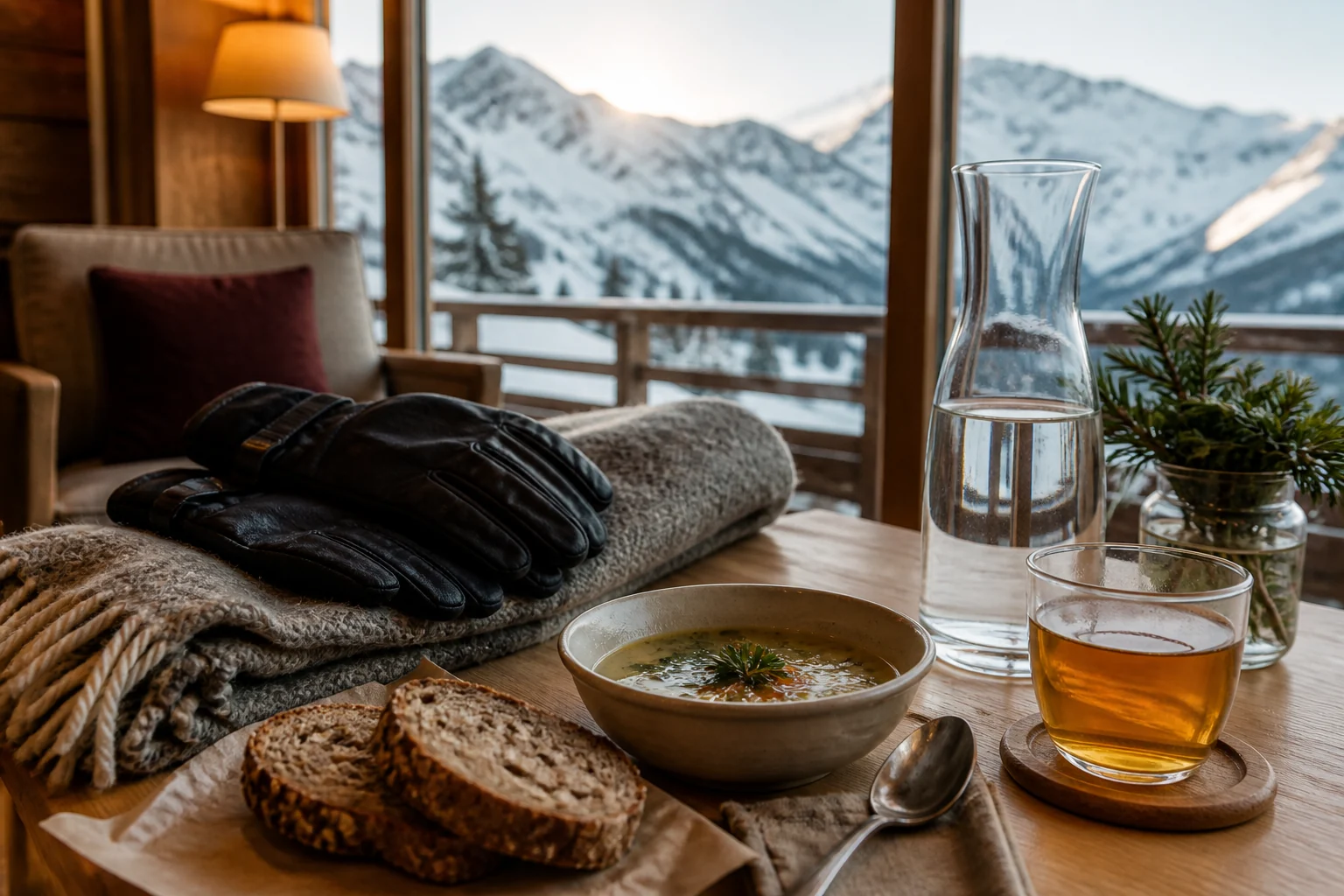
Cold suppresses thirst, mountain air is dry and insulated clothing does not prevent sweating. Add coffee, an aperitif and sauna, and fluid loss matters. Drink progressively through the day rather than attempting a frantic litre challenge at night. Need varies with the individual, weather, altitude, intensity and duration.
ACSM fluid-replacement guidance emphasises appropriate hydration, not one universal volume. After a long, strenuous day, ordinary food and salt can matter alongside water. Guests with heart, kidney or other medically prescribed fluid limits follow their own clinical plan.
Massage: comfort, not repair
A systematic review found evidence that post-exercise massage may reduce delayed soreness. Individual studies also show the necessary caveat: less pain does not automatically mean restored muscle function. That is how treatment should be sold—as possible relief, not a guarantee for tomorrow's skiing.
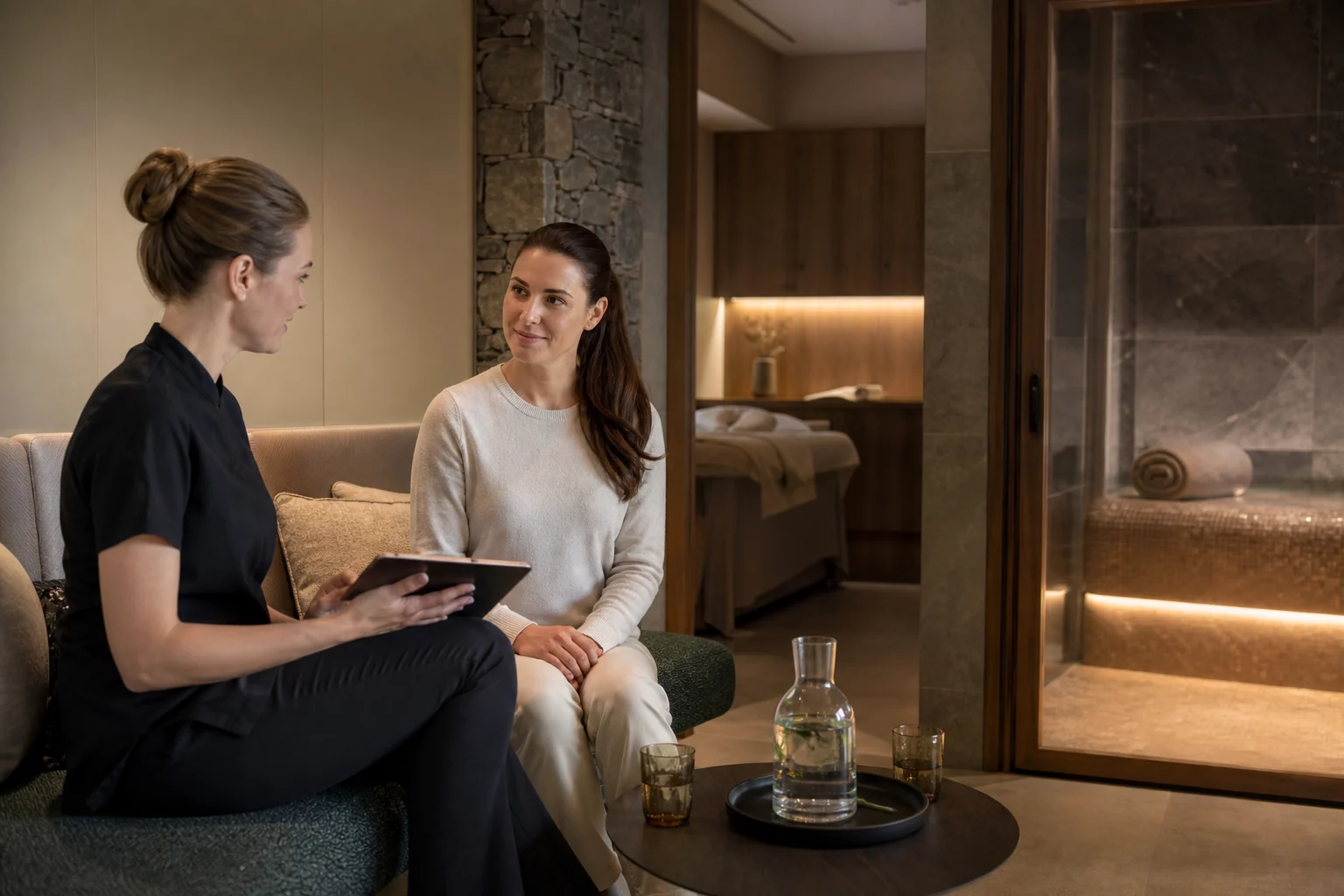
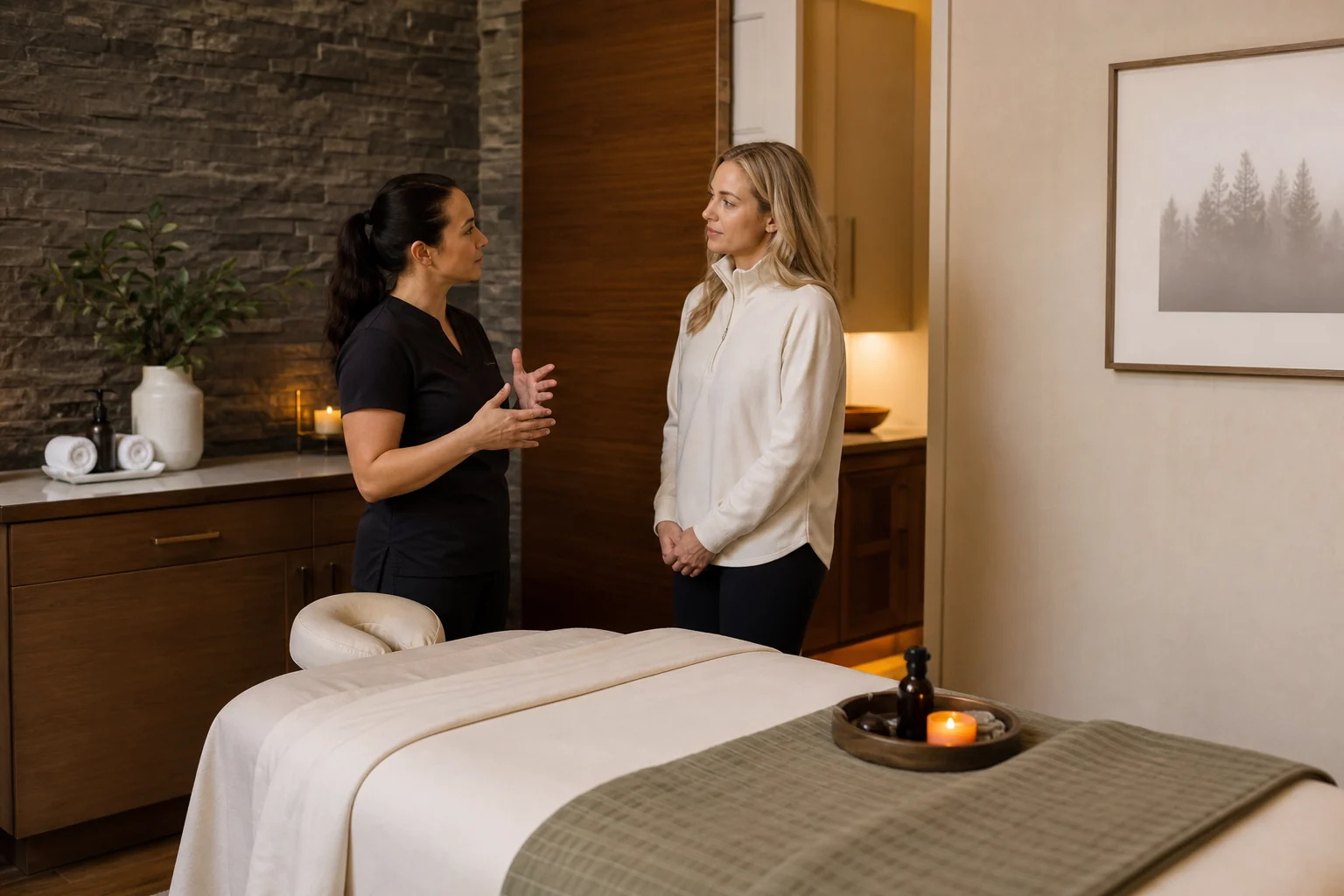
Moderate work on calves, thighs, gluteal muscles and back is often more plausible than deep, painful pressure. “Harder” is not a quality standard. Tell the therapist about new pain, anticoagulants, operations, varicose veins and any area that should not be touched.
Sauna and steam: pleasant, not physiologically neutral
Heat can promote relaxation and feel good with general stiffness. It does not detoxify a ski day or heal micro-injury. Sauna changes circulation and thermal load while adding fluid loss. Guests who are dehydrated, feverish, acutely unwell or intoxicated should abstain.
Unstable cardiovascular disease, fainting tendency or medical uncertainty warrants prior advice. Healthy guests should still start short, leave at dizziness or nausea and cool down gradually. Multiple extreme hot-cold cycles are not a prerequisite for recovery.
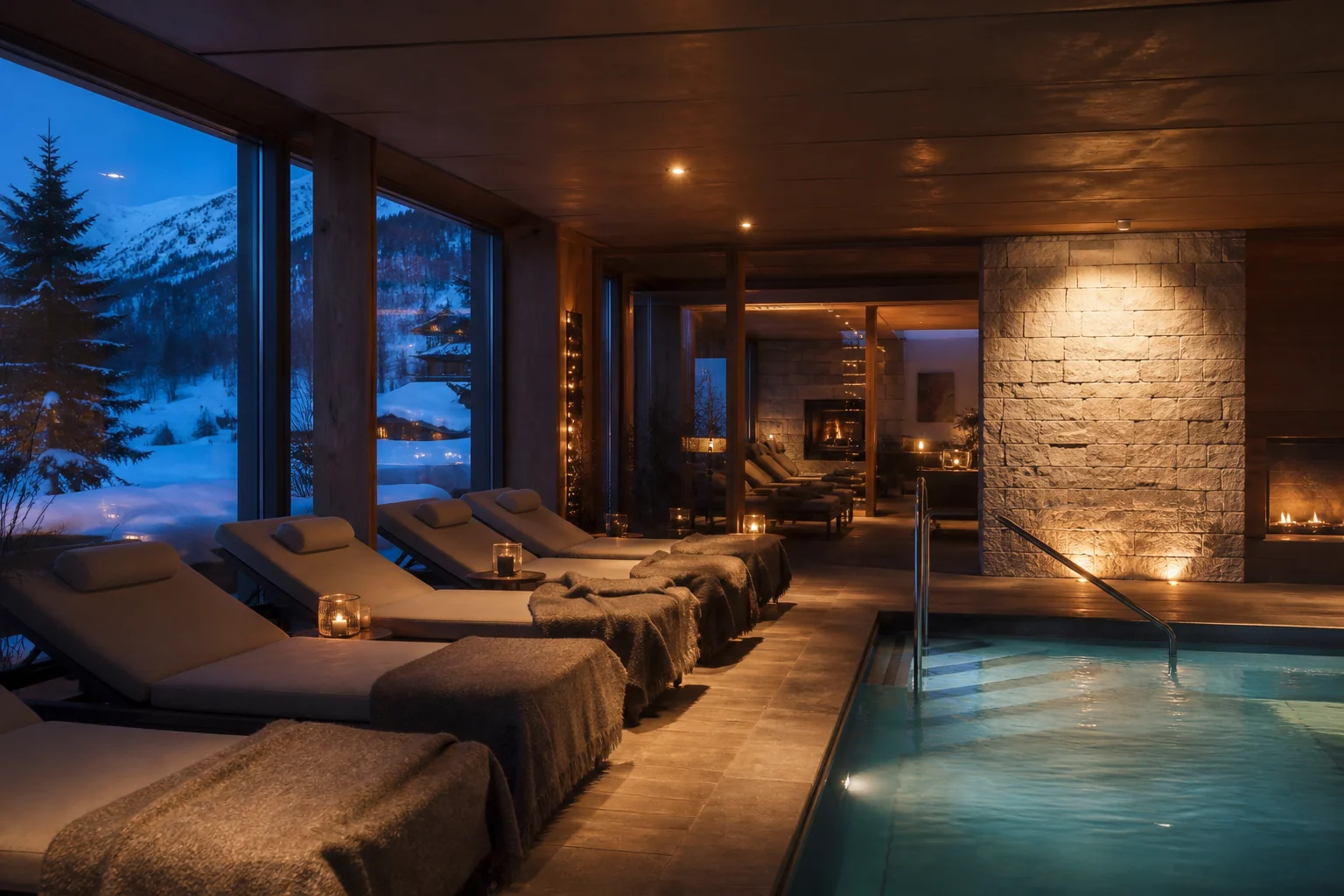
A warm pool: the most elegant default
A temperate pool combines warmth with reduced joint loading. Quiet walking, easy movement and floating may suit an ordinary ski day better than immediate deep massage. The pool is not a diagnostic test: pain on weight-bearing, clear swelling or instability remain warning signs.
Very hot whirlpools place greater demands on circulation and hydration. Temperature, duration and hygiene matter more than the mountain view. Open skin wounds do not belong in a shared pool.
Cold: a tool for a purpose, not a courage ritual
Cold-water immersion can improve short-term outcomes such as soreness or perceived recovery after acute strenuous exercise. It may have a place for athletic guests facing a tight schedule. It does not justify an extreme ice bath at the end of every holiday day.
Reviews suggest that regular immediate cooling after strength training may slightly attenuate some training adaptations. For most skiers, the simpler question is whether cold feels useful or merely produces distress, shivering and circulatory symptoms. Unsupervised immersion after alcohol or with cardiovascular risk is unwise.
| Treatment | Realistic benefit | Avoid when | Good approach |
|---|---|---|---|
| Gentle massage | Relaxation and less perceived tension | Acute injury or unexplained swelling | Moderate; disclose symptoms first |
| Sauna / steam | Warmth and quiet | Dehydrated, intoxicated or medically unstable | Begin short and cool gradually |
| Warm pool | Low-load movement | Open wounds or unstable injury | Easy movement, not a workout |
| Cold water | Short-term recovery after high load | Circulatory risk or poor tolerance | Purposeful, supervised, not maximal |
| Physiotherapy | Functional assessment and guidance | — | For recurrent or unclear problems |
Stretching and mobility: gentle, not heroic
After hours in ski boots, ankles, hips and back may benefit from quiet movement. The aim is to restore comfortable range, not set a flexibility record. Painful stretching of cold tissue and abrupt manipulation are unnecessary.
A short guided mobility session is valuable when the instructor asks about symptoms and offers alternatives. It is less photogenic than an elaborate treatment but easier to integrate into a sustainable daily rhythm.
Compression boots and devices
Compression boots may feel pleasant, but an expensive machine does not automatically outperform rest, food and sleep. Do not self-administer them with vascular disease, suspected thrombosis, marked one-sided swelling or neurological symptoms. Spa staff should know the device's contraindications.
Electrical stimulation and percussion devices also require sensible intensity and placement. They should never be used to mute warning signs before the next morning.
An ideal 90-minute mountain-spa sequence
- 15 minutes: dry clothing, water, a small snack and honest body scan.
- 20 minutes: calm warm-pool movement or brief mobility.
- 35 minutes: moderate, clearly briefed massage if no injury is suspected.
- 20 minutes: rest, drink and rise slowly; sauna is an alternative, not an extra obligation.
What the therapist must know
- Falls, head impact and any new pain that day.
- Swelling, instability, numbness or reduced weight-bearing.
- Cardiovascular, vascular, neurological or relevant skin disease.
- Pregnancy, recent operations and important medication.
- Alcohol, dehydration, infection or unfamiliar altitude symptoms.
The Deluxetargets verdict
After an ordinary ski day, the most luxurious combination is remarkably unspectacular: drink, eat, move gently, choose one moderate treatment and sleep early. Excellent mountain spas do not promise miracles. They dose, ask and recognise when professional restraint is worth more than a sold treatment.