
Capri does not need to be empty to feel private. What matters is where you sleep and when you move. Guests who wake on the island, spend its busiest hours on the water and remain after the return ferries experience a different Capri from the day visitor moving between arrival and departure.
The short answer
- Minimum stay
- Three nights; two work only with exceptionally clean arrival logistics.
- Best base
- Capri town for early and late walks, Anacapri for distance from the main flow, Tragara for views and retreat.
- Core principle
- Use land early and late; take to the water during the island's densest hours.
- Never promise
- Empty lanes, calm seas, Blue Grotto access or punctual ferry operations.
Luxury begins before breakfast and after aperitivo
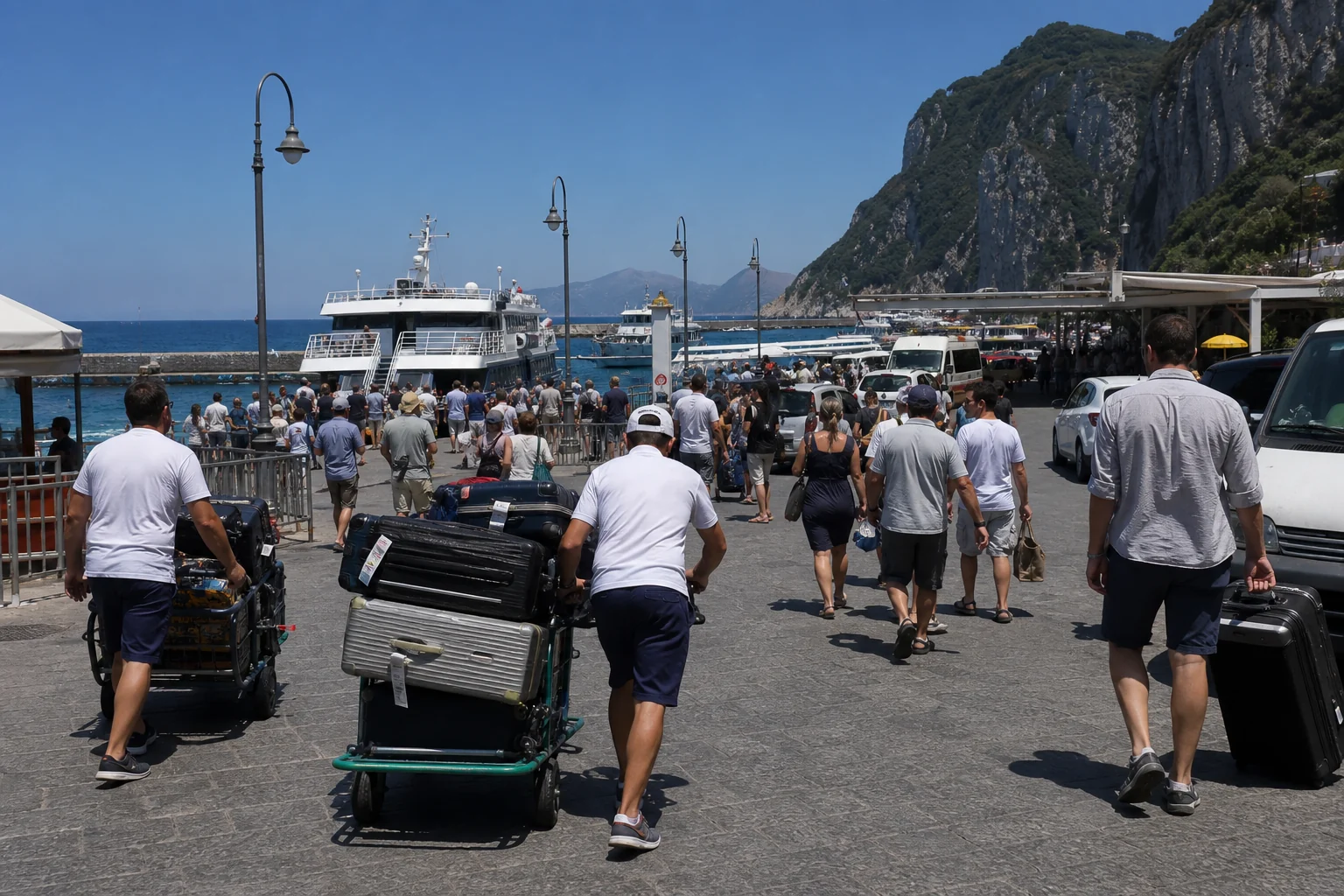
Most day visitors see Capri within a compressed window. The result is not uniform congestion but a tide: Marina Grande, the climb to the centre, Piazzetta, a viewpoint, lunch and the return to port. Staying overnight gives you ownership of the edges. A walk before breakfast, a late lunch or dinner after the largest departures changes the island more profoundly than an ostentatious transfer.
The objective should not be sold as “Capri without people”. In high season the island remains animated. Intelligent timing removes friction; it does not manufacture solitude.
Three nights are the smallest persuasive stay
Arrival consumes time through the port, luggage and the final hotel transfer. Departure is governed by the next connection. With two nights, only one complete day remains, and it is quickly overloaded with a boat, Anacapri, lunch and shopping. Three nights create two usable days: one shaped around the island, the other around the sea. A fourth is valuable when weather flexibility, a spa, a beach club or an entirely unscheduled morning matters.
Your hotel location is a timekeeping decision
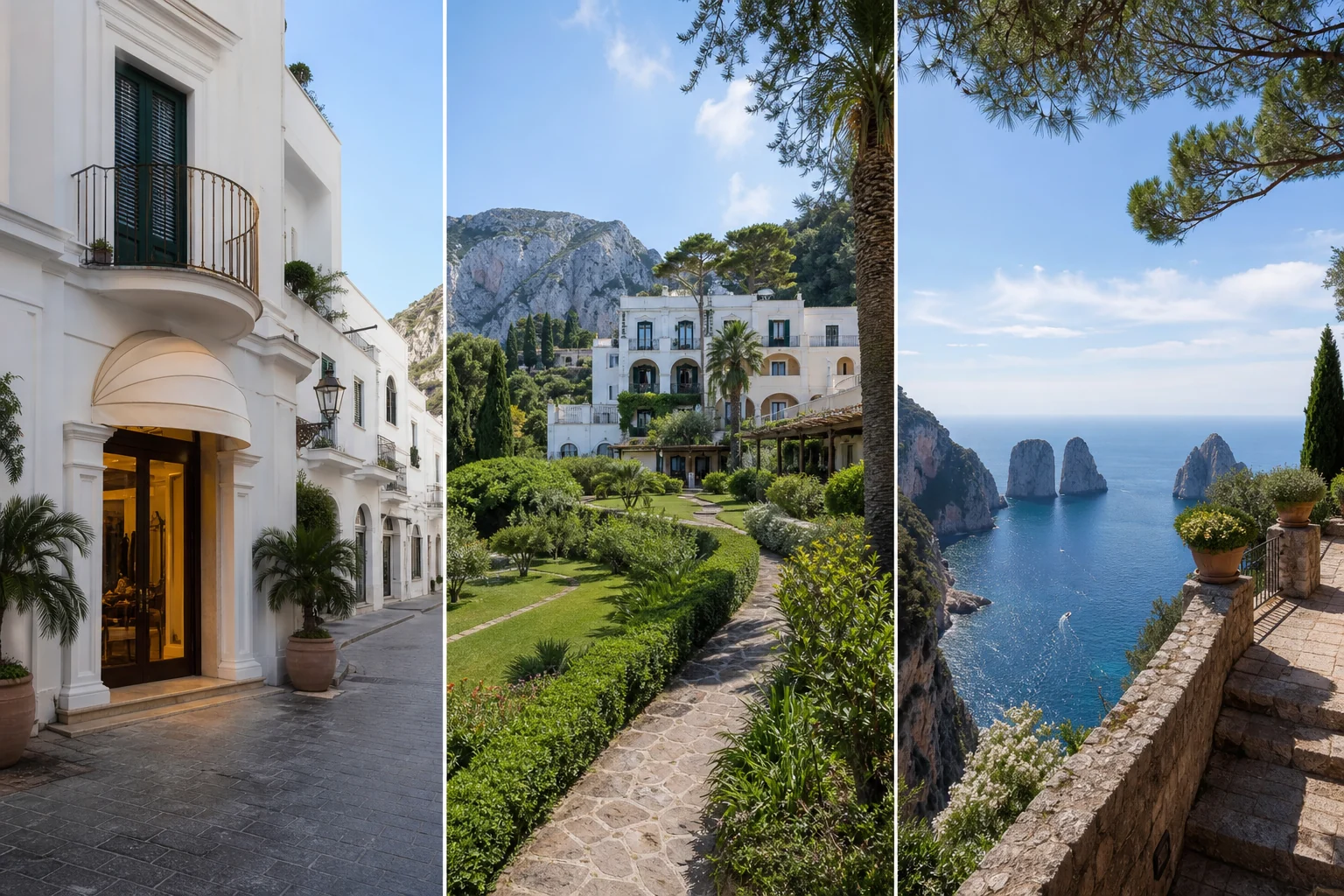
| Base | Time gained | Friction | Best for |
|---|---|---|---|
| Capri town | Early Piazzetta, late restaurants, no evening ride home | Inside the strongest daytime flow | First visits, a social rhythm |
| Anacapri | Quieter mornings, village life, Villa San Michele and Monte Solaro | Transfers to Capri town and the port | Longer stays, calm and spa time |
| Tragara / Faraglioni | Views, Pizzolungo and quiet evenings | Luggage and the final approach need organisation | Couples, walking and retreat |
A hotel in Capri town saves time at night. An Anacapri base saves patience during the day. Tragara rewards travellers who value outlook and stillness above spontaneous vehicle access. None is objectively superior; the right address follows the guest's clock.
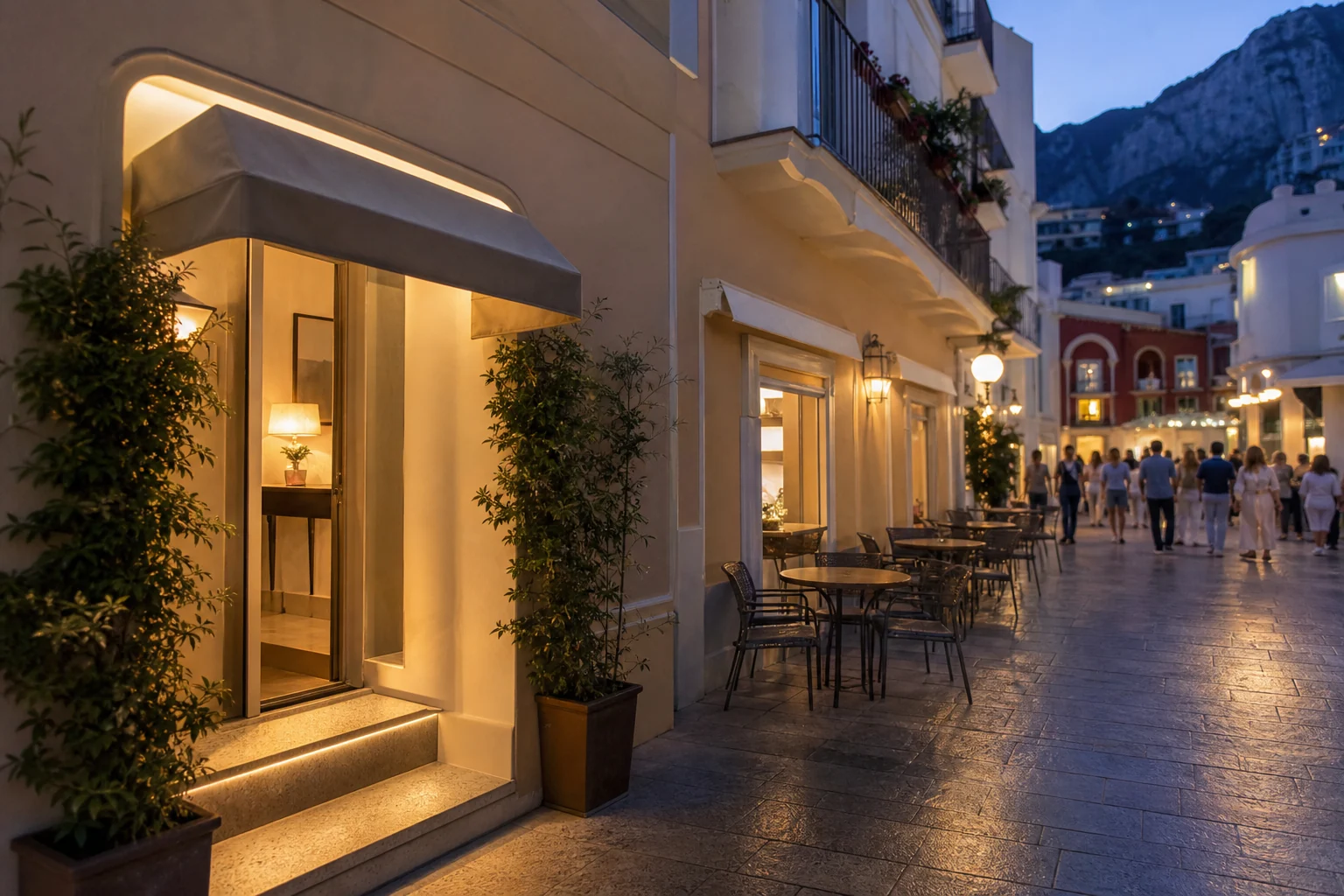
A full Capri day should have space in it
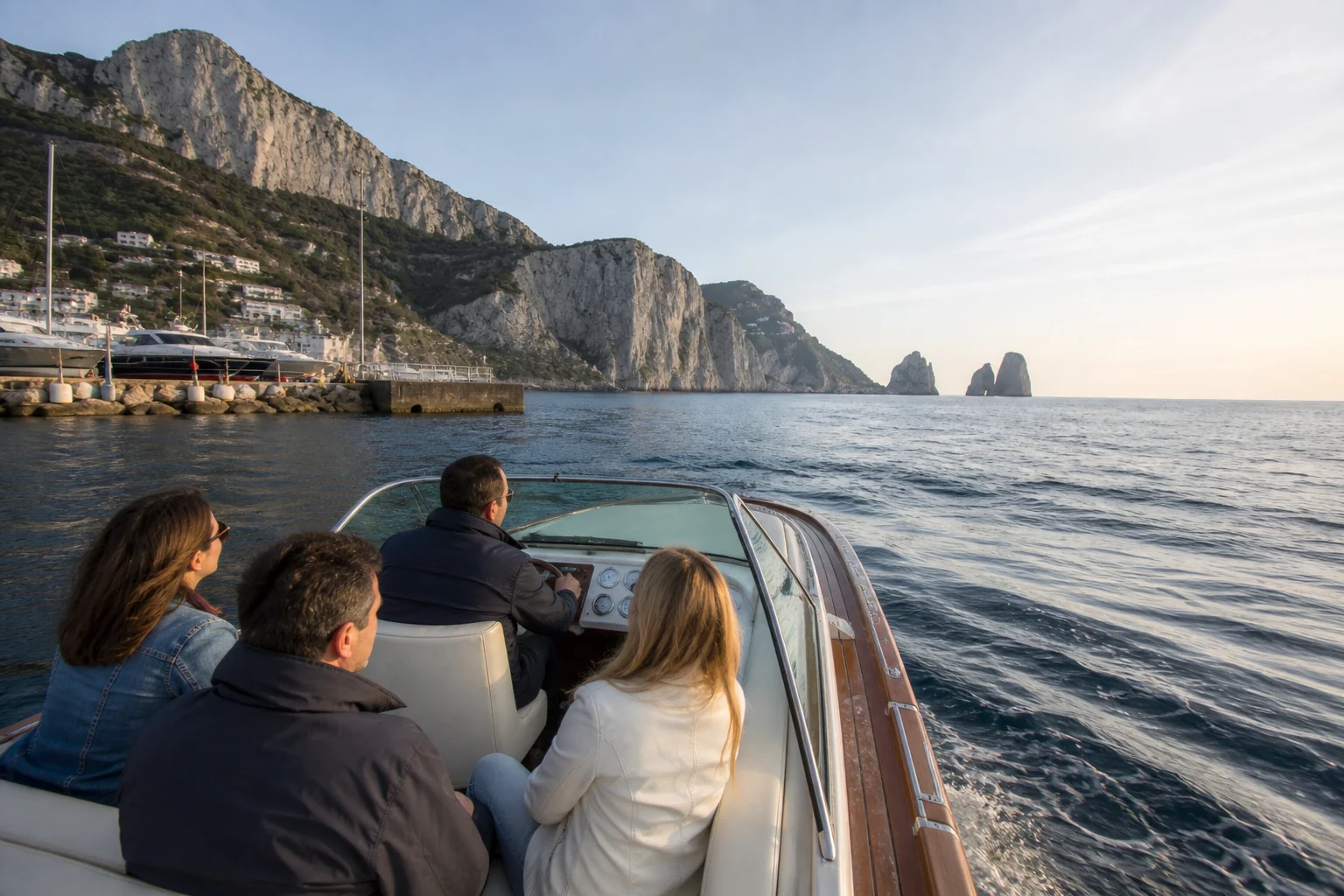
Begin on land: walk through a quiet Capri town, take the Pizzolungo path or start early in Anacapri. Follow with a late breakfast. As the centre grows denser, board the boat. It need not be long or theatrical; for coves and swimming, a nimble, comfortable craft is often more useful than an oversized yacht.
Return in the later afternoon, rest at the hotel and leave again as the homeward movement gathers towards the port. This structure contains deliberate gaps. Those gaps are what separate a holiday from an inspection tour.
Boat planning: Marina Grande is not the whole experience
The port is a transport hub and can feel like one. Confirm the meeting point, boarding method, shade, towels, drinks, luggage and return window in advance. On a private boat, the captain, hull and weather judgement matter more than length. Travellers sensitive to swell need a route with credible alternatives, not a rigid promise to circumnavigate the island.
The Blue Grotto remains an option. Access and waiting time depend on sea state, operations and demand. A good captain judges whether that day's window deserves the time; an itinerary should not treat a social-media landmark as an obligation.
Anacapri is a destination, not an escape route
Anacapri is more than relief from Piazzetta. Villa San Michele combines gardens, a collection and the story of Axel Munthe's life on the island; Monte Solaro restores a sense of Capri's geography. Both suffer when squeezed between the port and lunch. Opening hours and chairlift operations are seasonal and must be checked for the travel date.
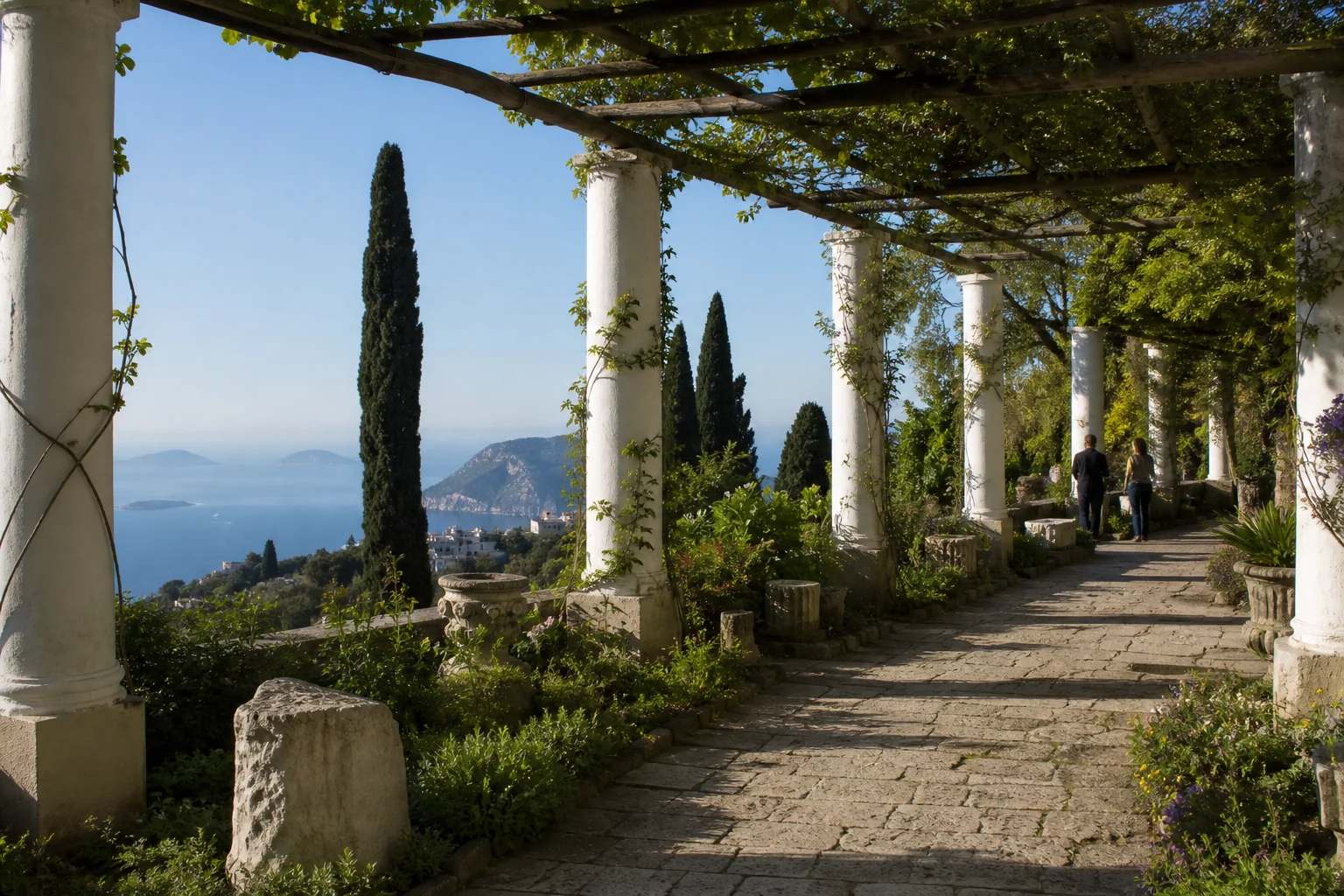
Guests based in Anacapri should keep at least one evening there. Otherwise the peaceful hotel choice turns into a daily transfer project.
The arrival day shapes the first impression
The most elegant answer is not always the most private vehicle. Ferry or hydrofoil can be efficient when tickets, port assistance, luggage and hotel transfer are coordinated. A private boat creates freedom but remains weather-dependent. A helicopter does not automatically solve the last mile and makes sense only when routing, landing point, baggage and onward transfer are confirmed as one movement.
A late arrival sounds romantic but leaves little resilience when the sea or timetable changes. Before a long-haul departure, a night on the mainland is often the more luxurious choice.
May, June, September or October
Shoulder months can feel gentler than midsummer, but “off-season” does not guarantee warm swimming, every beach club or daily boating. July and August bring maximum energy, heat and demand. Start with the priority—social Capri, sea, walking, dining or quiet—and select month and weekdays around it.
Five details a serious Capri proposal requires
- Nights on the island and the journey that follows.
- The balance between society, privacy, views and sea.
- Mobility, luggage and tolerance for steps.
- Boat ambition, swimming confidence and sensitivity to swell.
- Fixed restaurants or experiences—and what may remain open.
The Deluxetargets recommendation
Give Capri three or four nights. Spend its quiet hours on land, the densest hours on the water or at the hotel, and protect at least half a day from plans. Choose Capri town, Anacapri or Tragara by the hours you most value, not a generic ranking. The island will not become empty, but it will begin to feel generous again.