
In Dubai, the hotel district matters more than the league table. An exceptional property in the wrong part of the city can fragment every day into transfers. Decide first whether the trip revolves around the beach, restaurants, meetings, landmarks or retreat; only then choose the hotel and, just as importantly, the room.
The quick decision
- Jumeirah Beach
- The most convincing balance of resort days and city evenings
- DIFC
- Restaurants, art, business and polished short stays
- Downtown
- Burj Khalifa, Dubai Mall and a compact first visit
- Creek
- Depending on the address: calm resort, old Dubai or a new waterfront
The short answer: stay close to the centre of your day
For four nights with two beach days and two city evenings, Jumeirah's urban beachfront is usually the most elegant single base. For meetings, galleries and dinner reservations in DIFC, stay in DIFC. If a first visit is built around Burj Khalifa, the Fountain, Dubai Opera and the Mall, Downtown makes sense. Choose the Creek for calm, golf, spa, old Dubai or a gentle arrival after a flight.
“What is the most luxurious hotel in Dubai?” is the wrong opening question. Ask instead where the most frequent day begins and ends. In a long, linear city, a celebrated pool is little consolation if every reservation is on the other side of town.
| Area | Best reason to stay | Usual compromise | Confirm before booking |
|---|---|---|---|
| Jumeirah City Beach | Private beach with practical city access | Neither a sealed resort nor a walkable centre | Sea or skyline aspect, beach section, balcony |
| Palm Jumeirah | The resort is the destination | Longer journeys to DIFC, Downtown and old Dubai | Wing, beach, internal distances, club access |
| JBR/Bluewaters | Promenade, Marina and energetic beach life | Density, noise and peak-time traffic | Room position, vehicle access, beach-club model |
| DIFC | Business, art and serious dining | An urban pool rather than a beach resort | Weekly rhythm, rooftop noise, beach transport |
| Downtown | The headline sights sit inside the itinerary | Crowds and little sense of retreat | True walking route, view, Mall access |
| Creek | Calm, golf, heritage or airport logic | Remote from Palm and Marina | Which section of the Creek the name means |
Three beach worlds: Jumeirah, Palm and JBR/Bluewaters/Marina
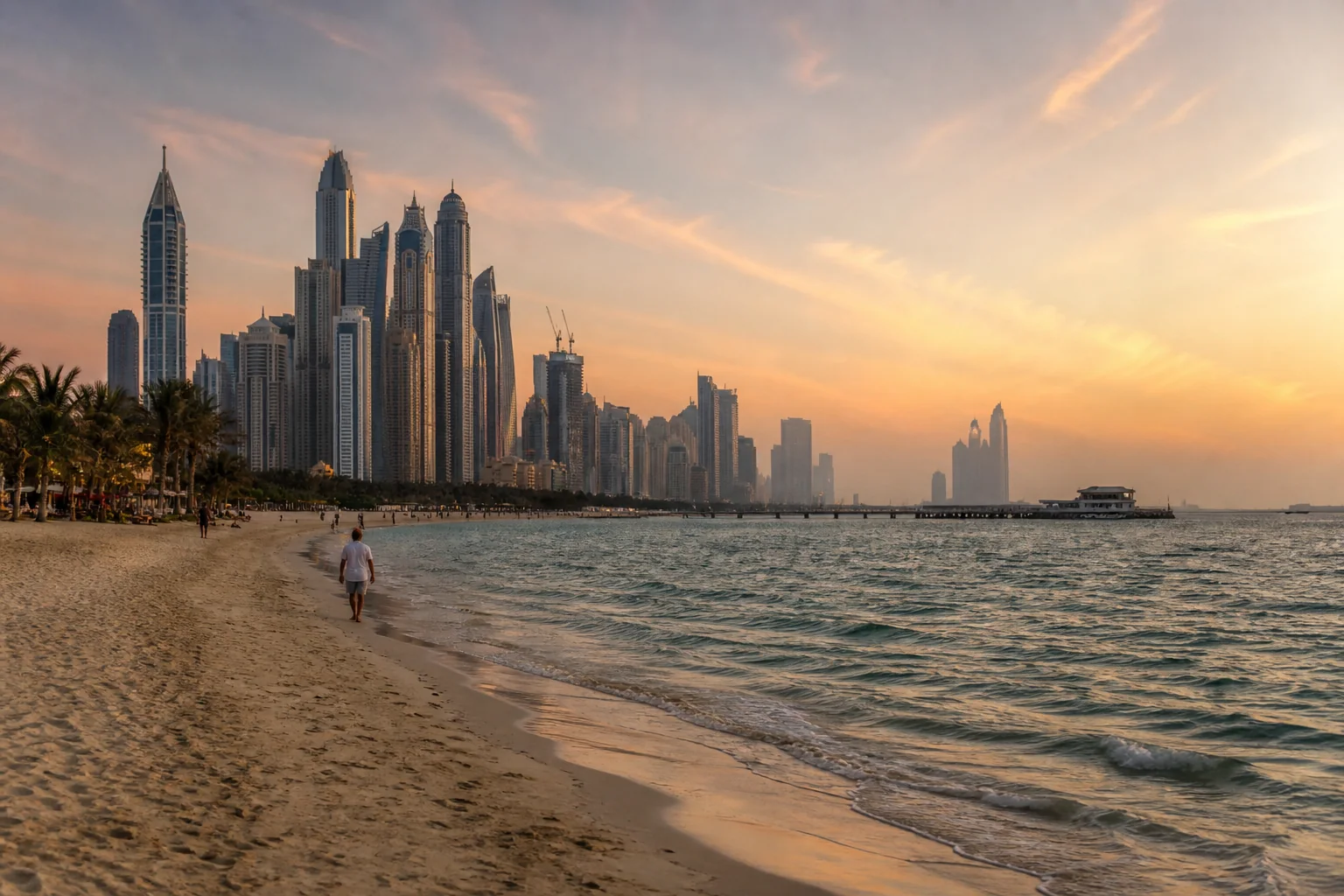
Three distinct stays are often sold under one label. Jumeirah City Beach sits on the urban coast and combines resort facilities with comparatively direct access to Downtown and DIFC. Palm Jumeirah is a self-contained resort world, at its best when the spa, beach, pool and hotel restaurants carry the day. JBR, Bluewaters and Marina are denser and more animated, with promenades and cafés close at hand but greater sensitivity to traffic and exact room position.
A guest who reads by the sea in the morning and dines in DIFC at night needs a different “beach hotel” from a family planning to remain in the resort. Beachfront describes a boundary; it says nothing about privacy, atmosphere or the rest of the journey.
Jumeirah's city coastline suits travellers who do not want to divide Dubai into resort and city chapters. Mandarin Oriental Jumeira illustrates the category: a genuine urban resort on the Gulf, with room aspects towards the water or skyline and connecting options for families. Its advantage is not merely the sand, but the possibility of a beach morning and a city evening without moving hotel.
Do not book only a nominal category. Aspect, balcony, floor, connecting door and distance from pool, lobby or event space all affect the stay. A skyline-facing room may feel more distinctly Dubai; a sea-facing one may feel more restorative. The exact allocation matters more than the marketing photograph.
The Palm works beautifully for five to seven nights when several days are intentionally spent inside the property: beach, spa, children's programme, water sports, restaurants and suite form an itinerary of their own. In that case, geographical distance is not a flaw but part of the retreat. It becomes inefficient when every day contains separate appointments in DIFC, Downtown and the Creek.
Read the resort internally as well as geographically. A large property can involve long walks between room, breakfast, pool and kids' club. Building aspect changes sun, wind and view. “Private beach” does not explain water depth, shade, lounger spacing or construction in the sightline. These details require a current, room-specific check.
This cluster suits travellers who want sand, an evening stroll, casual restaurants and visible city life in the same neighbourhood. It can feel more immediately accessible than a gated resort. The trade-off is density: vehicle access, event noise and busy public space can be conspicuous. A high floor is not automatically quiet if it faces an active promenade.
For teenagers, friends or an active winter escape, that energy may be exactly the point. For expansive gardens, near-silence and a protected hideaway, another part of the coast will be more convincing.
DIFC and Downtown for the urban programme
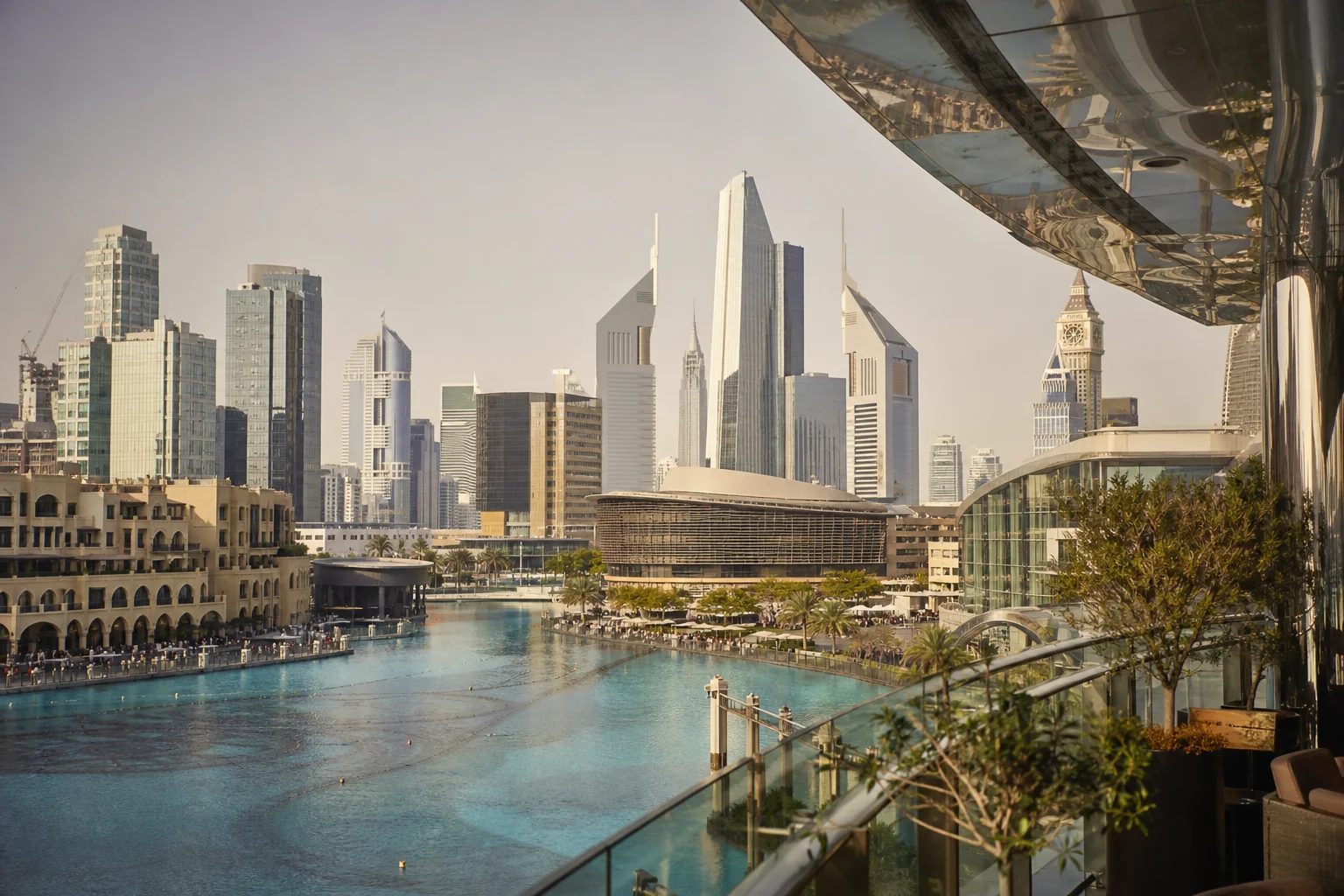
DIFC is less a sightseeing district than a polished way of using the city: a meeting in the morning, galleries or design in the afternoon and dinner without a long return journey. Four Seasons Hotel Dubai International Financial Centre, in Gate Village, expresses that purpose as an intimate city hotel with dining, wellness and rooftop atmosphere. It is not a beach resort, and it should not be judged as one.
For two or three nights, a business visit or a restaurant-led stop, DIFC is exceptionally efficient. Its cadence changes over the week; offices and some venues behave differently at weekends. Restaurant opening days and reservations are therefore part of the location decision, not an afterthought.
Stay Downtown when Burj Khalifa, Dubai Mall, the Fountain and Opera are the substance of the trip. Armani Hotel Dubai occupies part of Burj Khalifa and turns the architecture itself into the stay. Hotel entry, Mall connection and view can simplify a concentrated visit, but the real route and room aspect must be understood before arrival.
The compromise is intensity rather than a lack of luxury. Visitor flows, evening traffic and immense interiors shape the day. If the skyline is a single excursion and the rest of the holiday belongs to the sea, there is no need to sleep here. If early access and repeated central appointments matter, the location earns its place.
Creek and Park Hyatt: three journeys and one current caveat
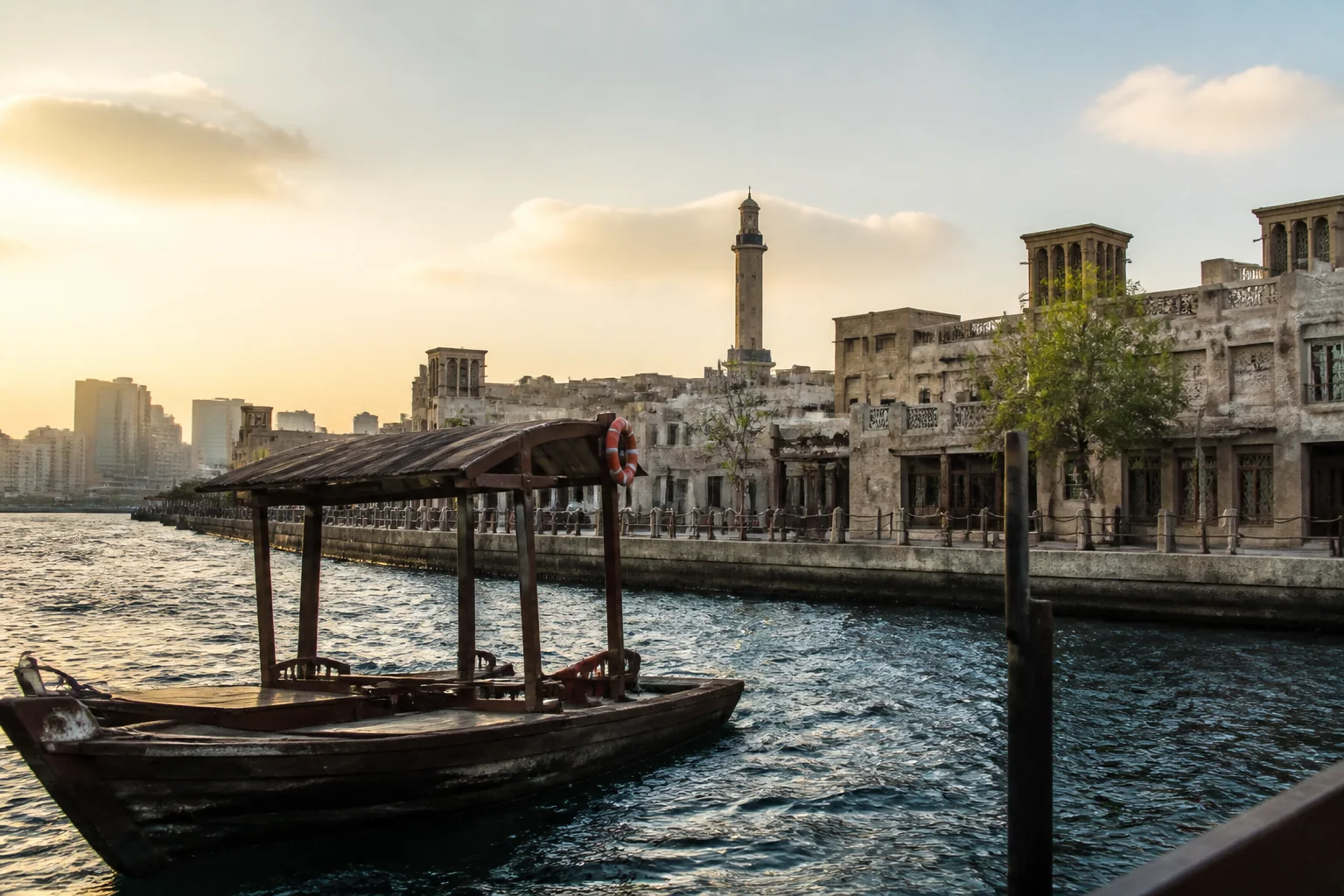
Dubai Creek Resort and Park Hyatt Dubai form a low-rise resort environment near Deira, with golf, marina, spa and water views. Al Seef and Bur Dubai offer waterfront walks, souks, commerce and a sense of the older city. Dubai Creek Harbour is a newer residential and lifestyle waterfront with its own modern skyline. These are not interchangeable hotel areas.
A Park Hyatt guest is usually choosing stillness, gardens, golf or an easy first night. An Al Seef guest wants proximity to heritage and street life. Creek Harbour belongs to a contemporary development. Always identify the bank, bridge and access route behind the word “Creek”.
Park Hyatt offers a persuasive alternative to the coastal mega-resort: lower in scale, calmer and integrated into the Dubai Creek Resort world of golf, marina, dining and spa. It can be the stronger choice for golfers, couples arriving after an overnight flight or travellers curious about Deira and old Dubai.
The operator currently states that its Lagoon venues are temporarily unavailable. Pool, Lagoon, beach-club access and operating status must therefore be reconfirmed for the travel dates. An image or old review must never imply an amenity that will not exist during the stay.
Transfer time and summer change the best address
A map shows distance, not the day of travel. Commuter peaks, weekends, events, road works, bridge approaches and the position of a hotel entrance alter the real journey. Rather than promise an exact number of minutes, group appointments geographically: Downtown with DIFC, Marina with Palm, Creek with old Dubai.
The Metro is useful for DIFC and Downtown, but it does not deliver most beach guests to the lobby. Taxis or pre-arranged transfers are often more practical. A day-long chauffeur earns the cost when several fixed appointments must connect; a beach day followed by one dinner usually does not require a car waiting outside.
Summer changes the best address
In the cooler months, beach, terrace, promenade and walking routes become part of daily life, strengthening Jumeirah, JBR and well-chosen Creek resorts. In the hottest period, Dubai shifts indoors: spa, museum, Mall, restaurant and short vehicle transfers carry more of the itinerary. Even a modest-looking walk may be unattractive at midday.
For summer, check shaded pool areas, water-temperature management, indoor connections and the direction of sun on balcony and beach. A Downtown or DIFC hotel may become more efficient than a resort whose central advantage is difficult to use for much of the day. Season in Dubai is a question of daily architecture, not weather alone.
When a split stay is genuinely better
A move makes sense when it creates two clear chapters: three nights Jumeirah plus two in DIFC for beach and dining; four on the Palm plus two Downtown for resort and first-time landmarks; the Creek as a quiet opening followed by City Beach. The second check-in must deliver a new purpose.
With only four nights, the interruption usually costs more time than it saves. Palm plus Creek is especially restless for a short visit. Packing, room release and registration break the day; one carefully timed excursion may be more elegant than changing hotels.
The room is the second location decision
Once the district is right, choose the micro-location. Sea, skyline, inner resort, road, lift and club lounge can produce different stays inside the same hotel. For families, guaranteed connecting rooms often matter more than a higher nominal category. Early sleepers need to know where rooftop, beach club and events sit.
Access is part of room selection too. How far is breakfast Are there steps to the sand Can a pushchair reach the pool Is the Mall connection genuinely indoors Luxury appears when the category supports the day, not when reception merely announces an upgrade.
Length of stay and one or two hotel bases
Two- or three-night stopover: Downtown for an iconic first encounter, DIFC for dining and business, or the Creek for a gentle arrival. Four or five nights of city and beach: Jumeirah City Beach as one base. Five to seven resort nights: the Palm when the property itself is the programme. A family with teenagers: JBR or Bluewaters for promenade energy. Golf, spa and old Dubai: Dubai Creek Resort, once current amenities are confirmed.
This is not a ranking. A couple holding three DIFC dinner reservations needs a different answer from a family with a toddler, even when both expect the same standard of service.
No address can provide absolute beach seclusion, effortless daily access to every district, old-city street life and a walkable evening scene at once. Dubai rewards priorities. Choose one centre of gravity or divide the journey deliberately.
Travellers who schedule every crossing spontaneously at peak periods will also spend too much time in transit, however central the hotel appears. A good plan does not reduce experience; it places together what belongs together geographically and emotionally.
The Deluxetargets recommendation
For the most versatile first stay, we generally favour Jumeirah City Beach and organise Downtown, DIFC and the Creek as distinct, well-composed days. DIFC is the clearest base for a short business- or restaurant-led visit. Downtown wins for an iconic few days. Choose the Palm when the resort is intentionally the destination; choose Park Hyatt when calm, golf and Creek atmosphere outweigh Marina and Palm.
Before confirmation, we verify district, room aspect, view, beach and pool operation, connecting configuration, restaurant days and the real daily journeys. The right Dubai hotel is not the one with the longest facilities list. It is the one that allows the desired day to unfold without friction.