
A sense of space is more than key count
Eleven villas on an island sounds inherently more exclusive than 72 suites in a garden hotel. Yet total land, usable guest space, full occupancy, paths, beach, restaurants and service capacity together determine whether generosity is actually felt.
Key count is only the beginning
Hotels count rooms, suites and villas as keys. Two properties with the same number can feel entirely different through occupancy, layout and shared space.
Frégate states 200 hectares and 17 villas and estates, while saying 90 percent remains conservation land. The impressive island size cannot simply be allocated as usable space per guest.
Beach, paths, gardens, pools and restaurants count only when guests can reach and use them. Steep ground, habitat, service areas and closures sit outside the calculation.
Marketing photographs are often made in emptiness. The useful question is how many people breakfast, swim, transfer and seek a lounger at maximum occupancy.
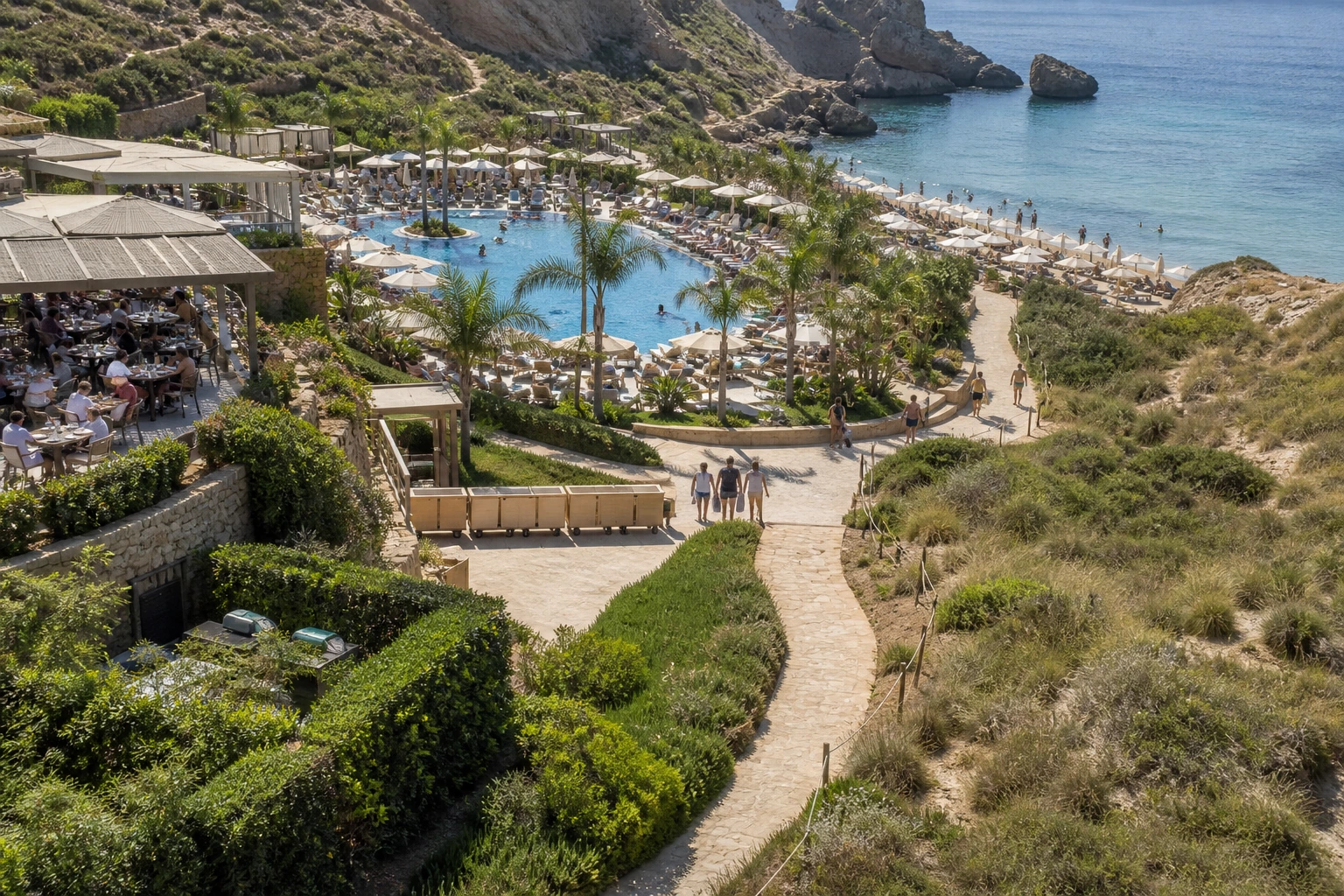
A key is not a person. Multi-bedroom residences, extra beds and families increase the real population, making occupancy density more informative than villa count alone.
Length, width, tide, wind, coral, public access and safe swimming determine value. A large island may contain only one small, comfortable beach.
Private pools reduce pressure on the main pool while replacing neither shade nor social space. Number, size, sun path and service positions belong in the comparison.
Two attractive outlets help little when the desired time is full. Seats, reservations, kitchen capacity and weather-protected alternatives reveal actual performance.
Create a peak-use sheet rather than a single density ratio. List maximum resident guests, day visitors, restaurant seats, shaded loungers, safely swimmable beach length, main-pool capacity and indoor refuge. The weakest shared space often determines the experience, even when villas are spread across an enormous estate.
Distance, sightlines and service traffic
Wide spacing offers seclusion while producing buggy dependence, waiting and long walks. The best plan combines retreat with independent movement.
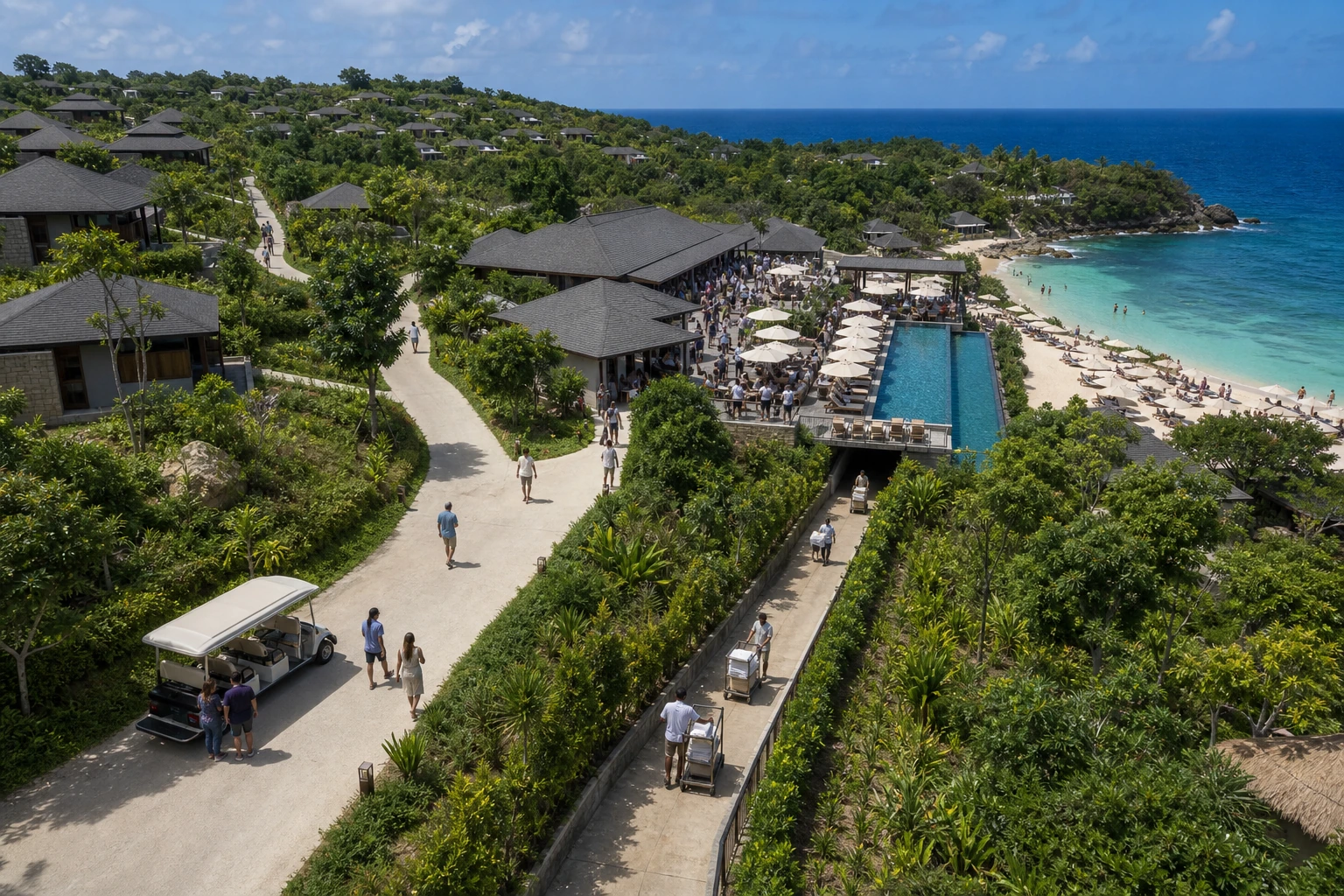
Vegetation, level changes, orientation and entrance position prevent overlooking. Nearby villas can be more private than distant buildings facing each other directly.
Generator, service route, restaurant, music and neighbouring terrace alter the experience. Topography and wind carry sound differently from a site plan.
Laundry, kitchen, housekeeping, engineering and deliveries move every day. A villa beside a concealed logistics road may feel busy despite a large plot.
A high ratio sounds luxurious, yet roles, shifts, training and distance matter. Availability at the right place is more relevant than a global number.
Walk the guest and service journeys on the current plan. Measure villa to breakfast, beach, spa and emergency pickup, then map laundry, deliveries, waste, staff transport and evening setup. Privacy improves when those routes cross deliberately and briefly, not when logistics are merely hidden behind vegetation.
Three models of low density
The official site states eleven private villas. That number becomes meaningful only beside island paths, dining, activities and the potential occupancy of each villa.
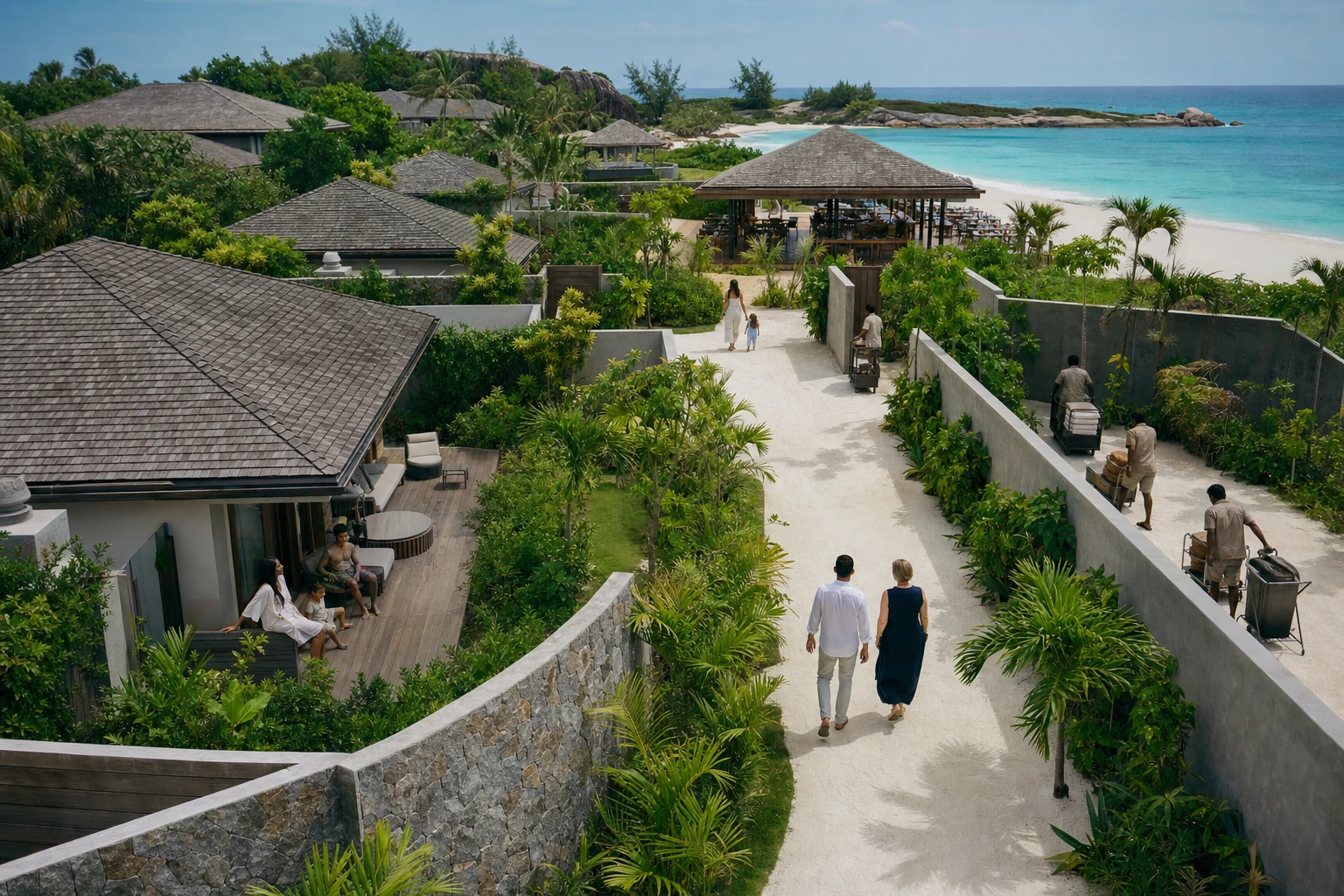
The island states 17 villas and estates, seven beaches and substantial conservation land. It is a compelling starting point that needs current verification during the stated relaunch and construction programme.
Hotel Wailea states 72 suites across 15 acres and describes gardens and winding paths. Landscape design and separate living areas can filter density effectively.
Villa, groups, season and construction reshape the calculation
A vast interior may sit behind a narrow outdoor buffer. A moderate suite can feel freer through terrace, garden and well-designed shared spaces.
Villa pool, dining, spa and gym reduce encounters while increasing energy, staffing and land needs. Privacy and resource use require a joint reading.
Multigenerational occupancy concentrates many people in few keys. Play areas, vehicles, tables and care have to support the actual guest mix.
A wedding, buyout or retreat changes beach, restaurant and soundscape. Ask about exclusive areas and concurrent groups for the specific week.
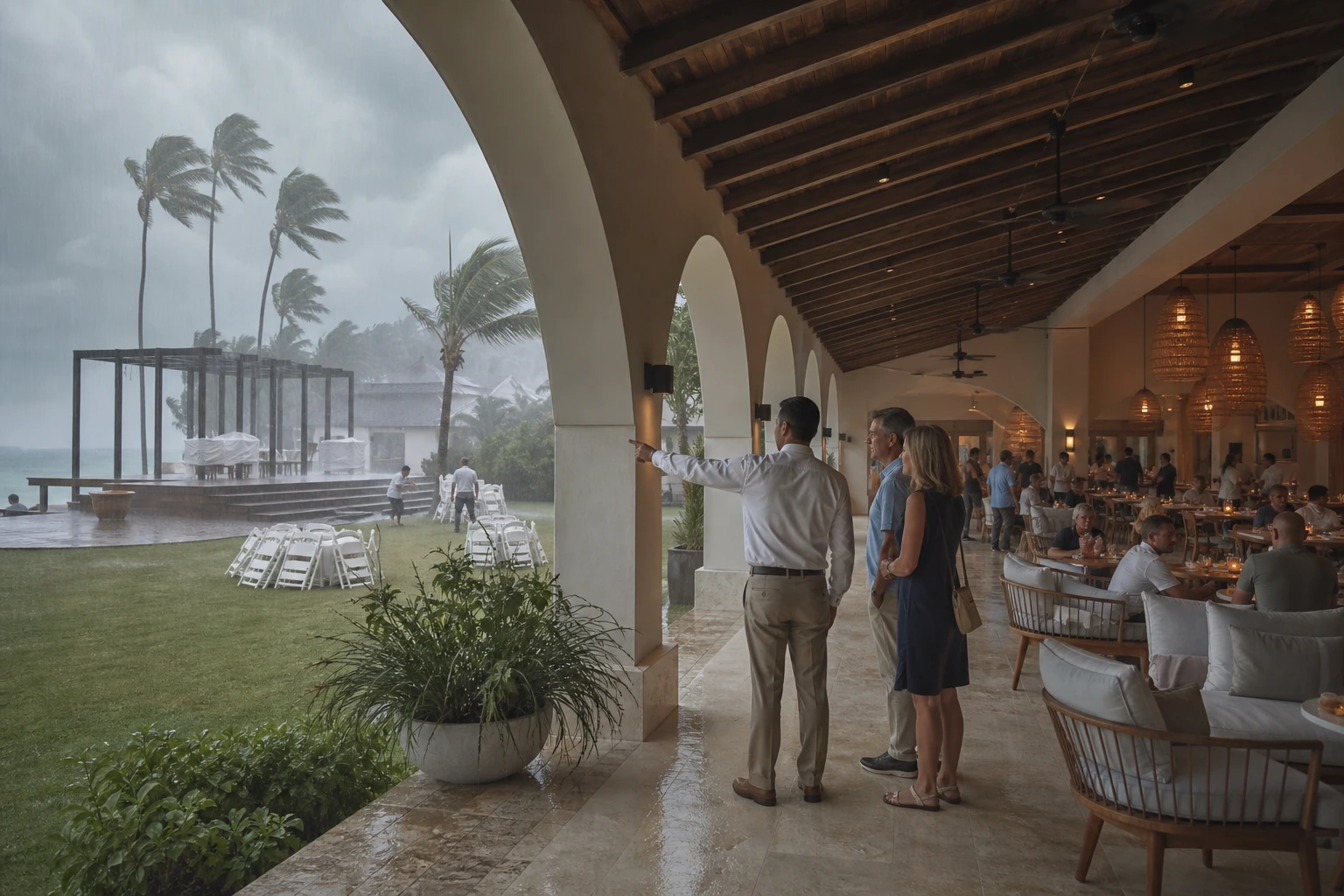
Monsoon, heat, wind or snow can close outdoor areas. In poor weather the entire resort may concentrate in a handful of interiors.
Closed villas reduce nominal occupancy while noise and diversions diminish spatial value. Project phase, screening and working hours need verification.
Ask for the bad-weather operating plan at full occupancy. How many guests can sit comfortably indoors, dine without compressed turns, reach covered activities and move without every buggy converging on the lobby A low-density resort can feel most crowded precisely when its landscape becomes temporarily unusable.
Few keys do not guarantee sustainability
Large plots, private pools, long routes and complex logistics consume resources. The GSTC Hotel Standard examines management, local benefit, culture and environment beyond one density metric.
Shared energy, water treatment, kitchen and transport can perform efficiently per guest. Measurement and planning matter more than the romantic assumption that small is always better.
IUCN stresses visitor management in protected areas. Unbuilt land has value when habitat, capacity and access serve conservation rather than an exclusivity narrative alone.
The rate needs a spatial return
Rate, minimum stay, transfer and board are compared with real access to quiet, beach, service and facilities. Few villas alone do not justify a premium.
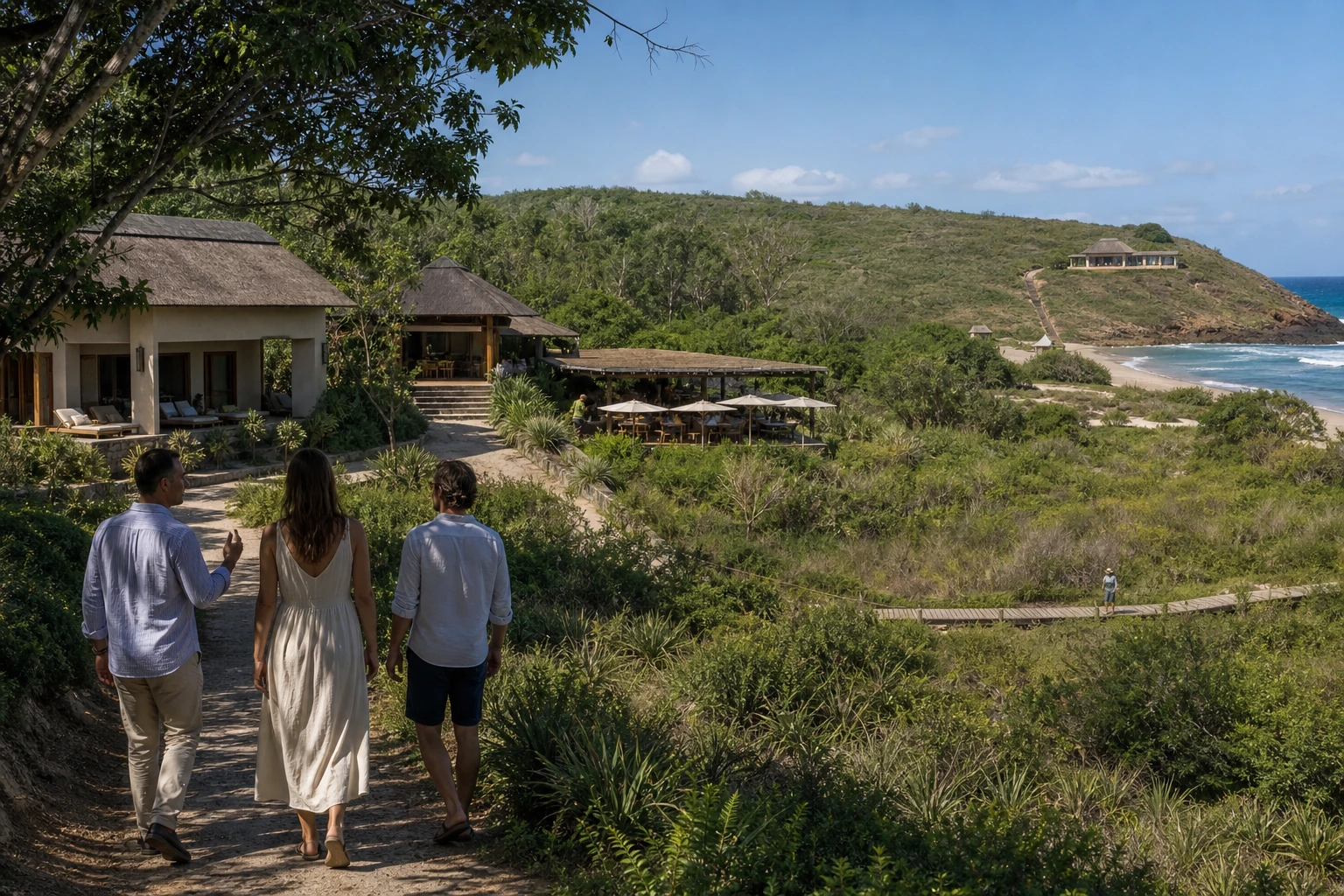
Villa, restaurant, pool, beach, service route, neighbours and contours should be visible. One current map answers more than ten perfectly empty photographs.
Maximum guest count, usable outdoor area, beach and pool capacity, peak restaurant seats and average journey time describe density better than keys per hectare.
Compare privacy friction as well: expected buggy calls per day, reservation lead time, likelihood of seeing neighbours from the pool, number of service visits and time required to reach a staffed point. Space has value when it increases autonomy; distance that creates dependence is not the same luxury.
How full is the property, which groups are coming, what closes seasonally, where is the villa and where does service move Written answers make space comparable.
Do not seek the fewest villas; seek the best conversion of land into usable freedom. Value appears when privacy, movement, service and ecological boundaries work together.