
An eco-luxury lodge is not credible because it is built from timber and has removed plastic straws. What matters is whom the land and business serve, whether energy and water systems actually work, how employees and communities participate, and whether conservation is measurably more than scenery around expensive rooms.
The four areas to test
- Conservation
- Land, species, research and long-term finance
- Community and culture
- Work, ownership, sourcing, rights and agency
- Operations
- Energy, water, wastewater, waste and reliable data
- Comfort and commerce
- A durable guest experience without displaced costs
The short answer: the business model matters more than the material
A small lodge can be badly managed; a larger resort can operate serious systems. Bamboo, earth, reclaimed timber and stone make sense only when provenance, durability, maintenance and climate align. The convincing property explains not only what it installed, but who measures performance, who benefits and what has improved over several years.
The Global Sustainable Tourism Council's hotel standard organises assessment around effective management, local social and economic benefit, cultural heritage and reduced environmental harm. For nature-based businesses, The Long Run gives equal weight to Conservation, Community, Culture and Commerce. Both views prevent one solar roof from deciding the whole verdict.
| Claim | Strong evidence | Weak evidence | Question to ask |
|---|---|---|---|
| “100% renewable” | Period, consumption, generation and backup | A photograph of solar panels | Are kitchen, vehicles and generator included |
| “Zero waste” | Weights, material flows, residual waste, target year | A reusable bottle in the room | Where do glass, organics and hazardous waste go |
| “Community-owned” | Equity, governance, profit flow and voting rights | Crafts for sale in the boutique | Who decides and who carries risk |
| “Carbon neutral” | Inventory, boundary, reduction and offset registry | A general tree-planting reference | Is international travel included |
| “Conservation lodge” | Area, baseline, monitoring and finance | Wildlife photographs online | What impact would tourism not otherwise fund |
Certification is a beginning, not a free pass
A standard creates shared language, yet logos are often used imprecisely. “GSTC-aligned” does not necessarily mean the property was certified by an accredited body. Network membership is not the same as its highest recognition. Auditor, date, scope and expiry need to match the specific operation.
The Long Run's Global Ecosphere Retreat standard describes 125 criteria across Conservation, Community, Culture and Commerce, external site assessment, annual data and periodic recertification. In 2026, the organisation lists twelve certified operations. That scarcity matters: a meaningful certificate must not be silently extended to an entire brand or sister lodge.
Land rights come before lodge romance
The first question is not how many villas occupy the property, but who owns, uses and governs the land. If a community was displaced, grazing restricted or access to water privatised, beautiful design does not resolve the conflict. Concession, lease, customary use and decision-making belong inside the impact assessment.
For a private reserve, ask how long protection is secured, who decides after an ownership change and which hectares are actively managed. “Next to a national park” is not a conservation outcome. The lodge should explain whether it funds buffer land, corridors, rangers, monitoring or restoration.
Biodiversity and wildlife encounters need baseline evidence
More sightings do not automatically mean more nature. They may result from better observation, feeding, habituation or habitat change. Serious monitoring names a starting year, method, target species, invasive species and negative findings. Research partners add credibility only when their role and data are clear.
Mashpi Lodge describes its operation inside a 3,200-hectare reserve in Ecuador's Chocó, with conservation, science, local development and education as pillars. Reported species discoveries and parabiology make the model tangible. Before recommending it, we still seek current reporting, land status, research contribution and governance beyond the operator's narrative.

No sighting is guaranteed. Vehicles, boats and walkers follow distance, time and the guide's decision. Feeding, touching, flash, blocking an escape route and crowding are warning signs. A “rescued” animal is not automatically suitable for guest contact.
Group size matters as much as room count. A tiny lodge may dispatch many vehicles at once; a larger one may regulate zones and frequency more strictly. Ask about maximum vehicles at a sighting, night drives, off-road policy and procedure around nests or young animals.
Energy, water, wastewater and circularity in numbers
Solar arrays are visible; demand reduction is less photogenic. Relevant measures include energy per occupied night, renewable share, batteries, generator hours, cooling, hot water, kitchen, laundry, staff housing and vehicles. A resort can report clean guest villas while leaving back-of-house loads outside the boundary.
Good comfort begins with design: shade, cross-ventilation, insulation, roof, glazing and zoning reduce mechanical demand. Where air conditioning is necessary, efficient equipment is more honest than asking guests to sweat on principle. Sustainability must not romanticise poor sleep.
On islands and in deserts or dry regions, water may matter more than electricity. The lodge should state source, extraction permission, consumption per guest night, leakage control, treatment and dry-season strategy. Desalination uses energy and produces brine; a pool is not merely a design feature.

Follow wastewater to its final destination. “Treated” does not explain to what level or where the output goes. Grey water, black water, spa chemicals, laundry and kitchen grease require distinct systems. In sensitive forest and coastal settings, one failing plant can outweigh every towel-saving message.
The visible refill bottle is one minor stream. Purchasing, packaging, glass, metal, food, construction waste, batteries, electronics and hazardous material should be weighed and assigned to a real destination. On remote islands, “recycling” may mean storage for years or long-distance shipping.
Soneva's current stewardship pages present circular economy, upcycling and its AquaTerra research facility alongside conservation. It is a plausible operating model, but operator communication remains operator communication. We ask for current indicators, boundaries and performance rather than repeating an old percentage.
Local value chains and cultural consent
A locally made bowl in the bathroom says little if management, purchasing and profit sit elsewhere. Relevant measures include local employment across seniority, contract security, pay structure, training, promotion, grievance routes and supplier spend. Culture cannot be represented only by dancers and craft makers.
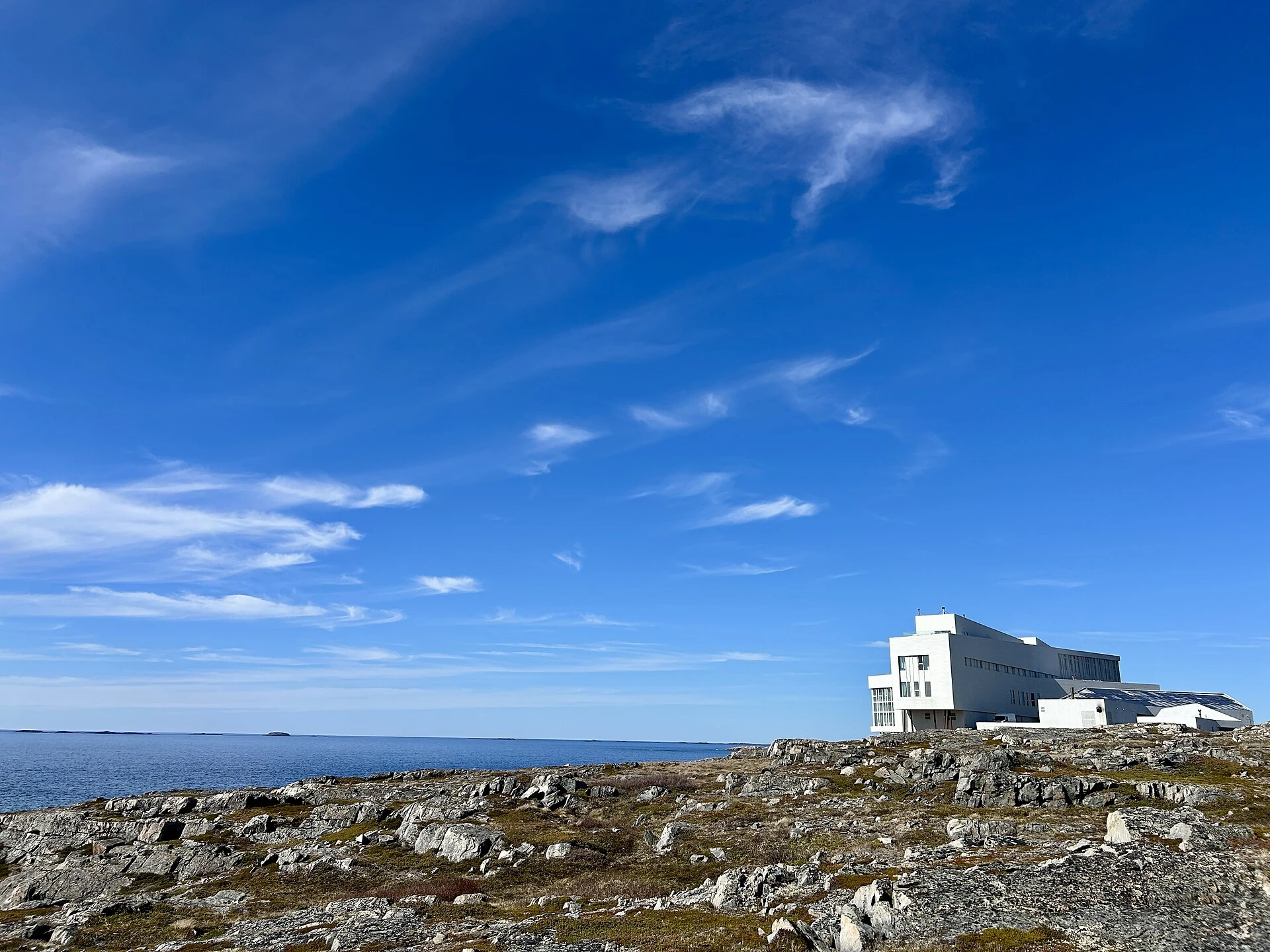
Fogo Island Inn describes local-first sourcing, island-made furniture and textiles, an 80/20 approach to ingredients and an Economic Nutrition label intended to show where money flows. According to the operator, surplus is reinvested through Shorefast. The model demonstrates the stronger question: not just “What is local?”, but “How much value remains where?”
Culture requires consent and authorship
A village visit is not a hotel product unless the host community helps determine content, timing, payment and photography. Guests require preparation; hosts require the right to decline. Sacred sites, ceremonies and knowledge do not become available because a resort uses the word partnership.
Design can respect culture without copying motifs. Architect, maker, material provenance and intellectual authorship should be named. A shop should make price and producer relationship transparent. The lodge mediates; it does not consume culture as free atmosphere.
Architecture, journey, comfort and offsets in the right order
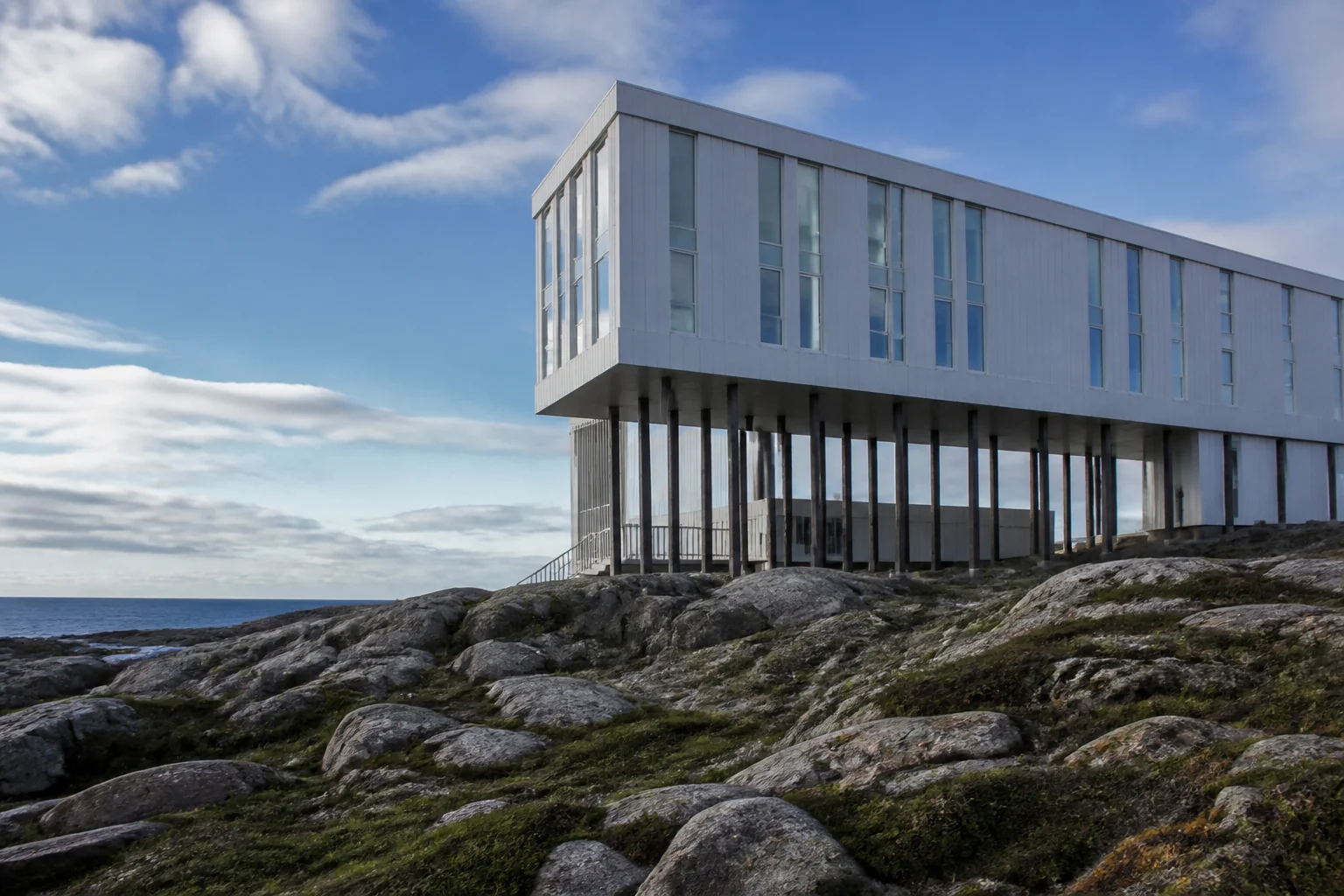
A spectacular structure requiring imported components, new tropical hardwood or constant cooling after five years is not a sustainable masterpiece. Test service life, repairability, modular parts, local skills, corrosion, humidity, wind and fire safety. Eventual removal and ecological restoration belong in the plan.
Fogo Island Inn cites local or regional timber, island-made furniture, a low-impact foundation and construction for severe wind. This illustrates place-specific design. It does not alone prove total impact, but shows why durability and local fabrication matter more than a generic “organic” aesthetic.
The journey cannot disappear outside the boundary
A remote lodge can be efficient internally and transport-intensive overall. International flight, regional flight, helicopter, seaplane, boat and road vehicle should be shown separately from lodge emissions. An offset does not undo the physical emission and does not replace avoidance.

The answer is rarely to stop travelling altogether. Longer stays, fewer lodge changes, shared transfers, the right season and a route without empty sectors improve the relationship. Three remote properties in eight nights are usually worse design than one immersive week.
An operation that loses guests after one night, exhausts staff or requires constant repair is not durable. Sleep, safe water, secure paths, temperature, insect protection, food and medical planning belong to the standard. “Rustic” must never excuse poor hygiene or neglected maintenance.
Before booking, establish power hours, cooling or heating, hot water, connectivity, noise, walking surfaces, stairs, emergency communication and evacuation. Eco-luxury is not urban perfection in a forest; it is an honestly described level of comfort appropriate to place.
First inventory and reduce emissions; then address the remainder. An offset should name its standard, project, vintage, registry, additionality, permanence and risk. A broad “carbon-neutral stay” without a system boundary is incomplete.
Mashpi and Fogo Island Inn describe offset arrangements. We treat them as one component, never the final verdict. It is particularly important to know whether travel, energy, food, waste and construction are included and whether the stated credits have been retired.
The ten questions before booking
Who owns and governs the land and lodge Which independent certification covers which operation What current data exist for energy, water, waste and emissions How is biodiversity measured What share of payroll, purchasing and profit remains local How are land and cultural rights protected Which animal-welfare rules apply What does “carbon neutral” include What comfort limits are real How does access change the footprint
A good lodge may not answer every question immediately, but it responds precisely, acknowledges limits and supplies documentation. Vague stories, shifting numbers, logos without a registry and defensiveness around land or wages are warning signs.
They suit travellers who want to understand rather than merely consume a landscape, stay longer and accept constraints when these are well explained. Families benefit when guides, safety and learning are age-appropriate. Photographers need rules, patience and respect for animal and person.
Remote lodges may be wrong for guests expecting immediate urban medicine, constant climate control, flawless connectivity or complete accessibility—unless the specific operation can prove these. Responsibility begins with a suitable match, not a moral promise.
The Deluxetargets recommendation
We do not create a top-ten ranking. First we define landscape, season, comfort and desired impact. We then compare certification, land model, biodiversity, local value, operational systems and access. Soneva, Mashpi and Fogo Island illustrate different models rather than an automatic hierarchy.
The most convincing eco-luxury lodge does not make the guest the hero of its sustainability story. It shows transparently how a commercially durable stay strengthens nature and people over time, where tensions remain and which work continues after departure.