
Kaiseki is not Japan’s answer to a European tasting menu. It expresses season and place through temperature, texture, vessels, pacing and restraint. Securing a famous reservation does not necessarily create the right evening. The more useful question is which form of kaiseki belongs in this particular journey, for these particular guests.
How to read kaiseki
From a distance, kaiseki can look like a succession of immaculate dishes. Its intelligence lies between them. The chef arranges produce, cooking techniques, colour, temperature and tableware as a continuous arc. A clear broth may be deliberately quiet after an intricate opening; grilled fish introduces heat and aroma before rice, soup and pickles bring the meal back to earth.
Not every course is meant to astonish. Some create the silence that allows the next one to register. Reading the menu only for expensive ingredients misses the relationship that gives the dinner meaning.
Kaiseki can be written with two sets of Japanese characters. One points towards the modest meal associated with the tea ceremony; the other towards a more convivial gathering or banquet. Contemporary restaurant kaiseki carries something of both: concentration and economy on one side, generous hospitality and celebration on the other.
This history explains how a restrained tea meal and an elaborate ryokan dinner can both be called kaiseki. The word on a booking confirmation does not, by itself, reveal what kind of experience has been reserved.
Seasonality means more here than asparagus in spring or mushrooms in autumn. The moment appears in ingredients, cut, serving temperature, colour and vessel. Tender green may suggest early spring; glass can convey coolness in summer; substantial earthenware gives winter a sense of warmth. Leaves and flowers are used with specific intent rather than arbitrary prettiness.
An accomplished menu therefore tastes not merely of Japan but of one place during one brief part of the year. Returning guests look for that change. Expecting the same signature plate on every visit misunderstands the movement that keeps kaiseki alive.
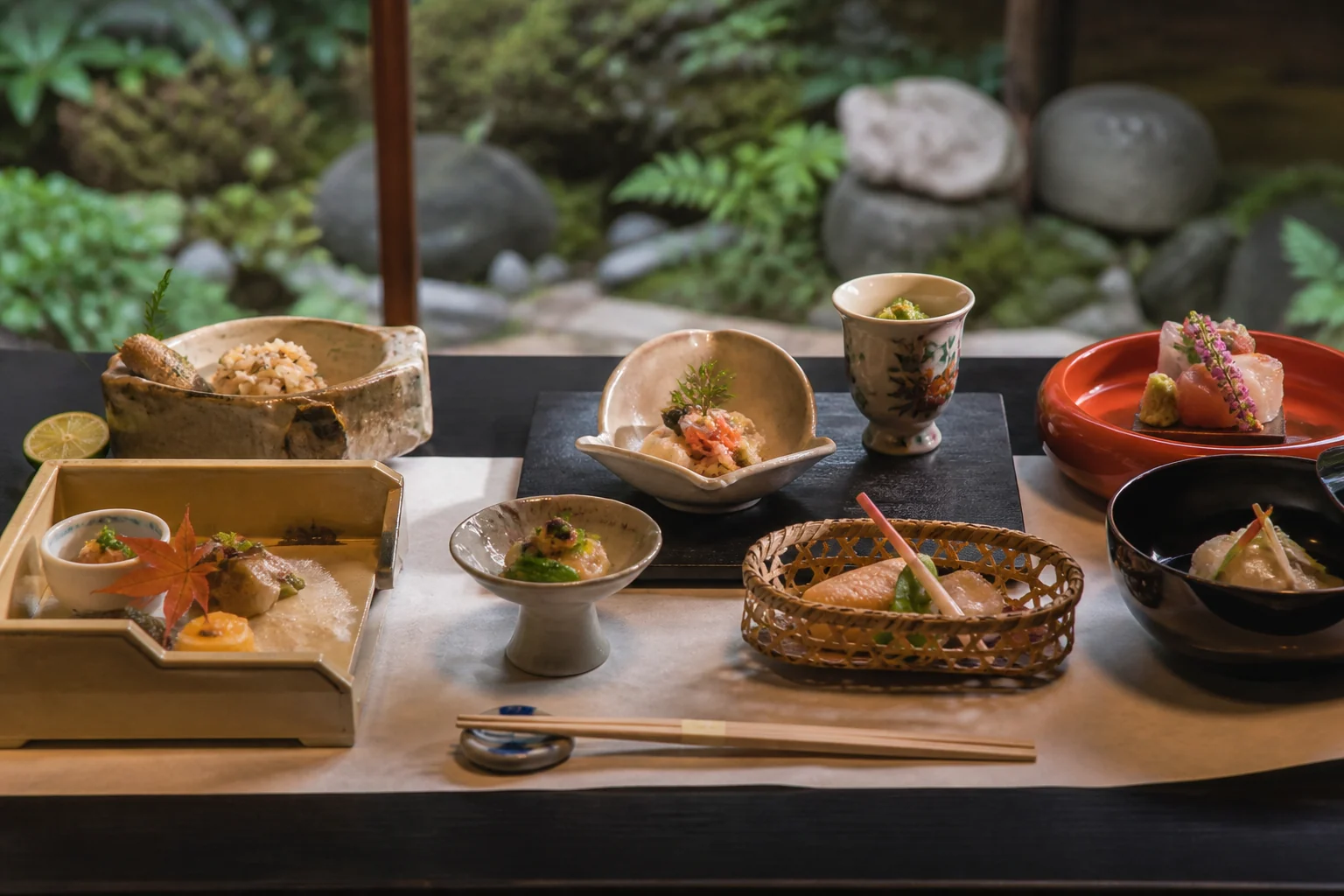
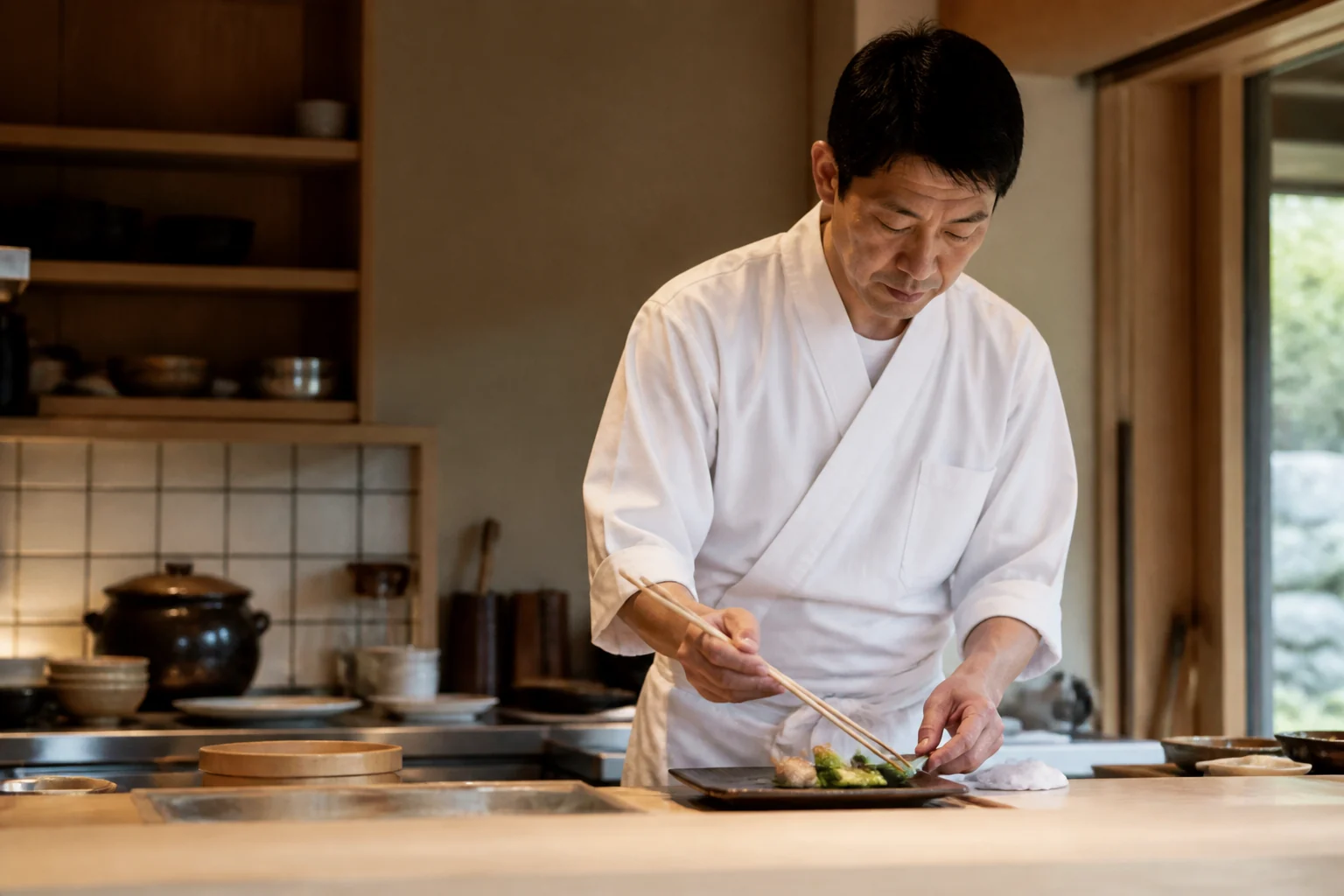
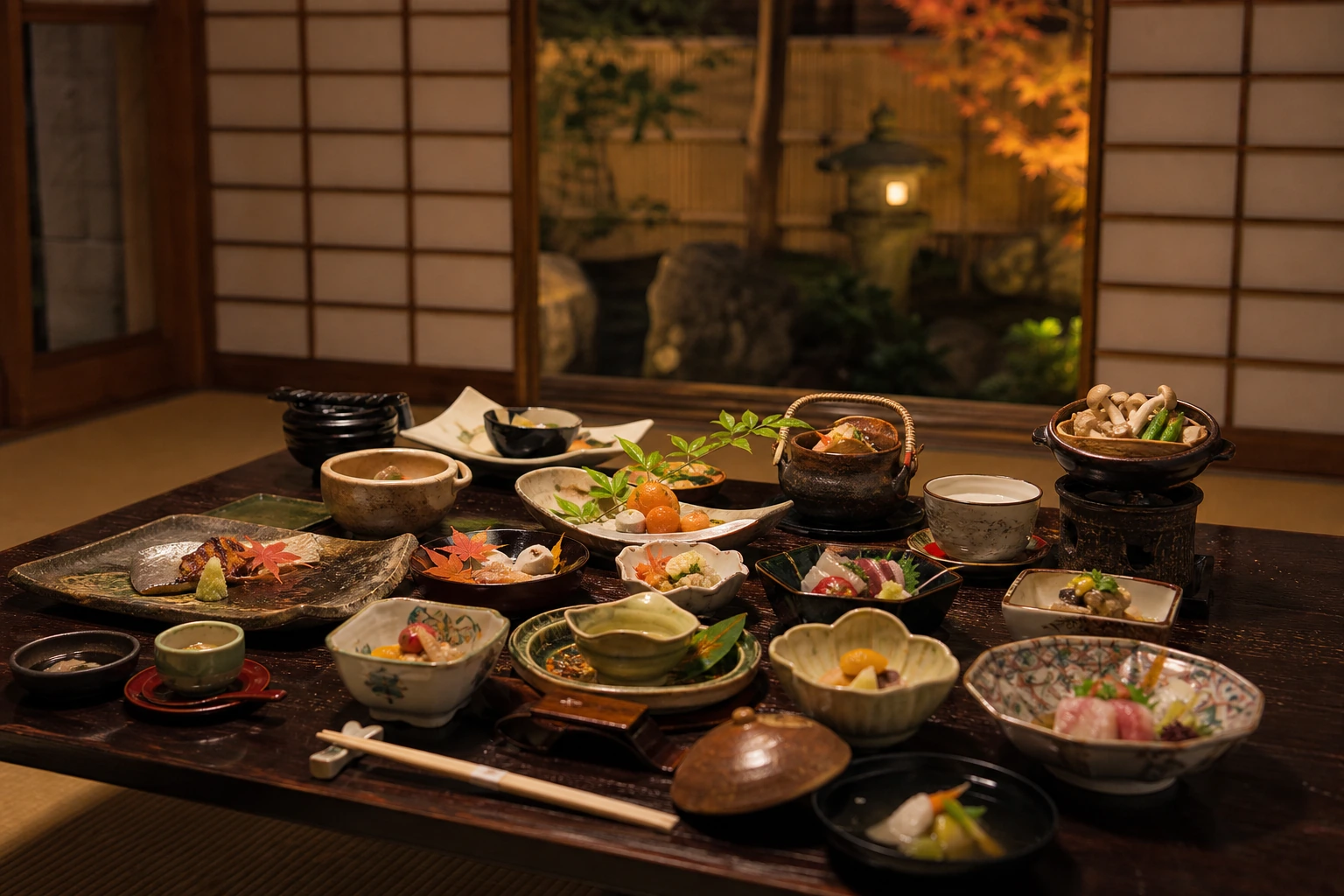
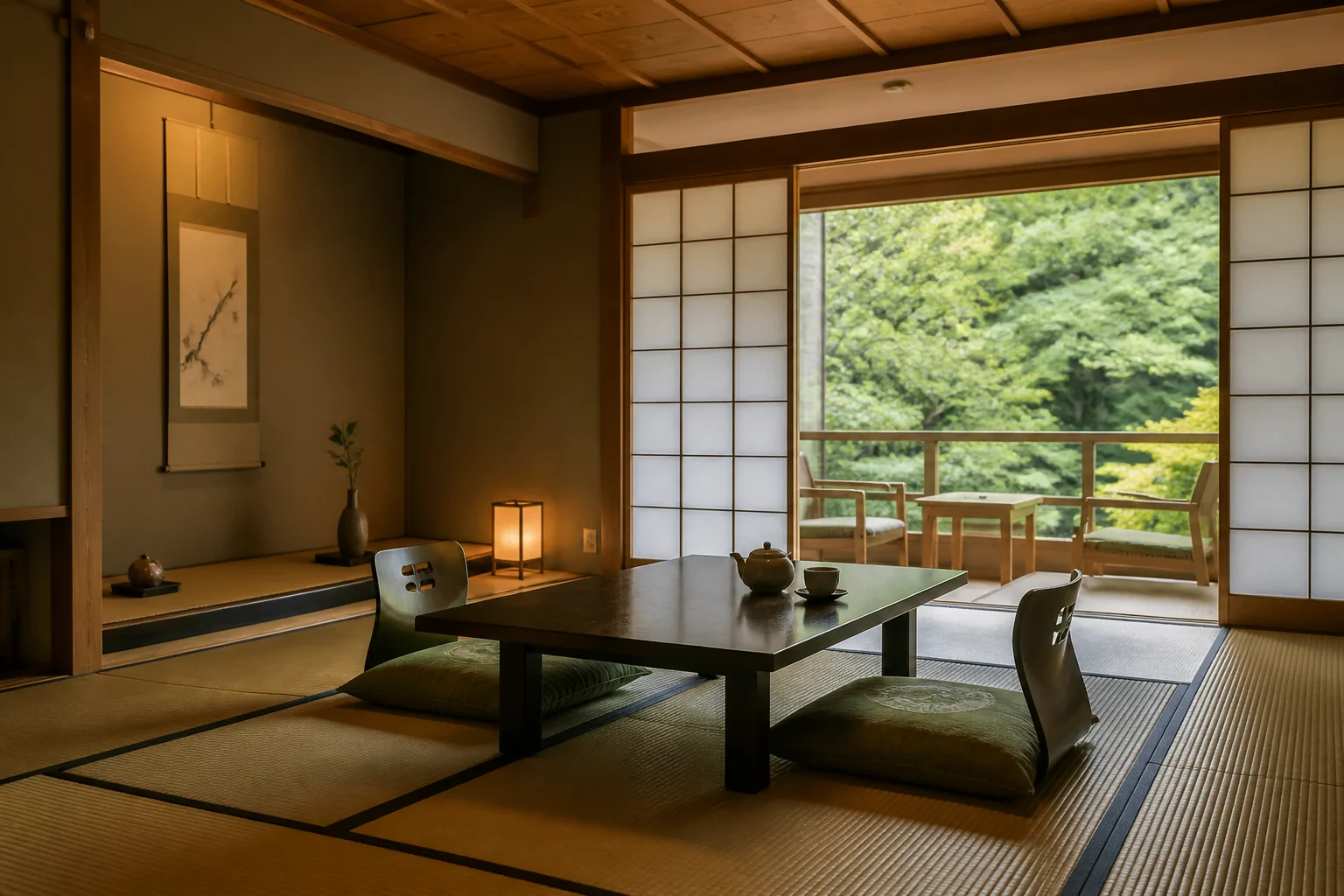
Ceramic, lacquer, bamboo, metal and glass are not neutral containers. The shape, age or origin of a vessel can frame a course as decisively as the produce. In a private tatami room, a garden view changes the perception of time; at a counter, hands, knives and timing become visible. A contemporary interior may express the same precision through quiet architecture.
Ask where guests will sit, not only who cooks. A couple hoping for exchange and proximity needs a different setting from a family seeking privacy. The right restaurant in the wrong room can lose much of its effect.
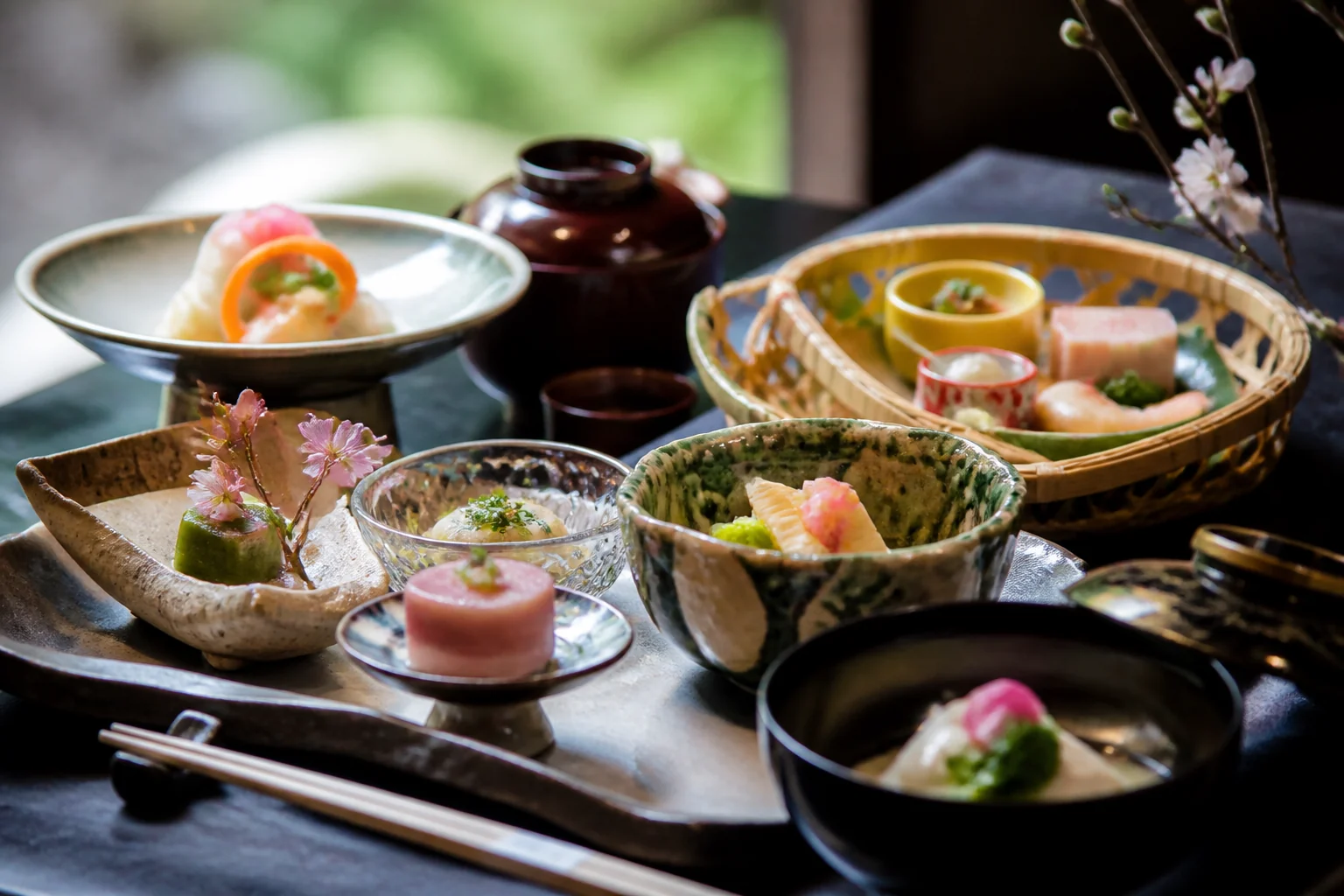
Terms such as sakizuke, hassun, wanmono, mukozuke, yakimono and shokuji provide useful orientation, but they are not a universal contract. School, region, season, chef and occasion change the order and content. One menu may open with a single precise appetiser, another with several seasonal elements. Raw fish appears at different points; a flexible course gives the kitchen room to respond.
Rice, soup and pickles often signal the movement towards the close. Preparation should make a guest comfortable without dismantling the experience in advance. Surprise is not a failure of translation; it is part of the design.
Many menus travel from a distilled opening through seasonal appetisers and clear soup towards raw, simmered or grilled preparations. Stronger flavours rarely sit beside delicate ones by accident. A resting course may reset the palate before the rice service, with fruit or a restrained sweet to finish. This pattern is more useful than memorising a glossary.
Notice how warmth, acidity, umami and texture change. The meal begins to explain itself even when no English description identifies every leaf, fish or technique.
Western diners often wait for a recognisable main course. Kaiseki builds towards a different resolution. Carefully cooked rice, sometimes carrying one seasonal ingredient, arrives with soup and pickles as a calm, substantial conclusion. Its apparent simplicity is intentional after so many nuances. Water, grain, steaming and timing become unmistakable.
Treating it as filler—or skipping it in anticipation of dessert—misses the moment when the menu finds solid ground. Some houses may offer remaining rice for breakfast or as onigiri, but that gesture should never be assumed.
Kyoto, Tokyo and ryokan follow different logic
Kyoto is central to kaiseki because court culture, temple food, tea, craft, water and local vegetables have formed an unusually dense culinary inheritance. Dinner can be highly formal, set in a historic room and built on conventions that are not fully narrated. For some guests, that reserve is the fascination. Others will have a richer first encounter in a more communicative house.
A celebrated name does not automatically deserve the only free evening. Schedule Kyoto kaiseki when there is enough time for the journey across town, the meal itself and the quiet that should follow it.
Tokyo contains classical restaurants, contemporary kappo counters, polished hotel dining rooms and chefs who translate regional produce into a personal language. It is an excellent city in which to contrast kaiseki with sushi, tempura or modern Japanese cooking. Abundance complicates selection. A modest counter may be more intense than a grand room; a hotel restaurant can offer the best introduction through language,
concierge access and seamless logistics. The relevant measure is not how difficult the table was to obtain, but what kind of attention the guests want to give and receive that evening.
At a ryokan, dinner belongs to the stay. Bathing, room, yukata, service rhythm and breakfast form one composition. Arrival deadlines are often firm because the kitchen cannot move the entire sequence at will. Travellers still sightseeing far away in late afternoon risk compromising the purpose of the night. An urban restaurant separates the day from dinner more easily;
in a ryokan, kaiseki begins with arriving in good time. Confirm whether the meal is served in the room, a private dining chamber or a shared restaurant. That one detail changes atmosphere and itinerary alike.
Choose the room, time and rhythm
A counter brings the craft close. Movement and conversation can carry the evening, but the format rewards curiosity and sometimes linguistic flexibility. A private room offers intimacy, suits a family or occasion and may place more emphasis on service. A larger dining room can feel approachable, though it may lack the concentration a guest expected.
There is no automatic hierarchy. A quiet couple might thrive at the counter; a lively party could disrupt its rhythm. Reserve the space for the character of the group, not for a simplistic idea of prestige.
Lunch is often shorter, more accessible in price and easier to place within a journey. Daylight reveals ceramics and garden; attention is sharper after a sound night than after ten hours of sightseeing. Not every restaurant serves the same menu at midday, and some open only in the evening. Lunch is nevertheless not a lesser experience.
For guests uncertain about duration, floor seating or unfamiliar ingredients, it can be the most elegant entry. The actual menu and setting must be confirmed rather than inferred from dinner reviews.
Kaiseki should not be wedged between a late museum visit, shopping and an early train the following morning. Several hours at the table, the transfer and a composed arrival all require space. Keep lunch light and avoid a major tasting beforehand. A lengthy journey immediately before the reservation imports stress into an experience built on precision.
There is rarely a need for an ambitious bar itinerary afterwards. Luxury lies in giving the meal its evening instead of treating it as another attraction in an overfilled day.
Many courses are prepared to the minute: broth needs a particular temperature, fish comes directly from the grill and rice is set for a defined service time. A delay therefore affects more than one guest. Small restaurants may be unable to restart the sequence; a late arrival can mean a shortened menu or a lost reservation.
Allow generously for the address, entrance, traffic and final walk. Carry the destination in Japanese characters and contact the restaurant immediately if a problem develops. Punctuality is not empty formality here. It protects the craft already under way.
Clarify allergies and dietary needs early
Kaiseki integrates stocks, marinades, garnishes and preparations across many courses. An allergy cannot always be managed by removing one visible item. Fish, shellfish, soy, sesame, egg or wheat may appear in forms that are not obvious at the table. State genuine allergies, severity and cross-contamination risk before confirmation. The restaurant can then decide whether it can cook safely and at the standard it intends. A courteous refusal is preferable to a dangerous improvisation after the guest has arrived.
Dashi is foundational to much Japanese cooking and is frequently made with bonito or other marine ingredients. “No meat” is therefore too imprecise. Vegan, vegetarian, pescatarian, halal and religious requirements must be explained clearly. Some kitchens can compose a coherent plant-based menu; others will not alter their structure or cannot guarantee separate preparation. For a plant-based traveller, a committed shojin ryori experience may carry more cultural and culinary integrity than a reluctant adaptation of conventional kaiseki.
How to inhabit the table
Sake can echo regional produce and shifts in temperature with considerable subtlety. A thoughtful service may change style across the menu and pour modestly. There is no requirement to match alcohol with every course. Tea, water and a serious non-alcoholic selection allow the cooking to speak just as clearly. Guests who drink little should say so at the beginning;
attentive staff may otherwise continue to refill an empty glass. A long pairing can eventually blunt attention. Appreciation is not measured by consumption.
The essential manners are straightforward: follow the pace, handle objects respectfully and observe the service when uncertain. Chopsticks should not stand upright in rice, and food should not pass directly from one pair of chopsticks to another because both gestures recall funeral rites. Do not point with them or drag bowls around the table. Lidded soup bowls can be lifted towards the mouth.
A small accidental error will not destroy the evening. Genuine curiosity and consideration matter far more than a rehearsed performance of Japanese formality.
Ask before taking the first photograph, especially at a counter. Some restaurants allow pictures of food but not the team, room or other guests; others prefer no photography. A phone should never set the pace. Strong perfume interferes with aroma and with neighbours in a compact room. Conversation can be warm, but its volume must suit the space.
Guests who stage every dish for social media often experience a record of dinner rather than dinner itself. One or two discreet images are usually the more elegant memory.
When kaiseki is not the right dinner
A long predetermined meal in a quiet room does not suit every child. Age policies and children’s menus vary widely; some restaurants accept only guests who order the full menu. Ask openly about duration, seating and alternatives. The same problem appears in an adult group when only half truly wants the experience.
Separate the programme if necessary rather than allowing reserve to turn into resistance. Kaiseki rewards attention, and attention cannot be purchased through price, status or group pressure.
After a late arrival, during severe jet lag or before an early departure, a flexible hotel restaurant is often the wiser choice. Guests with numerous restrictions, a very narrow repertoire or a desire to order spontaneously may not enjoy a fixed composition. Two elaborate kaiseki dinners on consecutive nights can dull the perception as well.
An izakaya evening, sushi counter, tempura meal or simple regional speciality supplies contrast. Luxury is not the act of maximising every available night; it is placing the demanding experience at the moment when it can be received.
The one-page reservation brief
Record date, party size, occasion, preferred atmosphere, counter or private room, desired menu length and language needs. Add every allergy and dietary requirement precisely, together with mobility, seating comfort, children’s ages, hotel details and a reachable telephone number. Confirm price, beverages, cancellation policy, payment, dress, photography and latest arrival. For a ryokan, include check-in time and dining location.
Much can then remain unknown. The best preparation does not control each course; it creates the conditions in which kitchen and guest can meet with equal attention.