
Reading Japan through the right stays
A ryokan condenses travel into a ritual of arrival, bathing, dinner and sleep. A design hotel gives the city freedom. Luxury lies not in choosing a side, but in sequencing both well.
Choose the accommodation format first
Brand and stars come later. Decide whether the day needs urban mobility, a landscape retreat or a fully guided overnight experience.
A ryokan is a complete sequence
JNTO names tatami, futon, yukata, bathing, kaiseki and Japanese breakfast as common elements. The product is a sequence, not simply an aesthetic.
A late arrival compresses bathing and dinner and burdens the operation. Work backwards from the confirmed meal to transfer and check-in.
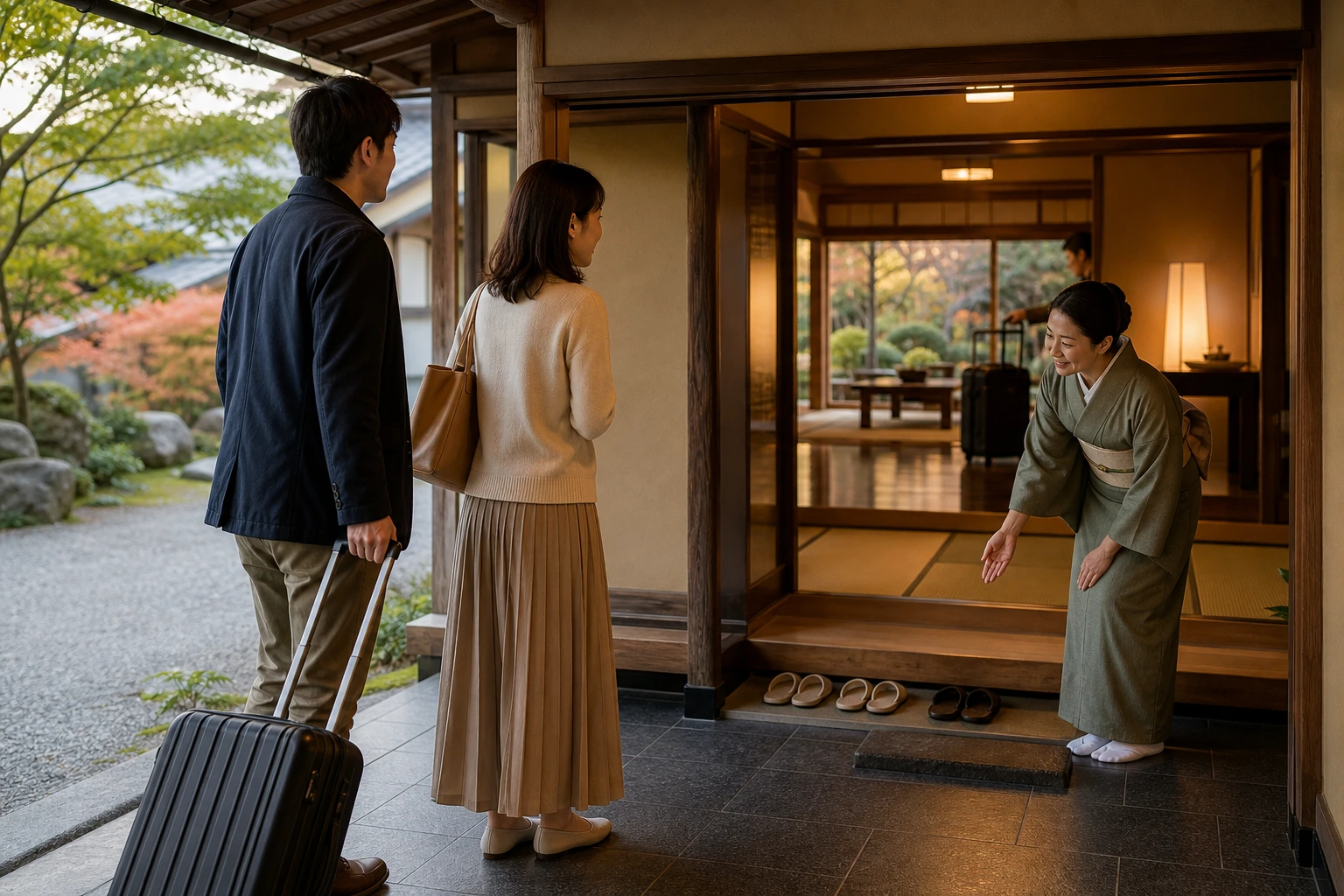
Different interior zones may carry different shoe and slipper rules. Observe, ask and move slowly rather than fear failing every gesture.
Firmness, floor height and rising do not suit every body. Clarify bed, futon, extra padding and accessible alternative before booking.
Washing takes place before bathing; shared areas follow local rules. Water, temperature, gender separation and operating hours vary.
JNTO notes that tattoo policies differ. Covering, a private bath or admission must be confirmed directly rather than inferred from general lists.
It may be in-room, reservable or exclusive to one party. View, genuine hot-spring water, steps and sight lines belong to the definition.
A useful arrival dossier names the last acceptable check-in, the confirmed dinner time, who receives forwarded luggage and how the guest moves from reception to room, bath and table. It also distinguishes an in-room bath from a reservable family bath and confirms whether either is supplied by genuine onsen water.
Kaiseki gives the evening a clock
Many courses arrive in precise sequence. A late city excursion or drinks elsewhere sits poorly beside it.
Dashi, fish, shellfish, soy and seasonal ingredients run through the cuisine. The property decides what it can adapt safely and coherently.
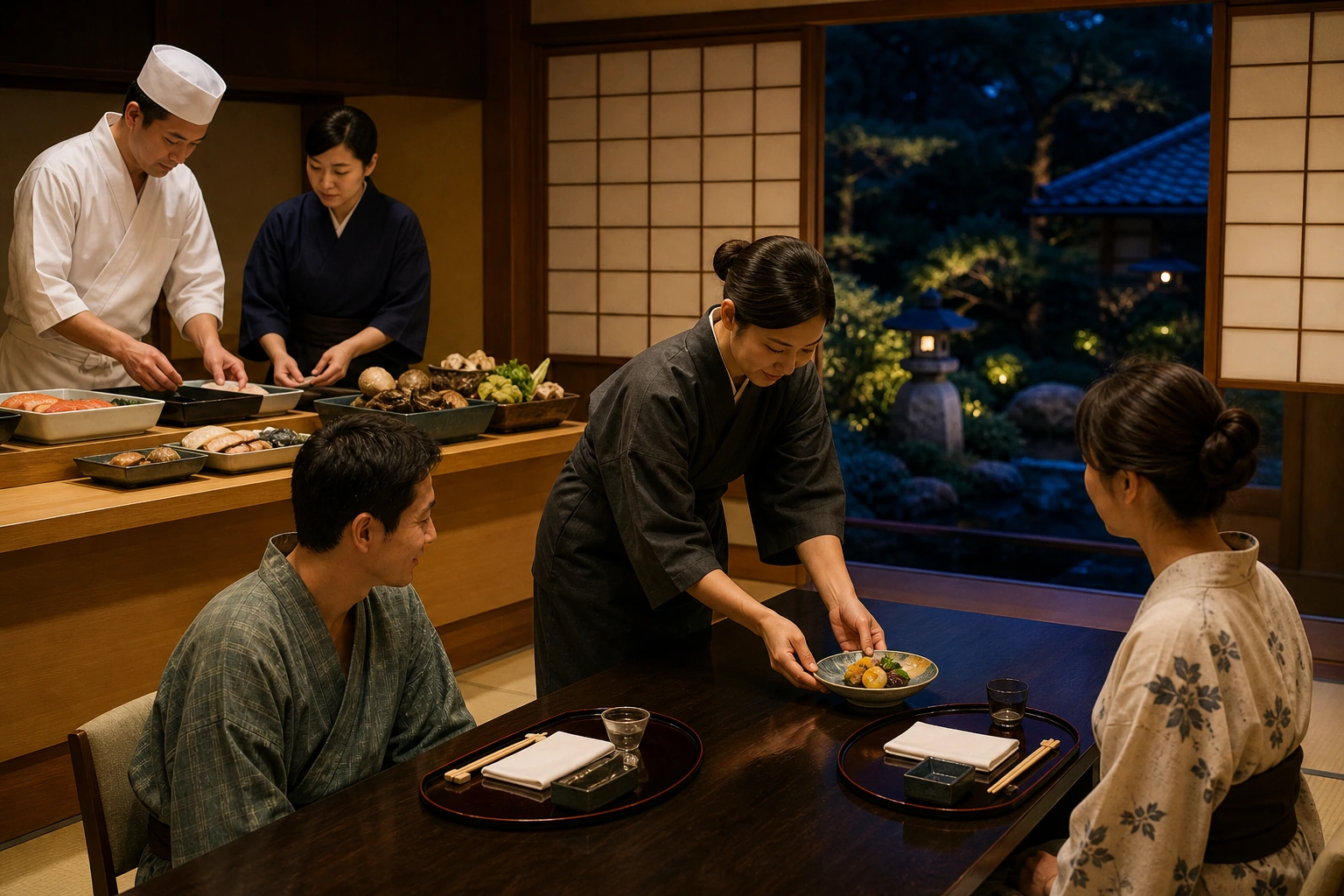
The term belongs to a demanding tradition, while style and context vary. Culinary direction, season and actual sequence matter more than the label.
UNESCO describes knowledge, practice, production, shared eating and respect for nature and local ingredients. Beautiful plating alone cannot contain that culture.
Richness, duration and fixed timing can repeat. One exceptional ryokan evening gains force between urban restaurant freedom and simpler local meals.
Grilled fish, rice, soup and pickles can be wonderful, but not every guest wants them daily. Do not assume a Western option or timing.
Dietary feasibility is not an allergy checkbox. It depends on broth, seasoning, cross-contact, notice period and the kitchen's ability to preserve a coherent menu. If adaptation would remove the structure of the meal, choosing another property or dining format is more respectful than forcing a ceremonial dinner to become something it cannot be.
Luggage determines the elegance of the route
JNTO describes delivery among airports, hotels and service counters. Check timing, acceptance, size, contents and destination for the actual carrier.
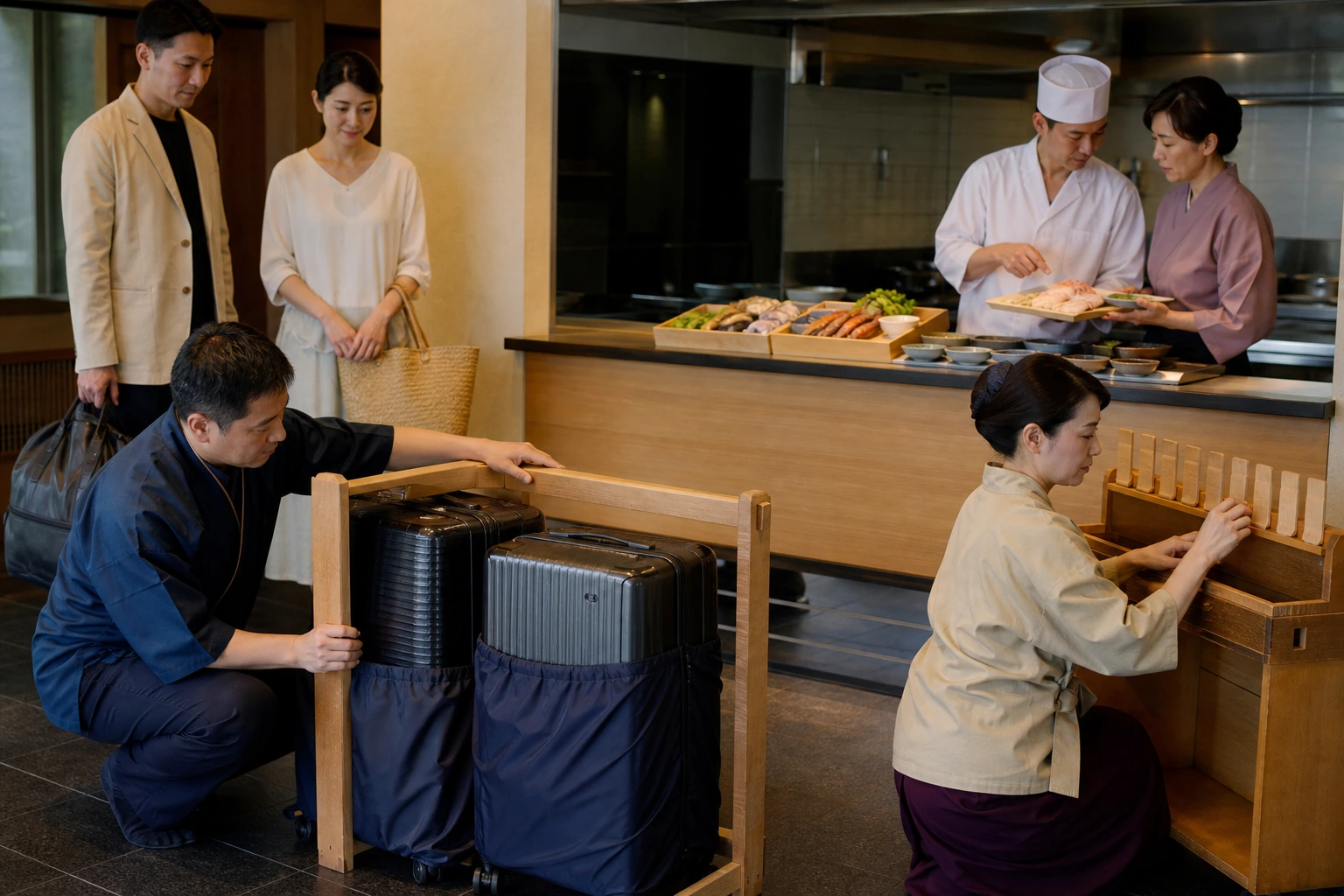
Main luggage travels to the next city while yukata, bath and futon work without a suitcase landscape. Medicines, valuables and fragile items stay with the guest.
Forwarding is a chain of custody, not a magic disappearance. Record the sending desk, carrier, cut-off, destination acceptance, expected delivery date and contingency for delay. A compact overnight bag should always hold medication, documents, chargers and enough clothing for the next twenty-four hours.
The design hotel is an urban workshop
Flexible dining, strong technology, luggage support and a clear return after long days make it useful. Its luxury lies in function and location, not only a lobby.
Material, proportion, light and craft should belong to building and place. A few shoji motifs do not create relevant architecture.
A precisely planned small room may outperform a poor suite. Compare storage, bed access, bathroom and open suitcase space.
Rail lines, bars, lifts and connecting doors matter more than floor number alone. Put exact room position into the hotel brief.
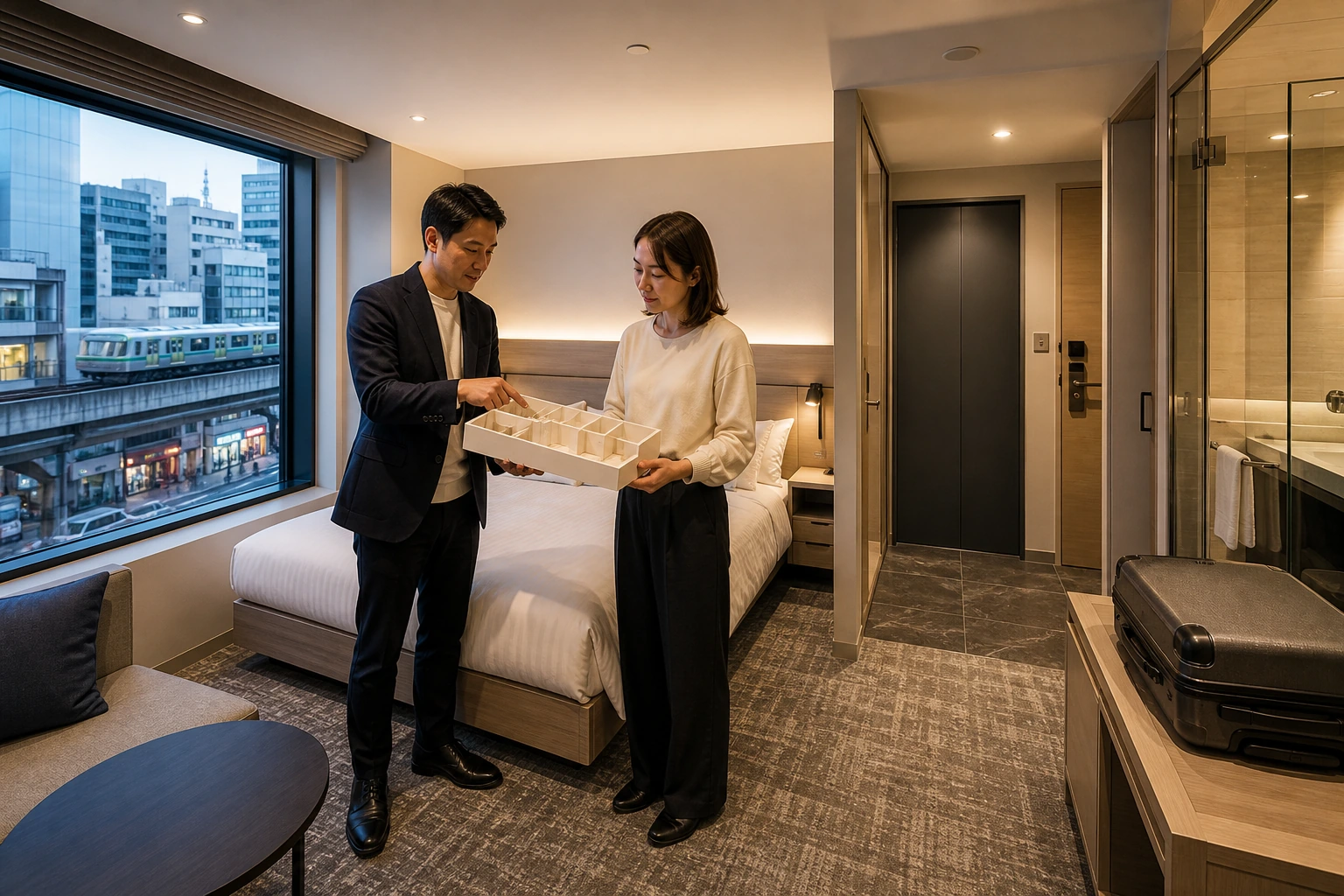
In Tokyo or Kyoto, design earns its place through operational intelligence: intuitive lighting, quiet air-conditioning, useful power points, blackout, an honest work surface and a bathroom that functions after twelve hours outside. A visually striking room that frustrates unpacking or sleep is decoration, not travel design.
Balance accessibility, city and landscape
Historic ryokans may involve steps, floor living and remote baths. Modern hotels are not automatically accessible. Verify the whole route.
Temple hours, district, traffic and dinner plans determine the base. An urban hotel may serve touring better than a ryokan with a strict meal rhythm.
Location, rail access, quiet and concierge create freedom for architecture, bars and dining. Daily hotel changes destroy that ease.
An onsen town, coast, mountain or garden gives the stay purpose. It gains little from being squeezed between two city appointments.
One night concentrates; two allow weather, bathing and a walk. Stay longer only when cuisine, landscape and daytime experience genuinely vary.
Futons may be flexible; fixed menus and delicate rooms less so. Align children's food, bath, bedtime and noise tolerance honestly.
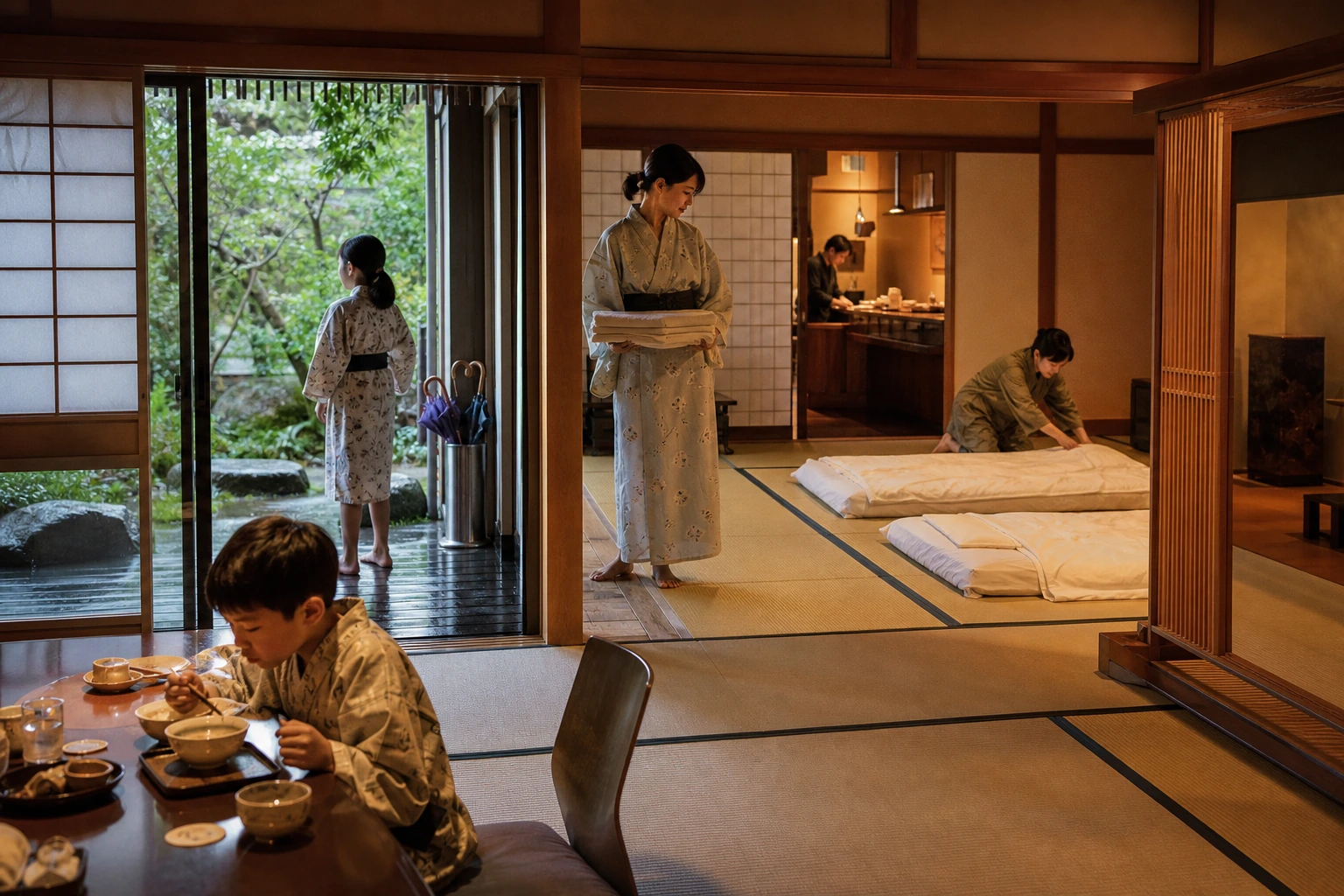
Ryokans often price per person with meals; single occupancy and dates vary. No general rule replaces the actual offer.
Translated names, arrival time, allergies and transport details help more than expecting perfect foreign-language service. Clarity is a form of respect.
A compelling route changes tempo
Several nights in an urban design hotel, one landscape ryokan and another flexible city base provide contrast without cultural overload.
A persuasive first journey might hold three or four urban nights, one or two ryokan nights and then a second city base. Consecutive fixed kaiseki evenings suit guests who actively seek immersion; for others they flatten the surprise. Contrast should be designed, not accumulated.
Book the ryokan as a complete evening and the design hotel as a precise base. Plan luggage, food, bathing and physical comfort as carefully as architecture.