
Japan in depth
The rarest moment is not necessarily a locked temple. It is an hour in which the right guide, the right place and enough quiet turn a beautiful building into an intelligible world.
Private access needs an honest definition
Many requests begin with a temple “just for us.” More often, private means a dedicated guide, a reserved cultural session or a carefully chosen time. Closing a religious institution exclusively is unusual, sensitive and never an automatic consequence of a high travel budget.
Buddhist temples and Shinto shrines remain places of worship. Prayer, ceremonies, funerals, training, conservation and neighbourhood life take precedence over a visitor itinerary. That living purpose explains why a room may close, a conversation may be cancelled or photography may be forbidden with little notice.
There is an ordinary public visit with a private guide, a limited public special opening, a bookable small-group practice and genuine out-of-hours access. Only the last is truly exclusive. A credible proposal states precisely which format has been confirmed.
A specialist connects architecture, gardens, iconography, religious history and present use. The work goes beyond translating labels. It includes reading the room: when conversation is welcome, why a threshold remains closed and which quiet detail would otherwise pass unseen.
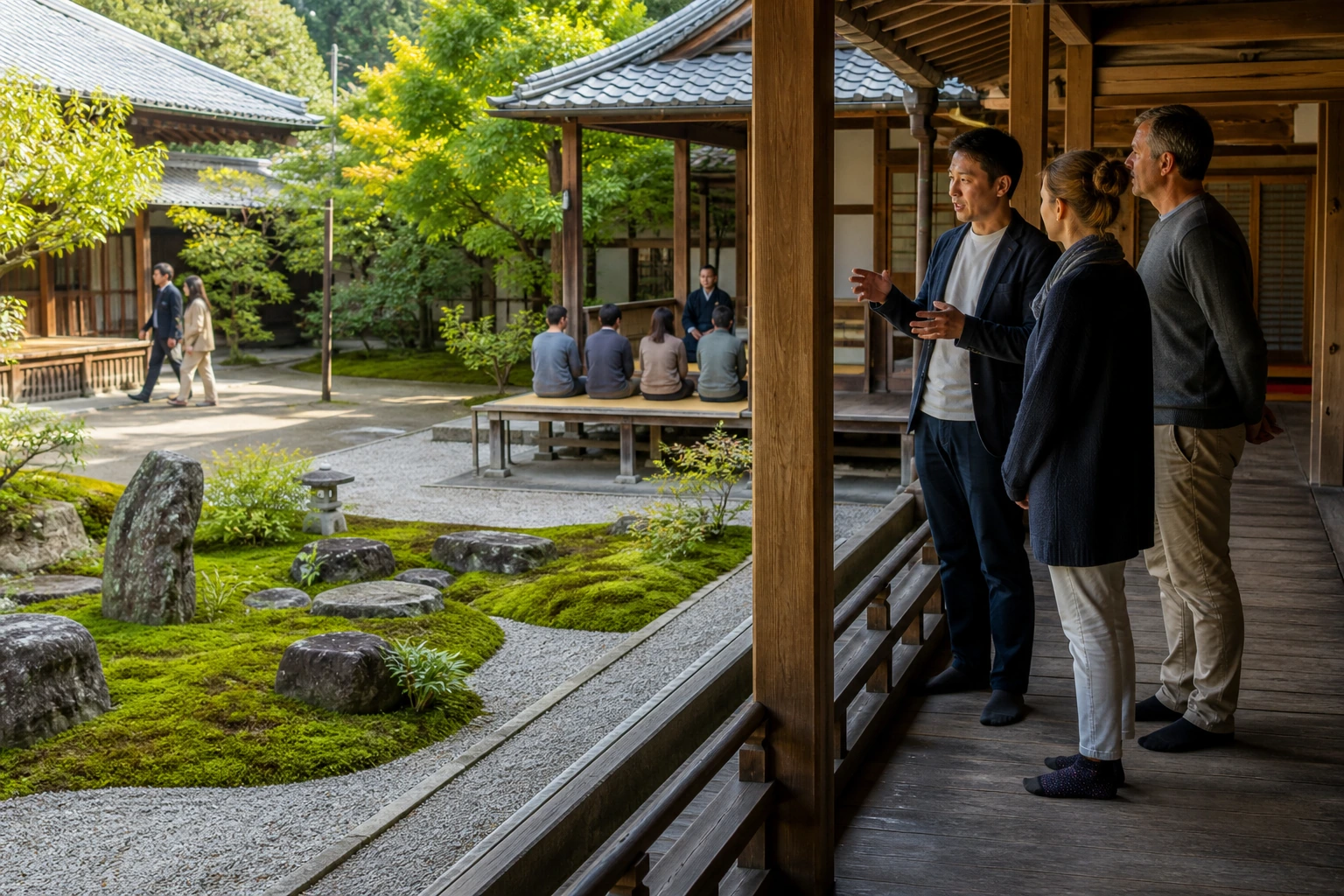
The city’s official tourism organisation lists Kyoto City Visitors Hosts and other recommended private guides. Their value lies in language, cultural knowledge, local planning and etiquette. Certification does not provide a universal key; interpretation and institutional access are separate services.
Zen gardens, Buddhist sculpture, timber architecture, tea, calligraphy and contemporary religious life require different expertise. “We like culture” is too broad. The sharper the curiosity, the more intelligently an adviser can match guest, guide, institution and hour.
Kyoto’s seasonal programmes make certain halls, gardens and cultural properties available for a limited period. Their scarcity matters, yet they normally retain published dates, admission rules and a shared visitor flow. Calling such access private would misrepresent the experience.
Kyoto’s official visitor information warns that ceremonies or weather can prevent viewing and that a temple may close without notice. A resilient itinerary carries an alternative of equal intellectual value rather than balancing the entire journey on one door.
Morning may be cooler, softer and quieter. Staff, worshippers, school groups and other informed travellers may still be present. “Empty” is a staged promise; a well-researched time slot is a better probability, honestly described.
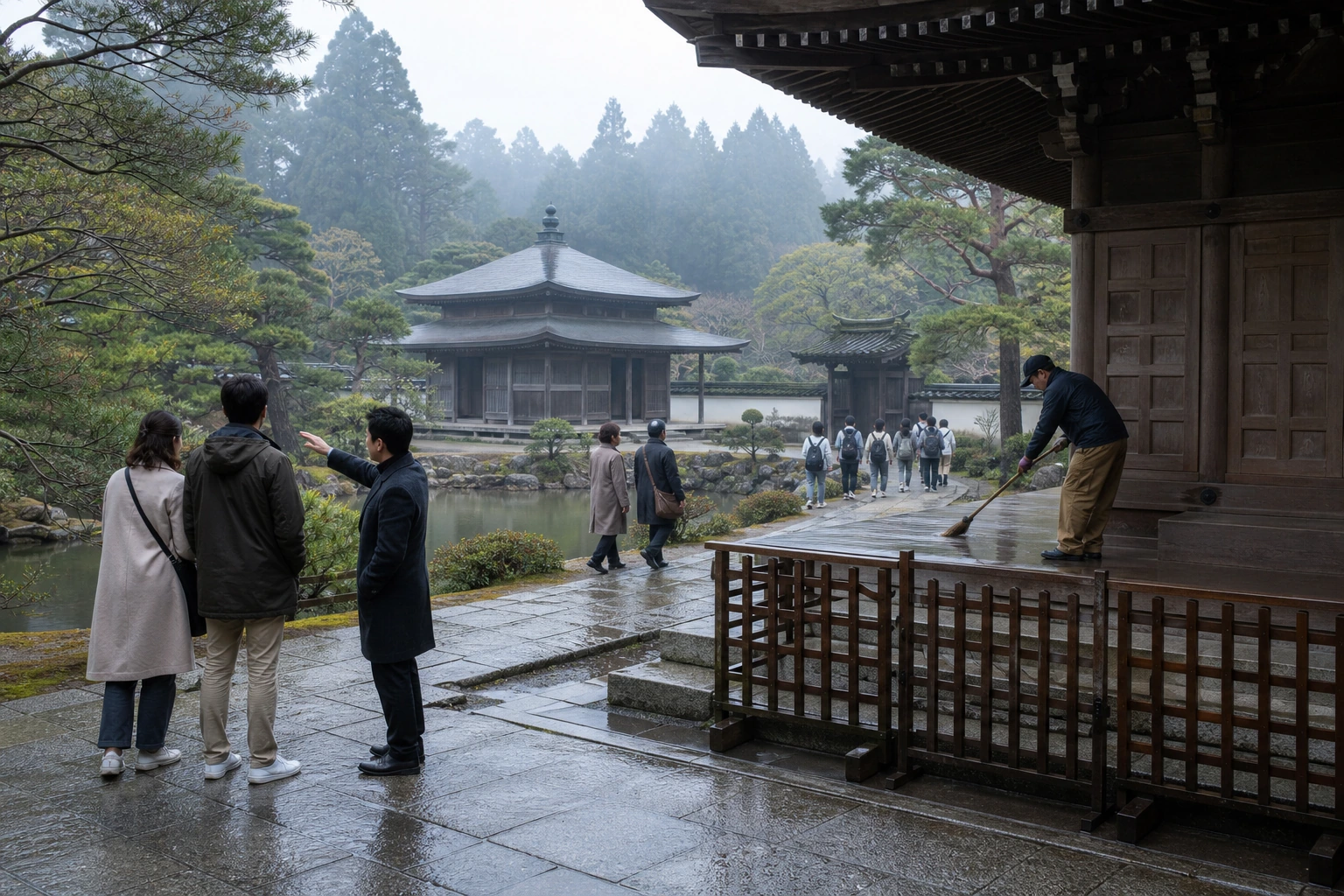
Illuminations and evening openings are seasonal events, not a general Kyoto privilege. They can be beautiful and very busy at once. Programme, admission procedure, lighting and transport home matter more than the fantasy of a silent temple after dusk.
Language, respect, photography and physical comfort
JNTO distinguishes Buddhist temples from Shinto shrines and explains different traditions of prayer. A torii generally marks a shrine; a sanmon belongs to a temple. Bowing, clapping, incense and purification should never be blended into one decorative idea of “Japanese ritual.”
Quiet voices, attention to instructions and avoidance of private areas are not ornamental etiquette. They protect worship, residents and fragile property. A good guide intervenes discreetly before unfamiliarity becomes disruption.
A garden may allow cameras while a hall, altar or artwork does not. Rules can change within the same compound. A private guide cannot waive them. The camera and phone stay away whenever signs or staff say so.
Without a viewfinder, proportion, scent, floor sounds and changing light become more apparent. For an experienced traveller, this is not a reduction in service but another form of attention. Memory need not prove that access took place.
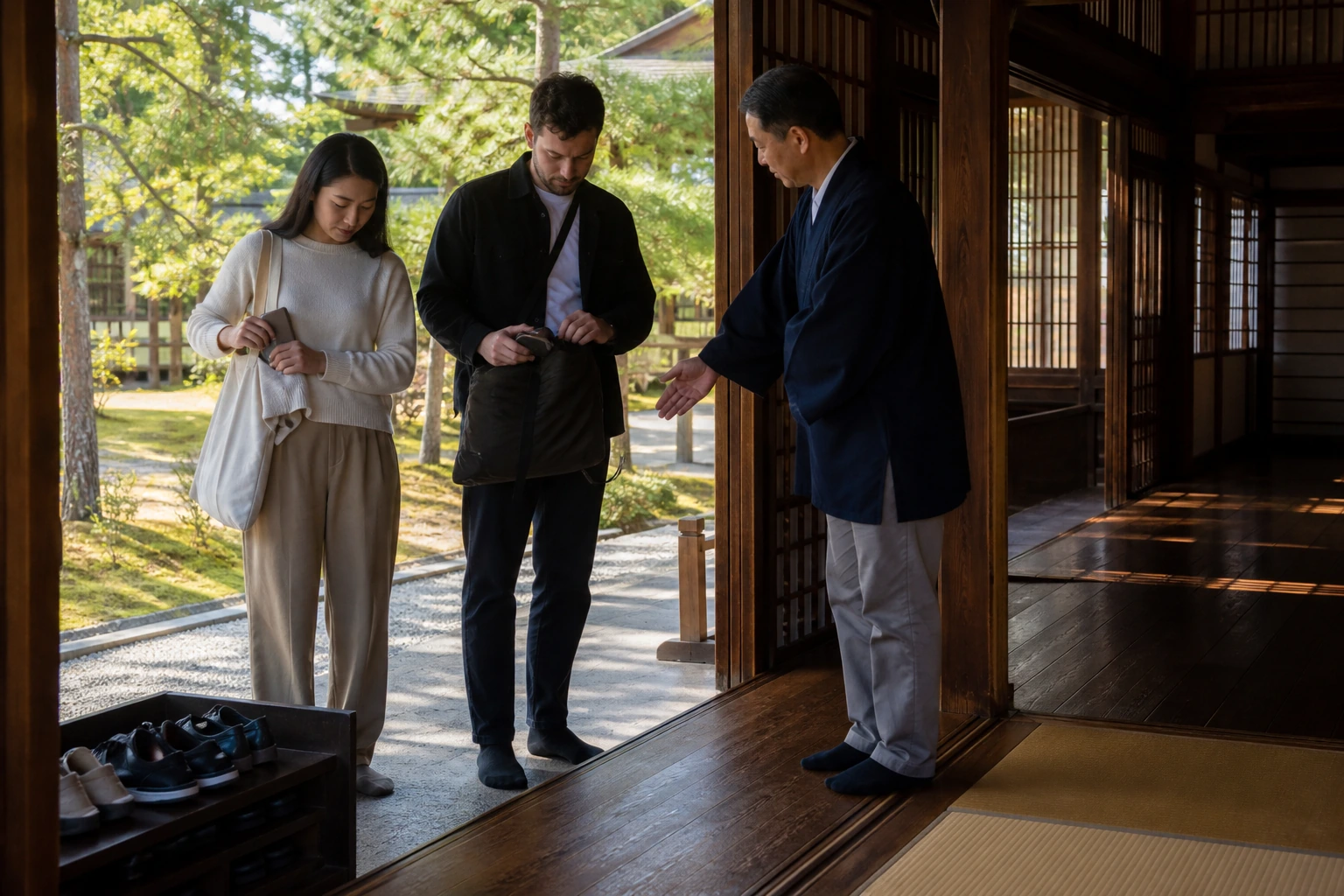
Shoes may need to be removed inside. Clean socks and simple footwear are more useful than complicated fashion. Large bags endanger delicate surfaces in narrow rooms; Kyoto asks visitors to carry backpacks in front or leave bulky luggage elsewhere.
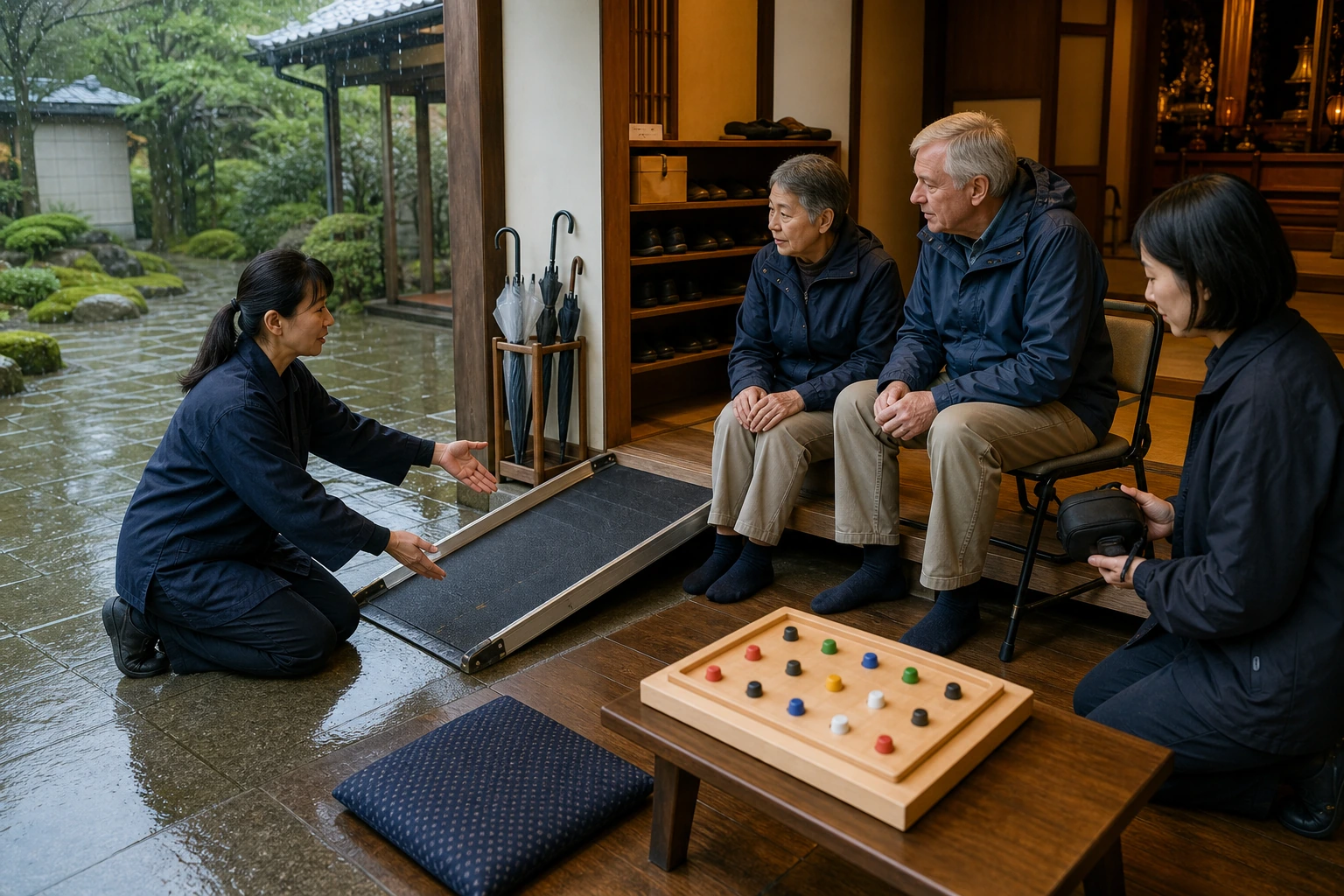
Long periods on the floor, low thresholds and steep stairs do not suit every body. Knees, back, balance and mobility should be discussed before booking tea or meditation. A chair or alternative room must be confirmed rather than assumed.
Meditation, tea and clergy are not theatre
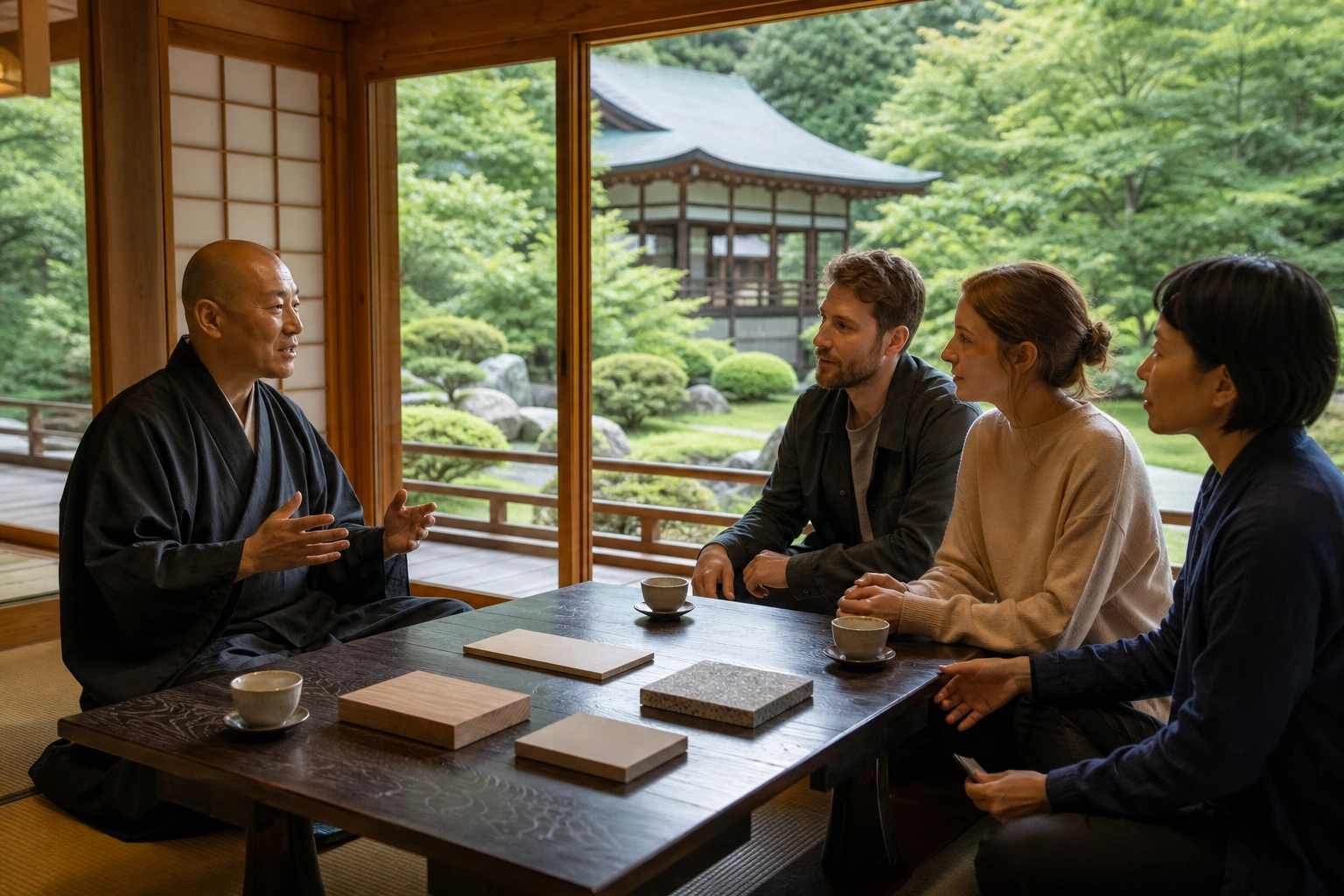
Bookable zazen and contemplative programmes vary by Buddhist school, temple, teacher, length and language. Some welcome beginners; others do not. The meaningful result is an intelligible practice in context, not a photograph beside a monk.
A private tea ceremony might mean a formal gathering, a concise introduction or simply served matcha. Host, room, language, duration, seating and guest participation should be written down. A temple setting alone does not turn a demonstration into a profound exchange.
A priest or monk may speak with guests when the institution, language and daily schedule allow. They are not performers included in a package. Name, role and format should be confirmed; spontaneous intimacy and portraits must never be promised.
Fewer names, greater geographical understanding
Five famous temples in one day create transfers, tickets, shoes and surfaces. Two well-chosen sites can compare an era, a Buddhist school or two ideas of landscape. Depth begins when there is still time for a second question after the first impression.
Ohara, Takao, Yamashina and other outer districts connect religious sites with landscape and neighbourhood life. They are neither automatically empty nor “secret,” but their rhythms differ. Choose them for substance and logistics, not merely to avoid what is famous.
The earlier capital opens a different conversation about monumental Buddhist art, state formation and spatial scale. It deserves more than a hurried addition between Kyoto appointments. With the right scholar-guide, a full day can alter how the traveller reads religion and power in Japan.
Temple lodging, morning observances and Okunoin are often packaged as a spiritual interlude. Comfort, meals, bathing, language, baggage and conduct vary. The stay succeeds when guests respect a working religious environment rather than expecting a hotel dressed as a monastery.
At peak times, Kyoto contends with traffic and crowded buses. Rail, subway, taxi and short walks need a coherent daily choreography. A private car adds comfort but cannot erase access restrictions, parking or congestion. The intelligent starting point may be more exclusive than the chauffeur.
Heat, rain, daylight, moss, garden maintenance, religious calendars and special openings all change the visit. The iconic weeks bring intense demand. A less famous month can be richer when architecture, conversation and a specific collection matter more than foliage.
What a proposal must confirm in writing
Institution, date, time, access format, public or private status, guide, language, group size, rooms, photography, footwear, seating, barriers, meeting point, duration, fee, donation and cancellation all belong in the confirmation. “VIP access” is not a sufficient service description.
Be wary of an unnamed “secret temple,” a guaranteed empty site or marketing built around unexplained images of monks. A credible arrangement has a named host, specific boundaries and the honest possibility that religious life may alter the schedule.
Will the institution remain open to other visitors Who is guiding, and in what role Which spaces are confirmed What may be photographed What replaces the visit if worship, conservation or weather closes it Precise answers matter more than prestigious phrasing.
We begin with cultural interest, not the promise of a locked door. Region, institution, guide and time follow. A rarely opened room is welcome when genuinely confirmed, but it can never substitute for interpretation and respectful conduct.
Perhaps no hidden hall opens. Instead, a guide explains why gravel holds a different tension from moss and how a building directs the gaze. The space becomes quiet even while other people remain. That is the kind of privacy Japan can offer with integrity.