
A serious caviar tasting begins not with the largest tin but with an intelligible origin. Species, source, country, packing, lot and cold chain say more than gold spoons or grand adjectives. Once that foundation is sound, texture, salt, length and character can be compared with attention—quietly, precisely and without turning luxury into theatre.
Taste caviar instead of performing luxury
In regulatory and specialist use, caviar means processed roe from sturgeon and, in relevant rules, paddlefish of the order Acipenseriformes. Salmon, trout or lumpfish roe may be excellent, but they are not sturgeon caviar. The distinction is not pedantry; it begins traceability. A credible menu says more than “black caviar” or a poetic house title. Staff can identify the species or hybrid and connect that description to the sealed primary container.
Three well-chosen products on a quiet table teach more than seven poorly explained tins surrounded by decoration. Comparison is the point: which eggs remain distinct, where does texture become creamy, which finish stays clean and long A good host provides enough context, then allows silence. Oversized portions, status gestures and constant Champagne top-ups blur differences. With caviar, concentration is more luxurious than excess.
Origin begins with species and label
Beluga, Ossetra and Sevruga are familiar, yet modern aquaculture includes other sturgeon species and many hybrids. Trade names, spellings and house grades are not used consistently everywhere. Ask for the biological species and, for a hybrid, both parents. The standard code on the CITES label is stronger evidence than a large word on the lid. A less famous sturgeon in superb condition can be more compelling than a prestigious name handled poorly.
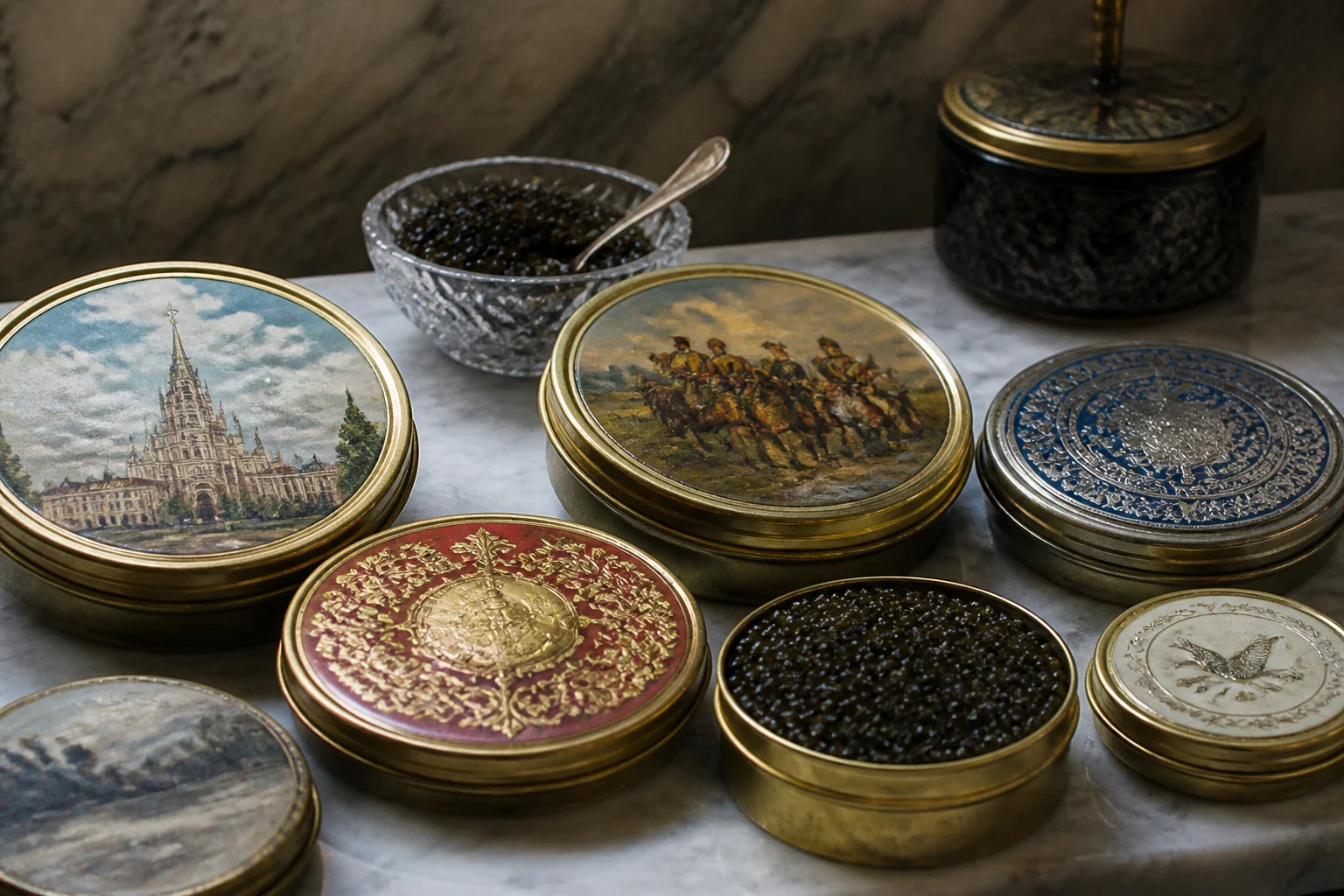
Internationally traded caviar is carried in a primary container with a non-reusable label. Official rules require information including the standard species code, source code, two-letter ISO country of origin, year, processing or repacking plant and lot identification. Hybrids combine the relevant species codes. A serious seller can show and explain this line. It is not a sensory grade, but a quality conversation without credible traceability has no foundation.
The source code identifies the legal origin category. Much of today’s fine caviar comes from aquaculture. That is not an inferior status: controlled production has created legal supply and can improve traceability. The assertion that wild is automatically better is both simplistic and ecologically troubling. Any wild claim requires especially clear species, permits and documentation. Unverified rarity is a warning, not a luxury credential.

A sturgeon can be raised and first processed in one country, then the caviar repacked into smaller tins elsewhere. The address of a brand or retailer therefore does not prove production origin. Traceability distinguishes origin, processing and repacking. Ask which stage the prominent geography describes. Repacking is not inherently negative, but it must be documented and the cold chain protected. Romance on the lid cannot replace the ISO origin code.
The year in the CITES code supports tracking; it does not alone reveal when an opened tin will taste best or how it travelled. Lot, packing information, use-by date and producer instructions belong together. Repacked caviar requires corresponding identification. At a tasting, the original tins should remain available rather than anonymous bowls. The more steps between farm and table, the more important a coherent explanation becomes.
Judge quality with the senses
Large, pale eggs attract attention and can be rare within a species. They do not establish a universal law that bigger or lighter tastes better. Species, maturity, feed, processing and lot influence the result. House grades are not standardised across producers. Never compare two imaginative category names without learning the criteria. Size and colour describe the caviar; they do not prove quality.
Fine caviar should not behave like uniform paste. Eggs remain perceptible and release with resistance appropriate to the style: some firmer and cleaner, others delicate or creamy. The question is whether the texture feels alive and coherent. Excessively crushed, mushy or watery product needs explanation. A few broken eggs do not decide the matter; condition, separation and the total mouthfeel do.
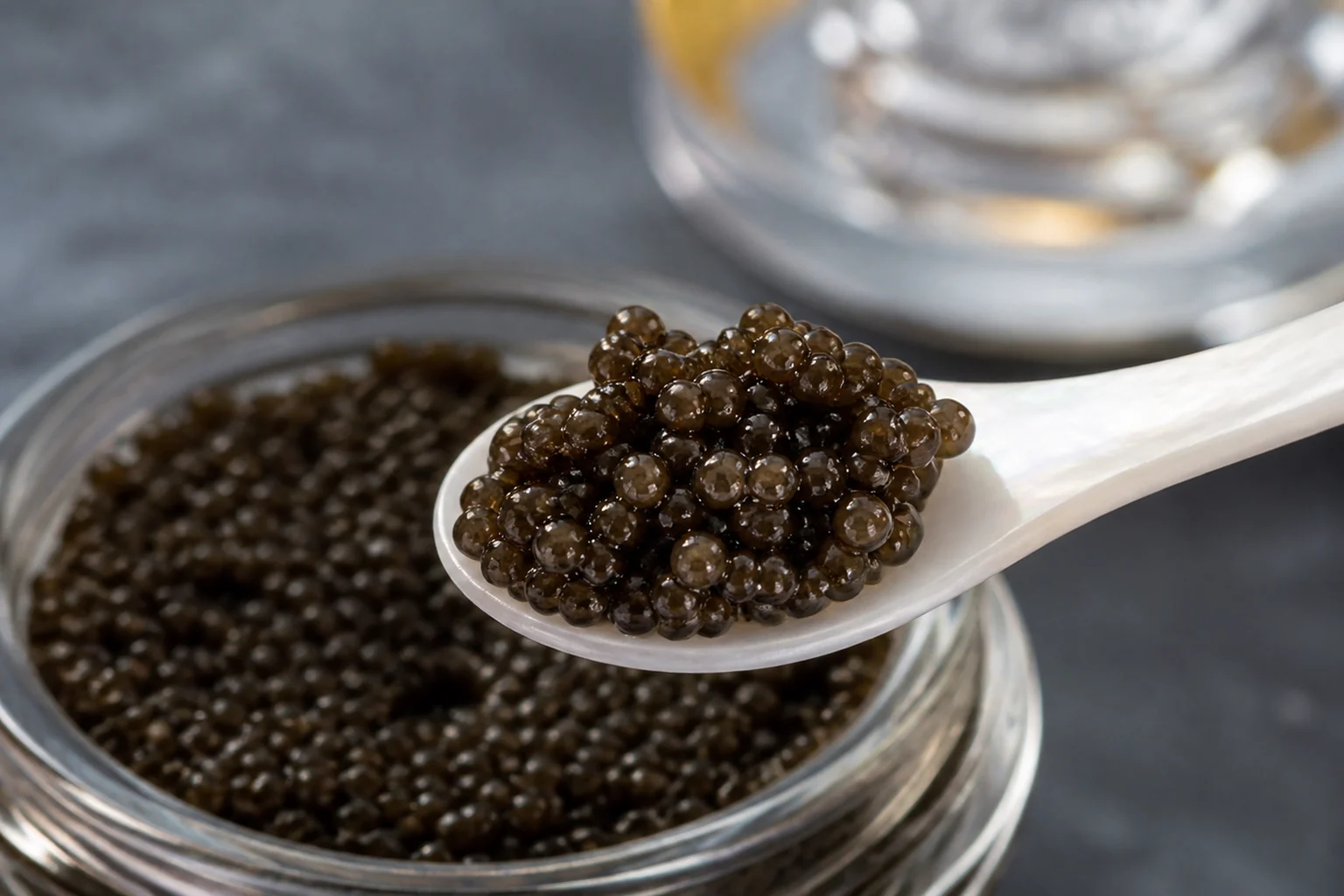
Aromas may suggest sea air, iodine, nuts, butter or minerals, but should remain clean and inviting. Sharp fishiness, sourness, ammonia or rancidity is not “strong character”. On the palate, salt should open flavour rather than conceal it. A precise finish avoids harsh metal or unpleasant bitterness. Tasting language is personal, but an obvious fault should never be explained away through prestige.
Malossol broadly means lightly salted and is widely used as a quality phrase. It does not state one standard salt percentage across all producers, nor species or freshness. Lower salt can expose character, while demanding careful processing and storage. More salt is not automatically poor, though it may obscure nuance. Ask about the producer’s style and taste for balance. The word on the lid cannot complete the judgement.
Cold chain and service decide the experience
Caviar is perishable. A sealed tin must remain continuously chilled according to producer instructions, with transport, storage and service aligned. A warm, swollen, leaking or damaged container is not made safe by elegant presentation. Staff should know when the product left refrigeration and how long it will remain open. Exact temperatures and shelf life follow the producer and local food-safety rules. A hotel minibar is not automatically reliable storage.
Caviar served extremely cold can seem aromatically closed; too warm, it loses texture and food safety. The tin commonly rests on or over ice without meltwater entering it. Small portions appear shortly before tasting. A lengthy speech should not leave the product warming on the table. Brief explanations between samples work better. Leftovers are handled under house and producer rules, not passed around for hours.
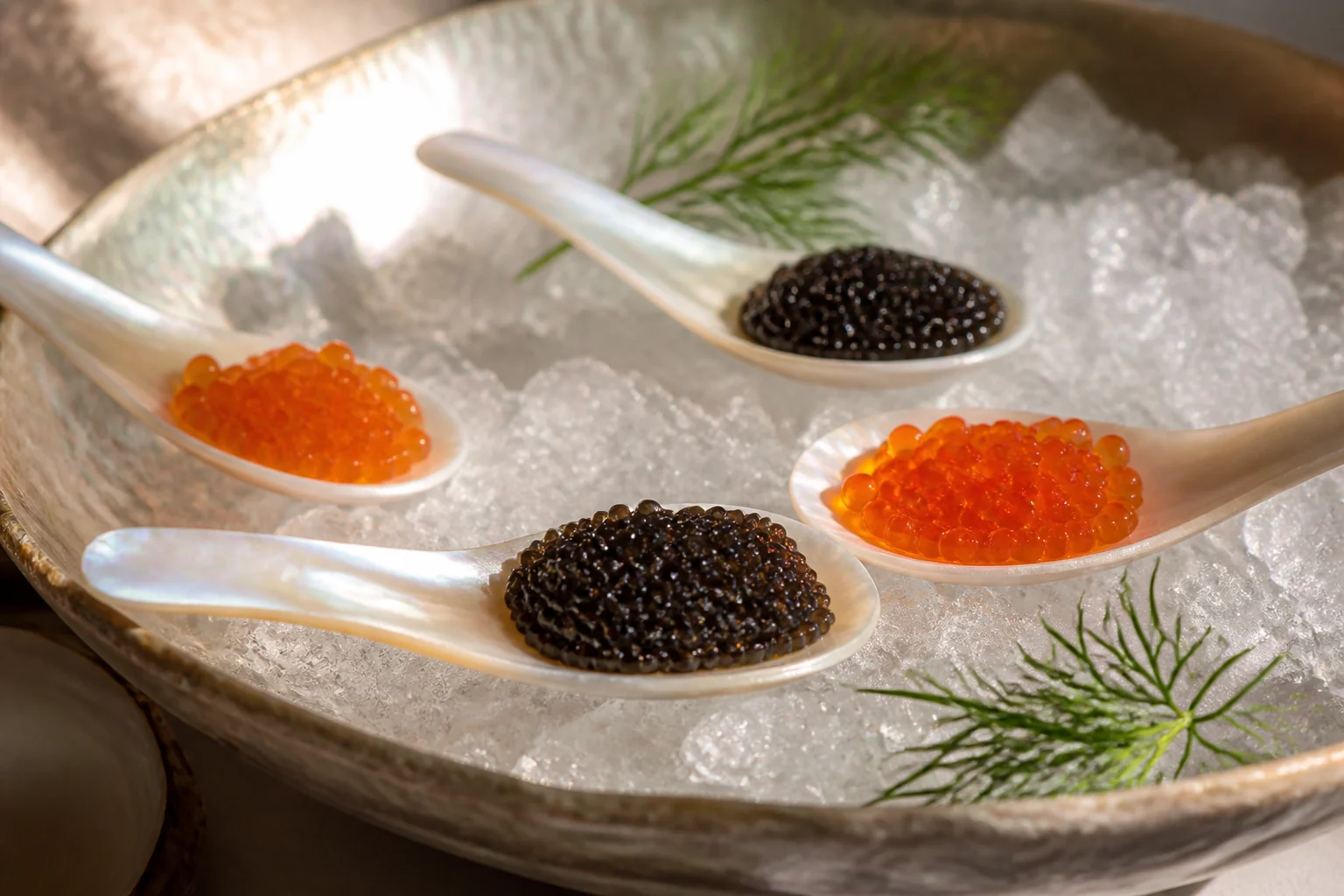
Mother-of-pearl, horn and porcelain spoons are neutral and comfortable. The claim that every metal spoon ruins caviar is too broad. Reactive materials such as silver can affect perception; clean stainless steel is routine in professional kitchens and largely neutral. More important are odour-free utensils and a small shape that does not crush the eggs. An expensive spoon cannot rescue poor storage.
Compose a tasting that teaches
A useful flight shows genuine contrast: a clean accessible opening, perhaps a nuttier or firmer middle, then the most intense or longest finish. Sequence should follow taste, not price alone. Each sample needs an identifiable tin and explanation. Blind tasting can expose assumptions about name, colour and size; labels are revealed afterwards. More than three or four products tires the palate and weakens memory.
Too little provides only a salty first contact; too much turns tasting into satiety. Each sample should permit two or three unhurried tastes, adjusted for the number of products and any following menu. The host states net weight in advance so price can be understood. One large communal tin makes equal comparison and traceability harder. Generosity means enough product and time for an individual judgement, not waste.
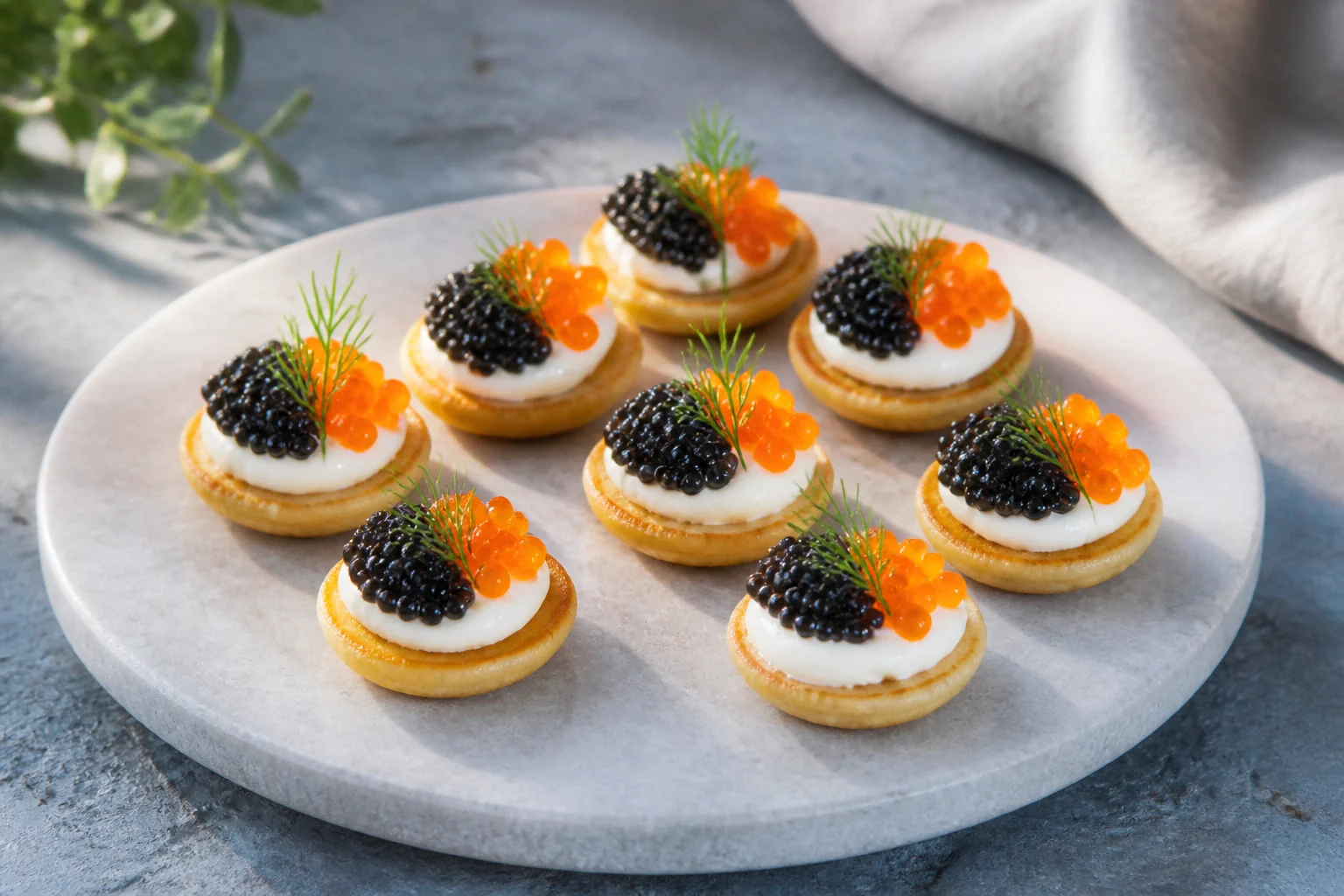
Blini, small potato, egg or a little crème fraîche can soften salt and temperature, but should not replace the first taste on its own. Onion, herbs and strong lemon dominate quickly; serve them separately and sparingly. Tasting from the back of the hand can be useful only in a hygienic, suitable setting. Neutral carriers may follow. The goal is not a rigid ritual but a fair sensory stage.
Dry Champagne can emphasise freshness and texture, vodka cool the palate, sake meet umami and a clear tea offer an alcohol-free perspective. None is compulsory. Strong dosage, oak, heat or perfume may cover differences. Taste each caviar alone first, then with a small sip. Water remains essential. A tasting should not become an excuse for an alcohol pairing that erodes attention.
The right venue and an intelligible price
A specialist often offers depth and can decode labels directly. A good hotel bar adds atmosphere but must demonstrate the same traceability and cold discipline. Private dining creates focus for a group when buying, transport and service are professional. The most famous room is not necessarily the best classroom. Turnover, knowledgeable explanation, original tins and quiet matter. Ask what will actually be opened on the date, not what exists theoretically on a menu.
Species, long maturation, yield, selection, processing, transport and service affect cost. A high bill still cannot guarantee a fine lot or correct storage. Require net weight, species, source and accompaniments to be transparent. A premium is persuasive when it produces a real sensory difference and intelligible work. Gold leaf, giant tins and vague “Royal” labels add no inherent value. A lesser-known species in excellent condition may deliver the strongest value.
Buying and crossing a border are separate decisions
Buying a tin abroad does not mean it can legally and safely travel home. Under stated CITES conditions, Switzerland’s BLV describes a personal exception of up to 125 g per person in an unopened individual container. Quantities cannot be pooled: one 250 g tin does not qualify merely because two people travel. Customs, food-import,
airline and transit rules still require current checking. The cold chain must survive the journey. Often the better decision is to enjoy caviar where it is served properly.
The one-page caviar-tasting brief
Record date, party size, occasion, experience and desired samples. For each caviar request species or hybrid, CITES label, origin and repacking information, net portion and price. Clarify allergies, accompaniments, alcohol-free needs, service format, timing and whether original tins will be shown. A purchase adds use-by date, producer storage, sealed packaging, transport and import rules.
A good brief prevents misrepresentation, but it also creates the calm in which caviar becomes what it should be: a precise food with provenance, not merely a symbol.
Ask the provider to justify the flight as a sensory narrative. Two nearly identical house grades may teach little, whereas changes of species, texture or salting style make comparison legible. Confirm whether tins are opened for the group or already in service, how many guests share each container and who will explain the traceability. If species,
weight and label cannot be answered clearly, decoration should not be used to compensate. Remove that sample and spend the budget on fewer products in better condition.
A mature tasting also leaves room not to admire everything. Preference is not a failure of expertise: one guest may favour firm, nutty eggs, another a delicate creamy texture or a clearer marine note. Write impressions before names and prices are revealed. Then connect the evidence to the palate. The result is not a permanent hierarchy but a vocabulary for the next restaurant or purchase.
The most valuable conclusion may be that the famous name is less compelling to you than the quieter second sample. That discovery is precisely why a comparison deserves to exist.
Schedule the tasting when the palate and room can support it. Immediately after a long flight, heavily spiced lunch, cigar or strong fragrance event, subtle differences become needlessly difficult. A calm early evening or focused aperitif works better than the final flourish of an already extensive dinner. Provide plain water and neutral bread, allow pauses,
and keep tasting notes short enough that the food remains central. If a chef includes caviar as one course rather than a flight, ask what role it plays in the dish; richness, acidity and heat may make provenance less perceptible. The ideal result is not a photograph of an enormous open tin. It is a clear memory of which texture,
salt balance and origin convinced you, which did not, and why. That memory makes the next choice more intelligent instead of merely more expensive.