
A truffle hides within a landscape, caviar now emerges from controlled sturgeon farming, and Champagne from a strictly defined wine region. They therefore demand three different journeys. Gather them on a menu and one experiences status; understand forest, water, cellar and people and one experiences origin.
This is not a culinary grand tour
Alba, the Dordogne and Reims do not form an elegant line. One trip devoted to all three products would collect more airports than depth. Design three independent chapters, or at most two with Turin, Bordeaux or Paris as the bridge. The product determines the geography, not the wish list.
For truffle: which species and real season For caviar: which sturgeon, farm, method and label For Champagne: which place, producer type and cellar appointment Only then do price, host, driver and restaurant become meaningful. “Premium” and “private” state no origin.
Truffle: species, season and region before prestige
Aroma, maturity, weight and condition differ from one piece to the next and across a few days. Weather and soil affect supply. A journey can promise neither a find nor size or price. Luxury lies in a credible hunter, a well-managed dog, traceable origin and a kitchen that does not bury the product.
They belong to different species, regions and culinary uses. Alba white truffle is commonly shaved raw over warm, restrained food; black species may be handled differently. Request botanical identity, origin, harvest date and weight. “Winter truffle” or “truffle aroma” alone remains too vague.
The international fair concentrates market, events and visitors while the landscape lies outside town. A sound stay combines a controlled market visit, a hunt in the hills and a restaurant that weighs and explains the truffle at the table. Current fair dates, tickets and programme require direct confirmation.
Arrival and quiet dinner, a hunt with lunch, market or winery on the next day and departure on the fourth is already concise. Turin can provide an urban contrast before or after. A country hotel reduces the drive to the hunt; an Alba address serves the market and evening. Few properties solve both perfectly.
Hunt, ethics, market and a credible Plan B
A credible outing uses an authorised trifolao, trained dog, lawful ground and the reality of that day. A planted demonstration truffle may teach, but must be described as a demonstration. Ask whether the find is genuine, the land is managed and participation is permitted and insured.
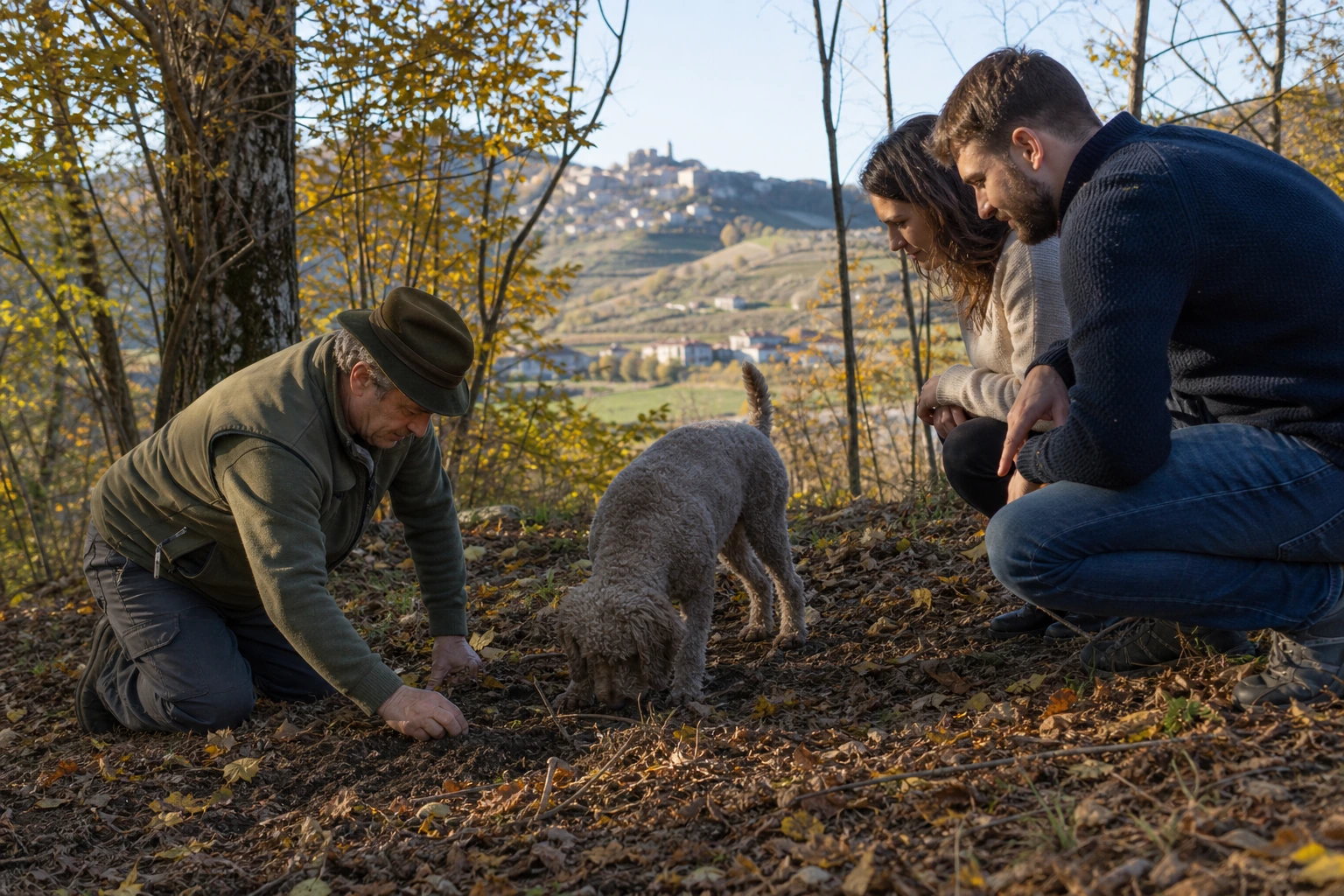
Working time, weather, water, rest, transport and respectful handling matter more than a perfect picture. Guests follow instructions, do not crowd the animal and expect no repeated performance. Responsible specialists assess welfare; the organiser names handler, accountability and stopping criteria.
Productive sites, ownership boundaries and methods can be sensitive knowledge. Coordinates, geotags and drones are never published without explicit consent. The guide decides when photography is appropriate. A small group with little equipment protects conversation, dog and place better than a full production.
Serious markets and traders inspect goods, while buyers still need species, origin, weight, price, maturity and invoice explained. A beautiful truffle under glass proves neither fitness nor shelf life. Anyone purchasing plans transport and use in advance. Fresh truffle is not a casual souvenir for a long route.
Base dish, price per gram, suggested amount and actual weight are explained. The truffle is weighed at the table or documented transparently. Egg, tajarin, risotto or fonduta can carry it; a long, highly seasoned menu can fatigue its aroma. One truffle course is often enough.
When supply is weak, doubtful goods should not rescue the day. Wine, hazelnut, cheese, market, cooking or an ordinary Langhe lunch keep the region alive. The agreement states what happens with weather, dog, guide or no product. MAG-188 examines season, auctions, menus and supplier diligence in detail.
Caviar begins with species and CITES traceability
It should not open as an anonymous black pearl. Species, farm, water, husbandry, feed, maturity, processing and label define the product. Historic wild stocks suffered severe pressure; a modern culinary journey should understand aquaculture and conservation rather than use “wild” as an unexamined luxury word.
Beluga, Ossetra, Baerii and other trade terms may refer to species, hybrids or style. Ask for scientific identity, country of origin, production method, packing establishment and date on the original tin. Colour and egg size prove neither species nor quality. The spoken description must match the label.
Sturgeons and their trade sit within international protection and control systems. Original container, sealed label and complete code therefore belong to provenance diligence. A qualified dealer or customs specialist interprets the exact legal meaning and importability for the route and date. This guide offers no legal or customs advice.
Farm, welfare and defensible sustainability
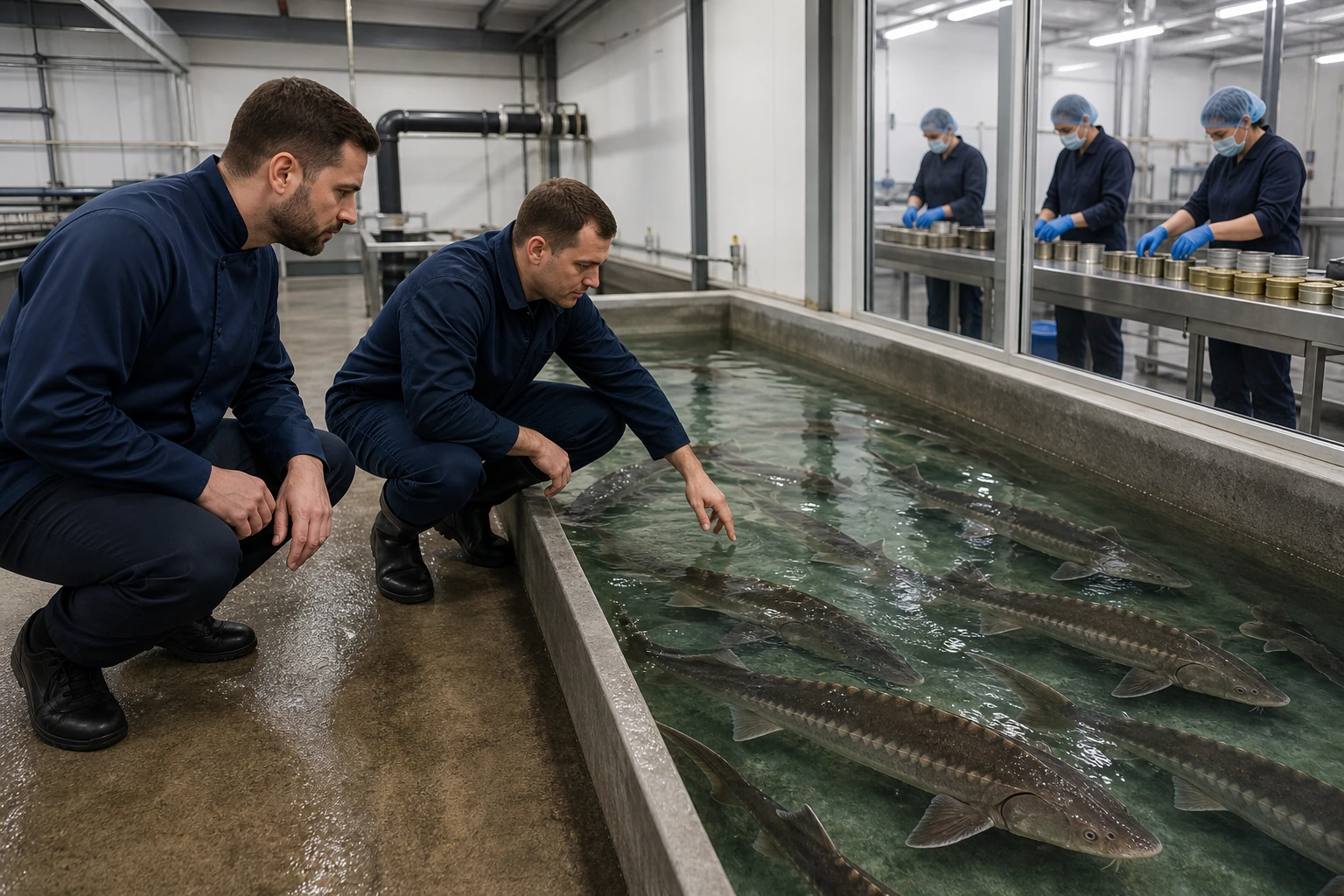
In the Périgord, a producer such as Caviar de Neuvic may offer visits subject to current availability. Water flow, pools, lifecycle, identification, processing and cold chain are the interesting elements. Not every area is accessible and not every production step occurs that day. Hygiene, biosecurity and welfare set the boundary.
Two nights in or near Bordeaux and two in the Périgord connect city, wine and aquaculture without inventing a week of caviar. Give the farm half a day, one focused tasting and a regional meal. Real roads and openings choose the base; a driver resolves alcohol and the return.
Stocking density, water quality, handling, stunning, mortality, veterinary responsibility and whole-fish use matter. The traveller should expect traceable standards and external oversight where available, not a marketing line. Competent veterinary and certification bodies assess practice, not the elegance of a tasting room.
Aquaculture may reduce pressure on wild populations while creating impacts through energy, water, feed and waste. Ask about source, recirculation, feed, effluent, power and contribution to conservation. A label or donation does not replace transparent operational evidence. Claims require current independent checking.
Service, sensory judgement, cold chain and personal suitability
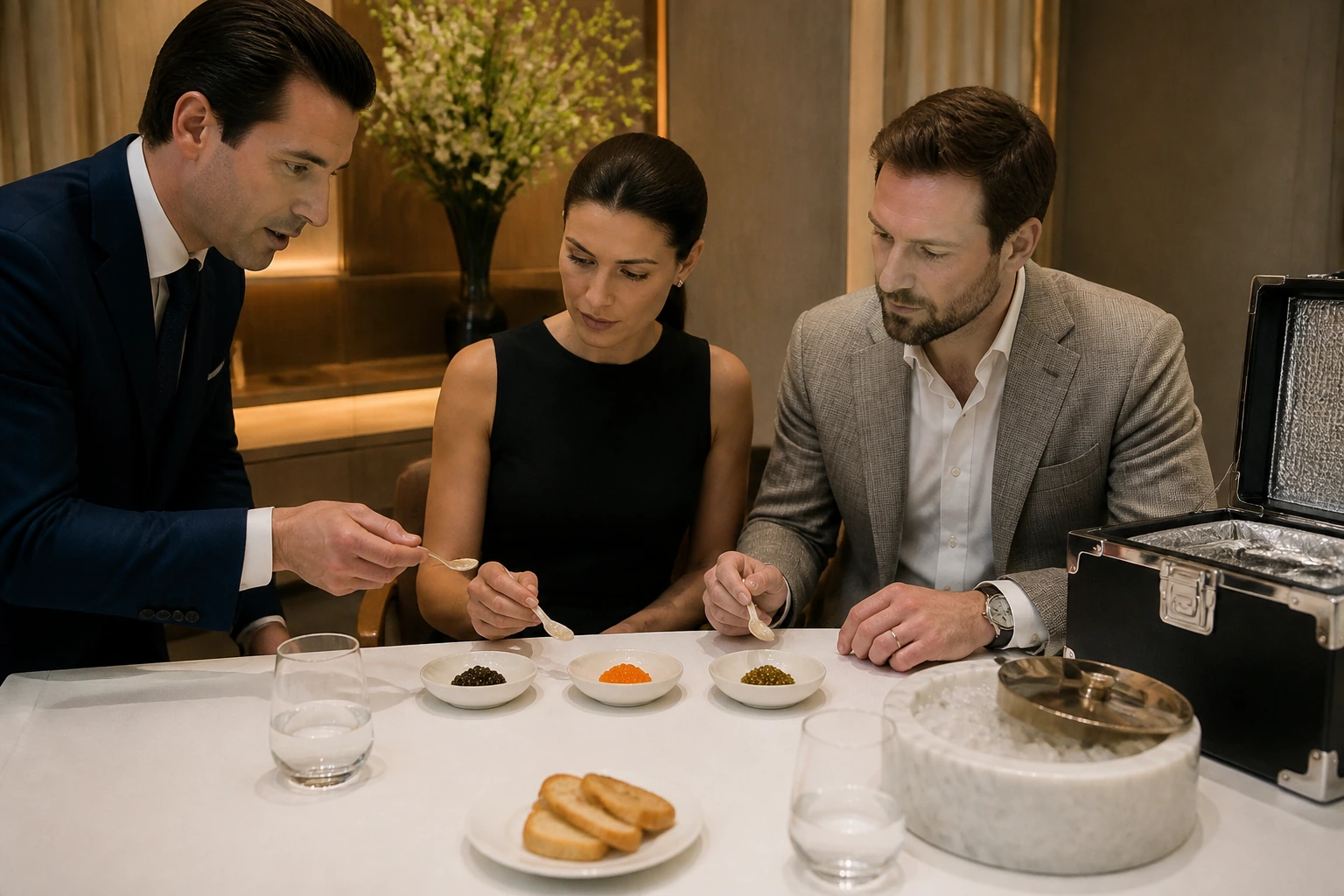
It links species, code, packer and date. During a tasting, the host should show the label before transferring caviar. Loose product from an anonymous large tin loses traceability. Restaurant and seller explain storage, opening time and portion while interrupting the cold chain as little as possible.
Caviar is served well chilled, not frozen, following the producer’s instructions. Neutral spoons, small portions and pauses reveal salinity, nuttiness, marine notes, length and texture. Blini, potato or egg may accompany without concealing it. A specialist host can explain the choice of service material.
Three clearly explained products are sufficient for comparison. Sequence, equal portion, temperature and a neutral palate matter more than ten tins. A blind comparison can unsettle assumptions but is fully revealed afterwards. Price and rarity are discussed only after sensory observation.
Collection, flight, hotel refrigerator, border and delivery must remain within manufacturer and legal requirements. A minibar compartment is not necessarily suitable. Taking product home requires written packaging, temperature, time and customs arrangements. Professional shipment is often safer than hand luggage.
Fish allergy, sodium restrictions, pregnancy, medication and other factors may affect caviar, chilled/raw products or alcohol. Restaurant and producer disclose ingredients and process; qualified clinicians provide personal advice. A culinary journey is not a recommendation to consume.
Champagne begins with origin and geography
Comité Champagne documents the region, varieties, production and appellation. The journey therefore concerns not simply sparkling wine but landscape, cellar work, blending and houses. “Champagne-style” elsewhere is not a destination in Champagne. Official terms and current rules deserve respect.
Reims combines cathedral, city, major cellars and transport; Épernay concentrates houses along the Avenue de Champagne and sits closer to many wine villages. Three nights allow one base and a driver without moving daily. Confirmed appointments, not abstract rank, decide between them.
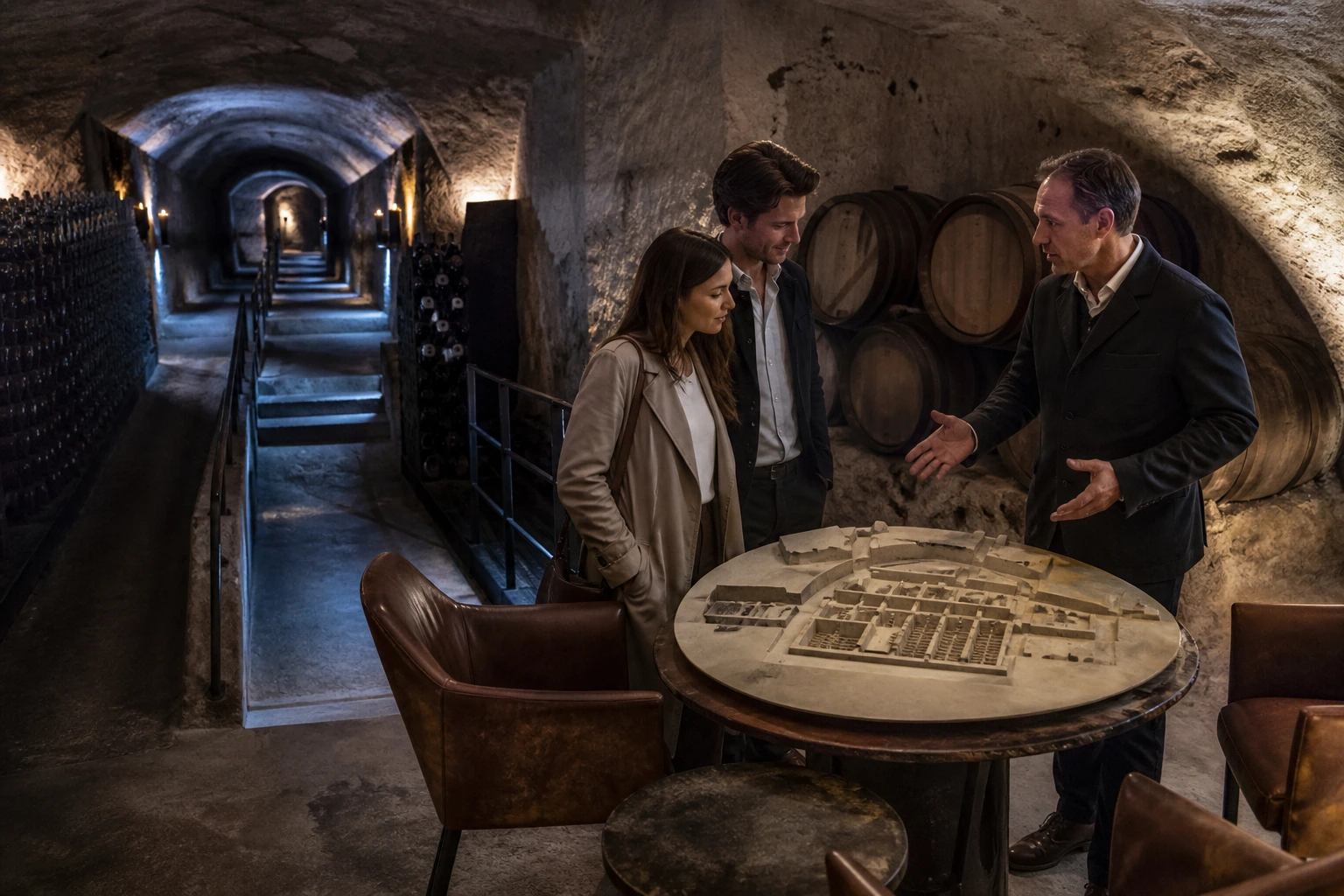
Historic vineyards, underground cellars and commercial/distribution houses form the World Heritage ensemble. A persuasive journey therefore sees at least two levels: landscape and production site. Cellar alone or tasting bar alone shortens the story. Hautvillers, Aÿ, Reims and Épernay are not interchangeable photo stops.
Maison, grower, host and cellar create context
A large house may explain blending, reserve wines, brand and international history; an independent grower may focus on parcel, vintage and personal decisions. Each category contains wide variation. Book one contrasting visit of each type rather than four similar cellar tours.
A public tour, private guide, cellar-master conversation and winegrower visit are different. Confirm person or role, language, group size, duration, accessible areas and wines. “Behind the scenes” means little without those facts. Harvest, travel or production can remove the announced person; the replacement plan matters.
Steps, humidity, cool air, low passages and standing can matter. Verify temperature, clothing, lift, seating, toilets and an accessible alternative. Historic cellars cannot always be adapted. A ground-level or virtual presentation may be the better, not lesser, experience for some guests.
Non-vintage, vintage, origin, reserve wines, dosage and maturation explain style better than a price list. A sound tasting reveals relationships without turning hospitality into an exam. Vintage and cuvée are named exactly. A rare bottle is never inferred from a photograph or old menu.
Two appointments with many glasses can tax palate and body. Water, food, spitting and pauses belong to professional tasting. A sober driver handles every onward road. Personal health, medication and alcohol tolerance are respected; volume measures neither access nor hospitality.
Picking dates change by year within appellation and estate logic. Visitors participate only through an expressly offered format. Work safety, hygiene and production take priority over photographs and preferred dates. A harvest day requires current confirmation and an equally complete alternative.
Price, tax, export, transport, temperature, insurance and damaged bottles are addressed in writing by the responsible seller. Airline baggage and hotel shipment are not automatic solutions. Customs and alcohol rules depend on destination and date; qualified review is required.
Duration and combination follow the product
Day one brings arrival and city; day two one major house and an open afternoon; day three driver, vineyards and grower; day four departure or Paris. A third cellar day serves specialist interest. One serious lunch and a simple evening keep perception alive.
A gentle arrival, hunt with lunch, market or cooking appointment and a wine/rest day create a full arc. The principal moment is never placed on departure. If weather or supply changes, landscape and cuisine hold the journey. MAG-188 then handles the truffle booking in forensic detail.
Farm, tasting and regional meal do not justify an artificial week. Joined to Bordeaux, the Dordogne or a country hotel, they form a credible component. Travellers seeking deeper aquaculture or conservation access need specialist design and explicit consent from the operator.
Paris connects naturally with Champagne, Bordeaux with Périgord caviar, Turin with the Langhe. Truffle plus Champagne or all three create long transfers and mismatched seasonal logic. A luxury narrative need not include every ingredient in its title.
Hotel and private dining as logistics partners
It should handle early breakfast, driver, muddy boots, refrigeration, deliveries and a light dinner without taking on legal or hygiene responsibilities outside its competence. Position relative to market, farm or cellar matters more than a themed package. A quiet room protects the senses.
A chef in villa or suite may connect the products, but tin, truffle weight and bottles must be documented exactly. Kitchen, refrigeration, allergies, service, leftovers and disposal are agreed first. A theatrical table replaces neither traceability nor safe food practice.
Season, price, sustainability and booking evidence
Truffle periods depend on species, region, law and year; caviar production and visits follow farm operation; Champagne houses and vineyards keep their own calendars. Do not plan backwards from a preferred month. Select the principal product, confirm its current season and build around it.
Add hotel, driver, guide, admission, private host, tastings, restaurants, equipment, shipping, cancellation and plan B. An expensive private tasting without a named host may offer less value than a small public group with depth. Money should buy knowledge, time and care, not merely portion size.
For truffle: habitat, lawful harvest and dog. For caviar: conservation, water, feed, welfare and cold chain. For Champagne: soil, crop protection, energy, packaging and labour. A generic “local luxury” claim is inadequate. Current data, standards and independent review are required for each operator.
Exact species and origin; season; host; group size; real activity; welfare; label; portion or cuvée; storage; allergy acceptance; driver; physical access; shipping/customs; total price; cancellation and equivalent plan B. Anything unconfirmed remains expressly open.
Context is the most valuable ingredient
Truffle needs forest and dog, caviar water and sturgeon, Champagne vineyard and cellar. Those relationships turn rarity into understanding. A great culinary journey therefore ends not with three trophies on a plate but with a sharper ability to read the product, its people and its limits.