
An art fair does not improve because three extra letters appear on a badge. What matters is what the credential allows: seeing early enough, speaking with focus, returning to a work and retaining the judgement to decide. A well-designed collector journey arranges access, city, hotel and appointments around that purpose. It never promises a door that only the fair or a gallery can open.
VIP access begins with the objective
A preview invitation, vernissage ticket, Collectors Lounge credential, premium pass, museum programme and exhibitor badge are different things. Some are sold; others are issued personally. One may cover every public day while another admits its holder only within a fixed window. Even a valid pass can require separate registration for tours, dinners or private visits.
Planning therefore begins with the access product’s exact name, issuer and current-edition terms. “VIP access included” is not a dependable benefit without those details.
Decide what the fair is meant to achieve before booking flights. A collector entering a field needs conversations, context and time to compare. Someone maintaining relationships needs appointments with a small number of galleries and institutions. A buyer pursuing a work needs a search thesis, decision framework and specialists for condition, provenance or logistics. One journey may contain all three purposes, but they cannot command every hour simultaneously. A precise priority stops social invitations from displacing the act of looking.
Choose the fair and relationships before the hotel
Art Basel, Frieze and TEFAF are not interchangeable stages. Their periods, gallery mix, host cities and rhythms differ. Select the fair, edition and relevant sections first; flights and hotel follow. Choosing by suite risks creating a polished journey to the wrong market. Calendar details remain live data too: organisers can change opening hours, ticket phases, entrances and programmes. Final planning must always use the published conditions for that particular edition.
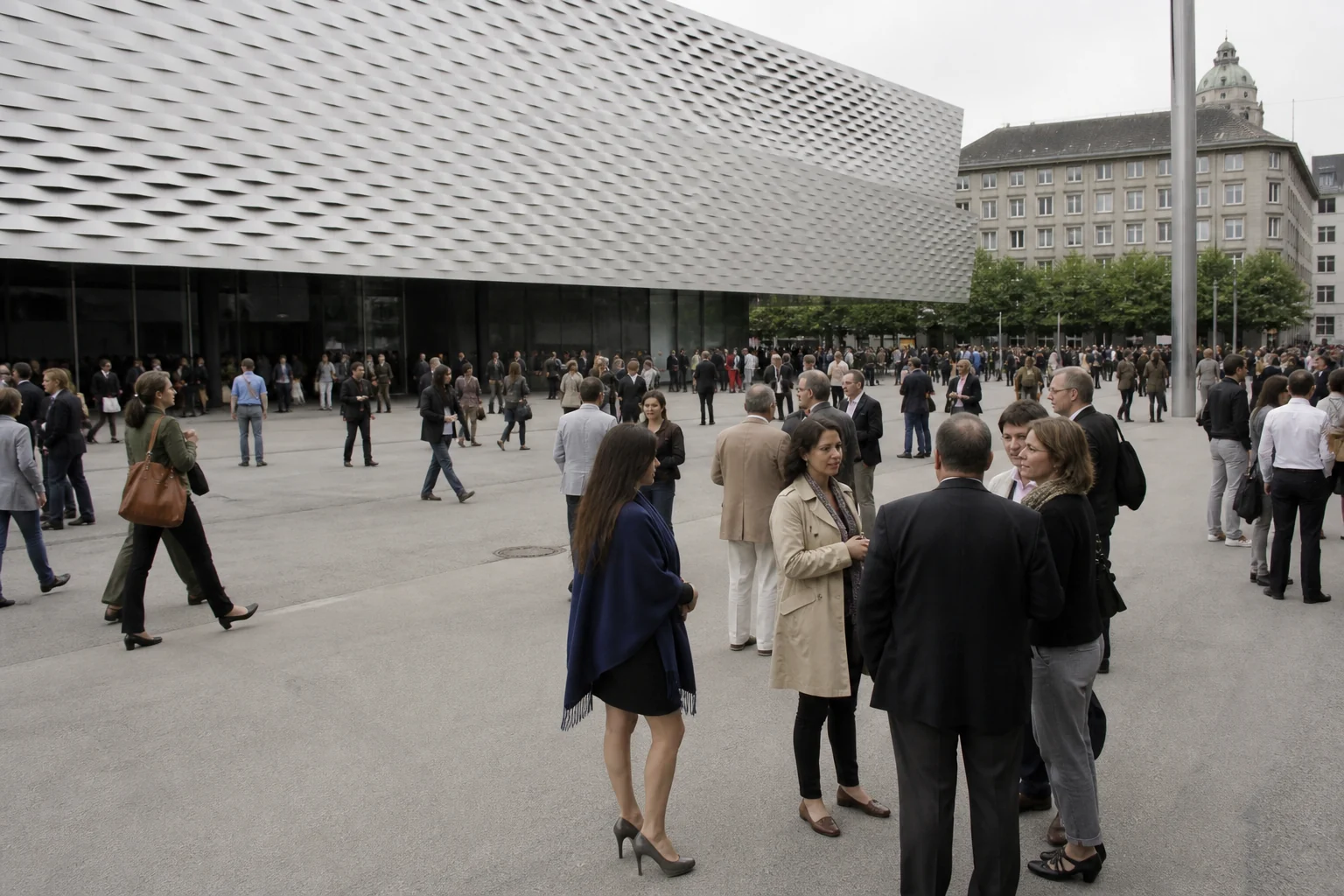
Preview access may provide the first view of sought-after works and quieter initial conversations. It also compresses competition, greetings and decisions. The finest strategy is not to count red dots in the first hour. It moves first to a few priority stands, establishes availability and schedules a second viewing. If a collector wishes to reserve something,
ask precisely what a “hold” means, when it expires and what paperwork follows. Earlier access is no substitute for composure or judgement.
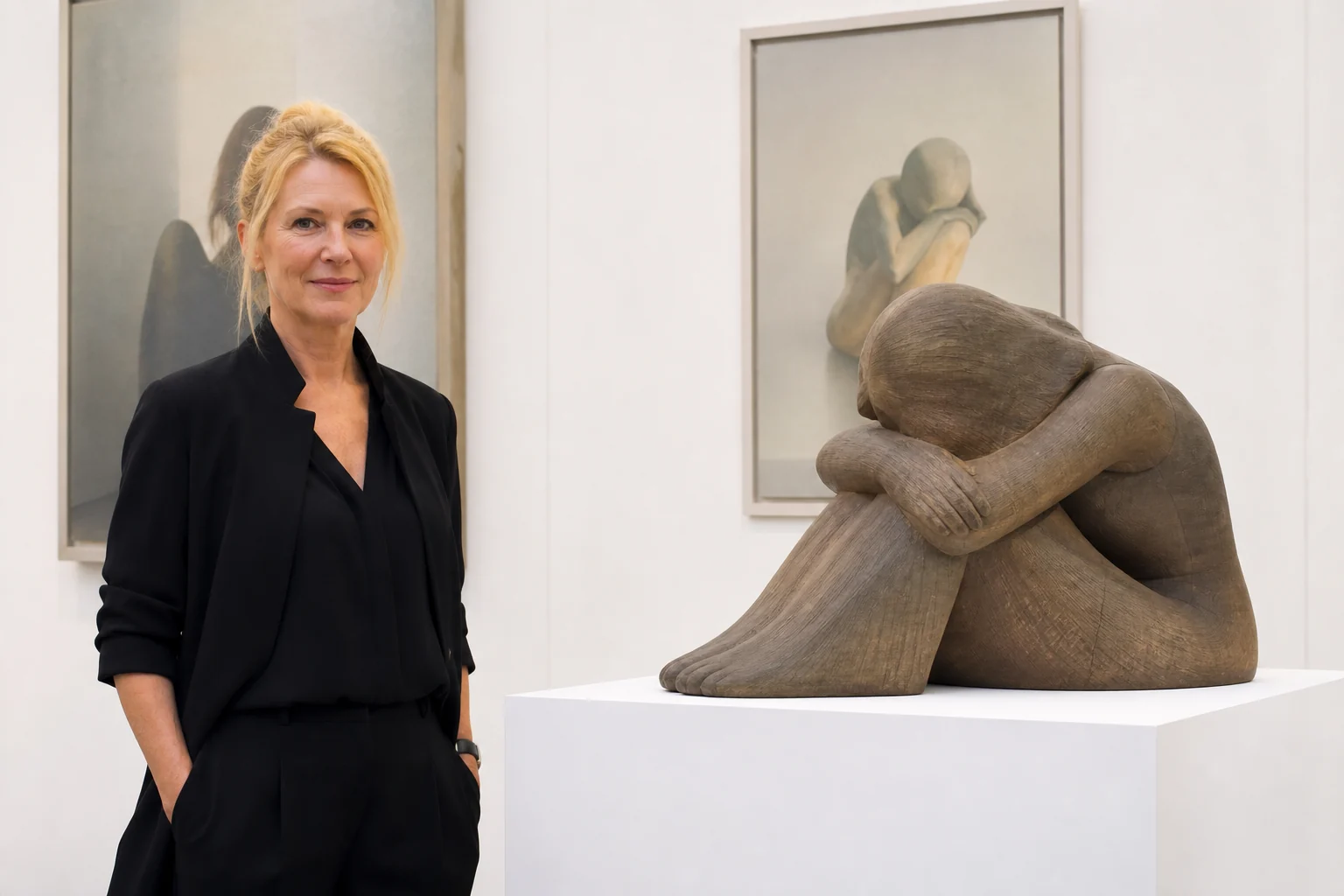
For orientation and deeper discussion, a public morning may be more useful than a preview. The first surge has passed, early sales are visible and gallerists sometimes have more room to provide context. A sold work can redirect attention towards a stronger, less obvious position. Travellers not chasing a specific new release do not automatically lose quality without vernissage entry.
The right credential fits the purpose of the journey; it is not simply the most prestigious phrase on an invitation.
Galleries invite collectors, advisers, institutions and other interlocutors according to their own criteria. A luxury hotel, business-class ticket or concierge cannot turn that discretion into an entitlement. Existing relationships should be engaged early and directly: state the interest, confirm attendance and request a realistic time to meet. A good approach is specific and leaves space for no. A new collector gains more from serious curiosity and reliable follow-up than from performing borrowed status.
Museum circles, patron trips, curatorial programmes and friends’ organisations may offer encounters with collections, studios or specialists. Their purpose is institutional engagement, not acceleration of a private purchase. Membership should not be invented for one weekend; it grows from continuing interest and support. For collectors seeking context, that network can matter more than a lounge. It connects works to scholarship, public collections and curatorial judgement.
An experienced travel advisor can identify the appropriate edition, protect flight and hotel arrangements, stagger transfers, organise reservations and turn confirmed invitations into a workable sequence. The advisor may request an introduction or identify an available premium product. Ethical advice does not claim to guarantee independent fair accreditation or a gallery invitation. It names every dependency:
who issues the pass, what has been confirmed in writing, which events need RSVP and what the journey becomes if approval does not arrive.
Six art weeks, six city systems
The main hall is only one part of the event. Galleries open exhibitions, museums launch shows, foundations convene talks and collections receive visitors. This is not a mandate to attend everything. Two satellite places tied to the collector’s interests are better than six photographic stops. Filter the city calendar by content and group appointments geographically. Keep at least one evening free so an important conversation can continue—or an overfull day can simply end.
In Basel, fair, museums, galleries and social meeting points form a relatively concentrated system. The proximity saves travel but intensifies encounters. A hotel on the collector’s real axis may matter more than the largest suite. Art Basel calls for a clear choice among sectors and a decision about which institutions truly belong in the journey. Filling every night until late sacrifices the quiet morning, often the best time to look again.
Paris links the fair to a dispersed network of galleries, museums, foundations and private programmes. Distances are conceptual as well as geographic: a Right Bank appointment, a western collection visit and an evening in another quarter can fracture the day. The itinerary needs urban logic. One focus per half-day,
generous transit allowance and a hotel on the actual route are more persuasive than a celebrated address remote from every meeting. The city remains an experience when movement does not become pure transfer.
During fair week, the principal event, satellite fairs, collections, beach traffic and evening programmes compete for the same hours. Distances look short yet become operationally large. A driver cannot dissolve every bottleneck; pickups need realistic locations and windows. Choose one main fair, no more than one complementary perspective each day and one evening that genuinely matters. Sleep, climate and movement are not background details. They determine whether anyone can still look attentively the following morning.
A Hong Kong fair should not be interpreted as a European format with another skyline. Galleries, artists, collectors and institutions bring distinct regional histories and market structures. Preparation should include positions from Hong Kong, mainland China, Southeast Asia, Korea and Japan without compressing them into a single “Asian” category. A local curator, scholar or credible adviser can establish context. Entry requirements, holidays, event rules and calendars must be checked for the live journey.
Frieze describes different Frieze Connect models for a single fair visit, local access or multiple fair cities. This is precisely why generic VIP language fails: reach and programme vary even within one brand. A prospective member should check edition, included admissions, guest entitlement, event registration and renewal terms. A year-round programme may suit a regular visitor; for one journey, a clearly defined visit product can be more honest and efficient.
TEFAF Maastricht brings millennia, categories and specialist dealers together. Old Masters, antiquities, design, jewellery and modern positions demand different questions from a purely contemporary fair. The organiser describes extensive vetting by specialist committees with support from the Art Loss Register. That is an important layer of scrutiny, not a substitute for diligence on a particular acquisition. Plan fewer stands, more object time and an independent specialist when the category requires one.
Look with concentration, not in a marathon
After several hours, the capacity to register scale, material and distinctions deteriorates. Plan one concentrated morning block, a real break outside the hall and a shorter second circuit. Not everyone is invited to lunch, and a simple meal nearby can be more useful than a long society table. Organise photographs and notes by hall and stand. In the evening, ask only three questions: what remains memorable, what needs research and what deserves another look tomorrow
A photograph is a memory aid, not a substitute for the work. Respect permission, copyright and stand rules; prices and private documents should not enter the frame casually. Alongside artist and gallery, record distance, surface, light and spatial effect. Those qualities disappear on a phone and often explain why a work did—or did not—hold attention in person.
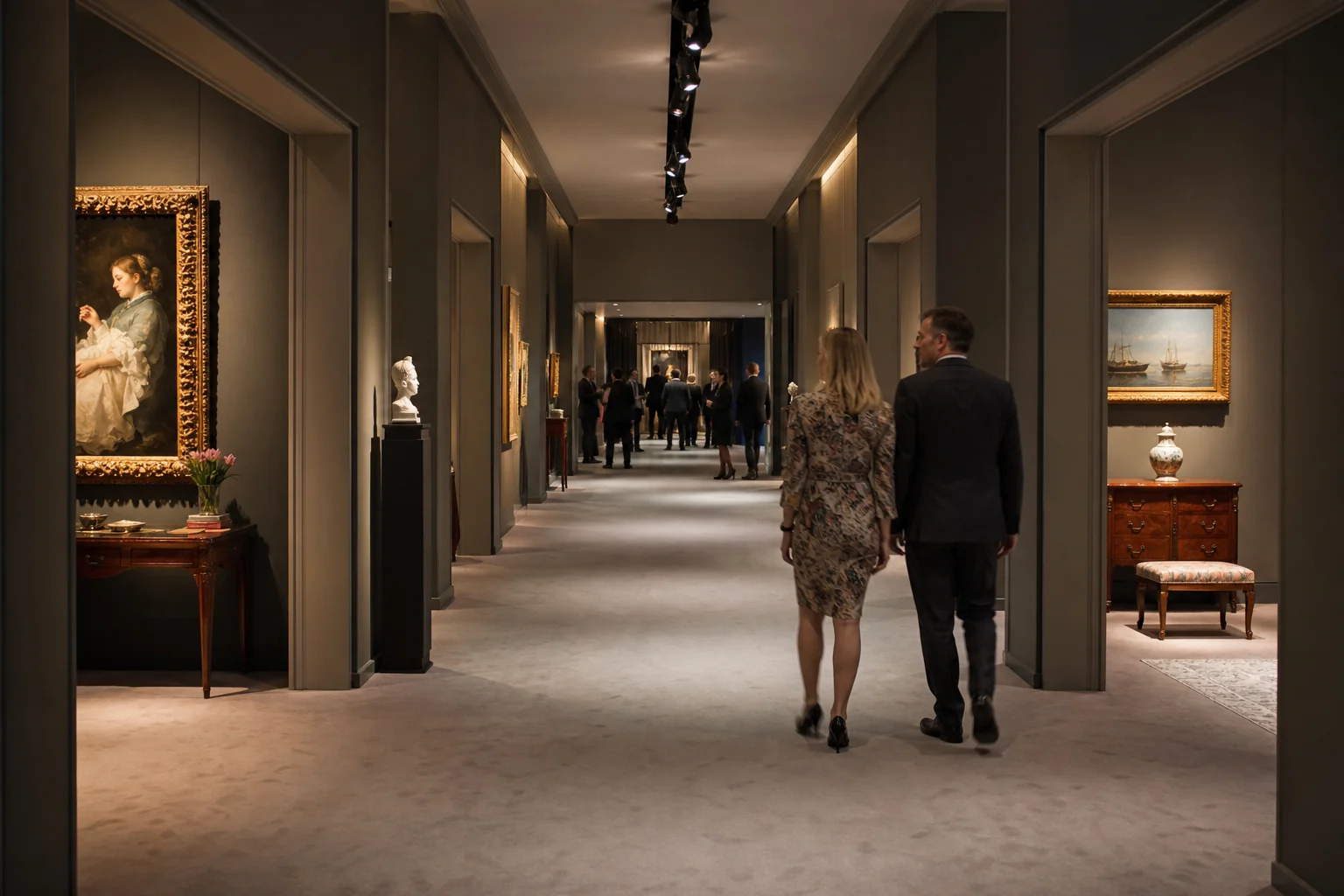
Read the exhibitor list and floor plan in advance. Mark existing gallery relationships, relevant artists, two discovery zones and necessary pauses. Keep the shortlist brief enough to permit chance. A specific search brief should record medium, dimensions, period, budget range and exclusions. Sensitive information remains private. A numbered stand map prevents repeated crossings; it is a navigation aid, not a timetable that terminates every unexpected conversation.
Examine, reserve, buy and deliver
Interest begins the work rather than ending it. Ask about ownership and authority to sell, chain of provenance, exhibition history, literature, certificate or archive status, condition report and known restoration. Older or sensitive cultural property also raises source-country, export and international-rule questions. UNESCO’s 1970 Convention provides an important framework against illicit import,
export and transfer of ownership. Qualified specialists must still assess the specific law and risk for the object and jurisdictions concerned.
Spoken interest is not a properly documented acquisition. Obtain written explanations of price, currency, taxes, payment schedule, passage of title, cancellation provisions and included services. Export permission, insurance, packing, freight, customs, import charges and installation may then follow. For valuable or fragile work, the lowest shipping quote is rarely the right standard. A fine-art logistics proposal should identify route, climate protection, storage, customs responsibility and handover. Tax and legal conclusions belong to specialists, not the travel itinerary.
Consider the destination before committing. Will the work pass through doors and lifts; can the wall carry it; are climate, light, security or permissions material Large, heavy, multimedia and maintenance-intensive works make installation part of the acquisition decision. The plan is complete only when the work can reach and inhabit its intended place responsibly.
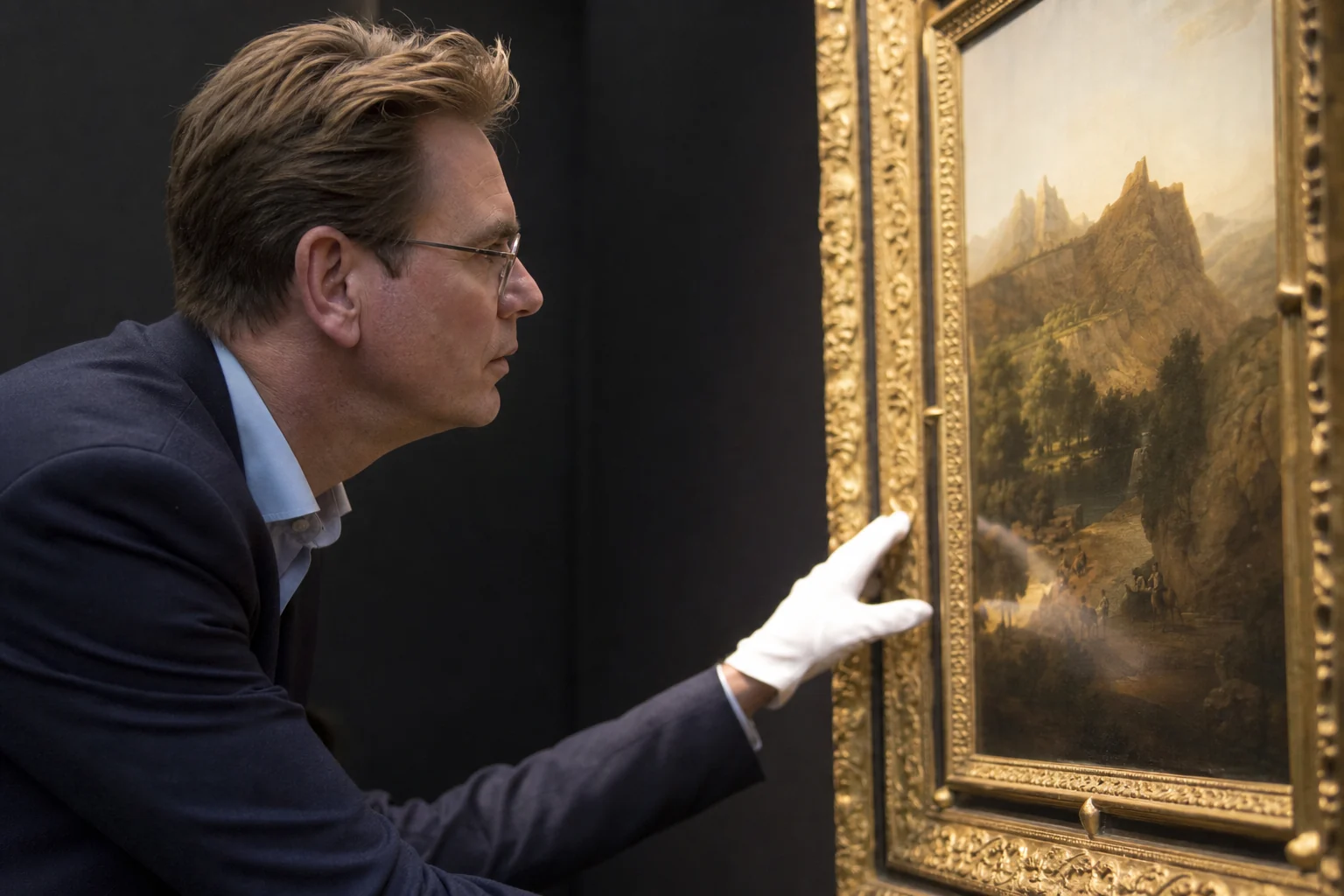
Hotel, driver and companions should protect attention
The best fair hotel removes friction between hall, appointments and recovery. Reliable early breakfast, a quiet room, space for documents, flexible housekeeping and a lobby suitable for conversation can matter more than spectacle. A driver needs entrances, contacts, pickup windows and a fallback—not just addresses. For short dependable routes, walking or public transport may be faster. Luxury here means eliminating unnecessary decisions while keeping the collector in control of the important ones.
Not every companion wants to examine the same stands for two days. A thoughtful journey permits a museum, architecture, wellness or culinary route before reconvening for one shared highlight. If an acquisition is possible, establish who decides, who advises and who is simply accompanying. The fair then becomes neither compulsory entertainment nor a concealed solo pursuit.
Children’s access, accessibility and assistance should be confirmed directly with the organiser and each venue for the current edition.
The one-page collector travel brief
Record fair and edition, purpose, collecting fields, existing gallery contacts, confirmed credentials and pending requests. Add flight corridor, hotel axis, two daily viewing blocks, institutional priorities, evening limit and one open period. For a possible purchase, name the budget, decision-maker, independent expertise, provenance and condition requirements, plus tax, export, insurance and logistics partners. List every access credential with issuer, validity, guest rule and RSVP status.

Then remove what does not serve the journey. Do the three encounters that sharpen the eye remain, along with two places that explain the city and enough time to revisit a work Is there a credible public programme if an invitation never comes Is the final morning clear enough to review documents instead of packing bags and making decisions at once A journey at this level should not feel full.
It should feel exact. Its highest privilege is that the collector returns having not merely seen more, but judged better.