
Seychelles is not one beach destination but an archipelago with distinct rhythms. Mahé, Praslin, La Digue and the private islands each solve a different part of the journey. Choose the architecture first and the resort second: the result is more time in the right place, fewer fragile connections and a holiday that feels composed rather than collected.
The right island begins with the geometry of the trip
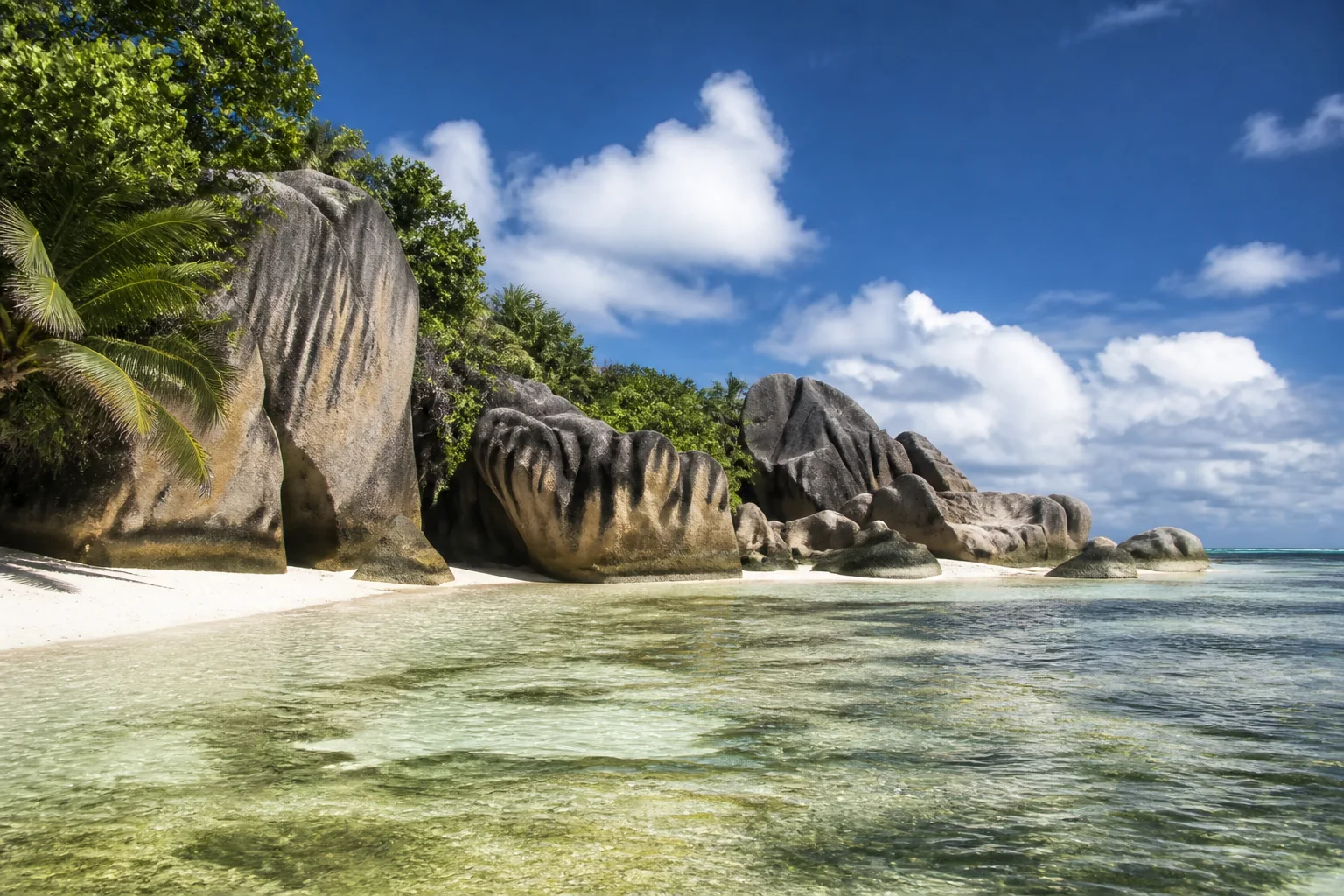
The granite boulders create a shared visual language, not a shared daily experience. Mahé offers the greatest breadth of landscape, restaurants and local life; Praslin is a calmer base for nature and nearby islands; La Digue rewards a slower pace. A private island places almost everything inside one resort. The right choice depends on duration, appetite for movement, dining style, privacy and tolerance for another flight, ferry or boat.
Before opening a hotel shortlist, write down the usable nights, the number of times you genuinely want to repack and the value a change of island must add. Seven nights usually support one base or, at most, two. Ten nights can carry two contrasting chapters. Around a fortnight creates room for three, provided arrival and departure buffers are protected. More islands do not automatically create a richer Seychelles journey.
Mahé is the largest and most populated island, home to Victoria and the international airport. Mountain roads, rainforest, small coves, local restaurants and the broader infrastructure of Beau Vallon give it unusual range. Treating it as an airport stop misses a complete island. Location still matters: an elegant southern retreat may be a long drive from dinner in the north, and a remote beach changes how spontaneously guests can explore.
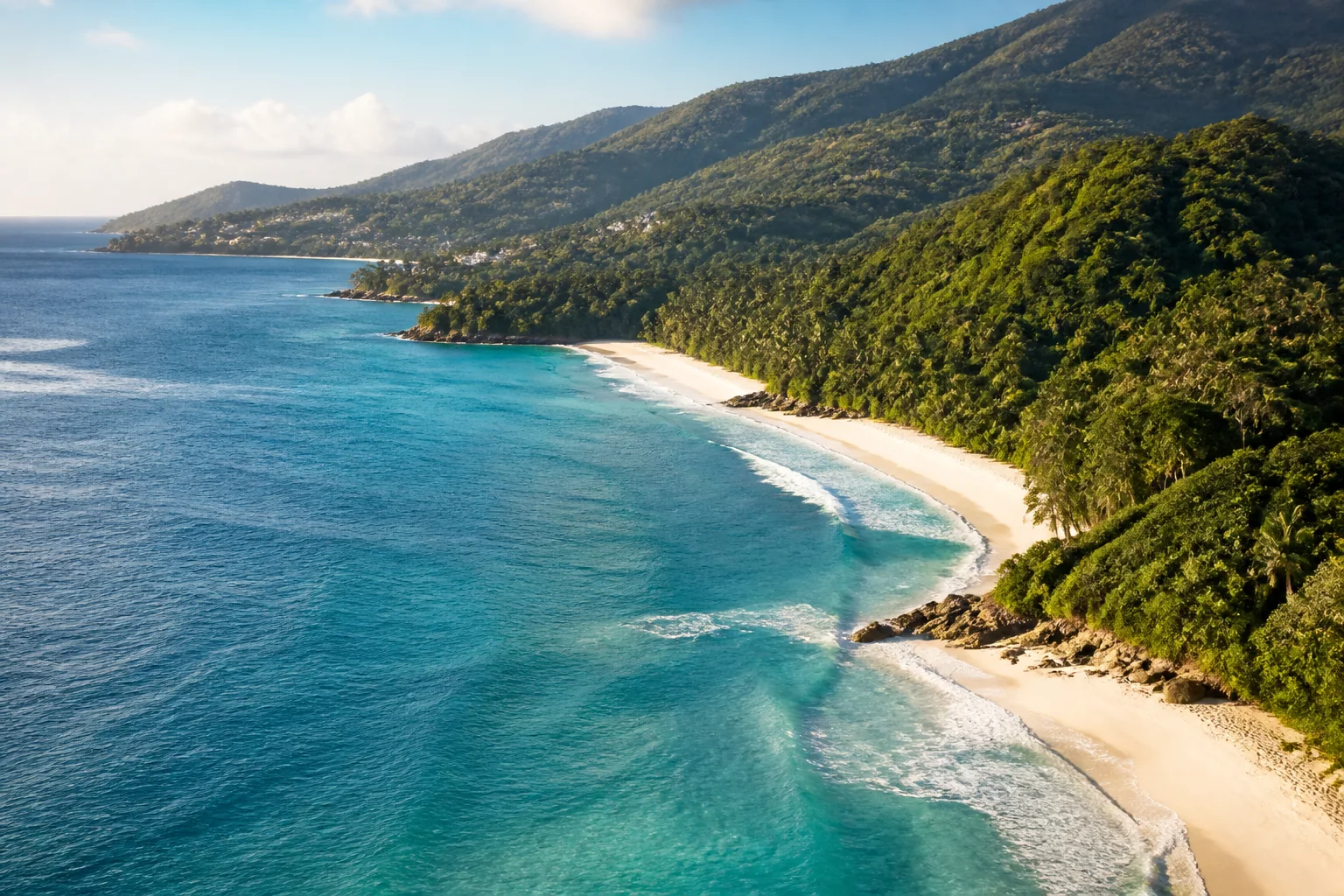
Map distance rarely captures the island’s winding roads. Identify the beaches, trails, restaurants and departure points that matter, then test the real journeys between them. The north tends to feel more accessible and animated; quieter coasts offer retreat but demand greater resort self-sufficiency. A driver or car expands the possibilities. Guests planning every meal off property need a position that does not turn each evening into a transfer exercise.
The second-largest island is reached from Mahé by small aircraft or fast ferry. It works both as a stay in its own right and as a base for Curieuse, Cousin, St Pierre or La Digue. Its appeal is balance rather than absolute isolation: enough variety for several days, manageable distances and a different tempo from Mahé. Choose the hotel according to the intended mix of beach, forest and boat days, not reputation alone.
In Praslin’s interior, the Seychelles Islands Foundation protects a 19.5-hectare remnant of ancient palm forest containing the endemic coco de mer. The UNESCO World Heritage Site is an active conservation and research landscape; visitor revenue also supports Aldabra. Allow time to experience the forest properly. Opening hours, admission and guiding arrangements can change and should be checked directly with the foundation shortly before a visit.
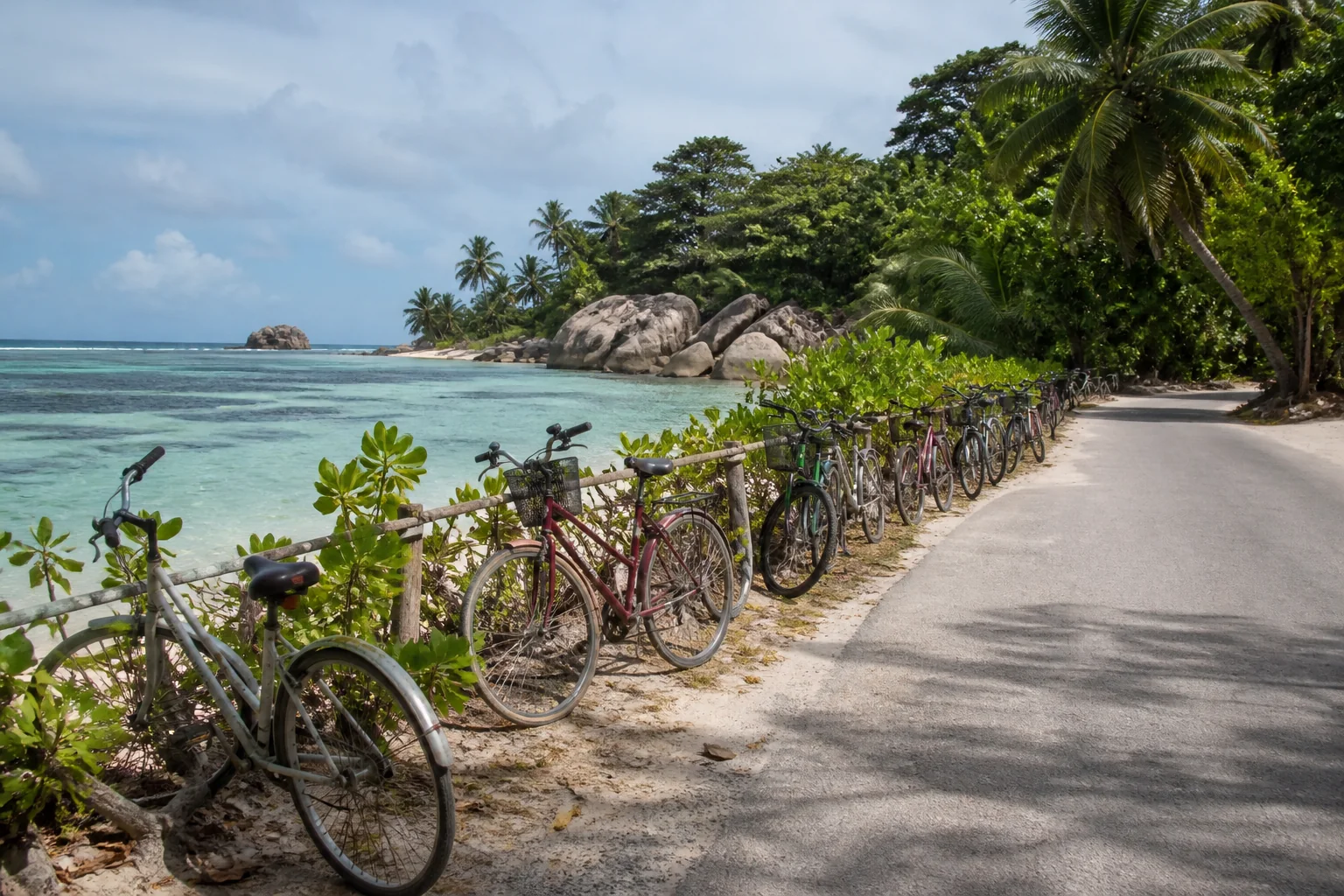
La Digue has no airport and is generally reached by sea. Bicycles, short distances and relatively little motor traffic define the island. Famous beaches can feel busy when day visitors arrive, while early mornings and evenings reveal a different place. Staying overnight makes sense when those quieter hours matter. Travellers expecting extensive room service,
air-conditioned public spaces and resort-scale facilities should examine the specific property rather than the island’s romantic image.
Private-island resorts promise distance, but their success depends on logistics and operational depth. Dining, medical response, excursions, children’s programmes and wet-weather options remain largely within one provider. Ask what the rate includes, how transfers work when conditions change and what happens after a technical disruption. Seclusion is luxurious when the system is resilient, not simply when no other building appears in the beach photograph.
Remote coral islands and atolls are not casual add-ons to Mahé. Flight days, baggage limits, supplies, conservation rules and medical reach can define the whole itinerary. Even a short stay may require buffers on both sides. Include one only when wildlife, diving or profound isolation is a principal reason for travelling. For a first visit, the granitic inner islands usually provide a more coherent introduction and considerably more flexibility.
Seven, ten or fourteen nights
After a long-haul journey, immigration, luggage and the first transfer consume meaningful time. With one week, stay on Mahé or combine it carefully with Praslin if connections align. La Digue can be a day visit or a second base, but should not be forced into a three-resort circuit. The luxury of a short holiday is not an island count; it is breakfast without the knowledge that the next checkout has already begun.
Pair difference with difference: Mahé’s mountain-and-coast range with Praslin’s quieter scale, or one main island with a private island. Three similar beach resorts create logistics rather than contrast. Nights need not be divided equally. The property with greater dining breadth or more planned activity may deserve the longer stay, while the transfer-dependent chapter needs enough margin to survive a schedule or weather change.
Two weeks can lead from active Mahé through Praslin to La Digue or a private island. Every move should still add a new quality. Give each principal stop at least three or four complete days and preserve a reliable path back to the international flight. A longer stay on two islands may feel more sophisticated than completing the set. In Seychelles, unassigned time is often the point rather than an omission.
Transfers protect the first and final day
Air and sea services connect Mahé and Praslin; La Digue is normally approached by ferry or boat. Journey time is only one variable. Add baggage, terminal transfer, check-in, sea state and the onward drive to the hotel. A guest prone to motion sickness assesses the ferry differently from a traveller constrained by aircraft baggage. Schedules and operating conditions are volatile, so every sector is reconfirmed at booking and again before travel.
A late international arrival followed by a tight island connection creates fragility for no meaningful gain. A well-chosen night on Mahé can be the more luxurious decision: shower, sleep and continue with margin the next morning. This is especially sensible with separate tickets or boats. The hotel need not be theatrical. It needs to be quiet, reliable and well placed, protecting the expensive part of the trip from a missed-connection domino effect.
Do not attach an international departure to the last possible ferry or a weather-dependent resort transfer without examining the consequences. Confirm minimum connection times, alternatives and provider responsibility. Private islands may impose boat or helicopter operating windows. A final Mahé night is not always necessary,
but it is often more rational than paying for an extraordinary last resort night that consists largely of an alarm, luggage and uncertainty.
Season, wind and genuine swimming conditions
The Seychelles Meteorological Authority describes a monthly cycle between the wetter northwest monsoon and the drier, windier southeast trades. April and October tend to be transitions; June to August can bring stronger wind and rougher seas. None of this guarantees an individual day. The relevant question is whether the priority is sailing, diving, calm swimming or land-based exploration. Season and intended coast must be evaluated together.
From roughly May to September, east- and southeast-facing beaches may experience more wind, rougher water and seaweed; the northwest monsoon changes exposure elsewhere. This is ecology, not a service failure. Ask not only whether a resort has a beautiful beach but how it is normally used in the chosen month and which sheltered alternatives are practical. Current local advice should always outrank a brochure’s promise of a permanent season.
Granite, pale shallows and palms make iconic photographs. Reefs, tides, current, rocks and wind decide when the water is comfortable or safe. Current FCDO advice notes that conditions vary seasonally and lifeguards are limited. Seek local guidance each day, observe signs and never read an empty cove as a private pool. The most beautiful hour may be for walking and light, not for entering the sea.
Villa, privacy and resort autonomy
A hillside villa may provide panorama and screening but also stairs, buggy journeys and distance from the water. A beach villa gives easy access yet can be more visible, humid or exposed to surf noise. Ask for the exact location, gradient, sun, shade and walking time to restaurants. Current images and a site plan reveal more than the category label. The particular room matters more than a generic model photograph.
“Private” may mean no direct neighbour view, a personal pool or simply abundant vegetation. Beach walkers, service roads, boats and villas above can alter the real experience. Couples and families also value different distances. State whether the priority is a screened terrace, quiet pool or immediate shore access, then examine sightlines and circulation. Few villas deliver all three equally, and a useful advisor says where the compromise lies.
The more isolated the property, the more dining range, consistency and fair internal choice matter. Confirm restaurant numbers and opening nights, reservation policies, room service and allergy capability. Half board may be rational on a private island but unnecessarily restrict local dinners on Mahé. Compare the real daily cost: room, meals, drinks, transfers, activities and compulsory supplements. A low room rate in a remote location can become the more expensive trip.
Excursions, family, accessibility and conservation
Curieuse, Cousin, St Pierre or a coastal cruise can deepen an understanding of the archipelago. Filling every day with a boat tour destroys the rhythm guests travelled to find. Choose a few well-run experiences and ask about group size, shade, landing method, conservation rules and weather cancellation. A private boat is superior only when the vessel, crew, route and safety standard also support the claim.
Short routes, sheltered water, shade, flexible meals and medical access often matter more to families than absolute remoteness. Confirm age-appropriate buoyancy aids, pool barriers, babysitting terms and the actual language of supervision. A kids’ club does not replace parental supervision at the sea. Across multiple islands, child seats, luggage and waiting time must work on every sector. The most family-friendly resort is the one whose daily life remains uncomplicated.
Steep hills, uneven paths, boat landings and bicycles can look romantic in photographs and become barriers on arrival. Disclose mobility, equipment and assistance needs early. Obtain specific confirmation for the room, bathroom, restaurants, beach and emergency route. “A buggy is available” is incomplete if it cannot help at the jetty, in heavy rain or late at night. Dignified comfort begins with honest circulation, not a vague accessibility symbol.
Help is closer on the principal islands than at remote resorts, but should not be assumed equivalent to a major European city. Discuss relevant conditions with qualified professionals, carry essential medication correctly and buy insurance covering the itinerary, activities and possible evacuation. FCDO guidance stresses cover for the trip and emergency costs. Before a private-island stay, ask in writing about clinic access, transport, response time and payment procedures.
Seychelles’ appeal depends on vulnerable coastal, forest and marine systems. Ask about wastewater, energy, sourcing, local employment, reef practice and wildlife interaction. Staying on marked paths, not touching coral, not feeding animals and paying protected-area fees do not diminish luxury; they preserve the reason for coming. Specific, verifiable operations matter more than green vocabulary. A beautiful resort should make the island healthier, not merely borrow its image.
The true price sits between the resorts
Island hopping adds domestic air or ferry tickets, private boats, airport transfers, waiting, baggage rules and sometimes a transit night. Meals, drinks, conservation charges and activities follow. Price the itinerary as a complete journey and identify what remains variable locally. A cheaper remote room may cost more after access and board. An expensive inclusive resort may compare better once the alternatives’ separate components are placed on the same page.
Ask what happens when a flight, ferry or resort boat does not operate: who rebooks, who pays for another night, which rate is refundable and which insurance responds Separate contracts can leave gaps. Operational names and mobile numbers belong in the travel file. A good fallback does not recreate the same villa elsewhere; it preserves safety, comfort and onward connections without forcing the guest to negotiate among providers.
A serious advisor explains the consequences of each choice, not merely the rooms on sale. Expect current site plans, images of the exact category, transfer terms, restaurant schedules, seasonal exposure and a transparent total. Put promises about view, connecting villas, dietary needs, late checkout or private transfer in writing. Establish who monitors flight changes, reconfirms transport and answers outside European office hours. The value lies in reducing surprises the guest must solve.
The one-page Seychelles brief
Record usable nights, desired island count, preferred daily rhythm, swimming or diving priority, mobility, children’s ages, dining style and privacy. Add international flights, every transfer, baggage, departure buffer, seasonal exposure and insurance. Select two non-negotiable experiences and make everything else optional. Only then compare resorts. This turns a folder of beautiful rooms into a journey in which every island has a defined purpose.